Novo poder (New Power), a solo exhibition by Maxwell Alexandre, is presented in three simultaneous locations: the Tokyo Palace in Paris, and the two locations of A Gentil Carioca gallery, Rio de Janeiro and São Paulo. In the context of the COVID-19 crisis and the resulting curtailing of travel, this is a way to amplify the reach of the proposal into a variety of contexts. The show unfolded from the project Pardo é papel (Brown is Paper), which played with the implications of the word pardo, long used to refer to light-skinned black people in Brazil. The term is politically problematic and divisive for the Black movement, because it fractures identity. In addition, the distinction between pardo and negro (black) involves an act of discrimination, since it attributes different status to individuals based on the amount of melanin in their skin. Painting portraits of black individuals on pardo-colored paper, the artist emphasized this point.
Born and raised the Rocinha, Brazil’s largest favela (shanty town), Maxwell Alexandre is well versed in the experience of social stratification, structural racism, and the marginalization of Black people. In the art field, the debate widens to encompass official art-history, decidedly Eurocentric. Reclaiming visibility for other narratives is necessary, and it will only cease to be when there is, in fact, a true equality of opportunities and of value for all peoples, in life as well as in the arts. Alexandre’s work engages with everyday matters that concern him not from an individual perspective, but as part of a community. The institutional powers that dictate social dynamics, such as the State, the Church, the corporations, and a hegemonic culture that suffocates peripheral expressions, all are brought into the fray.
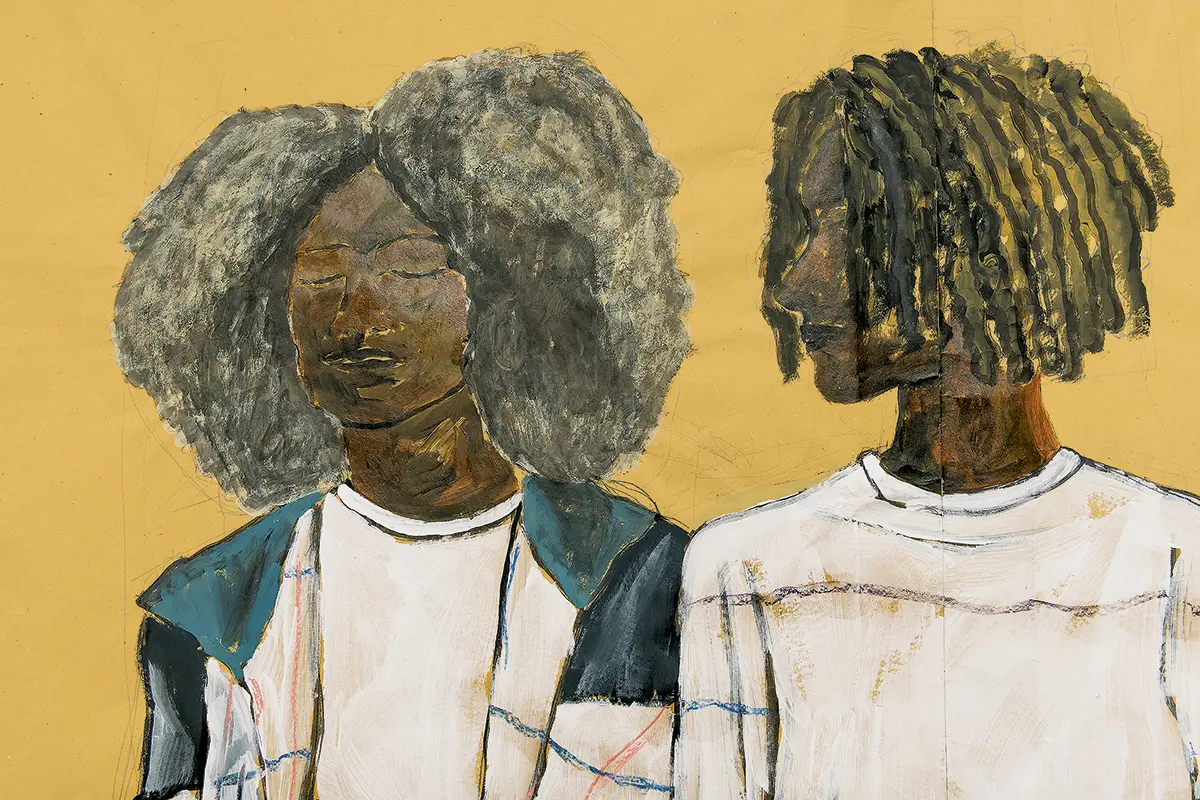
Alexandre’s works combine traditional art-studio materials, such as acrylic paint, charcoal, and wet pastel, with street-art techniques, to which he adds everyday elements like packaging and tarp to produce two-dimensional artworks, objects, and installations. The human figure is always present, but his characters are not individualized; rather, they function as bodies representing an entire class and an entire race, subject to stereotypical categorizations. The protagonists are almost always black individuals in everyday situations of travel, entertainment, and celebration, be it worldly or religious. The compositions are based on expressive brushstrokes and forceful colors, sometimes with different scenes arranged on a single surface.
In Novo poder, the artist takes as his starting point the relationship between black people and the art world’s consecrated spaces, such as museums and galleries. Collecting art (or at least being knowledgeable in it) is a form of social distinction, even among the moneyed classes and between people of equal economic power. The sites devoted to the enjoyment of these cultural goods are most often frequented, financed, and managed by white people, who in that way enhance and expand their social capital and, in consequence, their political power. Maxwell Alexandre understands that representing black bodies in works of art is important, but is far from sufficient. In his own words, “artists, gallery owners, critics, curators, historians, patrons, and collectors are all code-possessing agents within this specific field, agents who build images, worlds, pasts, and futures. Art is a depository of culture. Calling the attention of the Black community to this field is a prophetic strategy for ascent and empowerment.”
While it is true that the representation of Black people in the arts has grown in recent times, and is being not only welcome, but incentivized in institutional spaces, the same cannot be said of the audiences who patronize them who remains overwhelmingly white: the presence of Black people in such spaces is often limited to such service providers cleaning crews, security personnel, or waitstaff in opening events. Some college-educated black may act as mediators in exhibitions, but will rarely move into higher positions.
Unlike what occurred in Alexandre’s earlier work, the characters in Novo poder have more individualized features. They are presented against monochrome grounds, engaged in in the usual actions of museum or gallery visitors: standing, strolling slowly, with their back to the viewer, as if in contemplation of a work of art. It is as though the artist were symbolically populating the institution with an audience that is not present in the flesh. These works serve as a mirror that return their audience the image of those who should be there, appreciating an art that is made about them and for them.