Mariano Rodríguez (Havana, 1912–1990) is a universal modernist, according to Elizabeth Thompson Goizueta, curator of the solo show “Mariano Rodríguez: Variations on a Theme,” recently hosted at the McMullen Museum of Art in Boston. In this extensive and in-depth retrospective exhibition with more than a hundred works, including paintings, drawings, and watercolors, among other media, more than six decades in the trajectory of this prolific artist of the so-called second Cuban avant-garde were reviewed.
To articulate this great body of works, Thompson Goizueta elaborated a chronology made up of different sections: “Mexico, the first stage: the 1930s”; “The School of Paris in New York City: the 1940s”; “Non-Objective Art from New York: the 1950s”; “Black paintings and the Grotesque: the 1960s;” and “Cuba, Sensual and Idealistic: 1960-1980.” This chronological structure and its deployment with abundant documentation—books, posters, and photographs—generated an exhibition-as-visual essay. Naturally, this expository discourse also had an important investigative component. Thompson Goizueta wove together both dimensions so as to underscore the exhaustive research required to explore, identify, and delineate both the poetic and the discursive perspectives around each of the various stages of Mariano Rodríguez’s artistic career, and also to offer an exhibition design with the feel of a visual essay. This allowed for a broader poetic understanding of his work. An understanding that linked the historical-chronological model—and its language of objectivity marked by synchronicities—to the poetic prose and broadened subjectivity of the visual-essay approach needed to grasp Rodríguez’s extensive career.
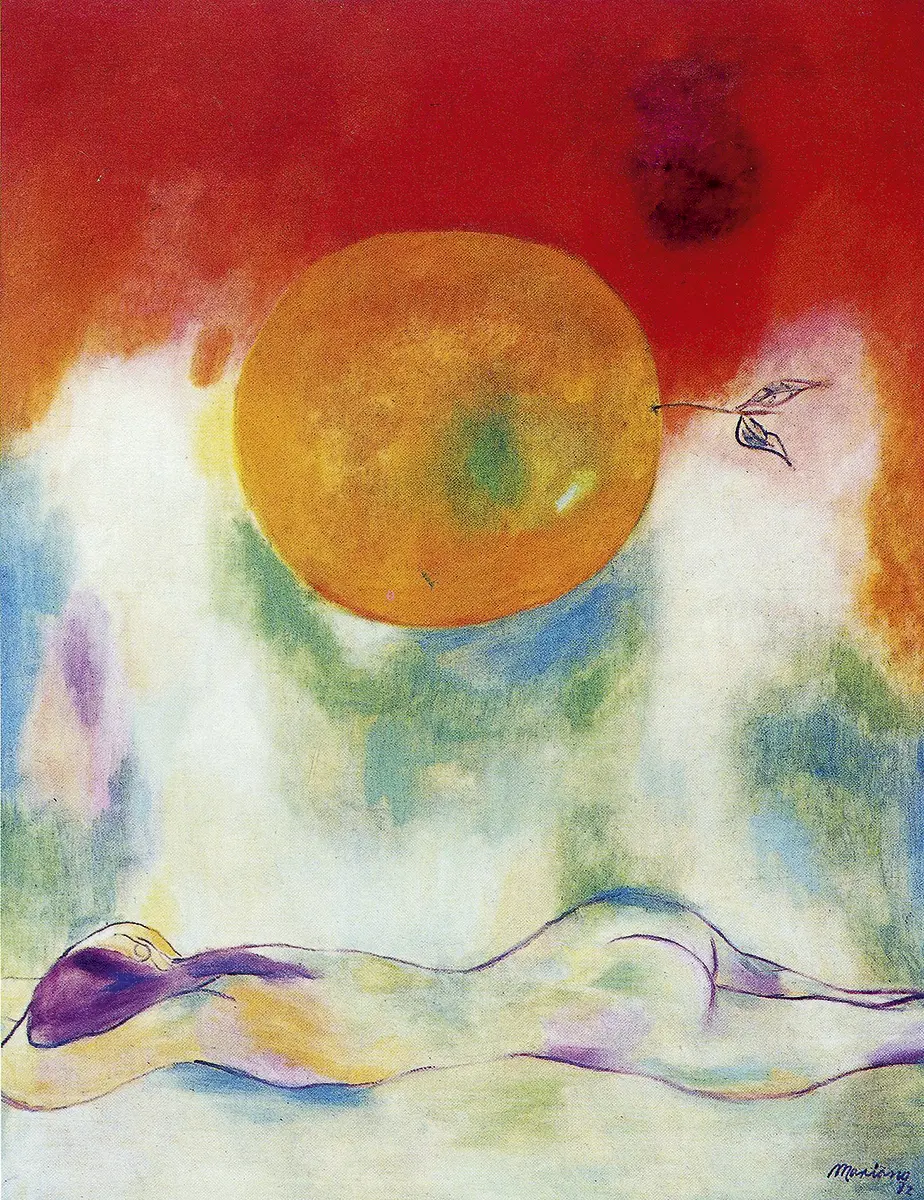
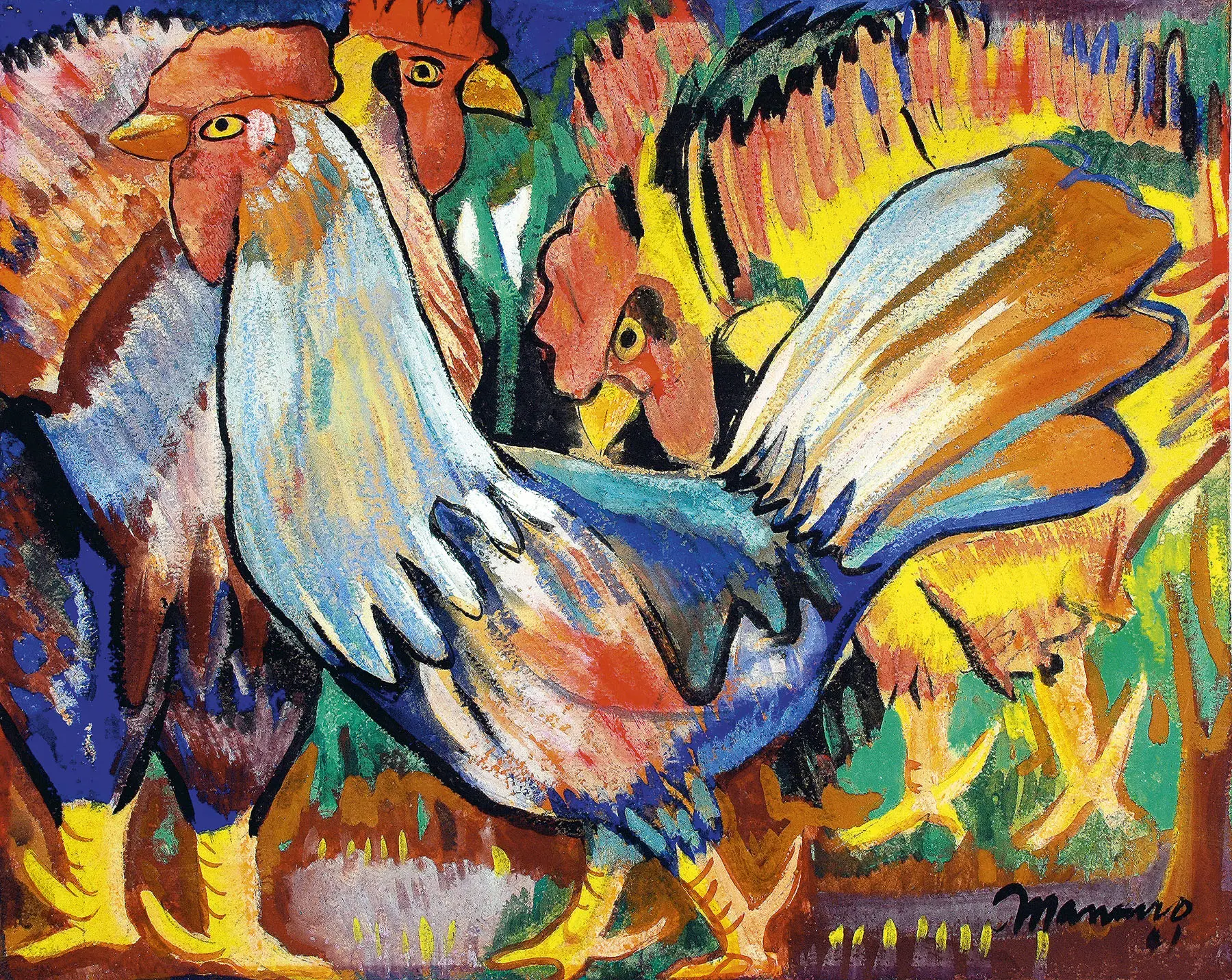
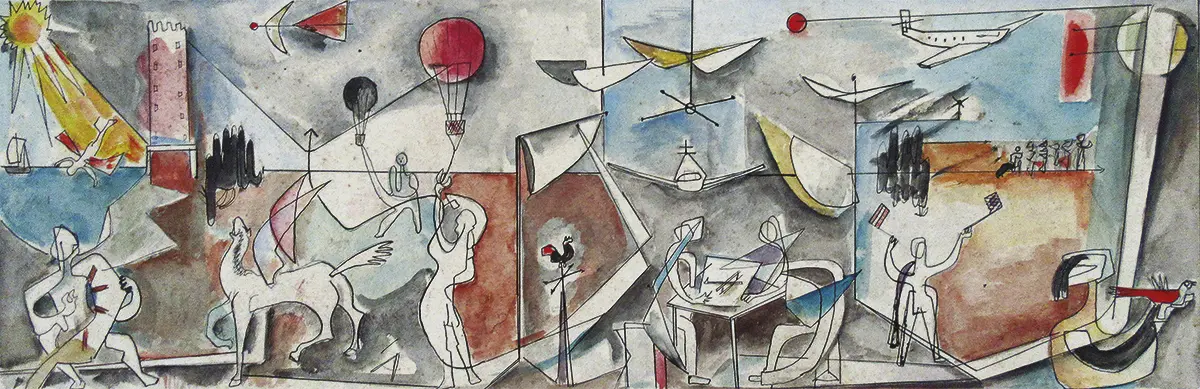
The visual narrative of “Mariano Rodriguez. Variations on a Theme” provided a reflection on the languages of contemporary art through a documentary structure that analyzed the specific conditions of representation within his work. This intention is made evident when, for example, the Parisian stage of the 1940s is compared with the paintings of the 1950s. During the first decade, the work is expressively settled within codes of figuration, such as, among others, Dove of Peace (1940) or Woman with Rooster (1941), whose visuality is expressed by thick and colorful brushstrokes. In the 1950s, however, Mariano decidedly entered the waters of abstract art. Carrying out a true aesthetic itinerary of abstraction that ranged from paintings of decidedly abstract-expressionist inspiration (White Tablecloth from 1956 and Sunflowers from 1958), passing on to a more lyrical abstraction (Carnivals from 1956 and Card Player from 1955), and finally facing geometric abstraction head-on (Medical Retreat Mural from 1956). This investigative drive to reinvent the languages of artistic modernity remained very much alive in his last stage, which took place during post-revolutionary Cuba. After having immersed himself in variants of lyrical and geometric abstraction, he returned to (neo)figuration, as can be seen for example in Masses (1981), among others. The different sections that made up this compelling exhibition offered, from the perspective of a visual essay, a constellation of little-known and unusual pieces capable of transmitting an ambitious understanding of the artist’s work, while also broadening and enriching its interpretation in the context of the Cuban and Latin American visual arts of his time.
For this reason it was also imperative for Thompson Goizueta to reveal the ins-and-outs of his pictorial syntax by illustrating and focusing on his poetic and discursive transitions. During an interview via email she explained that this exhibition wanted to “show how Mariano handled his artistic language of ‘themes’ (the rooster, the sea, women, peasants, fruits, religion, the grotesque) through different styles (Mexican muralism, the School of Paris, geometric abstraction, abstract expressionism, the baroque…) in order to portray him as a universal modernist.” And this is well resolved in the show, because the artist emerges as the creator of a discursive and poetic imagery that goes beyond all the topics with which his work had heretofore been identified. The curator remarked that throughout the exhibition, visitors were also able to discover that “his ability, not only to dominate these styles but also to create his own style by fusing the baroque and the grotesque, proves that he was capable of rising to the level of the great artists of the twentieth century.”
If this show offered the most comprehensive review to date of the artistic career of a member of the second Cuban avant-garde, it is no less true that the intellectual stature of Mariano Rodríguez is well depicted in copious documentation of the literary world of his time. His intellectual trajectory has a direct relationship with the gestation and development of publishing projects that are fundamental for the study of the Cuban letters and culture of the twentieth century. For instance, he was an active collaborator of the magazines Espuela de Plata (1939), Nadie Parecía (1944), and of the most influential of them all, Orígenes, with which—together with José Lezama Lima, Guy Pérez-Cisneros, and José Rodríguez Feo—he revolutionized the publishing scene. These great literary and artistic projects, which also had a deep sociocultural significance, claimed the uniqueness of Cuban culture from a more critical perspective, proposing new interpretive horizons around the rich and contradictory nature of our identity.
Mariano Rodríguez’s intellectual activism led him to acquire a leftist sensibility, which had made a deep impression on his generation. In fact, when the artist’s work began to expand, communist ideas had already seduced a large part of the international and Latin American artistic and intellectual community. Such was the case with the Mexican muralists David Alfaro Siqueiros and Diego Rivera, for instance. Mariano was no exception, and there are two episodes in his biography that speak of this engagement. At the age of 22, in 1934, he participated in the National Congress of the Communist Youth League. The second time took place during his stay in Mexico in 1937, when he joined the National Congress of Writers and Artists, convened by the League of Revolutionary Writers and Artists (LEAR) at the Palace of Fine Arts in the Mexican capital. However, contrary to the two Mexican muralists, who imbued the content of their respective pictorial codes with their communist beliefs, these ideas never entered the ideo-thematic repertoire of Mariano’s art. As Elizabeth Thompson Goizueta acknowledges, “from the 1930s to the Cuban Revolution of 1959, Mariano’s works are notable for their lack of political expression.”
The discursive displacement that Mariano’s work poses with respect to the first Cuban pictorial avant-garde—focused more on the criollo (creole) and the mestizo (mixed-race) identities—entailed the addition of introspection, whereby individuals began to see themselves as the epicenter of an accentuated subjectivity. The handling and synthesis of this displacement, coupled with a desire for aesthetic experimentation, positions Mariano Rodríguez as one of the greatest creators to reflect on the project of Cuban artistic modernity in the second half of the twentieth century. For this reason, his obsession with languages and forms could be interpreted as the manifestation of modernity’s contradictory relationships between: the individual and society; what we consider to be private and what constitutes the public space; material culture and nature; or rationality and the sentient realm.
DENNYS MATOS