DA2 recently hosted a group show with works selected by curator Suset Sánchez from the Cuban art collection of Luciano Méndez Sánchez. An ample and heterogeneous collection comprised of several hundred works and assembled over the many years this Spanish businessman has been in contact with the island where he now resides. He distinguishes three parts in his collection: works of deceased artists, those of famous contemporary artists, and those of younger generations. Under the title “A Round Trip,” the entire collection was exhibited between 2019 and 2020 at DA2, an art center in Salamanca where Sánchez’s selection was just shown.
While the title of the first of these two exhibitions indicates that its curators wanted to stress that this private collection is part of the long history of cultural exchanges between Spain and the Caribbean, both the title and subtitle of the second show draw attention to the extraordinary contribution of African religions to the formation of both past and contemporary Cuban culture and the arts. “Griot Songs” is a tribute to the griots: the singers or poets in charge of preserving and orally transmitting the legends, stories, songs, and poems that have shaped African traditions. The subtitle, “Afro-Cuban Images and Spirituality in the Luciano Méndez Sánchez Collection,” sets forth the content and commitment to this legacy by the nine artists whose works were exhibited.
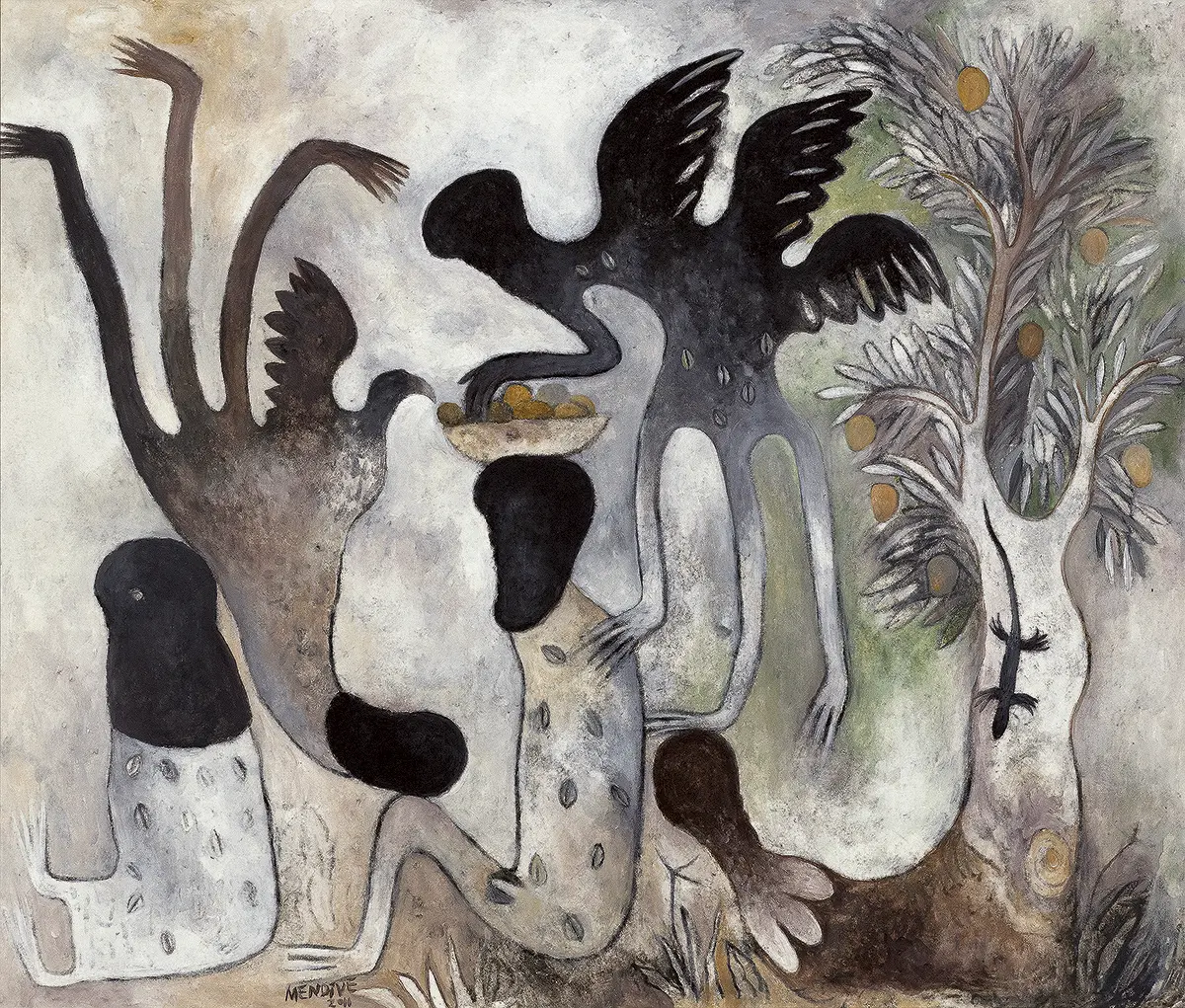
The show itself evidenced the diverging ways these artists have approached this commitment aesthetically and politically. Paintings and sculptures by Manuel Mendive, a historical figure in this mighty cultural and artistic practice, evoke and combine recurring elements both in the imaginary and in the rituals of Santería, the most widespread Afro-Cuban religion: orishas or gods, ancestral spirits, totemic animals, and snails used in divinatory arts; all of them set in the monte, which translates as forest, symbol, Olympus, and refuge.
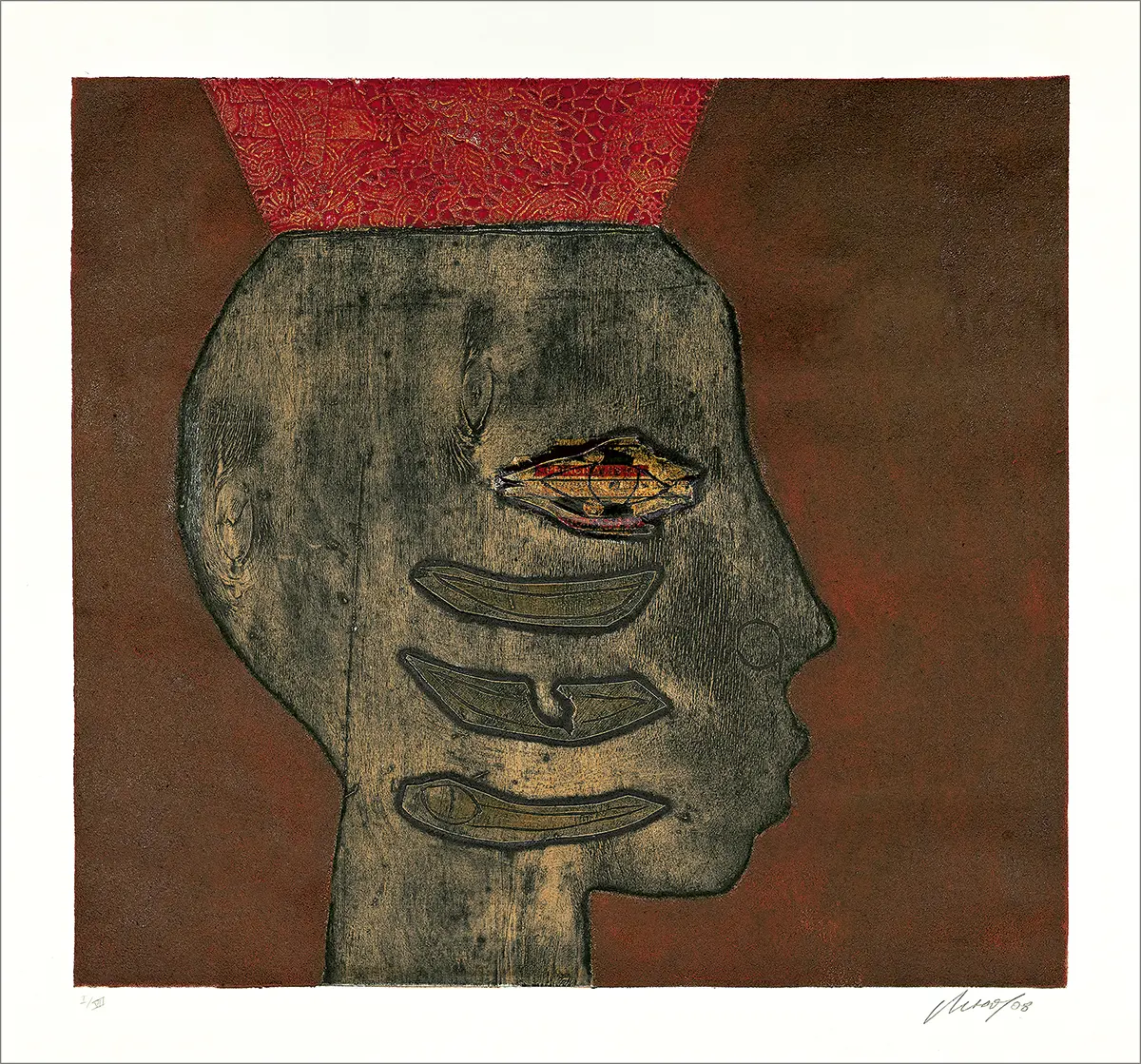
Homenaje a Changó by Eduardo Roca (Choco) is a collagraph that despite its medium size manages to convey the formidable power of Changó, the masculine divinity presiding over the pantheon of Afro-Cuban religions or “rules.” Choco shares with Mendive the concept of an absorbing, inclusive, saturated pictorial space if you will; one that denies the void and cancels or neutralizes the background/figure opposition, which had been a dominant feature of Western painting for centuries.
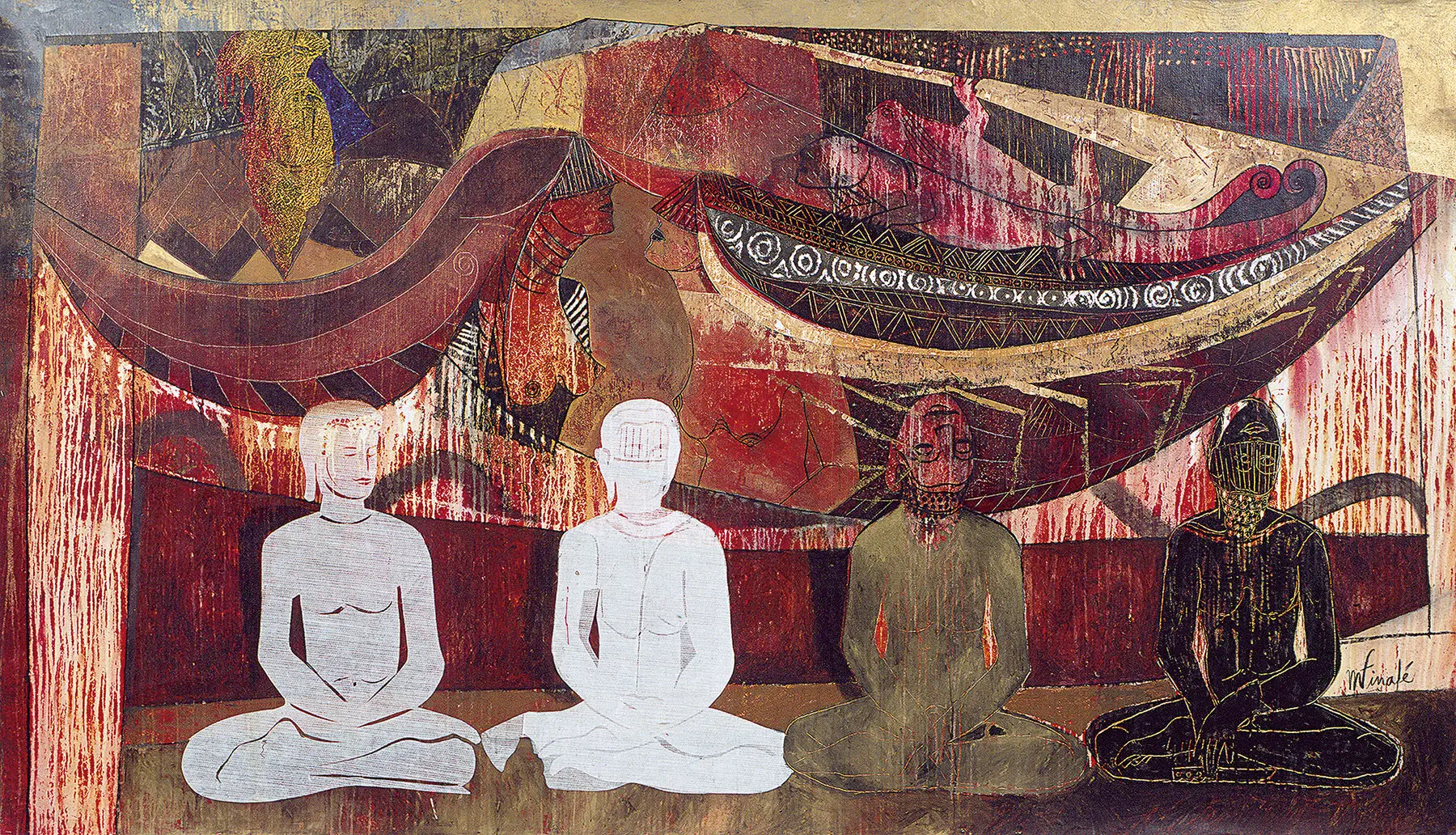
This is also the case of Moisés Finalé’s large-format paintings, inhabited by mythological versions of humans and animals that pay tribute to African imaginaries and to Buddha, “The Enlightened One” himself. Here it is possible to speak of “spirituality” due to the separation his paintings establish from the repertoire of images emerging from the entire complex of Afro-Cuban beliefs, loyalties, liturgies, and rituals. The same can be said of Carlos Quintana, whose painting moves along a threshold of confluences, juxtapositions, and exchanges between various historical and cultural traditions, proving that the “syncretism” Fernando Ortiz detected in Cuban culture still continues to bear vigorous fruit. One of the most impressive works in this exhibition was undoubtedly Life and Death of the Black Angel, a 316x240-centimeter oil on canvas filled with ghostly human and animal figures, skulls and bones. Lessons of neo-expressionism and baroque are juxtaposed as the Christian angel is lithely intertwined with the omnipresent spirits of ancestors. His painting Le sale el caballo de donde le sale a todo el mundo (He gets his horse where everybody gets theirs) offers, instead, an ironic and expressionist version of encabalgamiento: the possession of initiates by the orishas in Afro-Cuban rituals.
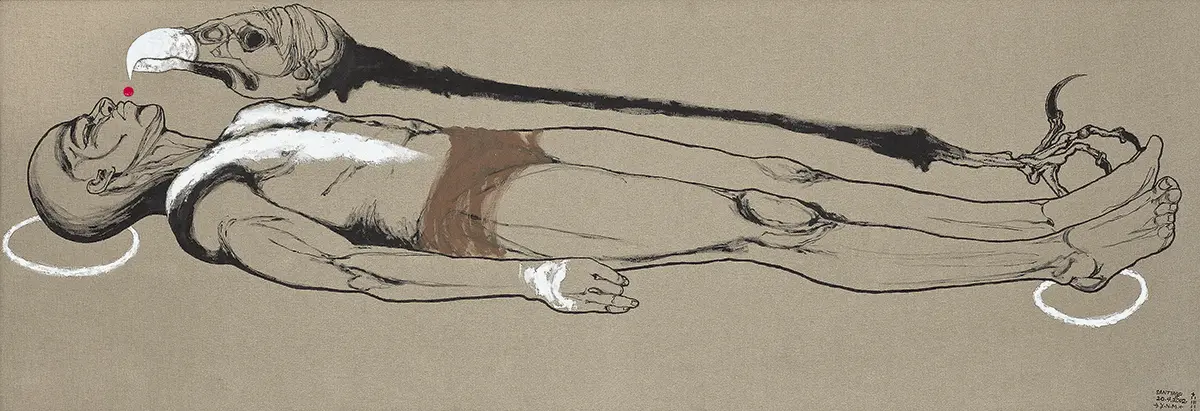
The spirituality derived from the purification and refinement of religious practices and beliefs proves to be singularly paradoxical in Santiago Rodríguez Olazábal’s works. An artist and at the same time a Regla Osha-Ifá priest, he has radically reduced the colorful and polymorphous exuberance of Afro-Cuban imaginaries. In “Griot Songs” his draftsmanship is powerful, human figures are more realistic than allegorical or mythological, the palette is extremely austere, and the colors are symbolically charged. In her curatorial text, Suset Sánchez quotes him: “White symbolizes the color of bones, black is the color of the underworld, and red is the color of blood, a primordial essence.”
The photographic collages of Roberto Chile and Ricardo Elías’s rigorous black-and-white photographs provided the documentary component. Somos (We are), by the former, is an enormous mural comprising some hundred full-color photos of places, habits, costumes, and rituals of Guanabacoan santeros who worship the Virgin of Regla. Elías’s subject, on the other hand, is somber: the ruins of the centrales, the huge sugar mills that were the core of the Cuban economy in colonial times, sustained by an enslaved workforce; not very different from the republican period, when emancipated blacks were forced to perform cheap manual labor. Both were very important nuclei for the erection of complex Afro-Cuban religious architectures.
The ruins of the sugar plantations are also the memory of the Cuban Revolution’s failed dream of the harvesting the ten-million tons that would have enabled socialist Cuba to take its own Great Leap forward. This has not been the only broken dream. The supposed equality proclaimed by the Revolution did not eradicate racism: that heavy and sinister cultural heritage bequeathed by colonialism and slavery is still inflicted on Afro-Cubans. Wishing to draw attention to this, Suset Sánchez included paintings by Juan Roberto Diago, even though they bear little relation to Afro-Cuban imaginaries. As Sánchez states, they “scream from the depths of a black consciousness against racism, marginalization, and criminalization of the Afro-descendant population in post-revolutionary and post-Soviet Cuba.”
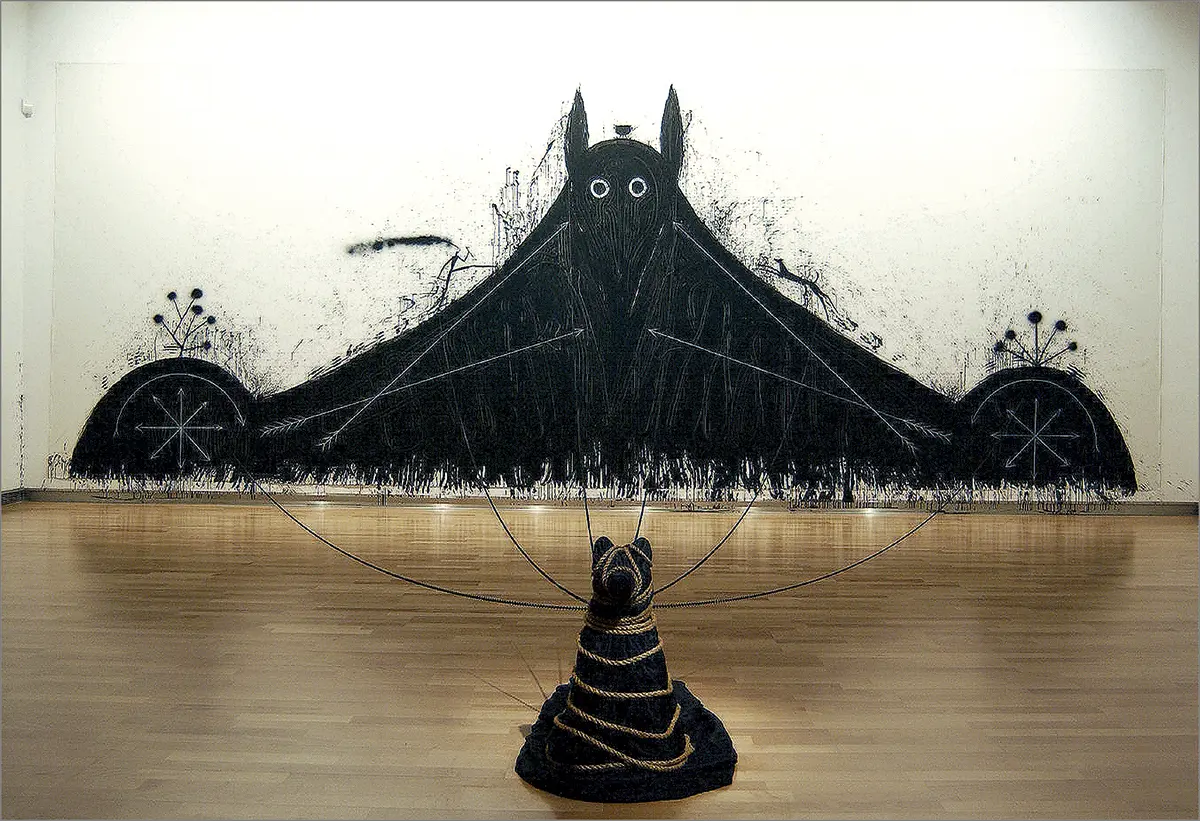
Finally, it’s worth mentioning that the “Griot Songs” selected a piece not belonging to the Luciano Méndez Sánchez collection, but to DA2. Mbua Ndoki, Witch Dog (2004) is a formidable installation by José Bedia, which served, in the curator’s words, to “open or close the show, depending on your preference.” Its extraordinary quality also enhanced the entire ensemble of works. Bedia stands out like no other for his fruitful, versatile, and complex contributions to the African legacy’s regeneration. Bedia is Abakuá, an initiate in the Palo Monte Rule, and he has worked hard to create a vast visual repertoire that synthesizes in unprecedented terms the artistic achievements of both Afro-Americans and indigenous peoples, whose knowledge he has gained access to both by his travels in Africa, the Caribbean, and North and South America, and by the in-depth study of the anthropology, ethnology, and aesthetic histories of these communities. His work ultimately responds to the grand purpose of launching a new worldview. Or, if you prefer, an ecumene, a vast artistic and cultural field meant as a place for encounters and communication, which at the same time vindicates and gives new vitality to African and aboriginal legacies in the Americas.
CARLOS JIMÉNEZ