In 1615, Felipe Guamán de Ayala wrote a letter to Felipe III, King of Spain. More than a letter, it is a memorial of the grievances inflicted on the Indian population of the Viceroyalty of Peru, in the hopes that the monarch would put an end to them. The letter, entitled Primera nueva crónica y buen gobierno (First New Chronicle and Good Government), with its 1,180 pages, is in fact a chronicle of colonial Peru and an ethnographic document that reports on the customs, practices, and livelihood of the peoples subjected to the Spanish Crown. It’s also an extraordinary artwork because it fulfills both purposes through a display of vigorous images, which are much more important than the accompanying texts. I’m referring to this letter here because it was the main source of inspiration for the works gathered in Sandra Gamarra Heshiki’s extraordinary exhibition at the Sala Alcalá 31 in Madrid, as its title underscores: “Buen gobierno” (Good Government).
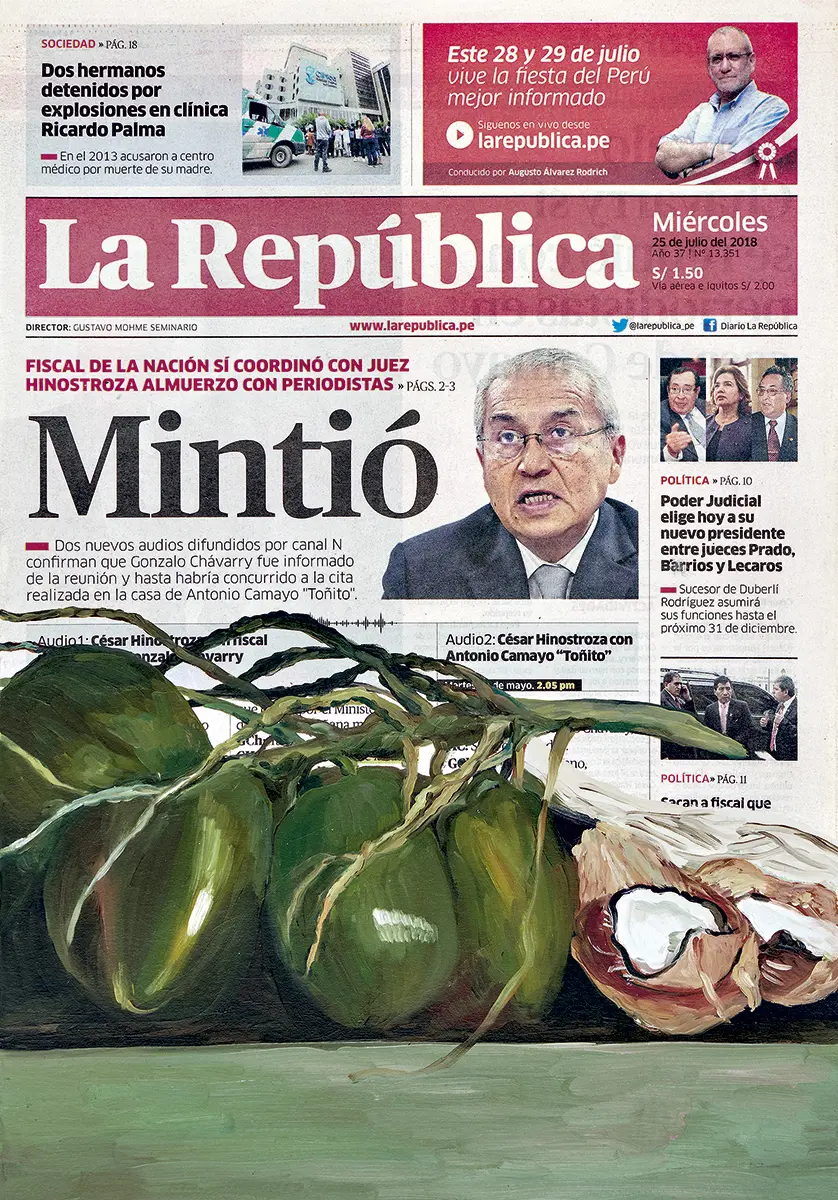
And it is made very evident, when visiting this large group of works, that the artist’s intention is similar to Guamán de Ayala’s. He wanted to inform the king of Spain what the country he was ruling from the remote capital of his empire was really like, so that he could govern it better, instead of following the misleading reports of his emissaries. Adopting a comparable position, Gamarra Heshiki strives to show those facets of Peru today that are often omitted or distorted by history and the hegemonic media, or buried by clichés persisting since colonial times and renewed only to perpetuate their exclusionary function.
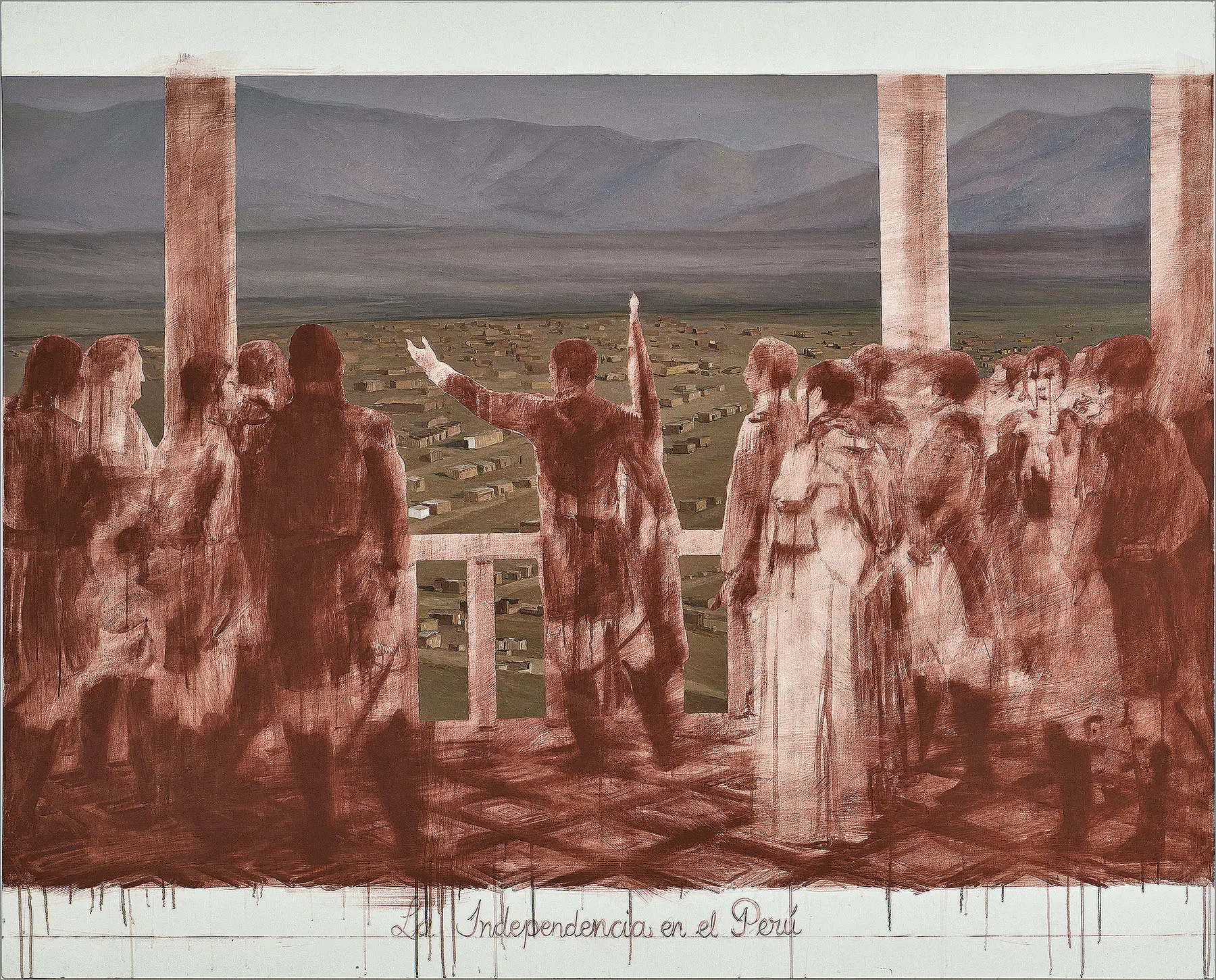
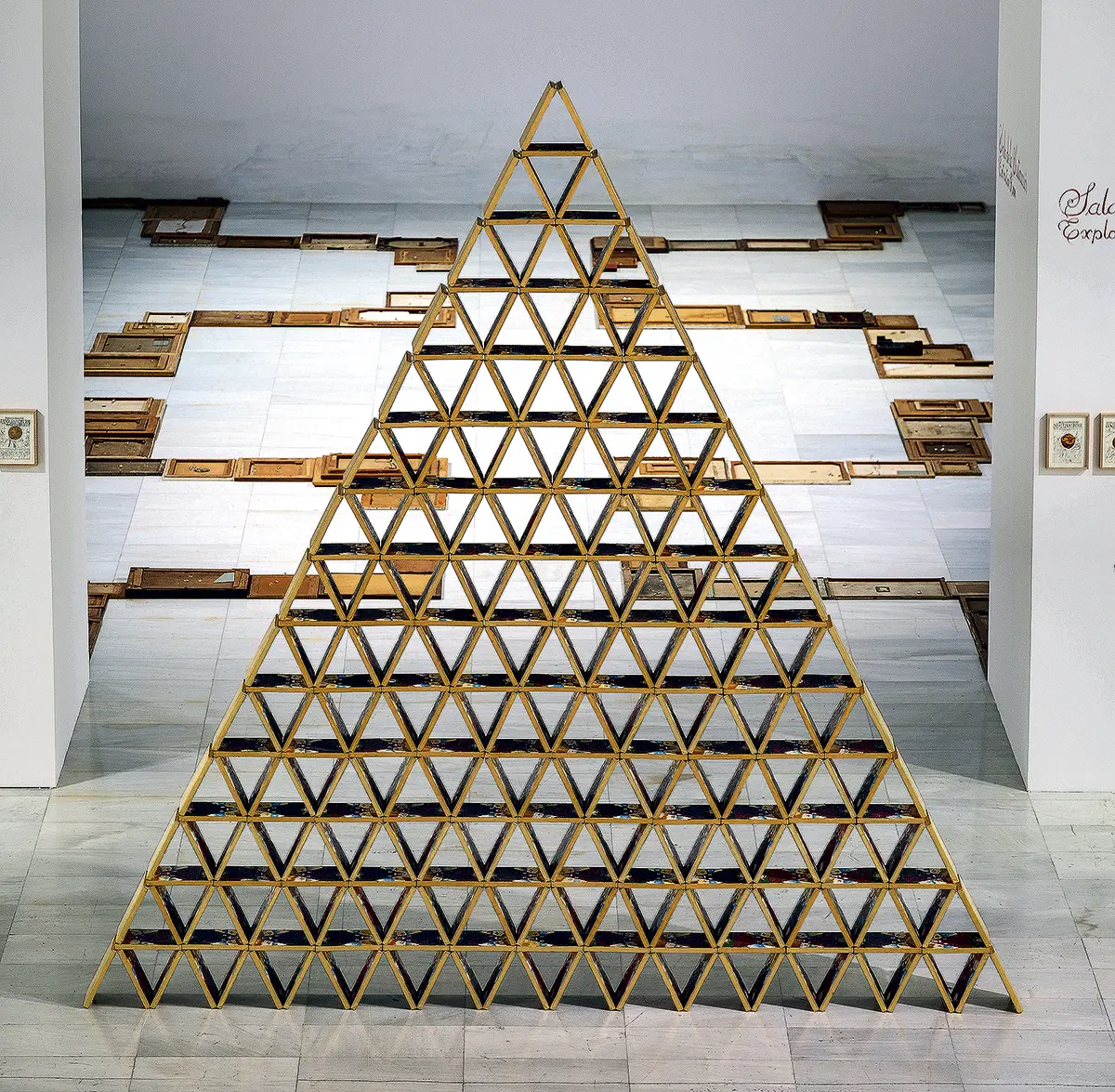
Her show is therefore both critical and vindicatory. The initial space is entitled Sala de espejos (Hall of Mirrors); here, the artist’s criticism is exposed by her carefree blurring of paintings left behind by colonialism, which represent and simultaneously enhance episodes such as Columbus’s discovery of America, Atahualpa’s funeral, the proclamation of Peru’s independence, or the marriage of Inca aristocrats with high peninsular dignitaries, as was the exemplary case of Saint Ignatius of Loyola’s great-nephew’s marriage with Ñusta Beatriz, the last Inca princess. This somewhat Dadaist form of criticism becomes Leninist in other works of this same section, which endorse the Soviet leader’s statement: “The best way to criticize a river is to build a bridge for it.” Instead of a bridge, she built a pyramid several meters high with hundreds of small copies of the Virgen del Cerro (Virgin of the Mountain) done by the painters who sell them to tourists in Cuzco. Its title is Tierra virgen (Virgin Land).
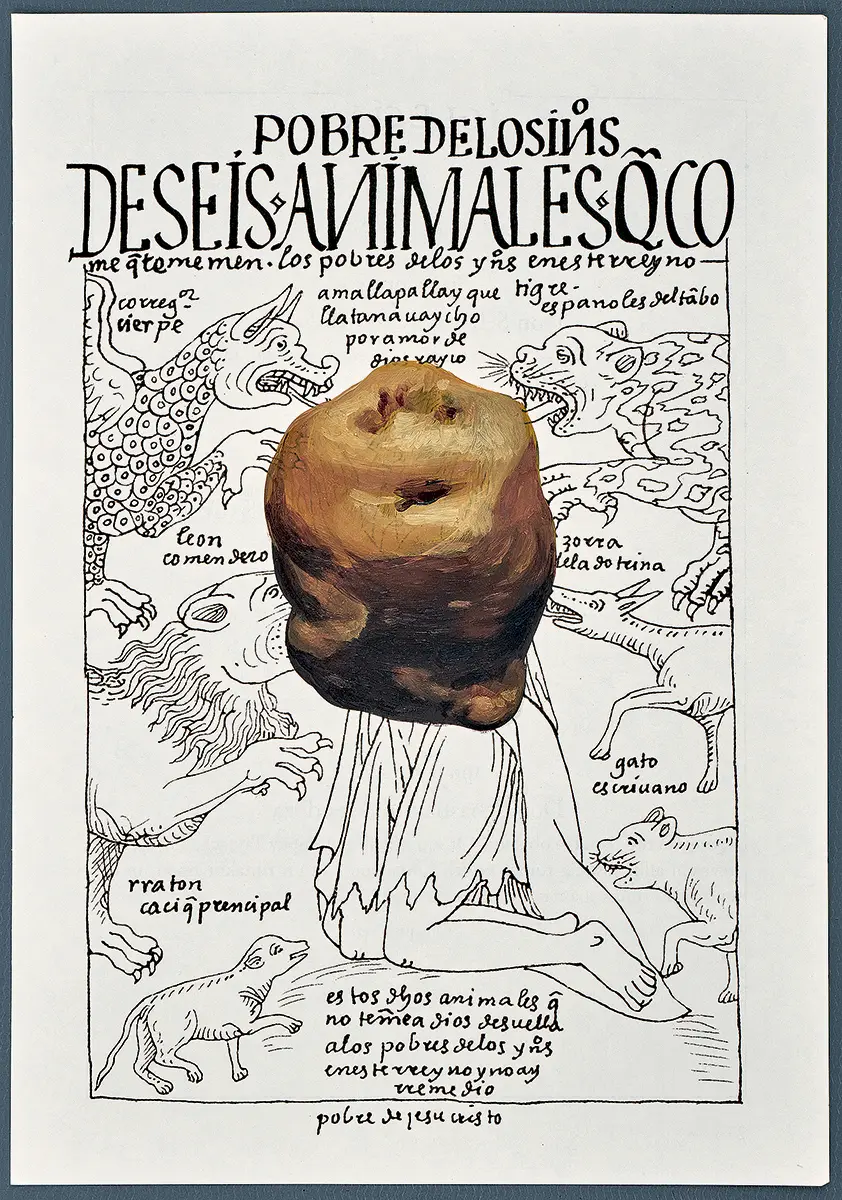
By contrast, vindication is most pressing in the Sala del Reconocimiento (Hall of Recognition), on whose walls hang hundreds of facsimile reproductions of the images in Guamán de Ayala’s letter. On each one, this Peruvian artist imprinted the image of one of the many varieties of potatoes cultivated since time immemorial in the Peruvian Andes. The title is equally ironic: Cuando las papas queman (When Potatoes Burn). In this same space, Gamarra Heshiki placed two glass showcases, on one of whose surfaces she printed the image of various domestic clay utensils of pre-Columbian origin preserved at the Museo de América in Madrid. On the opposite wall, she substituted the glass for a mirror that superimposes these images on the image of the viewer. The titles: Exhibitor I and Exhibitor II.
Of El gabinete de incomodidades (The Cabinet of Discomforts), the third section, one could very well assert that it’s even more complex because it interlaces criticism and vindication, incorporates works by other artists, and offers additional examples of Gamarra Heshiki’s protean talent. Among the critical works there is a copy of The Three Races or Equality Before the Law, painted in 1859 by the Peruvian Francisco Laso de la Vega y de los Ríos, on which she superimposed a text highly critical of the concept of race, by the decolonial feminist Rita Salgado. Then there’s the series of small-format paintings by Gamarra Heshiki, which overlay the faces of victims of the war against terrorism in Peru on versions of the series “Homage to the Square” by Josef Albers. A criticism tout court of formalism in modern art. This vindication was led, among others, by Sixto Seguil Dorregaray, author of eight chiseled gourds using a pre-Columbian technique, and elevated—by their inclusion in this exhibition—to the status of works of art.
CARLOS JIMÉNEZ