The contemporary art scene has been adamant about launching projects that focus on areas exposed by current sociopolitical indicators, which are the outcome of explorations on bordering paths of invisibility. On these paths, traces of living alterity bring to the surface concerns that mobilize those artists who circulate through spaces of critical consciousness.
From this environment of consciousness, transformed into an inventory of recreated places as a field of permanent aesthetic research, arises the restless vocation of a Brazilian artist who remains connected to the many signs of otherness. We are talking here about Rochelle Costi.
Creator of a visual imaginary built at the crossroads of her own and other people’s experiences, which she recognizes and reintegrates into the logic of the daily transit of life in the cities, her work deals with a network of interactive circuits triggered by photography.
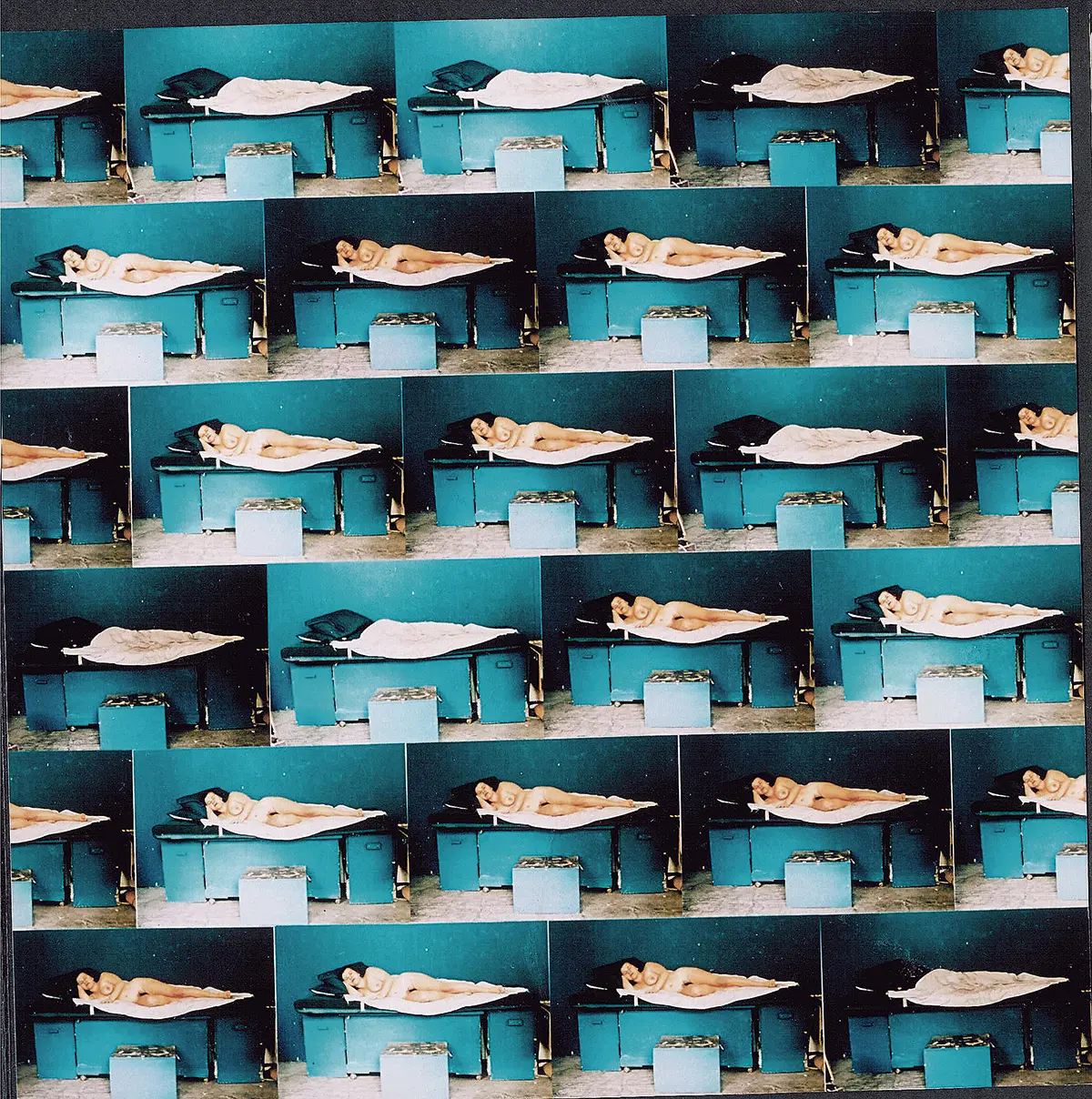
On the alertness for the exposure times determined by the visual regimes to which photography gives consistency and legitimacy, the creator begins working with a place she has chosen within a particular field where differences keep resisting.
When the artist walks through the arteries of cities—their buildings and their interiors—she crosses the paths of others’ lives, their silent traces. She thus establishes a practice of investigative activity as a strategy to launch the fictitious version of an autobiographical story, recreated by the experience of others and by her own condition as a critical narrator.
To accompany the mechanisms activated in each corner of Rochelle Costi’s trajectory, we must invariably go through photography, that modality of confrontation with the world.
Since her participation in the XXIV São Paulo Biennial, we recognize a creator that is very interested in capturing the most diverse subjectivities permeating our bodies.
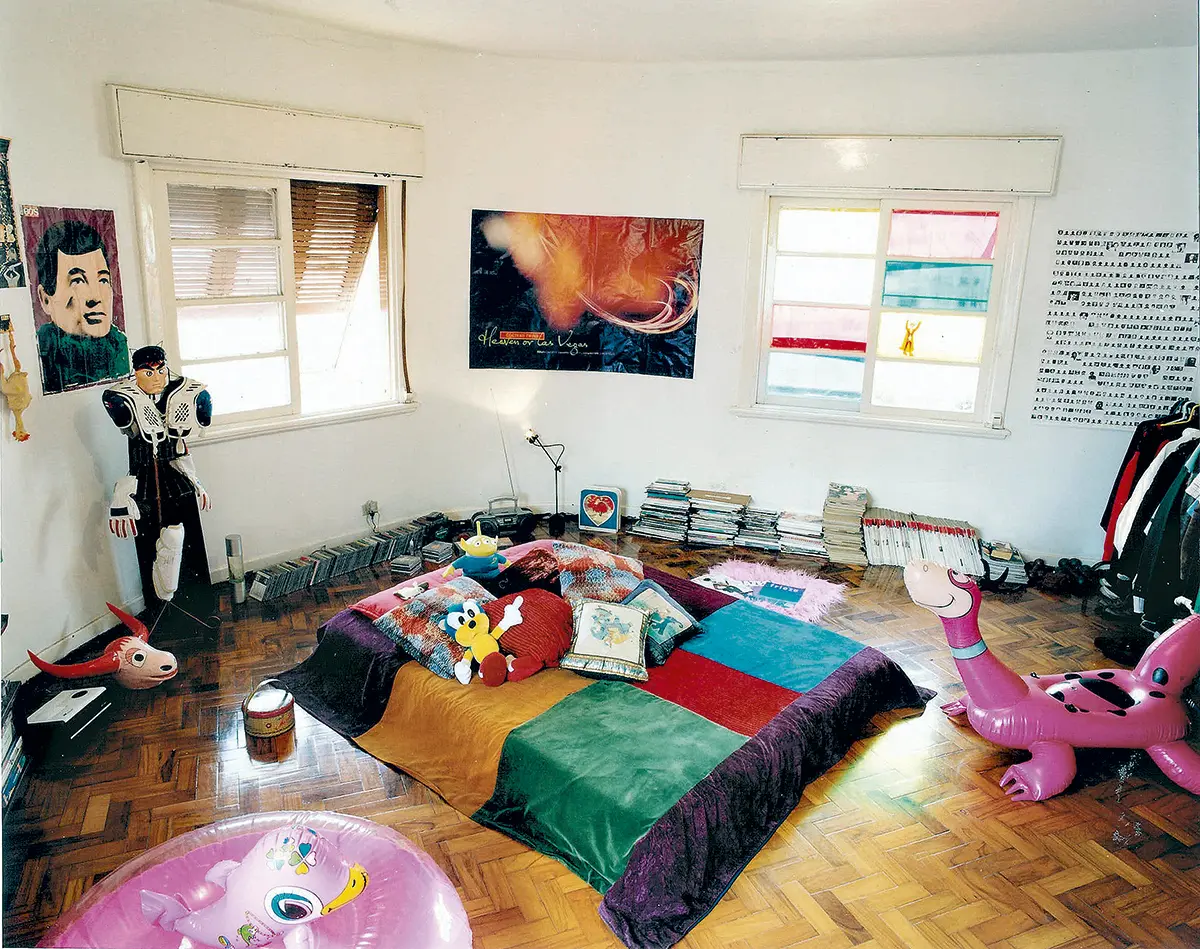
The photographic series Cuartos-São Paulo (Rooms-Sao Paulo), from 1998, composed with large-scale images for the edition curated by Paulo Herkenhoff and Adriano Pedrosa, reinforced her intentions by bringing together microstories that are components of many life stories and allow us to coexist in dissent with otherness.
The recorded interiors visited by the artist in São Paulo and its outskirts suggest a narrative constructed with social indicators fixed within the intimacy of a space destined to be a refuge: the room, at its most directly subjective dimension.
In each environment she focused on, Costi has materialized the absent body of a person by their way of arranging objects, ordering pieces of clothing, organizing memories.
In an interview with historian Ivo Mesquita, the artist said: “I went out to São Paulo in search of specimens for my research: temporary spaces such as pensions… and lodgings in construction camps, apartments in the Singapore housing project,1 barracks… as if we had already achieved the unattainable equality between human beings. Pensions, a brothel, a spiritual refuge, middle-and-upper-class residences”.2
Her search for rooms in their most revealing capacity to translate the absence of its protagonists, has created visual narratives constructed by antagonistic issues.
With this project, Costi reaffirmed her vocation as a collector of fragments of splintered social groups, of subjects who live very distant realities, while also being contemporaneous.
The other and the autobiographical imaginary
From the tracks that lead to the artist’s visual explorations we can recognize her commitment to differences and to other people’s experiences. A constitutive feature of her creative projects is her engagement with the memory of others, the habits of strangers, and survival strategies of popular cultures in permanent transformation.
From the 1980s, when she was studying for her degree in Social Communication at Porto Alegre’s Pontificia Universidad Católica, the artist has been committed to exploring the environment by making forays into the country’s cultural scenarios.
A photographer and multimedia artist, Rochelle Costi has been a frequent presence in the Brazilian contemporary scene and has expanded her relations with similar artists in the international scene.
She was a recipient of the 2017-2018 CNI SESI SENAI Marcantonio Vilaça Award for Visual Arts3 in its sixth edition, among other acknowledgements throughout her career. Her works are part of important collections at Brazilian museums such as Pinacoteca do Estado, Museo de Arte Moderna de São Paulo, Museu Afro Brasil, and foreign ones such as Centro Galego de Arte Contemporánea in Santiago de Compostela, Fond National d’Art Contemporain in Marseille, or San Diego Museum of Contemporary Art in La Jolla, California.
Rochelle Costi was invited to participate in the III Beijing Photo Biennial, the Paiz Art Biennial and the Cuenca Biennial, where she stood out for an inventiveness that triggers the precarious at its emancipatory core.
Her incursions are paths created to sink into the existence of others. Her investigative itinerary contemplates various environments—popular festivals, housing solutions invented by anonymous citizens, the restless emotions of thousands of people in a ritual procession, the material improvements built from the utmost precariousness—which she handles almost like an ethnographer who captures peculiarities.
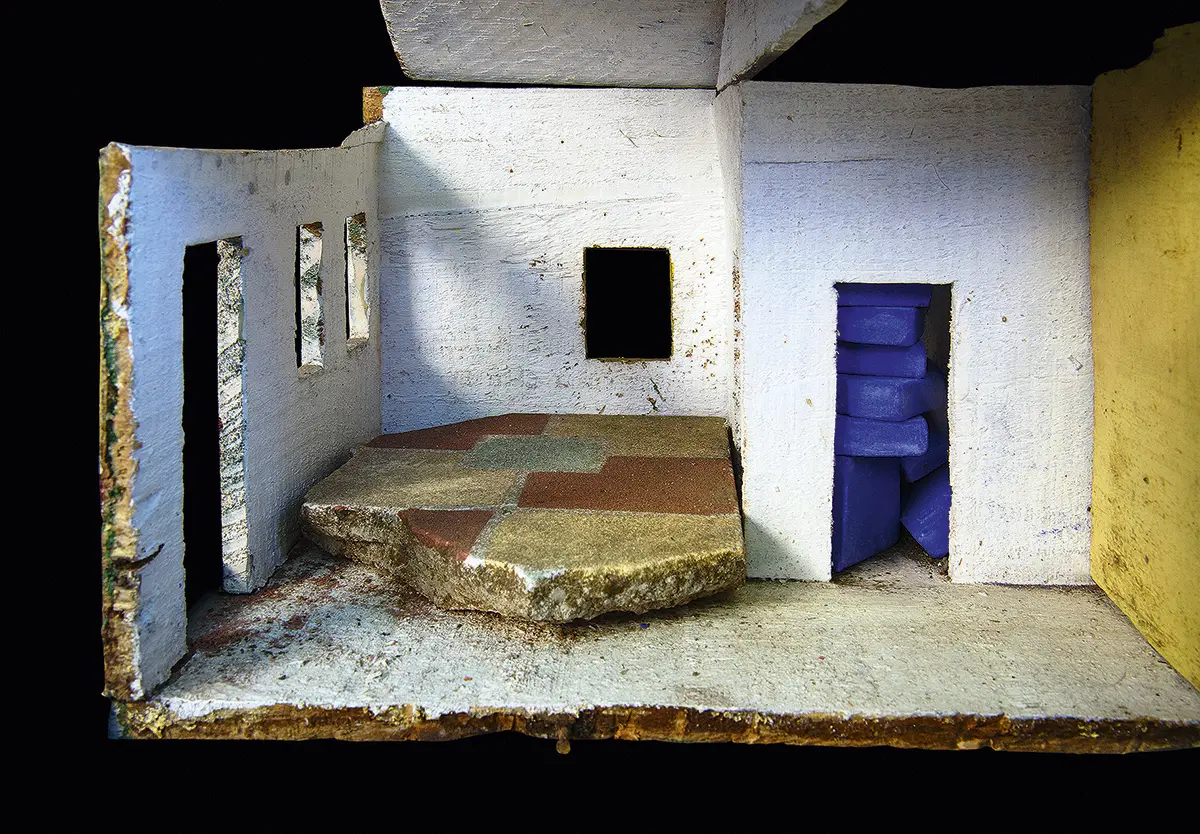
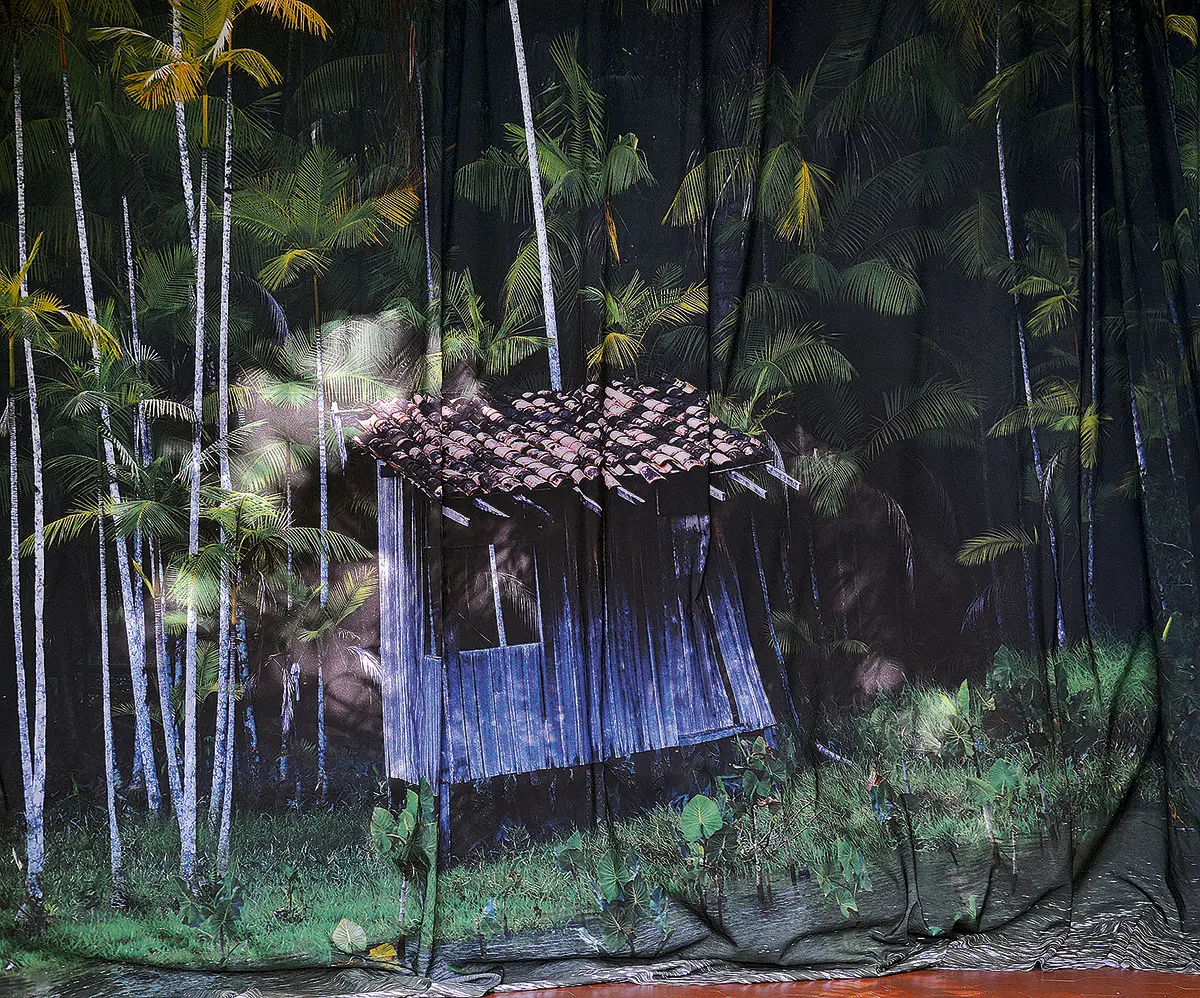
In her series Informal Architecture (2003-2005), Rochelle Costi amplified the meaning of precarious rooms, capturing anonymous building solutions. In her photographic documents, she made an inventory of rural areas, coastlines, urban scenes; places forgotten by the coexistence model of paradoxical societies.
Each strategy devised within an ethnographic dislocation is experienced by the artist as a conscious option to recognize a forgotten, hidden, semi-abandoned place. By giving expanded visibility to the unstable arrangement of improvised situations, she is reaffirming the dignity of silenced stories in milieus of exceedingly disparate realities.
In her adventures, she complicates relationships of coexistence in spaces that operate with another logic of existence; not the logic of narratives supported by certainties, but the one destined to register what is possible, the urban disorder, the quasi chaos.
In this way, the artist invents approximations as critical responses to landscapes that insist on reaffirming their dissonant selves in the contemporary panorama.
Complicating the landscape
In fact, armed with a whole array of active strategies given amount of time she needs to carefully construct layers of meaning in projects that investigate the dynamics of circulation by people who are so often invisible in contemporary society, we can perceive in her steps a certain stride that accompanies the different voices in a disorderly chorus of complicated landscapes.
The artist operates within the restless imaginary of intimate spaces struggling for survival, as can be witnessed in her pieces Casa de la isla (2015), Hay casas (2018), Negocios aparte (2017), and Se vende todo (2006-2008).
Se vende todo (Everything is sold) plunges into the private-public spaces of other people’s memories, compacted as records of family flows of discarded objects and remembrances, in a kind of display of unfinished stories.
Exposing the totality of other people’s memories, or their fragments, and composing a wide cabinet of curiosities, the artist’s thoughtful gaze is interested in every detail of residual stories spreading all across a particular territory.
Understanding that art is a way of seeing, as a collector of ways of coexistence in spaces intervened by photography, her essays are loaded with temporalities and a restless affection for domestic rituals.
In her forays we recognize a movement associated with the understanding of ways of expression. A movement that discovers survival strategies fused with the transit of imaginary urban flows.
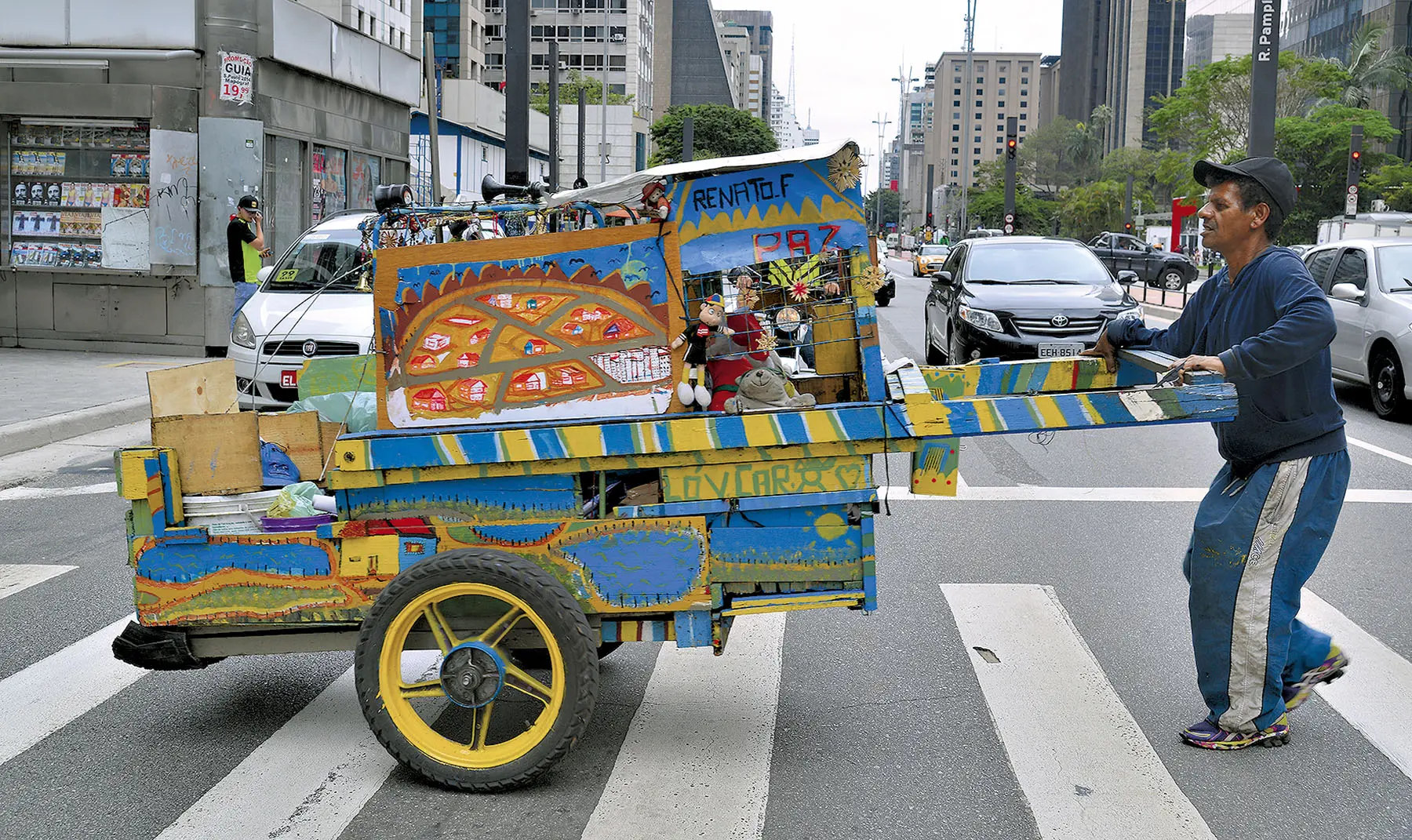
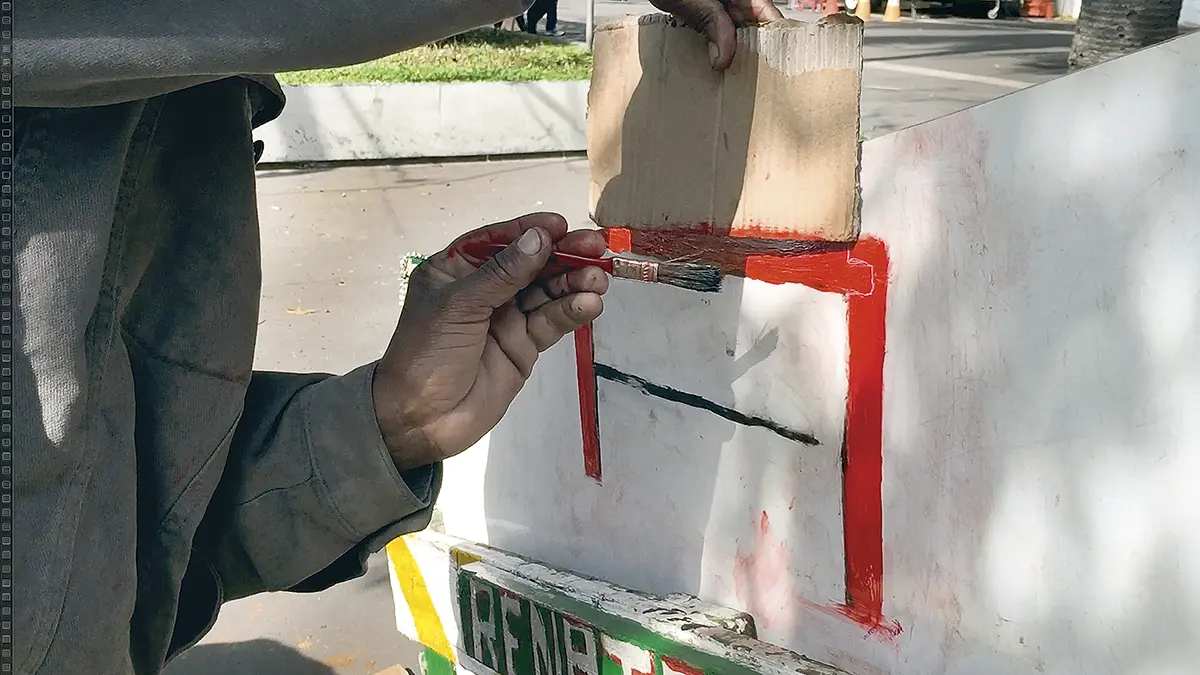
Part of the group show entitled “Avenida Paulista,” held in 2017 within the commemorative framework of the seventieth anniversary of the Museo de Arte de São Paulo (MASP), the artist presented Negocios aparte (Business aside) in collaboration with Renato Firmino, a painter and artist who experiments with recycled material.
The work created by the couple redimensioned the senses of habitation, transportation, and trade shops. These milieus constitute the living space of those who are being observed, with their humble arrangement of rooms and movement through São Paulo. Placed inside Firmino’s working cart, a video recorded scenes and characters dislocated from the patterns imposed by the social model that typically determines the rhythm of life in large cities.
A creator interested in changing landscapes and who conceives her projects by revealing hidden ways of seeing, Rochelle Costi insists on keeping in tune with environments that branch off from more superficial interpretations of the everyday.
Mapping the sensitive
The works designed by the artist in her ethnographic journey insist on mapping an itinerary of sensitive locations that recognize—by the force of processes of subjectivation implicated in the place occupied by the other—the firm dynamics of her intervening enterprises.
For the artist, the other can be a collector of memories who organizes parcels of their existence by carefully arranging objects in their room, so that life is always the same, but also different. They can also be devotees who, during processions—manifestations of popular cultures—express their inclination towards a constant form of resistance.
The other, then, is revealed as an effective living presence, partly unfolded from the artist’s own consciousness, which, for each new project, takes on an unknown face.
It’s important to remember that Rochelle Costi is recognized as a collector of memories when she catalogs the reinterpretation of archives, of classifiable sources.
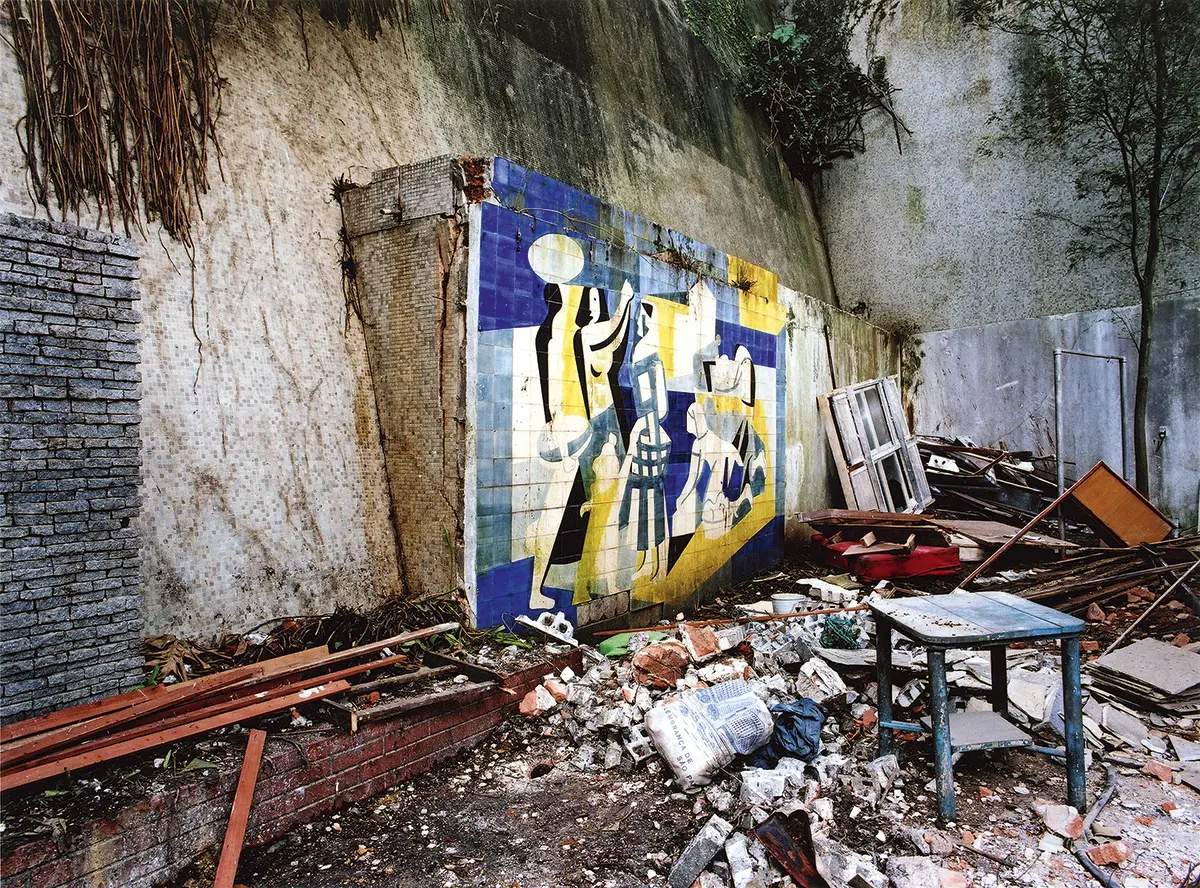
After important research carried out in the Iconographic Archive of the City of São Paulo, which also preserves the work of Italian photographer Aurélio Becherini (1879-1939), the artist began to use the technical reserve of historical heritage in her projects.
Costi created the work Inventario de terrenos demarcados: Casa de la Imagen (Inventory of demarcated land: House of the Image) in 2012: an investigative plunge into the photographic heritage—repository of images of a growing city at the beginning of the 20th century–associated with sensitizing devices created to instigate a new perception of the archive.
Starting from the notion of inventory, the artist redimensioned the meaning of the city’s collection, observing through a “voyeur’s eye” the memory deposited in the same steel cabinet that used to hold the annals of a period that is very distant from the city’s current realities.
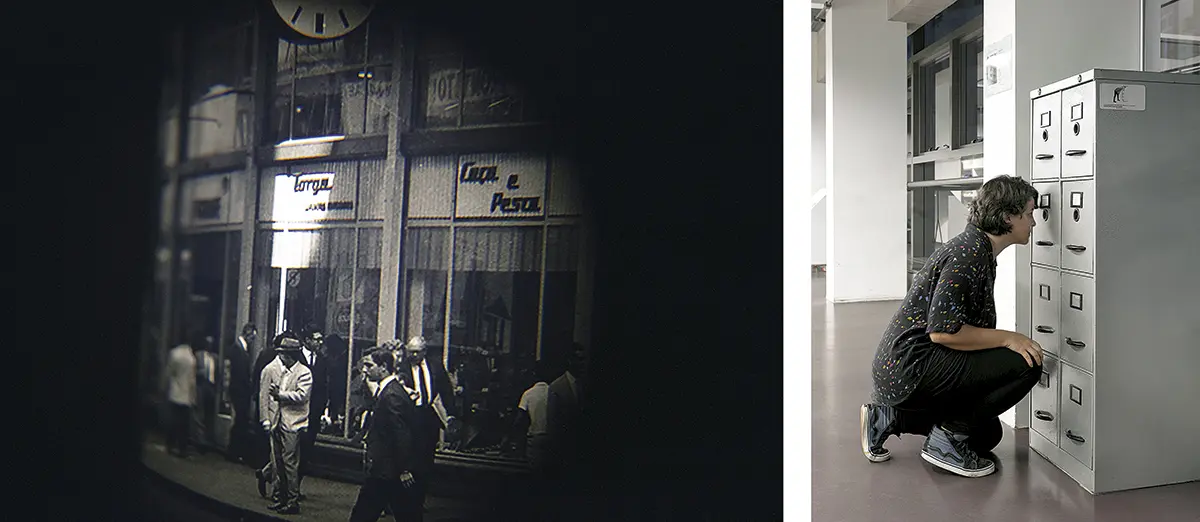
In dialogue with Tombo: Casa de la Imagen, the Tombo: Centro Nuevo project, from 2017, is part of the group show entitled “São Paulo is not a city. Inventions of the center,” held for the opening of the SESC 24 de Mayo, curated by Paulo Herkenhoff and co-curated by Lena Veras.
This work, which is now part of the collection of Casa de Imagen and is permanently exhibited in its library, reveals moving images filmed in the 1970s and 1980s: old stories about São Paulo’s downtown. Urban memory is again accessed through the destabilizing magic eye installed in the drawers of the steel closet, alternating archives of the distant past with snapshots of contemporary flows.
Aesthetic dialogues in alternation were also used in her solo show “Reforma” at the Luciana Brito Gallery in São Paulo, in 2018. For this occasion, Rochelle Costi generated a provocative coexistence between snapshots of living experiences and the space of the gallery itself, a former modernist residence designed by architect Rino Levi.
In her photographs, as in the video Hay casas (There are houses), from 2018, the artist exposes interiors, intimate spaces of others, and also constructive practices that aim to find unusual solutions, between improvisation and the ingenuity of minimal resources, revealing the inventive spirit of the Brazilian people.
A creator interested in unveiling alterity and transient visualities, Rochelle Costi reaffirms her intentions through a solid and coherent journey of investigation. She stands out from artists of her generation by her conscious choice of encountering chance and the fragmented identities of subjects and memories in permanent struggle for the survival of restless minds.
NOTES
1. The Singapore Model is a social housing project adapted from the Singapore Government’s Social Housing Program, and was financed in São Paulo by the Municipal Housing Fund, with aid from the International Bank for Reconstruction and Development (IBRD).
2. “A conversation with Rochelle Costi,” by Ivo Mesquita, 2005, https://rochellecosti.com/ Conversa-com-Ivo-Mesquita-A-conversation-with-Rochelle-Costii
3. A Brazilian award ceremony financed by the National Confederation of Industry, the Social Service of Industry, and the National Service of Industrial Learning in order to assess contemporary creation. One of the most traditional awards in the country, it is named after Marcantônio Vilaça as a tribute to the artist, manager of cultural projects, and collector who promoted contemporary Brazilian art in various countries.
*Photo courtesy of the artist
CLÁUDIA FAZZOLARI