While this letter—without any somber purpose—intends to commemorate the powerful indigenous cultures discovered in the lands of New York, the intention is also to reflect on a succession of social, racial, political, economic, cultural, scientific, and urban events. These categories have intensely coexisted in this city and its visual arts environment. Increasingly, various accents placed in certain public works have raised questions. For example, what are these species of scaffolds that began to inhabit New York City five years ago? Is this the work of an artist who was sponsored to make one of her public creations with an ephemeral slant? Or was this the good idea of a construction company after a humanistic deliberation, has redesigned the scaffolding for workers in order to beautify and brighten the city with some sort of umbrellas made of recycled steel, plastic, and lighting?
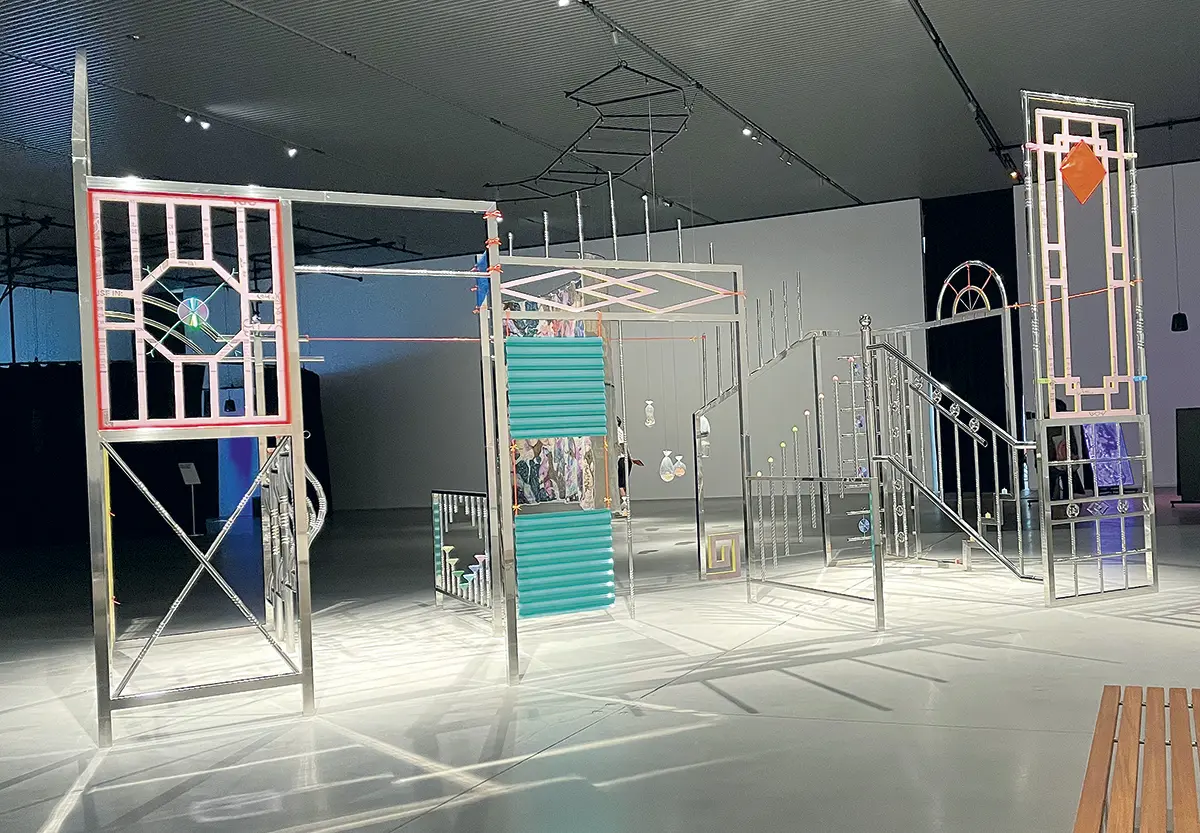
In mid-2020—already waiting for the vaccine—we began to visit exhibitions with the daily uncertainty of whether they would remain open and if we were risking our health and our lives. At the heart of Manhattan, The Shed in Hudson Yards and the High Line displayed high technology in outdoor virtual reality—and in indoor galleries—with the exhibition “The Looking Glass,” accessible to pedestrians and their phones. In both spaces, virtual reality eluded pure technology to become involved in games of surreal, multidisciplinary, and emotional imagery, thanks to Tomás Saraceno, Bjarne Melgaard, Olafur Eliasson, and others.
The city, the country and the domun (the world) have been forced into a peculiar quarantine during almost two years. What happened in New York during such hiatus? This letter does not require a strictly chronological order because our reflections would gain a weight that is not essential right now. Before Covid-19 was heard in all spheres, real estate and human displacements had already begun within cities, provinces, countries, and even in art negotiation companies. As technology was being intensified in almost all jobs, people in offices and schools began to shift to their homes in order to avoid mass infections. New York and European galleries of great prestige and financial reach were already opening offices in many places, with Asia or the Mediterranean as their new anchors, and offering various activities beyond pictorial transactions. Specifically, in Chelsea, various galleries were dispersed to the suburbs and in subdivisions, at economically and spatially more accessible spaces. Those who had summer or weekend homes left their offices—more so since the students did not return to their classrooms—turning those houses into their semi-permanent headquarters while waiting for encouraging health news. Other galleries took their suitcases to East Hampton or similar areas, where an essential aesthetic nutrient soothed the anxieties of strange baroque times that lacked definition or protection.
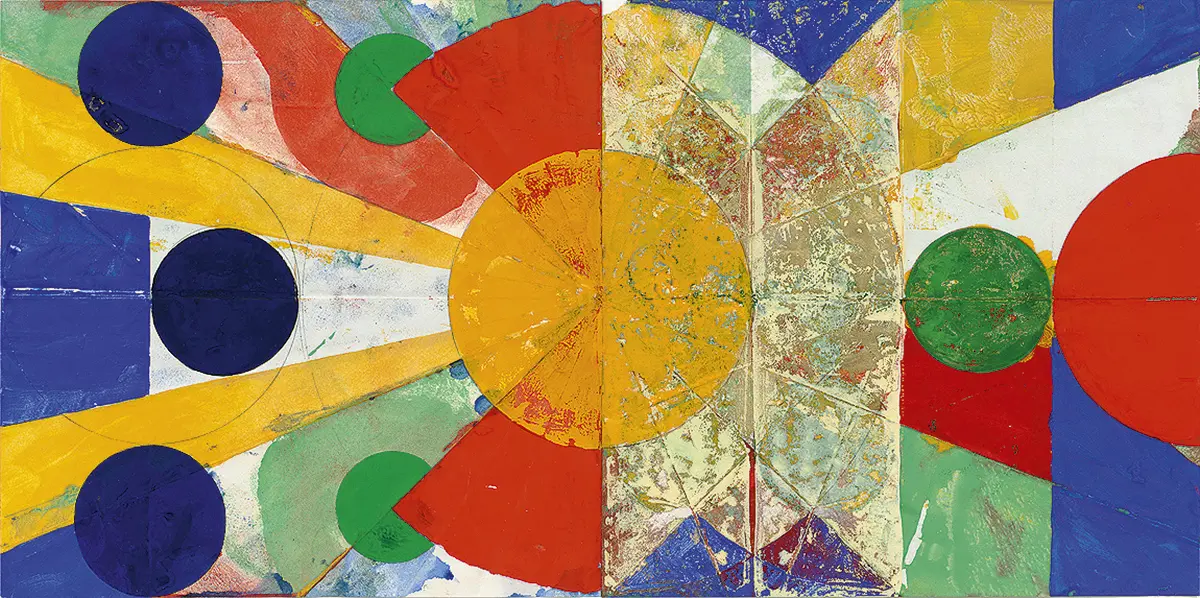
Part 1 and Part 2, private works by Gabriel Orozco, were seen in two successive exhibitions at Kurimanzutto East Hampton (New York). Orozco is a devoutly experimental and conceptual artist. In his multidisciplinary work, he has gone around the circle several times, in different ways, and with lenient and fluctuating objectives. Made in 2013, this was the first time these works were shown. They constitute a highly elaborated series within the sophisticated language of this artist. Here, color is the prominent vocal factor. The pieces—made on paper and worked in folds, overlays, possible collage sections, and binding transparencies with gouache—show an intimate aspect of his work. The circle, which the author reveals as part of geometry and nature, offers the public a dynamic of symmetry and relaxation, which is the language of much of his production, albeit in diverse materials, sizes, and themes.
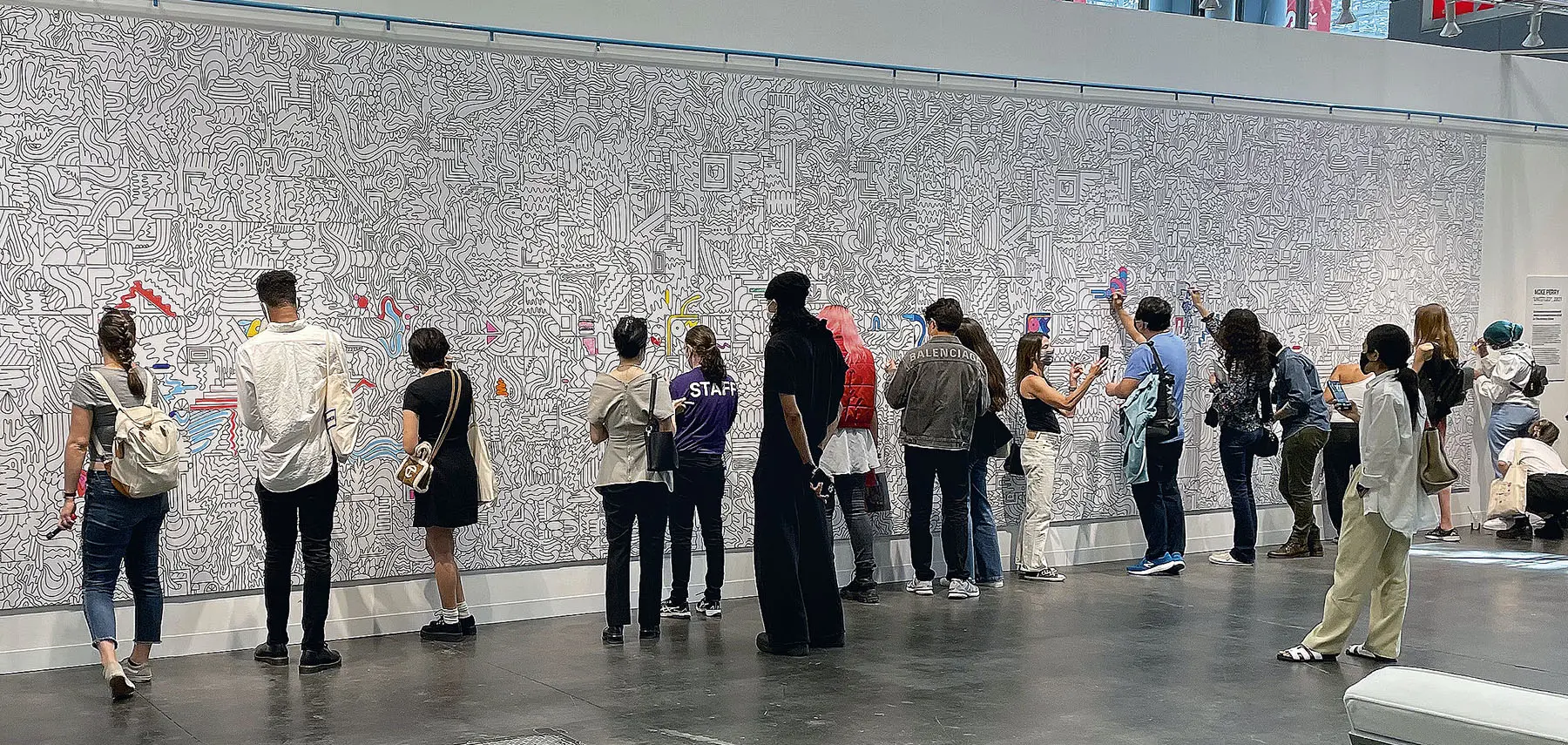
Kurimanzutto East Hampton, a temporary space, occupies a very small building, assembled in a sequence of six prestigious galleries in a shopping mall composed of several buildings. With this, we return to the initial real estate issue in New York, and we highlight it with the trilogy of art fair spaces that require so much dimension for each edition. The fairs—several at the same time—have reopened in New York: Independent, Affordable and The Armory, among others. The latter, the largest and with a new venue that expanded to the Javits Center, achieved substantial comfort and security, given that the virus dilemma still demands strong protection measures. The wide hallways, uncrowded booths, lounging and cafeteria areas, as well as adequate lighting, offered a good experience to this edition of The Armory. As for the works, intense coloring and semi-figuration predominate, without ignoring combinations with geometry; graffiti, ceramics and textiles, a variety of dimensions, isolated works, polyptychs, and a high percentage of creations upholding non-discrimination. A collective project located at one end of the fair called for collaboration in the mural format, thus validating the kind of interactions that had been suspended for so long.
GRACIELA KARTOFEL