Casa de México en España established a dialogue between two monographic exhibitions, entitled “El color como forma” (Color as Form) and “Toledo ve” (Toledo sees), which paid a heartfelt tribute to Francisco Toledo (1940-2019), one of Mexico’s most consistent artists in the twentieth century.
After Toledo’s retrospective at the Museo Reina Sofía in the year 2000, his extensive legacy significantly returns to the Spanish capital with the reinstallation of “Toledo ve,” his last major exhibition, which he curated and which took place in Mexico City, two months before his deeply mourned disappearance.
During a career spanning more than six decades, Toledo was dedicated to strengthening and recording his Zapotec cultural roots in the state of Oaxaca. Toledo became the founder and promoter of different spaces and institutions that preserve the Oaxacan cultural heritage. Among his many achievements are the editorial projects that aim to spread the Zapotec language.
Francisco Toledo was an activist committed to raising awareness about the value of the natural resources in his region and a strong detractor of transgenic foods, which he captured in a wide variety of graphic work.
In general terms, Toledo’s art created a reflective framework to address sociopolitical problems in his country. An extraordinary connector with a keen sense of humor, his legacy is deposited in the wonderful objects that condense and contrast myths and legends with reality, and technology with pedagogy and humor; a multiplicity of pieces that have come to us from the aesthetic focus of his diligent gaze.
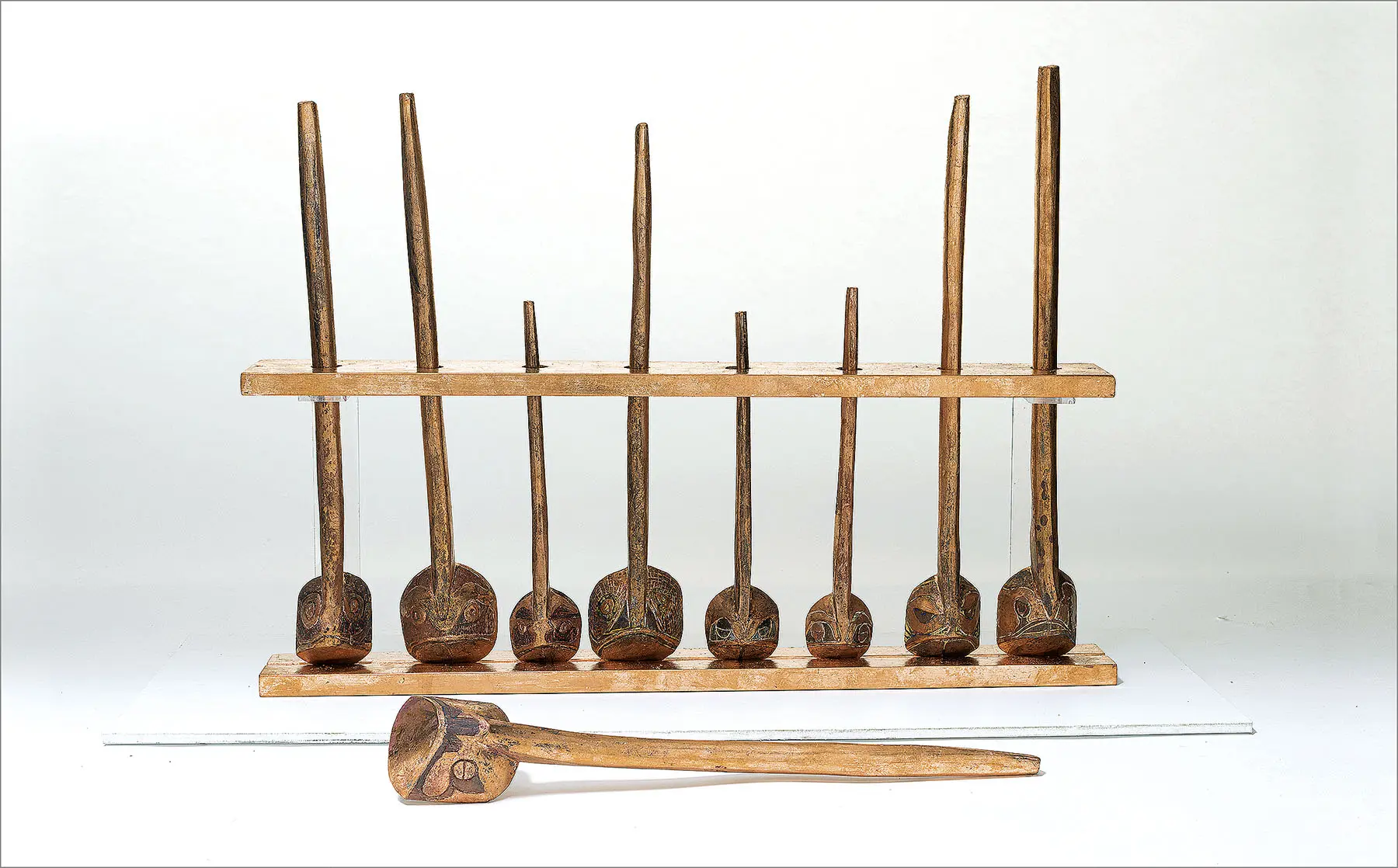
The exhibition “Toledo ve” occupies more than 700 m2 of surface and brings together 600 objects that were treasured by the artist. Together they constitute a manifesto to the inextricable bond between art, design, and crafts.
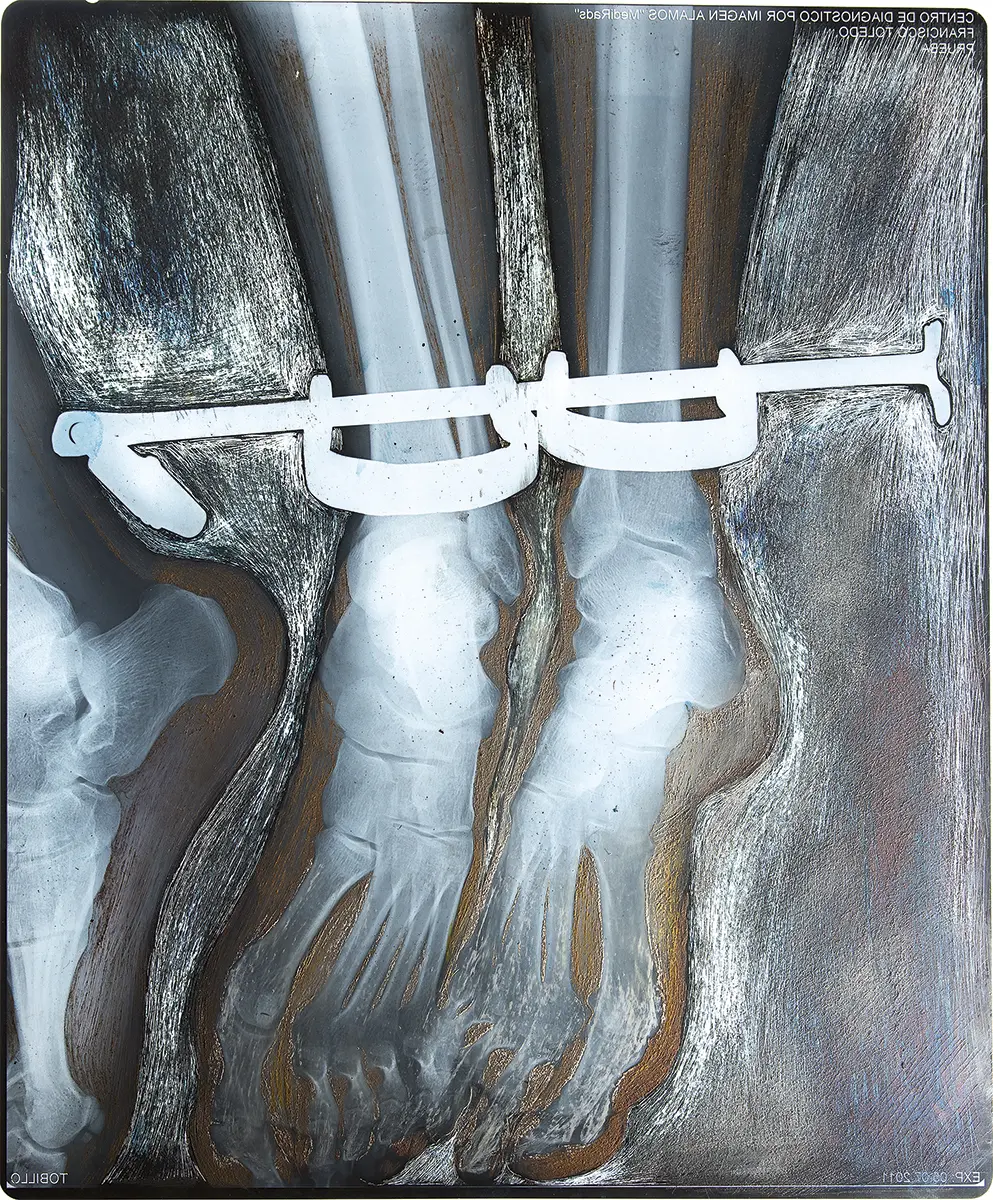
Each of these pieces constitutes an invitation to discover an invertebrate world, free of categories; a world where traditional production methods coexist with state-of-the-art technology. A world in which X-ray sheets are associated with copper fabrics, blown-glass objects, traditional games manufactured with laser cuts, or educational toys.
“Toledo ve” displays, on the one hand, utilitarian objects that, recontextualized, acquire that particular “Toledo aura,” addressing the artist’s intimate evocations; those in which he projects the trades exercised by his grandparents and uncles in the markets of Oaxaca, such as the shoe workshop where he discovers the needles and awls needed to work the leather, and items such as the Roman scales used by his grandfather Gil, killer of pigs. In the show we can see, for example, a curious kitchen scale made of wood and polychrome gourds.
The processes and methods required by those family trades to which he had access were an early school. We can read his own words on the subject in one of the exhibition’s posters: “The workshop is what made me a painter, without wanting to, without knowing it, because a shoe is made just like a painting is made: you measure, you cut, you put color; there are proportions, an order, something is adhered or peeled off; all the handmade aspect of a painting is very close to the elaboration of a shoe.”
At 17 years of age, a precocious Toledo understood his true vocation and was admitted to the “Taller Libre” of Engraving at the School of Design and Crafts in Mexico City. Two years later, Antonio Souza Gallery, promoter of new talents, gave him the opportunity to exhibit his pieces. From that moment on, the prolific Francisco Toledo would not cease to create, leaving a legacy of 9,000 works.
He settled in Paris in the 1960s, where he came into contact with the Latin American intellectual elite living in the City of Light, such as Octavio Paz and Rufino Tamayo, who gave him their support. There he discovered the works of Klee, Dubuffet, Miró, and Picasso, and also accessed universal pieces of primitive art. With myriad new references, together with the extraordinary iconographic torrent that he recreated from his own culture, Toledo began to generate a solid production, which he exhibited in Paris, Oslo, New York and cities in Germany, England and Switzerland.
Around 1965, he returned home with all his acquired experience and set out to rescue Oaxaca’s arts and crafts. There, he founded the Toledo/INBA Collection, one of the most complete Latin American collections of graphic art, painting, and photography.
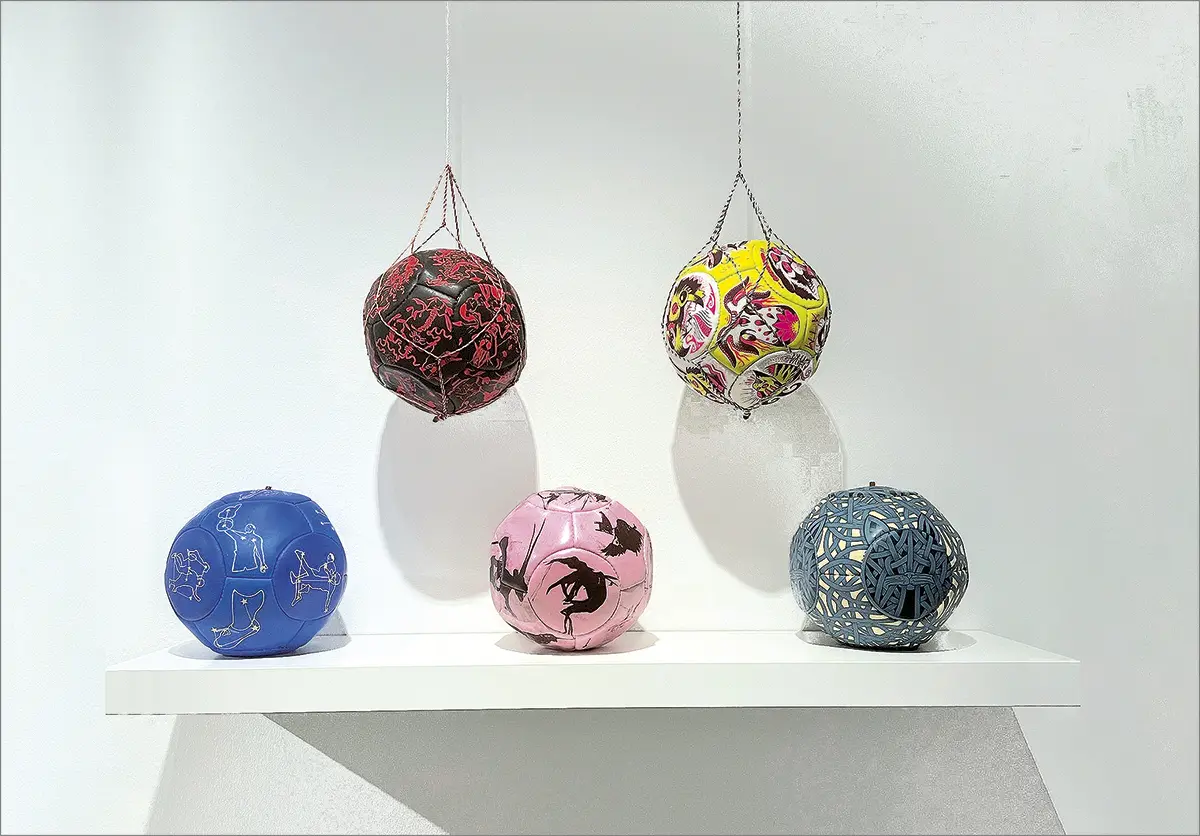
“Toledo ve” celebrates the artist’s persistent disposition to immerse contemporary art in the fantastic syntheses of everyday life through “his found objects,” collected or created in collaboration with other artists, such as the Balones (Soccer Balls, 2011) with Gustavo Ávila, Sergio Hernández, George Mead Moore, and Guillermo Olguín. Their intention was to “help the inmates of the Ixcotel Penitentiary, who manufacture soccer balls, to earn some income.”
Among the various themes developed by Toledo is the bestiary of anthropomorphic creatures rescued from his region, the Isthmus of Tehuantepec, and fused with themes drawn from world literature, such as Kafka’s Metamorphosis.
Toledo’s fantastic animals, combined with various geometric designs by other invited artists, took the form of multicolored earthenware (hydraulic tiles) lining the exhibition rooms.
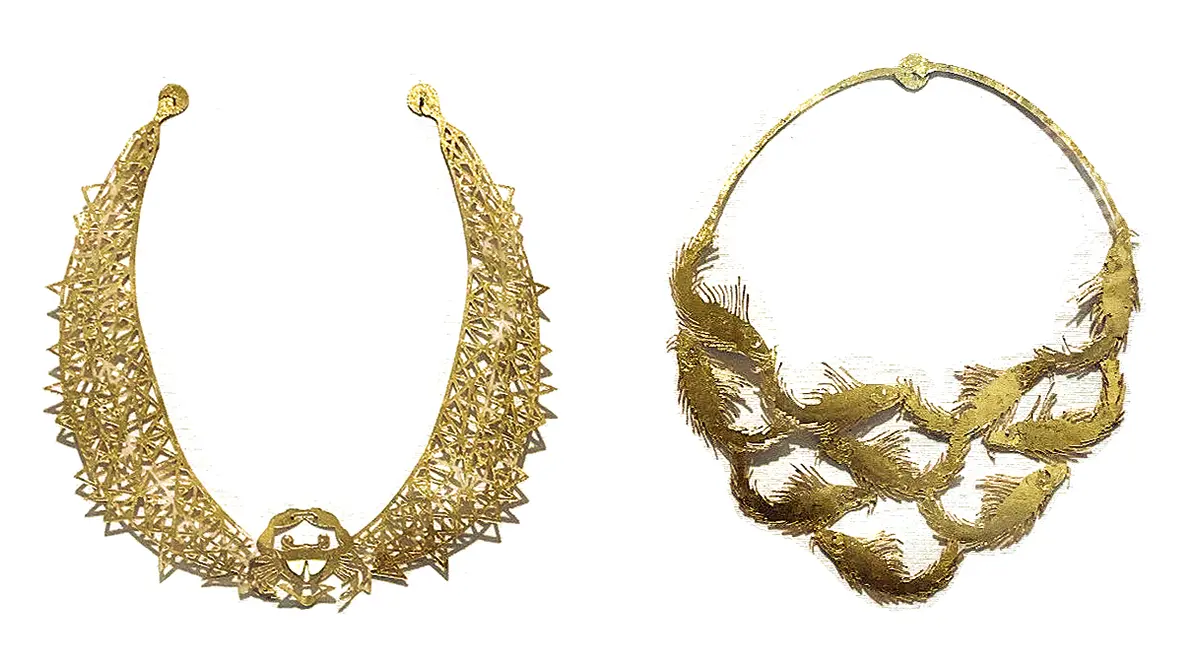
The exhibition highlights a huge installation containing his Jewels, which recreate significant regional animals such as scorpions, fish, spiders, chapulines (grasshoppers), and crabs. Some are embossed in silver and others were made with filigree, goat leather, or recycled x-rays cut with a laser machine, and decorated with oil paints and gold leaf. The jewels are part of the collection of the San Agustín Art Center (CaSA), which Toledo himself founded in 2006.
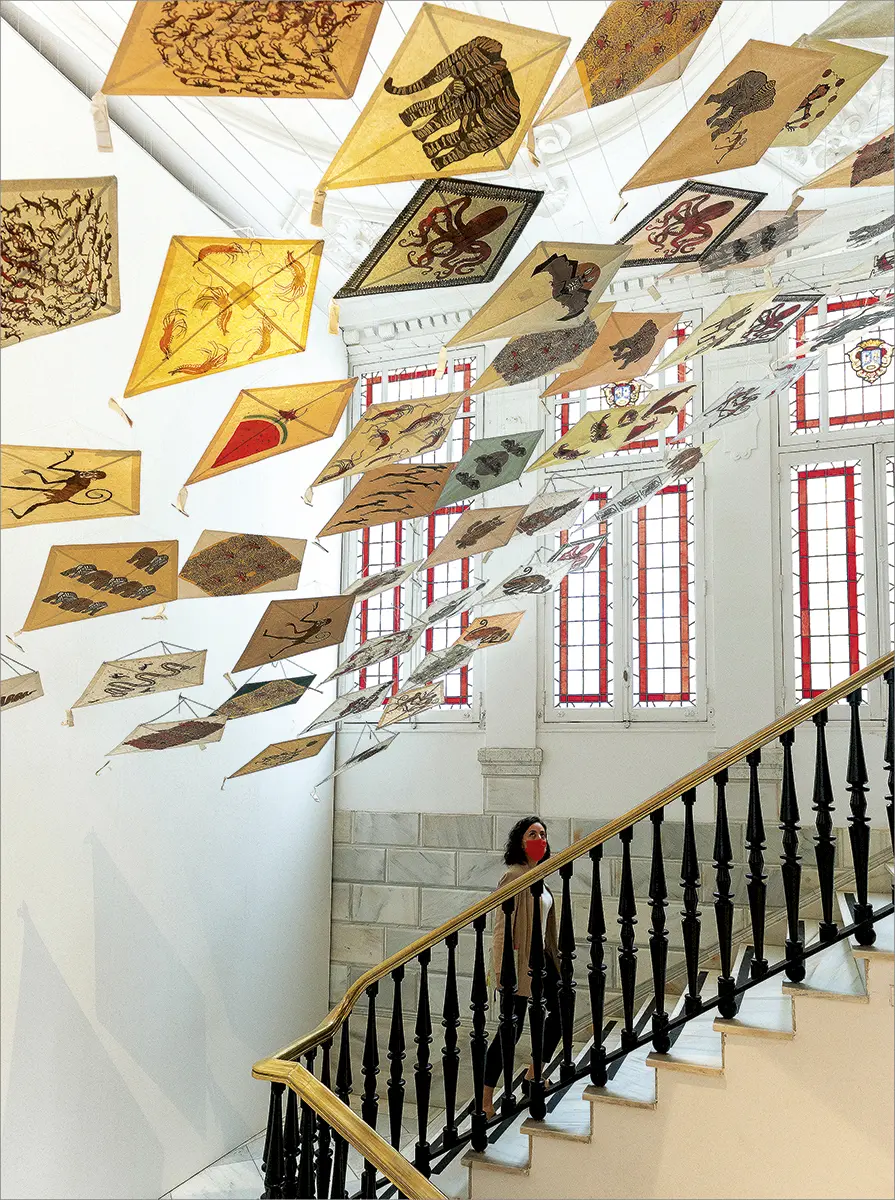
It is essential to highlight a most striking installation: flying over the stairs that give access to both exhibitions is a swarm of 140 handmade paper kites adorned with stencils that were produced by the artist and whose archive, open to the public, is also housed at CaSA. This work recalls Toledo’s tribute in 2014 to the 43 students of Ayotzinapa who tragically disappeared. Giving each kite the face of one of the students, the work was activated by elementary school children who poetically made them fly. In the words of Toledo himself, they took the kites “to search for the missing people from high up in the sky,” since according to the Zapotec tradition, kite strings link the worlds of the living and the dead. The show ends with the video documentary Francisco Toledo (39, min., 2000) directed by Rafael Ortega and Cuauhtémoc Medina.
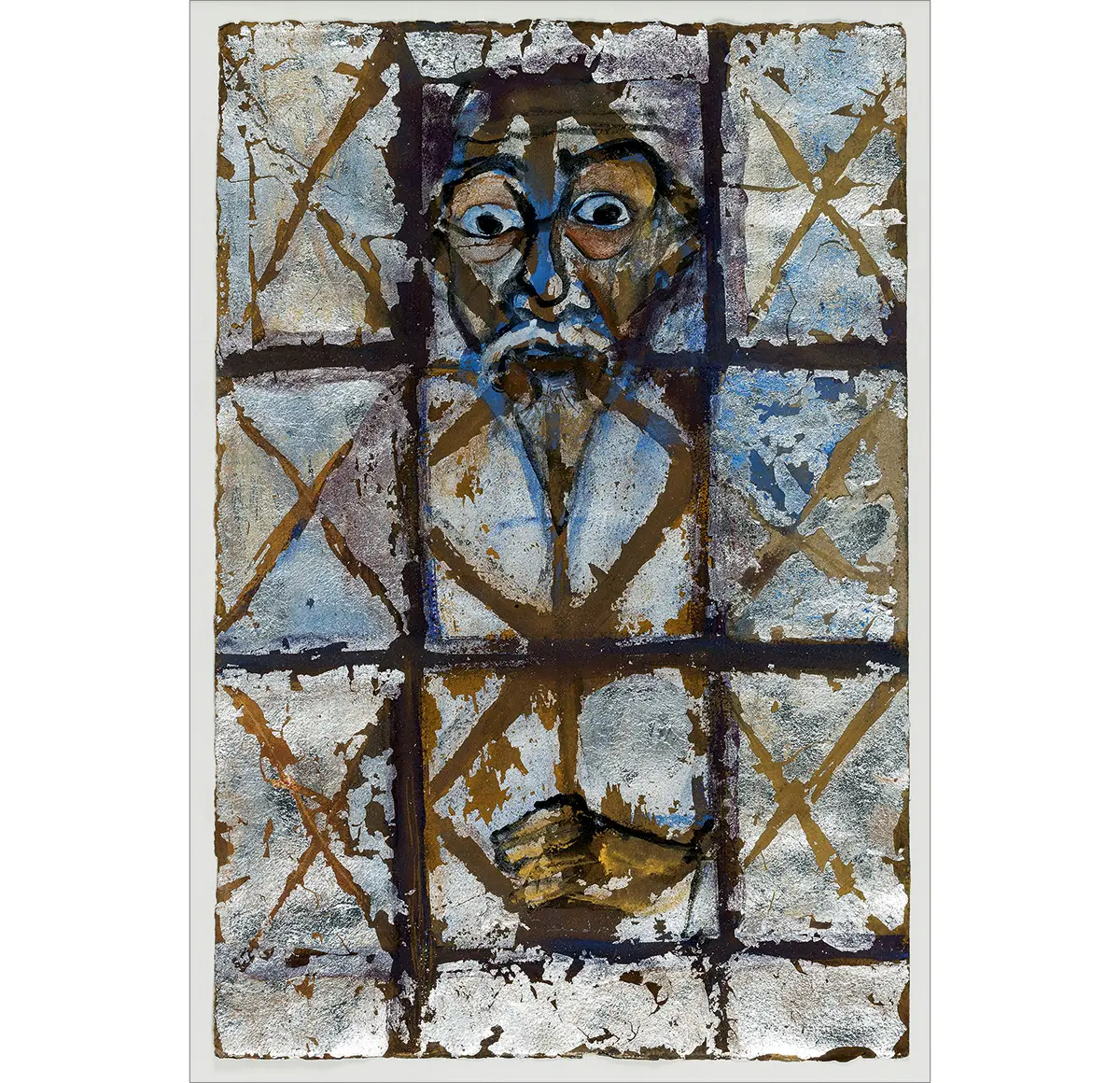
The second exhibition in Casa de México further expands these approaches to the artist. “Color as Form” displays a selection of sixteen pieces from the Arvil Collection, made between 1990 and 2000, and where three self-portraits stand out, as well as a tapestry and other figurative compositions in tempera, oil, watercolor, and collage. Both exhibitions offered recreational and educational activities for audiences of all ages, who participated in workshops, the storytelling of Oaxacan myths and legends, and various courses and conferences.
*Courtesy: Casa Mexico, Spain
ELISA RODRÍGUEZ CAMPO