Within the circuit of large-scale survey exhibitions in New York City such as the Whitney Biennial, MoMA/PS1 Greater New York, and the New Museum’s Triennial, El Museo del Barrio’s equivalent exhibition is greatly differentiated from them. The Whitney Biennial’s purview is national while Greater New York is more local, and the New Museum’s Triennial albeit international seems to spread itself too thin in its attempt at inclusivity. El Museo del Barrio’s survey exhibition, which in its current incarnation is a triennial, is concomitantly national and local yet transcends borders too in that some of the artists selected hail outside of the US though currently residing within it. What also distinguishes El Museo del Barrio’s Triennial is that by its very nature of focusing on Latinx artists, regardless of whether artists identify themselves as such, it ostensibly addresses topics that effect the varied demographics under the Latinx rubric. Consequently, El Museo del Barrio and its Triennial convey a certain urgency absent in the Whitney Museum, MoMA/PS1, and the New Museum. This exigency that can occasionally appear precarious, rests on a panoply of facts both historical and of the moment.
Most apparent is that it serves communities that are affected by inequities beyond, for example, discrepancy in public funding of El Museo del Barrio to that of other more endowed New York City museums; or being at a sociopolitical juncture where to its immediate south is the immensely wealthy and white, Upper Eastside enclave, while north and east of it are African American and Latinx neighborhoods anxious under encroaching gentrification, among other social challenges. In short, El Museo del Barrio is an institution that matters, especially in its unwavering support for Latinx artists that aspire to make a difference in people’s lives by presenting exhibitions that envision a more equitable society. And with the American political landscape of the last few years, the stakes of Latinx art and the communities from which they come have never been higher. With all these challenges El Museo del Barrio has faced amid a global pandemic that has yet to fully abate, its debut triennial was appropriately titled, not without a sense of irony, as Estamos Bien.
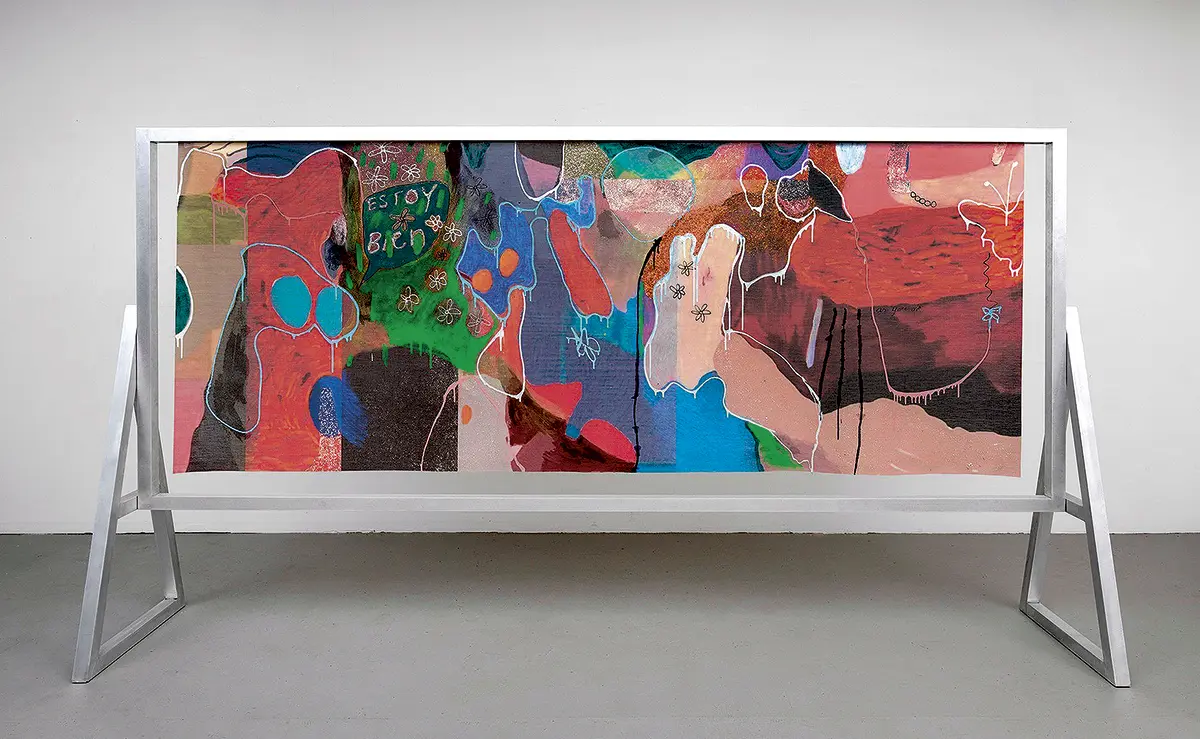
The Triennial’s title is derived from a painting by Candida Alvarez who’s the only exhibiting artist that has shown in El Museo del Barrio’s previous biannual survey exhibitions that went under the name of the S-Files. Consisting of a double-sided, mixed-media painting mounted on an aluminum scaffolding, Alvarez’s sculptural painting equally engages issues around contemporary painting and mark-making and not solely alluding to the adversities the world is experiencing. The title of her work’s pluralization is, however, an apt curatorial trope that is thematically malleable to encompass the diverse subject matter of the 45 artists and art collectives the make up the Triennial. In general, Estamos Bien was elegantly installed and as is often the case in large-scale exhibitions of this type, the initial works one encounters often set the tone of the exhibition, or at least captures somewhat of its curatorial, narrative arc.
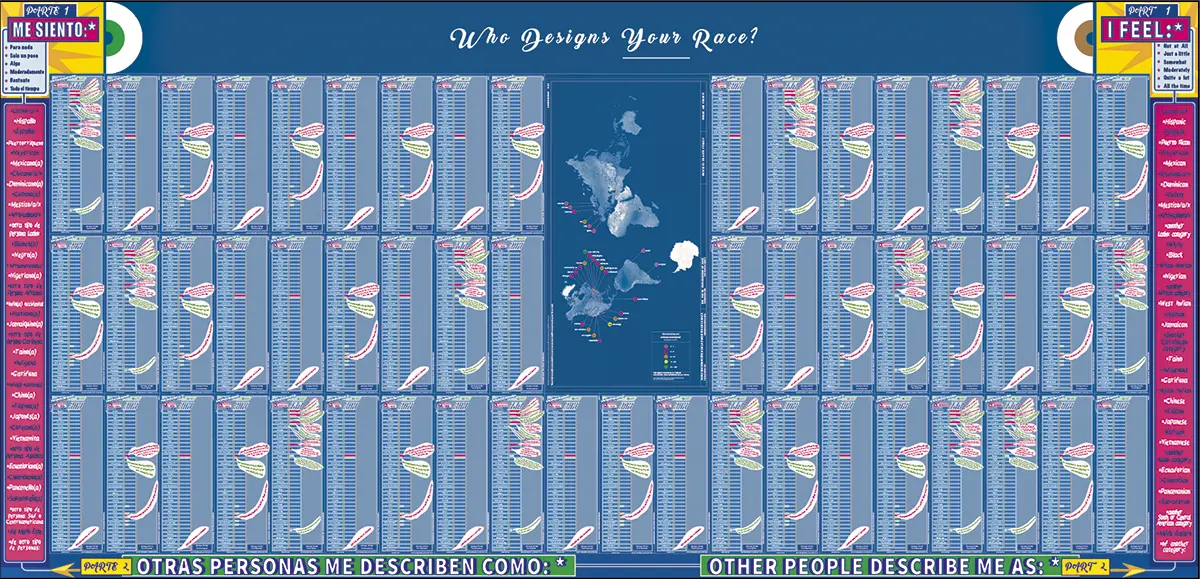
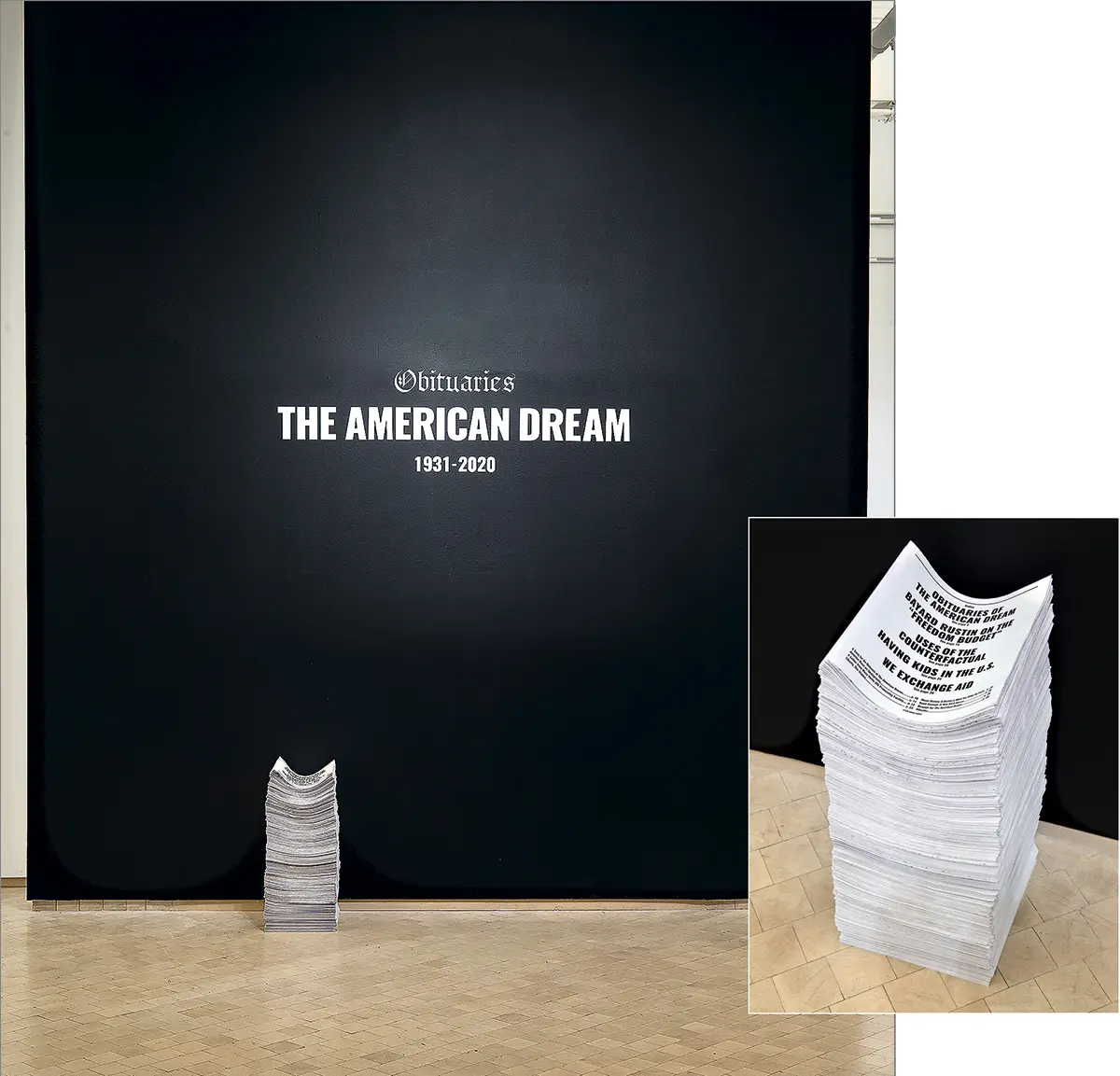
Organized by Elia Alba, Rodrigo Moura, and Susan V. Temkin, one of the most formally ostentatious works that welcomed the viewer was by a group of artists that collaborate under the moniker of Magpie Collective. Titled, Who Designs Your Race? (2020-21), this online survey and vinyl wall-paper installation takes a conceptual approach to the ubiquitous national census and its statistic-gathering methodology; but in this case, the viewer as participant is empowered in data mining at the conflation of politics and identity. Who Designs Our Race? consisted of anonymous participants who completed questionnaires that articulated their own agency regarding race rather than have it decided for them by invisible, administrative power structures. The polychromatic wall installation was offset, counterpointed, or dialoged with another wall-size work adjacent to it; but here it was a black and white architectonic installation titled Obituaries of the American Dream (2020-21). Consisting of a black-colored wall with part of the title’s white font referencing the New York Times newspaper and a stack of artist-designed newsprint, Lizania Cruz’s installation allowed the viewer to take a copy of the printed work with them to extend the work beyond EL Museo Del Barrio. This allowed the work to embed itself into various contexts such as one’s home or even in the public sphere while perusing it in a park, bus, subway etc. as one would a conventional newspaper. Other artists, the most well-known being Felix-Gonzalez Torres and his stack pieces and candy spills, have used this relational aesthetic or social art practice of allowing the viewer to take the work with them as integral to it. Cruz’s employment of this strategy expands it into a register akin to a critical pedagogy as her newsprint was rife with critical entries. Some of these include interviews with a broad range of individuals about the American Dream or its absence thereof; book and movie reviews; and a letter from a detainee at an ICE Processing facility, among other texts that tied into her work’s overall theme.
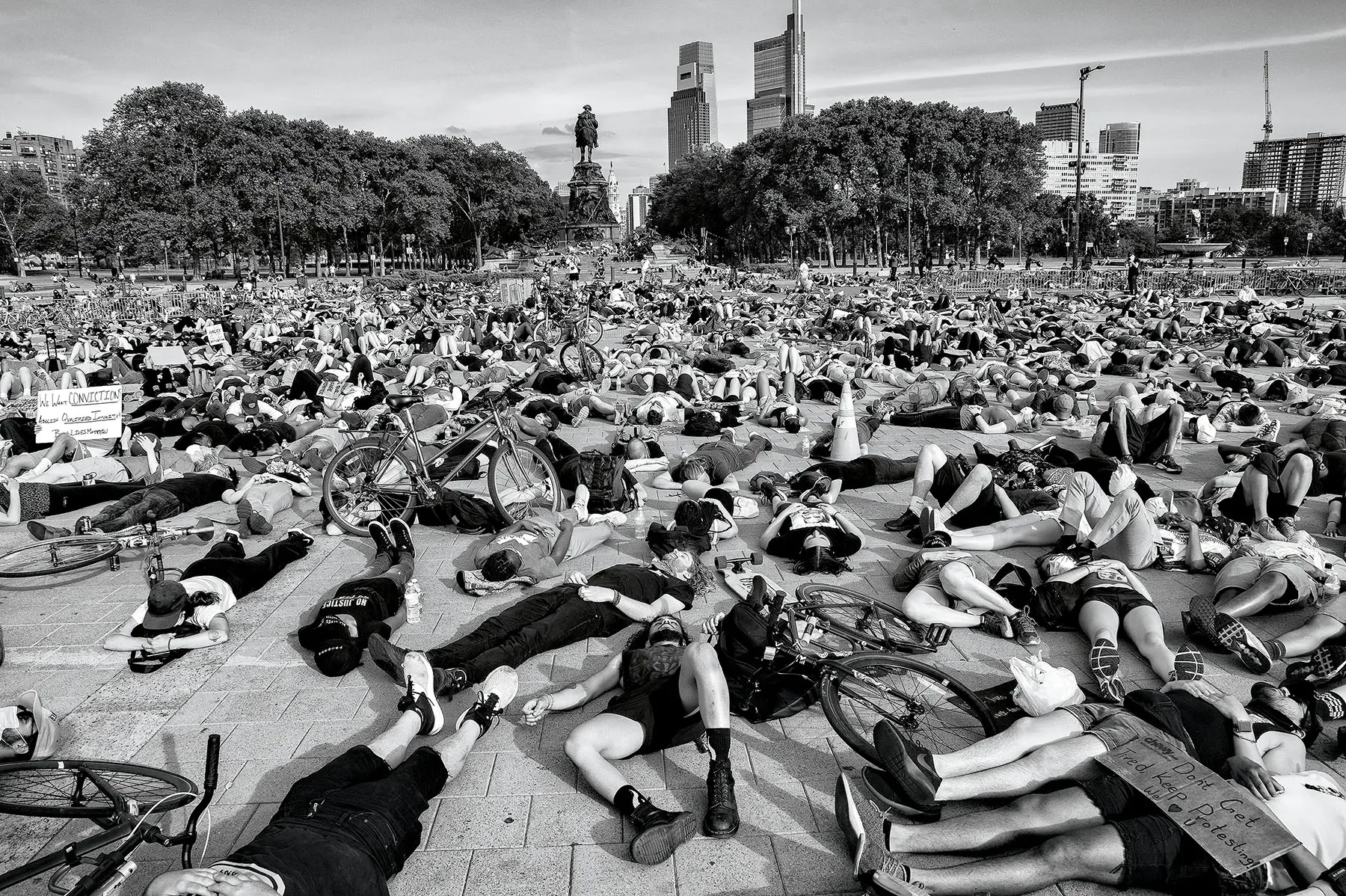
In the entrance gallery by these two works was a large black and white photograph of a protest during the Black Lives Matter demonstration that rocked the U.S. over the spring and summer of 2020. The fascinating thing about Ada Trillo’s Peaceful Protest (2020-21) photograph was that it seemed to teeter between photojournalism and “high” art. In other words, the composition’s lighting, perspective, and monumentality made the work that much more powerful and part of a genealogy of photographers, both historical and contemporary, that documented similar content. It’s rather reassuring to see artists who engage in topical subject matter or artwork that might be construed as political that don’t shy away or consciously eschew the aesthetic power of art and its ability to enrapture us through its visual dimension.
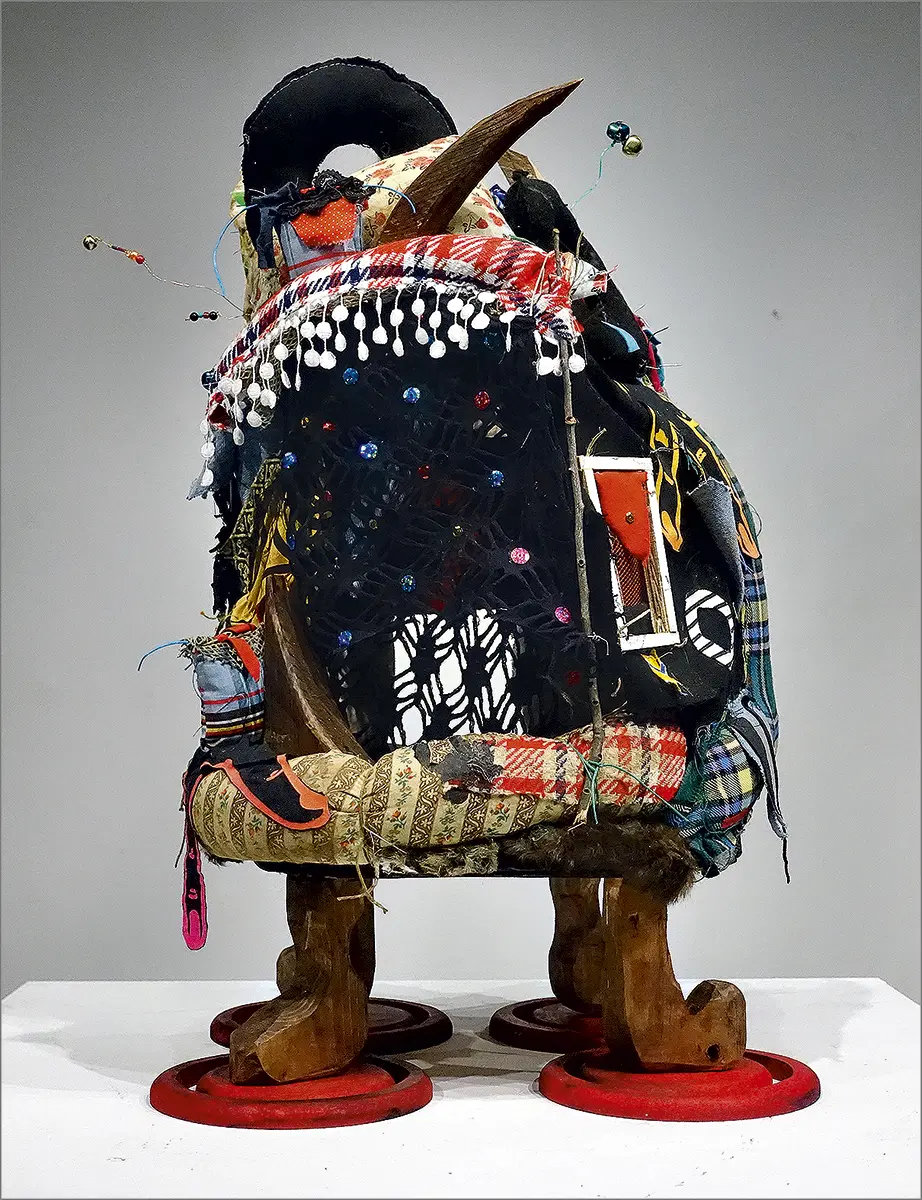
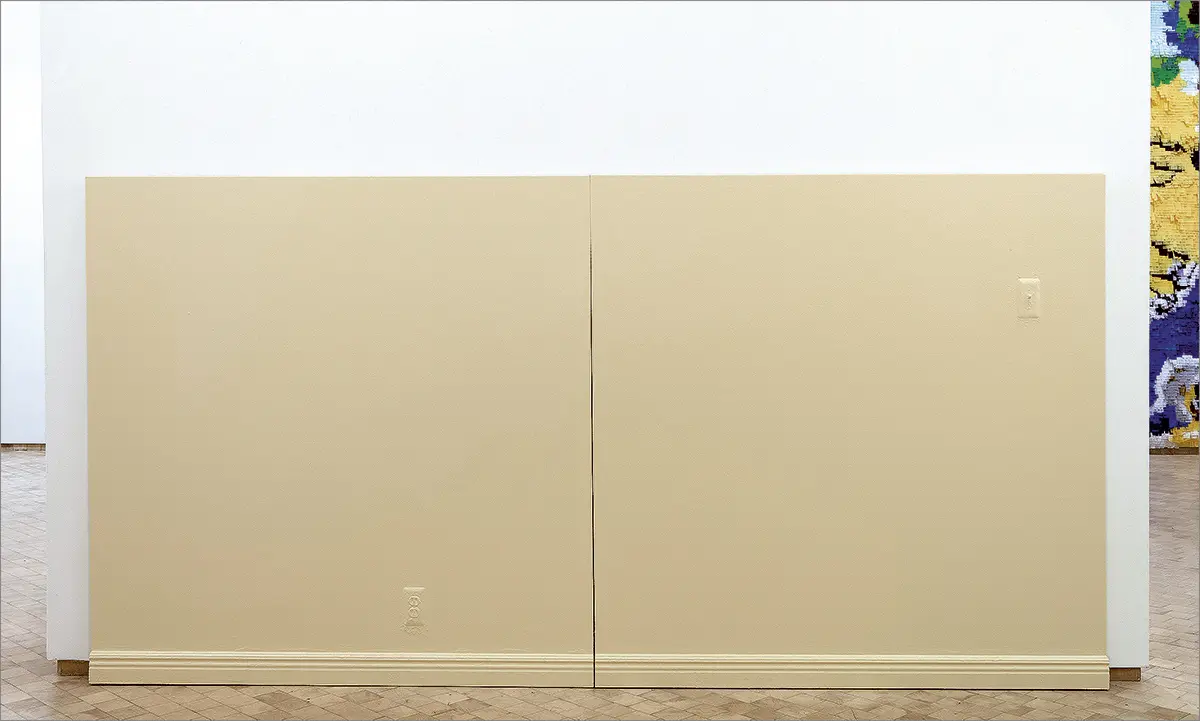
While these three works dovetailed around issues current today, the exhibition was diverse in both individual themes and media underscoring the complexity and breadth of Latinx contemporary art. Sculpture in the exhibition was as equally differentiated: for it could be airy or dense, freestanding or architectural, figurative or abstract, polychromatic or monochromatic, readymade or fabricated by hand. Some of the works that underscore how varied the medium was represented include Nyugen Smith’s three-dimensional works on pedestals, about 30 inches by 17 inches in scale, that he called Bundlehouses (2019, 2020). These works were an amalgamation of both created and found materials that refer to so-called makeshift homes that migrants make out of necessity in any part of the world. The social dynamic is certainly discernable, but they equally conveyed something anthropological and otherworldly. Although recognizable in the sense that they have an inescapable colloquialism, there’s something primordial in these visually poetic mashups from disparate sources. On the other end of the formal spectrum were the austere post-minimalist and conceptual sculptures of Yanira Collado and Fontaine Capel. One of Collado’s sculptures was installed on the floor and reminiscent of a mixture of Robert Morris and Eva Hesse yet overtly and uniquely her own. The untitled work (2020) consisted of geometric shapes made from oil pastel, paint, cardboard, textile, and most notably, cuaba soap. Cuaba soap is a particular type of body cleaner from the Dominican Republic and made from oil of the cuaba pine tree, which gives it its slightly amber color. The soap’s previous context cannot be overstated for it enriches Collado’s sculpture with whole other narrative associations that elevate its complexity. It is not only visually exuberant with its opaque, golden tonality, but one could also slightly sense its odor which, of course, made this work as much an olfactory experience as an optical one. Fontaine Capel’s Wall work (2020-21) also operated with a very austere, aesthetic sensibility yet was quite psychological as it drew from Freud’s theory of the uncanny or in its original German term of unheimliche, which translates as un-homely. First appearing in Freud’s 1919 essay Das Unheimliche, the concept of the uncanny articulated the potentially strange and unsettling in the most quotidian of material culture. Capel’s Wall work resides somewhere between sculpture and painting, for it appears to be a ghostly representation of the wall on which it’s installed. The uncanny that this psychological work conveys, with its formal allusions to Robert Gober and Gregor Schneider, is not of its displacement between the two media of painting and sculpture, but of its mysterious, absent presence that’s spectral.
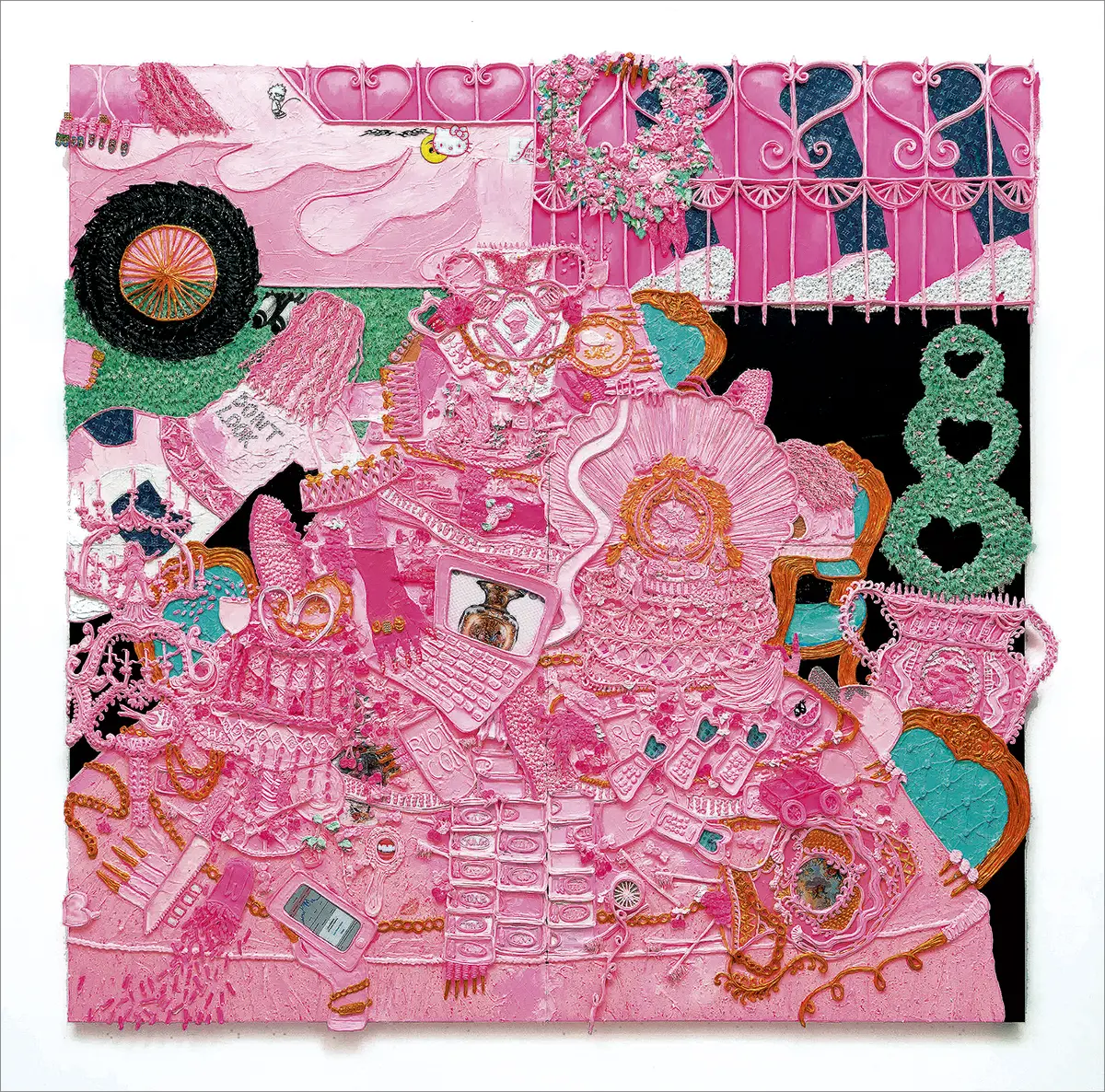
Other similarly mixed media works on canvas edged more towards painting rather than sculpture, including Yvette Mayorga’s citation of an urn, the vanitas, and eighteenth-century European ceramics. Mayorga’s paintings, with their mixed-media elements including acrylic nails, decals, party favors, rhinestones, and other collaged elements amounted to a kind of ultra-baroque yet conveyed a host of narratives that might not be ostensibly associated with the work’s playful yet sophisticated aesthetic: death, mortality, melancholy. The “paintings” were tactile and saturated with color, which was in stark contrast to their content. Performance too, took on these sober topics as well as many others including documented pieces by María Gaspar and Carlos Martiel.
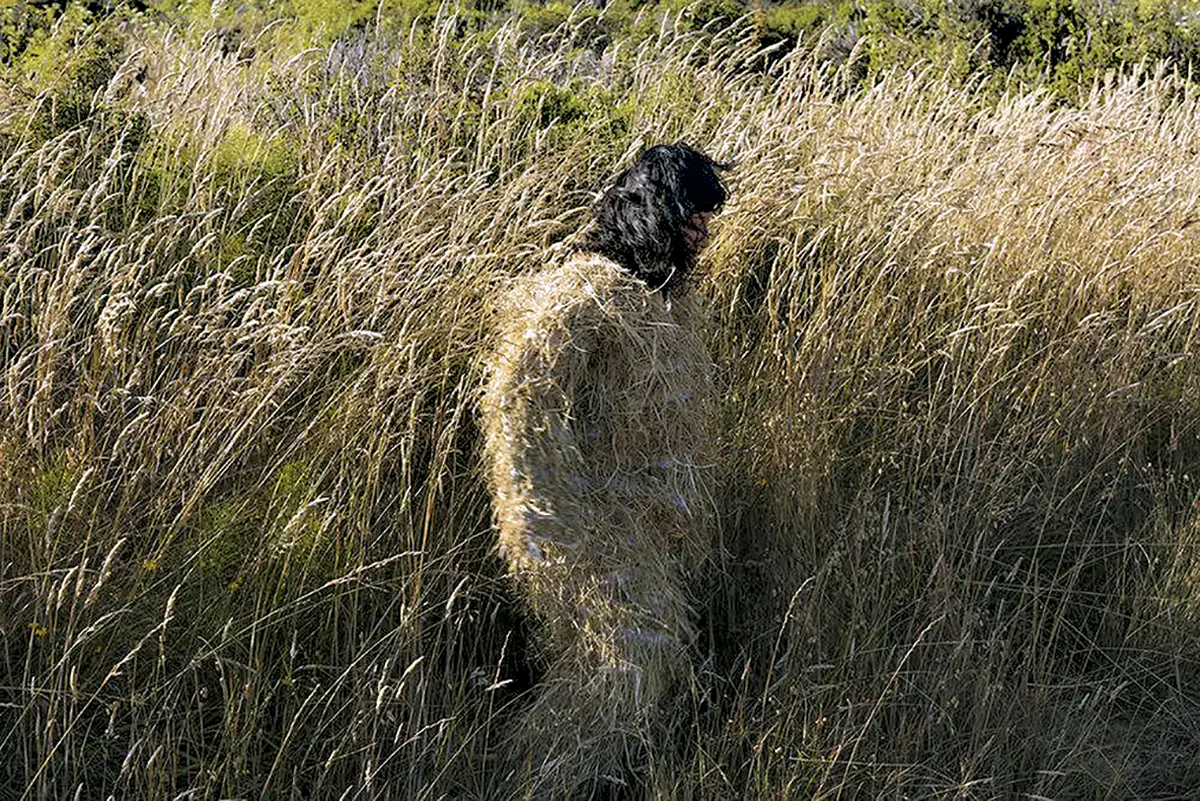
María Gaspar’s Disappearance Suit (2017) consists of a series of performances in disparate locales as Iceland, Switzerland, California, and Florida. The work entailed the artist donning bodywear that camouflaged her in her surroundings. These environments were either populated by immigrants such as the latter two states, or into environs where immigrant presence is overshadowed by a dominant, native majority. Apart from the performances that were photographically documented, the artist presented the suits to give the viewer a proximity to her corpus. But the performances also resonated with other issues facing the world today, including that of climate change. Carlos Martiel’s performance also worked with the register of documentation, however, his piece was actualized within one of El Museo del Barrio’s galleries. Titled Monument I (2021), this durational piece of a little over 31 minutes in length was performed by the artist within the gallery that exhibited the documented work. And in the words of the artist: “I stand naked on top of a pedestal in the center of the space with my body covered in blood drawn from migrant, Latinx, African-American, feminized, Native American, Muslim, Jewish, Queer, and Transsexual bodies considered as “minority” or marginalized groups in the United States by Eurocentric supremacist discourses.” What the viewer encountered was a video of a nude Martiel on the pedestal, and the actual pedestal was exhibited too, and bore traces of the artist’s footprints presumably in blood.
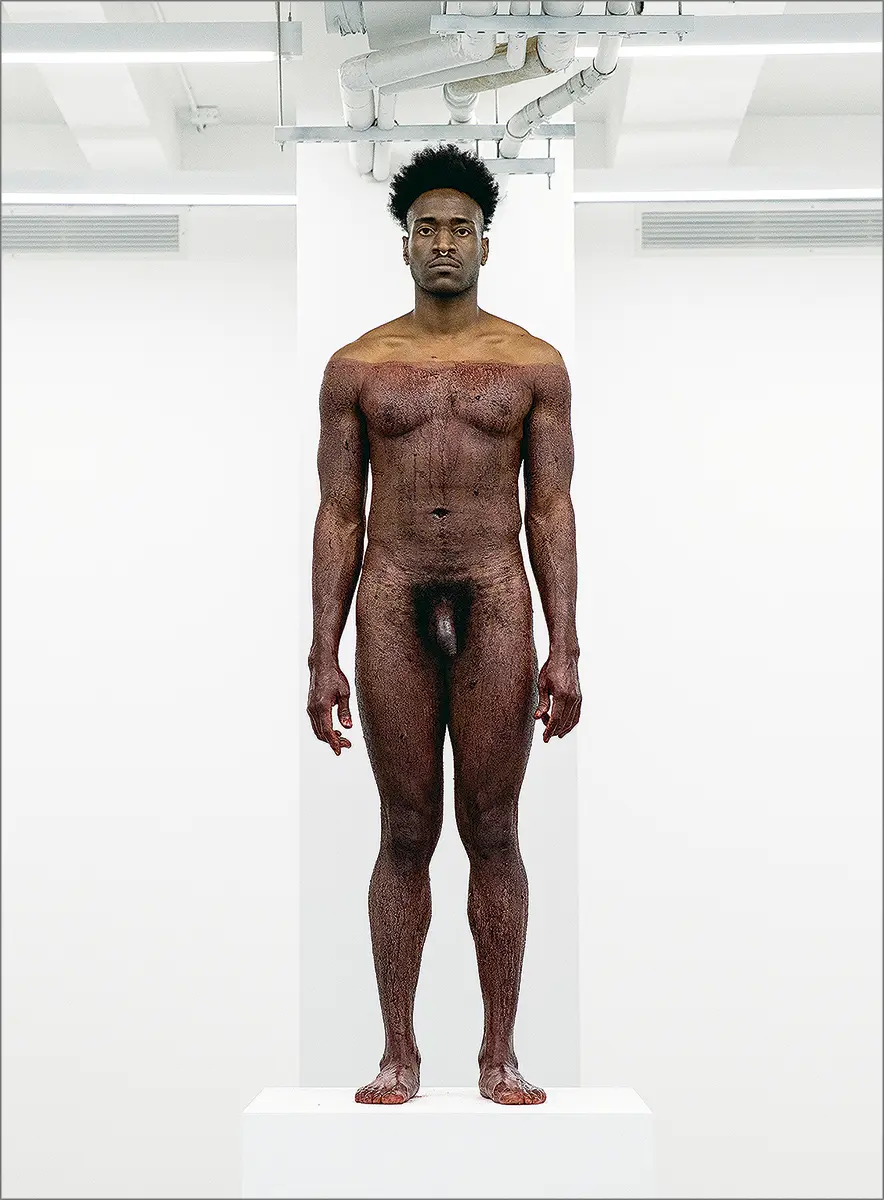
Within the pedigree of many artists of Martiel’s generation and earlier who worked with durational performance including Regina Galindo and Chris Burden, Monument I is a solemn reminder of the discriminatory and dehumanizing conditions in which many people work and live in today. And here what is referred to is the larger world in general beyond that of artists, their practices, and the broad infrastructure that they work in including museums, galleries, art fairs, publications and so forth. Monument I was presented in a newly designed exhibition space not too far from a window onto the hustle and bustle of the city and an apt coda to Estamos Bien. Yet the newly christened Triennial was a benchmark of sorts in reminding us of the power of art, especially under the conditions we’re collectively living. Estamos Bien was well indeed, and hopefully a positive sign of El Museo del Barrio’s tenacity given the challenges it has faced to remain a New York City Museum and keep offering art that is necessary, vital, and often overlooked in counterpart institutions.
*Courtesy: El Museo del Barrio.
RAÚL ZAMUDIO