The solo show “Los padres ausentes” (Absent Parents) was open to the public until October 9 at LA Galería in Bogotá. A series of mostly sculptural images explored the iconography of power in relation to postcolonial contexts. The first piece that every visitor came across with was a lamp made of glass and bronze, with very clear Baroque references, lit in flames and entitled Hogar (Home). The second piece to the left was an intervention on a sculptural relief representing the Catholic monarchs. Using plastic beads, the artist intervened the background of the relief around the faces of the kings with symbols of the Colombian Putumayo’s Inga culture.
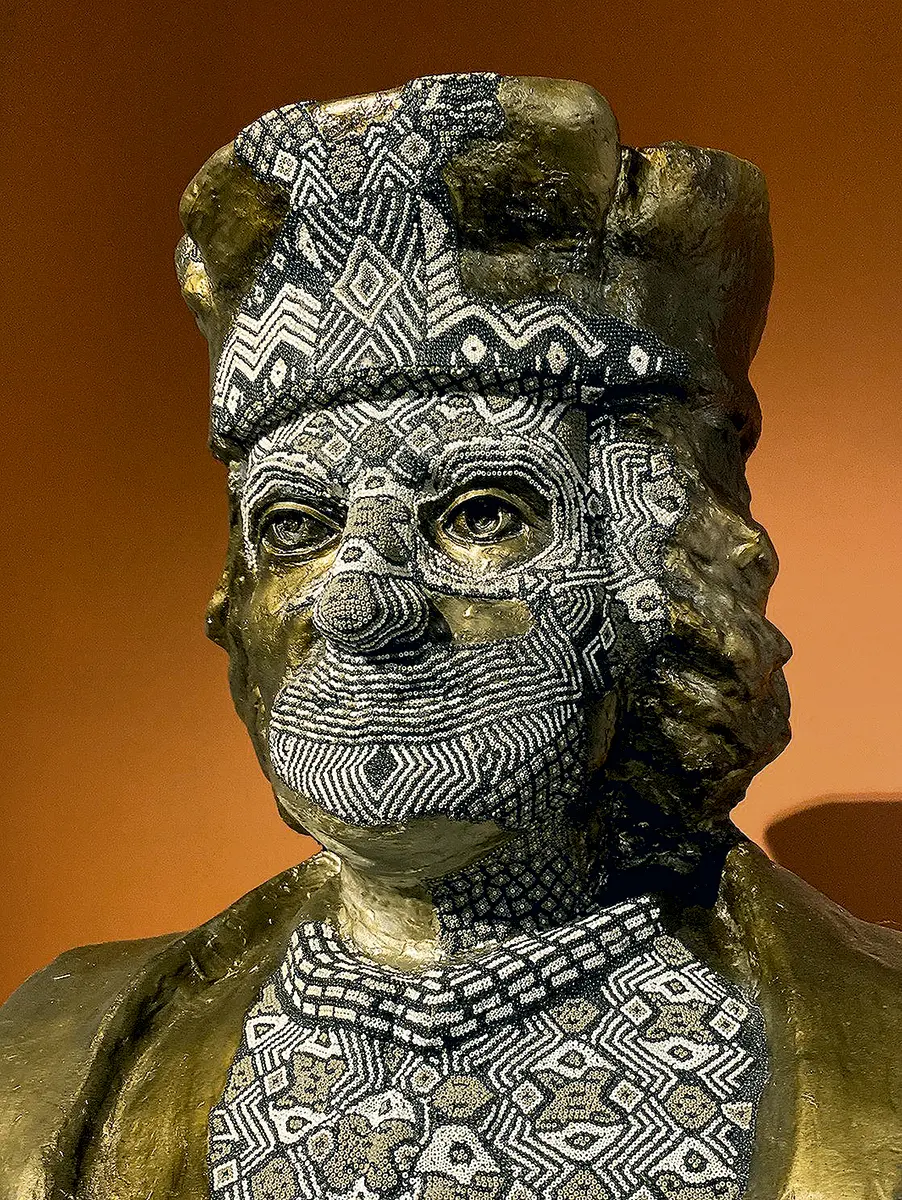
He made a similar gesture with other types of Inga symbols, but this time on the faces of two busts placed on pedestals: that of Queen Elizabeth, whose title is Mother, and of Christopher Columbus, named Father. Likewise, the sculpture of Gonzalo Jiménez de Quesada’s decapitated head—placed on the ground and titled Uncle—was intervened with different symbols of the aforesaid culture.
This group of sculptures is complemented by the presence of a previous work from 2011, called Monument to Gregorio Vázquez de Arce y Ceballos, which initially consisted of hanging a pair of shoes made with bronze from an electric cable in front of the Biblioteca Luis Ángel Arango, in downtown Bogotá, echoing a sign that has emerged throughout the planet. However, its current version consists of the photographic record of the 2011 action and the pair of shoes hanging from the gallery ceiling, now called Monument to Ricardo Carrasquilla.
Also on display was Public Trial, an altarpiece representing three monuments that have been attacked in different countries and which also refer to characters related to imperial colonialism and the extermination of indigenous peoples. Finally, the visitor encounters two small sculptures based on Bogotá’s Monument to The Heroes. In Pueblo Bandera (People’s Flag) an Indian man carrying a flag with Inga symbols perches on Bolívar’s horse. In Pueblo (The People), the equestrian monument is lit in flames, complementing the significance of the lamp.
Ever since his first projects, Carlos Castro has been recognized by his sharp opposition to the signs representing cultural or historical realities. By revealing the bias and contingency of the notions that sustain them through strategies such as counter-representation—the same medium serves to mobilize an opposing “message”—and palimpsest, which implies rewriting or resignifying, Castro alters the way in which the meanings of ideological symbols are made to seem immovable. For this reason, he insists on the need to recognize the inherent mobility of the social field, which inevitably introduces a constant reconfiguration of history and, in particular, of the meanings that configure it.
By covering the sculptural portraits of characters that have symbolically engendered “the fatherland” with other symbols, he proposes to replace old meanings with other ones to begin to reconfigure the present. It’s surprising that so many people remain unscathed in the face of the pain inflicted to today’s indigenous peoples by the immutable presence of colonialism’s symbols. For empathy to exist, we must establish historical and political responsibilities related to the extermination, enslavement, and marginalization of indigenous peoples from the Spanish conquest until the present. The symbols of the conquest and the colonization processes perpetuate this viciousness. The works by Carlos Castro that examine these representations also investigate the patriarchal dimensions deriving from the terms in which that glorious past is spoken of, such as patria (fatherland) or patrimonio (patrimony), which refer to ‘father’ and seem to suggest eternal male dominance.
Finally, it is interesting to review the gesture of setting fire to both Bolívar’s equestrian statue and the crystal lamp, called Pueblo and Home. Aside from its obvious questioning of the institutional values associated with these two objects, he seems to recognize the social outbreak occurring in recent years in Colombia and other countries all over the globe, given the ways that daily life has become so precarious. In Bogotá, a symbol for the protests is the Monument to The Heroes, which went from being associated with individuals from the past to the people that seek to reconfigure the present. The future significance of this monument, which was demolished in recent days, is yet to be seen.