The Museo de Arte Moderno de Buenos Aires celebrates the versatile artist Alberto Greco (Buenos Aires, 1931-Barcelona, 1965) with the first retrospective of his work to be held in Argentina. With the publication of Ni tonto ni holgazán (Neither Dumb nor Lazy), the Museum further contributes to the recovery of Greco’s oeuvre, dispersed in a number of photographic records, various texts, and just a handful of early paintings. This jewel of a book includes a children’s story that Greco told on the radio in 1956, adapted by Martín Lojo, beautifully illustrated by María Wernicke and with graphic design by Eduardo Rey.
Of this story, as with so many other works and actions by this artist, we barely have a trace. The manuscript has not been preserved, thus it was not part of La aventura de lo real. Escritos de Alberto Greco (The Adventure of the Real. The Writings of Alberto Greco), a much-needed collection of Greco’s writings researched and produced by Paula Pellejero and Eduardo Pellejero, and published in 2020 by Ediciones Julián Mizrahi. Writing was central to Greco’s brief, tumultuous life and oeuvre. In fact, he wrote several manifestos, including the “Manifiesto vivo-dito,” in 1962, launched from Rome: “Living art is the adventure of the real,” he wrote there. Greco committed suicide at the age of 34. He had written the word fin (the end) on his arm.
The Museum has also relaunched Alberto Greco: ¡Qué grande sos! (Alberto Greco, How Great You Are!), the 2016 book by Marcelo E. Pacheco and María Amalia García (the Malba’s current Director).
The Moderno’s effort to give renewed currency to Greco’s work is not difficult to understand. There’s a consensus view that, as museum director Victoria Noorthoorn said, Greco was “a catalyst for contemporary art in Argentina (...) who generated a major opening up of the artistic horizon for all subsequent decades.” Indeed, he was a local precursor of practices that in the early 1970s expanded the idea of art, stretching its boundaries and capturing public space, furthering the dematerialization of the work of art with street actions, performances and graffiti.
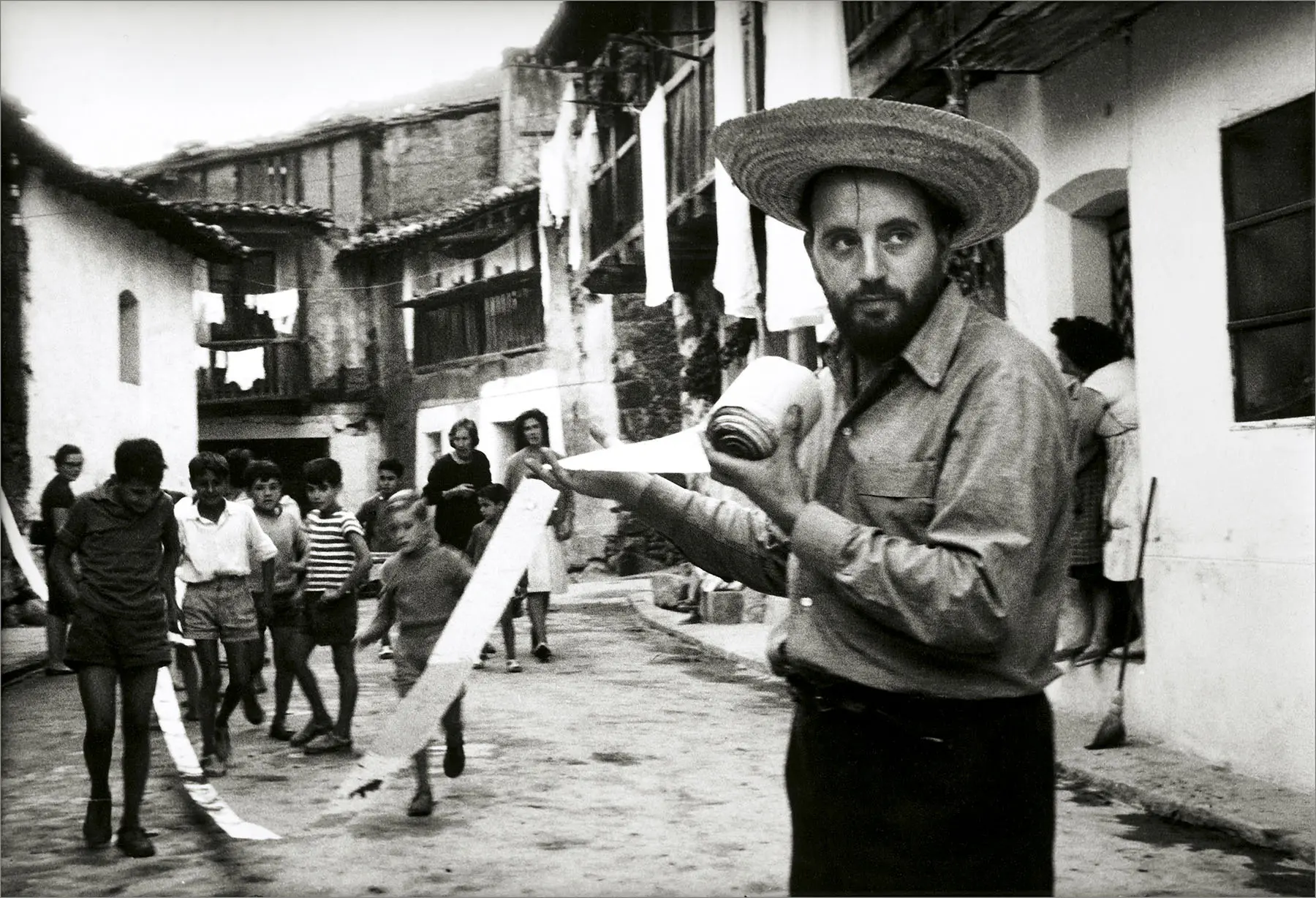
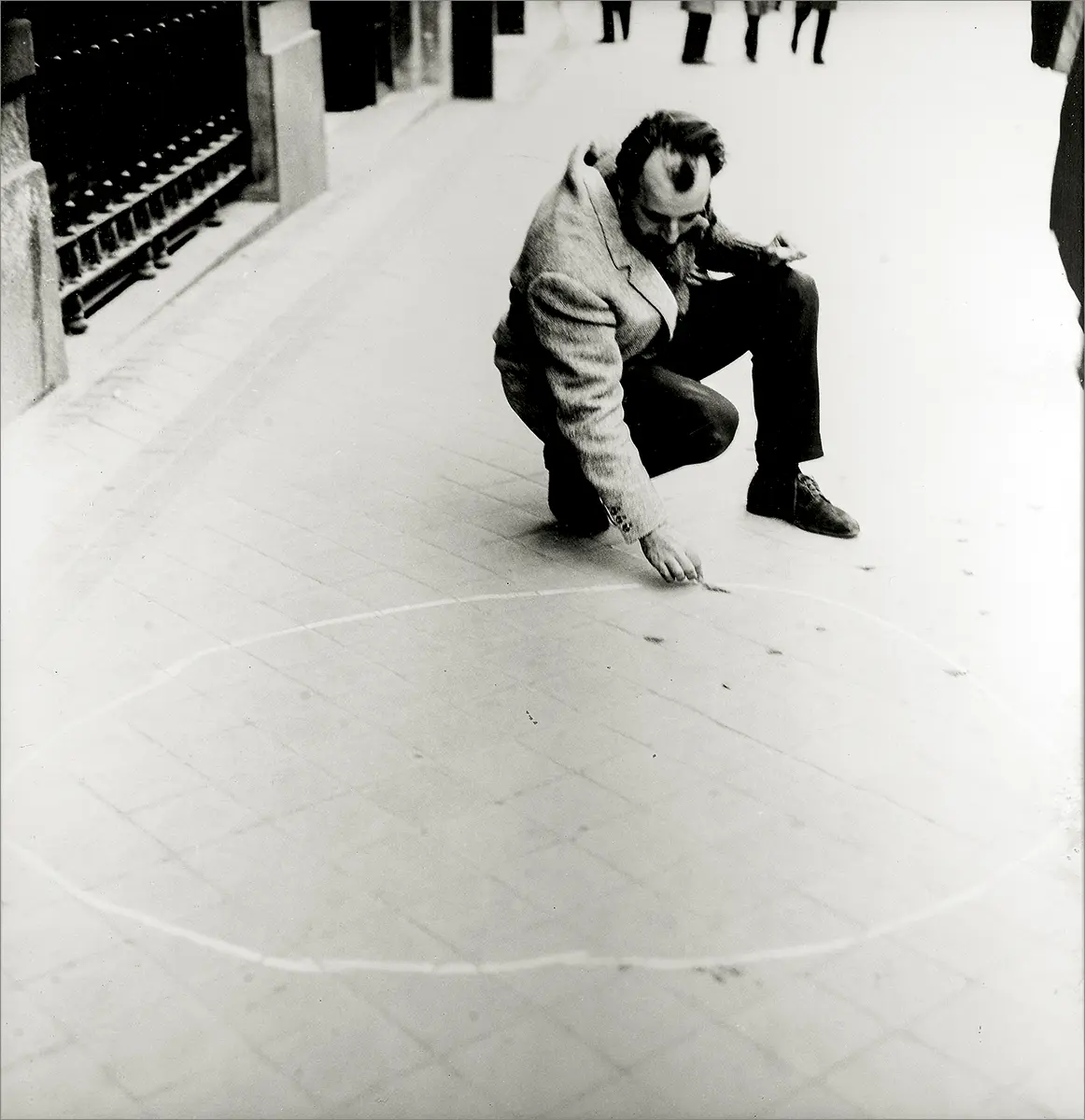
Curators Pacheco, García and Javier Villa (of the Moderno) present over one hundred artworks that are key in Greco’s career, organized around three axes. One is Viva el arte vivo (Long Live Living Art), which features the creation of universes by means of drawing, writing and Greco’s vivo-dito works. In Paris in 1962, he began to exhibit “living art,” vivo-dito (dito means “finger” in Italian): after pointing at living beings with his finger, Greco signed and instituted the action as a work of art, “transforming urban and rural situations into new supports for experimentation.” Then, in Paris, in celebration of the real, the artist drew a chalk circle around his Argentinean colleague Alberto Heredia. Always a great communicator, Greco even designated himself as a work of art.
The second section is La pintura è finita (Painting is Over), which brings together his “black paintings” installed in a circle. These paintings were made when Greco was a participant in the Informalist movement in Argentina: lyrical abstraction, tachisme, action painting; a type of abstract art that eschewed geometry and worked against the formalities of “good painting.”
The third axis, La orden the Greco (The Order of Greco), revisits collective agitation and underscores the artist’s rebelliousness in the face of cultural conventions. Among the reconstructions are a set of lockers like the ones used in Rifa Vivo-Dito en la Central Station (Vivo-Dito Raffle at Central Station, New York, 1965), in collaboration with Lichtenstein, Oldenburg, Christo, Spoerri, among others.
The exhibition’s exceptional setup shines in the second gallery, which stages a presentation of photographs of Greco’s actions in the Spanish town of Piedralaves. The design by Daniela Thomas, Felipe Tassara and Iván Rösler highlights and underscores paintings, drawings, photographic registers and archival recreations of his actions and of “blind episodes” by contemporary Argentinean artists such as Joaquín Aras, Guillermina Etkin, Sebastián Gordín, Daniel Leber, Agustina Muñoz and Paula Pellejero, “with the purpose of revealing how Greco remains alive and present in our cultural community.”
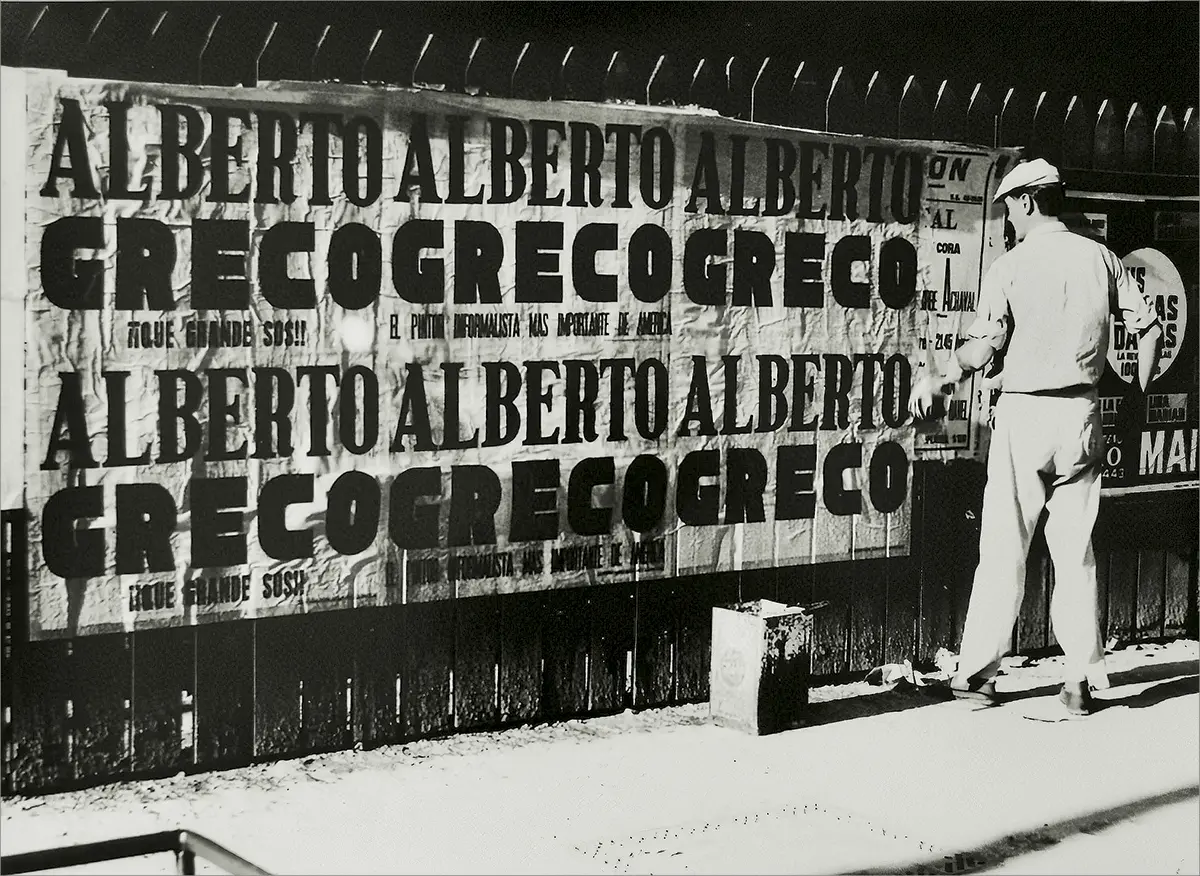
The section begins with a reproduction in “tropical” colors of an advertising poster with the legend ¡Alberto Greco: Qué grande sos! (Alberto Greco, How Great You Are!), which alludes to the Peronista March (1948), which includes the line “¡Perón, Perón qué grande sos!” The quote was quite reckless in 1961, during a period when Argentina’s legendary political leader was “banned.” Greco did not subscribe to the peronista ideology; it was an act of provocation and self-propaganda.
That action was registered by Sameer Makarius, and the silver-gelatin original is on display at Del Infinito gallery. In fact, Del Infinito is presenting La Pittura e Finita. Poses e imposturas de Alberto Greco en Italia (Painting is Over. Postures and Impostures of Alberto Greco in Italy), with twenty-four previously unpublished photographs by the Italian photographer Claudio Abate. The text by curator Fernando Davis puts in context the photographs of Greco’s performances, graffiti, and vivo-dito actions in Roma in 1962 and 1963. Greco was expelled from Italy after the staging of a play that was seen as blasphemous for its use of Catholic symbols and its critique of the Church’s teachings. The artist, also the protagonist of a work titled Cristo 63, had to return abruptly to Madrid.
VICTORIA VERLICHAK