Losing an image is like losing one’s memory. When we lose a photograph, we feel the event it depicts beginning to vanish as well. And if the lost photograph has some degree of communitarian value—be it familial or national—the effect is perceived almost like a tragedy: what we lose is not just the specific image, but our access to the social memory built upon it.
Assessing Rodrigo Moya’s photographic oeuvre poses just that very problem. While Moya is one the few photojournalists in Twentieth-Century Mexico who have properly organized, cataloged, and preserved their archives, there remain many significant gaps in it: photographs never returned by the publications to which they were delivered, forgotten or lost in those publications’ archives (or integrated into them in such a way that the photographer lost control over their whereabouts); or, in Moya’s special case, photographs that the photographer himself decided to discard as mismatched to his subject, his point of view, or his self-imposed standards of quality.
Moya’s case is unique because, although he began taking photographs in 1954, his work appeared in illustrated journals—mainly Impacto, Siempre! and Sucesos para Todos—only over eleven years, between 1956 and 1967. Tired of the precarity of the trade, he left it in 1968 to buy a printing press, establish a publishing firm and put out Técnica pesquera, a trade journal about fishing activity in Mexico. Técnica pesquera remained in circulation from 1968 through 1988, adding thousands of images that provide invaluable information about that industry to Moya’s already abundant trove of negatives.
With the experience accumulated over thirty years as a publisher, Moya returned to his archive in 1999, after an illness that brought him to the verge of death. First, as a way of reconnecting with past attachments, later as a return of his passion for photography, Moya began to re-edit the archive, organizing, culling, reprinting and, with admirable discipline, discarding those negatives that no longer interested him (mainly money-earning commissions in political propaganda). The Moya archive that can be studied today comprises an extraordinary cache of images of the years before 1968, an era described in collections like Photo Essays (Mexico City, Chapultepec, Nezahualcóyotl City, Ixtleros…); Precarious Life; Social Movements; Village Life; Agriculture; Religion; Visual Artists; Literature, and other more or less known groupings of Moya’s photography.
Among the lesser-known groups, some, like Colonial Architecture, Pre-Columbian Architecture, and Mural Painting, includes part of the work Moya did for the National Institute of Anthropology and History (INAH, in its Spanish initials) between 1960 and 1963, in two projects documenting Mexico’s national heritage. The first project was directed by the art restorer Manuel del Castillo Negrete, through the recently established National Directorate for the Cataloguing, Restoration, and Conservation of the Nation’s Artistic Heritage (the “Directorate etcetera,” as its employees called it to shorten the long name). The second was the Teotihuacan Project, coordinated in the area of than name by the archeologist Ignacio Bernal. The negatives preserved today in Moya’s archive are those he produced in a medium format (6 x 6 cm) and saved in his personal stash, after reaching an agreement with Del Castillo Negrete: he was to give the INAH black and white copies and keep the negatives. “I was happy traveling with don Manuel, a true road warrior,” Moya says. “He could drive for ten or twelve hours straight all the while engaged in an interesting and, for me, always educational conversation. Sometimes though, he fell into a long silence, befitting a personality I came to see as mystical. He was a Christian and knew of my militant socialism. Still, the ideological chasm was never an obstacle for an exchange of opinions that ranged from historical events to the story of his life…”1
Despite being “the most constructive and exciting project in all I did as a photographer,” this documentary task allowed Moya “to encounter Mexico in a very different way from what I knew as a photojournalist or a chronicler.” The truth is that Moya had already explored Mexico City on foot, open to that which his father, the stage designer Luis Moya, had taught him to see and appreciate: “I walked a lot. One of my characteristics as a photographer was that I loved to walk. As a student, I often went from the Engineering School, in Tacuba, to Insurgentes, at Kilometer Nine. In other words, I would walk nine kilometers, over two hours. And I loved it. I would find myself in unknown areas. It was not a predetermined expedition. I found myself in those places, encountered those scenes, and took photographs.”2
The city is not just a reportage subject for Moya: it is something that exists right in front of him, which he continually photographs over time. How, then, did his photography reflected that endless Mexico, already a megalopolis? Despite the apparent lassitude of his project of portraying the city, Moya’s photographs made repeated and specific gestures. First among them: a tone that set him apart from the chronicles produced by Bernardo de Balbuena and his heirs, Artemio del Valle Arizpe and Salvador Novo, the closest to Moya. Moya’s intention wasn’t to produce a panegyric to the city, but to critically confront it with his camera, which he used to capture fragments of the urban experience. His catalographic work for the INAH contributed to this point of view. From it emerged a good portion of the photographs of colonial-era stone and wood buildings he would later use in his photo essays for Sucesos para Todos.
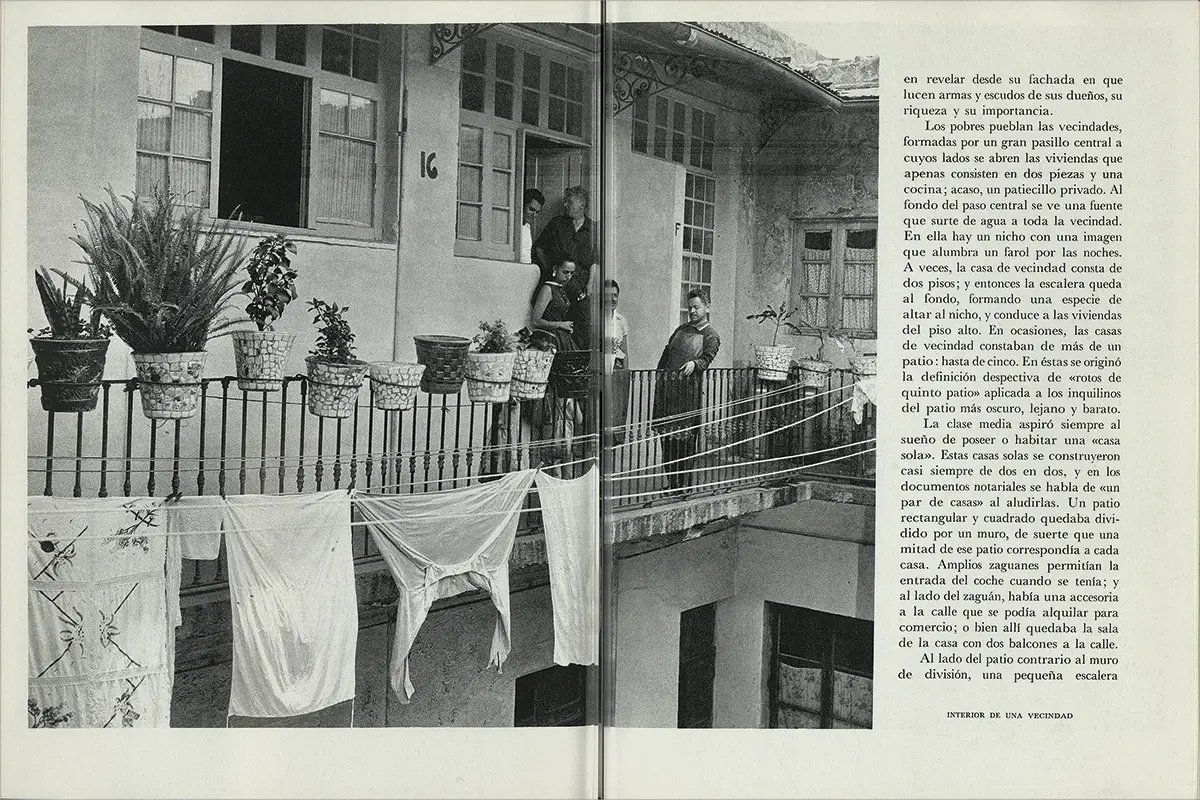
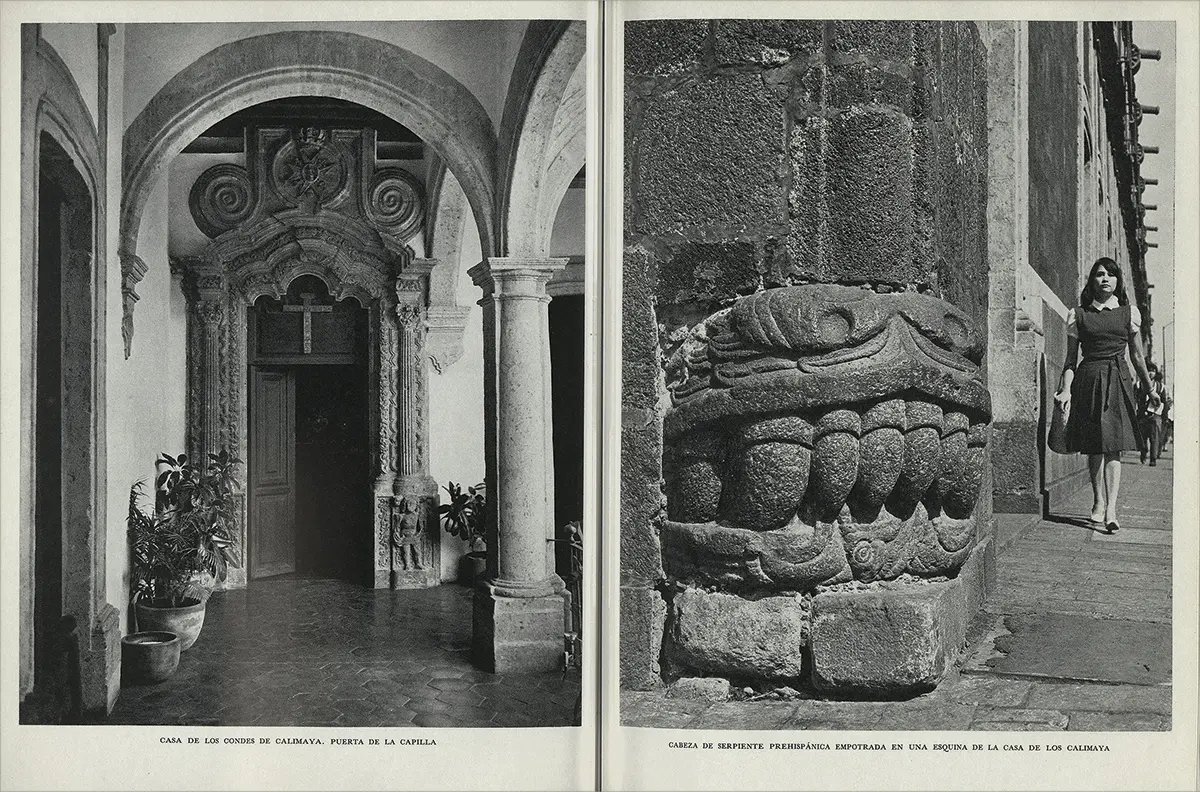
Besides serving as documents of cultural heritage, those photographs are connected to an iconographic program, that of the old Guías de forasteros, guidebooks published from the early Nineteenth Century onwards, as tourism spread, to advertise the virtues of what were considered the city’s “attractions.” Among Moya’s reports for Sucesos para Todos featuring these types of images are those about Chapultepec, the zoo, and urban resorts. One of them stands out as an example of the way in which Moya was already using his archive back then: Puertas (Doors),3 comprised of photographs of colonial-era doors in Mexico City’s historic downtown first produced as part of his work for the INAH, and later also used as illustrations in Salvador Novo’s México, a book commissioned by Barcelona’s Ediciones Destino in 1965.
That year, Mexico’s President Díaz Ordaz had named Novo—a poet, journalist, and advertising writer—the “Chronicler of Mexico City.” As a consequence, Novo received a deluge of commissions for books about the city. The best known among those is Nueva grandeza Mexicana4 (New Mexican Grandeur), first written in 1947 and republished in 1967 with photographs by Héctor García. That book was commissioned by the Director of Pemex, Jesús Reyes Heroles, to use as a gift during the 7th World Petroleum Congress held that year. Novo’s México. Imagen de una ciudad (Mexico. Image of a City), with a similar concept and format, but with photographs by Pedro Bayona, was also published in 1967.5
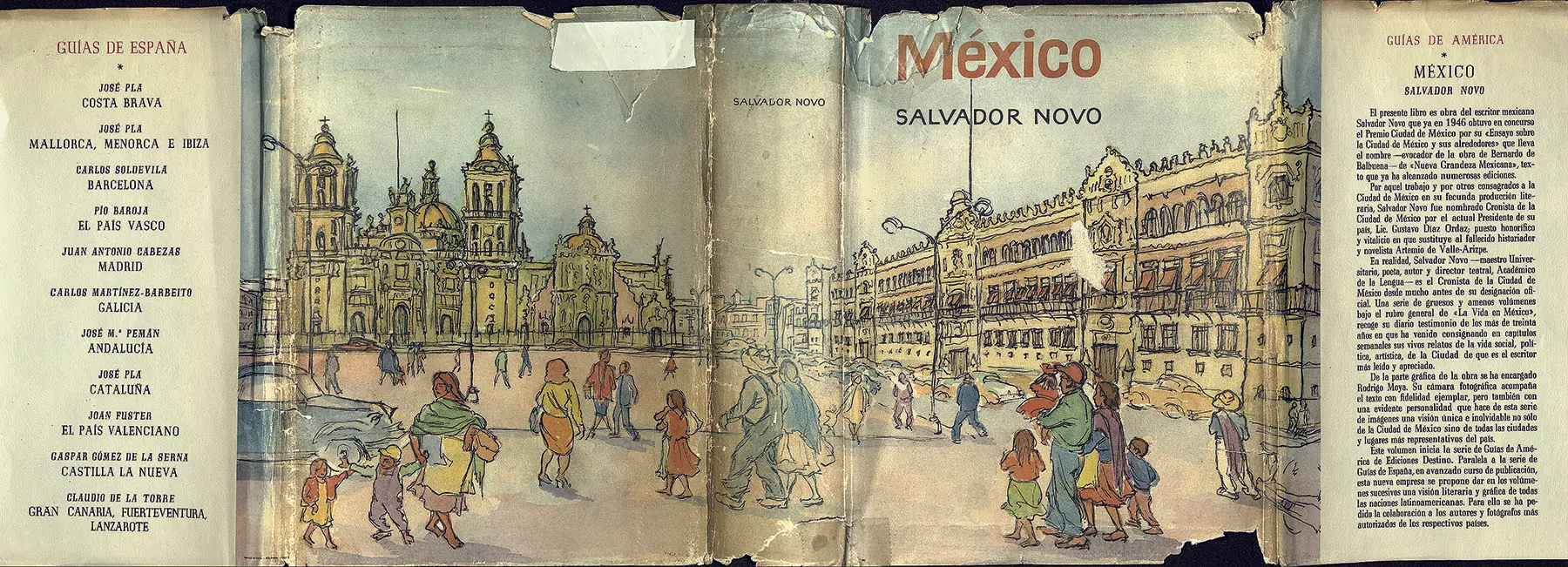
The Ediciones Destino commission for the book with Moya was part of the publisher’s project of Latin American guidebooks, with a graphic concept developed by Ricard Giralt-Miracle in Barcelona. The Mexico book was to be launched in 1968, taking advantage of the Olympic Games celebrated that year in the country. The intent was not different from the old Guías de forasteros mentioned above: to sell the city to potential visitors. To that end, it required photographs that presented Mexico City’s tourist attractions and other locations, such as Acolman, Tepoztlán, Teotihuacán, or Acapulco, under a positive light. Thanks to his penchant for walking and his work with the INAH, Moya already had many such photographs at the ready.
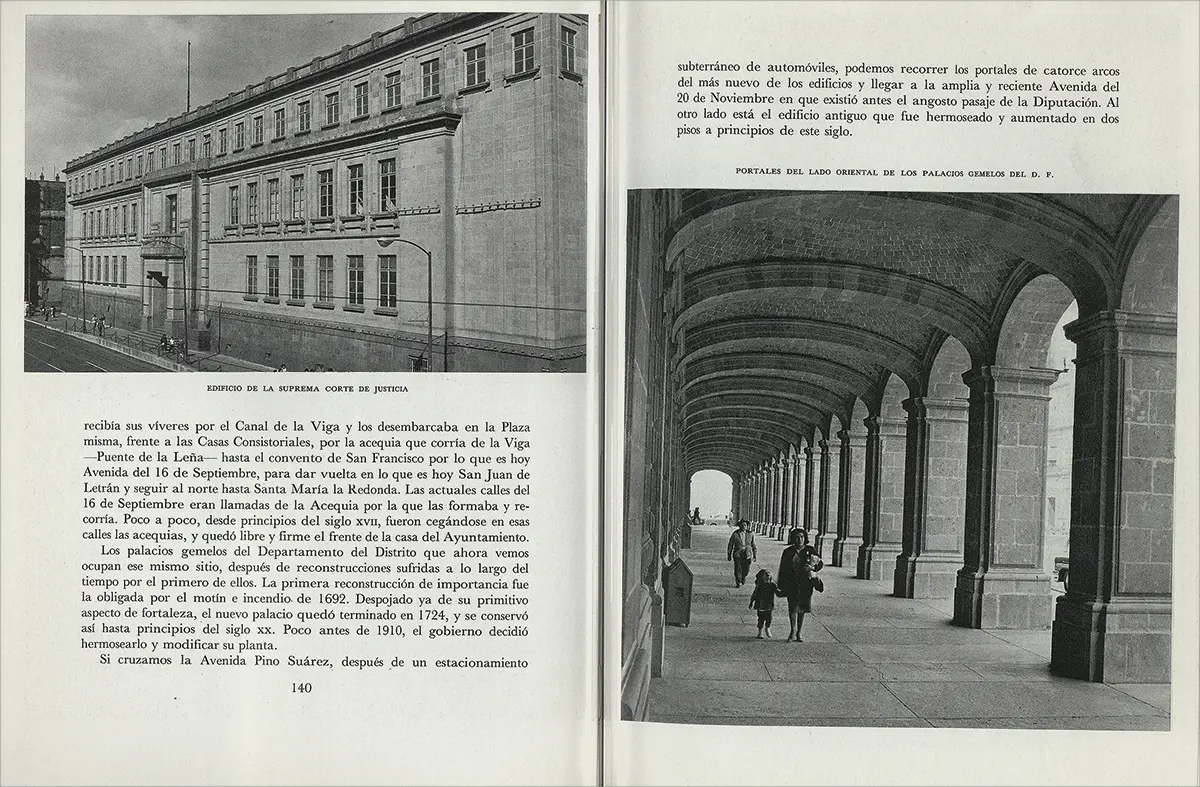
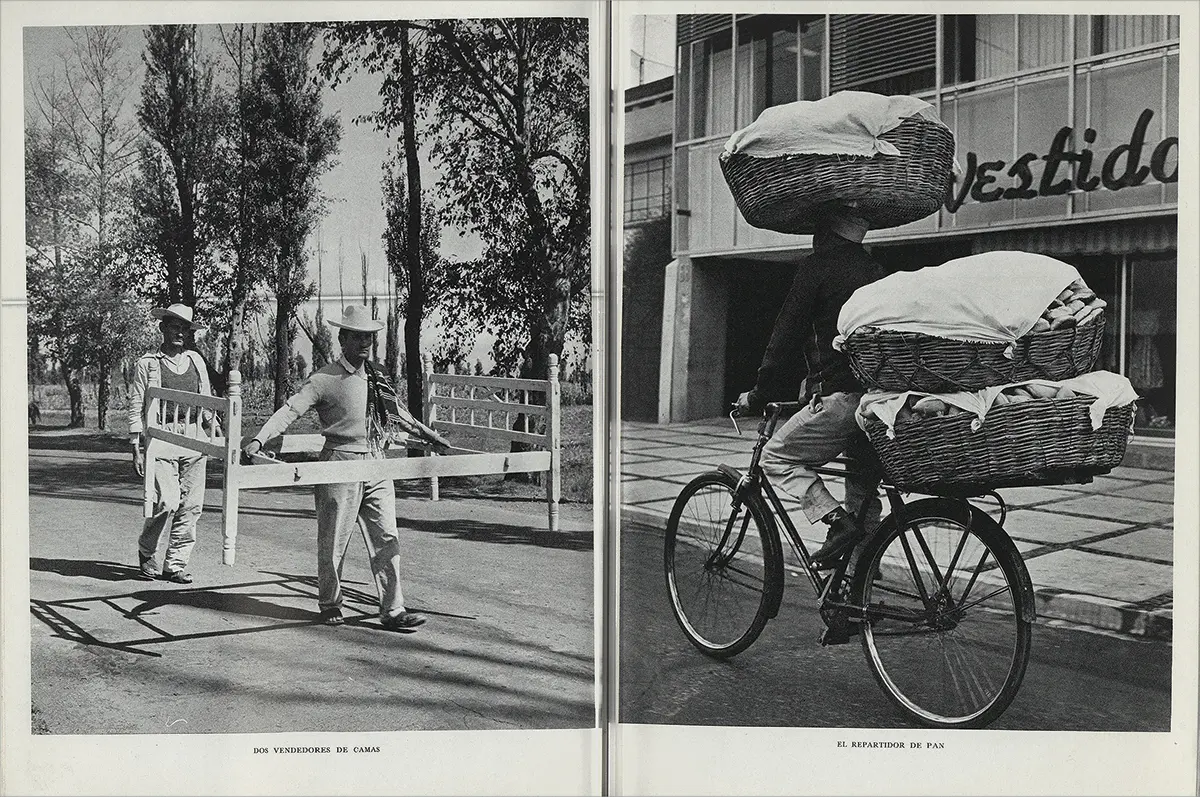
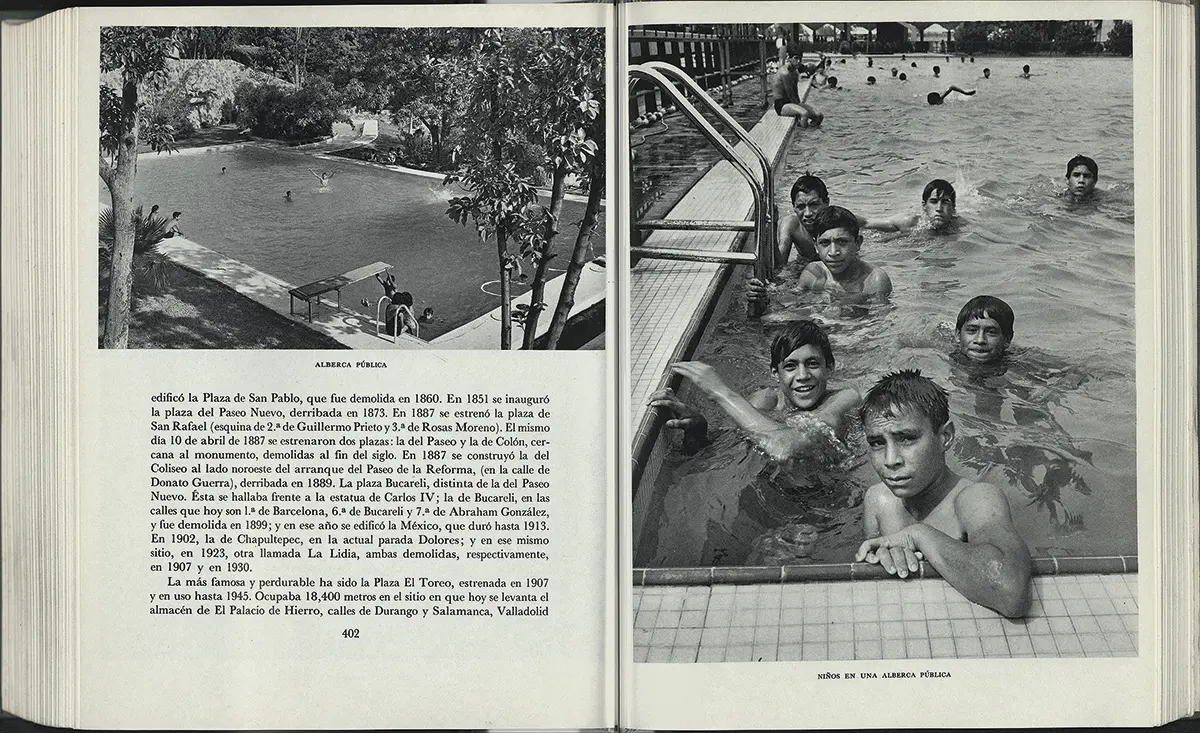
At first, the collaboration between the writer and the young photographer went along smoothly. However, after their initial meetings in the upper level of the La Capilla theater in Coyoacán, where Novo cited Moya, it was clear that the former rejected an essential element in the material provided by the later: people. According to Novo, people unnecessarily “muddied” the city vistas. Moya certainly includes people in his shots of the city and its monuments; they animated the urbanscape, which in the end functioned as an architectural stage for social life. For him, documenting Mexico was a personal and ideological matter. His photographs are an eloquent testimony of the visible traces of time on a city split between modernity and tradition, the public and the private, the social and the personal. But, above all, Moya’s work seeks to give an account of the shifts in emotional scale between the city as an inhabitable yet alienating machine and the individual as a sensitive subject.
While the commission demanded images of old stone and concrete buildings (traditional Mexico), as well as of the mammoth glass and steel skyscrapers that had begun to replace them in the 1950s (modern Mexico), Moya insisted on also including their inhabitants, however much they “disturbed” the frame. Looking down from above or up from below, he strove to emphasize the vertical growth of a city that became an abstraction. In other instances, he moved tightly close to his human subjects, decoupling them from the city’s visual noise to produce a portrait of their gestures.
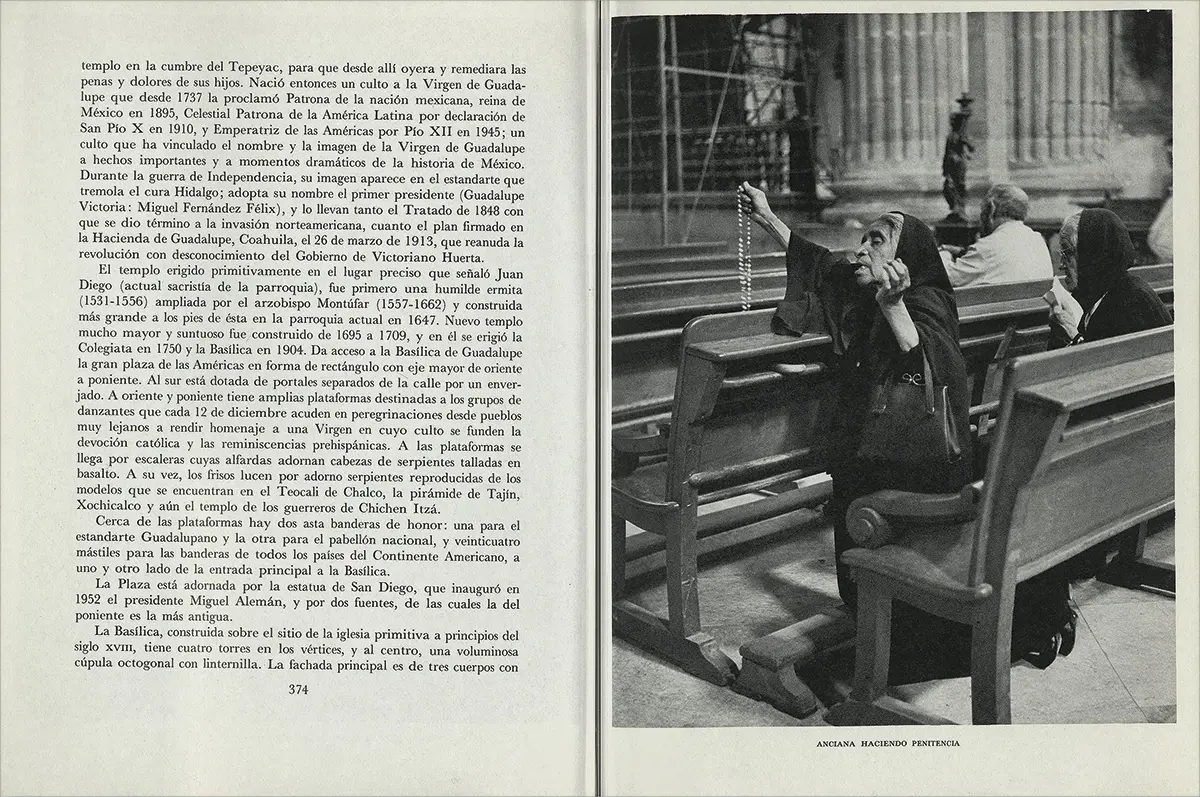
Despite Novo’s negative opinion, Moya was able to have his photographs included in the book. How? He went around the writer and defended the pertinence of his images in direct correspondence with the publishers. He sent them not only what Novo had commissioned from him, but everything that, in his judgment, should be included in the guidebook. Moya’s strategy was successful: Ediciones Destino published his photographs and credited him in the flap: “Rodrigo Moya was in charge of the graphic component of this book. His camera accompanies the text with fidelity, but also with remarkable personality, which turns this series of images into a unique and unforgettable vision not only of Mexico City but of all of the country’s emblematic cities and locations.”6
Salvador Novo’s México is not only Moya’s first book; it is also an alternative archive of many of the images he lost. Contrary to what the contract stipulated, the publisher returned some of the negatives, which is why a significant portion of the photographs only exist today in the published volume. Beautifully reproduced as photo-engravings, Moya’s 414 photographs use the genre’s analytical and descriptive capacities to express, via the inclusion in the frame of tangential details, the city’s weaknesses, ruptures, and inconsistencies. Presented in pairs or as two-page spreads, the photos take over half the book, giving it a distinctive personality. But above all, they build an alternate discourse independent of the famous chronicler’s merely descriptive guide to the city, written in an already outmoded style.
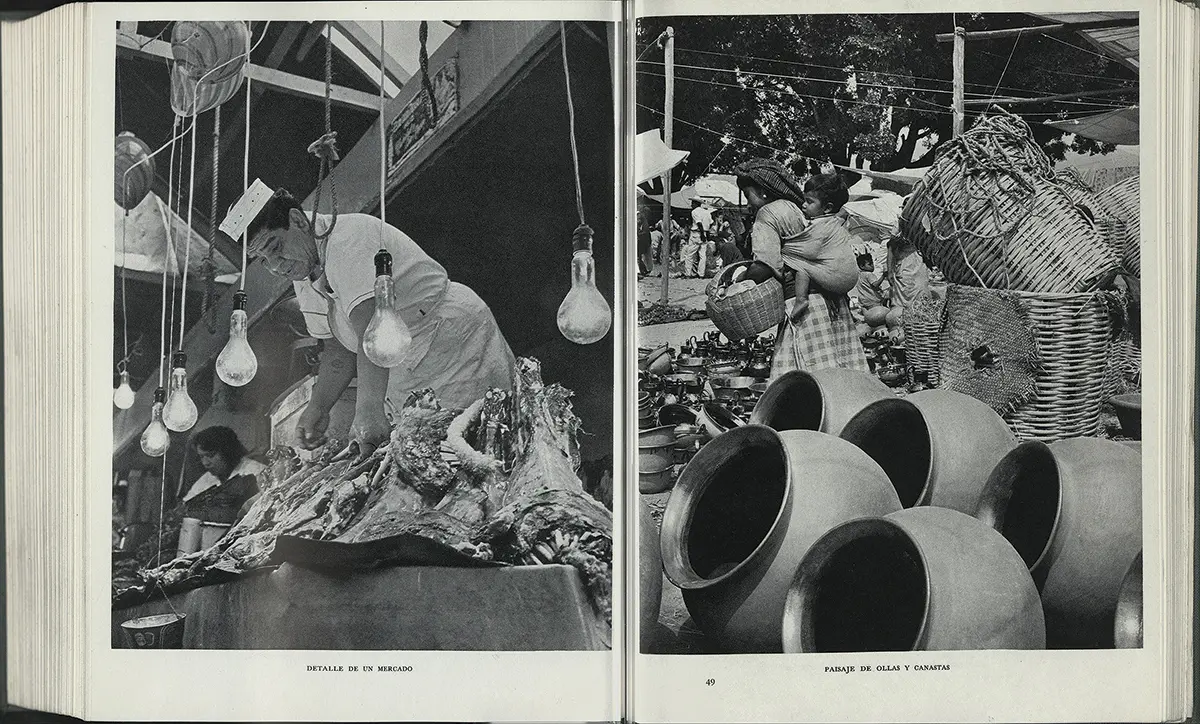
Preserved in a book that is now a collector’s item, these lost photographs of Mexico are an important source of shared memory. They function not only as captive images of the country in the era of “stabilizing development”—Novo’s request—but also as a subtle testimony of the cracks that were beginning to appear in Mexico’s economic and political system. A few months after the publication of México, in early 1968, and a few days before the opening of the Olympic Games, the country Moya photographed would clamor for democratic change in Tlatelolco Square.
NOTES
1. Rodrigo Moya, notes about Manuel del Castillo Negrete provided to Laura González, October 2019.
2. Interview with Rodrigo Moya by Laura González-Flores, Cuernavaca, October 1, 2018.
3. Águeda Ruiz, “Puertas”, Sucesos para Todos 1737, September 3, 1966: 59-62.
4. Salvador Novo, Nueva grandeza mexicana. With an introduction by Carlos Monsiváis and photographs by Héctor García, Mexico, ERA, 1967.
5. Salvador Novo, México. Imagen de una ciudad, Mexico, Fondo de Cultura Económica, 1967.
6. Flap copy, Salvador Novo, México. Guías de América, Barcelona, Editorial Destino, 1968.
*Editorial Destino, Barcelona, 1968. Essays by Salvador Novo. Photographs by Rodrigo Moya taken between 1963 and 1968.
LAURA GONZÁLEZ-FLORES