For some time now, people disillusioned with politics have taken the streets to protest against traditional—and, by extension, imperial—modes of government. Through collective protests and the production of chaos, but also civic indifference, various groups that celebrate intergenerational and plurinational dialogue, in addition to sexual, racial, and ethnic differences, have questioned the role of the government sector regarding public law and citizenship. They highlight the rather individual and selfish motivations that shape much of the State’s policies. The exercise of voting, for example, so celebrated this year in the United States with the centennial of women’s right to vote, has been questioned by millions. “Why to vote if all the political class has done, whatever the ideology, is to pursue power based on popularity gained through boldfaced bribery, through promises that are never fulfilled?” many ask. The discontent extends worldwide. But for a few exceptions, the connection between State and deceptiveness is an open secret. A secret—an idea—visible to all who want to see. Such discontent invites us to reflect on how many artists have represented and interrogated the metaphor of “bread and circus,” an old technique the political class uses to dazzle the people with food and spectacle. Or, to put it in different words, an old method for silencing the people. As the Roman poet Juvenal (ca. 100 C.E.) indicates it in his Satire 10: “Long ago, when they lost their votes and the bribes, the mob that used to grant power, high office, the legions, everything, curtails its desires, and reveals its anxiety for two things only, bread and circuses.”
The current exhibition at Another Space deals precisely with aesthetic forms that represent, reinterpret and/or critique the relationship between politics, State, food, and spectacle. Organized by Estrellita Brodsky, the founder of the space, the exhibition includes works ranging from anonymous mid-nineteenth century calling cards to more recent works by artists like Diane Arbus, Maria Fernanda Cardoso, Ross Rudesch Harley, Paz Errázuriz, Anna Bella Geiger, Victor Grippo, Anna Maria Maiolino, Hermanos Mayo, Miralda, Bruce Nauman, Laure Prouvost, Rubén Ortiz Torres, Andrés Serrano, Cindy Sherman, and Javier Téllez, among others. Alluding to the “bread and circus” metaphor first used by Juvenal centuries ago, at the dawn of Western “democracy”, the exhibition is titled Pan y circo: Appease, Distract, Disrupt. But while Juvenal focused mainly on the State as such, the exhibition focuses on the people, events, and modes of representation that questioned it.
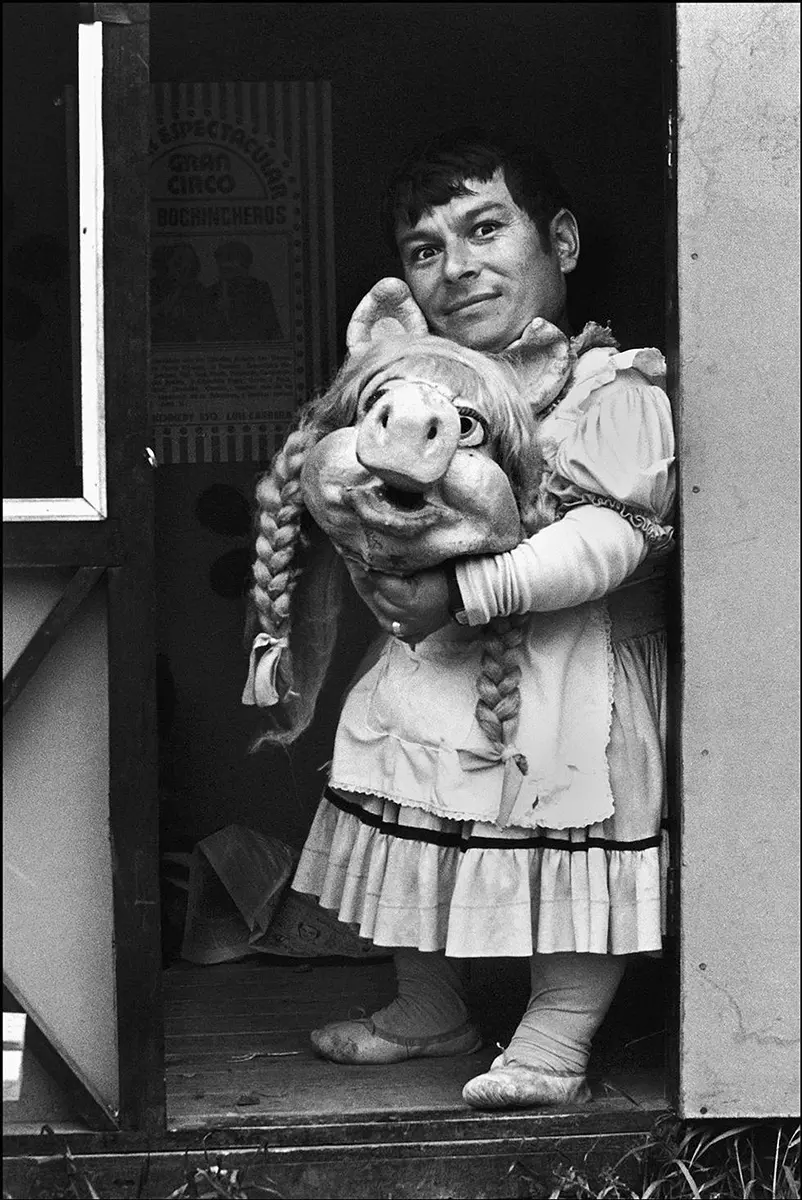
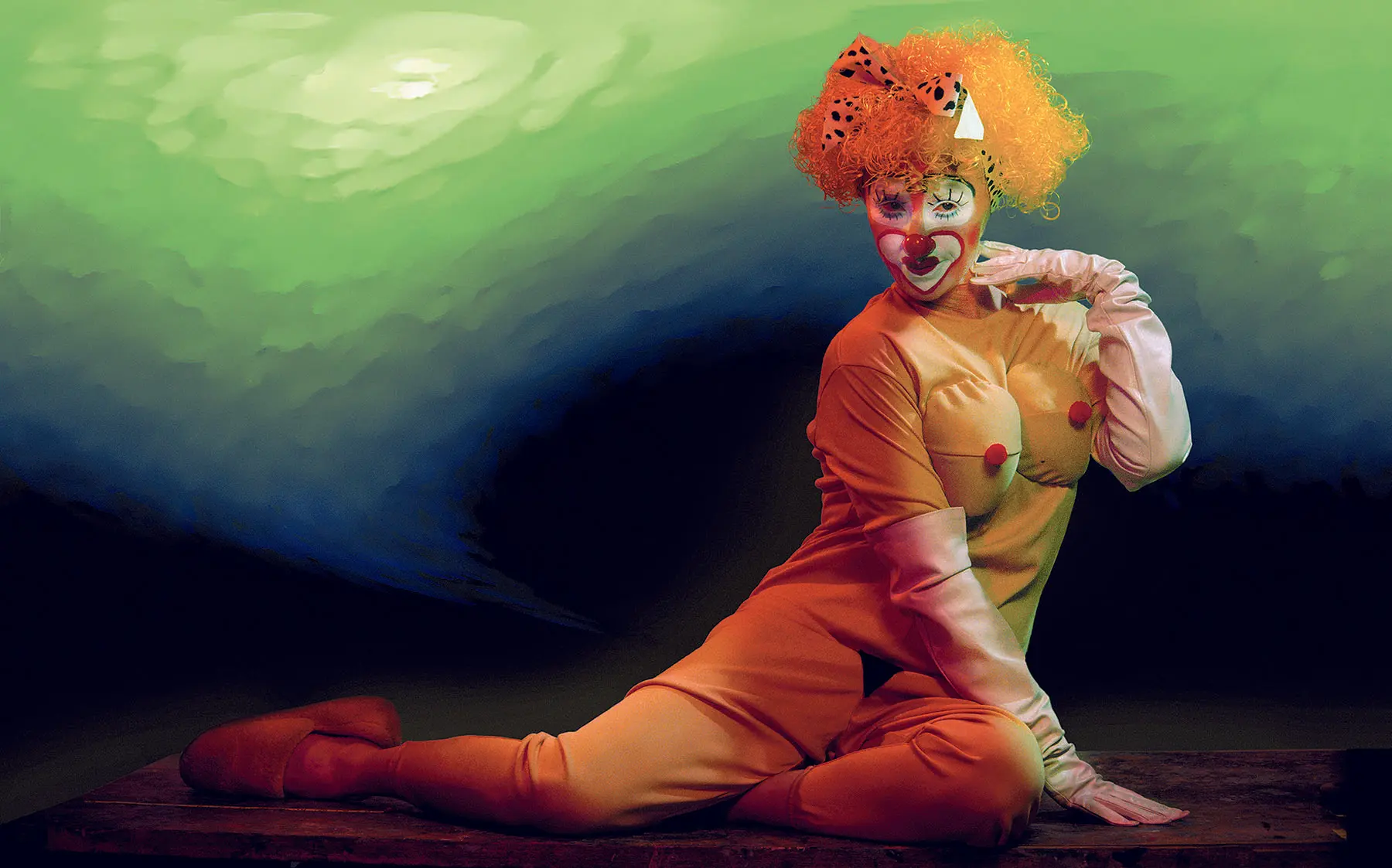
Many of the works featured in Pan y circo are photographs: photographs documenting subjects, moments, or performances, but also posed shots, built for the camera. We see, for example, the famous portraits of circus workers made by Paz Errázuriz (Santiago, 1944) in the mid-1980s. Showing everything that was denied and punished by the patriarchal, neo-conservative state of siege established by Pinochet and the modern local elites (1973-1990), Errázuriz invites us to see, feel, and think in complicity and solidarity with the dissident and the marginalized. Diane Arbus (New York, 1923) did something similar, for the social and imperial context of mid-century USA in her case, with her black and white photographs of circus workers. Indeed, Arbus’ and Errázuriz’s photographs, so often textually compared by critics, are now installed on the same wall, gazing at each other again and again. On display, across from hat wall dominated by documentary aesthetic approaches, is a selection of shiny, saturated, narrative, and conceptual photographs. These images are indebted to the Picture generation, and some even were shot by its historical members. In Untitled (2005), for example, Cindy Sherman (New Jersey, 1954) appears as a clown to critique, using ambiguous poses and, one could say, without masks, stereotypical ideas about a character being either happy or sad, which is to say, exclusively binary. And as we again look forward, we encounter Errázuriz’s and Arbus’ portraits, which unveil the capacity of the circus world’s subjectivity to challenge the homogeneous, binary discourse of the dictatorial program.
Other works featured in Pan y circo are equally situated in the context of the Southern Cone’s dictatorial regimes orchestrated by the infamous Operation Condor. In Our Daily Bread, for example, Brazilian artist Anna Bella Geiger (Brazil, 1933) invites us to think of a conceptual narrative of the human and of hunger in the context of the dictatorship in Brazil (1964-1985). Made in 1978, this work is comprised of six postcards and a silk-screen print on Kraft paper, mounted on cardboard. In the silk-screen, we read the Portuguese phrase that names the work: O Pão Nosso de cada día (Our Daily Bread). Of the postcards, the first one shows the artist’s lips and her hands holding a slice of bread. Others show two slices of bread with a hole at the center, representing the cartography of the South American continent and Brazil. Another postcard shows a bread basket with the slices and their cuts, and another, the drawing of said edges, this time provided with bread. Through a conceptual strategy that documents a performance where Geiger ate bread as she distributed the postcards to participants, the artist reflects on the issue of hunger and poverty in Brazil and Latin America.
Given the cultural resistance regarding local identities and geopolitics that derives from Geiger’s work, art critics and historians have situated it in the antropofagia tradition (eating the other, the colonizer). But when it comes to hunger, poverty, and de-colonial resistance, a second essential reference must be foregrounded: filmmaker Glauber Rocha’s celebrated manifesto Aesthetics of Hunger. Written one year after the coup d’état to describe the role of Cinema Novo (or Third Latin American Cinema) in politics and society, Rocha writes: “Latin America remains a colony. What differentiates yesterday’s colonialism from its current one is only the perfect form of the colonizer. In addition to the colonizers, the subtle forms of those who, on us, also carry out future blows... Latino hunger, for this reason, is not only an alarming symptom: it is the nerve of their society".
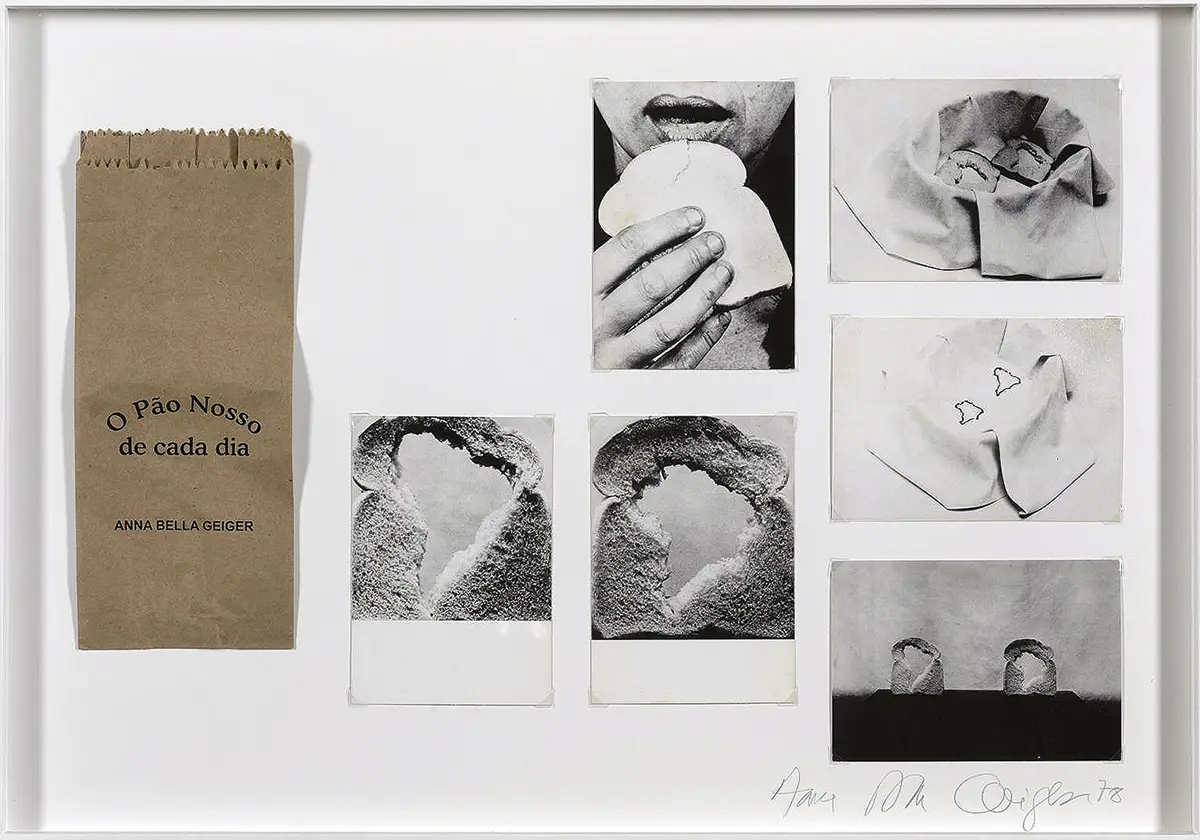
In the context of the exhibition, such aesthetics of hunger invites us to see Geiger’s performance and its recording as conceptual webs that give visibility to the “bread and circus” metaphor, in terms of the empire replicated by the local elites. On the other hand, and taking into account the dictatorial context in which Geiger and Rocha were working, the metaphor becomes impossible, since the people are no longer to be fed to gain “democratic” votes, but persecuted, tortured, and eventually killed. The people receive neither bread no circus. In that sense, Geiger’s work goes on step beyond the historical repetition of a Roman model. But as we also know, the truth is that “democracy” would later return, albeit “on edge,” to quote the title and the central issue of Petra Costa’s documentary, The Edge of Democracy (2019).
In her poem “Pan” (“Bread”), the Chilean writer Gabriela Mistral, winner of the Nobel Prize in literature, uses bread as a figure to evoke memories and cultures shared in the Americas. Mistral writes: “Everywhere in the world, it has been eaten, the same bread, its hundred brothers: bread from Coquimbo, bread from Oaxaca, bread from Santa Ana and from Santiago.”
And if one considers trans-Atlantic relations during the first half of the Twentieth Century, when Mistral wrote her poem just as thousands of artists and intellectuals migrated to Europe and vice versa, for political and/or cultural reasons (Chile, for example, received hundreds of Spanish republicanos fleeing the Franco regime, with the support of the poet Pablo Neruda, another Nobel Prize winner), bread can be thought of as a metaphor for a wider belonging shared between art, culture, and society. That experience comes to mind when we see Bread Browser in Pan y circo, the digital print of an installation by the Spanish conceptual artist Antoni Miralda (Spain, 1942). Art and life intersect, as usual, in Miralda’s work, where food is nothing but what we eat culturally, politically, and even ritually. But rather than analyzing now this particular work, what we need to do here is to reflect on the broader notion of “America” that Brodsky presents. It is an America that launches transnational and trans-Atlantic dialogs, and which, by doing so, resists being framed as a South in isolation from and opposition to the North. Instead of repeating a center/periphery discourse, what we see is an America never intending on inserting itself into the historical debates that are not their own or marking its distance from them. The bread-and-circus problem is personal, one could say, and in that measure, America reinvents and represents it, makes it absent, sets it in motion. Brodsky’s selection indeed sheds light on the capacity of time and space to render concepts more complicated, as Benjamin thought when he wrote his theses on history.
But if there is one thing that has not changed, this exhibition tells, it is the failure of economic and government policies concerning the issues of hunger and a life with dignity, which is to say, without bread and circus. It is that colonial continuity of “subtle ways [and] future coups” described by Rocha, and also, a desire to violate it, even if for that one needs to cross-militarize borders, risking one’s life. This comes to mind when we see One Flew over the Void (Bala perdida) (One Flew over the Void [Loose Cannon]), and always urgent and contingent video by Javier Téllez (Valencia, Venezuela, 1969). Projected in the middle of Another Space’s main gallery, One Flew records a parade organized by Téllez in 2005 in Las Playas, on the border between Tijuana and San Diego. A noisy multitude in a seashore setting with masks and slogans, the parade was attended by members of the local public, professionals working for InSITE (the exhibition for which the work was created), and patients from a nearby psychiatric hospital. The latter, their faces hidden under animal masks, carried signs revealing a wide range of more or less subtle injustices, i.e., injustices manufactured in past and “future coups.” The performance ends when a cannonball man is shot over the border and flies from Mexico to the United States. That metaphor, like a metonymy, violates border and sovereignty to highlight the adversities faced by millions of Mexicans and Central Americans who cross the border illegally in search of a life with dignity. The exhibition’s introductory essay ends the same way. As Brodsky writes in collaboration with Another Space: “[Bala perdida] offers a prescient take on the current administration’s use of the southern wall as a political circus. Coinciding with one of the most spectacular presidential campaigns in U.S. history, the exhibition ultimately aims to reflect on the increasing role of spectacle and entertainment as economic motivators and an integral part of the U.S. political arena”.