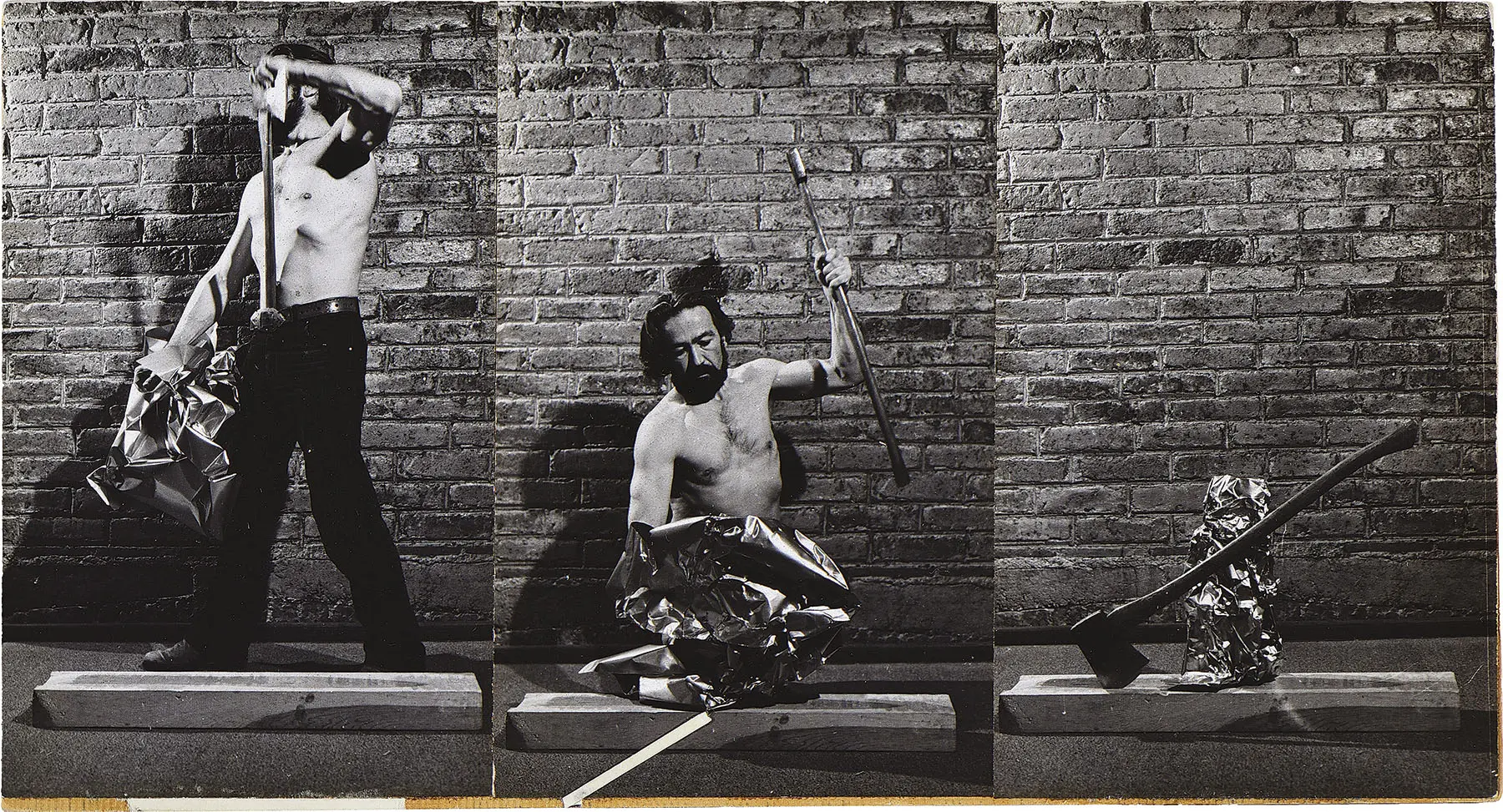
After the important retrospective “Si tiene dudas… pregunte” (When in Doubt... Ask, 2016) by performer and activist Mónica Mayer (1954)—one of the most active protagonists of the Mexican feminist movement1 of the1980s—the Museum of Contemporary Art (MUAC), of Mexico’s Universidad Nacional Autónoma, presents the first major exhibition by Marcos Kurtycz, entitled “Against the State of War. An Art of Total Action.” Some years ago, Marcos Kurtycz (1934-1996) opened in Mexico the path to political action with the performative staging of his own body. This Mexican of Polish origin arrived in the country shortly after the massacre of October 2, 1968. The personal shock felt by that terrible drama made him abandon his engineering profession to devote himself to a conceptual artistic practice, with his body as the primary vector. This important and notable exhibition—organized by art historian and researcher Francisco Reyes Palma, cofounder of Curare2 magazine—confirms the value of a museum designed to communicate effectively with the visitor. The curator worked about fifteen years on a multiplicity of geographically dispersed visual documents (drawings, notebooks, paintings, collages, photographs, videos, etc.). He had to locate them in several private archives, and then gather, photograph, film, or digitize them. All this to construct a meaningful journey that could bring to light the human, intellectual, and subversive personality of a rebellious and marginal artist. Someone who, throughout his life, maintained an unstoppable need to create and express himself with complete independence.
The rooms are organized according to thematic rather than chronological guidelines. The documents, works, and performance videos in the exhibition make one aware of the existence of an immense oeuvre ignored by most critics, and of the strong personality of an artist who used manifold techniques and materials with total freedom of time and place. The museography was structured in eight sections that establish a dialogue following a helical scheme to combine the different relational and spatial aspects better. This premise allowed the curator to organize the numerous documents and to preserve the traces of some performance videos in a way that helps the visitor to come and go without visual saturation.
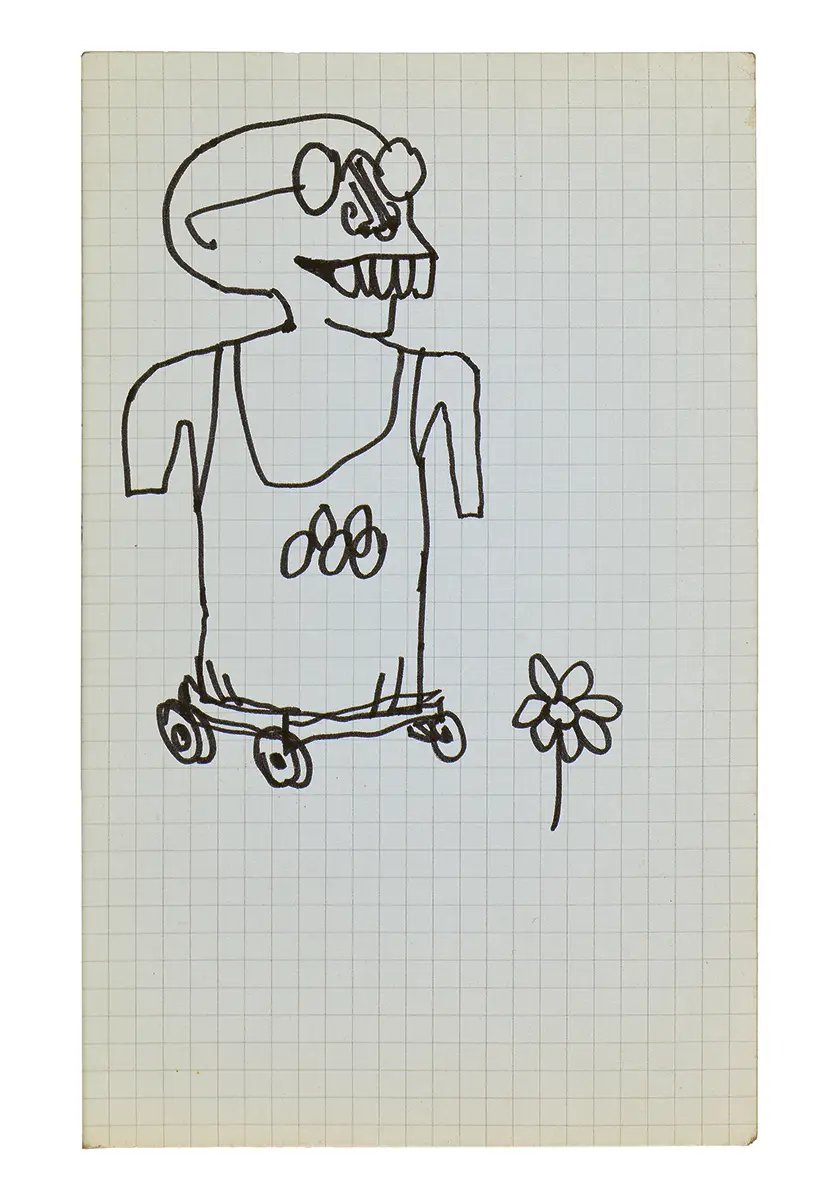
This exhibition allows us to know a man who was first an engineer and then an artist. Marcos Kurtycz is also presented to us as an intellectual who spoke with Marxist theorist Stefan Morawski to build “anarchist ethics transformed into conceptual actions.” The next section, called “For an Integral Action” (photo-action, urban action, ecological action, linguistic action, etc.), presents a large number of documents whose careful preservation by the artist himself records detailed planning of his works, as you might expect from an engineer. The show’s trajectory continues with “The Artist / Significant Body and the Aesthetics of Risk and Aggression,” a section that profusely documents his actions with the body through the “face-sign,” attacks on the gallery and the museum, the sacrificed body, and disease.
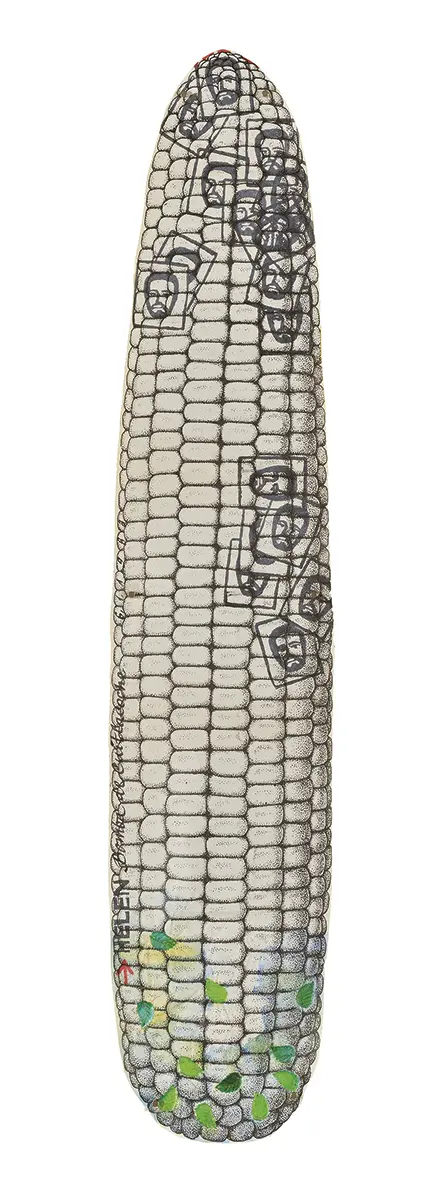
In the section “The Art of War” (related to practices pioneered by the Japanese group Gutaï since 1954), the visitor is confronted with the deep pain of an artist whose family, of Jewish origin, was exterminated in concentration camps and whose mother was shot before his own eyes by the Nazis when Kurtycz was only eight years old (“Corn Bombings,” in galleries and Mexico’s Museo de Arte Moderno when Helen Escobedo was the director; critiques against the genocide in Hiroshima and against Reagan; the incorporation of the tzompantli;3 the 1989 Twin Towers attack with Mexican candies as projectiles; etc.). “The Edition as Ritual” section also confirms the vast field of actions—more than a hundred in Mexico—carried out by Kurtycz; in this case, artist’s books (such as a project consisting of making one book per day in 1984 during the entire year in homage to George Orwell), a graphic workshop with Chontal indigenous children, or visual poetry where word games and irony predominate). The exhibition circuit ends with “The Snake Cycle” (also including many “artifacts”: the term used by the artist to refer to actions and performances), exhibiting his snakes of air and fire, mercury, etc.)4
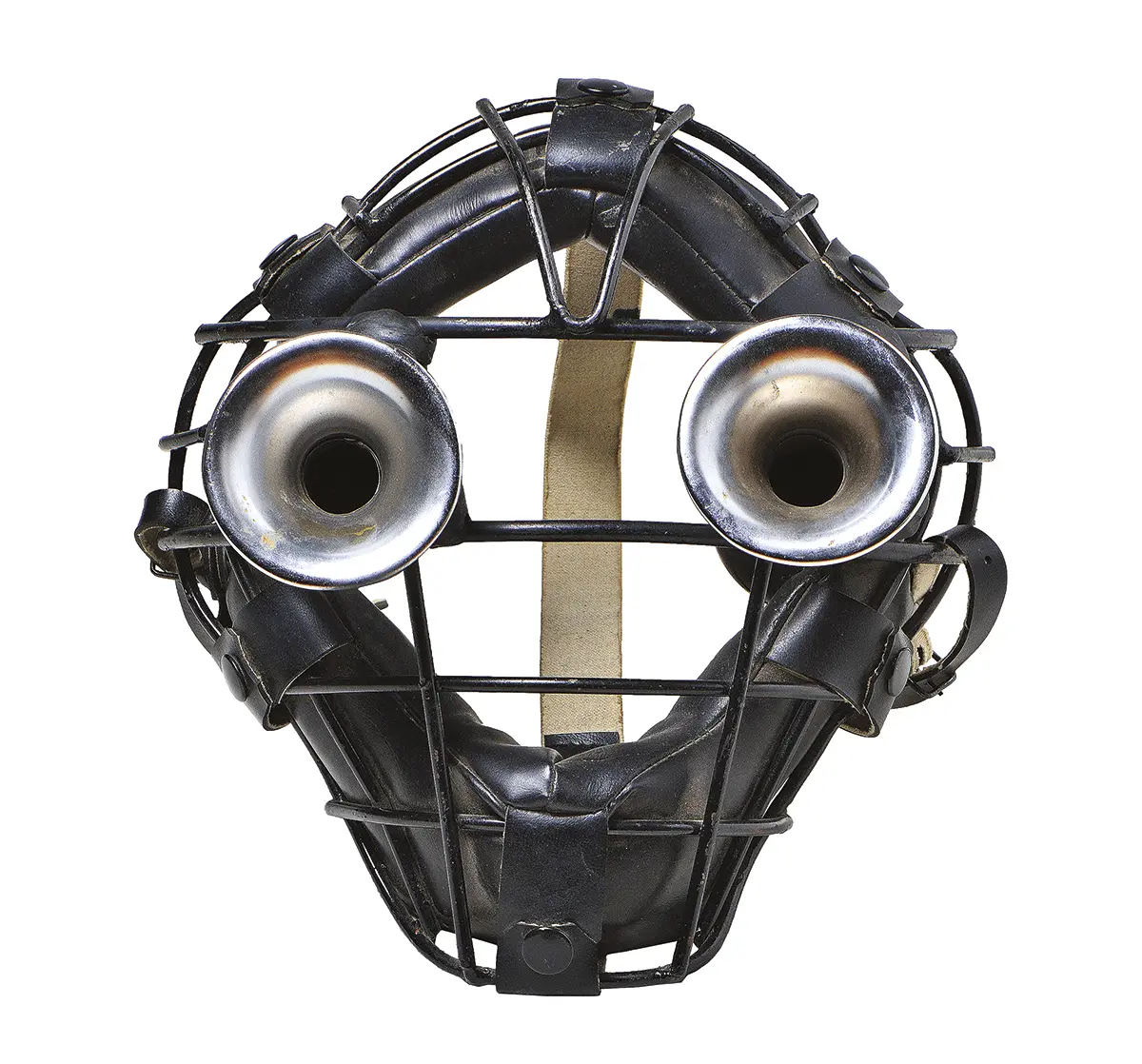
In the catalog, Francisco Reyes Palma concludes by saying: “Marcos Kurtycz never forgot that we live in a perpetual state of emergency, or that the anarchic autonomy and imaginative power of art only makes sense in the threshold where many forces impossibly coexist: provocative impetus and meditated orchestration, perverse pleasure and sensorial deployment, the games of abjection and the defense of life, play, and obsessive production, humor and the aesthetics of risk.”5 The exhibition immerses us in the life—quite tragic by the way—of this artist who was born Polish and became Mexican, and shows us his permanent war against authority, injustice, order, and disorder; his fight against all wars and also against himself in the face of sickness and death.
NOTES
1. With her accomplice, Maris Bustamante, and the “Polvo de Gallina Negra" Group. Following the artist’s desire, this exhibition highlighted art as a collective process.
2. Curare (1991-2010) was cofounded with Olivier Debroise, Karen Cordero, and James Oles.
3. A tzompantli is a stone structure with carved or inlaid skulls at the base, and wooden stakes at the top, where the heads of human victims sacrificed to the Aztec gods in Central America were impaled.
4. Marcos Kurtycz was operated to extract a brain tumor, resulting in a facial rictus he called “facenake,” and became a new icon in his work, just as his “face-sign” before.
5. “Between Humor and the Aesthetics of Risk” in Marcos Kurtycz. An Art of Total Action Against the State of War, Spanish-English edition, MUAC, Unam, Mexico, 2019, p. 33.
CHRISTINE FRÉROT