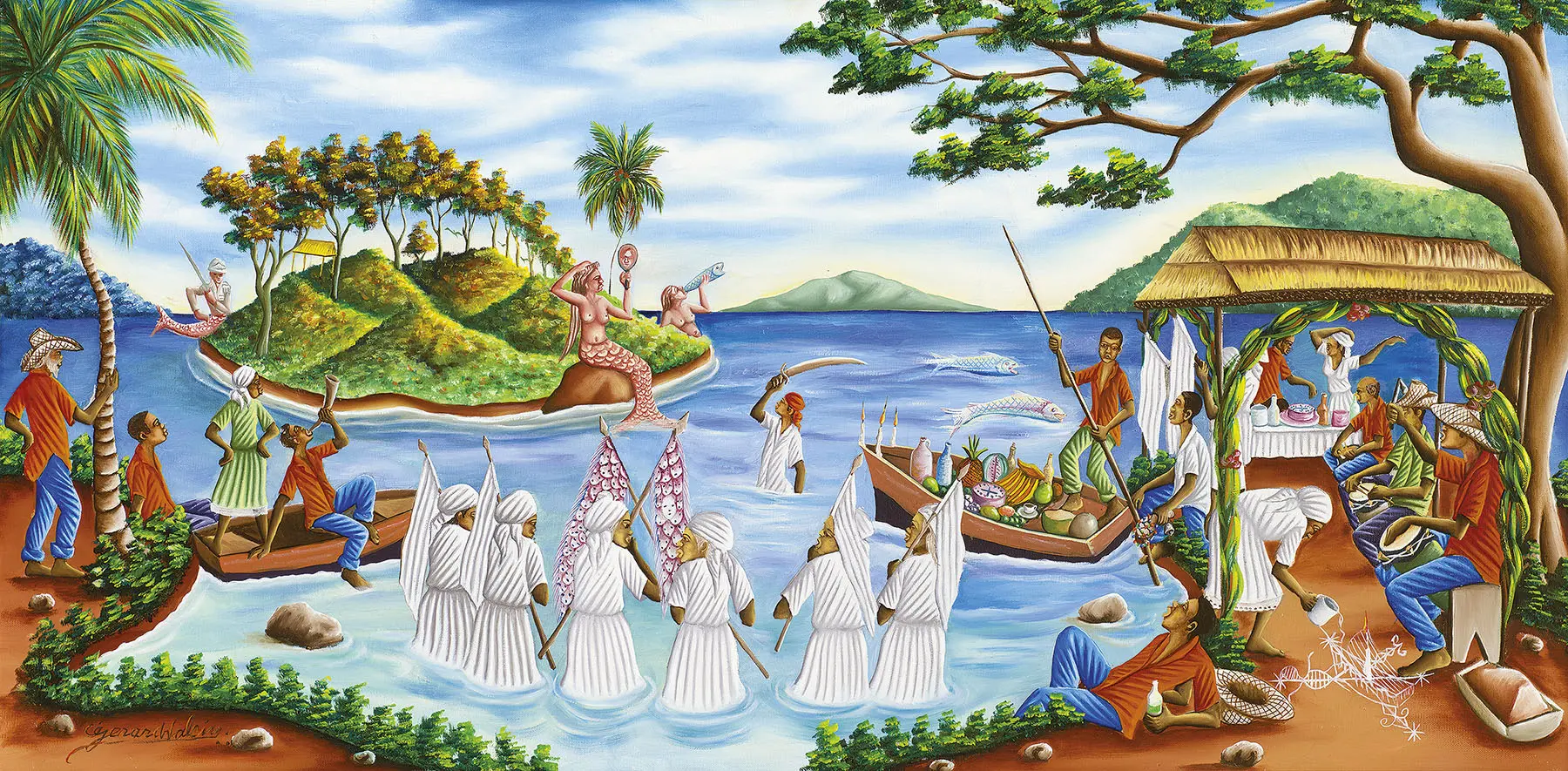
The diverse Caribbean communities are becoming increasingly visible in Miami’s socio-cultural scene, especially in Miami Dade County’s artistic and cultural institutions. An eloquent example of this is “Life and Spirituality in Haitian Art” (2021), a group show curated by Francine Birbragher-Rozencwaig at the Museum of Contemporary Art in North Miami (MOCA).
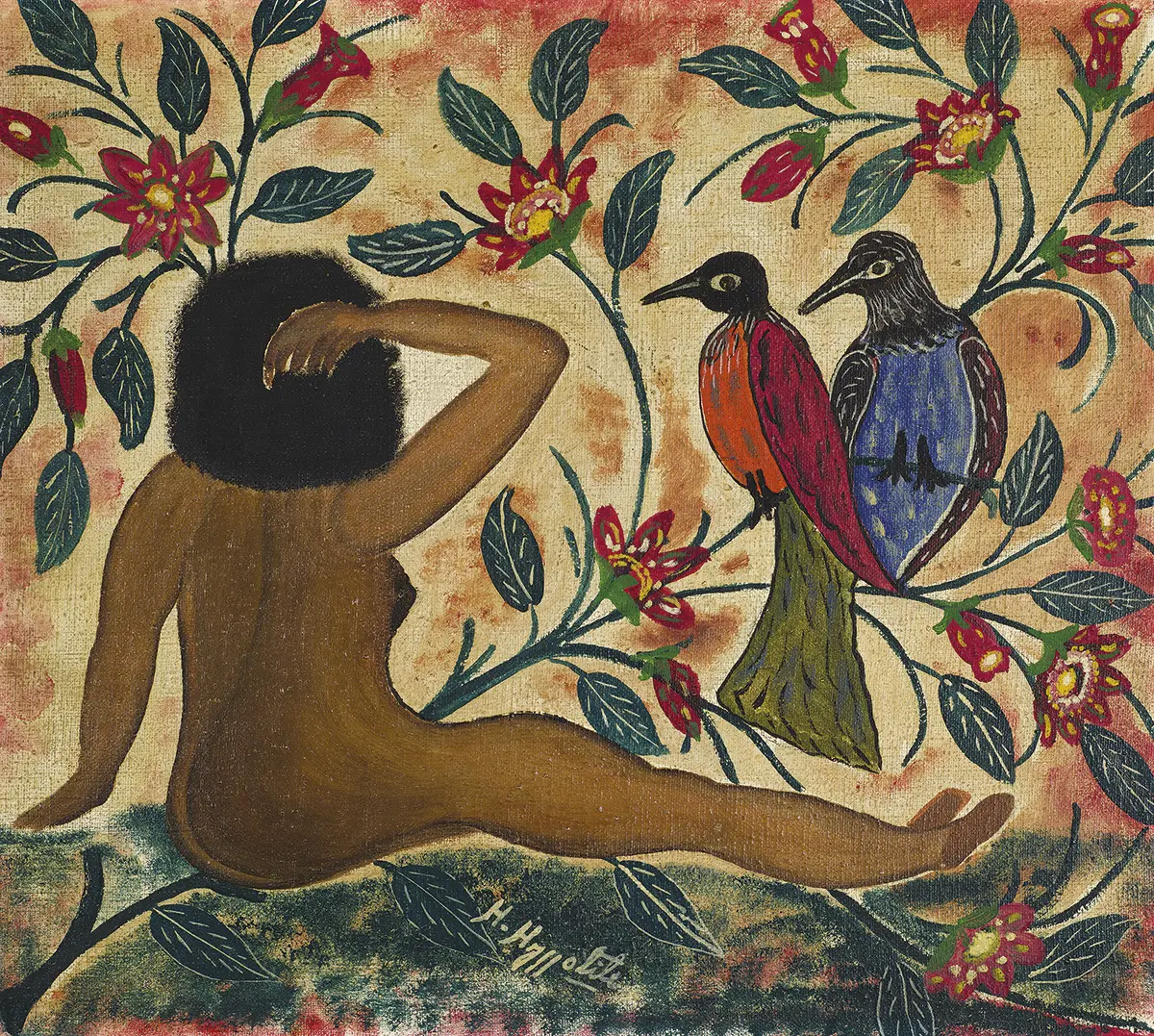
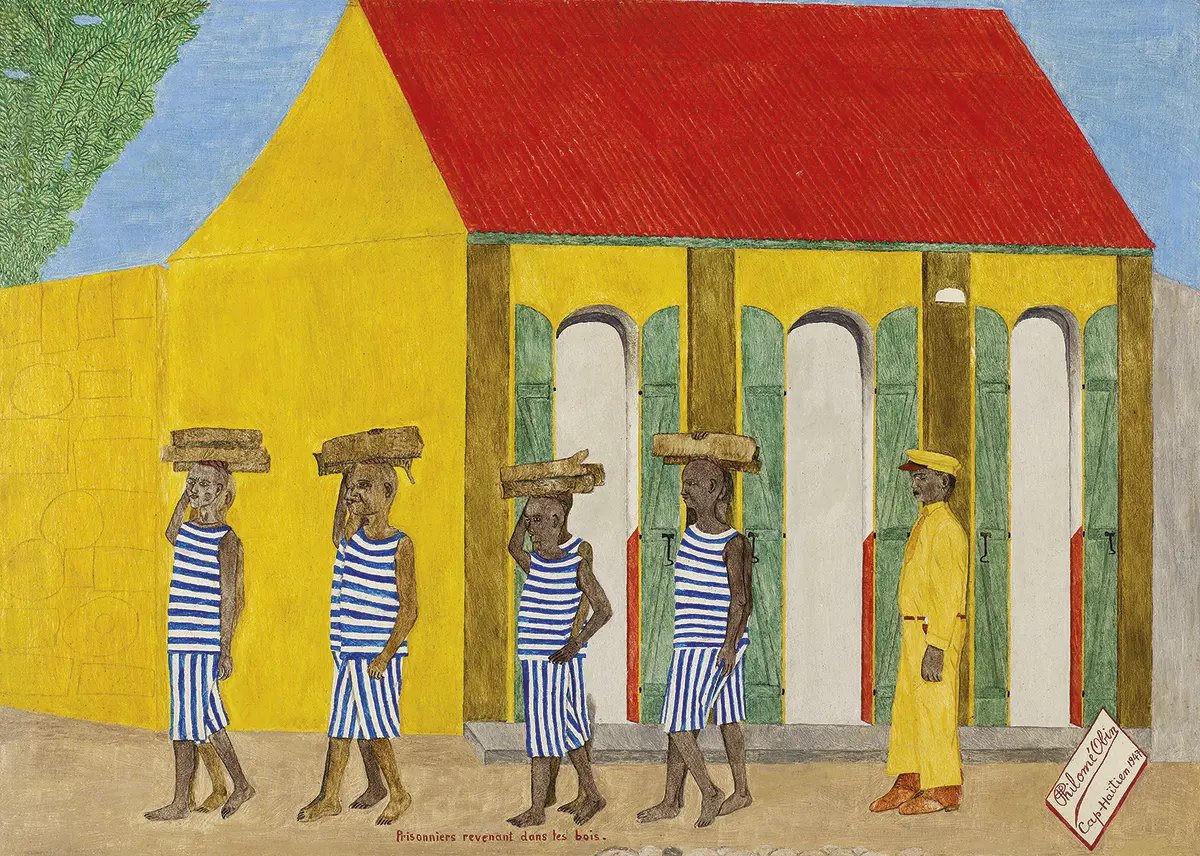
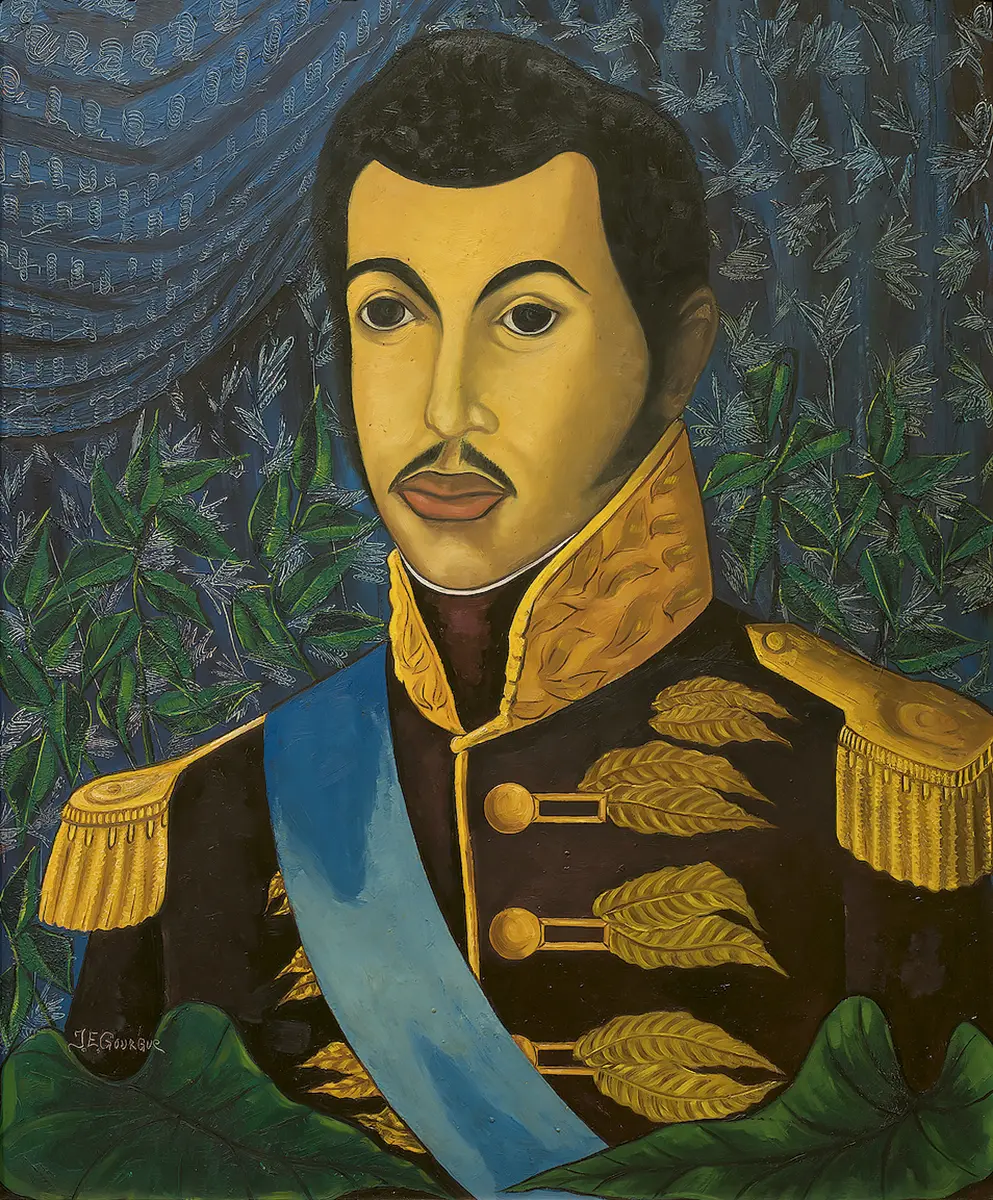
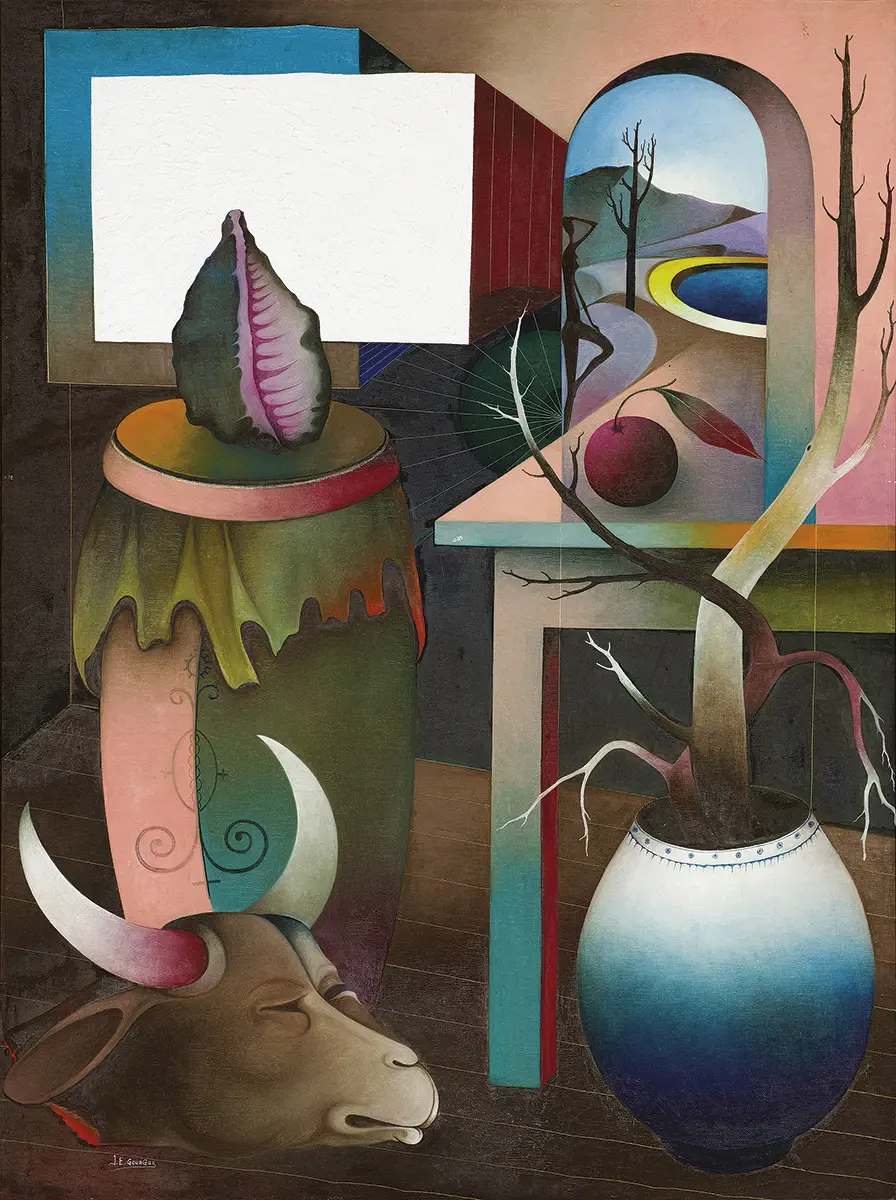
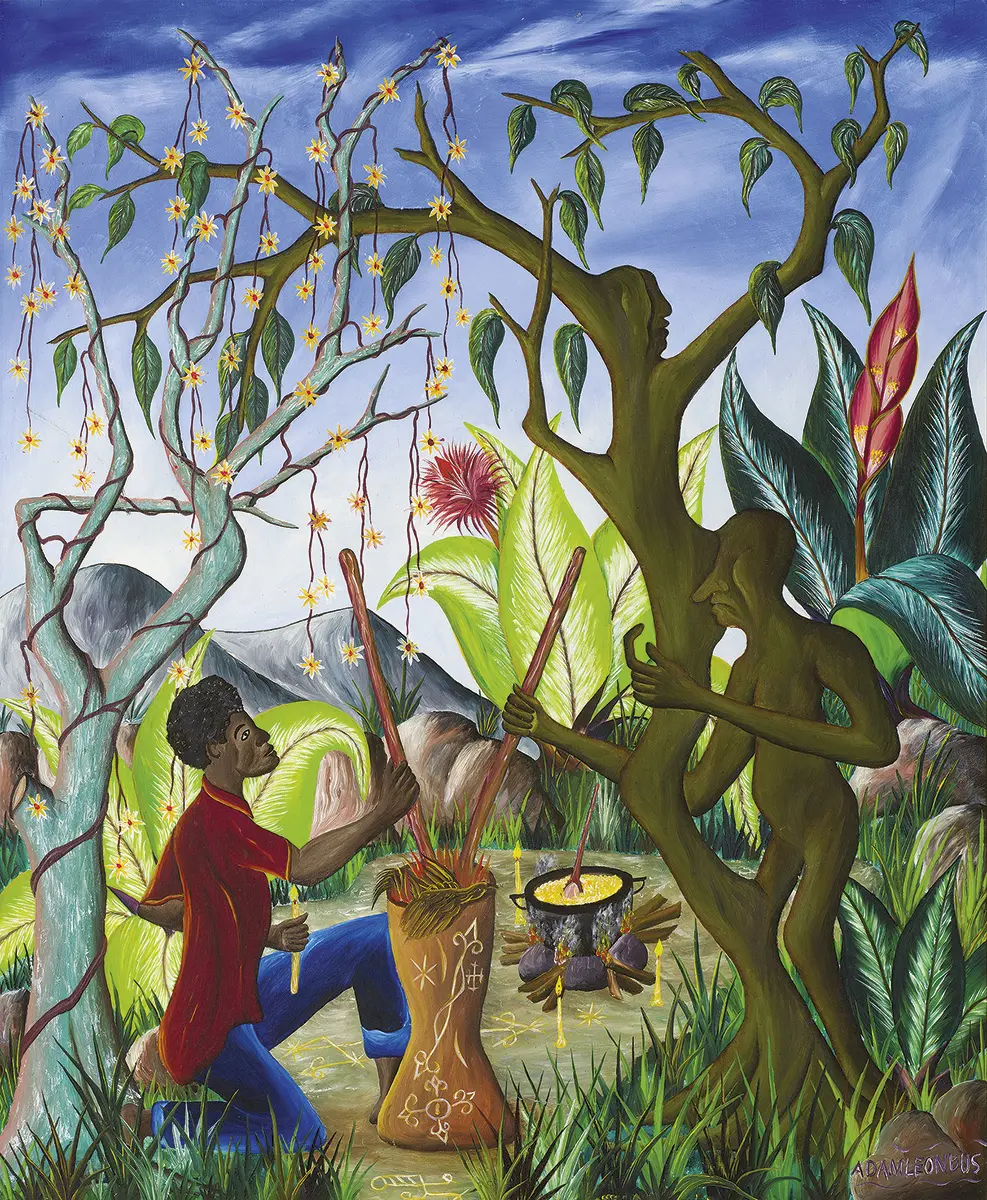
The exhibition offered a substantial revision of Haitian painting through the works of some dozen painters, with an important emphasis on those born at the end of the nineteenth and the first half of the twentieth centuries. “Life and Spirituality” is based on a selection from the Betty and Isaac Rudman Trust Collection and weaves an aesthetic itinerary around the forms and contents that prevailed at the time of Haiti’s entry into artistic modernity. The show featured the works of artists from two generations associated with the Centre d’Art in Port-au-Prince—such as Héctor Hyppolite, Philomé Obin, Wilson Bigaud, Jacques-Enguérrand Gourgue, and Gérard Valcin—as well as a group whose trajectories were contemporary to those masters and who were also their pupils and were equal members of this important center for the history of twentieth-century Haitian art. On display were works by Ernst Louizor, Célestin Faustin, Adam Leontus, Dieudonné Cédor, and Laurent Casimir, among others.
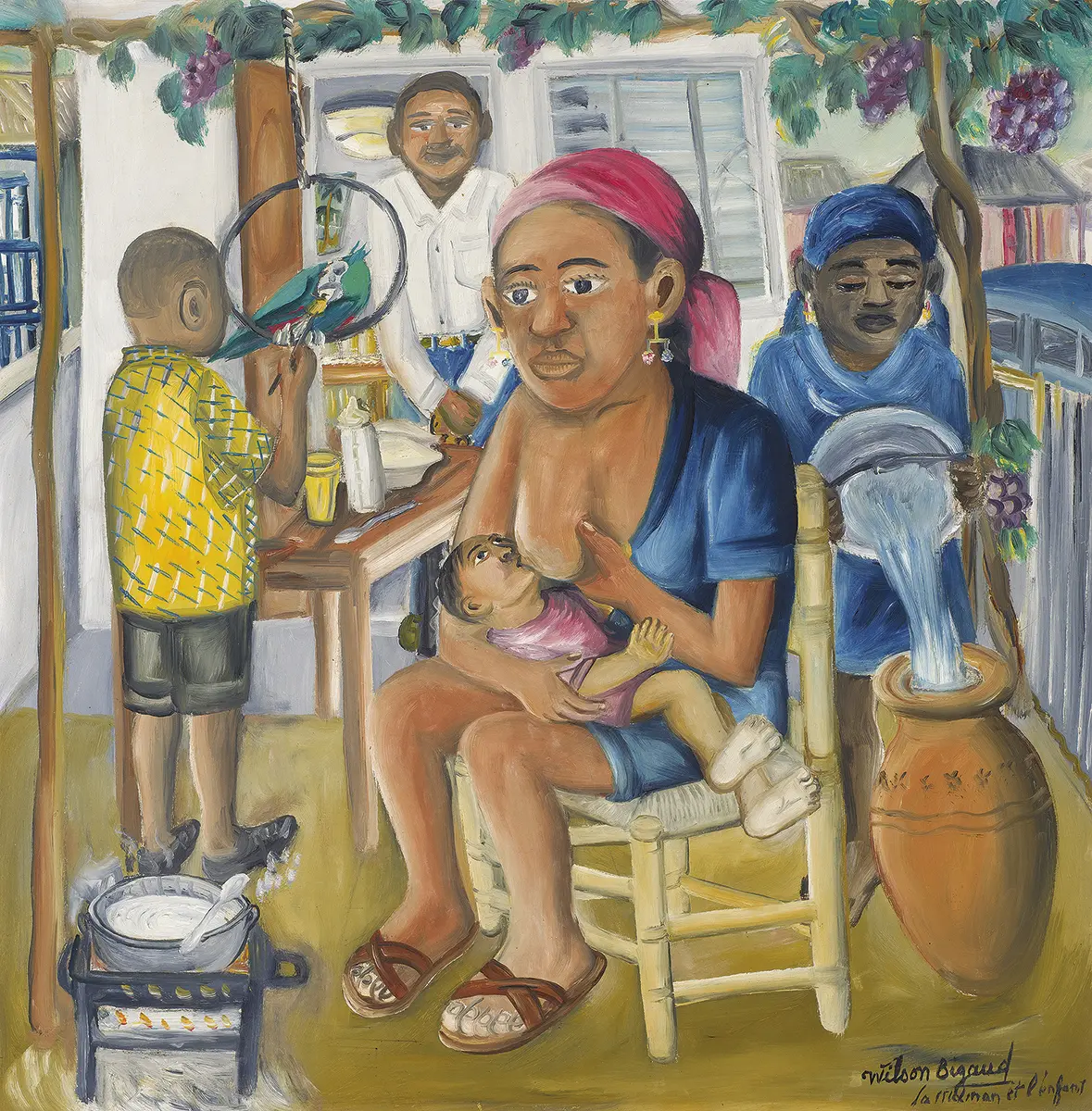
When walking through the exhibition, visitors were struck by the predominant poetics of figuration and by the absence of abstract painting. This speaks about the remarkable attachment to a figurative tradition in Haitian painting among a group of key figures to understand the art of the period mentioned above. This figuration projects a spiritual feeling and a loose style with thick colors and accentuated pictorial features, above all in works by Obin, Palanquet, Normil, and Vital. But there were also paintings with impressionist outbursts, such as those of Guerda and Ernst Louizor. They all give the impression that figuration—due to the variety and number of artists shown here—was the predominant language in modern Haitian manifestations during the first half of the last century. And this may have to do with the profoundly rural character of Haiti, which dates back to its colonial past when the industrial plantations of crops such as sugarcane and coffee shaped the development of the country’s society and culture. Precisely this model of agricultural development occupies a very prominent expression in the discursive aspects of the entire exhibition, as seen, for instance, in the thematic attachment to the rural world, to crops and animals, and the daily activities and interactions of peasant life. The agricultural world is also present in the visions of landscape, food, and popular festivals. In addition to these themes, mythological scenes related to religious syncretism are notable in the works of Adam Leontus, Gesner Abelard, or Gérard Valcin. There are also historical references to the heroes of Haiti’s independence in, for example, the paintings that Jacques-Enguérrand Gourgue dedicated to Toussaint Louverture, Jean-Jacques Dessalines, and Henri Christophe. The rural world and the agricultural life and landscape are as omnipresent in the exhibition as the virtual absence of urban references, which can be glimpsed in Wilson Bigaud.
In Miami, the specificity of a group show such as this one may have struck as odd if unaware of the profound demographic changes that have occurred in the city during the last fifteen years. Today it isn’t easy to find a more Caribbean city than Miami in the entire United States, not only because of its proximity to the Caribbean and the peoples of the Greater and Lesser Antilles but also because of the substantial Caribbean migratory diaspora that has settled in Miami, fundamentally after 1959 and constitutes the most significant part of its current population.
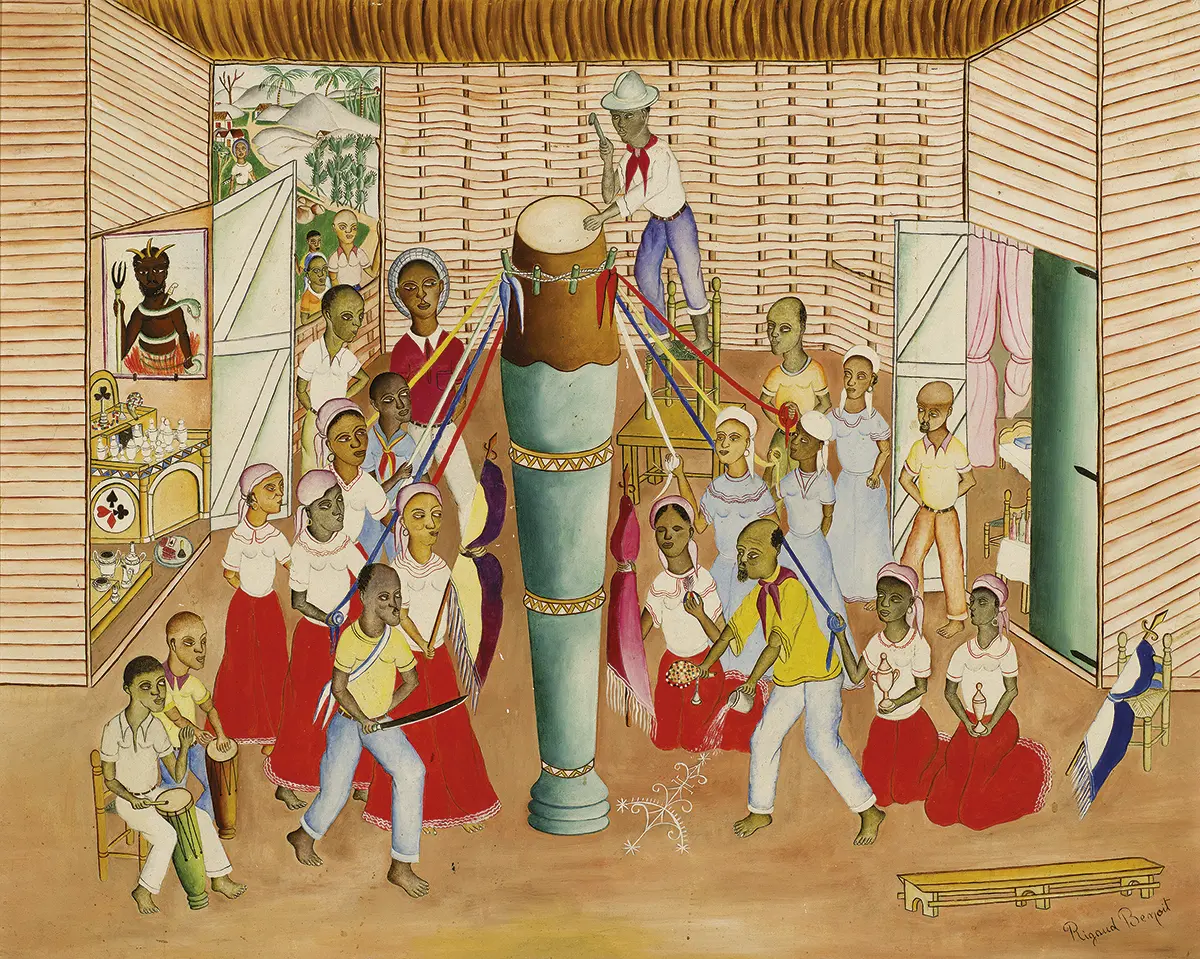
In this rich socio-cultural setting, Haitian immigration has played an increasingly important role in the city. Its diaspora is marked by two moments that have also shaped Haiti’s recent history. The first moment took place in the early 1970s when Haitian refugees fled the brutal repression of Jean-Claude Duvalier’s dictatorship (1971-1986). The second one occurred after the devastating 2010 earthquake, from which the country has not yet recovered.
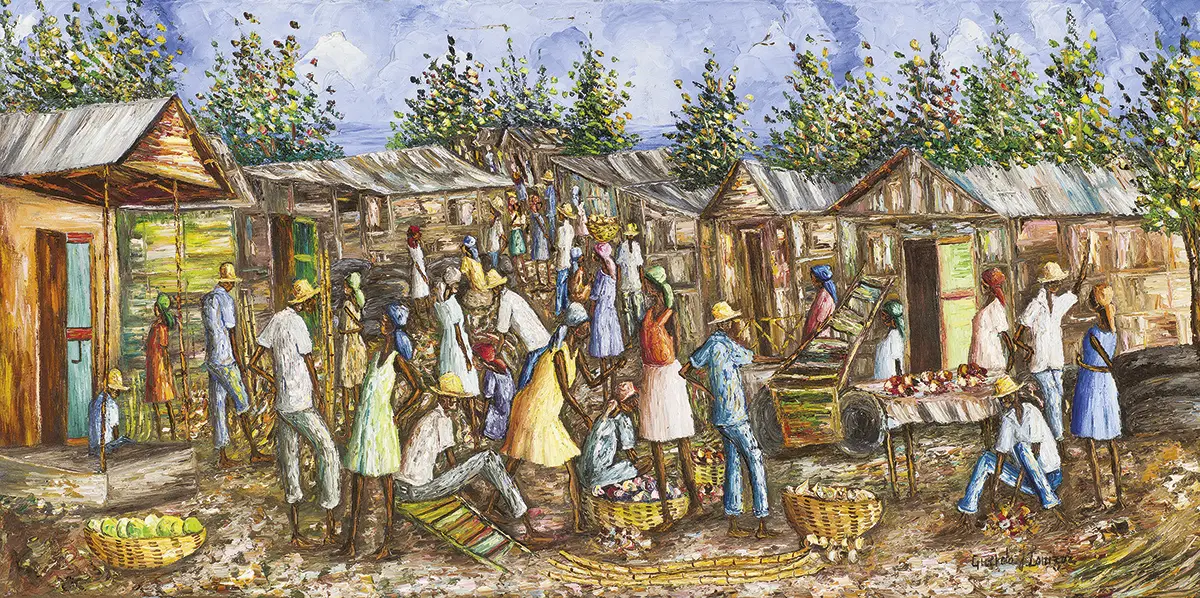
Little Haiti is the most visible example of the Haitian diaspora in Miami, but it is not the only neighborhood. Even by just walking down 123 Street NE, North Miami’s central artery, and where both MOCA and the Mayor’s Office are located, one can often hear the language of Haitian immigrants, Creole, being spoken. Then, it is no accident that the mayor of North Miami is Philippe Bien-Aime, who was born in Port-au-Prince (Haiti) and emigrated first to Canada in 1991 and then to the United States in 1993. Nor is it surprising to perceive a rural aura in their backyards, where chickens and roosters still run around and where religious offerings to the gods of the Voodoo mythology fill parks and open spaces. Syncretic religious offerings—often consisting of a jumble of feathers and bird remains, ripe bananas, red ribbons, dried coconut shells, and rusty metals—point to an imaginary, a spirituality, and a totemic metabolism between individuals and their cultural milieu. To walk the streets with small shops selling clothes and food, and to listen to the conversations of residents in colorful costumes—as if they were singing their words—transport us for a moment to another time and to a lifestyle that tries to find its pulse and place in the midst of an urban setting with which it has established permanent socio-cultural exchanges. In this transculturation process, Haiti’s socio-cultural imaginary—which fuses elements of indigenous, African, and European cultures—has begun to mingle with other Caribbean diasporas and those of the northern Anglo-Saxon world. There are lots of bananas, cassava, yams, and sweet potatoes in their diet and McDonald’s and Coca-Cola. In “Life and Spirituality in Haitian Art,” this community had the opportunity to directly appreciate brushstrokes and episodes relating to its origins and history. In these pictorial sources, they could find inspiration to reflect on their past and the richness and potential of their socio-cultural future.
* Photos: Daniel Bock. Courtesy: Museum of Contemporary Art, North Miami. Betty and Isaac Rudman Trust Collection
DENNYS MATOS