In the history of Latin America, extractive economies are not a recent development. They were already a significant presence when Europe began its chapter of extermination and occupation in the region in the late Fifteenth Century. While mining was a widespread practice in pre-Columbian times, only when a real fever for easy riches became established did such activities grew in scale, evolved into the central axis of an uneven exchange between continents, and came to play a pivotal role in the colonial economy and later periods. By the Twentieth Century, mining had become a highly controversial topic.
In the Americas, everything was forced to bend to that will: landscape, peoples, identity, history, and narrative. Five centuries later, after the tradition of traveling painters and the focus on customs; the first painting of American landscapes by American artists; and artists who, in the early Twentieth century—when we first began to move from a colonized imaginary to the awakening of an artistic —began to gaze upon their own past with benevolent eyes; a relationship with nature and the exploitation of the soil continue to be recurring themes in contemporary art. Perhaps this is due in large apart to our deep-rooted connection to the countryside and rural life, as well as to our historical relationship with loot and the violence of the land. The violence inevitably takes place on it as a result of our habitation, and the violence that is visited upon it as we transform the landscape into a mere landfill.
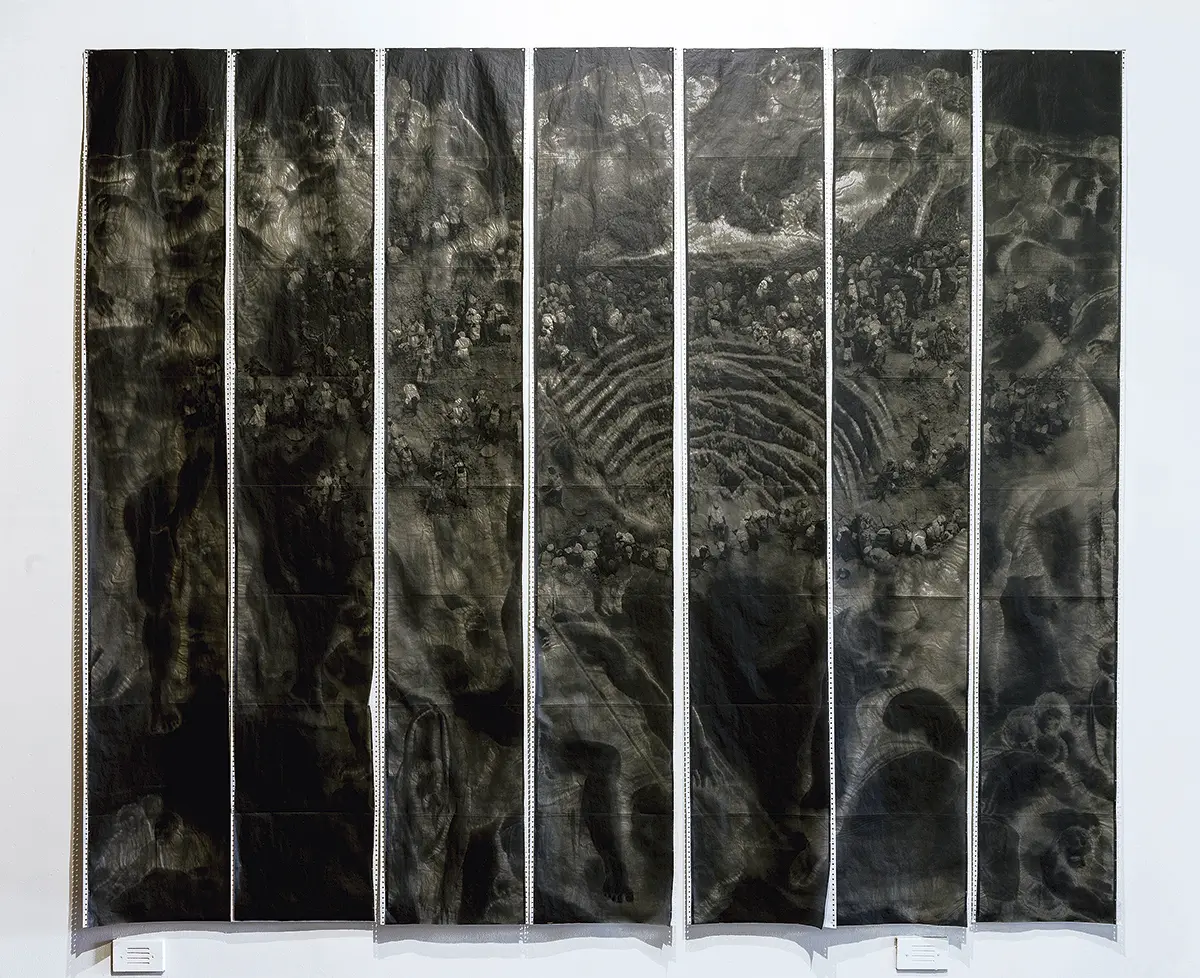
The exhibition Fortuna. Diálogos: extracción, economía y cultura (Fortune. Dialogs: Extraction, Economy, and Culture), curated by Óscar Roldán-Alzate, offers a necessary revision of the topic. Based on the dialogs fostered among fifty-two artists, it analyzes ways in which men and territories have interacted in the process of resource-extraction, mainly using mining. The argument posited by the curatorship focuses on how, while it is true that the extractive economy has played a dominant role in processes of cultural and historical configurations, even in pre-Columbian times, its practices are profoundly problematic. That is particularly true today in the context of Latin America’s economic policies, as they are both a means of survival and a driver of material loss of landscape and human dignity.
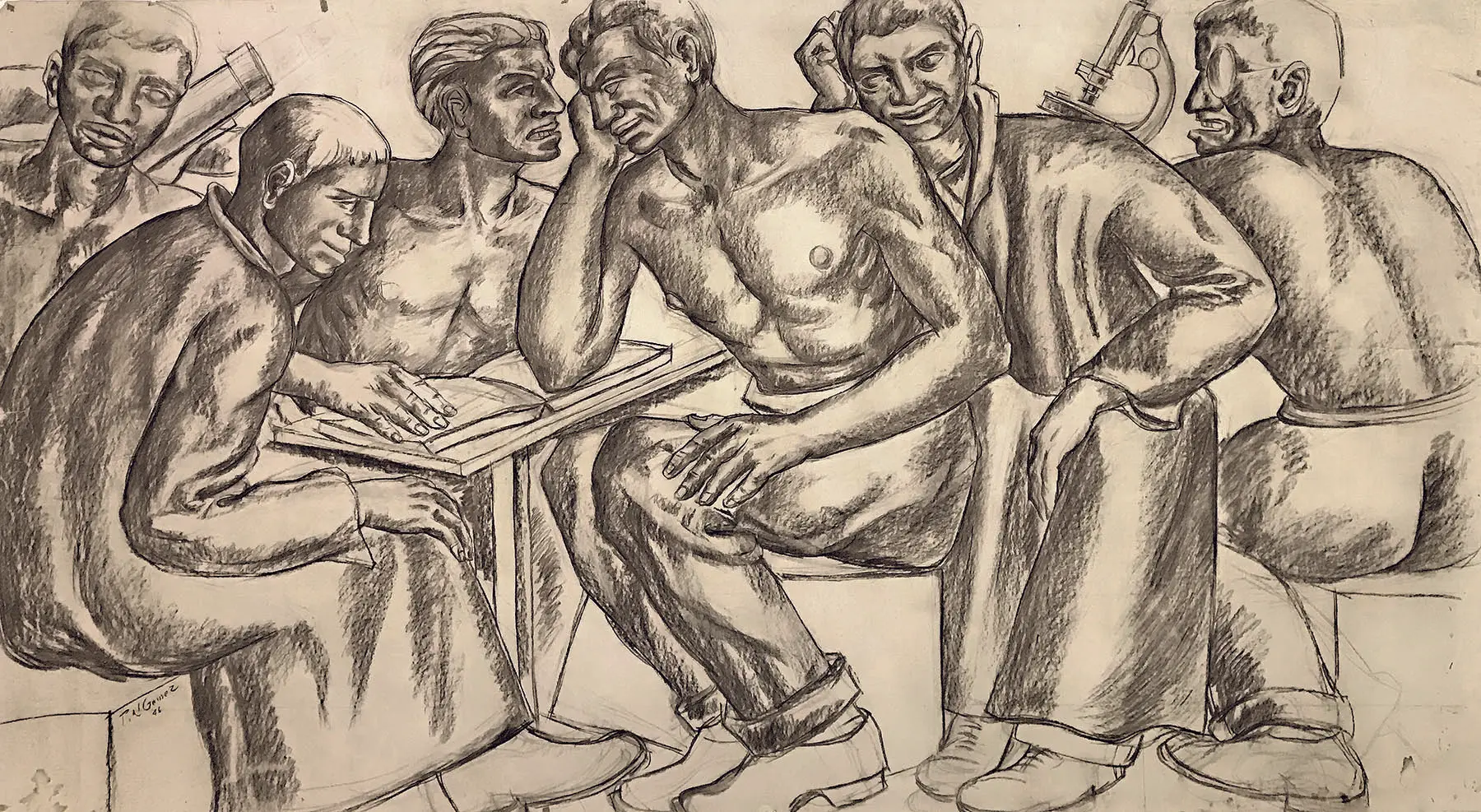
Through a wide selection of works displayed in two spaces, the Museo Universitario de la Universidad de Antioquia and the Casa Museo Pedro Nel Gómez, the exhibition brings forth the perceptions and reflections of a large, multigenerational group of Colombian artists. On the one hand, it includes artists who were active witnesses of the transition from the Nineteenth to the Twentieth Century. Francisco Antonio Cano, Marco Tobón Mejía, and Pedro Nel Gómez (the later closer to the 1930s and 40s) highlighted the subject of the mining as a proud legacy associated with progress and a promising engine of economic and social development. It also features the work of artists who, starting in the 1980s, have formulated critical and transdisciplinary approaches not only to issues directly related to mining, but also to the shifting dynamics and processes that mining triggers in the environmental, geographical, and cultural domains. It is worth remembering that the connection between environmentalism and art practices is not new. In the 1960s, with Land Art, that environmentalism became a topic of interest for the arts. Later, however, that interest moved from the landscape to the human-related effects of its consumption.
Among the salient aspects of the exhibition is the fact that it works autonomously in each museum, and it can be seen in any sequence. The curatorship is ambitious not only in the number of artists included but also in the scope of their participation (some with two or three projects on exhibit). The narratives that each space articulates and the interpretive guidelines they provide help visitors connect the works beyond their points of formal or thematic convergence with extractive practices, despite the wide variety of formats, language, materials, and media (drawing, painting, sculpture, mixed media, photography, installation, video, historical documents, archeological items, among others).
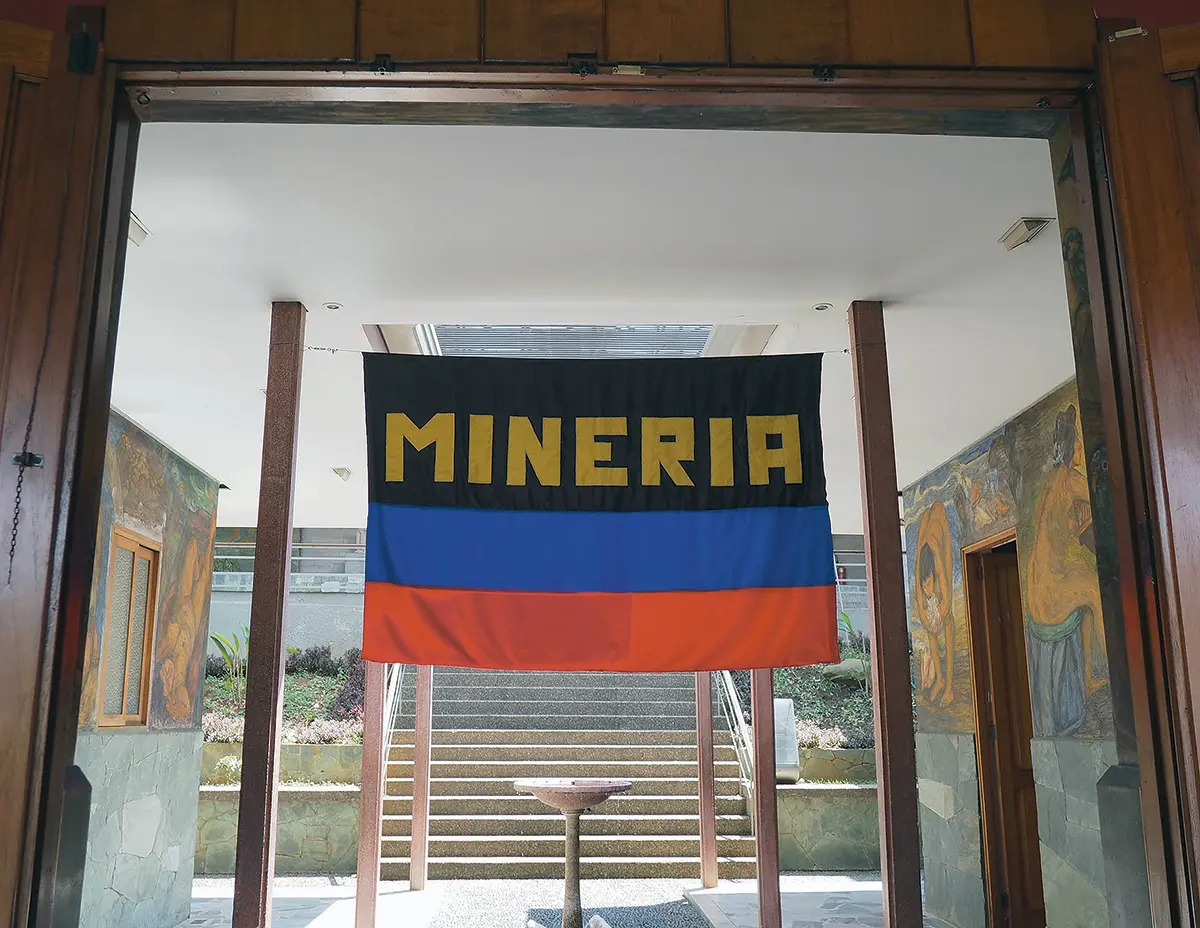
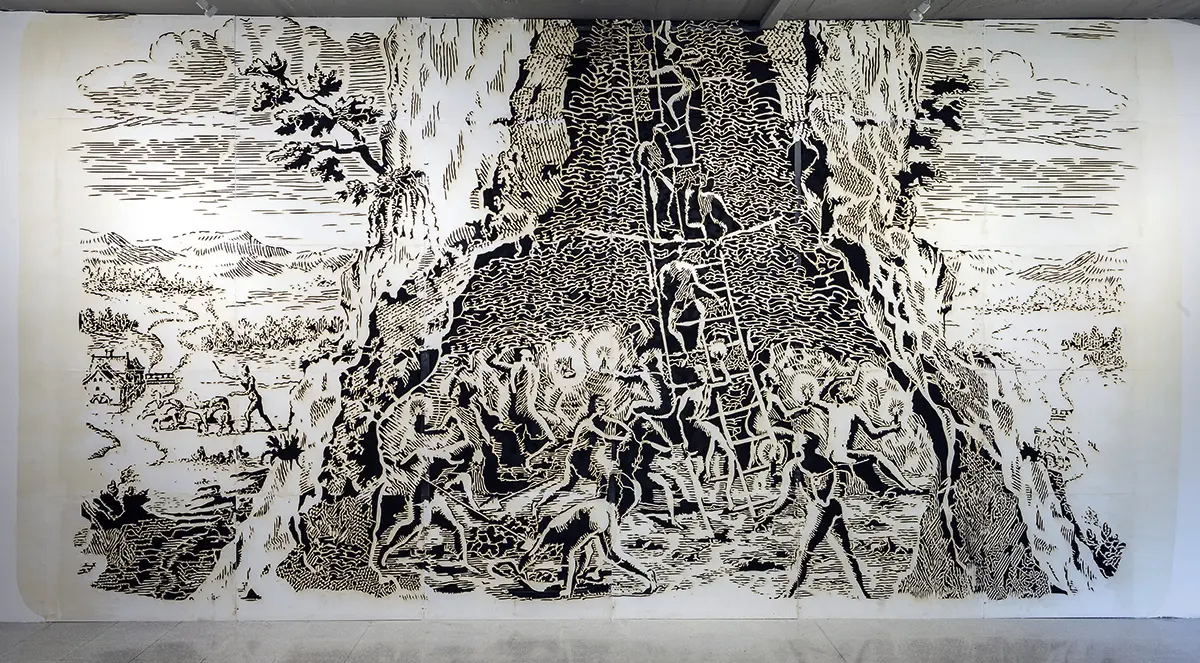
While the exhibition does put forward a revision of cultural and ecological changes derived directly from extractive modes of production, it also provides a counterweight based on its engagement with issues that are undoubtedly transversal and inherent. At the same time, from a different perspective, it addresses complementary or less literal topics such as biodiversity, pre-Columbian and colonial history, material culture, progress, or art history itself. Thus, works like Eduard Moreno’s Tierra en la lengua (Soil on the Tongue) and Rompimiento de gloria No.1 (Glory Break # 1); Carlos Castro’s Penetración (Penetration); or Antonio Caro’s Bandera Minería (Mining Flag), propose a critical reformulation of historical narratives and national symbols by pressuring them and bringing to the fore their underlying relationships of asymmetrical power.
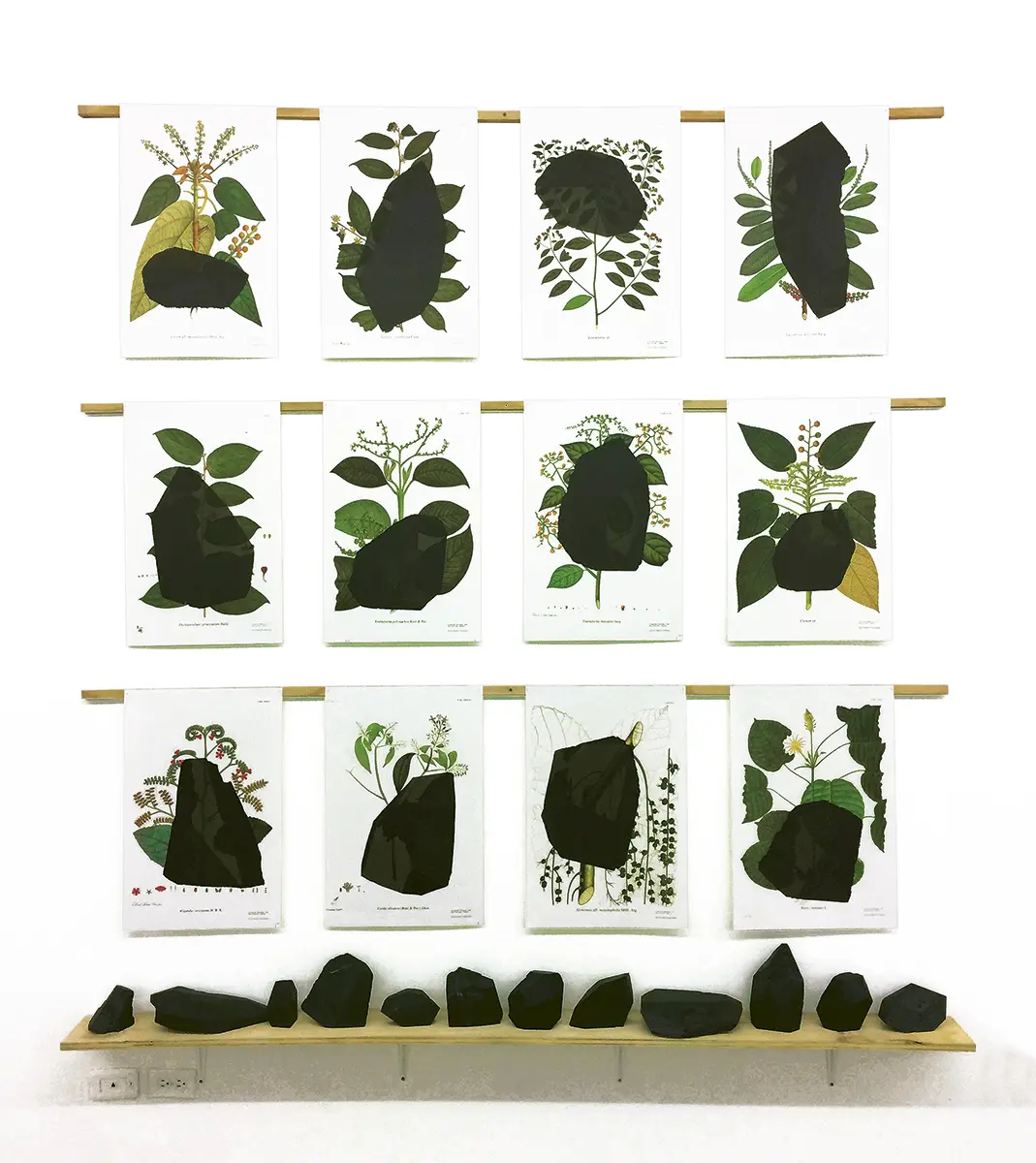
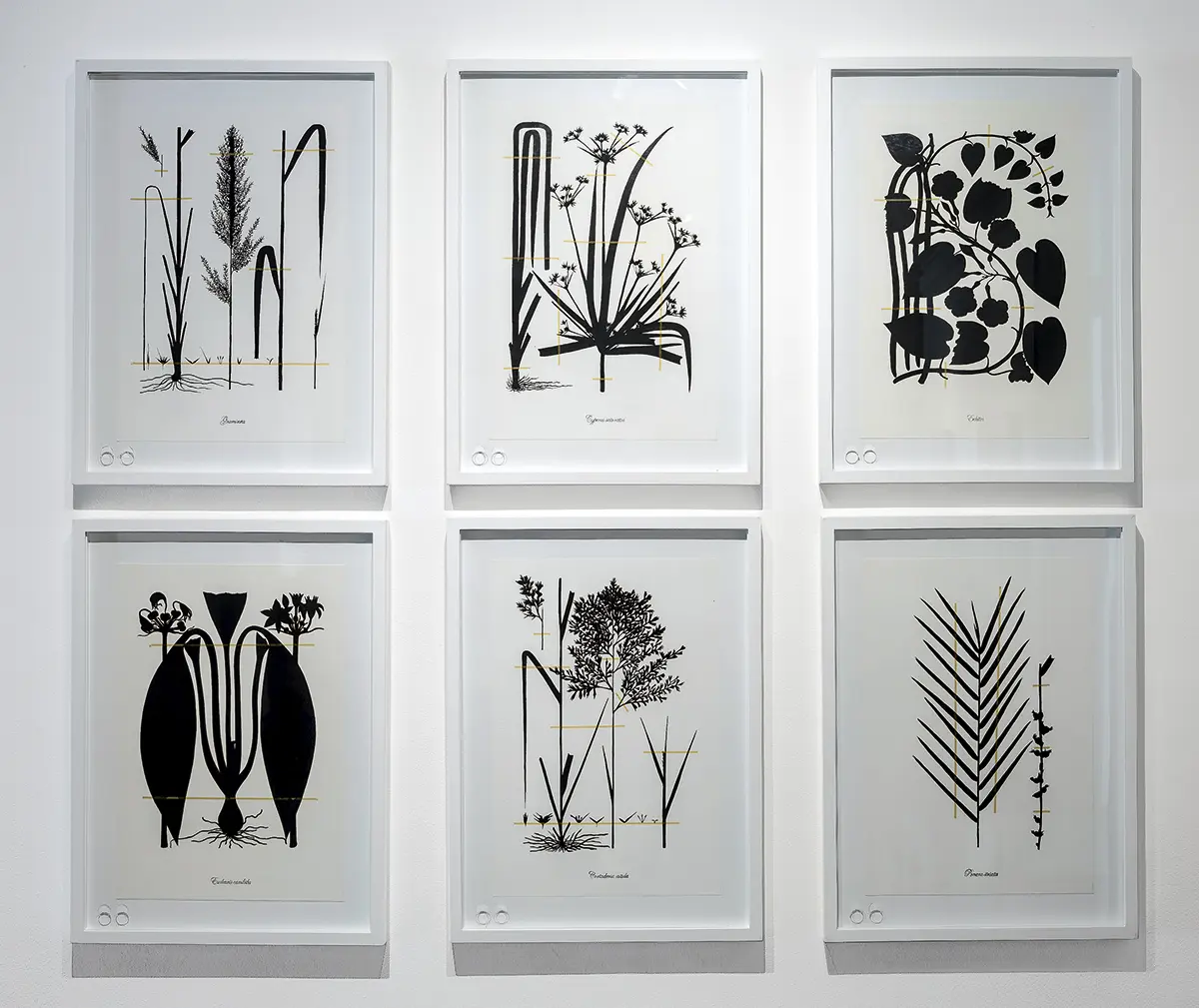
In the next group of works, meanwhile, a shared starting point can be traced back to the Botanical Expedition of 1783-1816 and its famous scientific illustrations of Colombia’s flora. Yet, while in Expedición extinción II (Extinction Expedition II), Edwin Monsalve appropriates images of endangered species and redraws them in oil. The substance operates at the same time as a pigment and as a metaphor for extinction. In Still Life, Evelyn Tovar intervenes the illustrations with charcoal to reconceptualize the paradox of wealth. It is using superpositions and concealments, that she addresses the paradox of wealth: does it reside in diversity or extraction? In Herbario de Plantas Artificiales. In Bugambilia Barte o Baretillia (Herbarium of Artificial Plants. Bougainvillea Barte or Baretilia), Alberto Baraya takes on the role of the explorer who collects and classifies specimens, only these are no longer “originals” but artificial samples that allude to the apparition of a “new” nature and gesture ironically in the direction of the Nineteenth Century’s Positivist project.
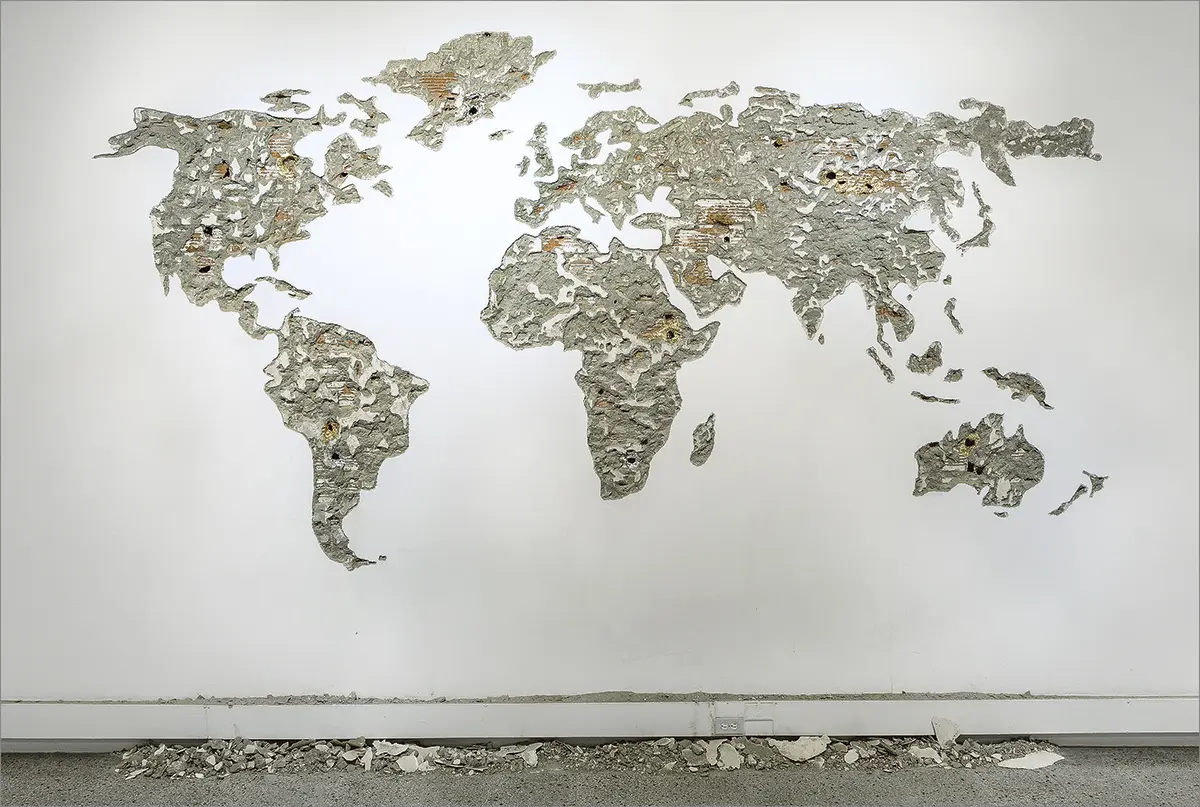
In regards to the landscape being altered by mining, two works stand out: Clemencia Echeverri’s Sub_terra series, and Mario Opazo’s site-specific Mapa mudo (Silent Map). In the latter, Opazo intervened the museum’s wall by peeling off layers of material until the brick was exposed, mimicking the effect of mining excavation. In a similar vein, but with the particularity of its being conceptually connected to the Nineteenth Century traditions of landscape representation in the Americas, Camilo Echavarría’s photographs have to do, more than with contemplation, with a critical view of idealized, heavily Romantic-inflected models of perceiving and representing nature, which under his gaze nevertheless reveal the traces of what attempts against nature’s fragile balance.
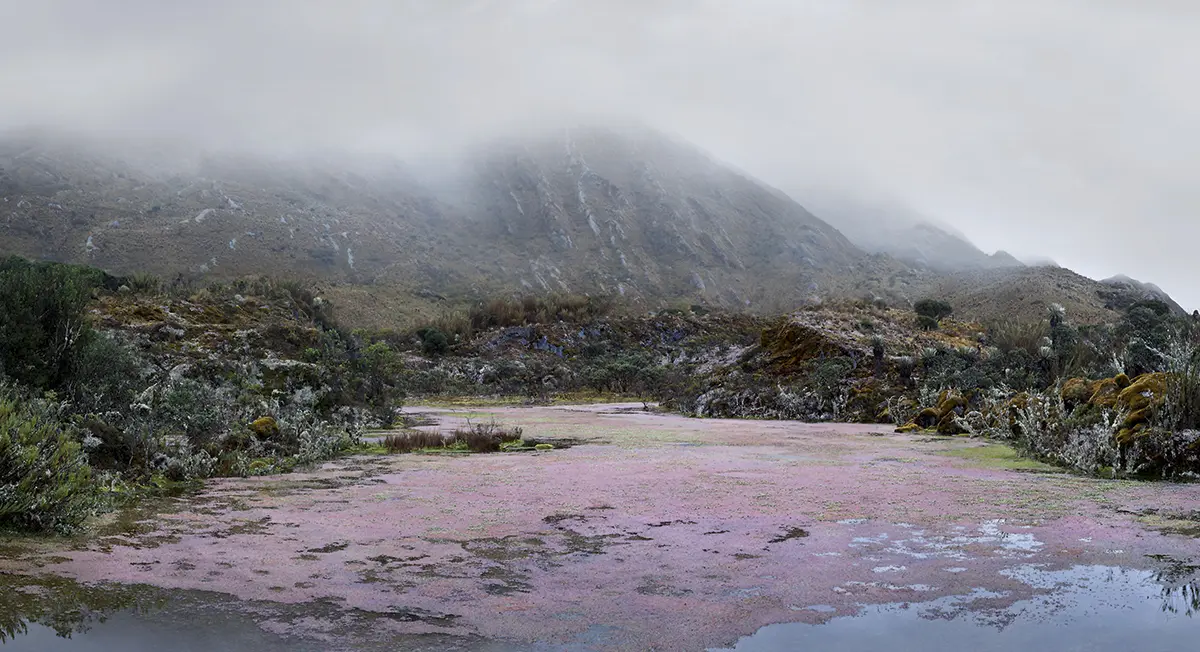
In a much more explicit way, artists like the Mazenett Quiroga collective, with Cartografía de la contienda (Cartography of the Battle), or Fredy Alzate, with Nuevas geografías (New Geographies) and Vacuus, use empty space, negative forms, and fragments to present a dystopian landscape defined by dehumanization and environmental catastrophe. There, in the same way, the indicia of deterritorialization are signaled or intuited. The loss of territory, which not only affects the human-animal but also dooms many to live in undifferentiated locations, in places flooded with oblivion or territorial estrangement.
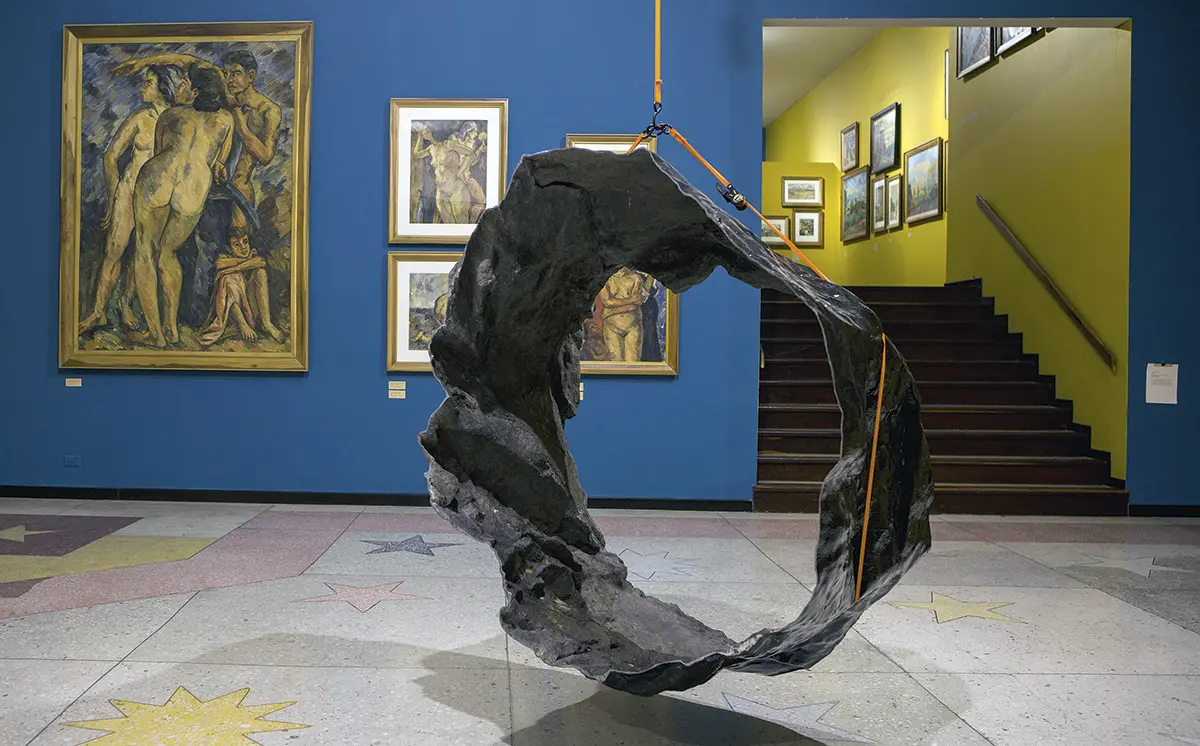
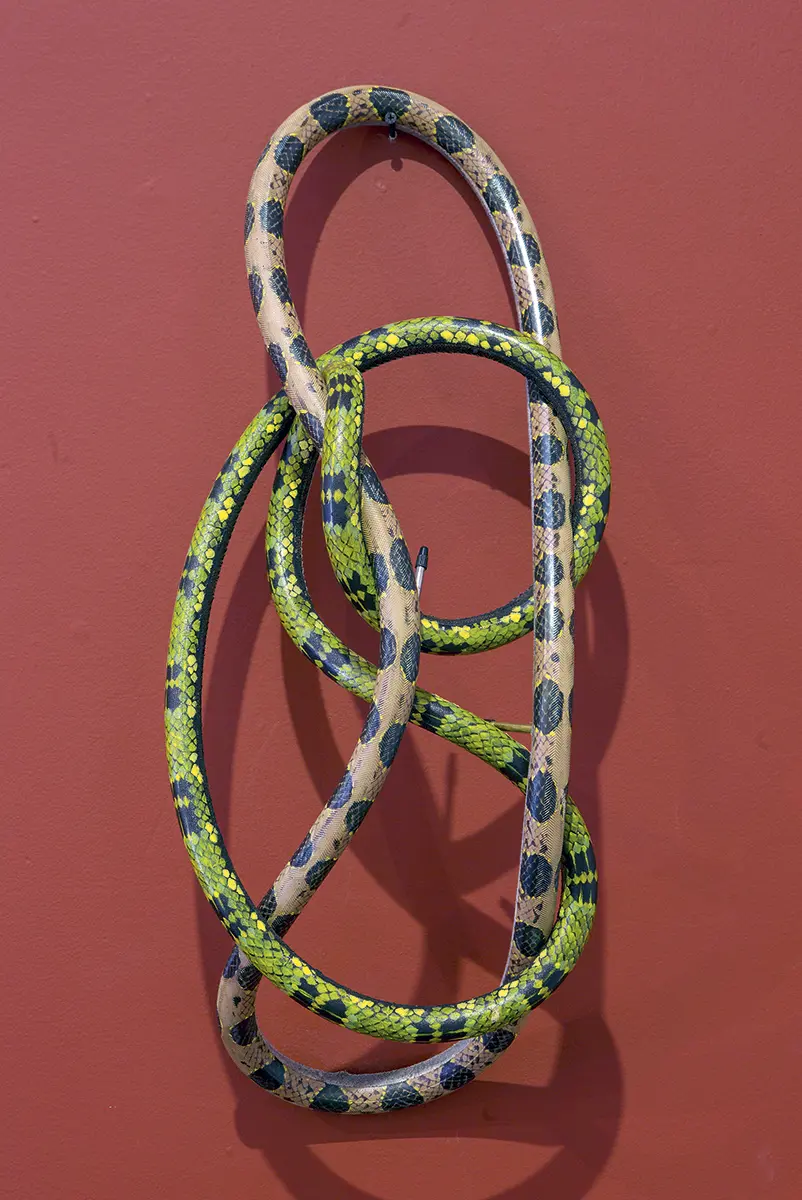
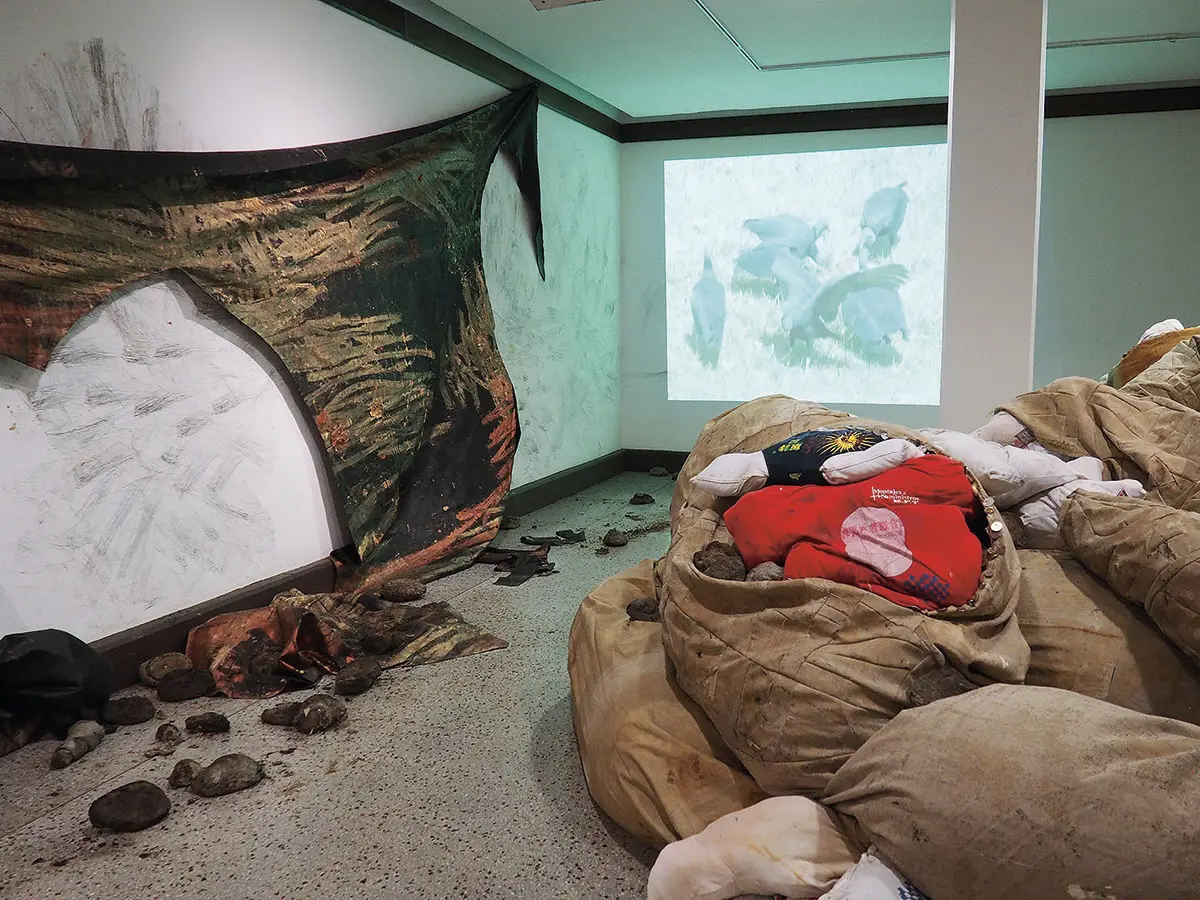
Also on exhibit are Ana María Jiménez’ series Códigos de nacimiento, río (Birth Codes, River) and Óscar Murillo’s installation Nada dorado permanece (Nothing Golden Remains). Both reflect on the status of waste as one of mining’s unfortunate byproducts. Although both proposals appeal to waste-based production, the results are diametrically opposite. In the first case, recycled silver is used as input in the creation of valuables (jewelry). In the second one, residual material resulting from the extraction process (pieces of fabric that were once part of clothing, tents, or containers) is used to recreate a space filled with putrid “garbage.”
Finally, one of the exhibition’s achievements is, no doubt, the effort to fold together into the curatorial narrative works from the MUUA’s little-known visual arts and anthropology collections, which have had a troubled management history and, in consequence, limited circulation. The exhibition is also able to activate two institutional spaces that often remain invisible in the city’s cultural programming, infusing them with a degree of freshness and topicality thanks to a conceptually coherent and historically pertinent project.
This exhibition is a blunt reminder that mining has been not only a major economic activity in Colombia but also, and to this day, a thorny gray area that illuminates the intricate connections between political power and foreign capital in the country; a model that re-actualizes the most primitive and dehumanizing forms of economic and environmental exploitation, deterritorialization, and violence exerted against relationships of belonging; and a model for the subjection of life, at all costs and above all considerations, to the logic of the market and the calculus of profit.
NOTE
1. The exhibition was initially presented at the Espacio ArtNexus (Bogota) with the support of the mayor’s office of Bogota through its entities: IDARTES and the District Secretariat for Culture, Recreation and Sport. Later, it expanded and traveled to Medellin to the Museo Universitario de la Universidad de Antioquia, MUUA, and the Casa Museo Pedro Nel Gómez.
Artists additionally included: Kike Aguilar, Adriana Arenas, Fernando Arias, Pilar Aparicio, Gabriel Botero, Germán Botero, León Cano, Nicolás Cárdenas-Fisher, Mauricio Carmona, Natalia Castañeda, Héctor Fabio Castaño, Lina Espinosa, Estefanía García, Sara Herrera, Gabriel Hincapié, Juan Raúl Hoyos, Juan Carlos Jiménez, Horacio Longas, Jorge Marín, José Horacio Martínez, Federico Ortegón, Nohemí Pérez, Yamith Quiroz, Raquel Ramírez, Luis Roldán, Miguel Ángel Rojas, Jeison Sierra, Olga Lucía Salazar, Jairo Téllez, Carlos Uribe, José Ignacio Vélez, Leonel Vásquez, Santiago Vélez, Bernardo Vieco, and Hugo Zapata.
* Photo: David Estrada. Courtesy: Museo Universitario Universidad de Antioquia – MUUA.
MELISSA AGUILAR