The 2019 Whitney Biennial came at a moment when political and social issues permeated sectors of museum infrastructure thought to be sacrosanct: philanthropy. The most publicized of these entailed New York-based artist Nan Goldin who spearheaded protests against art philanthropist and multibillionaire Sackler family and its Purdue Pharma company that manufactured oxycontin and misrepresented its highly addictive potential to maintain its marketability. The blowback against Purdue Pharma was not only within the USA, including demonstrations against it at the Louvre Museum as well as London’s National Gallery. Although the opioid crisis seemed to be less of a topic in the 2019 Whitney Biennial, one issue that generated publicity centered on Warren B. Kanders who is vice-chairman of the Whitney Museum Board1 and owns the innocuously named company Safariland. This company profits from the trafficking of munitions for police and security, including gas that was used against migrants crossing the US/Mexico border. Protests against the chemical deterrent included artist Michael Rakowitz’s public refusal of the invitation to participate in the 2019 Whitney Biennial, and a petition signed by 60 of the 75 biennial artists to remove Kanders from the Whitney Museum Board. In the midst of all of this was a work by the artist collective known as Forensic Architecture that exposed Kanders’ questionable business but created a fallout that may have not been intended by the collective nor the 2019 Whitney Biennial curators.
Forensic Architecture’s contribution consisted of a video titled Triple-Chaser (2019) that chartered the use of Safariland gas and munitions around the world. Narrated by musician David Byrne, the video was embodied with a certain gravitas and like Forensic Architecture’s work in general, which can be characterized as institutional critique and critical sociological research, was construed by some as a gratuitous gesture to placate the heated protests against Kanders and the Whitney Museum. Whether Forensic Architecture’s participation hinged on this one will never know; however, this reveals what may be interpreted as a reactive presumptuousness of the liberal Left. The reductive view of Forensic Architecture’s contribution as tool used by the Whitney Museum was not the only accusation of art’s cooption by the status quo; there were also white art critics who had dismissed the biennial as not attentive to social and political concerns to the degree that African-American artist Simon Leigh was compelled to defend her work from those who felt the biennial lacked critical fortitude. Leigh’s conundrum was summed up by the art historian and critic Aruna D’Souza: “The problem is not that these [white] critics lack some essential connection with the work of artists of color”… “It’s that many of them simply are not familiar with the intellectual, conceptual, and artistic ideas that underlie the work.” That said, many of the works by USA-based Latin-American and Latinx artists did not simplify matters either, for their heterogeneous artistic practices, as well as the myriad contexts from which their work emerges from, articulated the contradictions that plagued the 2019 Whitney Biennial and our global contemporaneity.
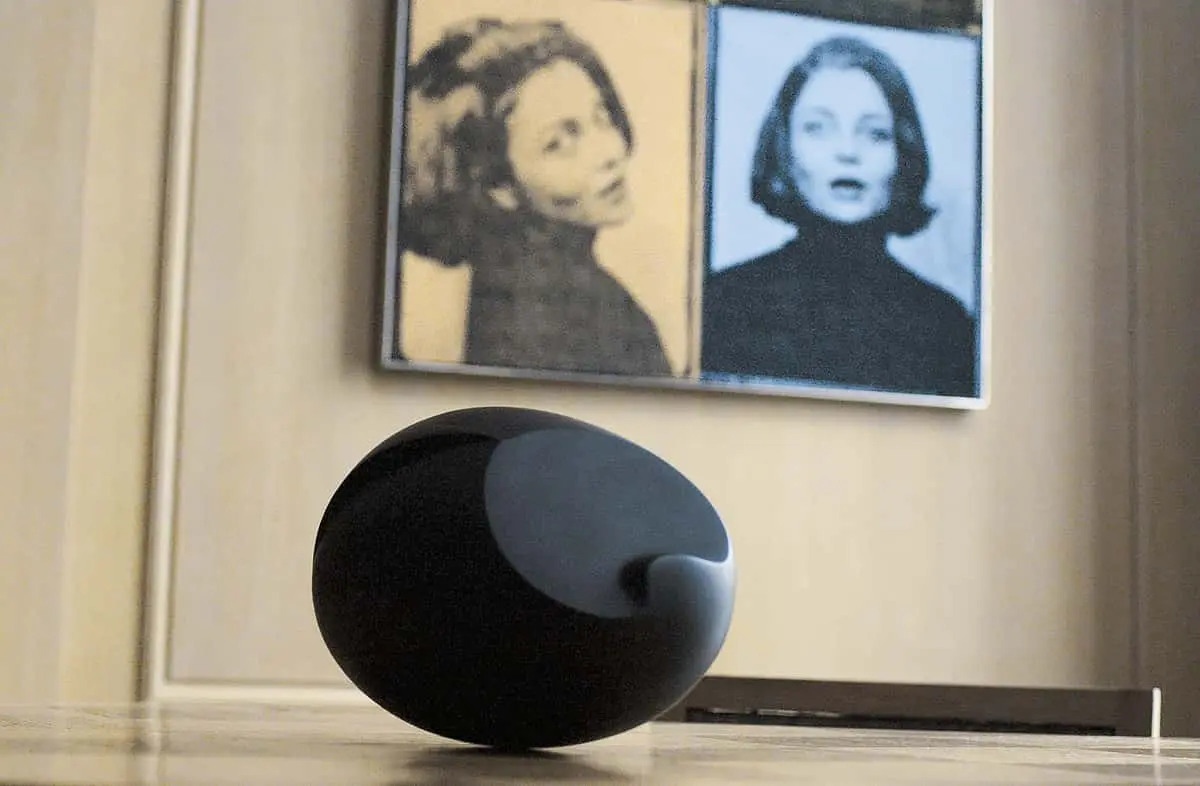
There were some artists, like Carissa Rodriguez, Augustina Woodgate, and Gala Porras-Kim, who presented artistically intelligent projects that were more conceptual in orientation and whose politics were not so apparent. Rodriguez’s contribution consisted of video on a double-sided screen that hung from the ceiling titled The Maid (2018), and photographs under the rubric of All the Best Memories Are Hers (2018). The Maid traced Sherry Levine’s appropriation sculpture of Constantin Brancusi’s Newborn (1915) in three different contexts: the gallery, which is the place of art’s commerce; a home, which is one of the destined spaces after an artwork is sold; and the museum, which canonizes the artwork as worthy of historicization, sale, and collection. As this detournement occurred in one day, it was not unlike James Joyce’s Ulysses (1922), yet the work went beyond the trope of postmodern appropriation in being juxtaposed with the other work consisting of photographs of an embryo. The dialectic between the video and photographs operated on numerous levels and underscore a political complexity that is oblique and poetic rather than didactic, as was the case with some of the works in the 2019 Whitney Biennial.
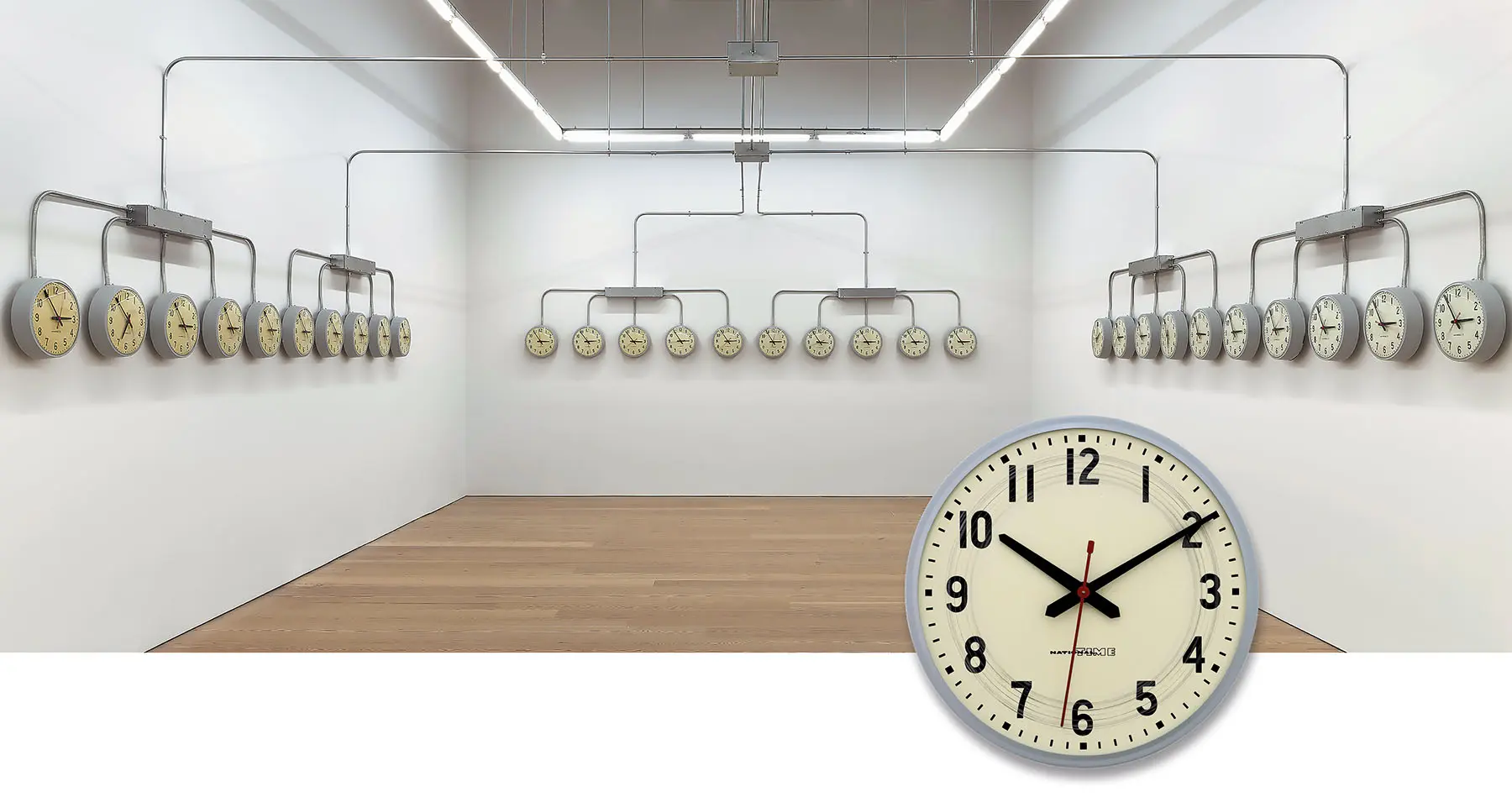
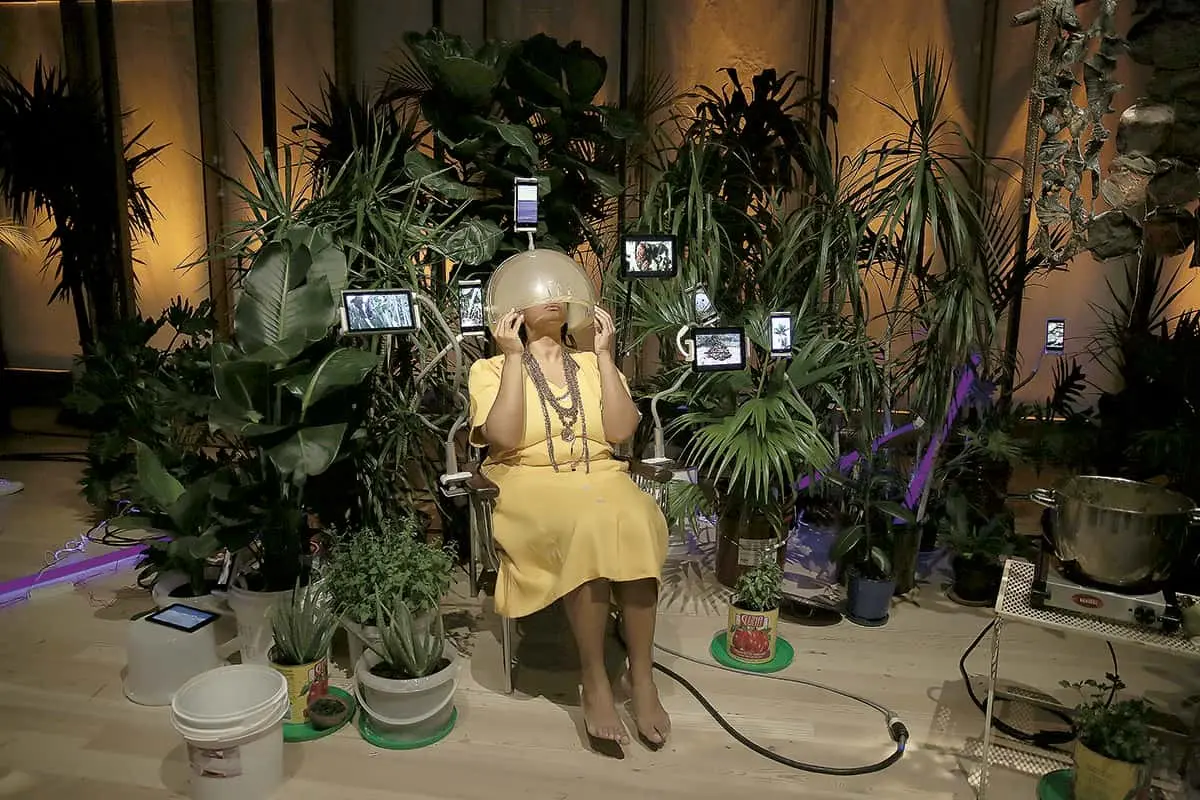
Similar was the conceptual purview of Augustina Woodgate’s mesmerizing room installation of clocks. National Times (2016-2019) consisted of identical clocks that were calibrated from a master clock, hence the interplay of master/slave that could be analogously extended into a myriad of other dichotomies under the heading of dominant/subaltern. But this work was not only about binaries of power/disempowerment and social and political variations thereof, but also explored ontology within the cultural construction of time and space. These were also thematic touchstones of the work of Colombian-born, Los Angeles-based artist Gala Porras-Kim. Working with the registers of pre-Hispanic art, specifically the iconic La Mojarra Stela 1, this epi-Olmec stone monument was created by a culture that briefly existed after the Middle Formative Olmec and before the emergence of the pre-Classic Maya. The origins of hieroglyphic writing, as well as calendrical notation inscribed on La Mojarra Stela 1, have been the flashpoint of heated scholarly debate between those who claim it as post-Olmec, while others argue that Maya script and calendrics begin with this work and thus consider it proto-Maya. Porras-Kim cited the monument in three different works as a point of thematic departure to investigate larger questions about the opacity of language; a discussion that originally emerges with the Swiss Linguist Ferdinand de Saussure and elaborated upon further by Structuralism, Post-Structuralism, and the Deconstruction theories of Jacques Derrida. Porras-Kim’s work too, one could argue, involves the politics of language and its effects on the formation of subjectivity, and then to more tangible political effects in the day-to-day, quotidian world. But conceptually oriented work was not the only genres of art-making by Latin American and Latinx artists represented in the 2019 Whitney Biennial, as there was also very good painting, sculpture, photography, and performance-based works.
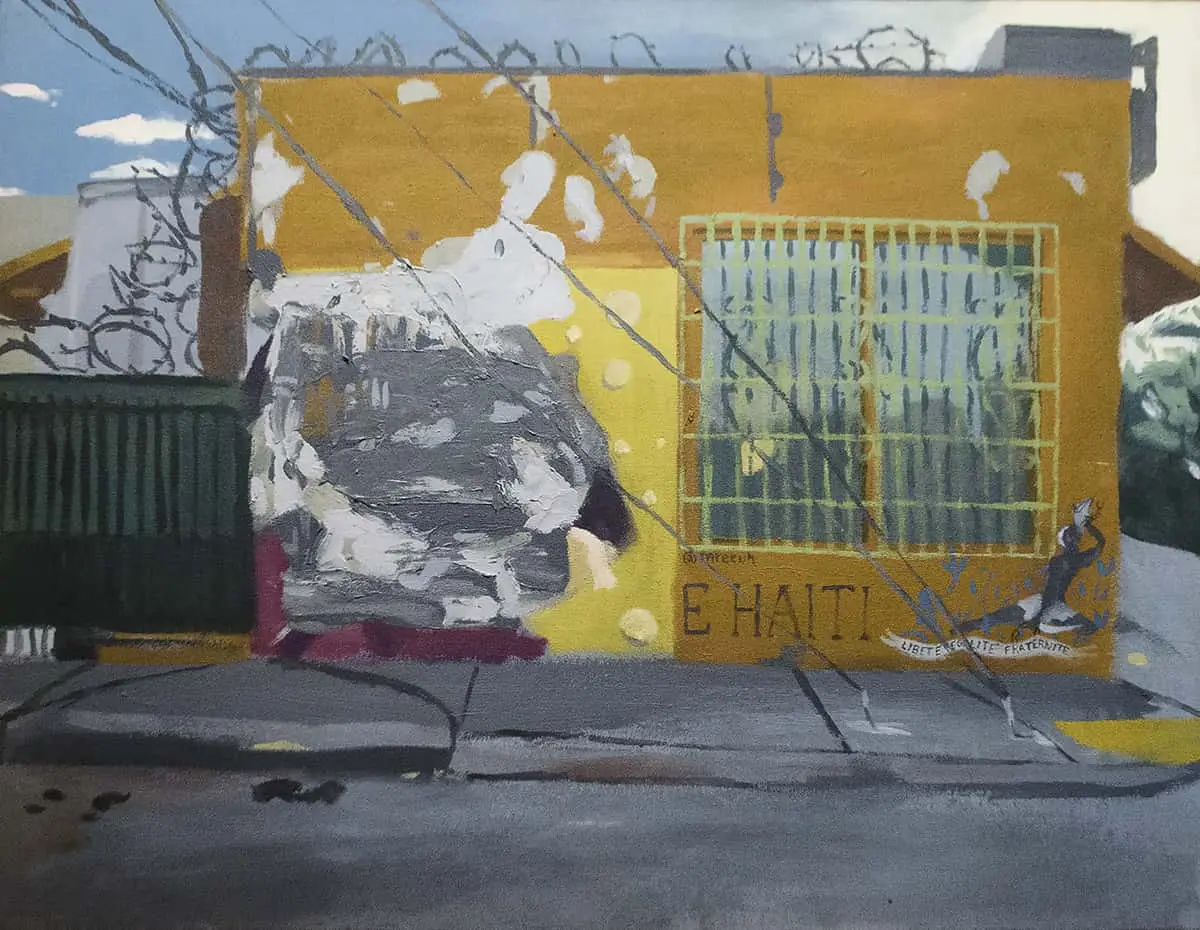
One of these was by Miami-based painter Eddie Arroyo. While the four paintings on view by Arroyo have been associated with artists such as Edward Hopper and I would even add the early twenty-century New York City Ashcan School, there are other formal and conceptual devices relevant to them. This is especially so in that the four paintings are titled according to the same address they depict, 5825 NE 2nd Ave, Miami FL 33137, and created over a four-year period, from 2016-2019. Like the previously mentioned artists who were dealing in their distinct ways with questions of time, space, language, and material and symbolic value but with themes that did not occlude any political content, Arroyo’s paintings did contain allusions to gentrification of Miami’s Little Haiti neighborhood, but there were also aspects to them that set them apart from simply painterly interpretations of real estate politics. As the four paintings created over a consecutive four-year period, one could not think of iconic artists who employ temporality within the parameters of architecture. Some references that come to mind include Claude Monet and his Rouen Cathedral (1892-93), paintings in which the Impressionist depicted the religious structure throughout different times of the year, or Andy Warhol’s Empire (1864), which is a single shot of New York’s Empire State Building that is eight hours and five minutes in duration. Also alluding to the quotidian but within the genre of sculpture were the vernacular constructions of Puerto Rican-based artist Daniel Lind-Ramos.
Lind-Ramos’ sculptures were some of the more visibly prominent artworks in the biennial, and the attention they commanded was undoubtedly merited. Shape-shifting through a myriad of artists who employ recontextualized found objects including the early sculptures of Robert Rauschenberg and the work of David Hammons, Lind-Ramos’ three-dimensional objects are nonetheless uniquely in his style. Centinelas (Sentinels) (2013), 1797: Vencedor (1797: Victorious) (2017-18), and Maria-Maria (2019) were three upright sculptures that were aesthetically a chock-a-block of materials yet elegantly configured, and the cornucopia of disparate sources imbued them with a protean quality. At once where they not only evocative of the aforementioned artists and a host to others, but they also transcended art into other forms of visual culture including fetish objects, talismans of power, and Jungian archetypal assemblages.
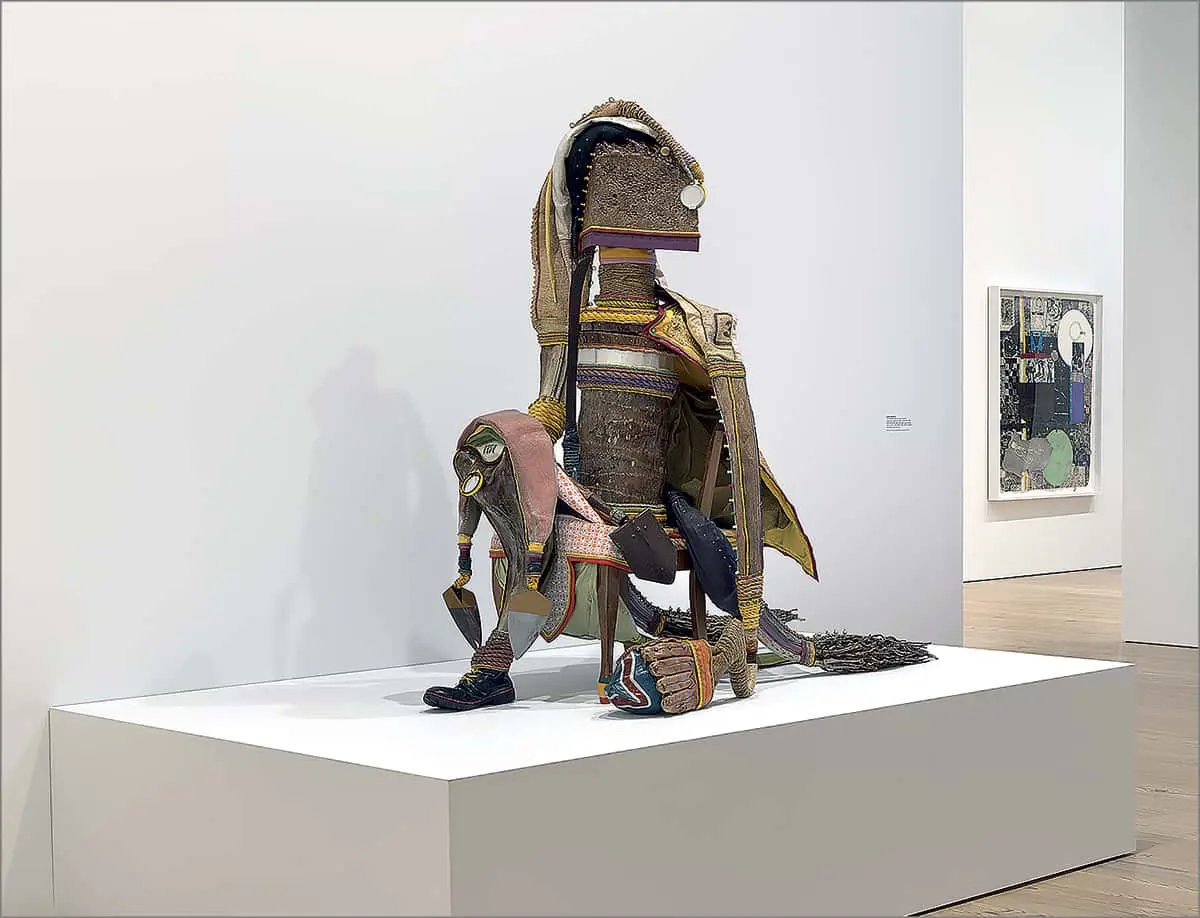
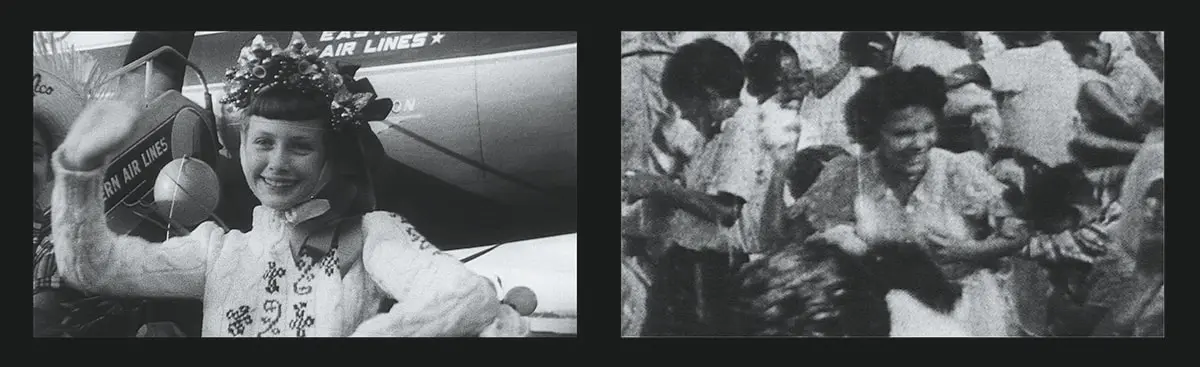
Lind-Ramos’ sculptures emanated a powerful anthropological aura. They were concomitantly anthropomorphic and zoomorphic, aggressive and demure, disfigured and delicately elegant. They too conveyed a sense of the political in historical and topical terms: 1797: Vencedor referred to the British invasion of Puerto Rico that was defended by Black militias, while Maria-Maria spoke to the disaster of Hurricane Maria while subliminally evoking religiosity. Also citing recent Puerto Rican history was a film by Sofía Gallisá Muriente titled Lluvia con nieve (Rain With Snow) (2014). The film dovetails on a 14-second news clip of snow brought to Puerto Rico in 1955 that melts into mud which the artist incorporates into a brilliant fourteen-minute video. Although the video has its comical novel backdrop of snow on the Caribbean island, it’s very much a meditation on colonialism and the relationship between the USA and Puerto Rico under the guise of what might be considered benign: meteorological differentiation. In the same way that Maria-Maria alluded to Hurricane Maria, Gallisá Muriente’s video has a subtext of the broader global challenge of climate change. Other artists conflated the topical and the personal in different registers including the photographic work of the Elle Pérez and the performance-based work of Las Nietas de Nonó, Mariana Valencia, and Nibia Pastrana Santiago.
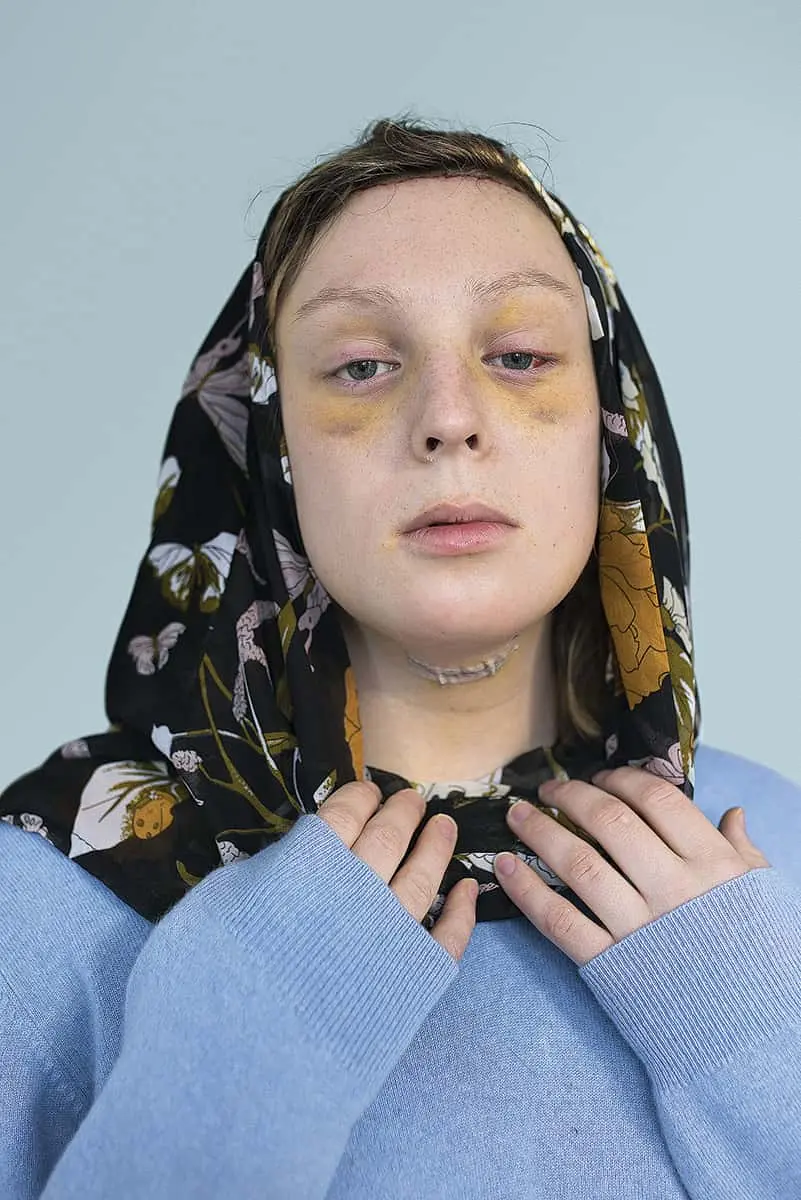
Elle Pérez’s photographs spanned a range of genres including documentary, portraiture, vernacular photography, and ersatz documentation of performance. The photos were lush, both in black and white and in color, and often were close-ups of individuals that one might consider on the margins of society including one image of a person’s arm being cut into with a scalpel with the word DYKE; another titled Bloom (2019) consisting of a male who’s cropped at the torso in which he raises his shirt to reveal a tattoo; or Mae (three days after) (2019), which portrays a young woman who has gone through medical operations to reveal the scars of healing and recuperation, physically as well as emotionally. Pérez’s photos are rich with pathos, empathy and melancholy, but they are never sentimental but unflinchingly honest and sincere and one could not but think of the photographic work of Billy Sullivan or Nan Goldin and her well-known corpus titled The Ballad of Sexual Dependency (1985). As Pérez’s works are situated somewhere between meticulously composed photographs to carefully directed enactments, the performance was also well represented and highly varied in approach and content.
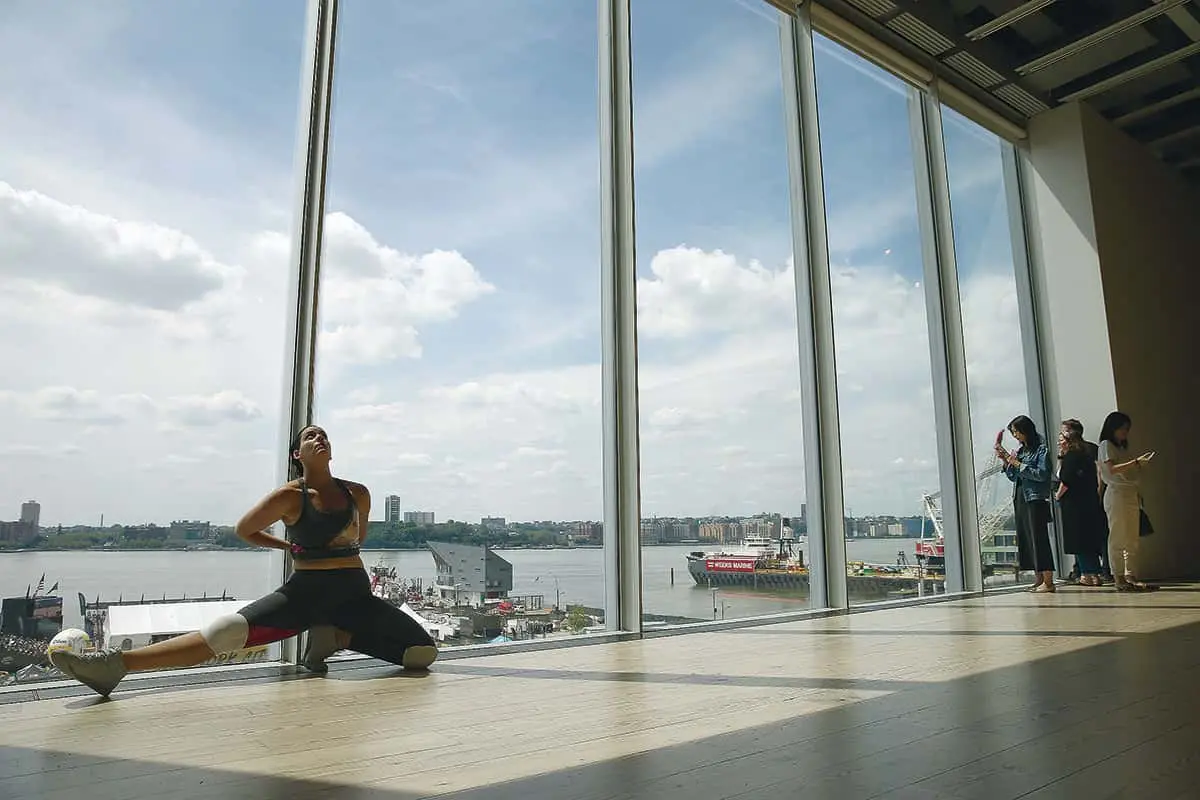
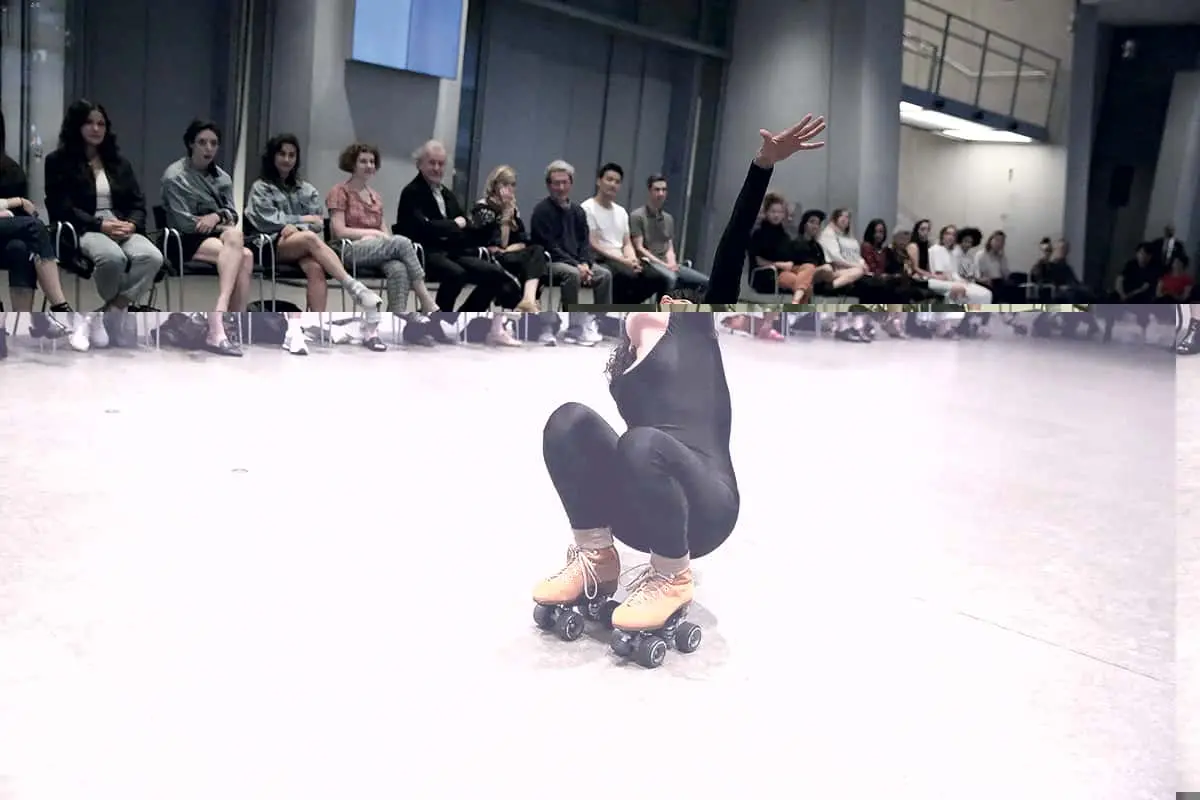
Las Nietas de Nonó, which consists of sisters Lydela and Michel that share the familial name Nonó, performed Ilustraciones de la Mecánica (Illustrations of the Mechanical) (2016-18). This is a complicated and multifaceted work that is cathartic, ritualistic, and transplants aspects of Puerto Rican history of problematic medical practices on the disenfranchised female and male colored body. Taking an altogether different approach was the performance by Nibia Pastrana Santiago. Whereas Las Nietas de Nonó performed in a more theatrical context, Nibia Pastrana Santiago’s work was transactional and contingent. In Objetos indispuestos o inauguraciones suspendidas o finales inevitables para un casi-baiIe (indisposed objects or suspended inaugurations or inevitable endings for an almost dance, 2019), Pastrana Santiago collapsed dichotomies of public and private space, the museum and the world outside to create engaging performances that were a microcosm of the macrocosmic political relationship between Puerto Rico and the USA. Using the waterfront as well as the social space outside of the museum, there was an element of chance to her choreographed piece that questioned traditional boundaries between performer and audience, and between art and life. Not dissimilar was the performance by Mariana Valencia titled Futurity (2019). Although this was performed in the museum, it entailed Valencia donning roller skates alluding to figurative ice skating, roller derby, and roller disco, all the while incorporating the audience as both receiver of the work and collaborator in becoming the parameter that one might find in a roller skating rink. In this sense and like Pastrana Santiago, the audience became an integral component to the performance. While she skated within the boundaries of her “human” skating rink, Valencia performed a monologue that interspersed the topical with the biographical that was delivered with occasional humor but of serious if not tragic allusions. One work that was very affective and powerful that gave the 2019 Whitney Biennial thematic closure, is a video by a Mexican, experimental film collective that work under the moniker of Colectivo Los Ingrávidos.
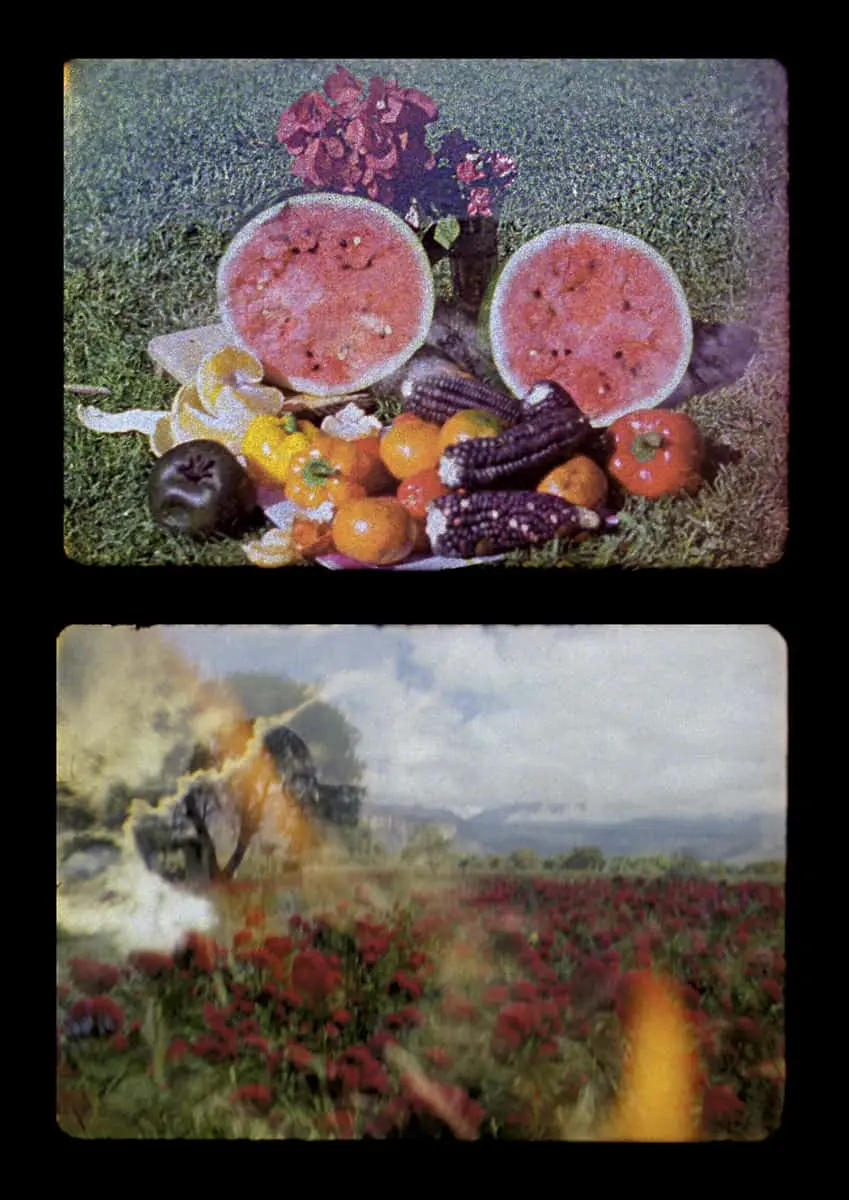
Impresiones para una máquina de luz y sonido (Impressions of a Sound and Light Machine), (2014), was one of Los Ingrávidos’ videos that feigned the type of title one might find in the early annals of avant-garde film associated with Chris Marker, Stan Brakhage or Jonas Mekas. However, the 06:43 minute video was anything but that. It consisted of what appeared to be a grainy, damaged, black and white loop of a 1950s Mexican film with an overdub of a woman reciting a monologue recounting the deaths of Mexicans from drug cartel violence as well as the femicide in Cuidad Juarez. Here and there, however, there were references to New York City’s Broadway and Hudson River, which brought the work into the present moment of the migrant crisis at the US/Mexico border; a situation that as of the writing of this text, there have been raids by ICE in Brooklyn ordered by President Donald Trump who, incidentally, told a Latinx, USA-born Congresswoman to go back to the country that she came from. And who said that the 2019 Whitney Biennial lacked political and social commentary or not engaged with issues of the present day?
NOTE
1. Warren B. Kanders resigned from his position as vice-chairman of the Whitney Museum Board on July 25, 2019. Editor’s note.
RAÚL ZAMUDIO
Independent curator and writer. He teaches at Parsons the New School for Design.