A couple of years ago, in these very pages, in an article titled “Colombian Photobooks: A Bird’s Eye View,” I pointed out the indifference of the local photographic scene towards this type of publication. I asserted, laconically and somewhat pessimistically, that “the fledgling efforts of new publishers and the individual labors of photographers are not enough to ensure a photobook surge in Colombia.” To this, I added: “We are still far from enjoying a true photographic culture and from valuing the medium beyond Instagram.” To my surprise, recent changes in the publishing realm announce an awakening of the genre, with powerful results.
Looking back, and as an explanation for the sudden flourishing of the photobook, we must note that the last five years have seen the emergence of a series of independent cultural projects and enterprises that bring together audiovisual production firms, art galleries and spaces, and new publishing houses. Bogotá’s San Felipe neighborhood is a clear example of this newfound desire to produce and appropriate for a local audience. It was in such ecosystems that photobooks began to circulate and became a means for the encounter of different publics and disciplines, straddling, if you will, the fields of art, writing, design, and, obviously, photography.
It was precisely a design studio, now doubling as a publisher, that served as a model for the new projects. I am talking about La Silueta, which produced during the last decade, with its F:otoTK collection, a series of key photobooks: Adriana Duque, Karim Estefan y Guadalupe Ruiz (2007), Paul Beer (2008), Nereo López. Contador de historias (Nereo López. Storyteller, 2010), A place to live–Mateo Gómez (2014), Los Silva (The Silvas, 2017), and La vaca y la orquídea, fotografía genérica colombiana (The Cow and the Orchid, Generic Colombian Photography, 2017).
Several design studios, publishing houses, visual workshops, and individual initiatives, have followed the example of La Silueta, launching high-quality productions in the field. At the same time, Idartes, in Bogotá, and the Colombian Ministry of Culture, have played an essential role in the photobook surge: with their support for independent publishing projects and artist books, they prod artists and photographers towards the format, often for the first time in their careers. Several common aspects surround the nascent photobook culture in Colombia:
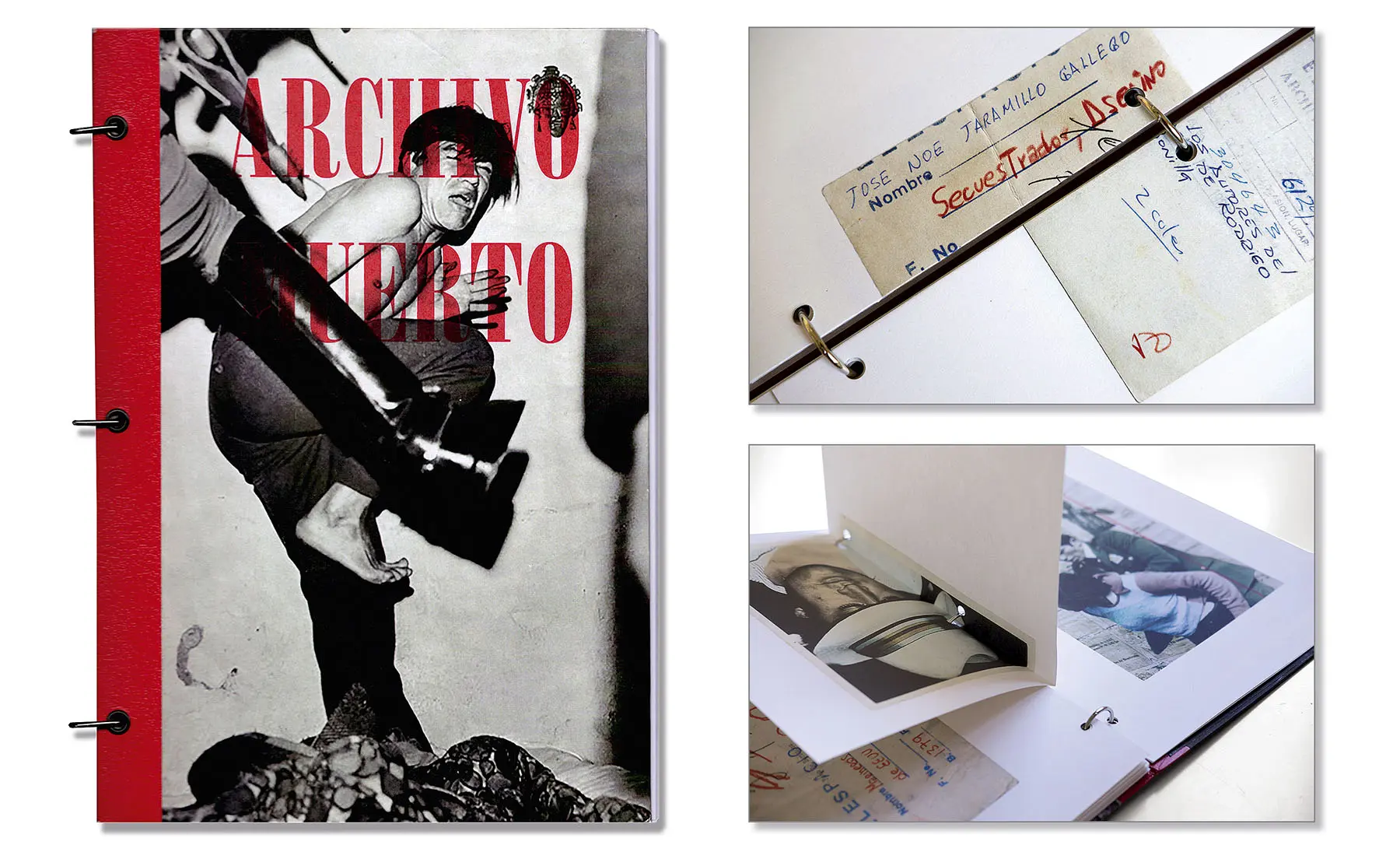
a) Renowned and mid-career artists have taken advantage of the format to summarize series or themes in their oeuvre. Such is the case of Miguel Ángel Rojas in Esquina rosa (Pink Corner, Jardín Publicaciones, 2018), Andrés Orjuela and his Archivo Muerto (Dead Archive, Chaco, 2018), Natalia Castañeda in Beloved Future (Nómada Ediciones, 2015), Sofía Reyes in Acá en la casa (Here at Home, Salvaje, 2017), and Santiago Forero in El sureño salvaje (The Wild Southerner, M-Taller Gráfico, 2017).
b) Colombia’s intricate unending armed conflict has prompted (this perhaps will not come as a surprise) the publication of photo books about it, such as Gabriel Linares’ Recuerdo (Remembrance, Croma, 2017) and Juan José Horta’s La última noche (The Last Night, self-published, 2018).
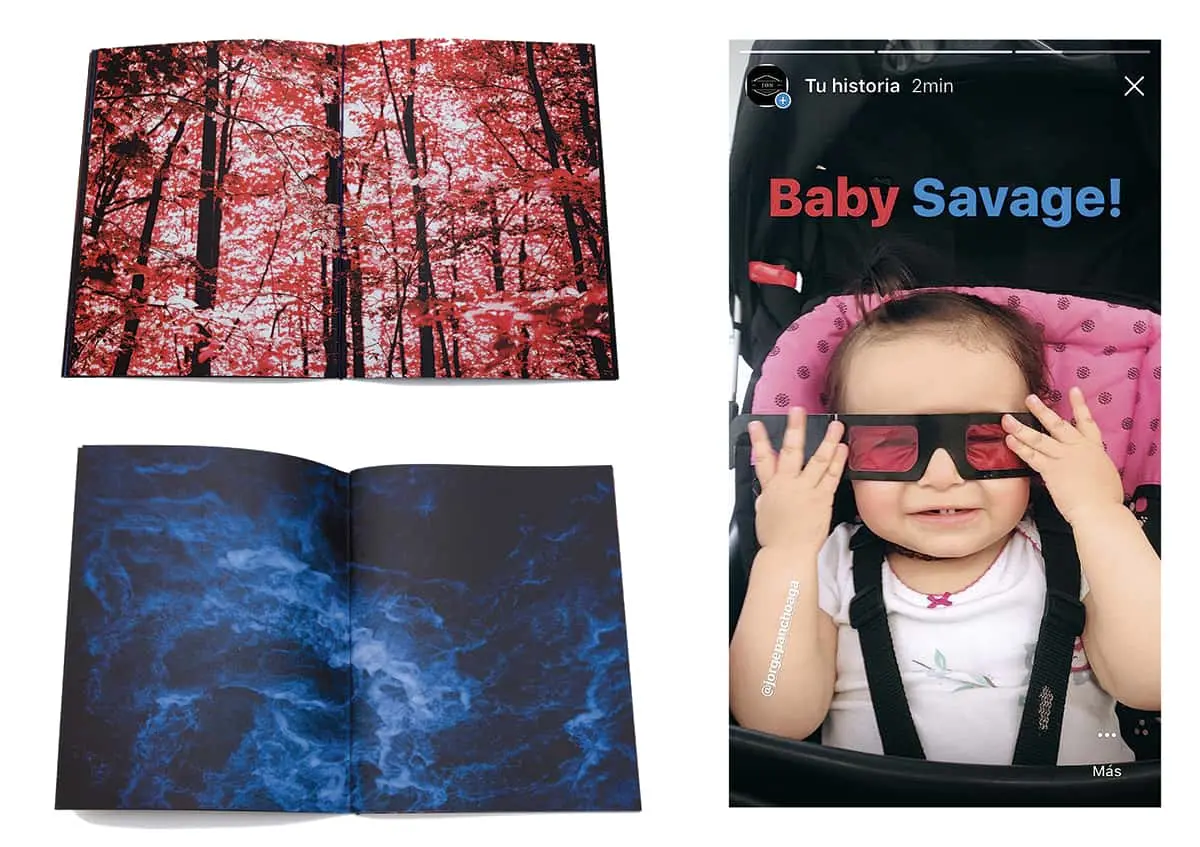
c) A will to experiment with formats, printing techniques, and stock is visible in Savage, by Jorge Panchoaga (Croma, 2018). Rather than a book, it is a notebook accompanied by two pairs of viewing glasses, red and blue respectively. It takes us, depending on which one of the pairs is used—the book is conceived to be used by two people at once—into a lysergic, mystical, and post-apocalyptic narrative filled with the key symbols in Panchoaga’s oeuvre: the starry sky, the forests, the body abandoned in the night, the dog jaws. In the same category we find the considerably prolific Eduardo Arias, who between 2016 and 2018, working with Kitschic Ediciones, created six photo publications: two books, 26 Cigarrerías de Cedritos (26 Cedritos’ Tobacco Stores) and Popocatepetl; two photo-notebooks, 7 kilos 18 centímetros 40 años (7 Kilos 18 Centimeters 40 Years) and Sexo, drogas, rock ’n roll (Sex, Drugs, Rock ‘n Roll); a foldout booklet, Terror; a flip book, Gana el Barça en 42 movimientos (Barça Wins in 42 Moves); and a miniature book, 38 personas vistiendo un casco (38 People Wearing a Helmet). Arias is an example of the new attitude among today’s Colombian photographers, more attentive to editorial design, more aware of the language of contemporary art and able to take advantage of its great legacy, and bolder when it comes to finding ways to enhance the visibility of their work. At the same time, they have benefited from the experiences of independent publishing houses and design studios that launched art-publishing projects: La Silueta, Tangrama, Jardín Publicaciones, Calipso Press, Destiempo Libros, Laguna Libros, Salvaje, Nómada Ediciones, Tyrannus Melancholicus Taller, Tragaluz, Rey Naranjo, Rat Trap, and Cain Press, among others.
From a wealth of current productions, three hold special interest and deserve particular notice because of their depth. The first is La vaca y la orquídea, fotografía genérica colombiana (La Silueta, 2017). In the book’s introduction, author Timothy Prus—founder, curator, and editor of the Archive of Modern Conflict—begins with a poignant premise: “The photos were gathered during a 12-year journey through Colombia. No stone was left unturned in the search for truly generic photographs of this country. As the collection grew, a vision emerged that was at once closer to Europe and at the same time infinitely more mysterious than we could have imagined. Do they help us understand the territory in a more profound way? Definitely not. It remains an enigma. Mixing the 19th, 20th and 21st centuries forced time to fold in on itself. Any clearer? Well, perhaps a trifle. The sensual orchid is one of Colombia’s national symbols. The cow, placid and generous, is a symbol of nothing. The place is ambiguous. So we find a nation where image-making is pulsing like a fiesta in which we can all take part.”
In consequence and given La vaca y la orquídea’s unique approach almost no detail escapes the editor of this generic life: children dangling from trucks, human-powered carts, foxes and street dogs, Holy Week and First Communion processionals, the Vuelta a Colombia bicycle race and the transistor radio in the stadium, the security guards (called “guachimanes” in the local vernacular, a term derived from watchman), the billiards stroke, the sale of cocinol (a kind of gasoline for household use), the wrestlers, rumba music and a six-pack of beer, nor a milk churn or the “Mi Tiendita” store. Just like with the photographs, so with the genres: visiting cards; street photographs and camera-box photography (the latter is known in Colombia as fotoagüitas); family albums; press images, and the photographers: Félix Tisnés, Gabriel Carvajal, Ángel Vargas, Manuel H, Ángelo Vargas, Guadalupe Ruiz.
A special place is reserved for tropical-music albums: Los Univox, Emeterio and Felipe, Los Hispanos, Los Hermanos López and Jorge Oñate, Los Carrangueros, Los Graduados, and Gustavo Quintero, Colacho Mendoza and His Band, Los Legendarios, Los Corraleros, and La Sonora Dinamita. These also opened a window to habits and customs: Los Carrangueros posing for a fotoagüita; Emeterio and Felipe hunting the Tiger of Zalamea; Jorge Oñate officiating as a priest in a wedding. Prus seems to be inviting us to listen to this music to fully enjoy this vernacular photography. Next comes another deep-rooted tradition among Colombians: the rumba. The book also has space for orchids: models, calendar girls, and the reigning queens of the country’s many beauty pageants. Prus even names some of them: Promenea gustatta, Anguloa virginalis, and even Paola Turbay is called “the orchid who lights up the family garden.” There is obviously a place for cows. Prus has a collection of them grazing in parks, found in neighborhood gardens, in medians, and parking lots, like a force from the countryside that refuses to abandon the city. The cow connects the rural and the urban and denotes the great transformation of Colombian society, what is known as the 70/30: the demographic shift that defined the country during the second half of the twentieth century. The book ends with a simple image of two plastic orchids, potted and set atop a closed toilet. The image is by Alberto Baraya, an artist who has explored the role played by flora as an ornament, beyond the symbolic forces it represents, in a country known for its legal and illegal exports of plant products of the highest quality.
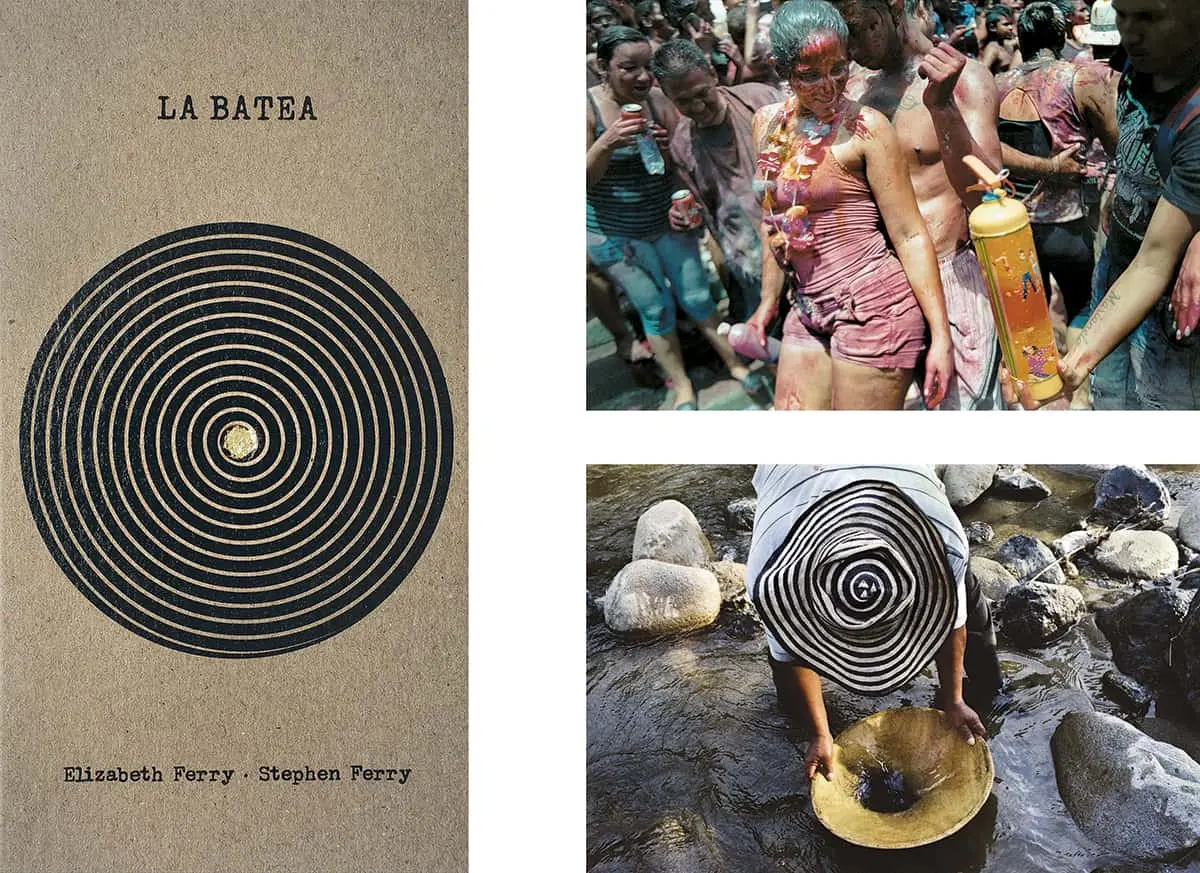
La batea (The Pan, Icono, 2017) is Stephen Ferry’s second photo book. In it, Prus chooses the cow and the orchid as his argument to describe what he sees as Colombia’s vernacular photography. Ferry and his sister Elizabeth—who also researched the book and wrote the texts—decided on the miner’s pan as a vehicle to explain the struggles of informal workers in the precious-metal industries and to bring them into closer focus. The Ferry siblings contrast unsanctioned low-tech mining in the Cauca Valley region—which uses pans, wooden steps, and a plant product called babosa to separate the ore—with the overuse of backhoes, mercury, and arsenic in sanctioned formal extractive activities throughout the country’s river basins, the cause of untold ecological destruction.
In Yolombó (Cauca), the Ferry siblings approach an Afro-Colombian community initially established by runaway slaves who, in many cases, were able to purchase their freedom thanks to gold mining. There, they witness deep love for the local traditions, land, and craft, and a wise determination not to allow multinationals, backhoes, and mercury to enter the area. It is a story of intimidation and anonymous threats, but also of villages organizing for self-defense.
We are progressively immersed in the dimmed world inside the mines in Segovia (Antioquia). Kneeling and struggling to breathe, the miners hammer and pick at rocks in search for a mineral vein. Ferry decided to use analog film for its silver halides, a sister to the homonymous metal, also the product of excavation. The grainy film gives materiality to the dust inside the mining shaft, alludes to the search for a gold nugget in the sand by a riverbed, and refers us to the indiscriminate use of mercury, which, as I said, has significantly damaged life in this water-rich country.
La batea was a sustained effort in the search for the adequate format, stock, and even inks and drying times for its mineral expressiveness. The book’s binding allows it to be fully open, which matches a visual design based on two-page spreads for most of the images. The cover is embossed with a circular spiral allusive to the ingenuity involved in the search for gold and features a gold button at its center.
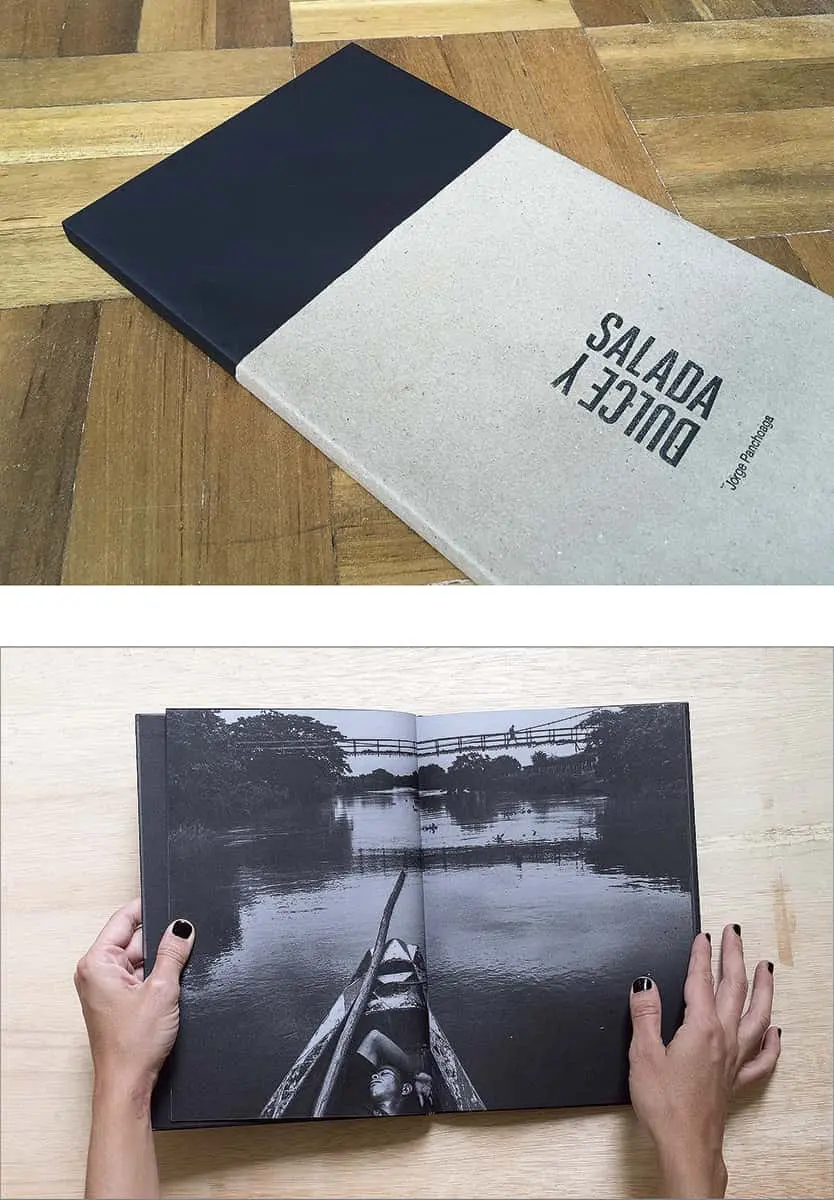
The most recent photobook by the tireless Jorge Panchoaga, Dulce y salada (Sweet and Salty, Croma, 2018), is devoted to the fishermen of Nueva Venecia, in the Ciénaga Grande of the Magdalena river. Page after page, it takes us on a dreamlike voyage populated by bunches of fishhooks, widemouthed fish, howling dogs, impregnable bushes, and boatmen—or charons—paddling in the dark as they take us into a fishing village. We enter wooden homes like spies in the night to discover sleeping (dead?) children, sleepless older folks, and the only face that confronts and challenges us directly, that of a man exhaling a puff of smoke. This is an homage to the men and women of the river, of the sea, of the sweet and salty water of the swamp (ciénaga in Spanish), whose lives take place more during the night than the day. The most difficult, the most painful image today, is an aerial view of a river (almost certainly the Magdalena, but that immediately leads us to think about the Cauca river) destroyed by the pharaonic hydroelectric Ituango dam, which has caused the most devastating ecological damage in the country by damming its channel, drying it and ending with its fauna
Finally, this overview must include several books about photography and photographers published recently, among them Nereo López. Saber ver (Nereo López. Knowing How to See, Maremagnum, 2015), Fernell Franco, Cali Clair-obscur (Toluca Editions, 2016), Macondo visto por Leo Matiz (Macondo Seen by Leo Matiz, Semana, 2016), ¡País! (Country!) by Fernando Cano (2018), and two by me, Autorretrato disfrazado de artista: Arte conceptual y fotografía en Colombia (Self-Portrait Disguised as an Artist: Conceptual Art and Photography in Colombia, Bachué, 2017) and Ardila-Lleras. Escritos y fotografías (Ardila-Lleras. Writings and Photographs, Idartes, 2018).
SANTIAGO RUEDA FAJARDO
PhD. in Theory, History and Criticism of the Arts. Curator and researcher of contemporary art.