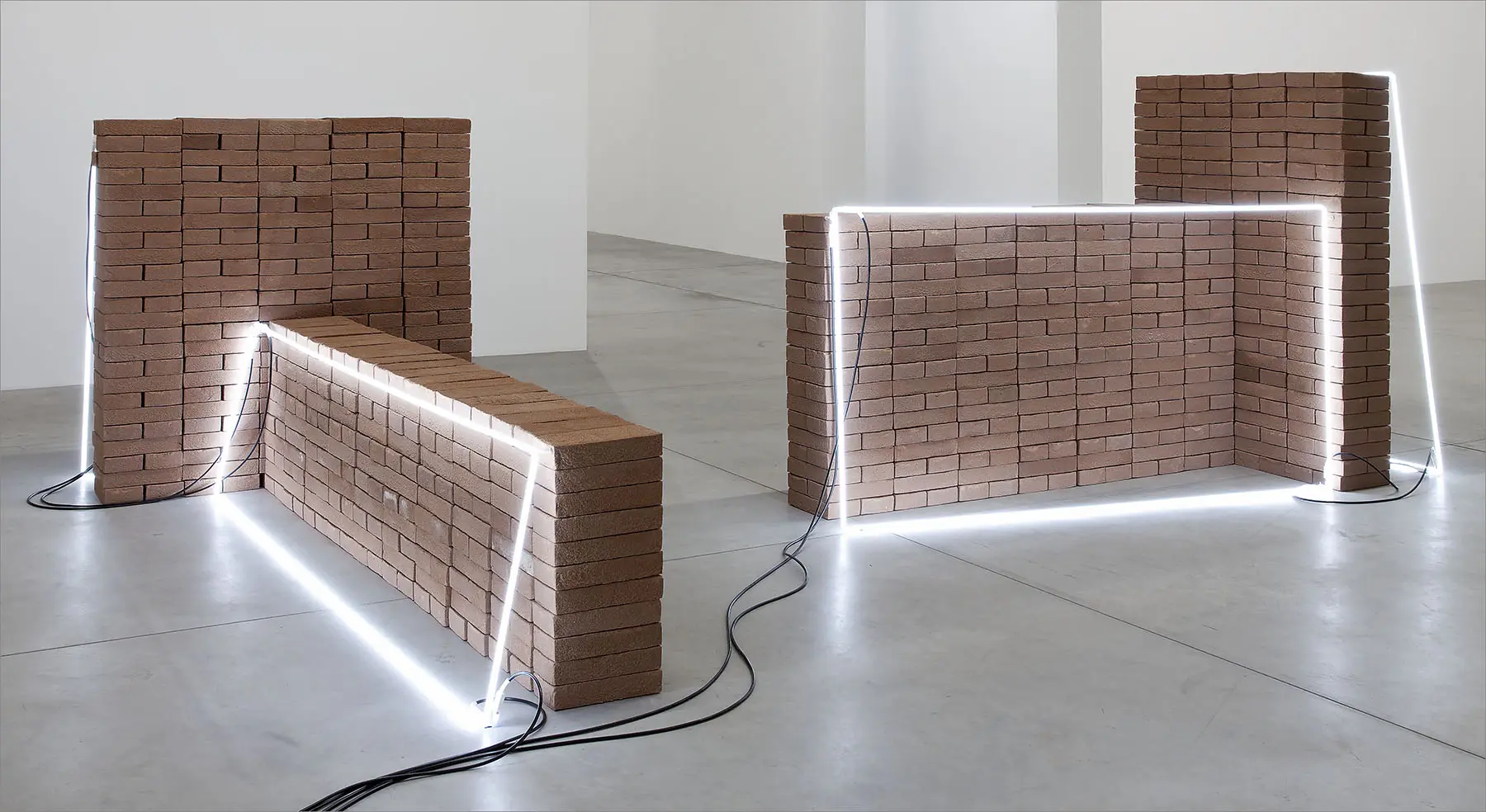
The year was 2015, and at the annual gathering of multitudinous omnipresence that is Art Basel, Jorge Méndez Blake and José Dávila shared space at OMR gallery. Not as much in a literal sense, though: first, the work on one of them was set up and exhibited; it was later taken down and the work of the second artist was set up and shown. They alternated in a temporal continuum during which we were able to inhabit one thing (or place) and then another. Simultaneity could only occur through the illusion of images being spliced together, a result of their coming in succession, without that splicing ever actually being the case. In this negotiation of times in the occupied space, an alterity that disputes and debates totalities are achieved, whether they be fields, sites, strata, lines (in terms of linearities), or figures (in every sense of the word).
Along with a few more, the works of these two artists, both natives of Guadalajara, in the Mexican state of Jalisco, ultimately embodied a sort of cosmopolitan marginality, reflecting the social, cultural, and political paradoxes that continue to exist in Mexico City as well as in other cities in the country. Artists like José Dávila and Jorge Méndez Blake, alongside Francisco Ugarte and Gonzalo Lebrija, made their earliest mark as the new century turned. Many have the advantage —or the disadvantage— of having trained as architects. They reject or jump between disciplines, driven by a need to expand the horizon and shatter the preconceptions that came with that temporal passage, which redefined and reformulated the local art scene —above all, its relationships with the global market.
The transition could not but be felt like a leap, and in many respects, it can be compared to an imposition or a decree from above, as so many other things in a top-heavy country such as Mexico, which has played the role of a bit of a backyard —in more than one sense— to its Northern neighbor, resulting in many debates and scuffles, more or less local in nature. All inroads into places in the interior have depended on (or can be compared to or described as) whether the city in question has an international airport: the roads of art have and don’t have layovers.
Dávila, Ugarte, and Lebrija created the group Incidental (also including Javier Dueñas, and Diego Quiñones, among others), which in 1998 presented two projects: Doméstica (Domestic), intervening in the space of an abandoned home, and Incidental, on the rooftop of Condo-minio Guadalajara (the city’s first skyscraper), with artworks and actions that composed an exacerbated hyperbole of everyday life in an effort that combined a critical intent with open provocation. (An example of this is their ultimately failed exhibition at the Alejandro Otero museum in Venezuela, where they wanted to send a stray dog). Eschewing the imposed metropolis, declared themselves inhabitants of one of their own, as marginal as it is exclusive, given to the new based on the traditional (in a way that conjures or conjugates different forms of violence). It is like a plan that is said while it is being drawn, as open in its parameters as it is closed in its course. It was, in fact, a scene —with its reasons and its extensions, its possibilities, and potentialities— defined and determined by its influences and consumption.
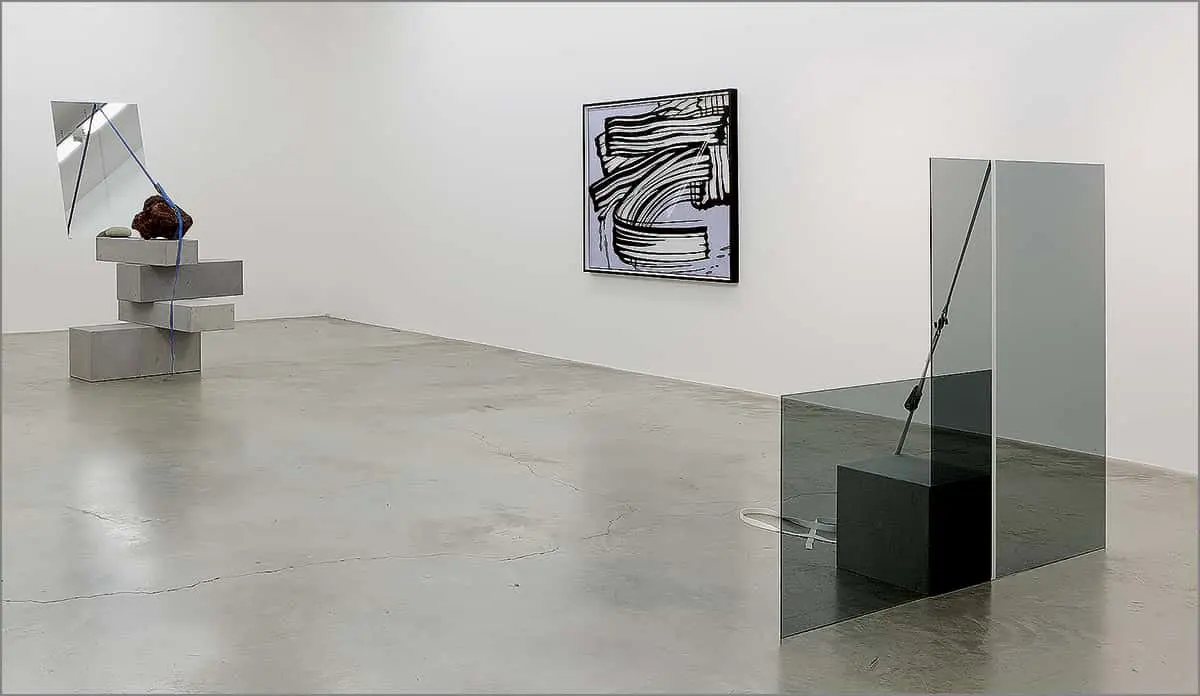
Grupo Incidental soon disbanded, and its members set out on similar trajectories, with careers that underwent a meteoric process. Each on their own, they sharpened a critical vocation that was as violent as it was digressive, and by virtue of it, it gained a foothold in the world scene. José Dávila, Ugarte, and Lebrija eat the world up, they pounce to devour it —to become one with it— in a process at once spiritual and digestive. In their need to update the local (this is to say, national) scene, they make use of all manner of linkages and appropriations in order to apprehend—in a sense of this word that blends together the meanings of raid and invasion, arrest and subjection —an elapsed world that— like themselves —both shines and hides in the omnipresence of the contemporary to give the urgency that only a vehicle in motion can possess.
What persists —what remains as evidence— is the wear-and-tear; the trace of velocities, tensions, and weights; the evidence of its negation, that which isn’t there but is spoken by means of volumes, contours, and dispositions: a vocation that tends towards the monumental as t revisits and updates the visions of emblematic figures of postwar art: the chromatic adventurism of Josef Albers and Sol LeWitt; the continuation of their adventure in space (and with different materials) by Donald Judd and Carl Andre (and that without mention of the local tradition, which includes German Cueto, Mathias Goeritz, and Chucho Reyes Ferreira, alongside architects like Pedro Ramírez Vázquez and Luis Barragán).
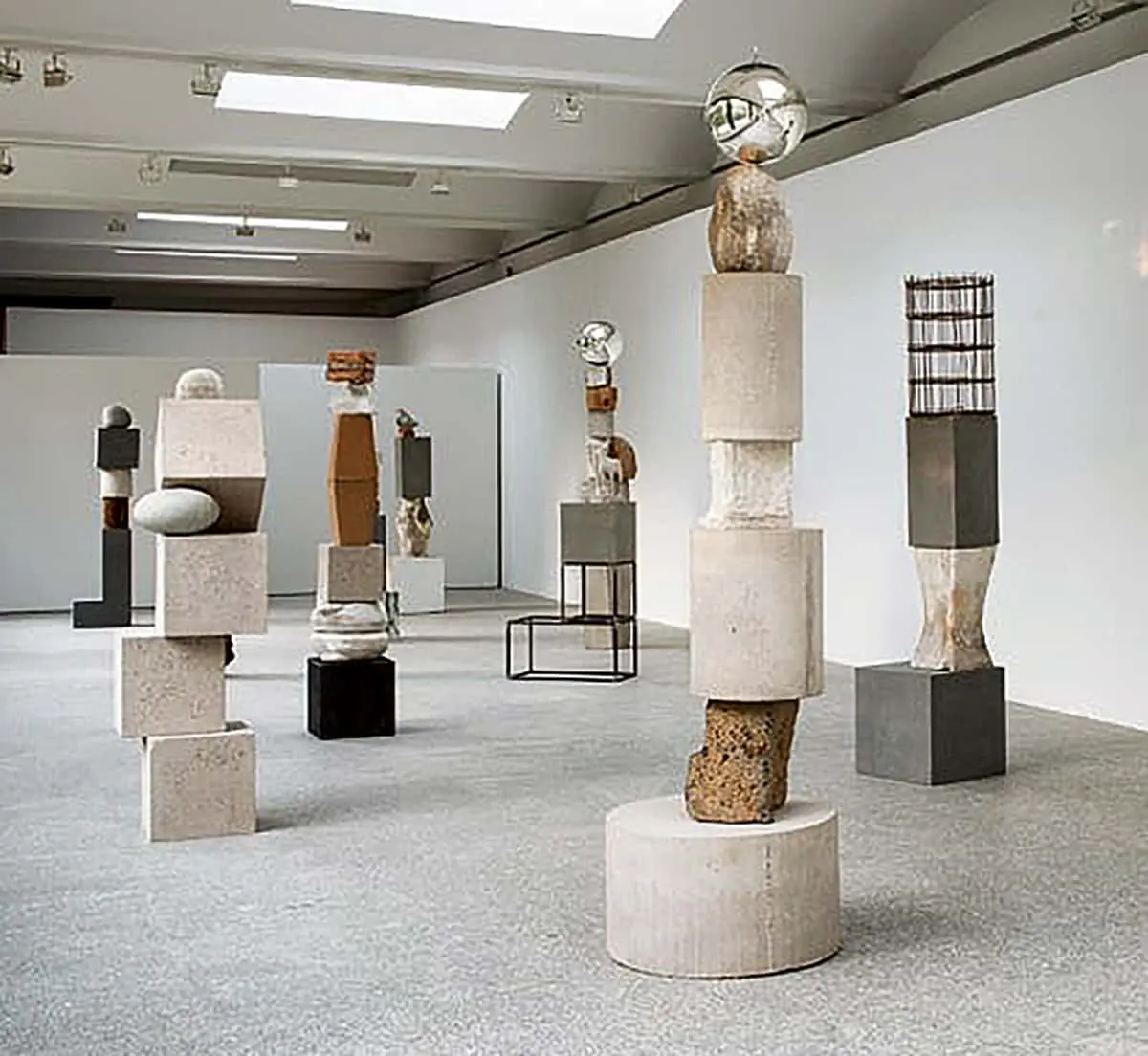
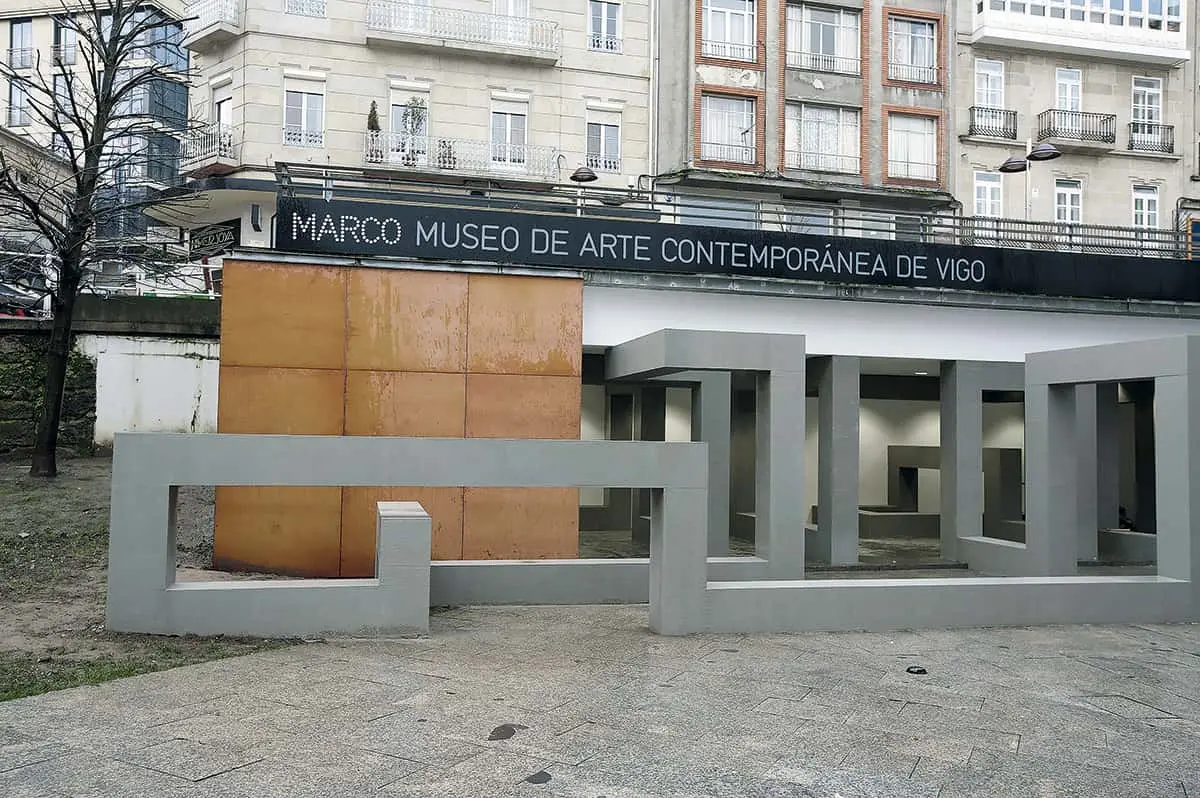
Josef Albers, Donald Judd, James Turrell, Gordon Matta Clark, and Robert Smithson, among others, are markers in time that ultimately coincide in a hegemonic present. The relationship of color and form with geometry becomes timeless and exists only through the evidence of processes of reflection about color and geometric figures; they are markers in time and also a continuation. José Dávila, in fact, at some point, found himself in the always-current miracle of the simultaneous, side by side with some of his lodestars (on a stela that transcends time while marking it as an inexorable procession), sharing the space of UNAM’s Museo Universitario de Arte Contemporáneo as part of the exhibition The Persistence of Geometry curated by Nimfa Bisbe and Cecilia Delgado Masse, using holdings from the MACBA and La Caixa Foundation collections.
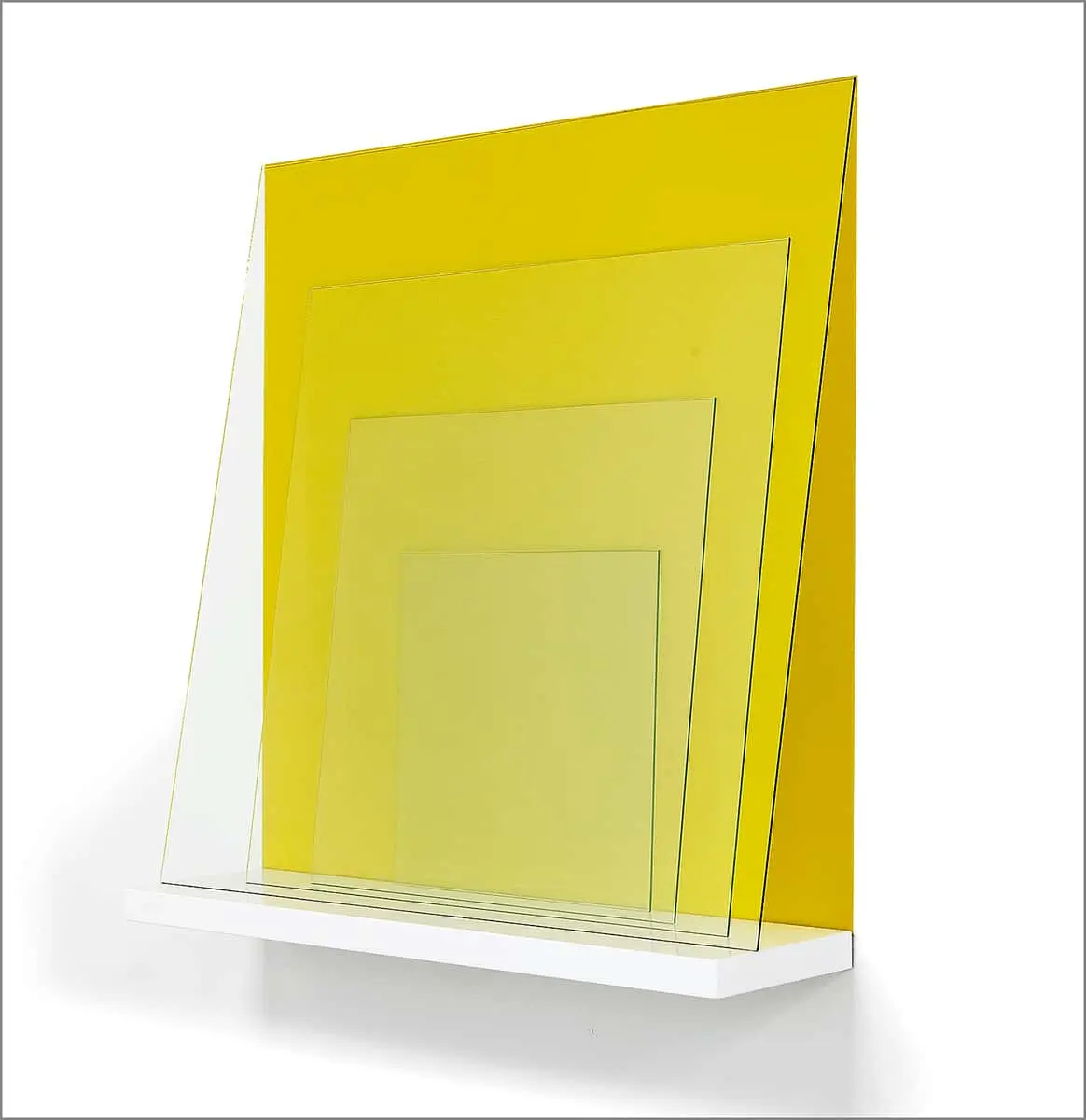
José Dávila’s allusions to his referents are not literal. Not only in the formal sense —where he carries forward and develops his own obsessions with subjects that derive naturally from architecture and design, such as materiality, geometry, primary colors, and dynamic tensions— but also by saying them. Indeed: who they are, where they come from, where are they going. He mentions them to pay homage by making them his; in that way, he appropriates not only forms but also names. Thus, his tribute to Albers’ square becomes a series in homage to Albers. Dávila discourse derives, weaves, breaks, reduces, and objectifies Albers in space as a reference that he has made his own, turning it into something personal. He reifies Albers, objectifying him, shattering him into pieces to transform him into something different from himself, but in the final analysis, in any terms that could be described as essentially the same. Dávila turns formal borrowing into a mode of demonic possession, an extension of economic culture, and a form of consumption.
In that regard, Dávila told Ricardo Porrero in an interview (Código magazine, February 9, 2018) that he approaches the artworks “to generate meaning that the originals did not have.” He derives, transgresses, and proposes on how own terms. For example, referring to his Serie Albers, Dávila confesses: “Commenting the paintings and graphic works that pay homage to Josef Albers’ famous square (…) I made a wood shelf that holds transparent glass pieces with a monochrome hue painted on the back. The light effect achieved through the glass pieces makes the color shift. My thought, based on Albers, is simple: color is light. I take the works as my starting point for my personal commentary.”

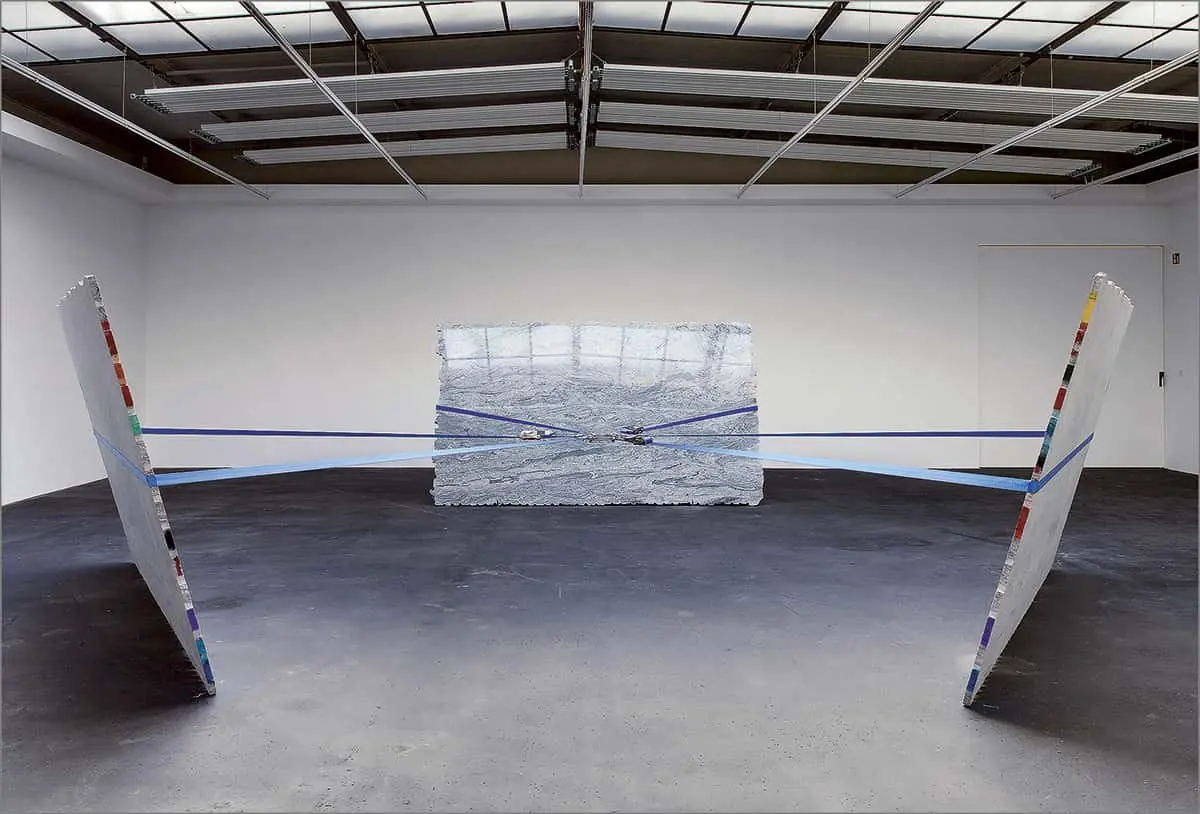
Dávila turns colors into objects. He makes them overlap or extends them in space, giving them a modular relevance that overtakes space, transcending and lacerating it with all the violence (or, rather, the imprint) that, as matter, representation possesses (or may possess). Weight, gravity, and the ultimate tension that exists between bodies and materialities, whatever their nature —concrete or polyurethane; vinyl or glass— impose or manifest themselves as the final link between the work and the author. They are what defines it, the tracing in space, the mise en abyme; they keep it aloft and unresolved, as potential and cataclysm; they are what makes it identical to itself and different from all others.
The figure of José Dávila hinges —a bit like his art— on attachments and connections, on linkages and projections, on pathways and trajectories that bridge tensions and weights with materialities and formal games. He can be said to have a propensity for the baroque, or, rather, for the idea of the baroque, and this idea implies or aspires to a place where all things exist without confusion, be it ideas or materials, invocations or talismans, evocations or souvenirs. Given to a spirit where disproportion and order coincide, he superimposes bodies and surfaces, in an interplay where any representation is projected dimensionally outwards. Whether line or vector, map or territory, allusion or reference, appropriation or tribute, it all overflows and is amplified, erecting a paradoxical monolith that revises and exhausts the world from a space that, being full, seeks to empty itself out in search of an ultimate meaning that survives as flight, as inertia, as a power that compels subjections and orderings.
In this way, Dávila opens himself up both to the totemic —in the alterity and overlapping of discourses that differentiate and unify themselves— and to the literalness of the abstract, to the narrative’s essential plot in the tension of lines, forms, bodies, and figures. It is the whole and its parts as impression and demarcation. It is the synecdoche of the world found in an Eastern tapestry, at once the ocean and the origin of species, projected towards concreteness (or concrete) in a literal way. (In fact, as Dávila told El País’ Elsa Fernández Santos,1 concrete is among his favorite materials. It is moldable stone, stone with tracks: “In concrete, the trace of the plastered material remains.”)
According to Markus Richter, José Dávila’s oeuvre is traversed by a meditation on the visions and disasters of modern architecture and urbanism. For Andrew M. Goldstein, these allusions to urbanism and architecture obscure how Dávila’s art connects with matters of greater existential and emotional import. Despite its moderate (or contained) sentimentalism (which Goldstein compares to Blinky Palermo’s emblematic opacity), Dávila’s work remains an effective vessel for the communication of the human condition, which is based more on emotions than on the intellect.
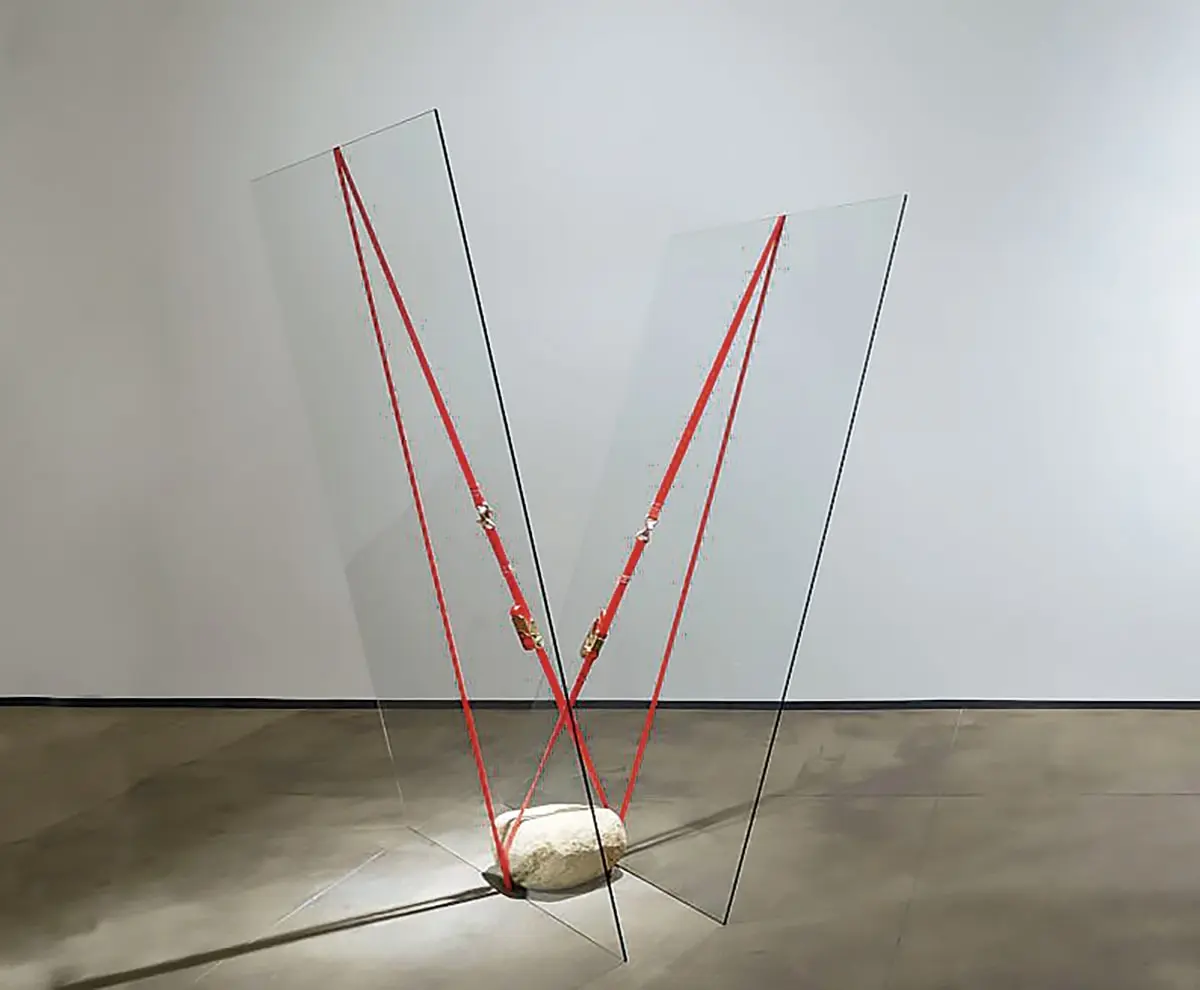
This has prompted me to speculate about our own emotional education —as a public— through the relationship we have sustained, in affective terms, with minimalism, geometric abstraction, and concrete as a material. These are the elements of an environment that has defined, in conventional but also emotional terms, our passage through the world, the way in which the a posteriori of modernity has come to be represented in museums, galleries films, and commercial passages. We see ourselves in the barrage of generalities and assumptions that define us as a medium and totality, in allusion to its extension and speed. We are part of the image storm that illustrates and illuminates the way of looking at the world we have been forced to adopt. We inhabit the everlasting continuity of the contemporary. It is in the particularity in which José Dávila approaches, joins, or jumps to the train of events, to the place —I insist— where all things are confused, where both the buildings to come and the buildings of the future rise: it is the gesture that distinguishes it, the trace it leaves, that which defines space beyond functions and needs, that which occupies it as a necessity, but also as a form of exception.
NOTE
1. Elsa Fernández Santos, “Este artista sueña con materiales de construcción”, El País, December 8, 2012.
RICARDO POHLENZ
Visual poet and writer. Critic of art, cinema, and media culture