A central concern with materiality and constructive elements and their relationship with space permeates the work of São Palo artist Carlito Carvalhosa. His latest solo exhibition confirmed this, O comércio das coisas (The Commerce of Things), at Silvia Cintra + Box 4 gallery in Río de Janeiro. It featured a large-scale intervention on the space, with innumerable paintings in aluminum and wax, in small and medium formats, arranged in between cool-light tubes hanging from the ceiling.
Carvalhosa’s latest oil-and-wax paintings hark back to a typology that the artist developed in the late 1980s, with his initial experiments with beeswax and pigments. Some works from that period were even included in this show, thus establishing a connection with the newer ones, in which Carlito Carvalhosa uses his own fists and thumbs to manipulate the material and create imprints with superimposed colors. In the new series, the paintings on aluminum are no longer monochrome, as the artist’s works from the late 2000s on have been, but instead, they display unexpected color combinations. The use of oil on reflective aluminum creates a surface on which the painting seems to shift.
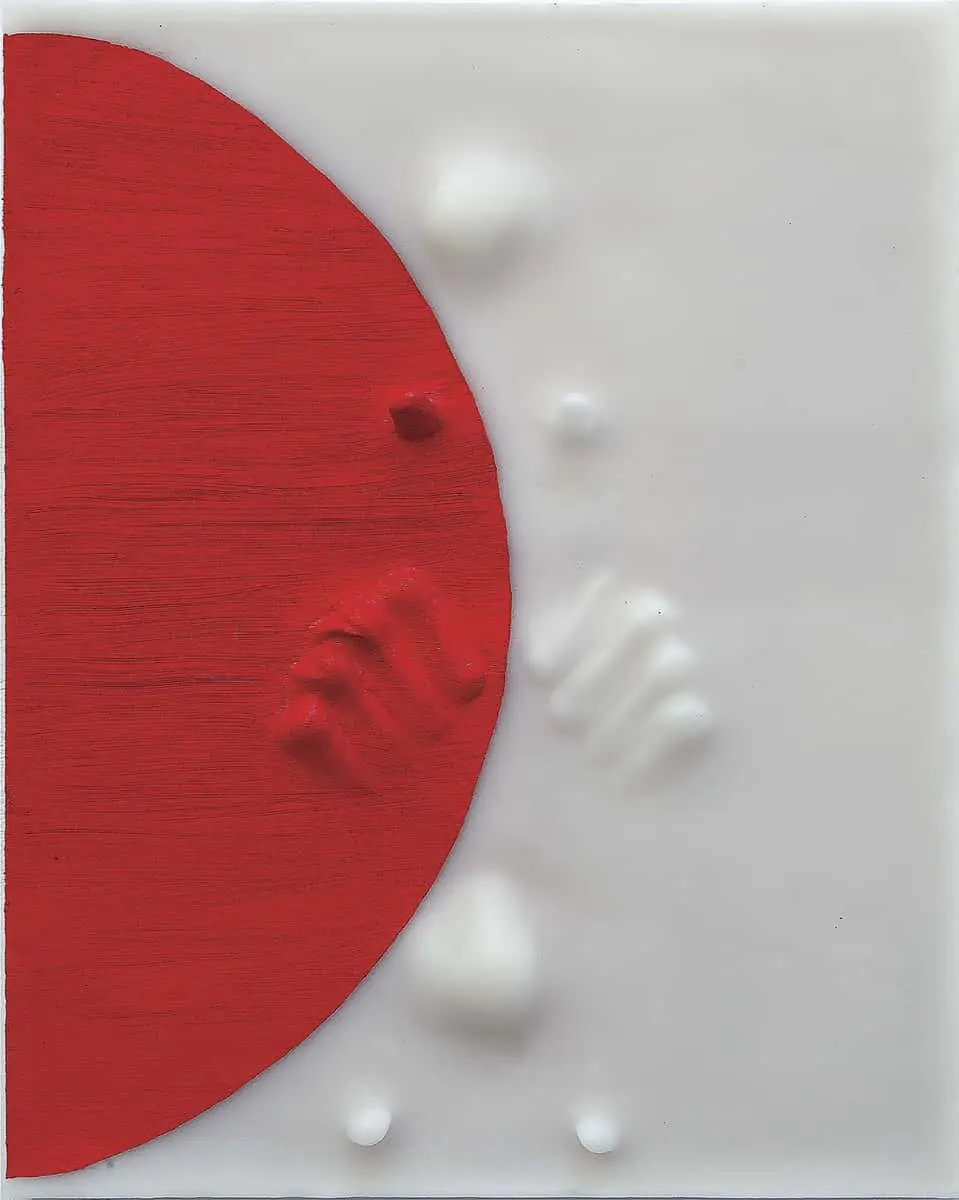
Carvalhosa’s initial productions already revealed a constructivist intention, based on probing the links between the expressive dimensions of matter and form. In paintings made using wax in the 1980s, the artist explored the malleability and the translucent character of matter. The results played with the viewer’s gaze, rendering it unable to find a stable foothold. His sculptures from that period also revolve around the idea of imprecision; their disposition in space always suggested a particular imbalance, baffling the viewer. Carvalhosa used malleable, mimetic materials in opaque or translucent colors to create enigmatic works of art. A degree of uncertainty about their materiality is once again present in this new exhibition.
Carlito Carvalhosa studied Architecture and Urbanism at Universidade de São Paulo (FAU/USP) between 1980 and 1984. Renowned today across Brazil, he burst into the local art scene in the 1980s as a member of the São Paulo-based collective Grupo Casa 7, alongside Rodrigo Andrade, Fabio Miguez, Nuno Ramos, and Paulo Monteiro. During that period, Carvalhosa produced large-format paintings with an emphasis on pictorial gestures and was part of an intensely expressive movement of São Paulo artists seeking a return to painting. His career began with abstract paintings that connected pictorial gestures with an emphasis on plasticity. He continued ever since to explore a fascination with materials in sculptural works, applying the Egyptian method of lost-wax casting and working with porcelain. During this same period, Carvalhosa began to experiment with the use of pure wax or wax mixed with pigments in his paintings.
In 1989, Carvalhosa was the recipient of a grant from the Deutscher Akademischer Austauschdienst (DAAD) [German Academic Exchange Service]; he remained in Cologne until 1992. In the mid-1990s, he engaged in new experiments with wax and porcelain sculptures, exploring the material’s aesthetic properties in great depth. In the last few decades, Carlito Carvalhosa has participated in many important exhibitions in Brazil and abroad, among them the São Paul, Havana, and Mercosur Biennials, and a solo show at MoMA, in New York.
Alongside his experiments with Matter, Carvalhosa uses a variety of found media and objects—including lightbulbs, fabric, and mirrors—to probe architectural space, as he did in O comércio das coisas. On display was his interest in the relationship between space and the act of construction, in a constant reordering of the world, based on his attachment to gesture and the playfulness of matter. The exhibition provided an experience of total spatial immersion, based on questioning the gallery’s very architectural boundaries.
ALESSANDRA SIMÕES