The exhibition Beatriz González: Apuntes gráficos (Beatriz González: Graphic Notes), curated by Francine Birbragher-Rozencwaig, was displayed at the ArtNexus Space. As the title indicates, it showed a selection of approximately one hundred works of graphic art. Produced from a matrix and numbered, engravings, silkscreens, lithographs, and digital prints, dated from the late 1960s to the present.
Beatriz González first approached printmaking in The Netherlands, after moving there with her husband, Urbano Ripoll, who had received an architecture scholarship. In The Netherlands, González developed an interest in techniques she was mostly unfamiliar with since the university she attended lacked the necessary equipment.
At any rate, while it is true that González began late as a printmaker, it must be noted that her oeuvre is strongly connected with the graphic arts. First, because the vast majority of works she has produced take previously formulated images (prints or photographs of images) as their starting point. Additionally, she uses multiple originals not only as a recourse for reproduction but also as a way to interrogate the category of art and its two significant bulwarks in the West: originality and authorship.
Graphic art is not only useful for reproducing her work, but it is in itself a field of critique. From that perspective, the medium ceased to be just a medium and became an object of reflection. This resource has proved productive. It started with the first painting inspired by a reproduction titled Fragmento de La rendición de Breda (Fragment of The Surrender of Breda, 1963), based on a poster depicting Velázquez’s painting (not on the picture itself). She later made Los Suicidas del Sisga (The Sisga River Suicides, 1965). La Rendición is a copy of a copy. Los suicidas is the copy of a newspaper image, from El Tiempo, which in turn had reproduced it up from another newspaper, El Espectador, which printed the original photograph. In summary, we have an image that is digested once or twice, an image that González transforms and renders it unique. In her work, it becomes a kind of antipode: the copy becomes original, which is a sharp contradiction.
A contradiction that has much to say about Latin America, which copied the names of its cities–York, Cartagena, Medellin, Rosario–, its plans–as Angel Rama points out, the checkered city plans came from Europe –, even the paintings–disseminated precisely from engravings– and the saints. Latin America copied, copied, and copied until the copy turned into a unique piece, something that could be copied anymore. From that perspective, Beatriz González’s work is an inquiry into our own selves.
In this order of ideas, the exhibition Graphic Notes enters the heart of Beatriz González’s questioning, her career, and a broad spectrum of issues developed in decades of production.
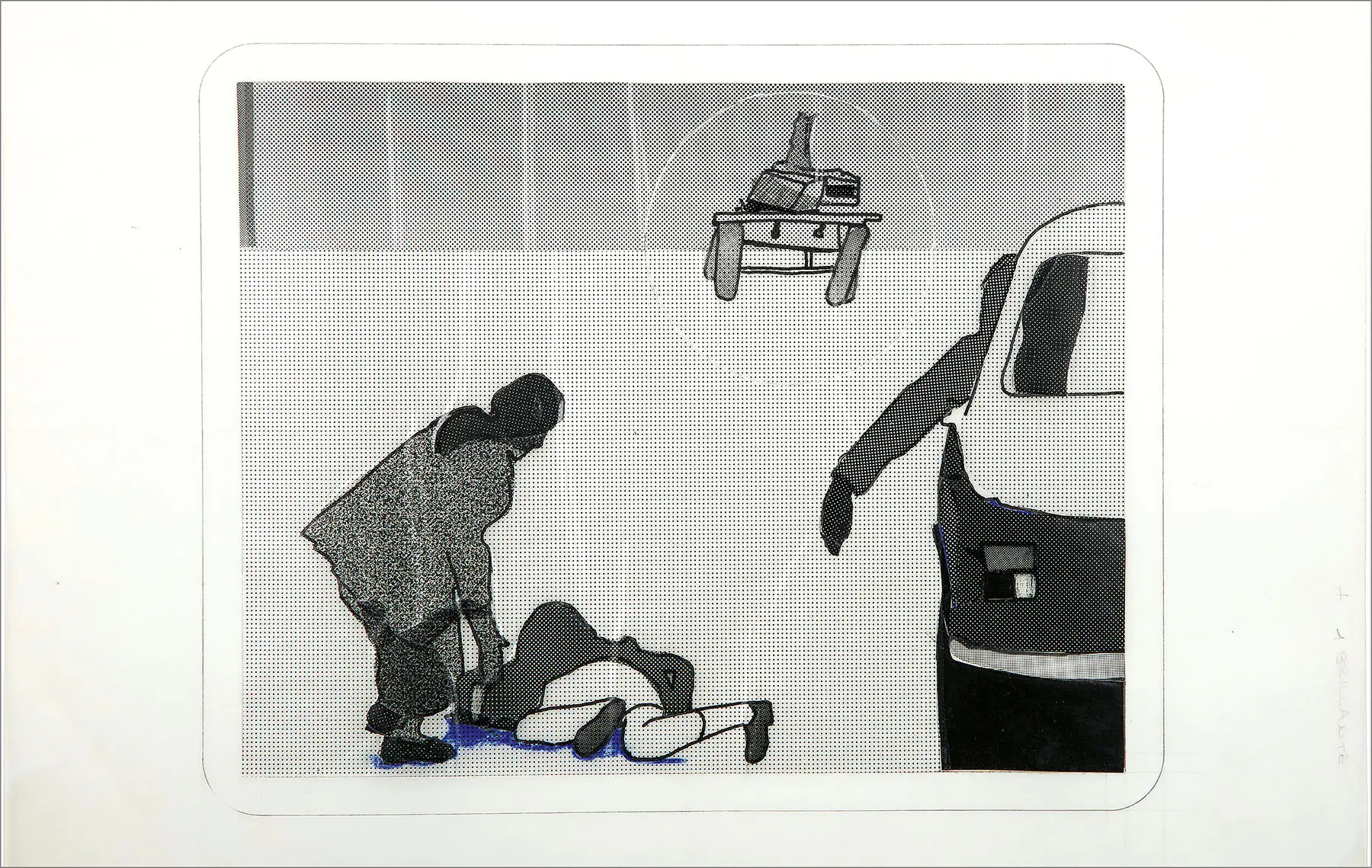
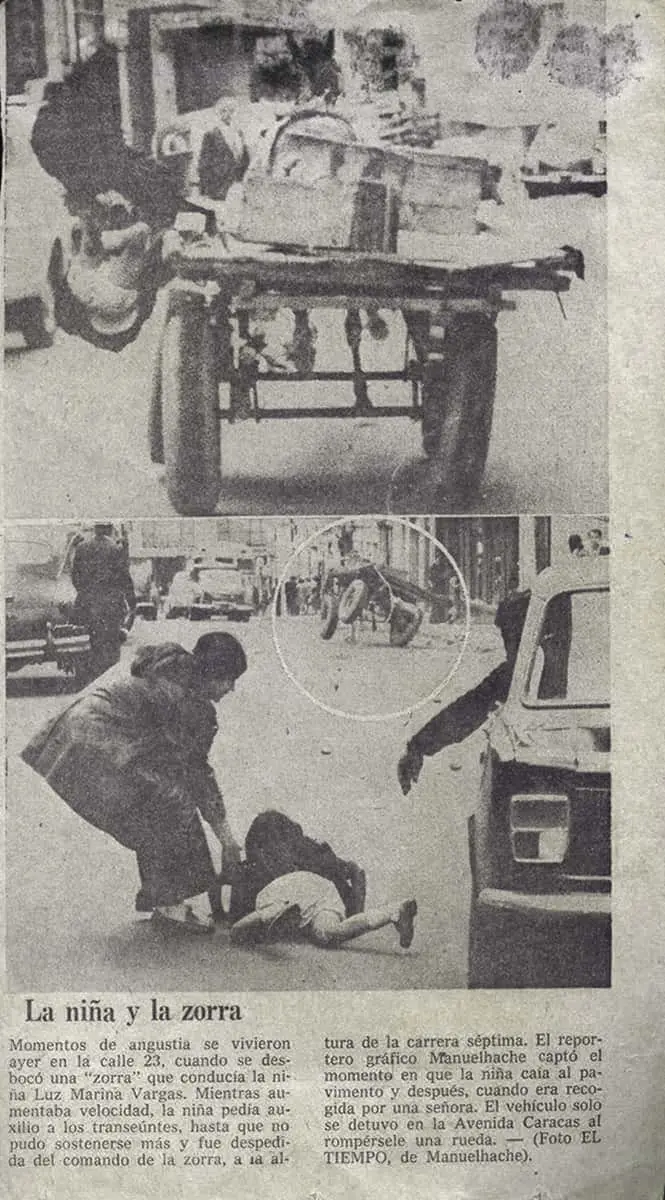
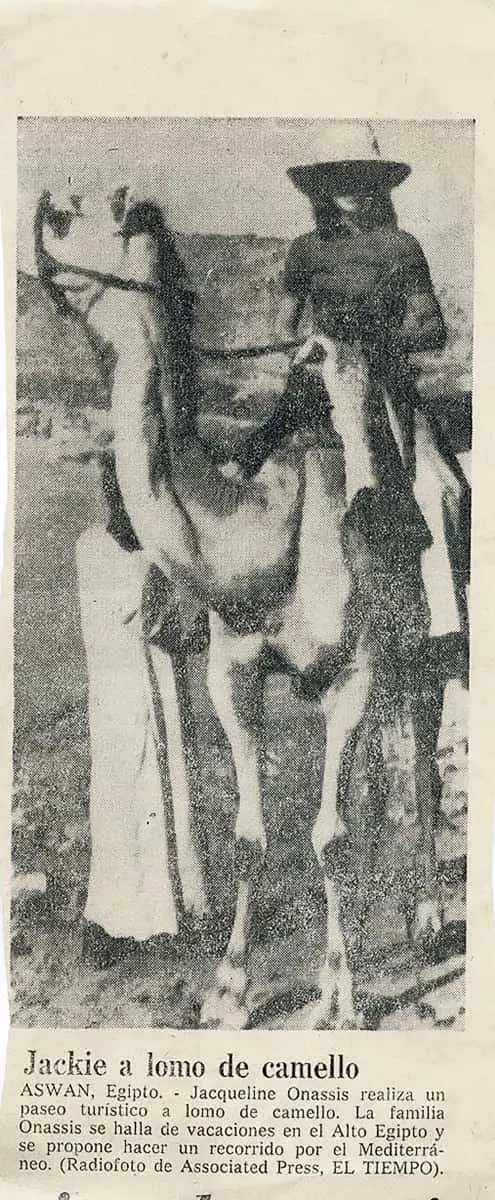
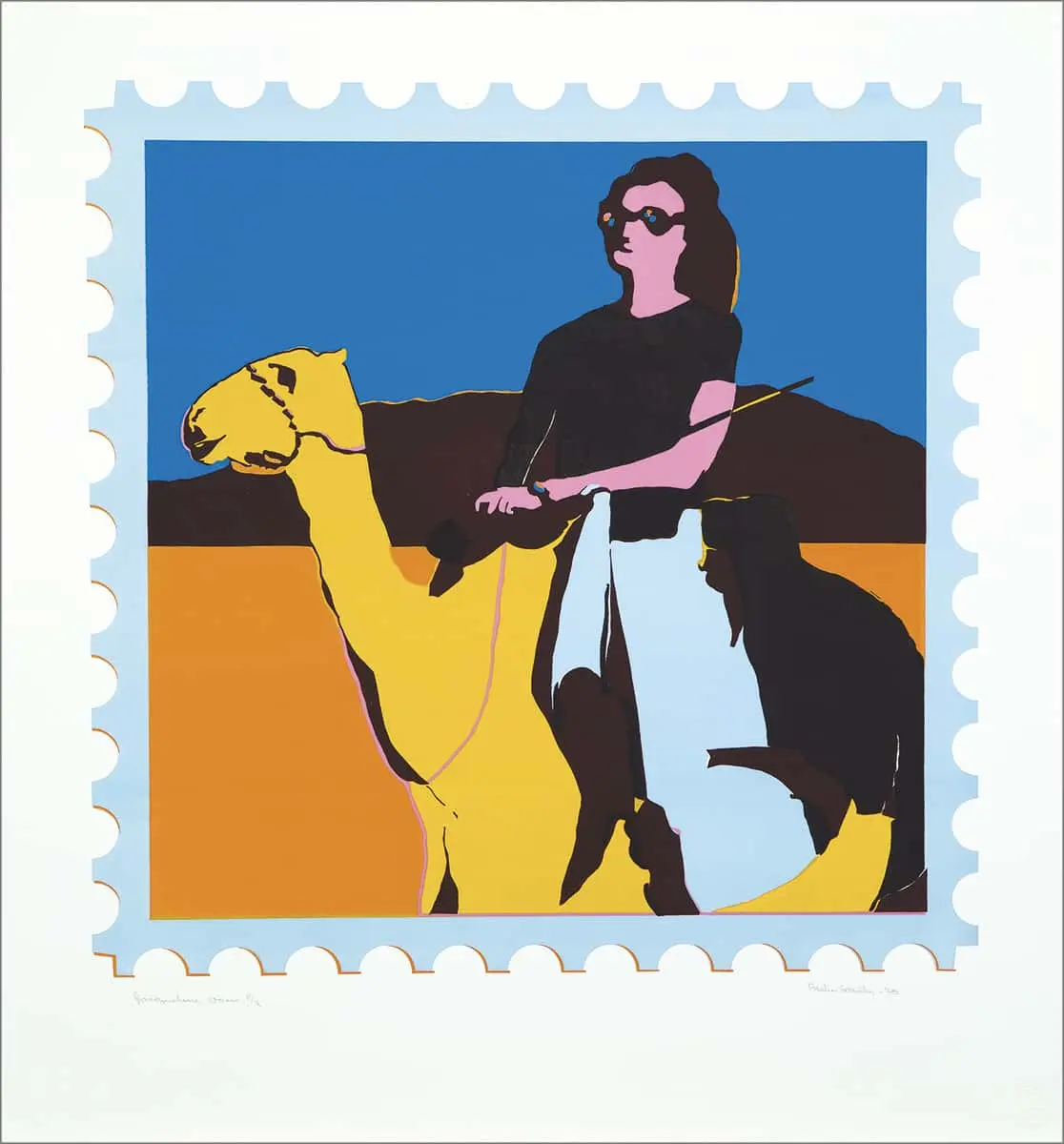
The exercise of seeing her prints based on other print materials, her reproductions of reproductions, provides one of the keys for understanding the work of this great master of Colombian art. Visitors to the exhibition will encounter little-known gems like La niña y la zorra (The Girl and the Horse-Drawn Cart), from 1973. A simple image, accompanied by a text, shows a cart, a girl on the ground, someone picking her up, and a car and its driver. It is through the narrative that we understand what took place. The horse that pulls the girl’s cart on her daily rounds in central Bogotá to collect restaurant leftovers ran into a cat. The cat scratched the horse, and the horse took off running from 23 Street to 19 Street. The run ended when one of the cart’s wheels collapsed, and urban chaos ensued. The news item is as minor as it is intriguing, and González’s way of reproducing it provides further clues. First, image and text intertwine, the one dependent on the other; the image is narrative, a common characteristic of prints and emblems, where the title resolves/sets up the mystery of the drawing. The image has a “democratic” aspect to it. On a newspaper page, you can find the “girl” or an international figure, say, for example, Jacqueline Onassis, whose image we find just on another wall of the exhibition, touring Egypt. In sum, these two figures—the anonymous girl and Mrs. Onassis—end up at the same level in the hierarchy, represented in a newspaper and as subjects of works of art.
Beatriz González approach to the graphic arts illustrates her most profound concerns: the contradictions between the copy and the original; the narrative/allegorical character of multiples; and its profound democratic nature—both in its potential for wide distribution and the way in undermines, like the media, all hierarchies—. But one further aspect brought to the fore by this exhibition still needs to be mentioned: the antipodal opposition between artwork and commodity, between unique item and industrial product.
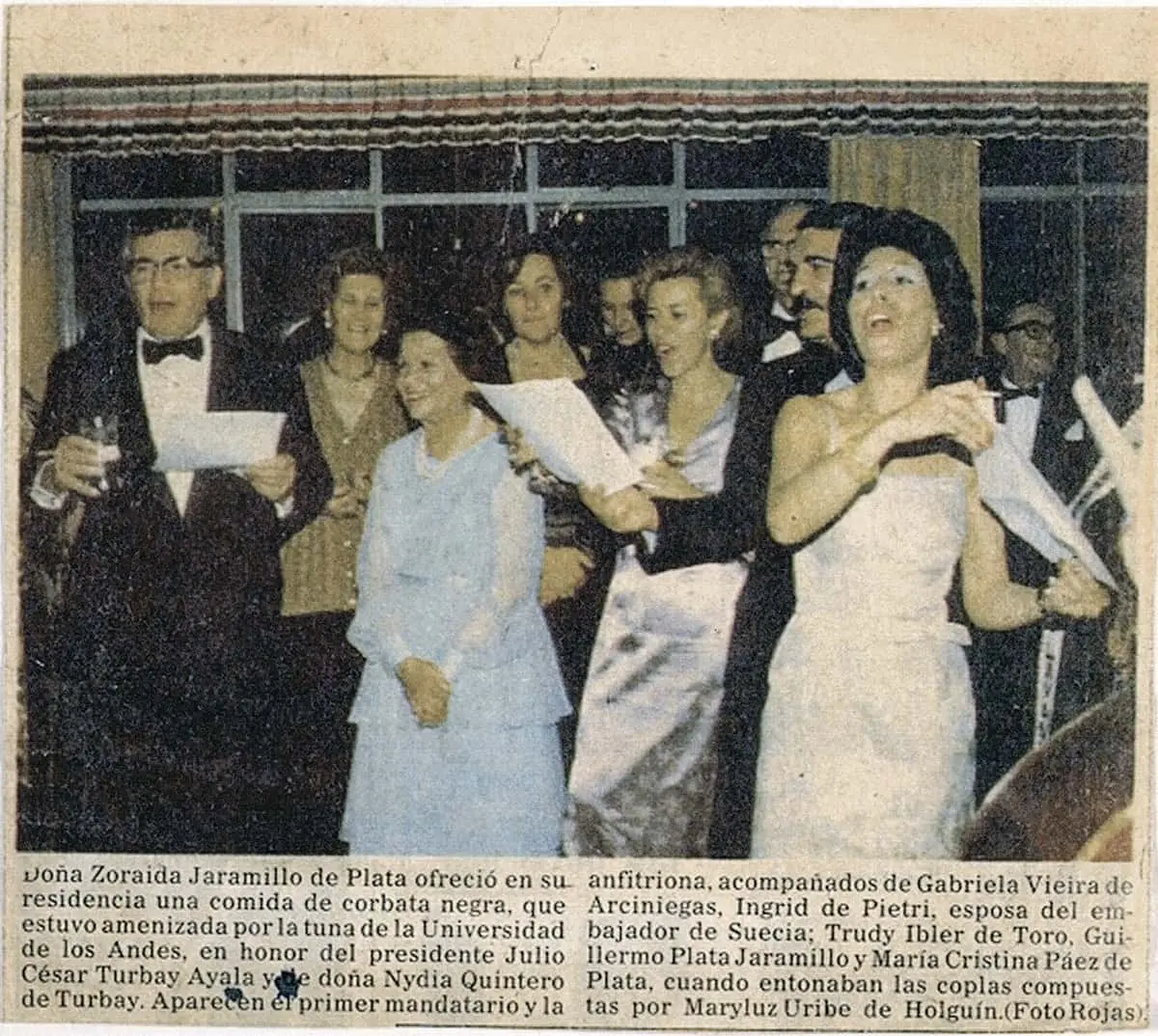
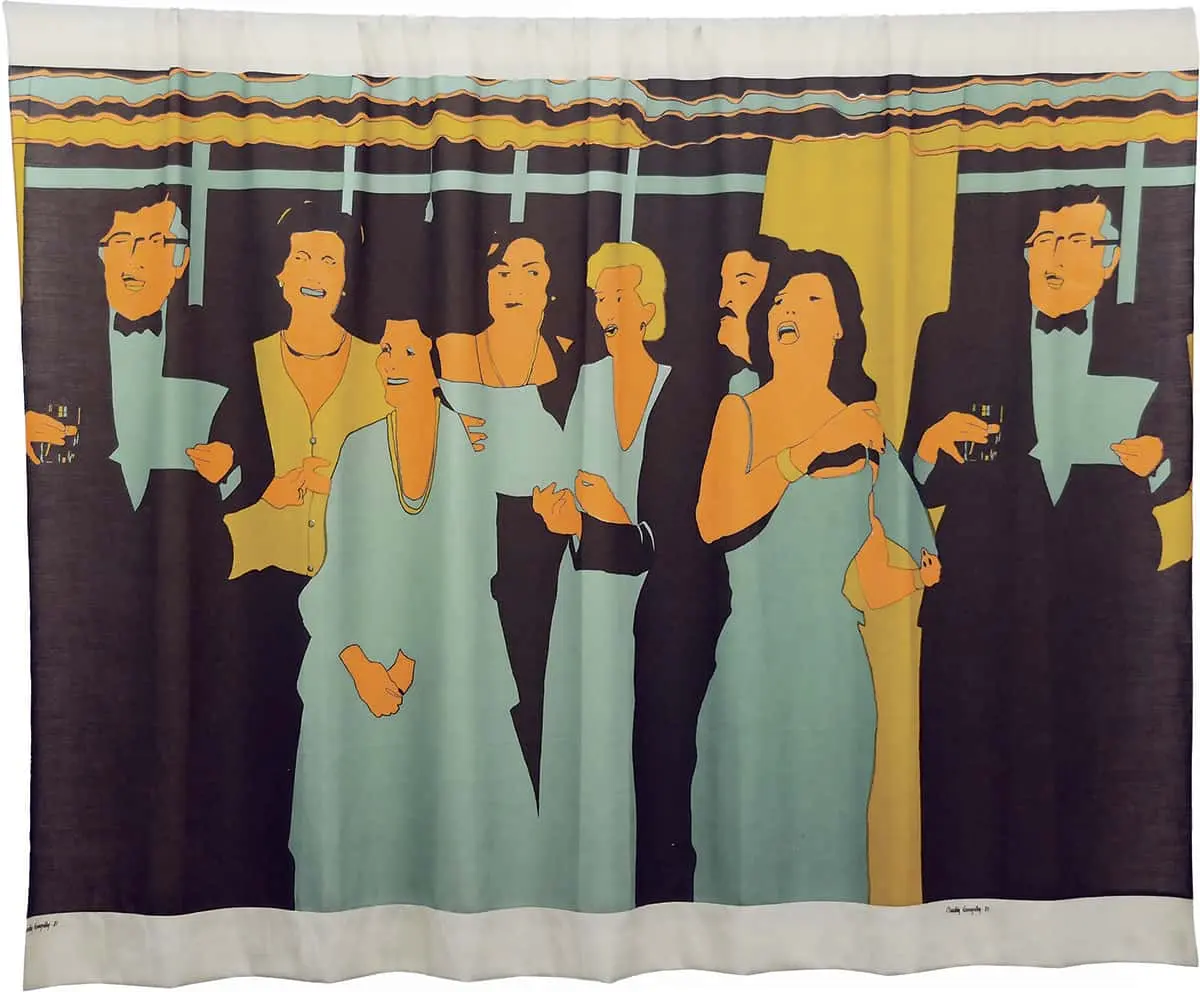
Visitors will not miss, the exhibition, Decoración de interiores (Interior Decoration), from 1981. It is a silkscreen-on-canvas curtain where another newspaper photograph, this one depicting then-President Turbay and his companions at a party, is copied in a repeating pattern. González’s work exploits the interplay between the curtain and the realm of politics (let’s underscore the hypocrisy of all curtains: mantles that keep the light away, fabrics that conceal). She does this with a very personal yet characteristically Colombian sense of humor. A piece measuring three-meters long was exhibited at Apuntes gráficos. When Beatriz González cut and sold the work titled Diez metros de Renoir (Ten meters of Renoir) in 1977, by centimeters, she subverted the parameters of art. Her work of art was sold in the same way in which manufactured fabrics were sold in stores. González signed the piece both on the upper and lower edges, to guarantee the originality of the purchased fragment. Such demystification, I venture, comes from the graphic arts, which in their character of many reproductions are inherently subversive.
Finally, I will mention Desplazados (Displaced), from 2017. It was a hanging roll of paper, printed with images of people being carried, who thus appear to “climb” the wall. The role presented displacement as the endless, unstoppable, and cyclical, part of the cycles of capitalism and land expropriation, always devastating, always new (even when they are old). The “roll” lends the work enormous content. If we cut the paper and leave it without the “roll,” a large part of the semantic richness of the piece is lost. What happens because everything speaks in the work of Beatriz González.
This is so because, in Beatriz González’s work, everything speaks. Thus, this exhibition of speaking images or allegorical objects, far from presenting us solely with methods or the reproduction of a specific painter’s work, reveals the matrix for the code, the foundational lines of her artistic concerns, or at least of a sizable portion of them.
*Catalogue raisonné Beatriz González. Courtesy of the artist and Banco de Archivos de Artes en Colombia of the Universidad de los Andes.
JULIA BUENAVENTURA
Critic and art historian with an emphasis in Latin America.