Zilia Sánchez: Soy isla (Zilia Sánchez: I Am an Island), the Cuban artist’s first retrospective in a U.S. museum, opened at The Phillips Collection in Washington, D.C.
Curated with great care and solvency by Vesela Sretenović, it is the most wide-ranging presentation of the work of Zilia Sánchez (Havana, 1926) to date. More than sixty artworks (paintings, sculptures, works on paper, videos, and sculptural canvases) have been brought together for a chronological exploration of the artist’s career, from its start in 1950s Havana through her European sojourn later in the same decade, her flight from Cuba to New York City in 1960, and her final move to Puerto Rico.
This exhibition is a metaphor for a life marked by motion, creative vitality, interdisciplinary dialog, and teaching. It puts on display the entire world of an artist who has in recent times garnered attention from great museums in the United States.
Zilia Sánchez’s interest in the arts began in the 1930s, with her neighbor Víctor Manuel as a mentor. Encouraged by her first great teacher, she attended the Elementary Fine Arts School for two years and completed her education at the San Alejandro Academy, graduating in 1948. In the 1950s Zilia Sánchez was an active participant in Havana’s effervescent cultural scene, and her work was exhibited in group shows and national salons. Her first solo exhibition took place in one of the country’s most renowned spaces, the Lyceum and Lawn Tennis Club, in 1953, and featured several abstract works. As part of a cohort of artists orbiting around Grupo Los Once, Sánchez was included in several of their exhibitions, despite not being one of the group’s founding members. In 1960, she fled into exile in New York, and it was there that she came into her own as an artist. Sánchez studied printmaking at the Pratt Graphic Art Center, illustrated poetry books, produced stage designs, and exhibited individually for the first time at Zegri Gallery, in 1966. In 1977, Sánchez resettled in San Juan, where she continues to live and work today.
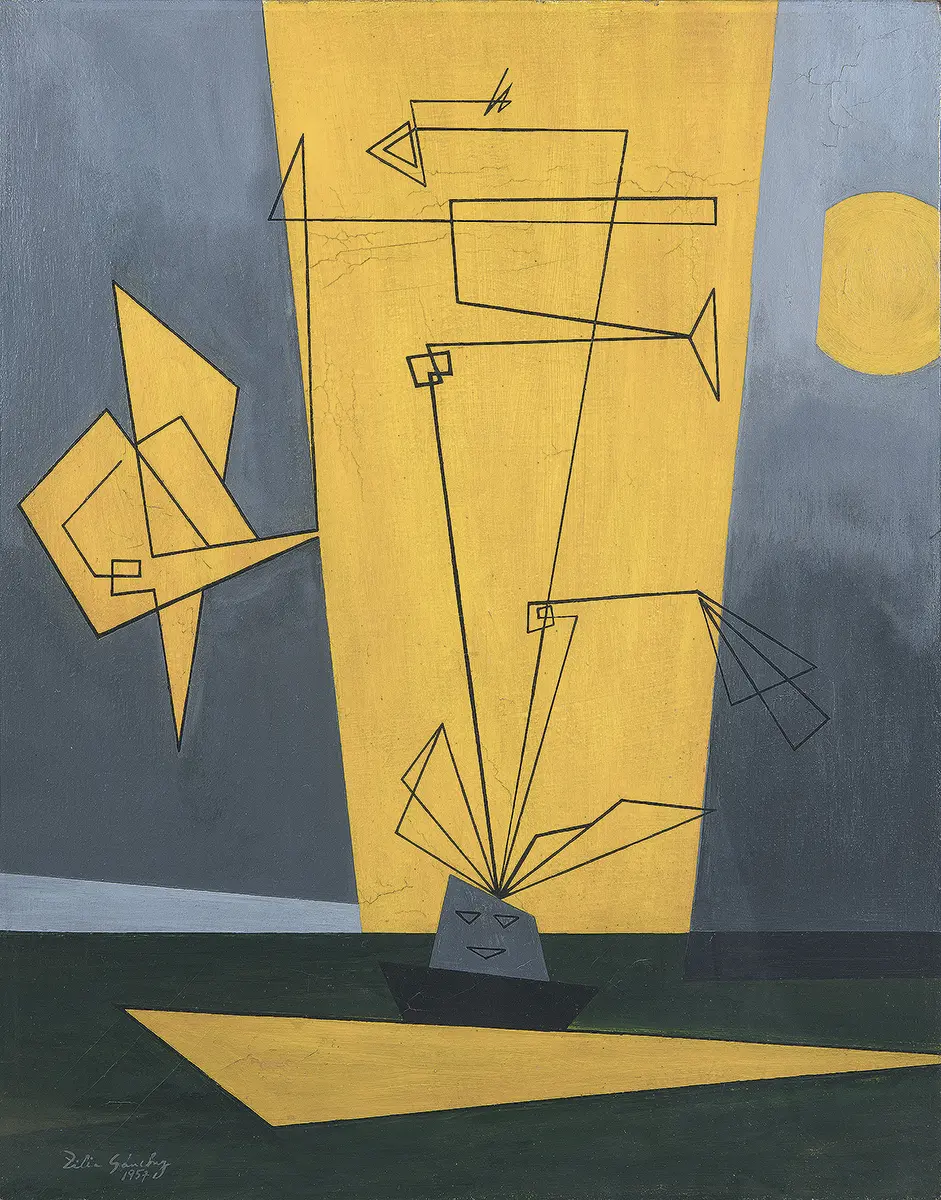
The show at The Phillips Collection captures this entire life process in a chronological sequence. Fortunately, it includes early works that were decisive for the artist’s career, like Afrocubano (Afro-Cuban, oil on canvas, 1957), in which Sánchez synthesizes, using lines and color fields, an eleguá, symbol of her cultural essence and racial identity. In this work, which combines geometric elements and rectilinear shapes, we can understand the artist’s connections with Cuban avant-garde painting of the period and her points of contact with some of the members of the Grupo Los Once.
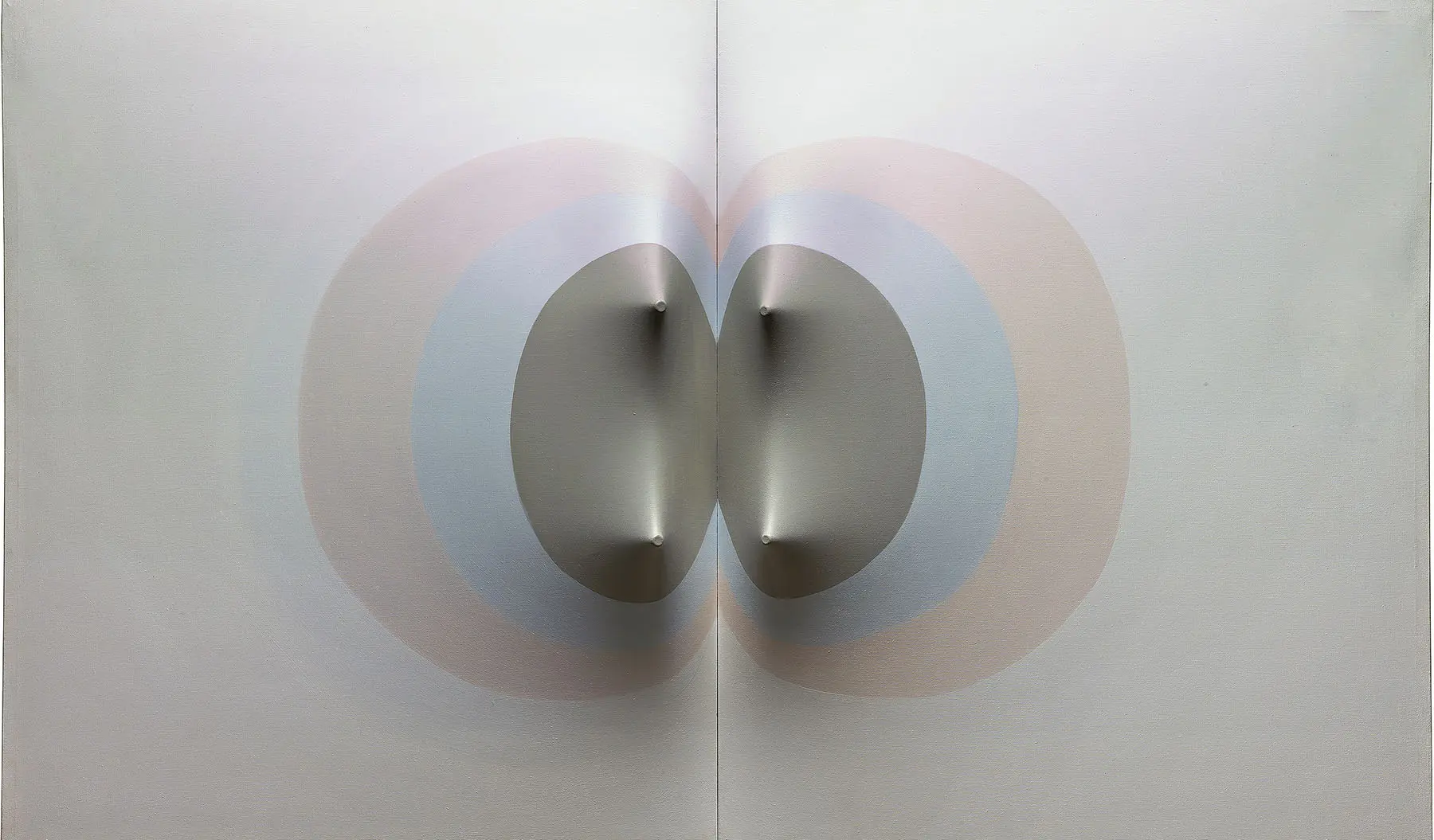
Eroticism, a central protagonist of Zilia Sánchez’s oeuvre, can be appreciated in the curved lines of her sculptural canvases, which dominate a significant section of the show. These works, some in large formats, refer formally to female sexual organs and summarize many of the artist’s deepest interests: her sexual identity; her break with the patterns of a patriarchal society; her ability to transcend all constraints when it comes to imagining and producing art; her need to communicate an inner world defined by her Island origins.
Sánchez produces her tactile works using an intimate process. She first creates structures to which fabric is added, resulting in protrusions, flat fields, and raised textures, all in soft and often pure-white hues. Her paintings in relief, where shapes protrude from the stretched canvas and the topographic character of Sánchez’s art is on full display, may occasionally lack a single orientation, and can even be signed by the artist in different spots as if inviting viewers to abandon their passivity and observe the work from previously unimagined angles.
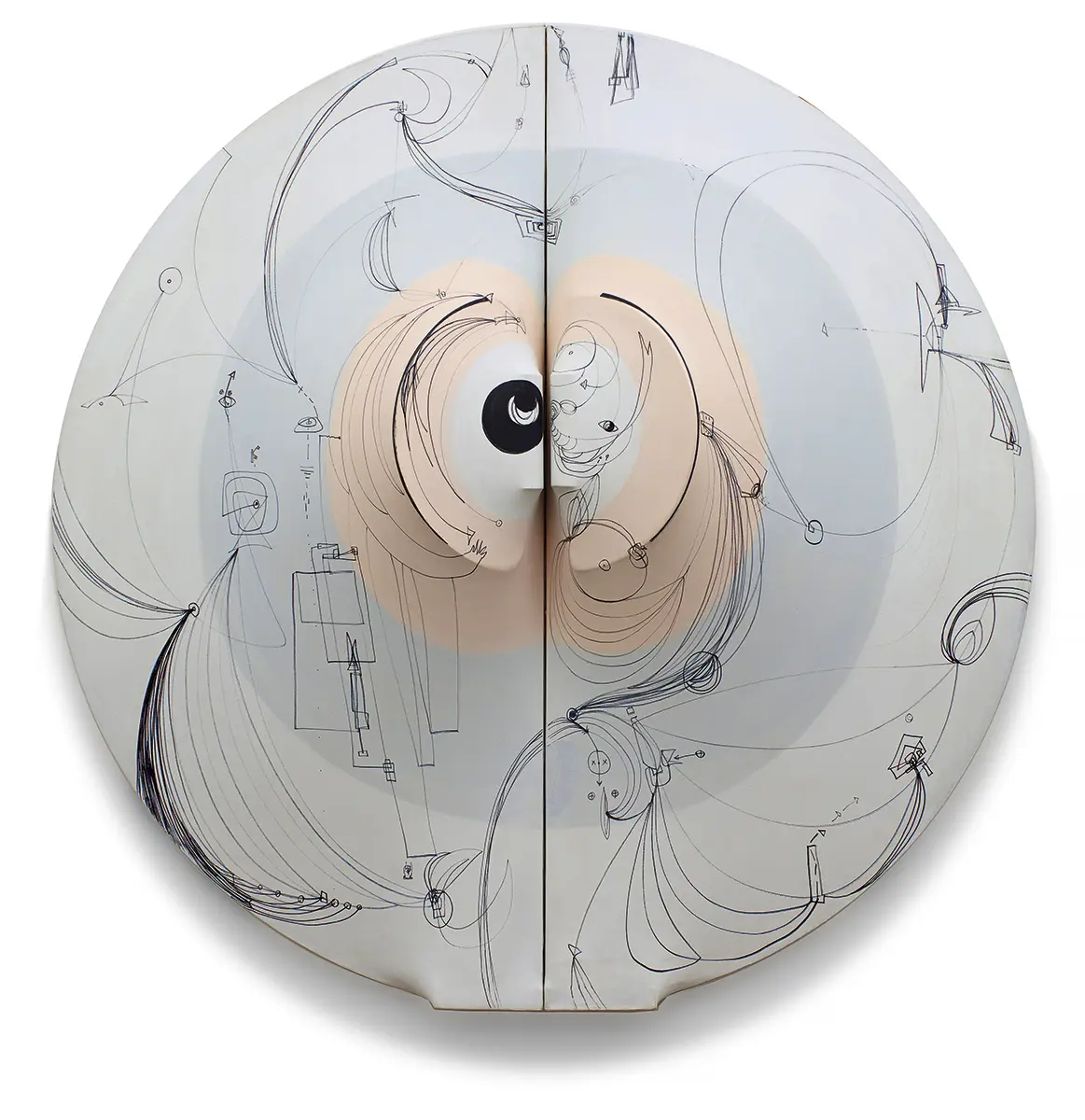
Other works, such as Lunar con tatuaje (Birthmark with Tattoo), can be viewed, at first, as minimalist. Looking closely, the viewers access a space composed of delicate drawings, fine lines that reveal the artist’s vast world as a woman, creative individual, exiled, someone who is both isolated and active in a community that respects her and appreciates her as a great teacher.
This exhibition not only leaves us with the satisfying sensation of having encountered a full life on display, but it has also produced an excellent catalog, in a laudable professional effort to showcase the real significance of Zilia Sánchez’s oeuvre in the history of Caribbean art. The publication includes essays by the show’s curator, Vesela Sretenović (who also interviewed the artist for the book), as well as Ingrid W. Elliott, Abigail McEwen, Carla Acevedo-Yates, and Mercedes Cortázar. Alyson Cluck’s well-documented chronology and bibliography of the artist also deserve special praise. This abundant documentary backdrop translated well into the exhibition’s museography, where a display of catalogs, periodicals, and texts of the time contributes significantly to our understanding of Sánchez’s creative process.
The devastation caused in Puerto Rico by Hurricane Maria was a colophon to the preparation of the exhibition, as well as a metaphor for the artist’s own insularity. In this context, the show was conceived as a journey into the emotional, referential, sexual, and formal ambiguities of a body of work that has sustained its quality over the years, never changing in response to the disinterest of the art world’s dominant circuits.
VALIA GARZÓN DÍAZ
Art consultant, based in Washington, D.C. A member of the International Society of Appraisers (ISA) and an advisor to public, private, and corporate collectors.