This year, the 13th Havana Biennial has extended beyond the city limits into neighborhoods as far away as Matanzas, a vibrant city 60 miles east with an extraordinary past that has been restored to its colonial beauty. Since the 1800s, Matanzas, once a hub of the island’s sugar industry, has been known as “the Athens of Cuba,” famous for its gifted artists, poets, philosophers, musicians, and dancers. The project, Ríos Intermitentes (Intermittent Rivers), organized by Matanzas’ artist and Vanderbilt professor, the distinguished María Magdalena Campos-Pons, refers to its location in the City of Bridges, where seventeen bridges cross its three rivers. Campos-Pons has organized exhibitions and interventions throughout the historic district and beyond onto, and into, the banks of the rivers. With the realization that her homeland city and its artists have never received the recognition that they deserve, she has taken advantage of the reach and significance of the Havana Biennale to bring together generations of Matanzas artists with their international colleagues, including artists of the African diaspora, to showcase her heritage with a global perspective. Under the direction of an international curatorial team, the guiding conceptual platform of the Biennale, “building what is possible,” expands into a visual language that is conceived as a space for the exchange of ideas between society, culture and the environment using art as a living event and continuous experience of interaction for the visitor. More than 15 projects are organized in the city to showcase its rich cultural traditions and bring attention to a history often fraught with trauma and pain, yet continuously revitalized by the arts. The artists of Ríos Intermitentes immerse themselves in the city and its environs and present a contemporary vision for the future.
Ríos intermitentes is headquartered in the former Palace of Justice, currently the office of the City Conservator, with the exhibition of some of the project’s most important artists. Matanzas artists with works on view include Lorenzo Padilla and graphic artist José Ramón Chávez, Jorge Y. Salomon and Claudia Padrón. In a bold and impressive move, Campos-Pons has brought in such prominent African American artists as Carrie Mae Weems, Tracy Snellings, Melvin Edwards, Paul Stephen Benjamin, Alicia Henry, Jamaal B. Sheets, and Brandon J. Donahue. Their presence with the Cuban artists is a testament to the success of a curatorial vision that includes exhibitions in all media, site-specific installations, performances, open studio events, music, dance and theater, and numerous opportunities for discussion among the artists and the community. Every day of its month-long program is full of events that pay homage to the city, especially its art and musical significance in Cuban history that was enriched by the African presence.
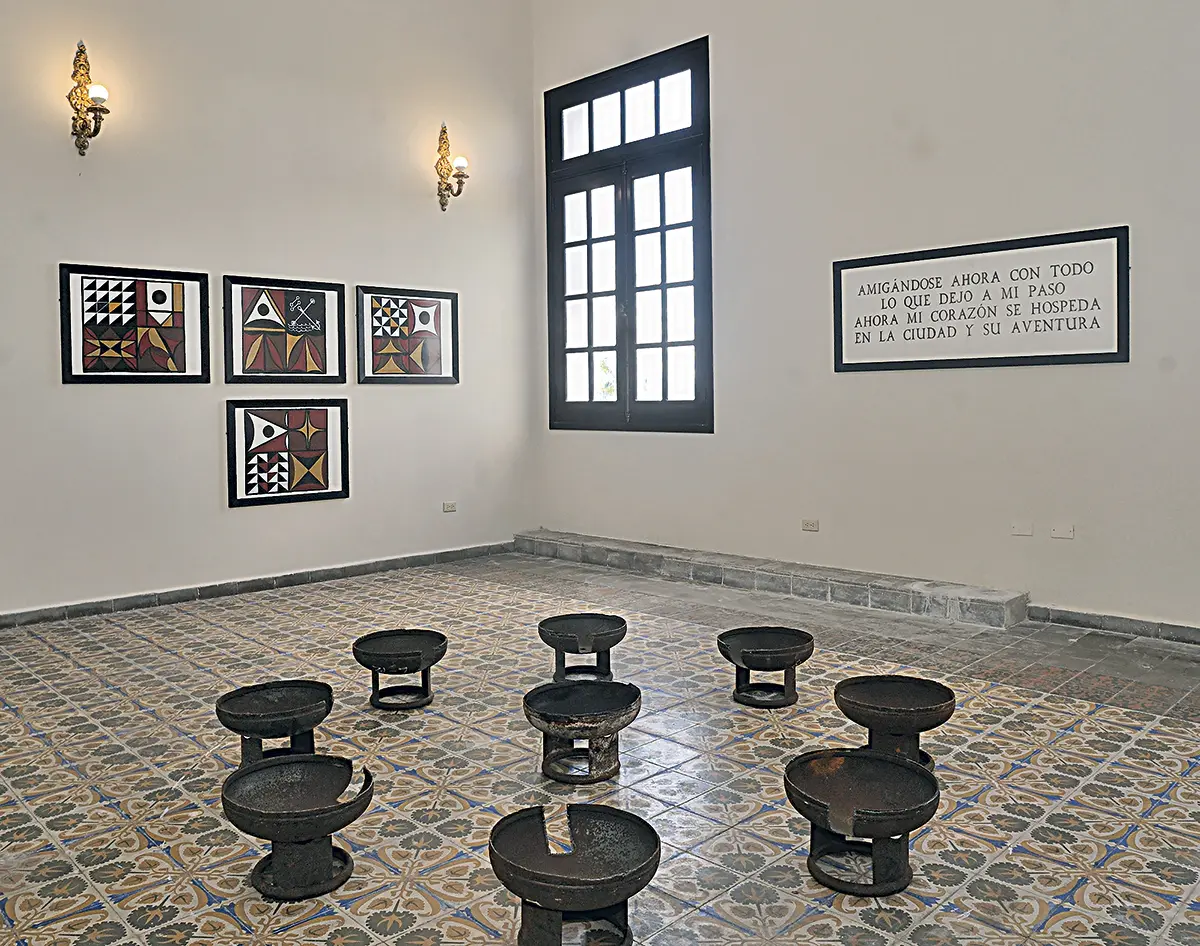
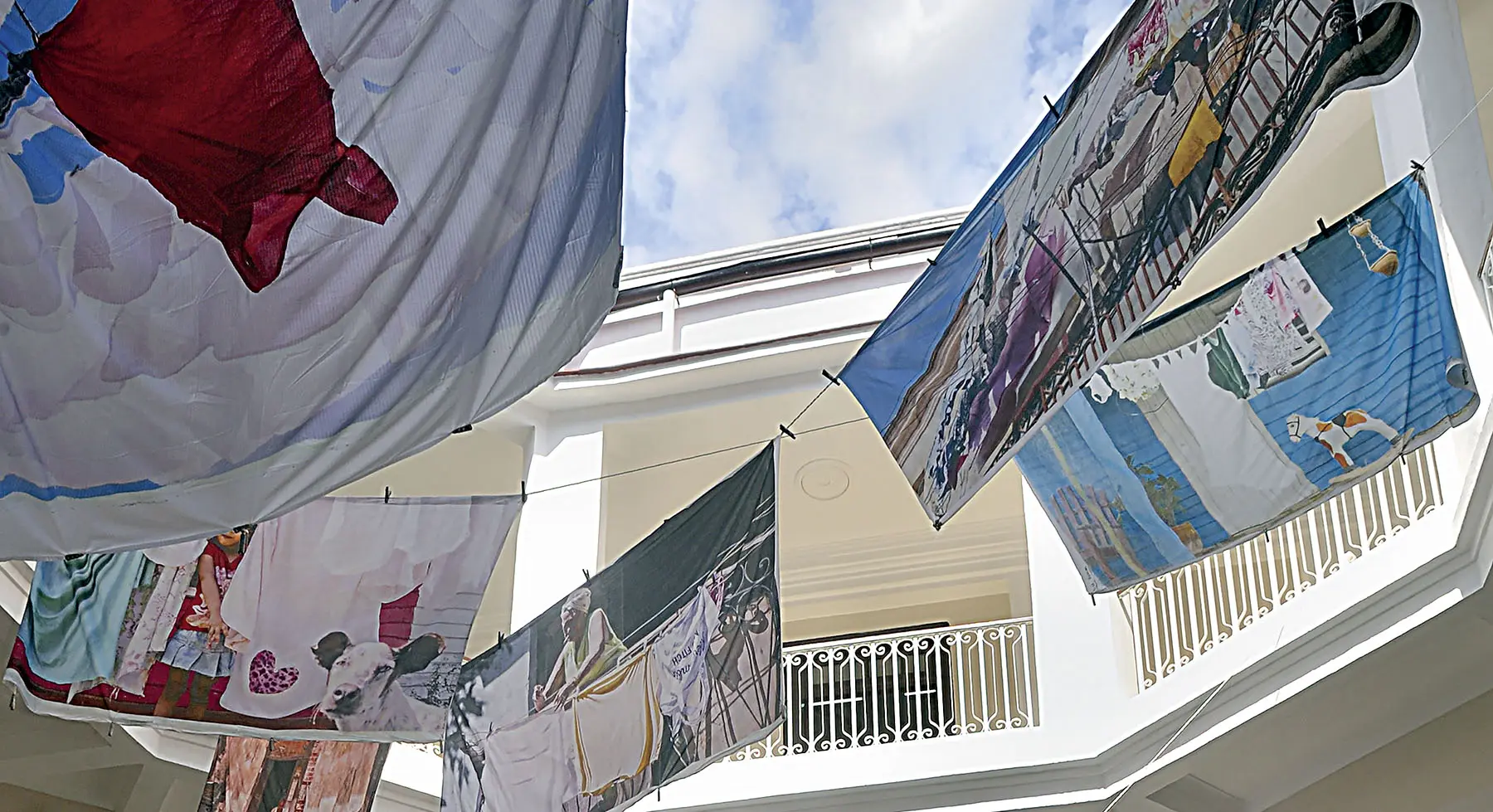
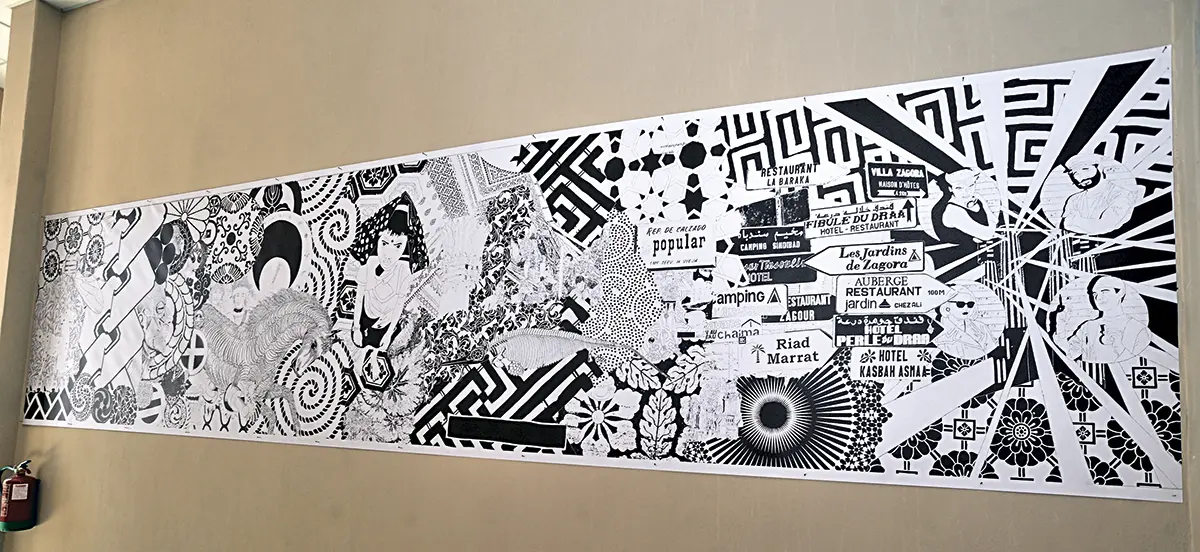
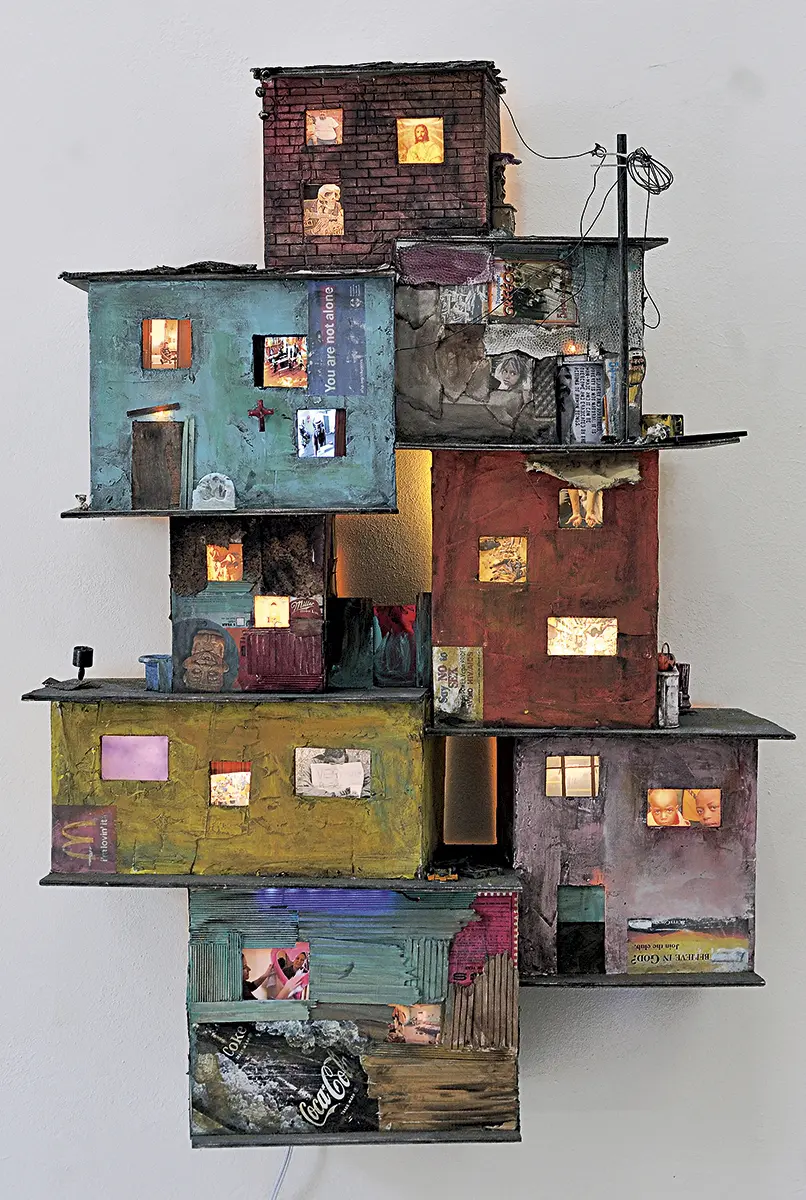
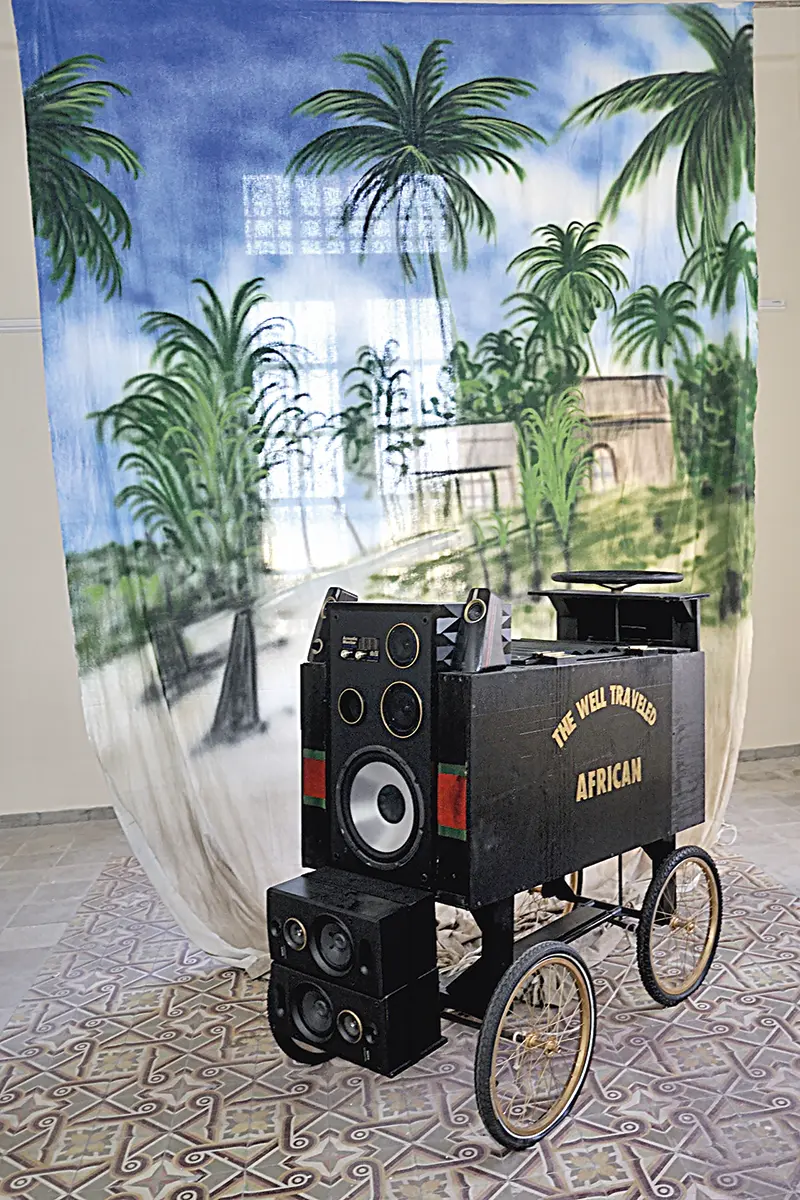
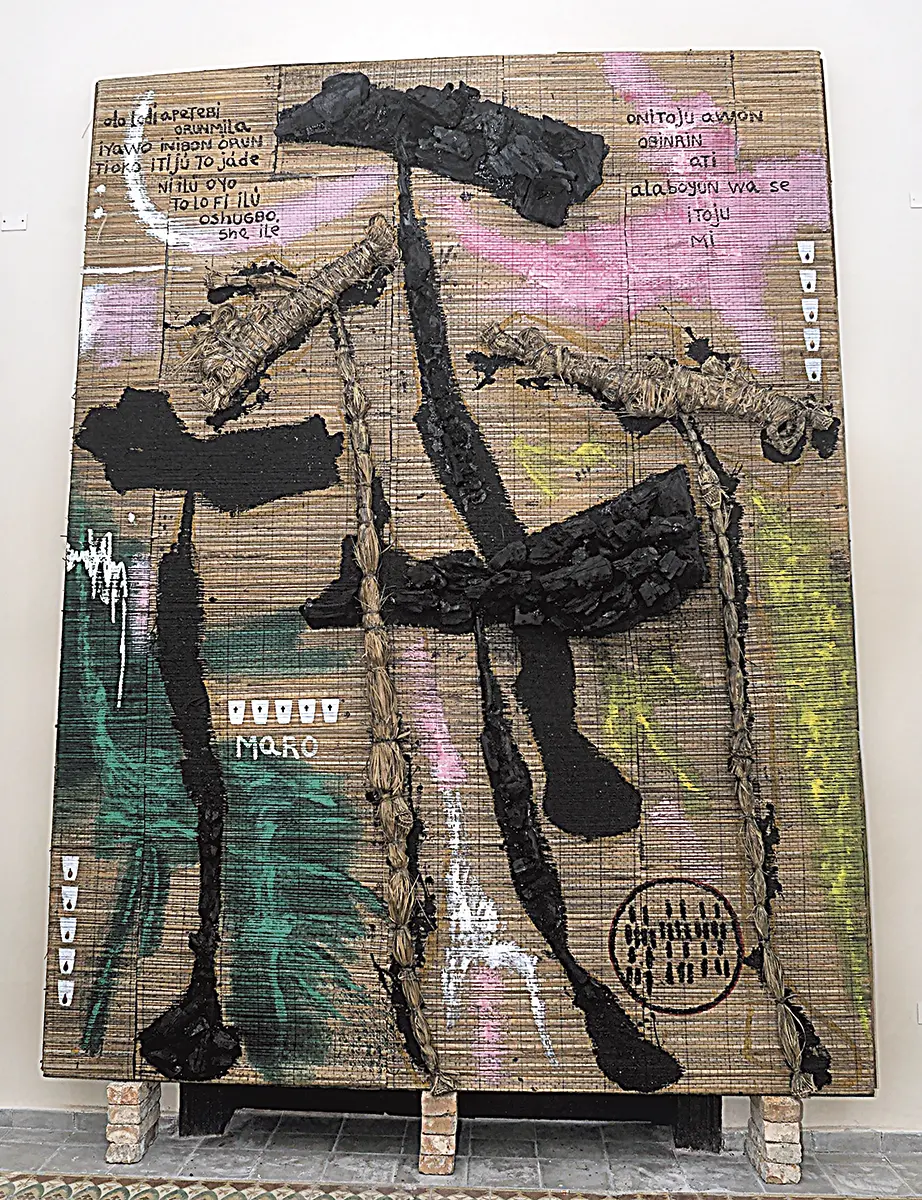
The major exhibition in the Palace of Justice occupies exterior and interior spaces, with a courtyard installation White Sheets: Transparency, 2018–2019, which immediately activates the beautiful colonial building architecturally and engages the community. Matanzas photographer Ernesto Millán (Cuba 1973) purchased 31 bed sheets and screen-printed them with unique photographic images which he gave to a family for a specific time period, asking them to document their use of it in cell-phone photos and videos. The building also brings together the most compelling works by established artists as it showcases the theme of the Matanzas Biennale that resonates with poignant and powerful references to the African diaspora throughout the city. Each room displays unique works of art. The monumental and powerful installation by Matanzas’s Jorge Y. Salomón (Cuba 1987), an artist and Ifá priest, The Way of the Ancestors, The Fear and Faith of the Cimarrons, references the persistent faith of the runaway slaves with Ifá religious symbolism and titles inscribed on mats reminiscent of prayer rugs, and large bamboo panels on the walls that are encrusted with numerous ceremonial objects. Ifá is a Yoruba religion and system of divination, and the objects in his work refer to the divination trays used to invoke the spirit of the Yoruba gods so sacred to the African heritage of Matanzas. Such reverence continues in a sculptural installation by renowned Nigerian-born American artist Olue Oguiba (Nigeria-US 1964) that includes 21 pieces forged in a steel factory in the city in the form of stools or pots, also part of sacred rituals. On the walls are drawings of African patterns that complement the floor pieces. The impact of the African diaspora is evident throughout the exhibitions. African American artist Melvin Edwards (USA 1937), a pioneer in contemporary African American art, continues his commitment to issues of race, identity and the diaspora welding metal objects like hooks, tools, and machinery to create a new aesthetic of simplicity and power that reflects his personal connection to Africa. Cosmo Whyte (Jamaica 1982) places a DJ cart with a camera, sound, and items from his personal archive titled “Well-Traveled African” as a reminder of the journey, past and present. Tracey Snelling (USA 1970) addresses the issues of poverty that accompany forced displacement and adjustment in her constructions of house parts, signposts, and found materials inserted with videos that attest to vulnerability, coupled with the strength that comes with survival. Survival is a mechanism present in Maurizio Cannavaccuiolo (Italy 1954) fantasy wallscapes. He works in pencil, paint and paper to create Tatanto Totonta, based on musical scores interrupted by such odd additions as patterns, signs, toys, among the detritus of human chaos that is but another comment on the “interrupted rivers” of civilization that survive constant conquest and outside control.
Interventions in the plazas and along the rivers with performances throughout the run of the project add to the dynamic of the city. Calle Narváez, the promenade along the San Juan River, had several open-air sculptures, including Banco (2017) by Matanzas artist Pedro Luis Cuéllar and Ofrenda (2018) by Agustín Drake. For María Magdalena Campos-Pons, who organized the events, it was a bringing together of an entire cultural community, from near and far. Her own project, Bar Matanzas, in the patio of the Palace of Justice, was designed as a space for meeting, performance, and celebration in the traditional Matanzas style. Throughout the project’s programs, numerous collectives and artist associations participated, bringing workshops, open studios, video productions, technology, and educational activities to activate the daily schedule. From the fireman and fisherman to writers, dancers, musicians, and artists, it was a time to thrive, develop, and bring Matanzas a new sense of pride on a global stage. She also included her Vanderbilt students to share their artistic talents, including performances with their professor that was an extraordinary experience for the young artists, and for the audience engaged with their activities. Numerous processions to the river honoring the Yoruba orishas marked the significance of the city’s location and heritage. The water of the river became the vehicle for success that brought the entire community together and was a provocative starting point for the story of the city and a history that began with the waters, so often interrupted, but from the way of the ancestors to the present day, a beautiful connection.
CAROL DAMIAN, PH.D.
Art Historian.