Mapa Teatro is a collective launched in Paris in 1984. It is led by the Abderhalden Cortés siblings, Colombian visual artists who, for more than three decades, have sought to weave connecting threads and bring new life to the production and intersection of a variety of artistic practices. These include drama, video, installation, urban-space interventions, opera, radio, and performance. Their pulsations occupy spaces where reality, myth, fiction, history, and current events are distended.
Since its inception, this living art laboratory has traced a variety of paths towards the body per se, with a profound will to reclaim it and intent on putting forth a reading of presence and life in the artistic discourse, versus the traces left by an absent, yet perceptible body.
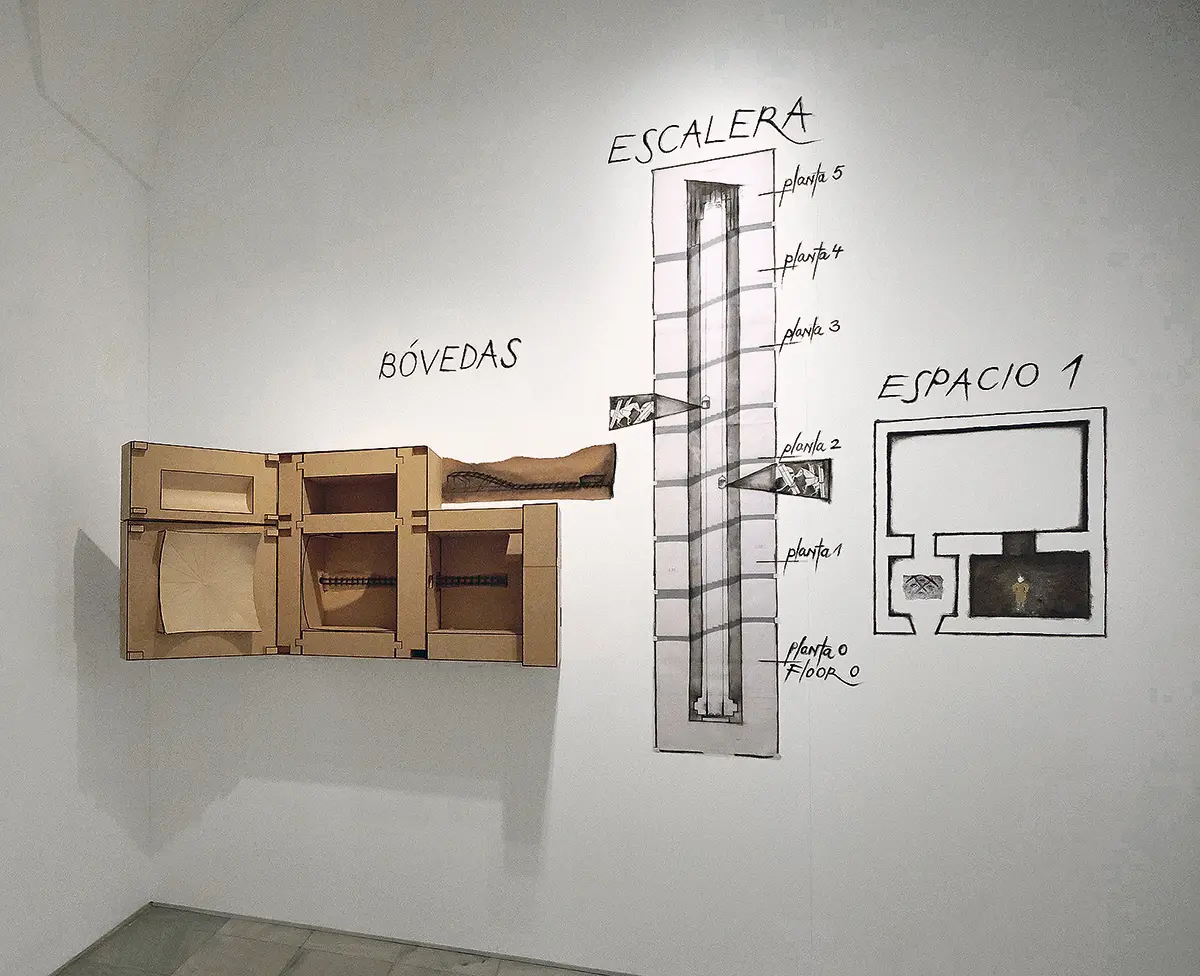
Mapa Teatro now presents De los dementes, ò faltos de juicio (Of Lunatics, or Those Lacking Sanity), a project for the Reina Sofía Museum’s Fissures program. In it, Heidi and Rolf Abderhalden, along with Ximena Vargas, Timothy Noble, José Ignacio Rincón, Forrest Gray, and an experimental community from the Marmato mines in Caldas, Colombia, come together to create an artistic installation that comes to life in the Sabatini building (the Vaults, the stairs leading to them, and Space 1 on the first floor). The bottom line is the spatiotemporal translocation of a narrative in an “ethnofiction” key, closely connected to the exhibition space itself.
The starting point for the construction of this narrative is the historical use of the building now occupied by the museum: it was established in the late sixteenth century by King Philip II as Madrid’s General Hospital, devoted to caring for the city’s poor and marginal population. Two centuries later, it became a modern healthcare center, funded, by order of Ferdinand VI, by Royal family alms based on the riches obtained from the Indies. Thus, the mentally ill were to share in the wealth generated by New World gold mining, embodied in coins and objects that arrived in the hospital since 1749.
Mapa Teatro’s “ethnofiction” continues with another fact, one that enriches the tale and justifies it by entwining the two continents, now based on transcendent energy, or karma. Towards the end of the eighteenth century, Charles III created the Royal Mining Company and sent two explorers/mineralogists to the Nueva Granada viceroyalty (today Colombia), with the assignment of improving extractive processes and increase yields in the mines there. The enterprise ended in failure, but, ironically, Don Ángel Díaz Castellanos contracted gold fever (auriferous delirium) in the Marmato mines, bordering the Quimbaya culture territories; he was sent back to Madrid and interned in the General Hospital, now the Reina Sofía museum.
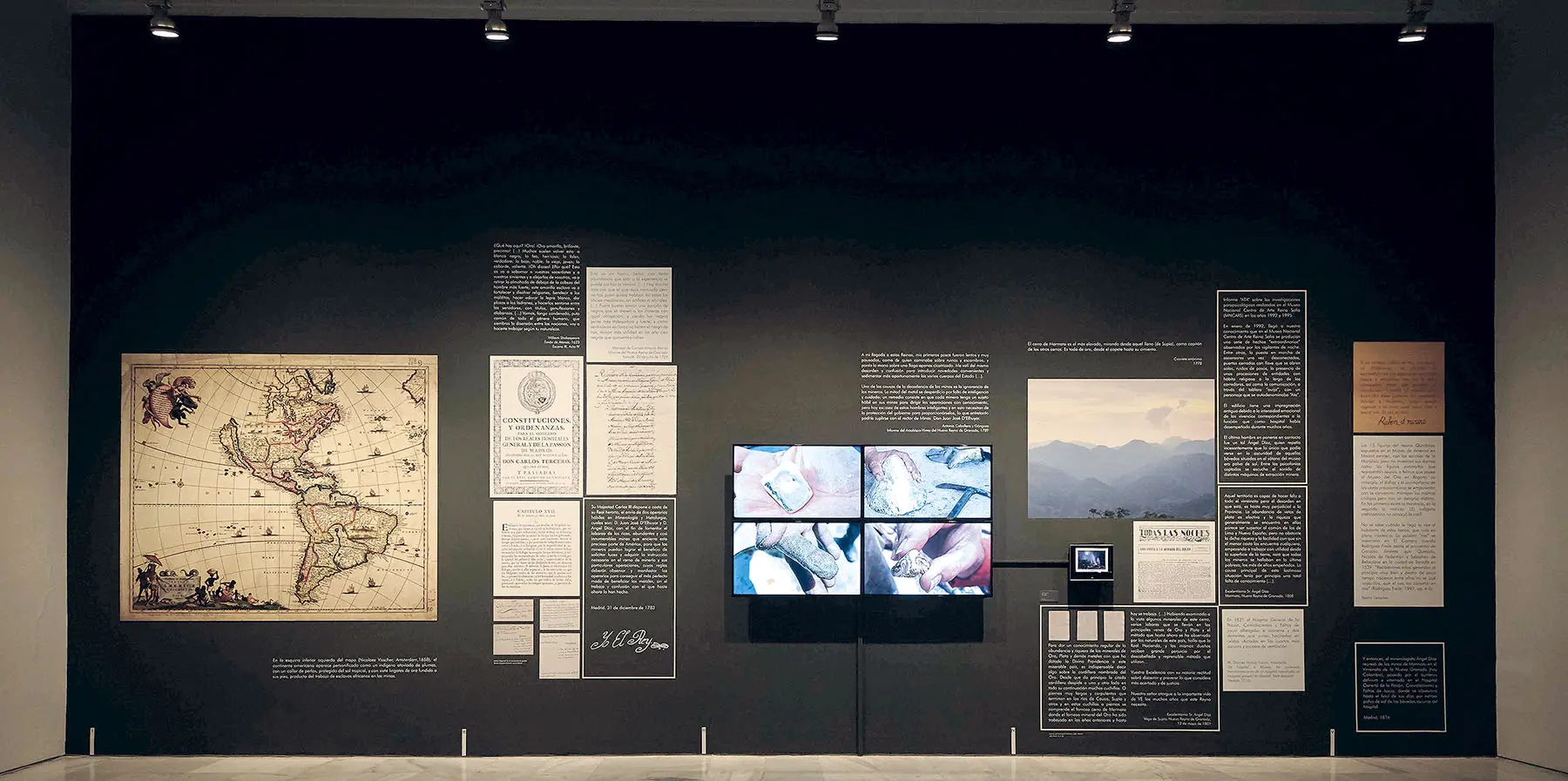
Based on this intriguing tale, Mapa Teatro structured the installation after a long process of research and compilation of archival materials and documents, giving shape to a surprising, novel fiction with profound ethical, historical, and aesthetic implications. Several records were unknown or lost, and have been rescued; such is the case, for example, of the document that gives the project its title: “De los dementes, ò faltos de juicio.
Visitors will also encounter archival material about the se of the museum’s facilities when it was a hospital, as well as photographs that retrace the Spanish miner’s steps in the ancestral land of the Quimbaya, where the Marmato mines are located. These mines were already active before the arrival of the Spaniards, and remain so today, exploited both by traditional miners and by multinational corporations.
Interestingly, the show also features an extraordinary gold statuette of the Quimbaya chief from the collection of Madrid’s Museo de América.
De los dementes, ò faltos de juicio is a critical, retrospective, and political proposition that comes to life as it makes the past reverberate on the modern stage of the Reina Sofía. Images, sounds, and devices all underscore and replicate the echoes of colonial exploitation, making it possible to assess the fiction from a contemporary, intensely creative, and militant critical standpoint. Bringing up historical documents and facts and fusing them into fictional narratives is a way to approach based on the resonances of Mapa Teatro’s installation, the other side of our emotions and attachments. It makes visitors experience and feel the pulse of “the other” belonging to a past and people that are neither impossibly distant not entirely alien.
ELISA RODRÍGUEZ CAMPO