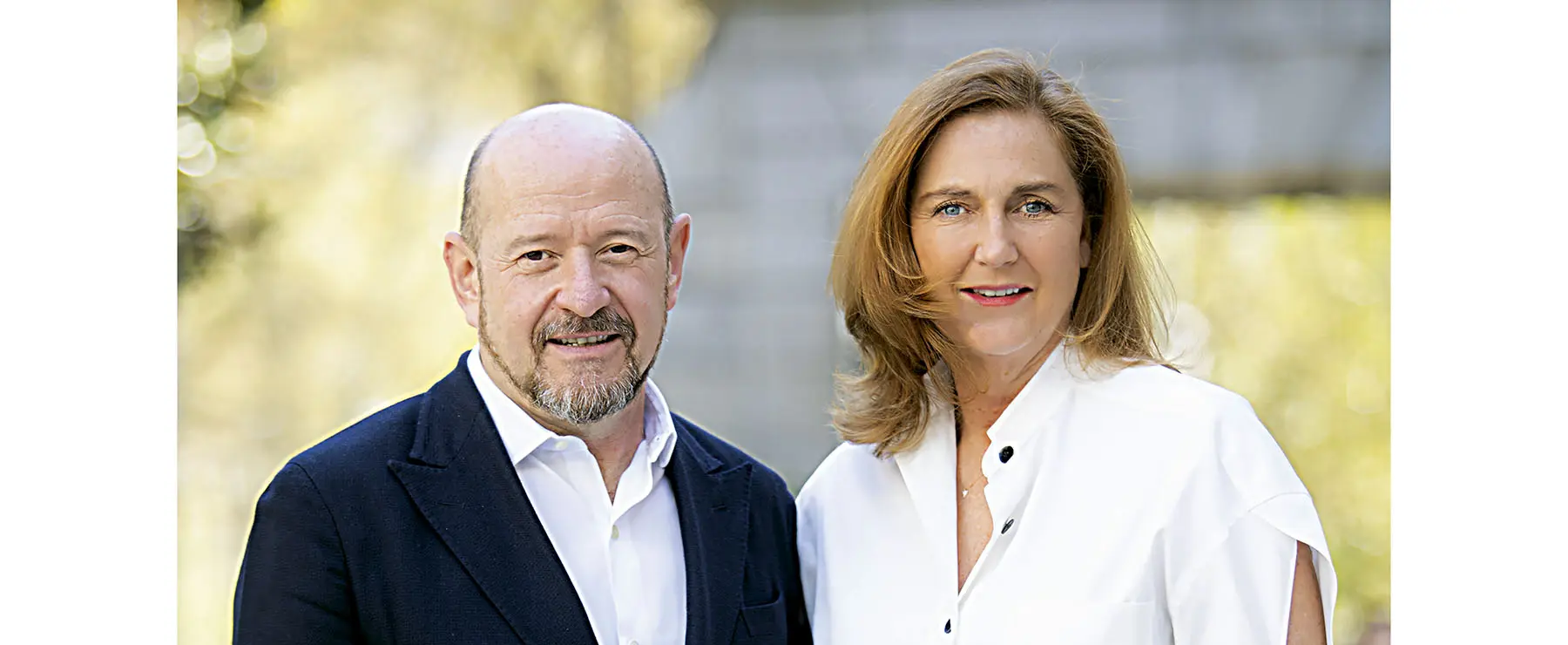
The following interview took place during Carlos Urroz’s last days at the helm of the ARCO fair, a position he occupied for nine years. Urroz has been named Director of TBA21, Thyssen-Bornemisza Art Contemporary, the foundation established by collector Francesca of Habsburg.
Celia Birbragher: I want to ask you about a couple of things that I think a lot of people are curious about. You took over ARCO at a difficult time for the institution and for the global economy. How were you able to respond to those challenges?
Carlos Urroz: The ARCO project has great potential. The art sector around the world has it in high esteem. Even galleries that did not do well at the fair have good memories of Madrid. ARCO is very important for the city, for IFEMA (Madrid’s Fairs Authority, in its Spanish acronym), and for the galleries; given that, it was logical that the situation would stabilize, with me or with someone else. It was merely a matter of orchestrating the interests of all involved and organizing the event under a period of economic recession: making it smaller; optimizing expenditures; spending only on business-driving activities; looking at Latin America, which had been abandoned somewhat after ArtBasel in Miami came into existence. Those were the keys: to give this art fair an identity of its own, and in that, I was greatly supported by institutions, galleries, the media, and collectors. And it worked.
CB: Speaking of Latin America, you looked in that direction personally. And it wasn’t just looking, you traveled there. Any particular reason for that?
CU: I believe this is a world of personal relationships. An artist enters a gallery because he or she trusts the gallerist. A gallerist chooses an artist because they know each other, only rarely as a result of an email or a digital marketing campaign. The one-on-one with galleries, collectors, and institutions is important to me and or ARCO. It is essential to hear a lot of “see, let me invite you to give a talk,” or to put your name up for an award, or to notice that you are a young gallery and we need a young section, and to be in touch with the needs of every agent. ARCO’s doors are always open for Latin America, and I have felt welcome wherever I’ve gone: Colombia, Argentina, Peru, also Mexico, every country I visited. Such fellowship may seem utopian at times, but the proximity between Latin America and Spain is real.
CB: Over the years, I’ve noticed that Fundación ARCO’s system for acquisitions has changed. Sometimes it is the job of the curators, sometimes the audience chooses. How does that work?
CU: When we took over, the collection had two curators: María Inés Rodríguez and Adriano Pedrosa. When they couldn’t continue due to their professional commitments, Miguel Von Hafe, who worked at the institution that held the collection, came in with Manuel Segade. Now we have Vincent Honoré. The curators select the pieces the Fundación will acquire. What we have done on a few occasions is that, within those curator-selected works, a given piece is subjected to the public’s vote. But always within the preselected options. In other words, some curators set the parameters for the collection as a whole, and within that, if they propose twenty, and we can afford ten, then one may be by vote, as in the case of the ones you were involved with on several occasions (EFG Prize). We were interested in that interplay. Later, when we made it into a fundraising gala, doing both became too complicated, and the idea was put on hiatus. But it’s there. It was interesting because people like to participate, and the public had an opportunity to do so, within the framework of what the curators had selected.
CB: And for the ARCO award, how are the selections made? Whose decision is it?
CU: We have an advisory council at Fundación ARCO with collectors from around the world. ARCO’s Director can receive proposals from the advisors or from the galleries. Two meetings are held every year to assess the candidates. There is a lot of debate to achieve a balance between local and international proposals, proposals from Latin America, major collectors, emerging collectors, and to build a selection where not only large banks and companies are considered. With that, an initial list is drawn after the summer, in October, and later, if there is to be a special award on that edition.
CB: There is something else I wanted to ask you about. You have worked in many areas in the arts. You were at the Fair, you have been an advisor, you have been a gallerist. Where do you feel most comfortable?
CU: Every one of those areas has its charms. Being the director of an art fair has been a great honor, and I enjoyed it thoroughly. But I miss working directly with artists. To be there one day setting up an exhibition, or producing an ambitious work, is what I like best, and I do miss it. To work alongside the artist, to help the artist’s idea become a project, be it an exhibition or an individual work, or a debut at an art fair.
CB: Now that you are leaving ARCO, do you have any feelings of nostalgia?
CU: I have a great love for ARCO, and I receive plenty of love in turn from people who tell me that I will be missed, which is a very positive thing. But I feel I will always be connected to ARCO. I don’t know, it may be as you say that I have been coming to ARCO from the beginning, first as a student, then when I was in law school. Since I did not really like being a lawyer, I came to ARCO to help the galleries, to help in their booths. Later I worked with Rosina, with Helga, and then I started to participate as an exhibitor. I have worked with the Community of Madrid, acquiring artworks. I believe that, whatever I do, I will be connected to ARCO in one way or another. I’m sure I’ll be back. I may be in the aisles. I may be in a booth. We shall see.
CB: Tell me about the relationship ARCO-Lisbon. How did that come about? What’s ahead?
CU: It will continue, I’m sure, because ARCOLisboa is a formal agreement with the Lisbon municipal government, which finances a significant portion of the fair, and in that sense, its continuity is guaranteed for three more years. That’s reassuring, because with projects like this sometimes you need to reach a break-even point before they are sustainable, and I believe this five-year support will achieve that. The idea came from IFEMA’s interest in organizing fairs abroad, an interest they still have. The opportunity arose around an art fair in Lisbon that closed, because the country is still recovering from the crisis and ARCO is a very, powerful brand. They are more familiar with ARCO than with Basel or Frieze, as a result of the intense collaboration with Portuguese galleries. The project is in great shape. This year it is turning its gaze somewhat towards Africa, which will probably be an avenue for development for ARCOLisboa. It needs to be treated with affection.
CB: How did having two directors for the fair work, inviting Maribel onboard, and working together?
CU: It worked great. It is a project, and Maribel has always worked in adjunct positions. She has always been co-director of an adjunct director. One of the changes is that all the decisions having to do with ARCOLisboa for 2020 or 2021 are hers, but yes, working as co-directors in this fair has made it possible for her to participate in meetings where the future of ARCO. was discussed. Otherwise, people would have wanted to talk only to me, and in that sense, I believe this has given her greater visibility and made her more of an interlocutor for each project.
CB: Carlos, you have done an excellent job. We will miss you dearly as Director. I think you were indeed the person to bring ARCO forward from where it was, and all that’s left for us is to congratulate you. You know you can count on us always, wherever you are.
CU: Thank you very much. I have always felt appreciated by ArtNexus. We shall continue to be in touch.
CELIA SREDNI DE BIRBRAGHER