Registers and residues seem to be all there is left of a historical period that saw the profuse emergence, even the excess, of a practice now common in contemporary art. The exhibition Arte acción en México. Registros y residuos (Action Art in Mexico. Registers and Residues) can be understood as part of a recent spate of attempts to map the points of connection, ruptures, and continuities, confluences, and contingencies, shared intergenerational concerns, affects, materialities and processes of body-based experimentation, or the discursive densities of a kind of art that knows itself particularly difficult to survey. After a year of research, the exhibition—curated collectively by Cristian Aravena, Sol Henaro, Alejandra Moreno and Brian Smith, and open between February 2 and July 21, 2019—takes full advantage of the documentary holdings of the Museo Universitario Arte Contemporáneo’s Arkheia Documentation Center in order to revisit one of the possible sites of such practice in local history. It must be said from the outset that order falters by force of the historiographical complexities involved in bringing to light something long hidden so that the narrative falls far from any single, unidirectional vision; rather, it embodies an imminent potential for the reading of all open archives.
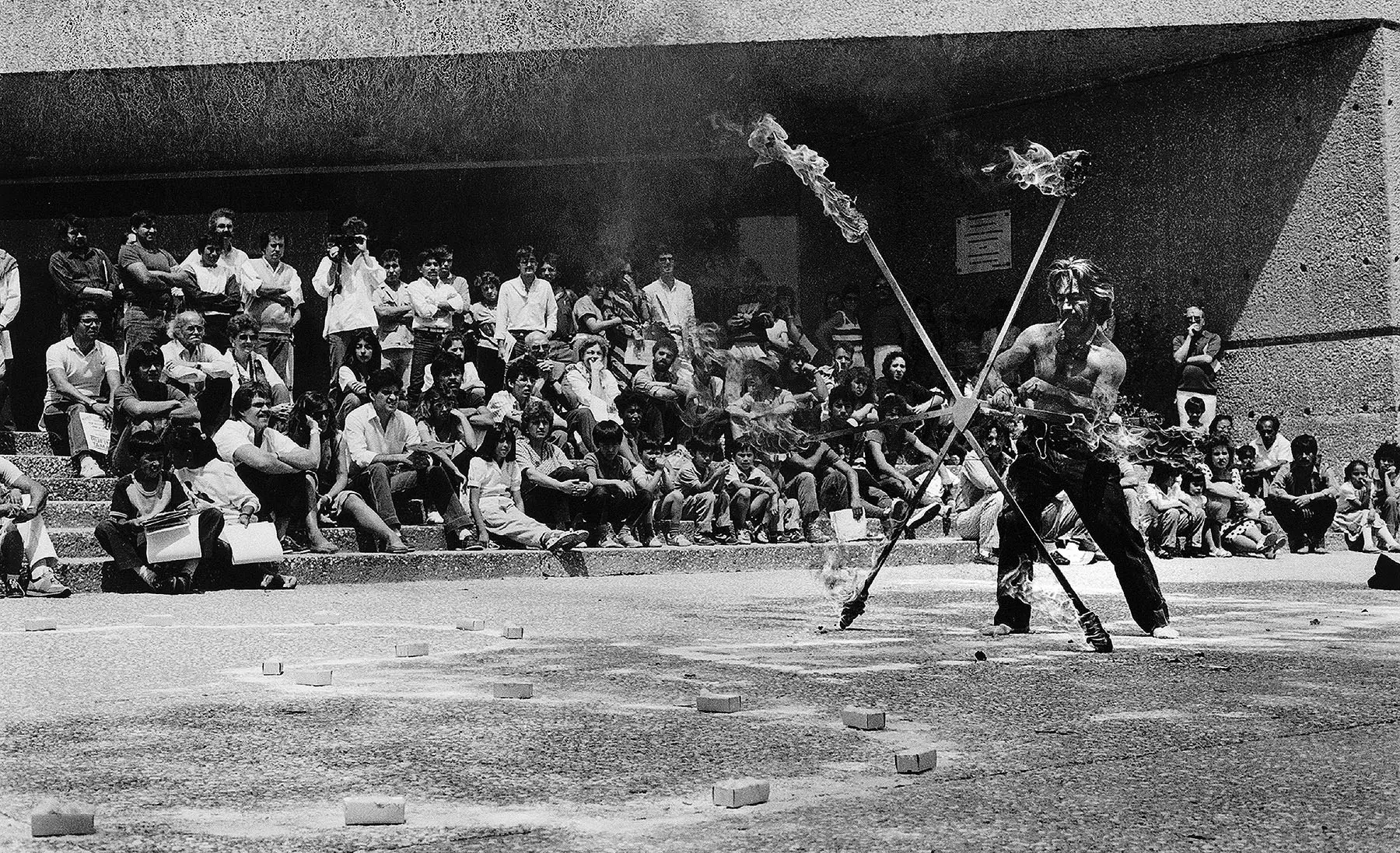
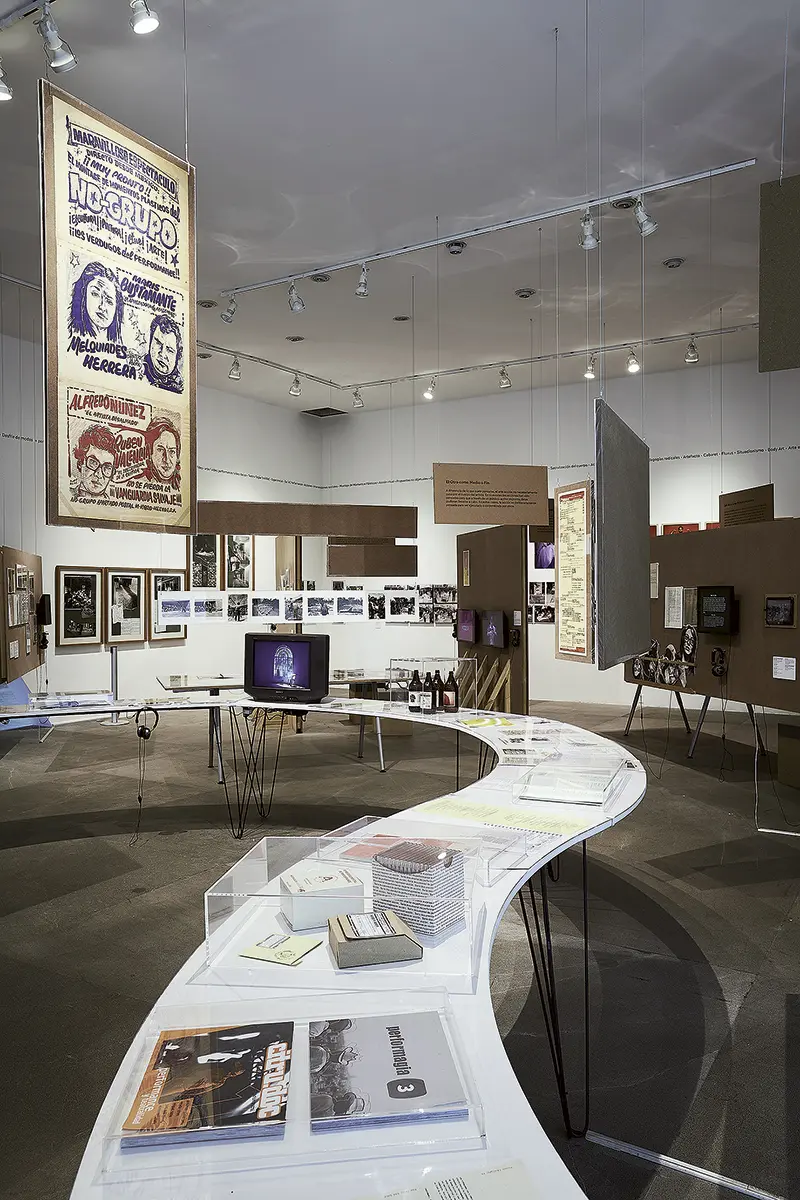
Due both to a drive towards insertion in everyday life and the ephemeral character of the art, the manifestations that arose can now reside only in memory. Their registers become a testament to a buried past, accessing which requires not only images but also a wide range of media: flyers and communication materials, publications, testimonies, press clippings, objects, drawings and sketches, scripts, etc. Performative actions that today are part of the history of art in Mexico were held in the streets, in bars, in public squares, on TV, in domestic spaces, in art world institutions (in favor and against), on the radio, or via mail.
The Mexican case has materialities of its own, at least judging by this exhibition. The curators grouped the works selected into eight categories to be read simultaneously, and there are no hierarchies or predetermined outlines. From the affirmation of sexual identity, through the prostheses used by bodies in order to denounce colonial situations, to political critique or magic and self-healing as extremely personal processes of catharsis, the Latin American context never ceases to find its materials in popular culture, always close at hand and still devoid of sterile, aseptic images. One of the exhibition’s powers resides, thus, in enunciating the fertile growth of actions and performances that signal an autonomous production, not derivative of well-known international narratives. Despite the reduced space assigned to the exhibition, the eight categories are glimpses of a story that demands greater attention, both to the political positions taken in many of the works and, swimming against the current of mainstream historiography, to the need to provide further visibility to names seldom mentioned today in histories of Latin American and Mexican art.
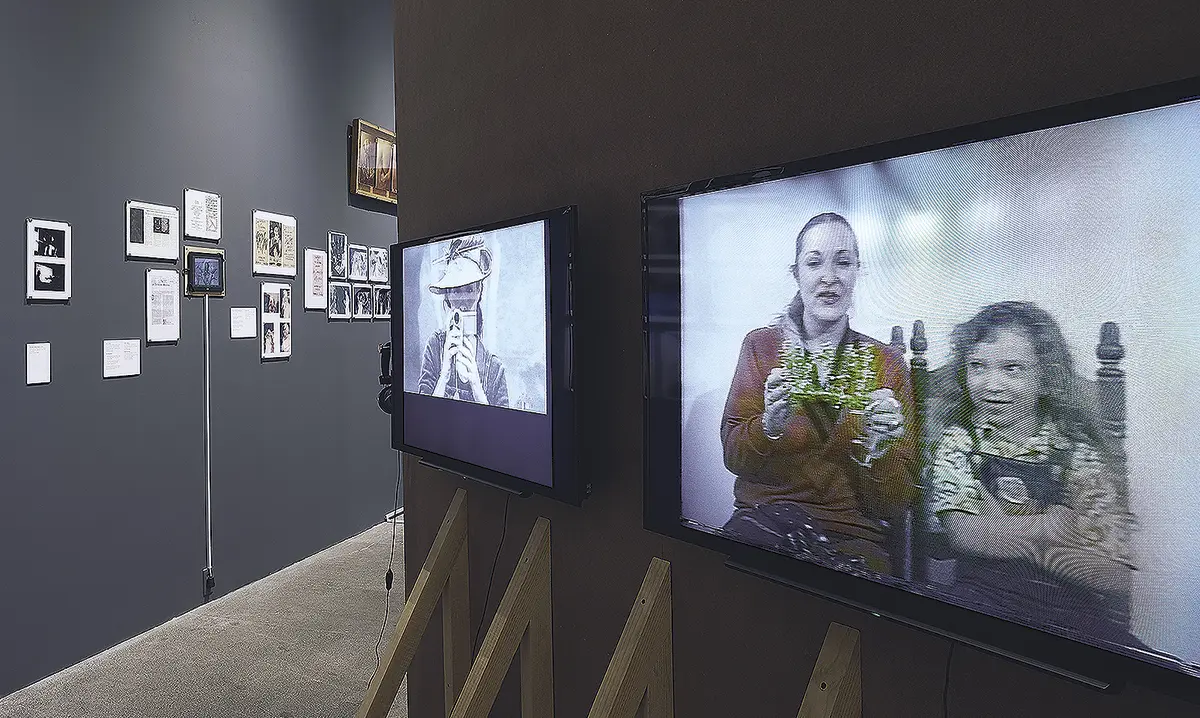
Through the show’s recovered, unpublished materials on actions that were part of Mexico City’s atmosphere at least since the 1970s, we see the many simultaneous glimmers and flashes that build a historical narrative. Like the intermittent light of fireflies across an open field, in the middle of a dense night, one finds the texts from the Maquinazo, written as it happened after the Days of Performance at Museo de Arte Carrillo Gil. Among them are the informal actions by Mago Melchor (a well-known model at the San Carlos Fine Arts Academy)– clearly in sync with the transgressions of the body sought by artists of the period; La Congelada de Uva’s radical interventions; and The Kitsch Company’s interrogation of cabaret theater and political contexts. One can also find Pola Weiss’ dance with a video camera capturing unpredictable images as the body moved through public spaces and the denunciation of femicide in Lorena Wolffer’s work. Felipe Ehrenberg’s London actions with film director François Reichenbach in the context of the city’s garbage collectors strike of 1970, No-Grupo’s masks of–sent to the 10th Youth Biennial in Paris–, and Melquiades Herrera’s hypothetical Nobel Art Price acceptance speech, also contribute to the voice that in recent years has begun to shatter a long-standing silence.
While a significant number of the groups that emerged in the 1970s attempted to break with modern art, the decade that followed saw the flourishing of independent countercultural spaces, in response to the shortage of locations for these young artists to carry out their experiments. Although some institutions were already starting to take advantage of existing blind spots to promote, via strategies of cultural administration and curatorial projects, an openness towards new sensibilities, it was through those new spaces that a generation’s intent of exploring new formats blazed its trail. Their small size and their power to bring together a cohort with shared interests, as well as the coincidence on many occasions of the art actions with parties and social events, are indications of an emotional exchange that promoted cross-pollination between disciplines and an intertwining of ideas about the production and circulation of art. It must be noted that although glimmers of this interdisciplinary push began to appear already in the 1960s, what we see with the action art of the 1980s and subsequent years is the amplification of one of its tangents, due, among other things, to a vitality transversal to all encounters between groups and collectives.
It cannot be ignored that the “rock en español” boom across Latin America overlapped with a particular type of countercultural activity also involving theater, film, and the visual arts. Concerts accompanied by installations and art performances were a common sight, resulting from the systematic concentration of obviously experimental practices. Spaces like the El Nueve bar, established in 1976, came to play a vital role in the exchanges that helped a large sector of the arts community blend, at a time when the State’s repressive pressure against autonomous countercultural expressions was undeniable. Museums like Ex-Teresa Arte Actual, Museo Universitario del Chopo, or Museo de Arte Carrillo Gil would also offer sporadic support to action art, in the context of a redefinition of the Mexican art system in the early 1990s, under the new economic openness brought about by neoliberalism.
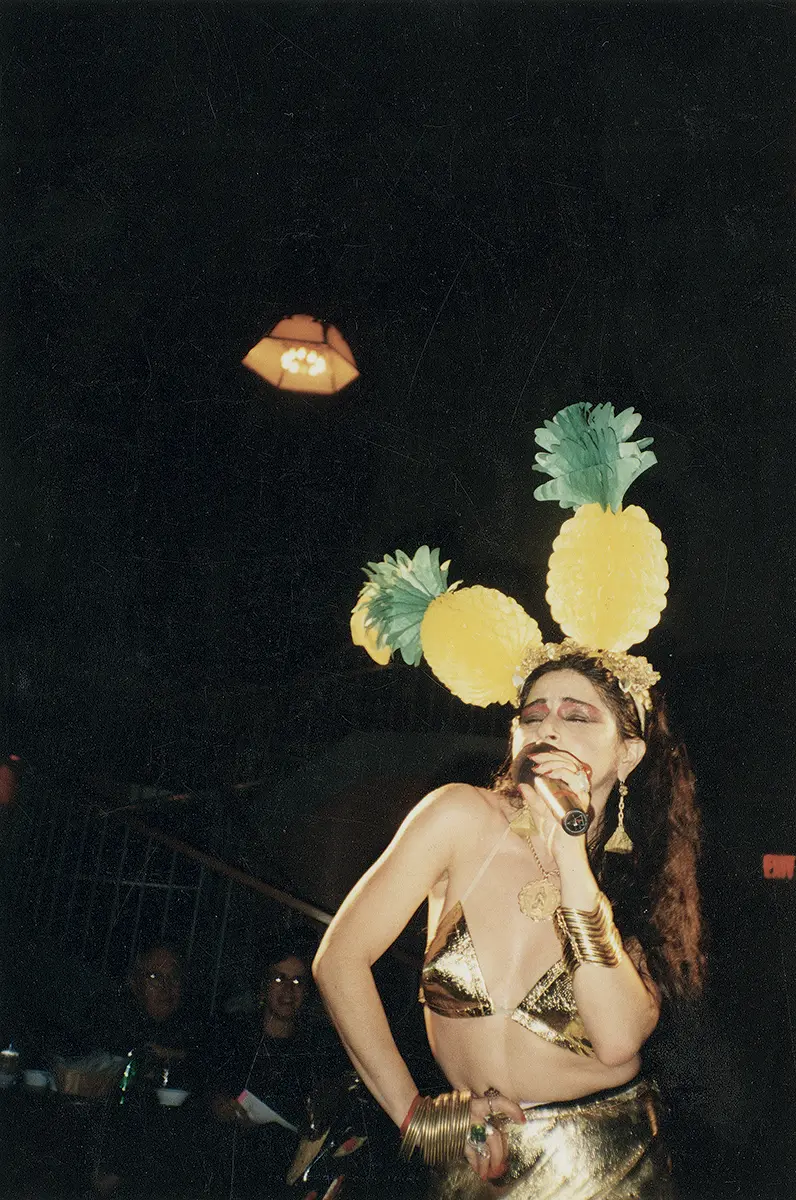
Like pinning Proteus down, defining action art with any precision is practically impossible. One example is the shifting inventory of names and concepts, which provides visitors to the exhibitions—and readers of the leaflet that accompanies it—with a glossary of several suggestive categories, useful to conceptualize linkages and connections. A good number of lenses to play with history. Or multiple ways, if you will to name a type of expansive, all-encompassing body of work. Apertures, expansions, displacements, and almost limitless possibilities to observe the effervescence of a historical moment when action art circulated in most cases outside institutional spaces and sought to reflect social and political realities. Thus, the eight thematic nodes and the shifting inventory put forth a question that cannot be ignored when it comes to curating archives, especially archives of practices that broke dams and caused overflows in contemporary art: How to tell the story of a type of art unanchored to fixed categories? One that waltzes between chance and event, always involving the body as well as emotional and social life?
The exhibition at MUAC outlines and threads together different itineraries towards a more cohesive narrative of action art in Mexico, clearly a still-unfulfilled debt in local historiography. We must remember that theatricality is artifice, but performative actions are not. At least, not entirely. They may, on occasion, adopt the artifice of theatricality, but they are nonetheless inscribed in a territory that insists on touching life and circulate in the diffuse margins of contemporary art. The history of action art in Mexico, as is the case in other corners of the vast and mostly hidden Latin American region, is probably one of those valuable narratives that help understand the present and give it—and us in the process—new meanings.
JORGE LOPERA