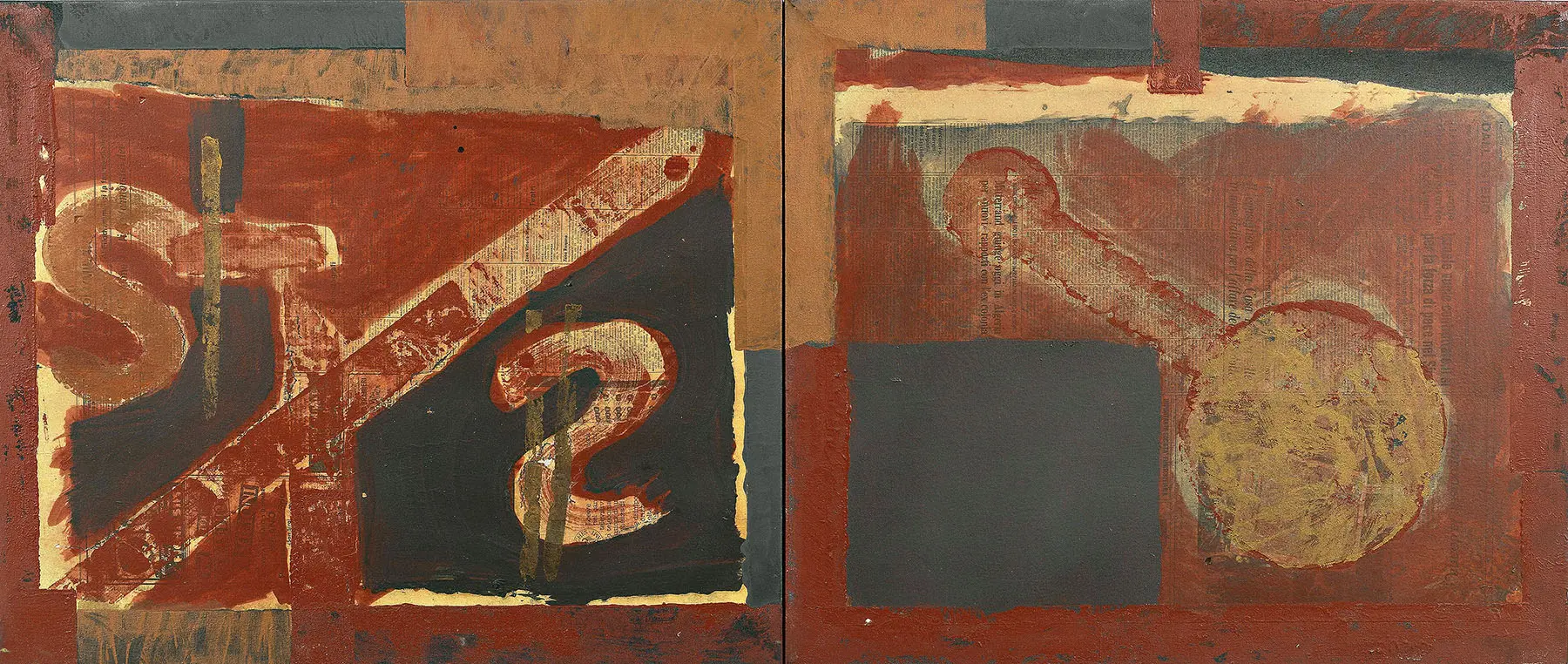
The work of Antonio Dias (1944-2018) comes with no explanation. They do not rapidly emerge, even if viewers demand easy pathways or answers. The meaning of Dias’ poetics reveals itself in that which is unrevealed, in the empty spaces, in the interstices, in what he does not show. Creases and folds are the spaces for Dias’ conversation with the other, the interpretation of his aesthetic reminiscences.
This paradox traverses the artist’s wide-ranging career, recently celebrated with an exhibition of some sixty works at the Museu de Arte Moderna de Río de Janeiro. Titled O Ilusionista (The Illusionist) and curated by Fernando Cocchiarale and Fernanda Lopes, the show brought out works from the museum’s own holdings and from the Gilberto Chateaubriand’s collection, on loan to the institution since 1993. Dias’ trajectory was clearly outlined through works from the 1960s, 1970s, and 1980s, made in a variety of supports and materials, arranged in an “impartial” curatorial proposal based only on objective staging relationships, rather than on a historical-critical sequence.
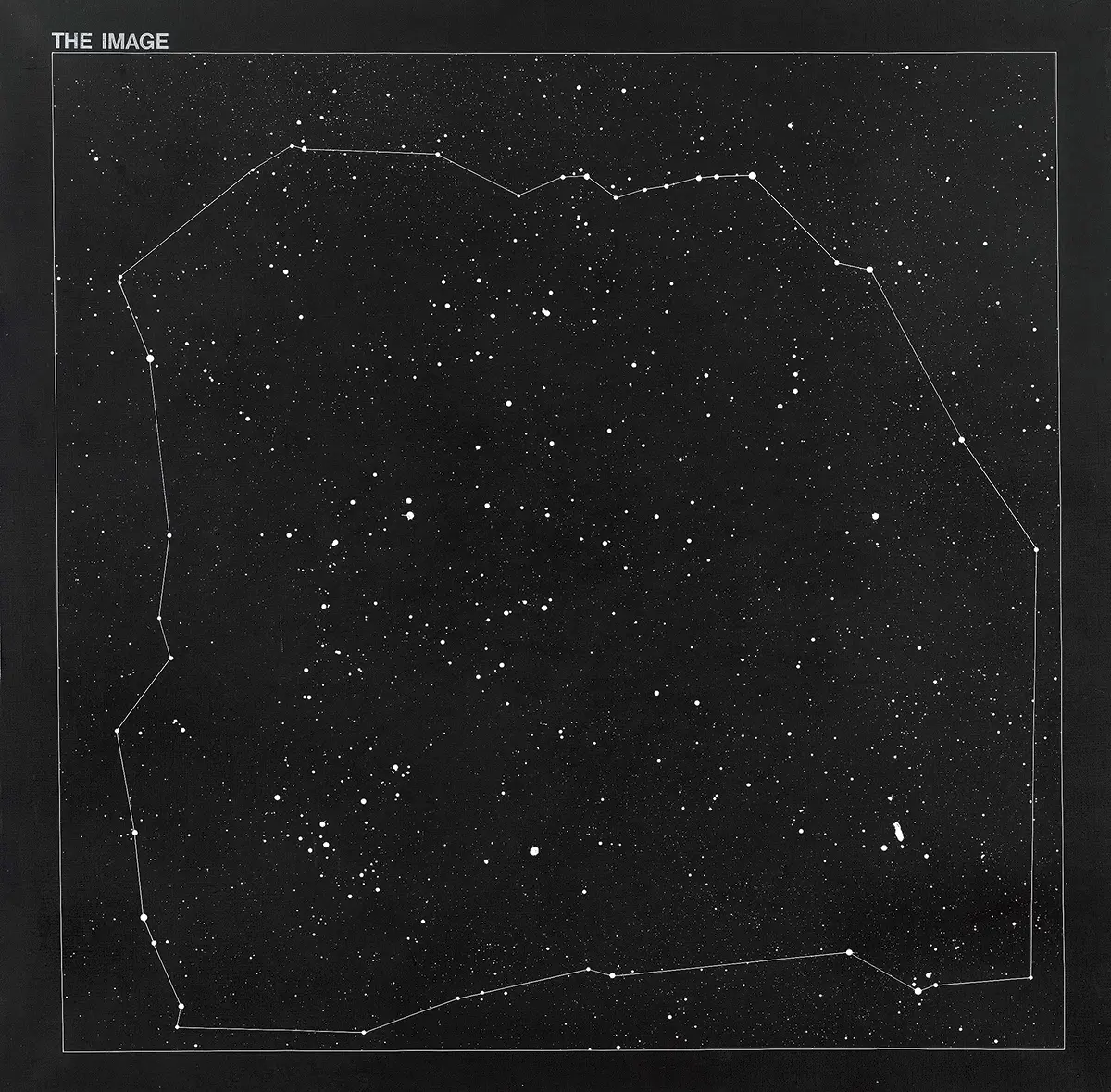
Dias began his career in the 1960s by exploring new media and supports and combining constructive abstraction with figuration. He produced works defined by their content of political critique, in the form of paintings, drawings, and assemblages, in line with Brazilian Neo-figuration and Pop Art. Known as one of the key names of Brazilian Neo-Figuration, Dias’ work nevertheless dialogs with the legacy of the Neo-Concrete movement and with Tropicália’s revolutionary push.
What emerged from this complex amalgam was a biased and challenging work, permeated with hermetic references yet in conversation with mass culture, a frequent resource in Pop Art. While always concerned with finding new formal and linguistic solutions, Dias never ceased to engage in social issues. He proposed enigmatic works, invitations to participate in the enjoyment that, at the same time, lead to a particular area of discomfort.
As can be seen in some of his works with references to comics, the artist did not seek to achieve complete narratives, as shown by the dismemberment of objects and images, which expresses his constant break with the traditional canon, the aesthetic debate, and the social turbulence of the sixties. Later, Dias brought writing into his art as a graphic and semantic element, intensifying the connections between visual art, poetry, and film in games and acts of camouflage that supposedly composed spatial images.
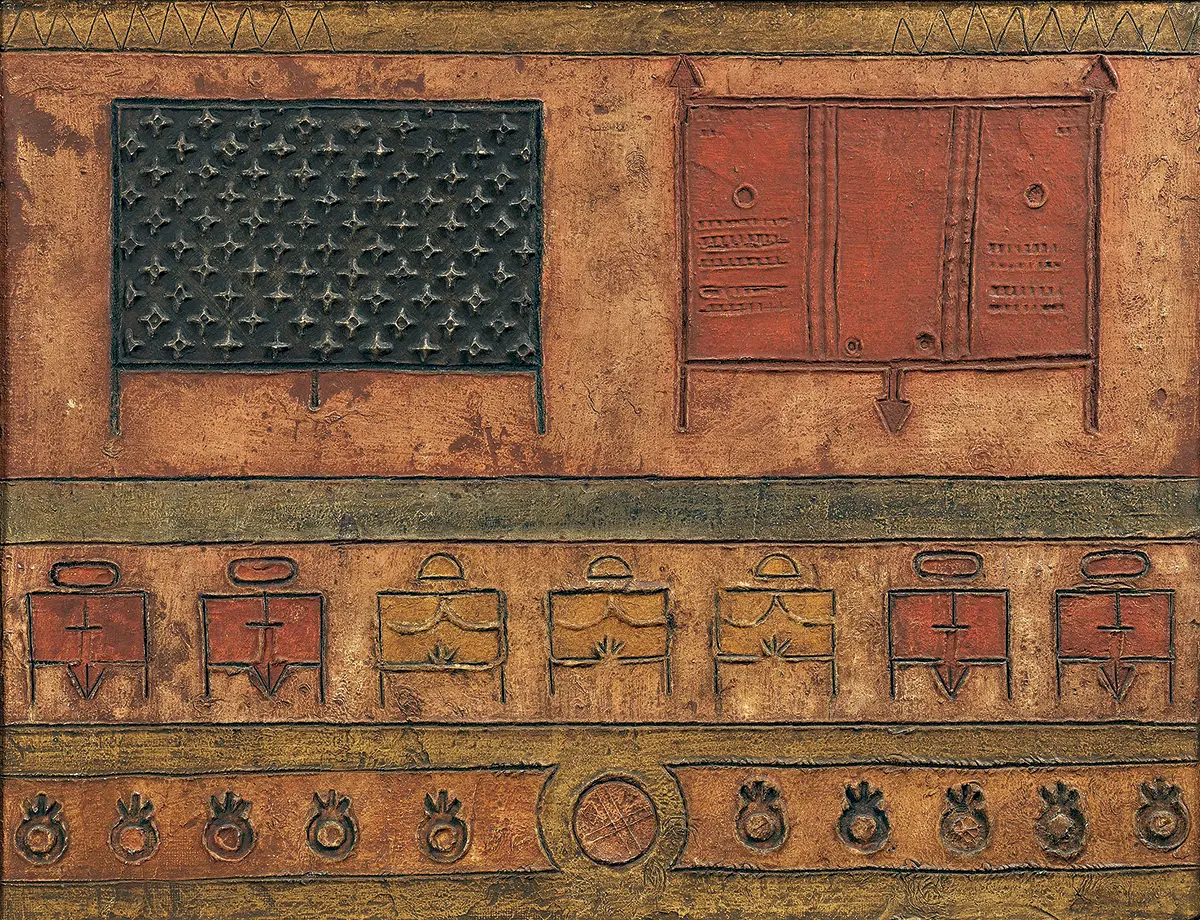
In the 1980s, Dias’ attention turned once again to painting, and he experimented with metallic and mineral pigments such as gold, copper, iron oxide, and graphite, mixed with a variety of binding agents. Most of the works from this period have a metallic sheen and contain a large number of symbols—bones, crosses, phalluses—that hark back to his earlier productions. Many works with such a symbolic tilt were on display at the MAM show. More than merely transferring symbols onto the canvas, however, Dias’ probes them, tears them apart and rebuilds them in new spaces. Politics, art history, language, formal structures, the space of insertion of the work of art, are all part of his concerns.
Born in Campina Grande, Paraíba, Dias gained international recognition throughout his career. He studied under Oswaldo Goeldi (1895-1961) at the Free Printmaking Studio of the Escola Nacional de Belas Artes (ENBA) and was featured early on in important exhibitions, among them Opinião 65, which set the stage for the emergence of a new realism in Brazilian art. Dias’ works have been included in more than one hundred group and solo exhibitions in the world’s most relevant institutions.
Above all, Antonio Dias adopted a markedly conceptual approach, creating paintings, installations, videos, films, records, and artist books that interrogated the meaning of art. By approaching eroticism, sex, and political oppression in playful and subversive ways, he built an oeuvre marked by formal sophistication, permeated by political concerns, and filled with forceful critiques of the art system and of society as a whole. Despite his proximity to many movements and political languages, Dias remained loyal to the individual uniqueness of his work, possessed of a cohesive poetics and a powerfully expressive personality.
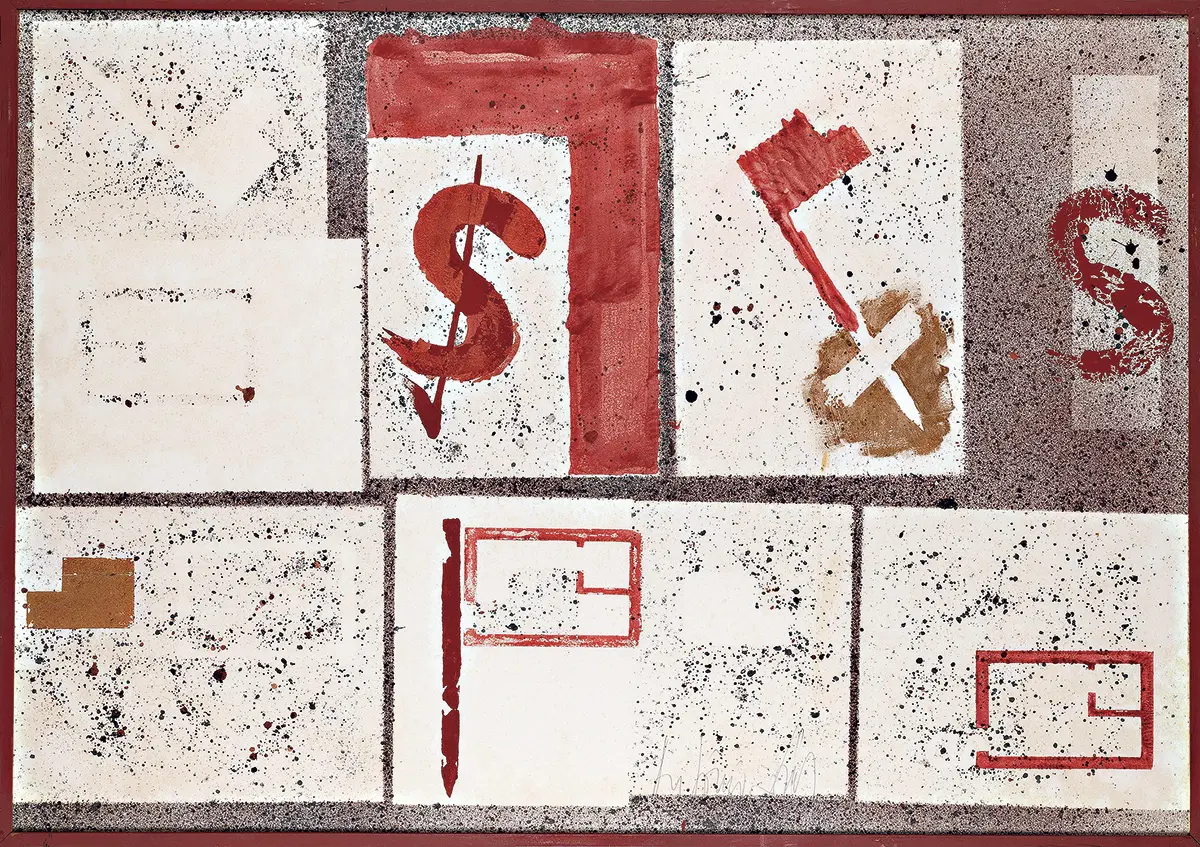
Great works of art always give rise to great questions rather than answers. Dias’ work belongs in that domain of complexity, a self-referred visual universe where an artist permanently confronts problems of language. So much so that he always returns to painting, to the exploration of materials, to the fundamental issue of art’s death. Hence his deep-rooted dedication to painting in organic, living works that are well aligned with the present. Dias’ exercise in self-reflection never stopped. He was never content with settling on a generational moment. In the 1960s and 70s, in line with many artists of the era, he showed himself as a political artist–in the “tropicalist” sense, which is to say, without giving himself entirely to the engaged artists’ knack for merely stating the obvious. In recent years he did not eschew the drive to delve deep into the emptiness of a generation deprived of ideological horizons.
And it is not a matter of assessing Dias’ oeuvre from a post-Romantic standpoint, based on the premise of a supposed end of art-as-melancholy. Dias’ work proves that art, and contemporary art in particular, cannot exist without a quest for new ideas of what art itself can be, and of its specific relationships with art institutions, society, and, above all, with one’s own thought. Any analytical observation of Dias’ work as a painter will support this thesis. His juxtapositions, superimpositions, and chaotic accumulation of canvases are markers of his immersion in visual language. His irregular colors and the unexpected insertion of symbolisms reveal a sustained effort of reinventing both himself and his art. Dias fulfills, thus, the role of proving that the meaning of contemporary art lies in thinking about oneself.
ALESSANDRA SIMÕES, ABCA – AICA