The idea of a portable museum has its roots in Boîte en valise, the project with which Marcel Duchamp proved it is possible to carry an art show in a suitcase. But neither Duchamp nor anyone else, until very recently, could even imagine that a museum in addition to being transported like a suitcase, could include a representative sample of the history of a nation’s art, from its most ancient historical origins to the most radical contemporary practices. Yet this is precisely one way to describe Perú en ARCO, the multifaceted exhibition project presented this past February in the Spanish capital’s most important museums and art centers, and not only in the fairgrounds of the Madrid Contemporary Art Fair. The fair’s directors must also be credited for the idea of having the exhibition programs for the city’s most important art centers focus on ARCO’s guest country, under the coordination of Peruvian writer and curator Fietta Jarque. An innovative idea—as was, at the time, the transformation of a simple art fair into the epicenter of a series of connected cultural activities—that includes forums, lectures, roundtable discussions, thematic exhibitions, book and exhibition launches, and, of course, the figure of the guest country. This model has since been copied by art fairs throughout the world.
Primitives and Contemporaries
This portable museum was also ephemeral: the average length of all the shows and exhibitions featured was six weeks (unlike the fair itself, which lasted six days, in February).
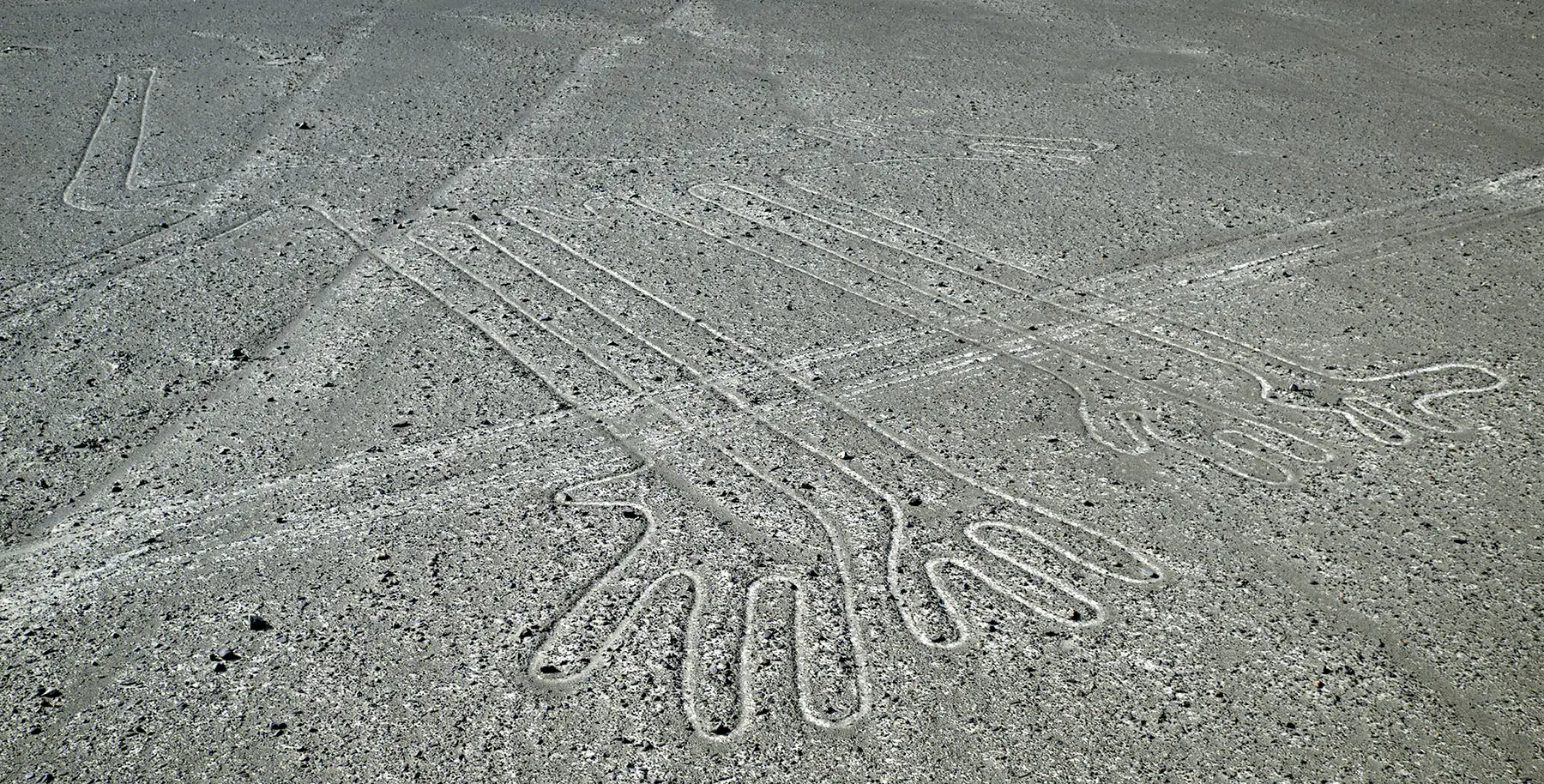
Few weeks compared to the will of eternity, or at least the long duration that characterizes museums. However, this transience did not take away from Peru en ARCO’s museum character, because it shared with the most important institutions the purpose of showing a history of art to public audiences. Not the History of Art, capitalized as it is presented at the Louvre, the British Museum, or the Met in New York City, but a history of Peruvian art, which of course does not fit snugly in the categories that articulate the story told in such paradigmatic museums. To start because the history of Peruvian art does not begin in remote places like Mesopotamia or Egypt, but right there, in Nazca, with a civilization that flourished 2000 years ago in the Rio Grande basin, in Peru’s arid Pacific coast. Nazca. Buscando huellas en el desierto (Nazca: Looking for Footprints in the Desert) was the title of the exhibition devoted to this dazzling culture, held at Telefónica Foundation in Madrid. The show featured more than 300 archeological artifacts including ceramics, textiles, and metal works. The extraordinary quality of the art was expertly highlighted by an impressive exhibition apparatus that included animations, projections, videos, musical compositions, mappings, and 3-D simulations obtained with drones from the region where the famous geoglyphs—the gigantic drawings etched on the ground known as the “Nazca lines”—are found. The exhibition was curated by Cecilia Pardo and Peter Fux.
Another difference, even more critical, was the fact that the temporary museum showed with determination that what the West still considers “pre-historic” or “primitive” does not belong in Peru to a remote and unrecoverable past, but to the most active of presents.
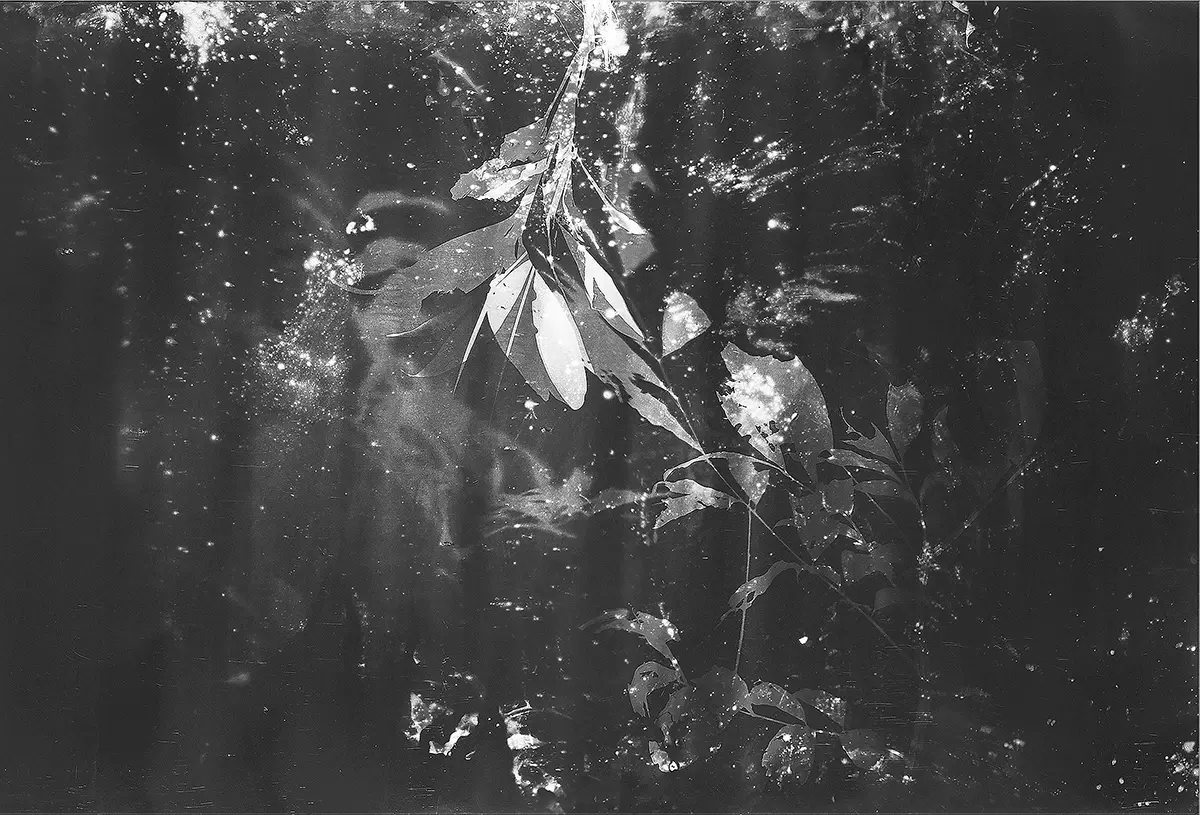
It did so through Amazonias, a formidable group show at Matadero, featuring the work of 46 artists. According to curators Sharon Lerner and Gredna Landolt, Amazonias was intended to present a panoramic view of art in that vast region of South America, the richness and diversity of which are often obscured by stereotypes that make exclusion and marginalization easier to achieve. This is why the show included the works of “contemporary indigenous artists who engage their ancient traditions and their myths and reflect on their communities’ recent social memory.” Among them, Olinda Silvano, Silvia Ricopa, and Wilma Maynas, three women from the Shipibo-Konibo ethnic group, who created at Matadero a mural based on the kené, a refined design pattern traditionally used by their people for the adornment of faces, bodies, costumes, hairbands, and pottery. Or indigenous artists such as Santiago Yahuarcani, Víctor Churay, Elena Varela, and Abel Rodríguez, who have paint or still paint using traditional themes, techniques, and poetics. Elena Valera is the Spanish-language name of Bawan Jisbe, who exhibited a panoramic painting representing La gran fiesta del Ani Sheati (The Great Ani Sheati Festival), celebrated in a village on the occasion of a female’s clitoris ablation, marking a young girl’s passage into sexual maturity. In open contrast with such works were experimental projects like Roberto Huarcaya’s, who transformed a forest clearing illuminated by an electrical storm into an unexpected photographic camera. There was also a good sample of works by artists and photographers from the Amazonian city of Iquitos, who have forged an aggressive and vibrant aesthetic in consonance with the turbulence and conflicts of life in a port that acts as a frontier between two very different and often conflicting worlds.
Refuting—or, if you prefer, dissolving—the myths and stereotypes that obscure the highly complex realities of the Amazonian region was also the goal of El calor derrite los estilos (Heat Melts Styles), an exhibition by Gilda Mantilla and Raimond Cháves, curated by Virginia Torrente at Centro Centro. It was, in fact, a vertical cut from a long-term project what led these two artists to visit Peru’s Amazon River region often. Rather than engaging directly with its peoples and its prodigious environment, they explore how its reality has been captured, documented, and interpreted by the printed media in the region, as preserved in various archives in Iquitos. They have limited themselves to select and show, both in the cultural center’s exhibition galleries and a photocopied brochure, refusing to categorize and interpret their findings.
Legitimization
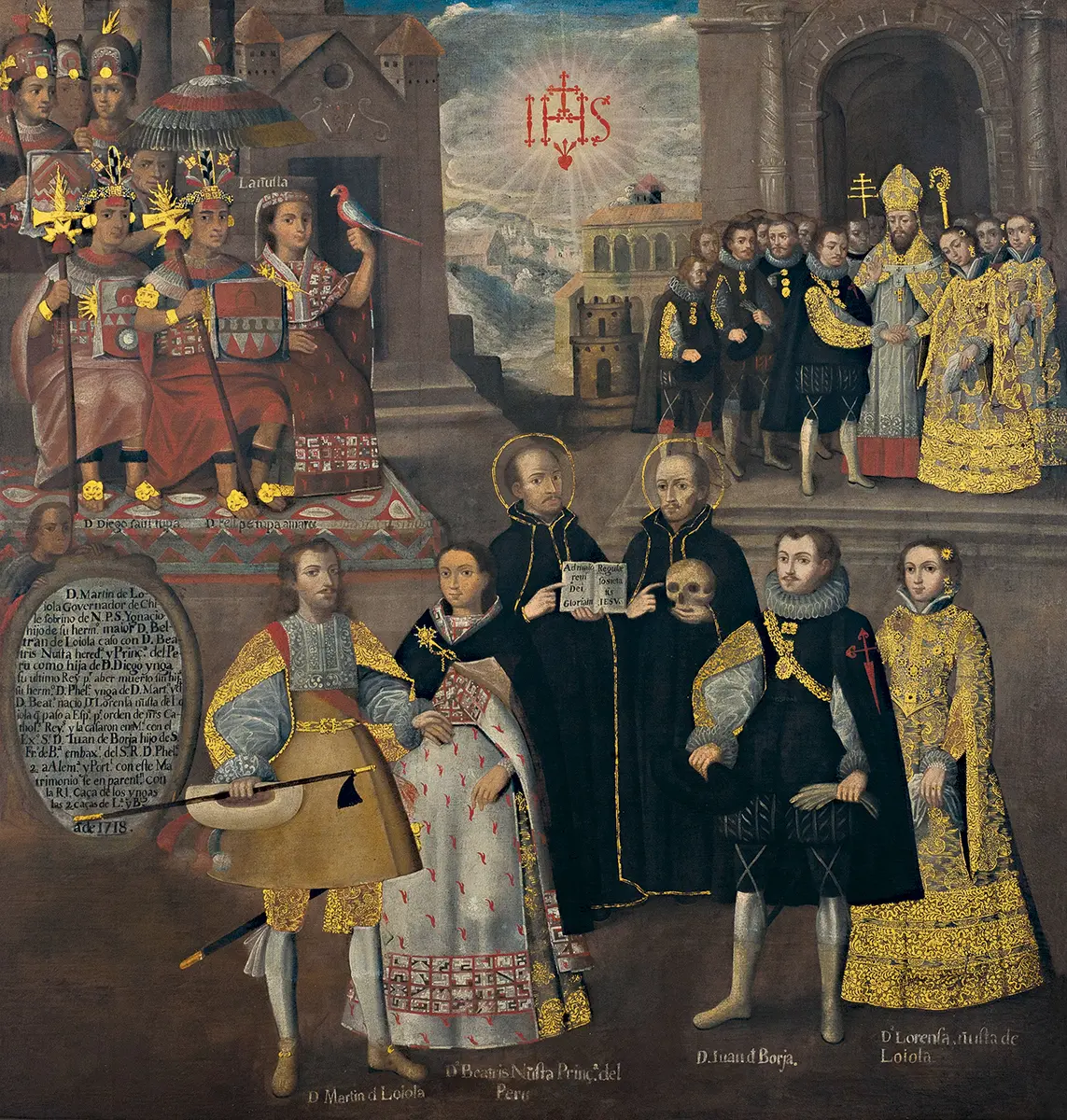
This portable and ephemeral museum sought to achieve an enduring legitimization of Peruvian art by those Madrid museums best poised to grant it. I am talking about, firstly, of the El Prado museum, one of Western Europe’s most revered and valued institutions. During the month of February, as part of its La obra invitada (The Guest Work) program, El Prado exhibited Matrimonios de Don Martin Loyola con doña Beatriz Ñusta y de Don Juan Borja con Lorenza Ñusta (The Marriages of Don Martín Loyola with Beatriz Ñusta and Don Juan Borja con Lorenza Ñusta). The painting is a copy of a large-format original dating from the late Seventeenth Century, commissioned in Cusco by the Jesuits. By depicting the scene, they wanted to praise the marriage of Inca noblewomen with relatives of Ignacio de Loyola and Francisco Borja, founders of the order that played a crucial role in the Christianization of elite members of the peoples subjugated by the Spanish empire in Peru and throughout Latin America. Exhibiting this painting in El Prado was a de facto acknowledgment of the historical importance—as well as aesthetic—of the Cusco School, as noted by Fietta Jarque.
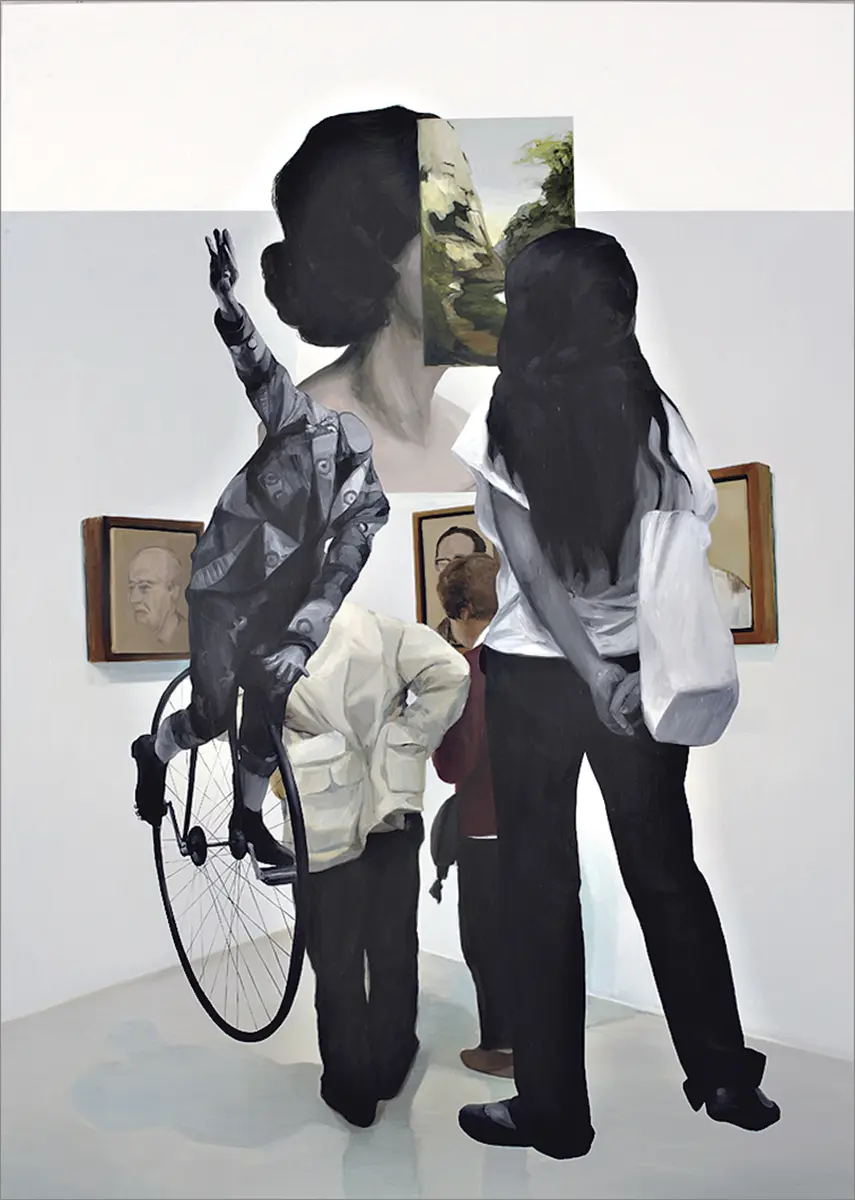
The exhibition En orden de aparición (In Order of Appearance) was evidently more complex, as it reflected the audacious goal of establishing a “dialog between artists” widely separated by geography, culture, history, and aesthetics, as well as by their relationship with the history of art in the West, which values some and ignores or excludes others. And also, because it was an exhibition within an exhibition: it featured works by Peruvian and Latin American artists from many eras, alternating with works from the Real Academia de San Fernando collection, which focuses on masterpieces of Spanish art from the Renaissance to the present. The show’s title, En orden de aparición (In Order of Appearance), was taken from a homonymous work by Sandra Gamarra, which opened the exhibition in a room that also included paintings by Luis de Morales, El Greco, and Zurbarán. In the remaining galleries, curators Luis Pérez-Oramas and Estrella de Diego arranged works by twenty-eight Peruvian artists and thirteen from elsewhere in Latin America, all from the Hochschild collection, initially focused on Peruvian art but now expanded to encompass modern and contemporary Latin American art.
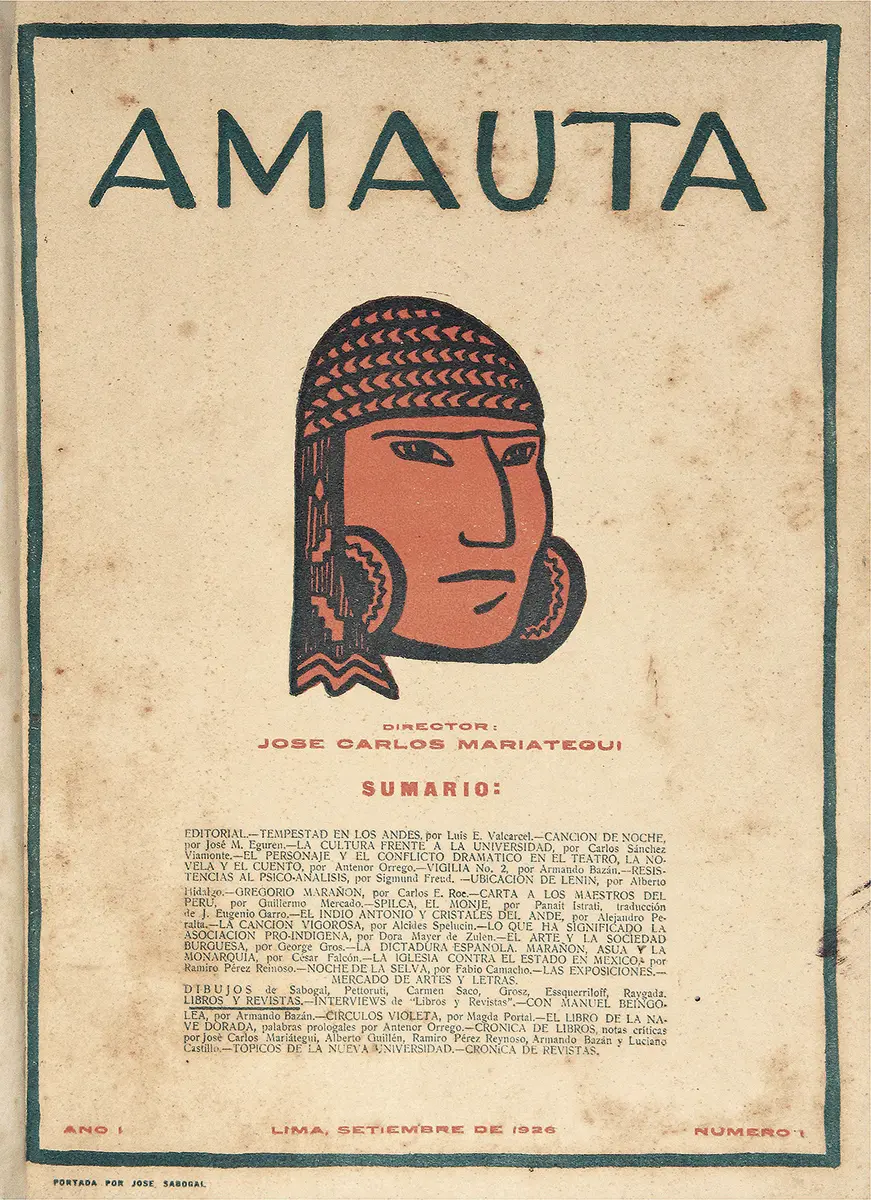
The Museo Nacional Centro de Arte Reina Sofía was the third piece in the strategy for the legitimization of Peruvian art projected by this ephemeral museum onto Madrid’s art scene. It held the exhibition titled Redes de vanguardia: Amauta y América Latina, 1926-1930 (Avant-garde Networks: Amauta and Latin America, 1926-1930). The museum indeed has a long history of solo and group exhibitions devoted to Latin American art, but this was the first time that it presented a wide-ranging show about an arts and culture journal. The editor of Amauta, José Carlos Mariátegui, was a Marxist politician and intellectual whose formidable and genuinely original thought is in full display in Siete ensayos de interpretación de la realidad peruana (Seven Interpretive Essays on Peruvian Reality), and who imprinted the journal with his own openness to the 1920s avant-garde. Indeed, the cover of the first issue of Amauta was illustrated with a work by José Sabogal, the most renowned figure among the defenders of Indigenismo in Peru. But this evident taking of sides was not an obstacle for Amauta to also engaged with other avant-gardes of the era, often in a relationship of inspiration or of competition with Indigenismo itself. This helps explain the vastness of an exhibition that included artworks and writings by 68 artists and writers from the Americas and Europe, to demonstrate the degree to which the project launched by Mariátegui was open to German expressionism, futurism, Mexican “stridentism,” and Soviet constructivism. And to muralism, represented by works by José Clemente Orozco, Diego Rivera, and David Alfaro Siqueiros. The show also featured works by such prominent artists as the sculptor Germán Cueto, the photographer Martín Chambi, and the painters Emilio Pettoruti and Alejandro Xul Solar. Beverly Adams and Natalia Majluf curated the exhibition.
Photography and video art
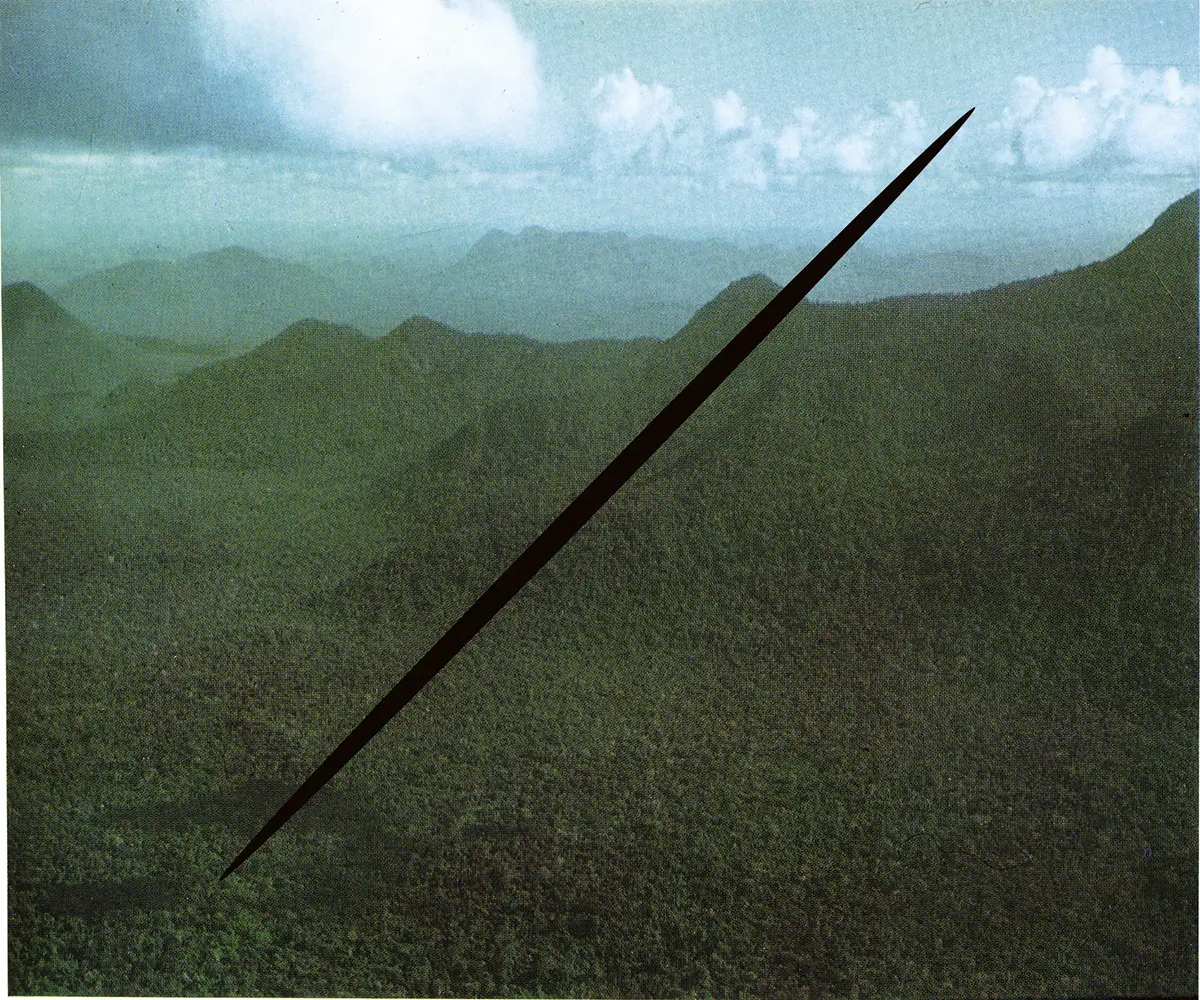
Estratos de un paisaje (Strata of a Landscape) was the title chosen by curator Alejandro Castellote for an exhibition of photographs from the Jan Mulder collection. It could very well have been titled “Chambi to Chambi,” given that this outstanding panoramic traced a temporal arc from Martín Chambi to Manuel Chambi. The former is the grand Master of Modern Peruvian photography; the latter, a prominent name in contemporary photography in Peru, from whom works resulting from failed photo editing processes were shown, authentic examples of the photographic, reflections of photography on itself and its languages.
Between these two extremes, between the arrival of photography and its consummation, a wide selection of works by 37 artists told of the multiple options that populate the photography scene in today’s Peru. In Milagros de la Torre’s impressive photographs, we find an outstanding example of urban panoramas. In Hans Stoll’s, we see classic landscapes. Human landscapes inform the work of Mariella Agois, Flavia Gandolfo, Daniel Pajuelo, or Adrián Portugal, while the imaginary landscapes do the same for Lorena Noblecilla. Giancarlo Shibayama and Gihan Tubbeh tend towards abstract shapes, while Cecilia Paredes moves in the direction of mimicry.
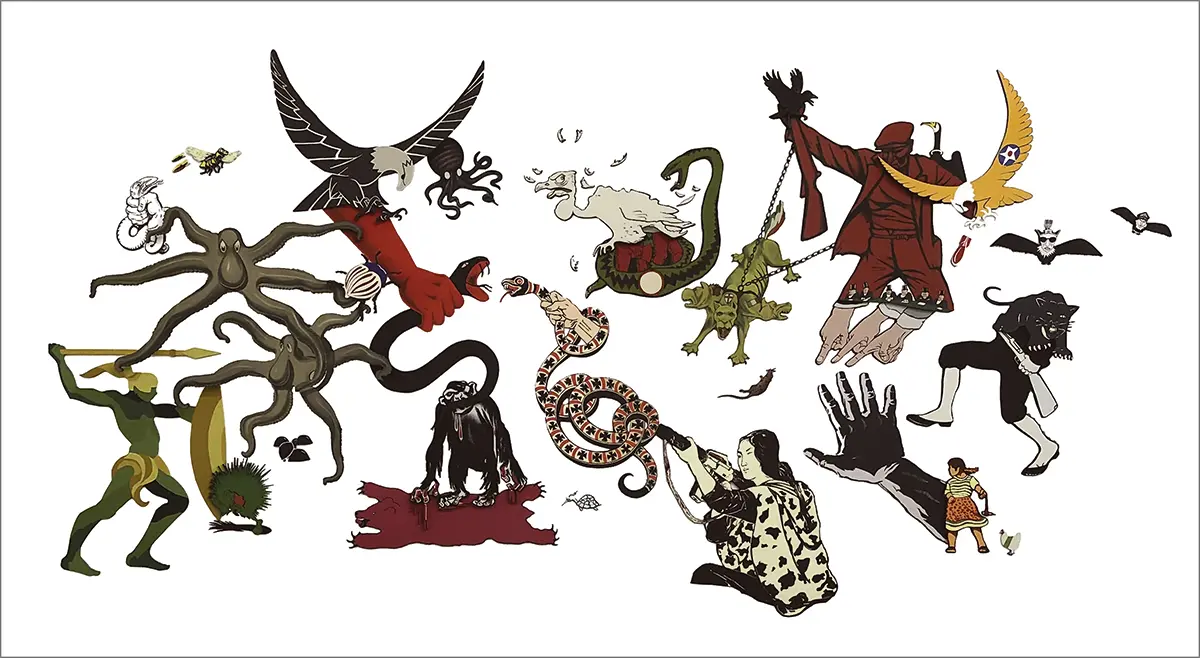
Curators José-Carlos Mariátegui and Jorge Villacorta offered a representative section of the work of two generations that in the last fifteen years fostered a new turn in Peruvian video art, with a push towards video installation. They have created, according to the curators, “a three-dimensional space that is shared by the viewer and the work of art,” where works unfold that “allude to geographic spaces, narratives of memory, readings of the city and of public space,” as well as the exploration of new possibilities for the methods and technical resources of video. The exhibition, titled Video-translaciones: miradas x espacios (Video-Translations: Gazes x Spaces), featured the work of fourteen artists and was held at the Centro Cultural Conde Duque. In one of the Centro’s courtyards, Jaime Miranda Bambarén exhibited Semilla (Seed), a group of large spherical sculptures.
The Collectors
Finally, it is worth mentioning the exhibition that gave prominence to a selection of Latin American art collectors. Titled Sincrónicas. Horizontes del arte contemporáneo peruano desde el coleccionismo (Sincrónicas: Horizons of Peruvian Contemporary Art from a Collecting Perspective) and held in the galleries of El Instante Fundación, the exhibition featured works of contemporary art from the collections of Ella Fontanals de Cisneros, Alberto Rebaza Torres, Armando Andrade de Lucio, and Juan Carlos Verme Giannoni. It was an excellent opportunity to visualize coincidences and divergences in the conception and orientation of these collections. The curator: Max Hernández Calvo.
CARLOS JIMÉNEZ
Historian, art critic and essayist.