The 13th Havana Biennial, held from April 12 to May 12, 2019, opened under the shadow of Decree 349, a censorship measure established in December 2018. Widely decried by artists and intellectuals, the decree curtails artistic independence by forbidding gatherings and exhibitions without a permit and criminalizing uses of certain content, among others. Under these circumstances, it was somewhat ironic that the theme of the biennial was “The Construction of the Possible.” Although the curatorial concept related to how to respond to contemporary global precarity under conditions of violence, social inequality, and environmental vulnerability, the theme also spoke to how to continue to operate under the latent threat posed by the Cuban regime.
The biennial’s curatorial team consisted of Margarita González Lorente, Nelson Herrera Ysla, Margarita Sánchez Prieto, José Manuel Noceda Fernández, José Fernández Portal, Ibis Hernández Abascal, and Lisset Alonso Compte. The exhibitions were spread over multiple venues, the main ones being the Centro de Arte Contemporáneo Wifredo Lam, the Centro de Desarrollo de Artes Visuales, Fototeca de Cuba, Casa Oswaldo Guayasamín, Casa México, and Pabellón Cuba. Indeed, the multiple locales made the experience of visiting the biennial unwieldy. The website of the event listed forty-four exhibition spaces, not counting the collateral shows, which numbered 133 on the official map. In all, it was next to impossible for any visitor to view the entire biennial in Havana. In addition, the cities of Matanzas, Cienfuegos, Sancti Spiritus, and Camagüey also featured parallel exhibitions as part of the program.
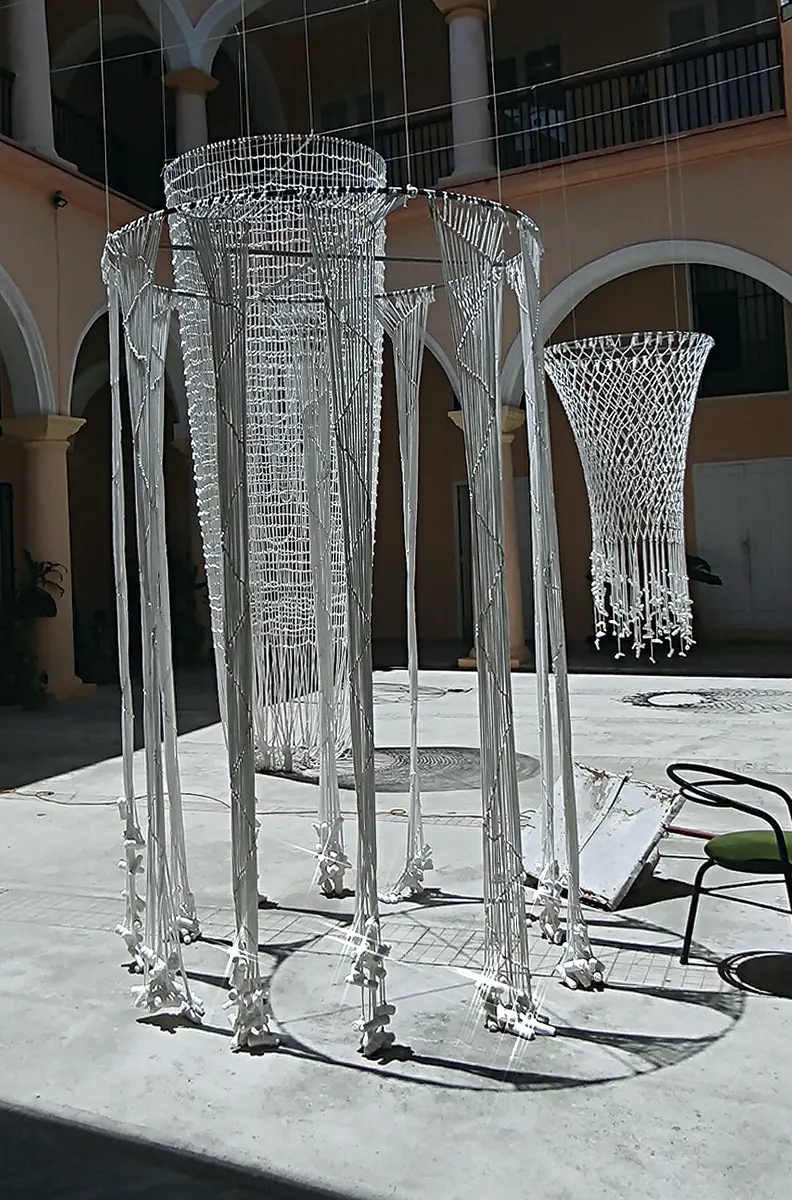
The point of departure for the biennial was the Centro Lam. Here, visitors were treated to a tightly curated selection of works—an auspicious beginning. In the courtyard, Alexia Miranda’s Tejido colectivo (Collective Weave, 2013-19) welcomed the spectator. These cylindrical weavings in white cotton hung suspended from hoops, forming multiple intricate patterns as three-dimensional sculptures but also in two dimensions, through the shadows they cast on the ground. Their presence in this central location spoke to the artist’s desire for these objects to activate communities. In her statement, she referred to how these weavings in her native El Salvador sought to function as a “tool for human cohesion.” At the Centro Lam, they certainly compelled visitors to linger in the courtyard or to look down on it from the second story to view both the ways in which fellow spectators interacted with the weavings and the interplay of patterns they formed. Another sculptural piece that recalled phenomenological legacies of geometric abstraction was Tamara Campo’s Blanco (White, 2019), an installation of hanging vertical white cloths positioned symmetrically to form an angle, which converged in a sort of vanishing point when viewed from the center of the room. As expressed in the artist’s eloquent statement, the piece spoke to “scale, monumentality, disorientation, the void, the search, nothingness, and everything.”
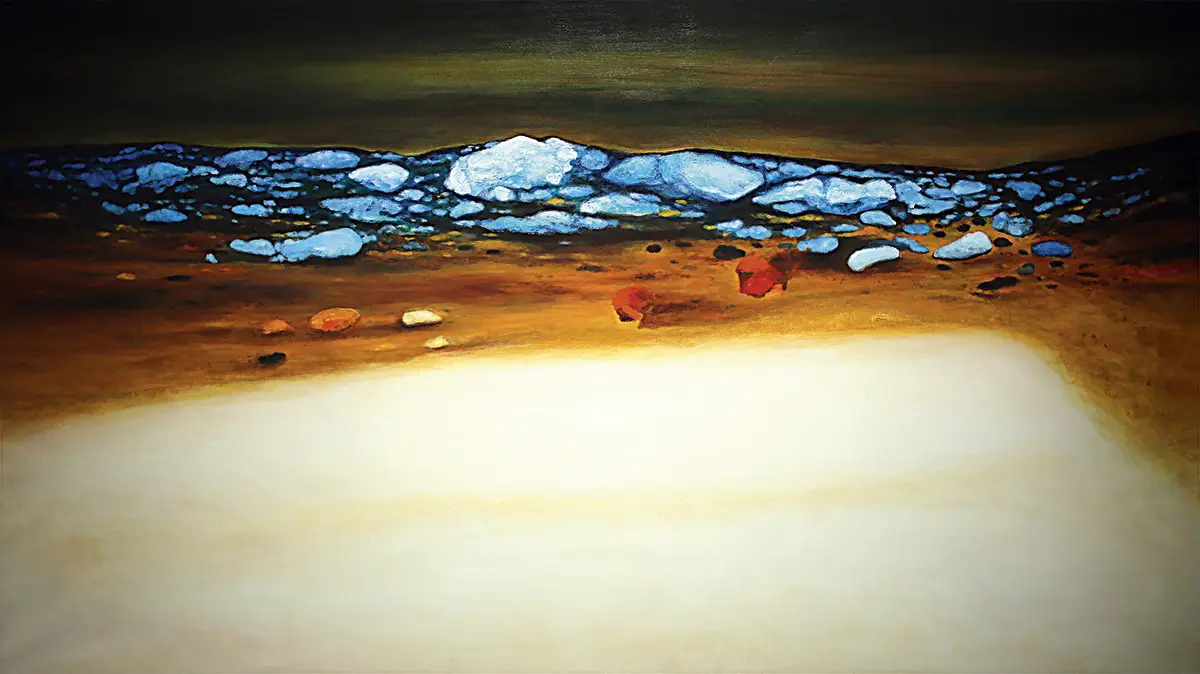
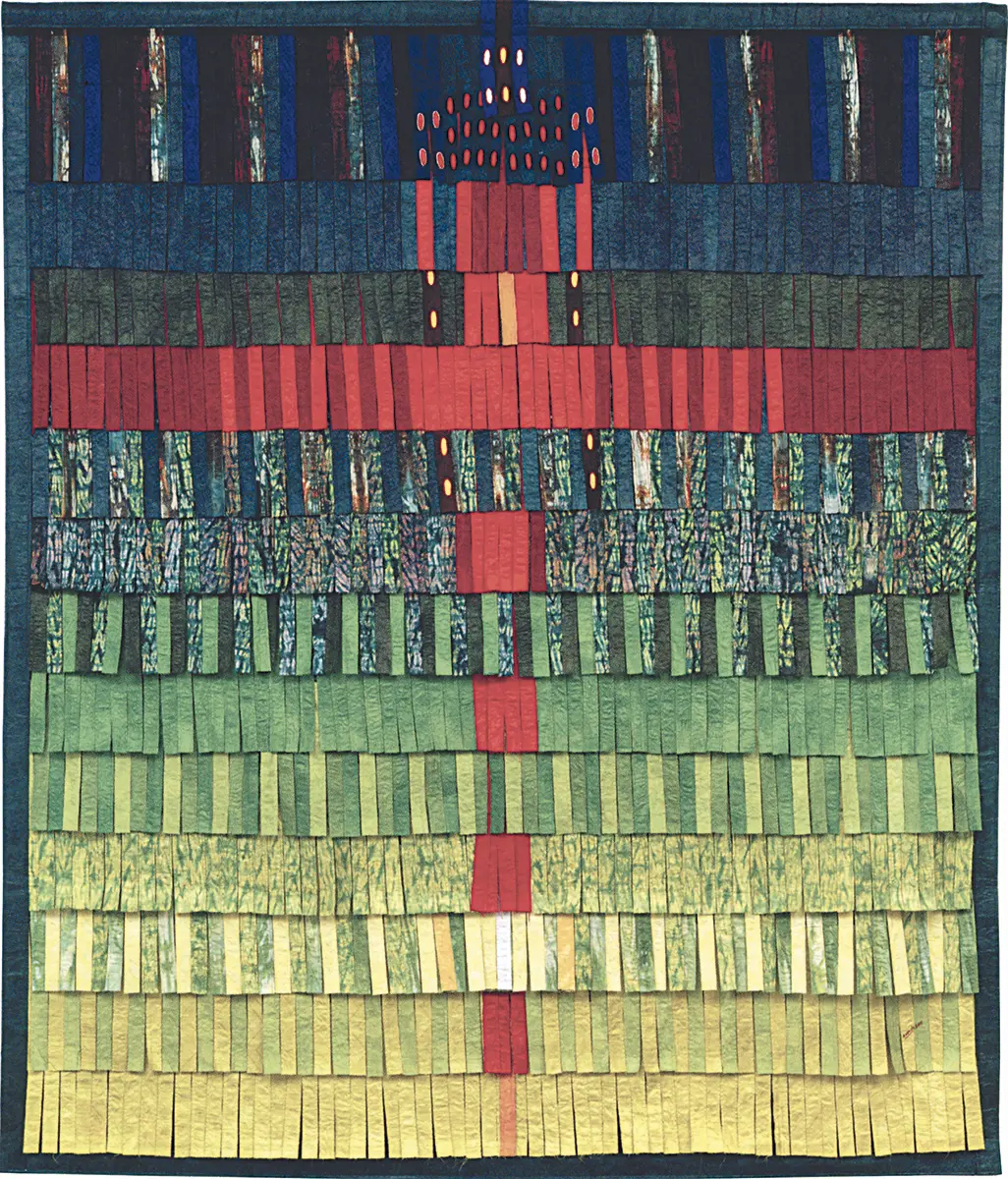
The strength of the selection of textile-based work at Centro Lam was admirable. The tapestries of Abdoulaye Konaté, striking for their vivid colors and stunning designs, were equally intriguing for establishing a powerful counterpoint with Campo’s and Miranda’s pieces. Their white monochromes gave way to seemingly limitless tonal variation in Konaté’s compositions. Most of the tapestries were formed of strips of color sewn onto the surface of an expansive plane, and they tended to hover between abstraction and representation. Le Rouge et le Noir et les Signes (The Red and the Black and the Signs, 2018) established counterpoints of reds and blacks while Papillon (Butterfly) suggested an immense butterfly in blues, greens, and whites. Their meditation on color paired nicely with David Beltrán’s five paintings from the series The Archaeology of Color, which occupied a nearby gallery. These works took as a point of departure minute paint samples from well-known paintings which are enlarged to reveal a universe of visual information in what would otherwise appear to the naked eye as pure color. In the case of the Cuban paintings, the artist was able to obtain samples from works by Sandú Darié and José Mijares from the collection of the Museo Nacional de Bellas Artes. The remaining three paintings were based on existing stratigraphic photographs from conservation analyses of works by El Greco, Van Gogh, and Velázquez. The paintings were both fascinating, for thinking about the qualities of pigments in microcosmic terms, and also beautiful in their vivid coloration and unexpected formal attributes. They were complemented by didactic information in vitrines, which featured reproductions of the original paintings pinpointing the location from where each of the samples was drawn.
The installations and prints of Adler Guerrier delved into the relationship between abstraction and representation through a poetics of the mundane. His piece Untitled (We find moments in the landscape, ripe for replenishment, and in positions conducive to imagine anew) (2019) meshed perfectly with the theme of the biennial. The photographs of tropical nature are common in his work, but rather than being undefined sites of tourist desire, typical in representations of the Caribbean, they suggest a specific sense of place. Based on these images, the artist creates prints on paper overlaid with polygons which are echoed by wall paintings in pastel hues. The gallery included tropical plants within, engendering a playful exchange between representation and reality.
Maya Watanabe probed the threshold between life and death in her video installation Stasis (2018). Filmed in a Dutch anatomical theater, the video captures a crucian carp achieving a state of biostasis, in which all metabolic processes shut down, and the minimum of energy is expended. The fish is able to reach a level of cryogenic preservation to survive the winter’s freezing temperatures. For the artist, this process is akin to the coping mechanisms of victims of ecocide and genocide. Tania Candiani also meditated on survival strategies in her video on view at the Centro Lam. Titled El sonido de la labor: Cantos de trabajo (Sound of Labor: Songs of Work) (2019), it featured a group of Afro-Cubans from Trinidad singing songs that their enslaved ancestors would have sung in the sugarcane fields. The shots of the singers were juxtaposed to the landscape and architecture of the sugar industry. Different scenes were introduced by quotes from Fernando Ortiz’s Black Slaves (1916), which foregrounded the barbarism of the institution of slavery.
The painter and psychoanalyst Clemens Krauss also chose to work with local subjects. He offered free therapy sessions to visitors and painted a mural in the back patio inspired by these conversations. Rendered in thick impasto, the painting featured people viewed from above in configurations that underscored alienation and opacity because of their placement in relation to each other and within the vast expanse of the wall. It was a compelling display of social practice converging with pictorial representation.
Another strong showing of works was the selection presented at the Centro de Desarrollo de las Artes Visuales. Memorable installations included a collection of pocket watches owned by notable Cubans who led nineteenth-century independence efforts presented by José Manuel Mesías. It also featured Esther Aldaz’s transformation of the building’s rooftop into an urban oasis of sorts with a group of people-sized nests connected by walkways of newspapers against a blue backdrop suggesting a marine horizon. A series of tapestries installed in pairs by Reena Saini Kallat, transcribed in a combination of English and braille the preambles of the constitutions of countries in conflict. Lourdes de la Riva created a map-like wall installation composed of the pages of books that had been devoured by bookworms. The irregular page fragments were positioned against areas of black paint resembling inkblots, evoking themes of erasure and loss. Although many of the works were abstract or conceptual, there were strong instances of figuration, particularly in the case of Mary Sibande’s installation of a mask resembling the artist’s face and grounded in the reality of race and gender isolated against purple sculptural and pictorial elements evoking the fantastic. Cuban artist Luis Gárciga teamed up with the Spain-based collective C.A.S.I.T.A.—comprised of Loreto Alonso, Eduardo Galvagni, and Diego del Pozo—to present one of the most captivating and well-executed installations of the entire biennial. Titled Jababacoa, the work was a video projection in a room with objects and colored lights which were periodically activated to correspond to what was happening on screen. The video was based on an action executed at the Museo Histórico de Guanabacoa, which brought together seamstresses who had previously worked in textile factories that had been shuttered. A workshop was established where they sewed bags (“jabas” in Cuban Spanish) and spoke about the impact that the closing of the factories had on the town and their lives. The video included clips of the women working, images of industrial machinery projected alongside their narration, and performative actions miming the labor of dressmaking and sewing. Flawlessly installed, the piece compelled visitors to stay for its entire 15-minute duration.
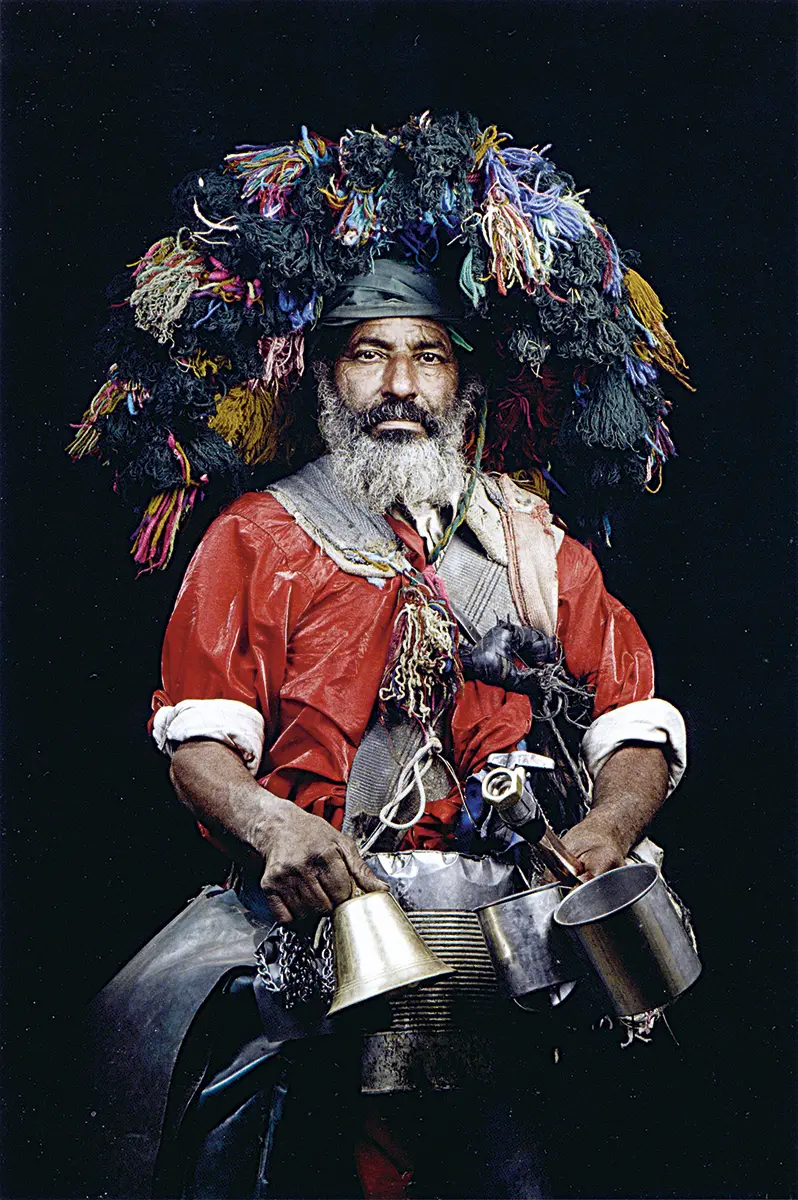
Across the Plaza Vieja, the Fototeca de Cuba presented a smaller selection of artists. Leila Alaoui’s photomural, installed in the courtyard, was the highlight of this grouping. Titled Amar las diferencias (Love the Differences), it was a selection from her series Les Marocains (The Moroccans) in which the artist traveled through Morocco with a makeshift studio making portraits of the people she encountered. Each of the subjects was photographed against a black background, and they were blown up larger than life-sized. Hovering over the spectators, the images both heroicized ordinary people and urged for empathy in the face of difference. Another notable series at the Fototeca was Max de Esteban’s 20 Red Lights. These were black and white photographs each overlaid with a red circle which offered a glossary of sorts of economic terms associated with neoliberalism. Printed against a white background, the images included words such as “Credit Default Swap,” “Off-Balance-Sheet Financing,” and “Sweet Equity” atop abandoned billboards or in urban environments, with their definitions provided below. These strange phrases and their equally convoluted meanings offered a potent critique of the inner workings of capitalism.
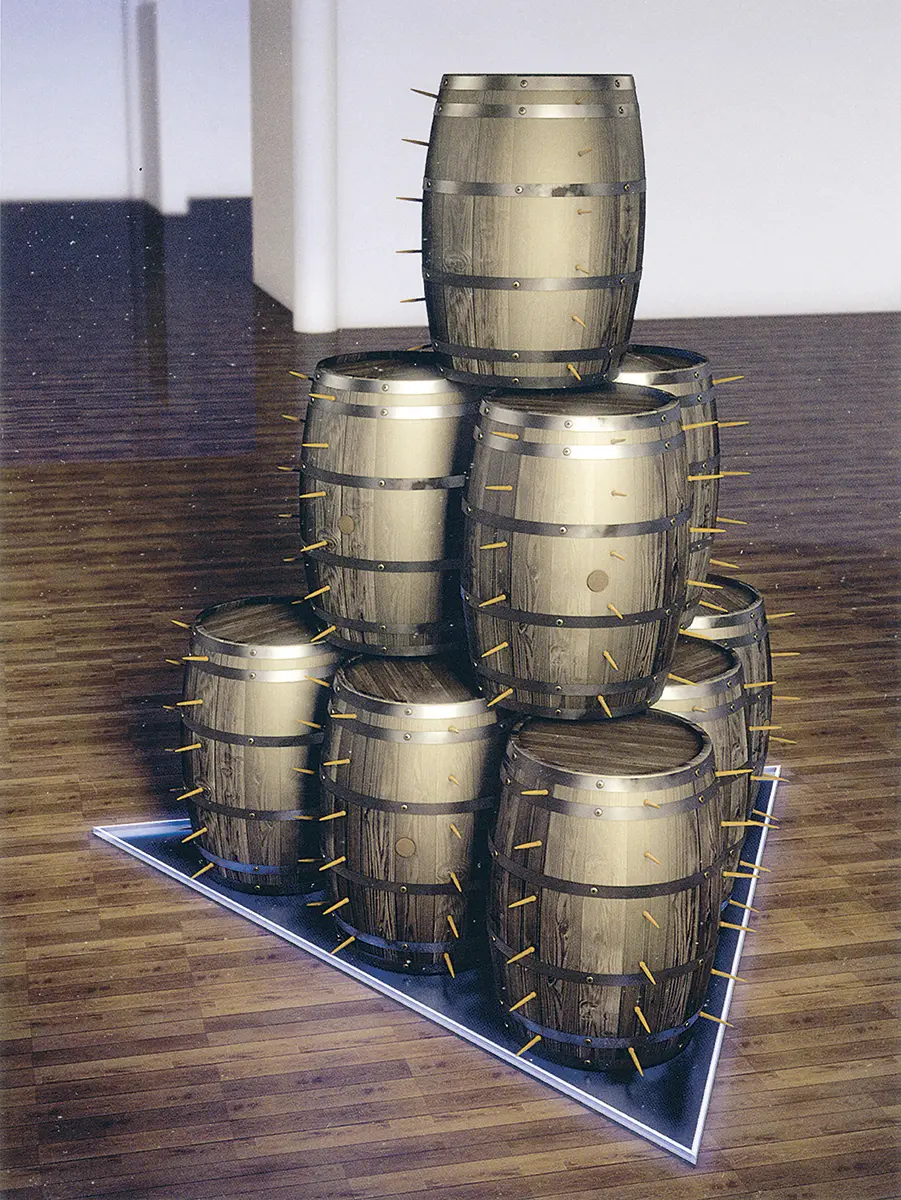
The Casa de México featured artwork by Charo Oquet, Richard-Viktor Sainsily-Cayol, and Matilde Marín. Sainsily-Cayol exhibited Grand Crus II (2019), a sculpture with nine barrels of rum atop a triangular base with blue neon light. The piece referenced to the triangular trade—the route between Europe, West Africa, and the Americas—where commodities were exchanged for human lives. The heavy barrels stacked in a pyramid formation contrasted with the ethereal light projected on their base; the human body was notably absent. Oquet’s installation Voces de Calibán (Calibán’s Voices, 2019) was a complex assemblage of wood, ribbons, bottles, beads, feather, fake flowers, and colorfully painted diagrams around a structure akin to a tree of life. The festive colors and whimsical forms belied a somber message. The work was grounded on histories of violence against Haitian sugar plantation workers in the Dominican Republic. Referencing Haitian Rara traditions (known as Gaga in the Dominican Republic), which are shown in an accompanying video, the piece speaks of resistance in the face of adversity. Nearby at the Casa Guayasamín, José Braithwaite presented a cohesive selection of sculptural reliefs and floor sculptures. Composed of found materials and intervened with white marks, the reliefs were structured as grids, infusing the legacy of geometric abstraction with a sense of randomness and disorder. The floor sculptures, consisting of mounds of earth with individual tiles interspersed within, reflected on the precarity of architecture.
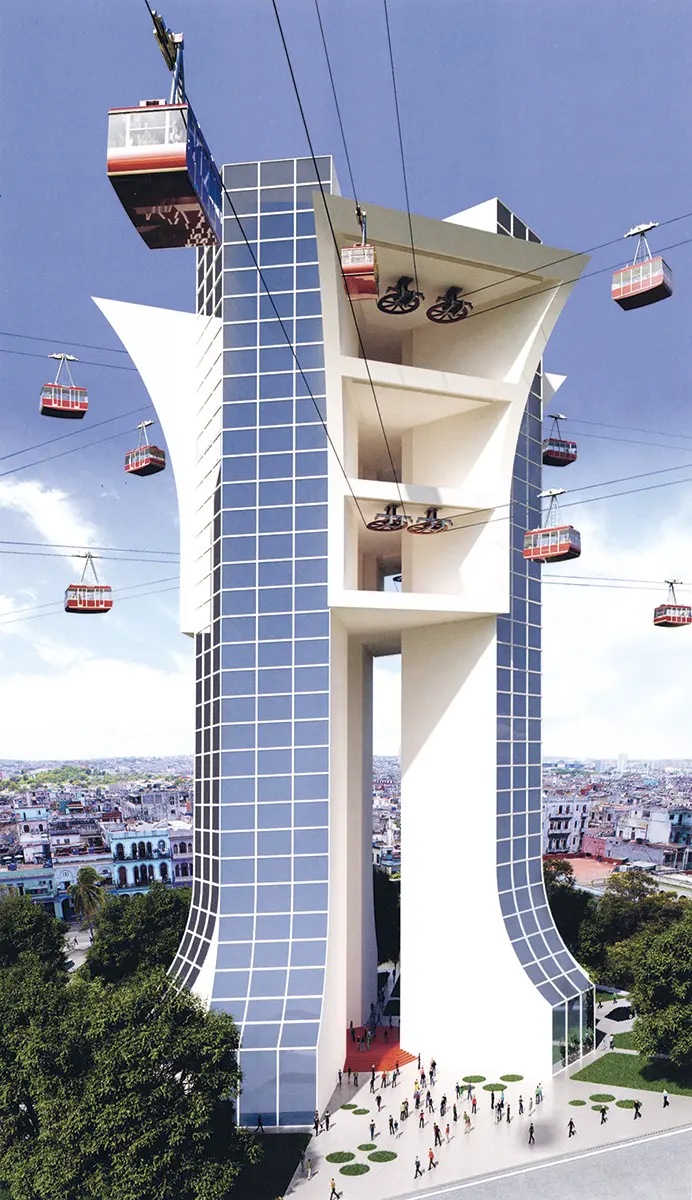
Farther afield in the Vedado district, Pabellón Cuba featured a large selection of artists, including Dayana Trigo, Dania González, Adonis Flores, Nicolás Consuegra, Javier Hinojosa, Manaf Halbouni, Narda Alvarado, Natalia Rondón, Marianne Fahmy, Moataz Nasr, Cheikh Ndiaye, Pedro Cabrita Reis, Hans Hamid Hasmusen, and Karlo Andre Ibarra. Among these, Estratosfera (Stratosphere, 2019) by Adonis Flores, a project envisioning a network of cable cars over Havana, was one of the most complexes. Installed in a corner, it juxtaposed a photographic rendering of the city visualizing the cable cars hanging overhead with transit maps complete with station names and connecting points for the proposed urban system. In the statement, the artist pointed out that instead “than seeming utopic, this idea is elevated over the dystopia that is Havana today, overpopulated and subjected to the gradual impoverishment of its spaces.” Natalia Rondón also contributed a cartographic series to the selection. Titled Cartografía portatil. Objetos de viaje (Portable Cartography. Travel Objects), the pieces were weathered textiles with maps, and transit plans from Venezuela printed on them, in some cases barely visible. Suggesting blankets, these cloths spoke to collective nostalgia for a country that has become a shadow of its former self.
The Museo Nacional de Bellas Artes featured several exhibitions from the biennial. A solo show of recent sculptures by Gabriel Orozco was presented in the building dedicated to international art. Installations by the heavyweights of Cuban art of the last few decades were installed on the ground floor of the Cuban art building as part of the exhibition Museos interiores (Interior Museums), featuring works that recently entered the collection. A regatta by KCHO, first made in 1993, felt equally relevant today.
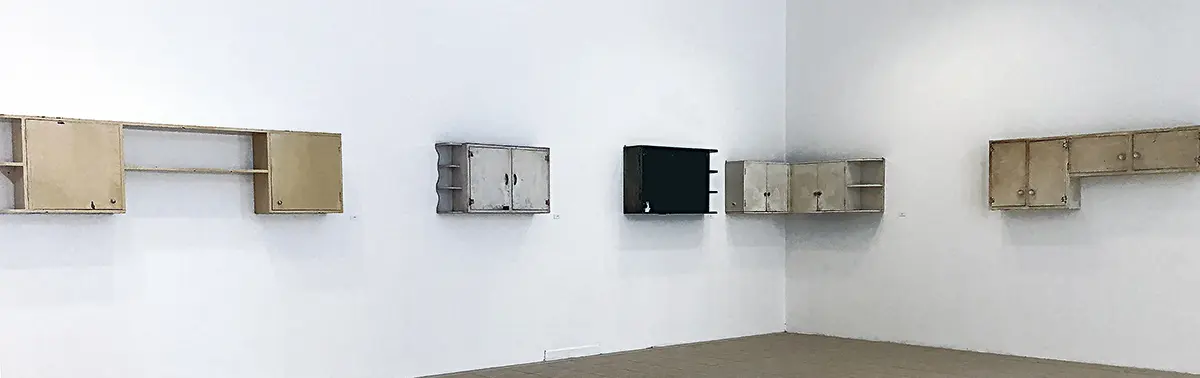
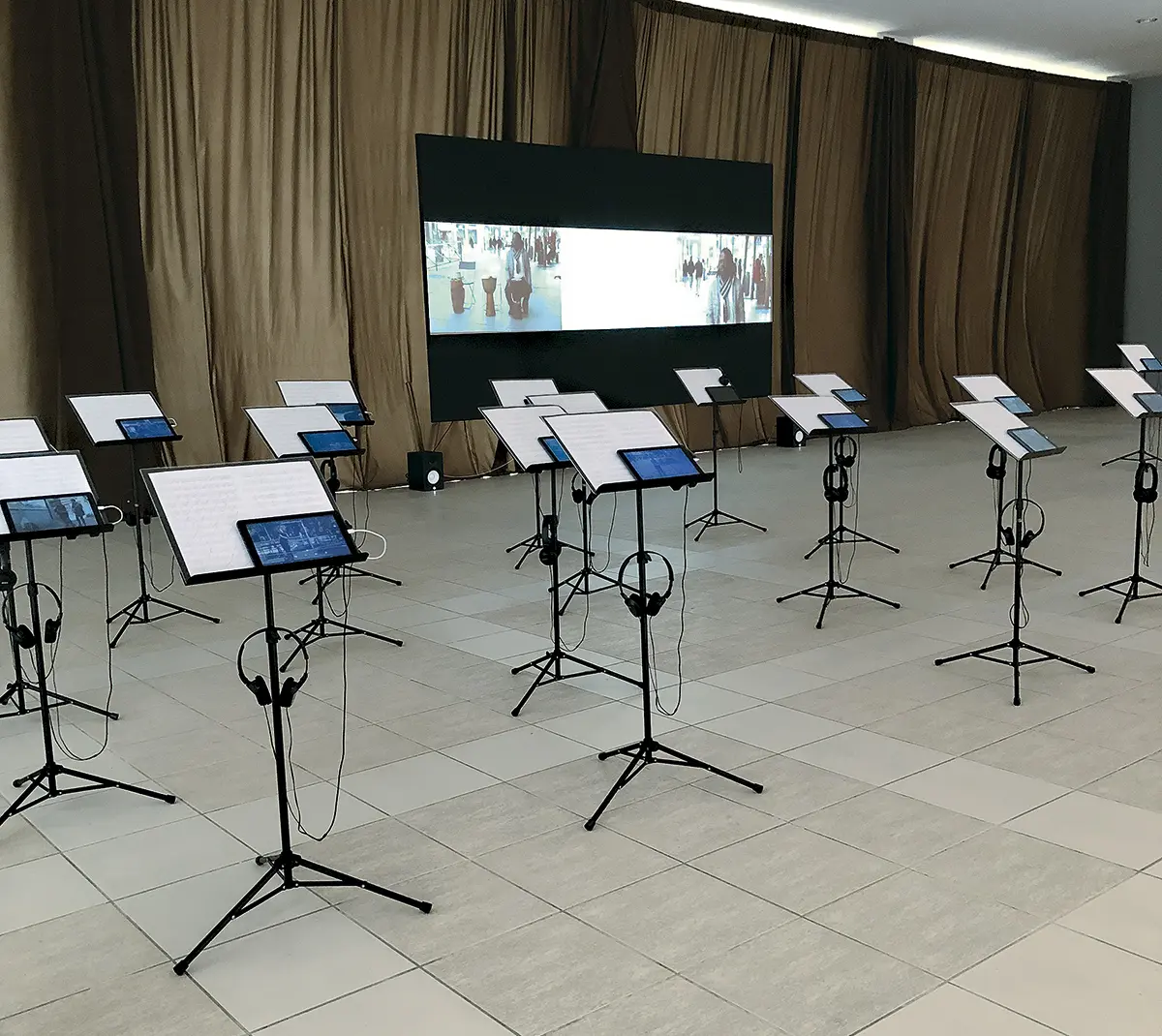
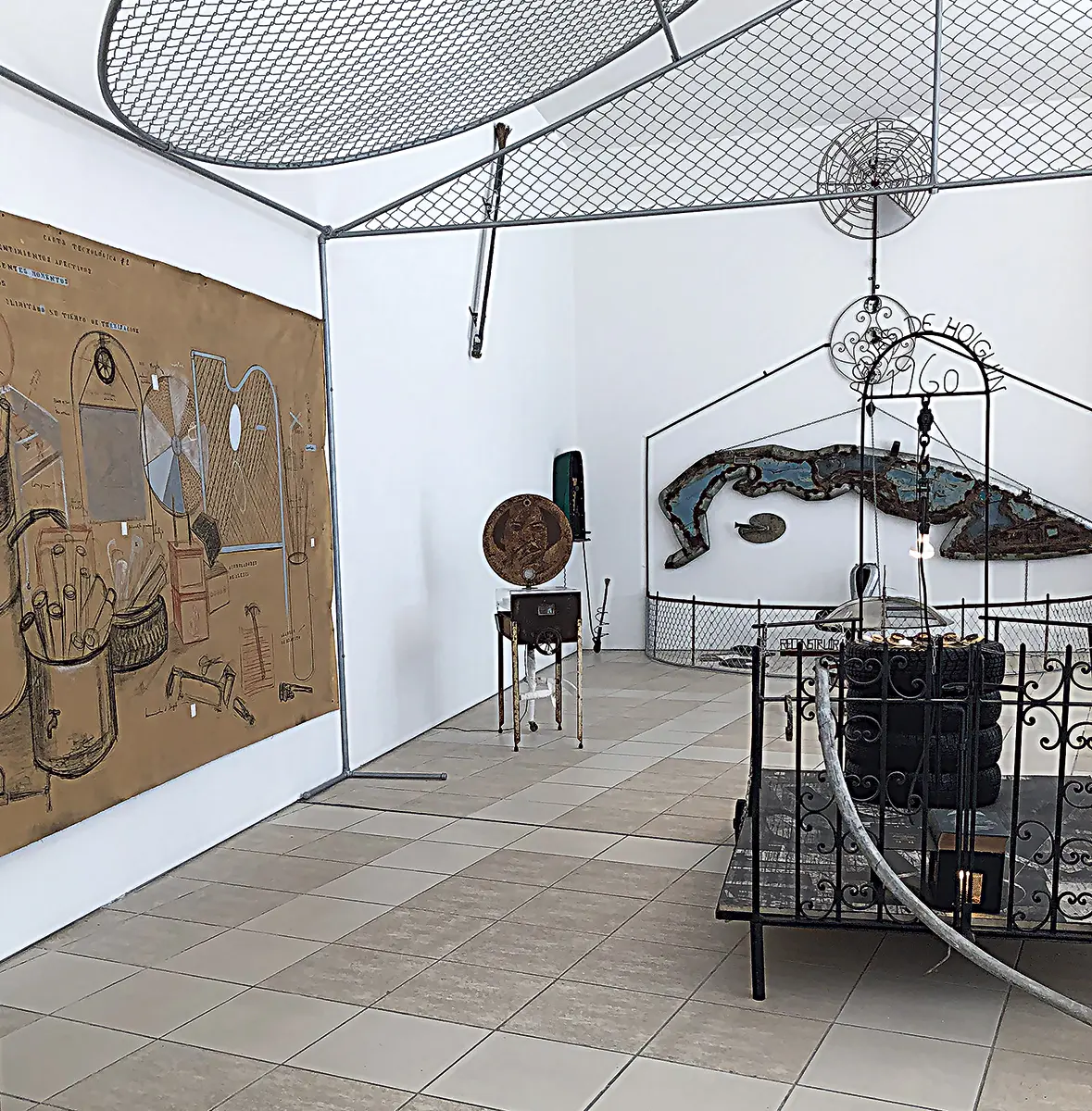
An installation of eight cabinets, Alacenas (Cupboards) Katrina, Sandy, Gustav, Michelle, Ivan, Wilma, Flora, Irma, and Andrew (2018)—each named after a major hurricane that has affected the region—containing an audio track of storm sounds collected by the artists, was poignant both for its subject matter and for being one the of the last works that Los Carpinteros made together. The selection also included Partitura (Score, 2017) by Carlos Garaicoa, an installation of videos on small screens placed on lecterns and mimicking the configuration of an orchestra, around a central projection featuring a score based on music played by buskers in an urban space. The most arresting of the pieces on display was Taller de Reparaciones (Repair Shop, 1997) by René Francisco Rodríguez. It is a fascinating collection of objects, art reproductions, and machines that hold a special significance for the artist. A contemporary cabinet of curiosities, the piece is a kind of self-portrait through things. It comments on the process of collecting as autobiography while also being remarkable for having been made during the Special Period, demonstrating ingenuity under adverse living conditions. Originally exhibited at the VI Biennial at La Cabaña, the colonial fortress that used to host the event, it was adapted to its new setting with a chain-link fence that created an open communal space. Overall, the selection of Museos Interiores demonstrated the strength of Cuban art over the past three decades. What was disappointing was that no women were included in the selection.
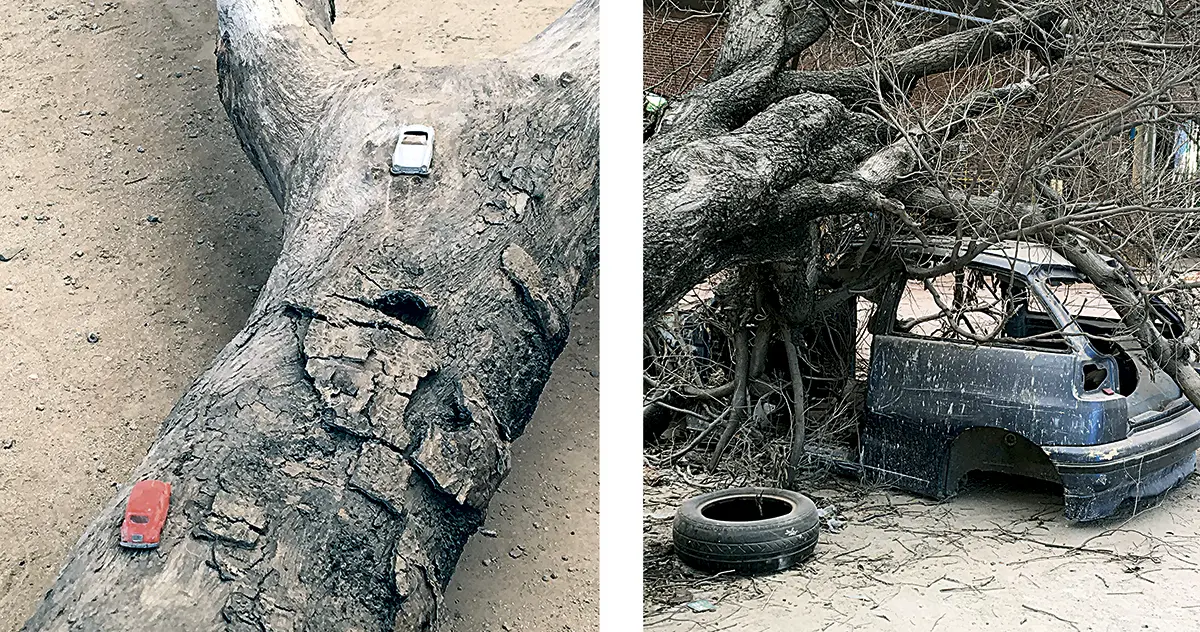
The city itself also served as an exhibition space for diverse projects. Glenda León presented the installation Mecánica Natural (Natural Mechanics) at an abandoned terminal tram station in Vedado. The artist placed in this cavernous hangar-like space two related scenes, a group of tree branches replete with little toy cars driving atop them as if on an interstate and an actual vehicle—completely wrecked—underneath a dead tree. The juxtaposition was startling. As described in the curatorial text written by Pompidou’s curator Ilaria Conti, “By shifting between macro-and micro-scale, the artist has induced a glitch in our expectations, allowing us to observe the pre-constructed forms of interpretation that guide our thinking.”
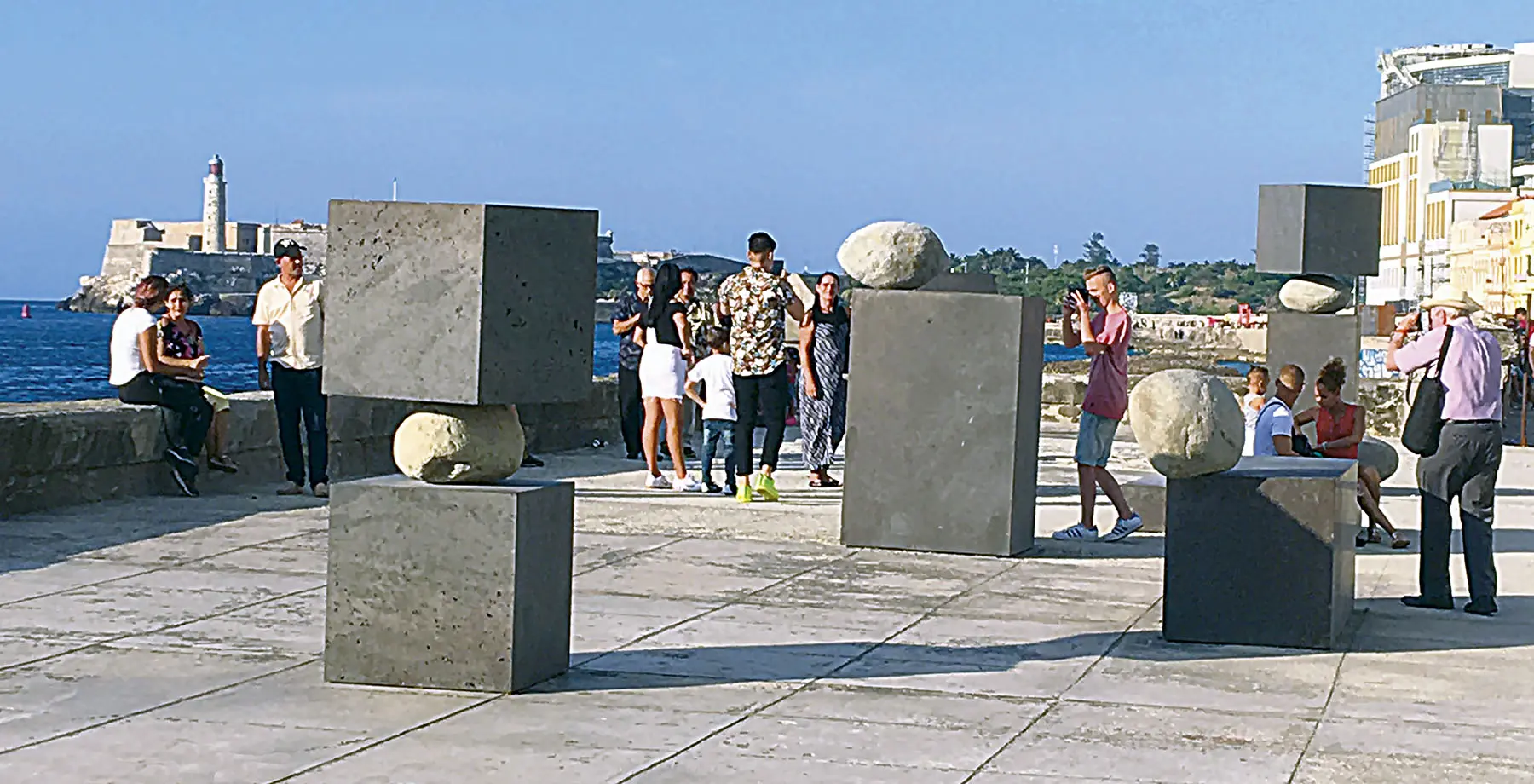
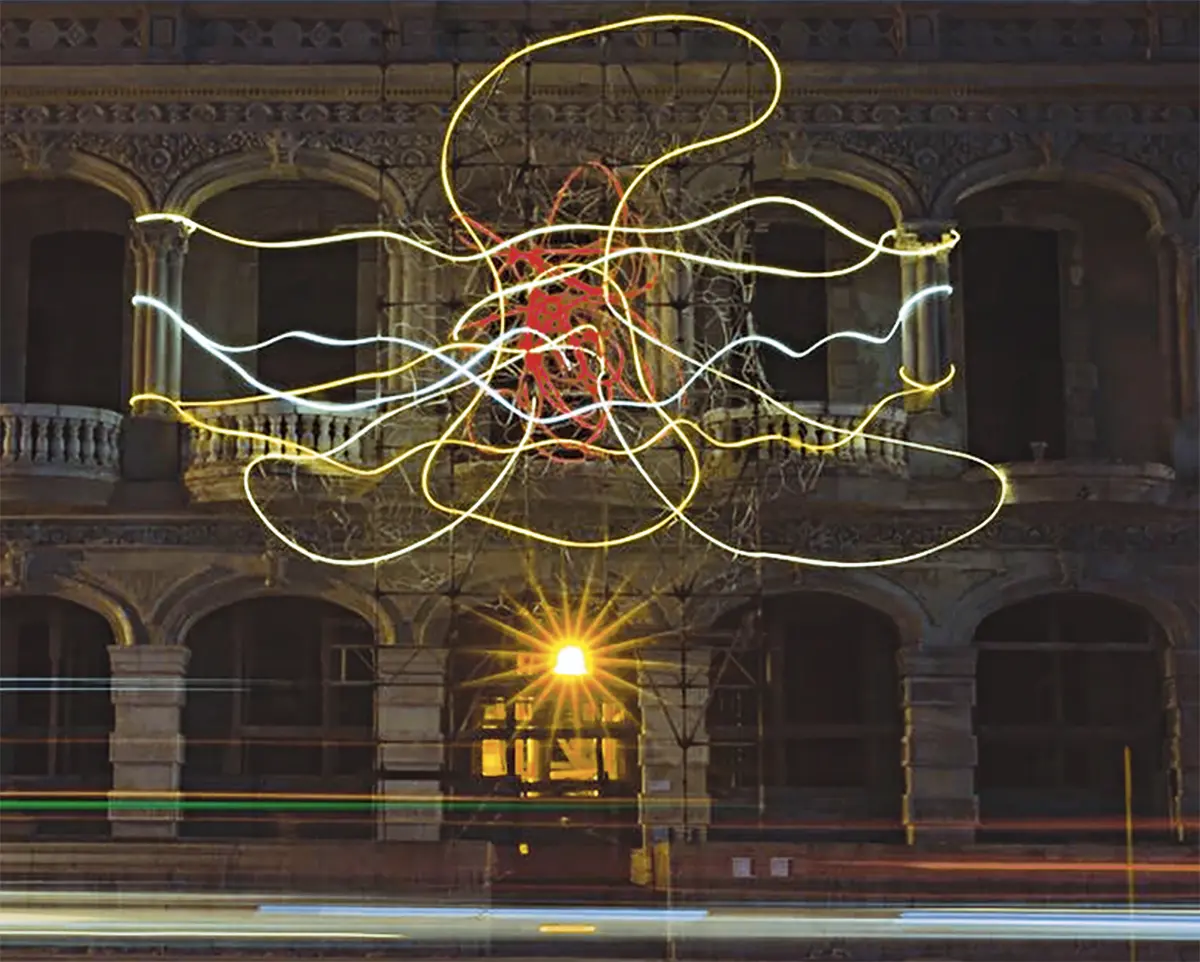
Closer to the center of the action, Detrás del Muro (Behind the Wall), a public art exhibition around Havana’s iconic Malecón seaside boulevard, held its third edition. Curated by Juan Delgado Calzadilla, the event included thirty Cuban artists and fourteen international ones. Some of the artists were repeated attendees, including Carlos Martiel and Arlés del Río, and Cuban-Americans Emilio Pérez, Antonia Wright, and Enrique Martínez Celaya. International artists included Grimanesa Amorós, with a striking neon light sculpture on the façade of a building, and José Dávila, with large rocks resting on concrete slabs. William Córdova, who presented a concrete pyramidal structure composed of blocks which were casts of boomboxes, and Marcos Lutyens, with a textured walkway, meant to be experienced while blindfolded to activate the sense of touch through the feet, were also featured. Overall, the presentation of this outdoor work created communal spaces and engaged inhabitants and visitors of the city who would not otherwise visit the biennial’s exhibitions. It was the most central and visible of all.
Shortly, following the closure of the biennial, President Trump’s announced new restrictions on traveling to the island from the United States, eliminating the people-to-people group travel category. It remains to be seen what impact this will have on the cultural life of the island and the next biennial. Although this edition was maddeningly dispersed, it was clearly a labor of love for the curators, artists, and cultural workers who made it possible. For visitors, it was inevitable to avoid the sense of having missed much of it, but this was counterbalanced by certain encounters with remarkable works of art.
TATIANA FLORES
Associate Professor of Art History and Latino & Caribbean Studies at Rutgers University, New Brunswick, NJ, USA.