Costa Rican artists Victoria Cabezas (1950) and Priscilla Monge (1968) presented Ejercicios de autonomía (Autonomy Exercises), an exhibition curated by Miguel A. López, at the Ars TEOR/éTica Foundation. The exhibition featured more than 67 artworks, including installation, photography, painting, drawing, sculpture, and video art, which served as the basis for readings and helped rewrite intergenerational and trans-chronological concerns about the primacy of the female body, its intensity, and its trepidations. Ejercicios de autonomía as a whole can be interpreted as a deliberate confrontation of patriarchal symbols and technologies. It foregrounds forms of structural violence that act upon female subjectivity and proposes discourses that reclaim control of one’s body and affections, the autonomy of the private and the domestic, giving expression to the artist’s ethic of the care of the self.
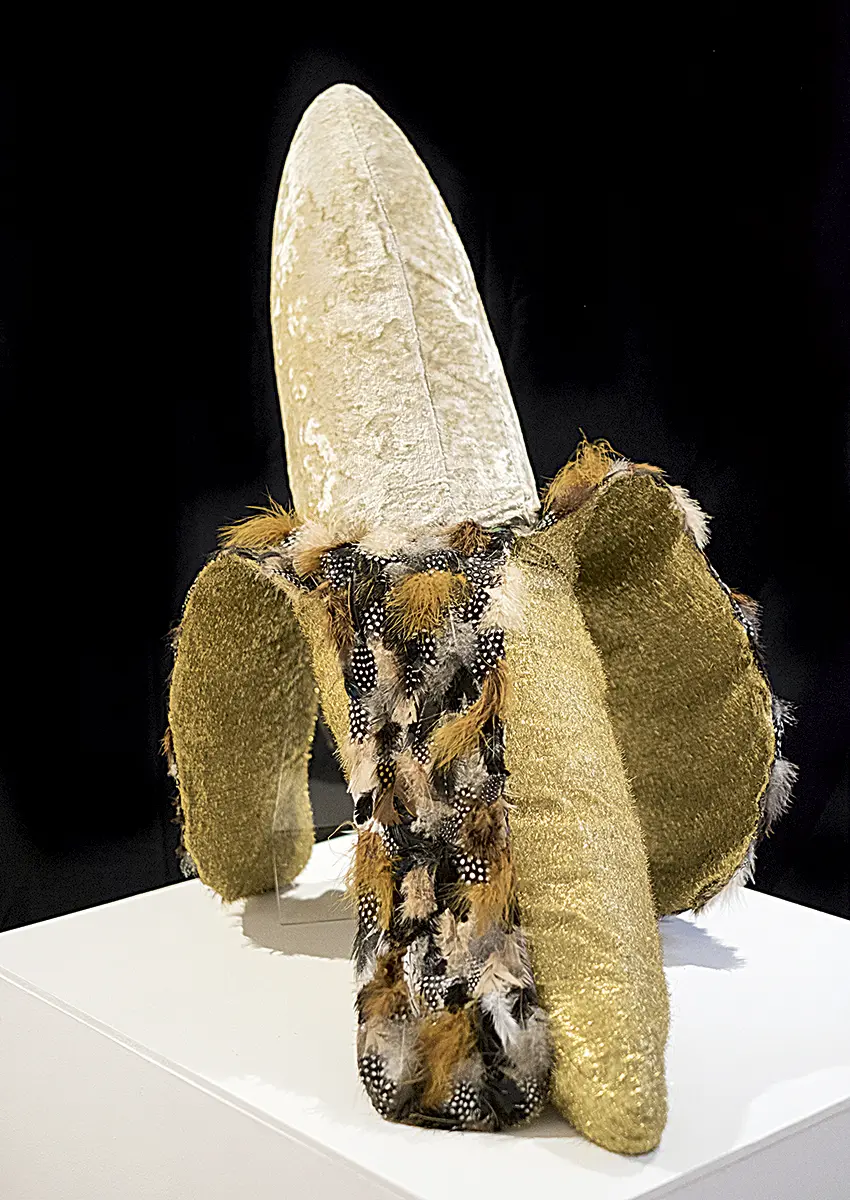
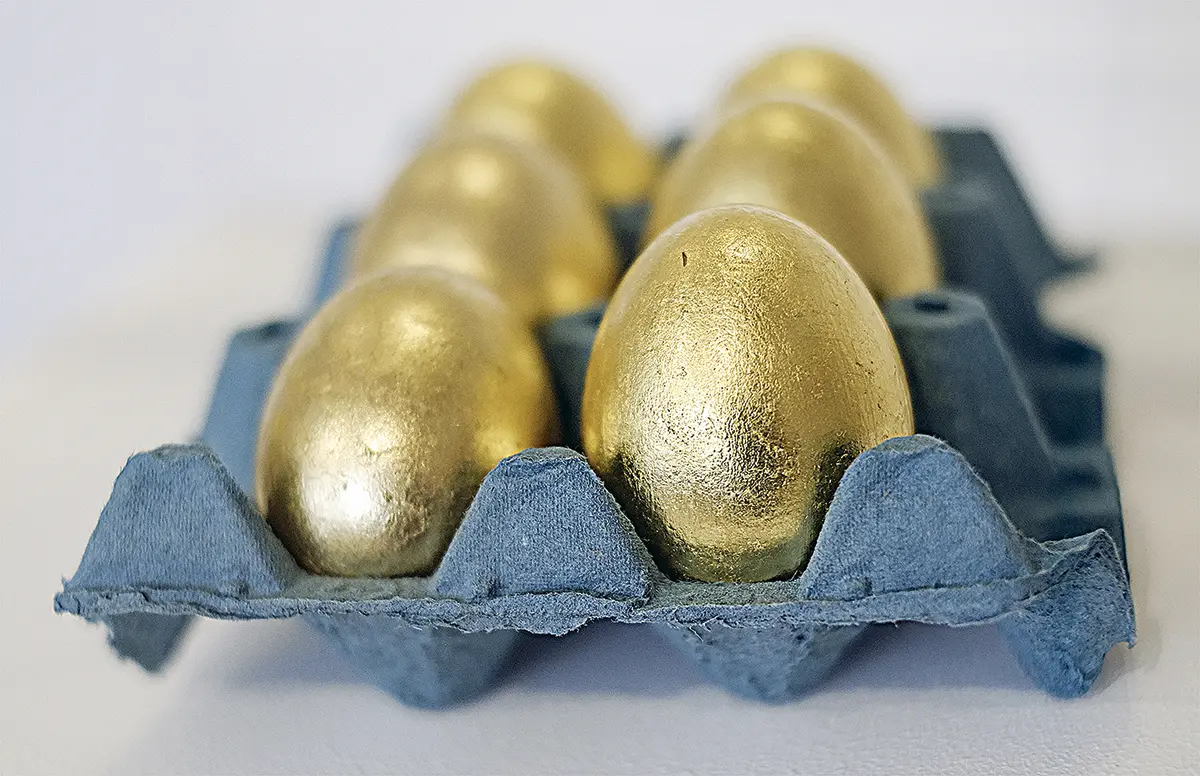
Victoria Cabezas has explored the issue of masculinity, among others, since the early 1970s. Her images, sculptures, and installations are highly subversive of the male body. She covers it with bananas, transforms it into fantastical animals, and reduces it to an object for female desire. For example, El banano emplumado (The Feathered Banana), and Banana Cabaret (1973), along with other works included in this exhibition, remind us that hegemonic masculinity is a fiction whose materiality is broken when the symbolic value of the phallus is shifted, and the male body is displayed for the enjoyment of the observer. On the other hand, Priscilla Monge has demystified maleness and its archetypes; an exemplary work in that sense is Huevos de oro (Golden Eggs, 1998), which alludes scathingly to an emblem of virility. Monge has also probed the iconography and rituals of sport, the will to compete, and the drive to heroism, in order to establish areas of instability and contradiction within patriarchy’s hegemonic ideals. This can be seen in Pelota de fútbol (Soccer Ball, 1997), the series Pintura salvaje (Savage Painting, 1994), and the series Monumentos (Monuments, 2004).
The exhibition also emphasizes the representation of an autonomous female body, one that is free in its eroticism and pathos. In both Cabeza’s and Monge’s works, female corporeality is destabilizing, since it is activated as a fetish for the observer. The artists dictate the mise-en-scéne of a female body that sets the conditions for its visualization and reception. This can be seen in Monge’s Dame lo que pides y pide lo quieras (Give Me What You Ask for and Ask for What You Want) and Sin título (Untitled), a silhouette of the artist in the shape of a gun (both from 1994). It can also be seen in Cabezas’ photographs from the series Mujeres, gatos y televisores (Women, Cats, and TVs, 1983), which articulates narratives that reclaim intimacy, her relationship with her own body, her space, and her cat.
Over the years, both artists have addressed domestic spaces and romantic relationships. Their works are expressions of current relevance of an artistic discourse based on personal universes and the unreserved unfurling of emotions, as a political instrument against normativity. This becomes evident in such works such as El beso (The Kiss, 1982), by Cabezas, and Dear Priscilla (1992), by Monge.
Besides, she begins from the awareness of naturalized violence of gender whose effects remain as indelible traces in the soul. Monge, an heir to the hybridization of languages and categories that dilute modern essentialisms, uses her experiences as well as those of other women to create works that fuse everyday objects with discourses on female subjectivity, patriarchal power, and aggression. Works like Bailarina (Dancer, 1999) and Instrumento de medición (Measuring Instrument, 2014-2015), make this clear, as do her self-portraits from 1996-1997, clad in a paper doll outfit and a blood-colored flower print dress.
Finally, starting from the idea that the focus (in the photographic) and also the way of seeing have been historically constructed under the influence of patriarchy, determining the need for high clarity in the visual field as an imperative of normativity1. Since in some photographic works by Cabezas and Monge there is an oscillation between absolute sharpness and concealment or glazing of the gaze, it is propitious to interpret how these artists seem to play with the gaze and the visual field.
On the one hand, Cabezas focuses on the male body, perhaps to center the attention on its contradictions; instead, she uses manipulation techniques, solarization and pictorial effects to blurry the vision of her own body in some photographs. This veiling procedure seems to enhance fetishization and simultaneously function as a form of resistance. On the other hand, Monge uses clarity to emphasize the documentation of actions and details that have to do with metaphors of violence; however, in images of her series of Polaroids as Ella apagó la última llama que quedaba (She Extinguished the Last Flame That Remained, 2017), she denies the gaze and blocks it, forcing us to imagine another reality. This procedure can also be an act of subversion, since the artist has referred to Susan Sontag, who affirmed that the photo aestheticizes everything, including violence.
It is a fact that in a time like the present, when normative fundamentalisms become more and more entrenched and cast a sinister shadow over our societies, Ejercicios de autonomía comes to remind us that contemporary art and curatorship serve as strategic counterattacks, as site to make conflict visible and to fissure and disrupt the functioning of repressive dominant discourses.
NOTE
1. See: L. Smith (1992), “Focus Politics: Feminism and Photographic Theo.”. In: Photographic Theory. London: Wiley Blackwell.
ROBERTO GUERRERO MIRANDA