Resulting from a collaboration between the Jumex Collection and Fundación Televisa, Scripted Reality has television as its protagonist, as it reviews the medium’s impact on everyday life and contemporary visual culture. The show was curated by Kit Hammonds and Adriana Kuri Alamillo, Curator and Curatorial Assistant at Museo Jumex, respectively.
From its earliest days and everywhere in the world, television has been a medium for both the circulation of information and the forging of identities. Scripted Reality brings together works by artists from the Americas, Europe, Asia, and Africa who engage television as an object, a subject, and a medium.
The exhibition comprises installations, photographs, sculptures, and video. In the latter category, there are two distinct aspects: artworks created for TV broadcasts and commercials, and three “channels” for artist videos with programs that explore specific forms and genres and refer to our everyday experience of television.
A significant selection of Latin American artists is included, all with important international careers and with works in either the Jumex or the Fundación Televisa collections.
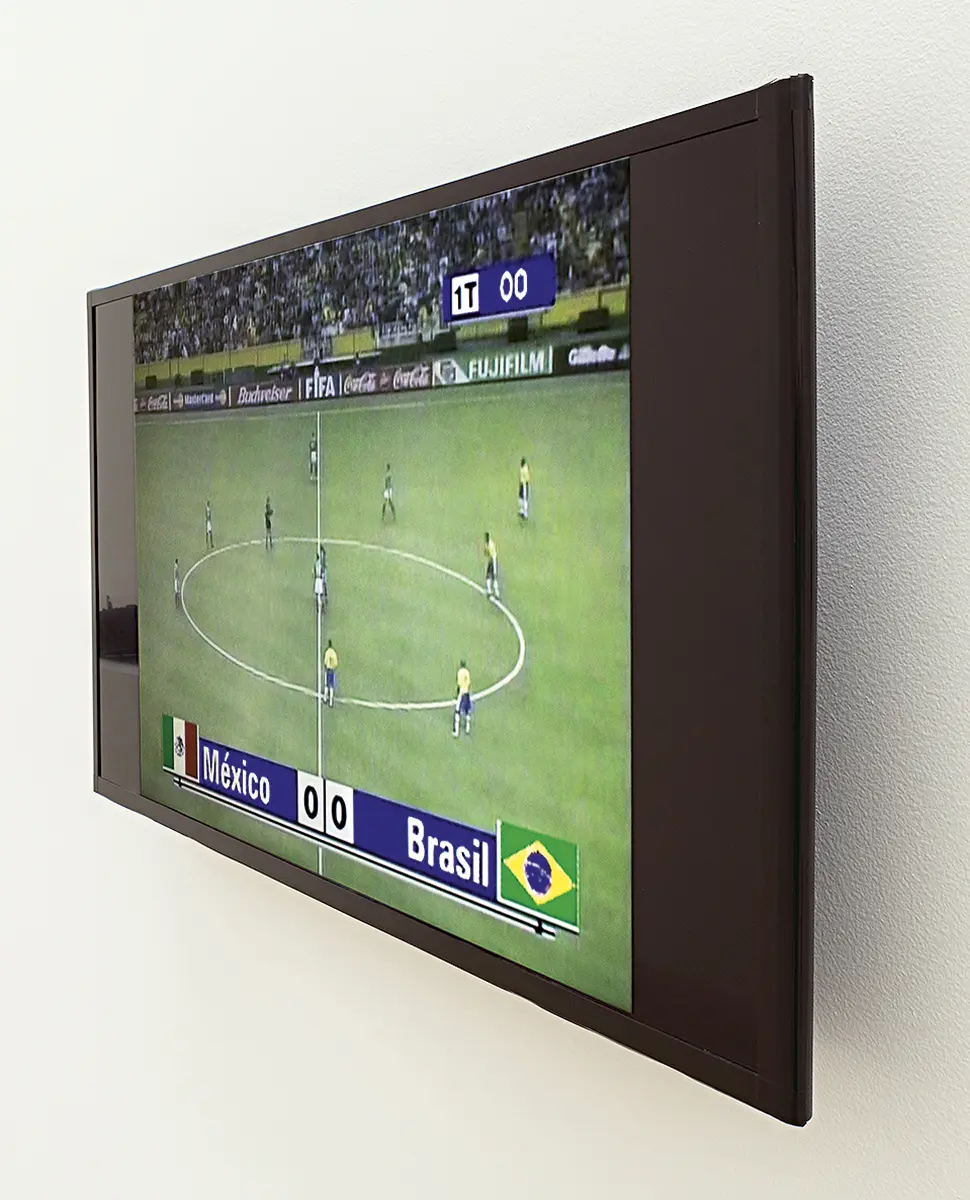
These artists’ approaches to the subject vary widely. For instance, in México vs. Brasil (Mexico vs. Brazil), Miguel Calderón (Mexico, 1971) engages the many defeats of his country’s men’s national soccer team against Brazil in a comic vein, transforming the collective desire of Mexico fans’ into an epic, cathartic triumph: the final score is 17-0. Calderón brought the work to the 26th São Paulo Biennial as part of the Mexican delegation. He represented the country›s art, and also the dreams of millions of his countrymen and women who got a chance to witness their team beat the Brazilians, famed as the world’s best in the sport, the inventors of jogo bonito (beautiful play), and with an overwhelming score to boot. Thanks to painstakingly detailed editing, Calderón recreates the regulation 90 minutes of a soccer match, with the voices of usual announcers as its soundtrack. In order to bring his work to the public, Calderón projected the video in a São Paulo bar, capturing the attention of patrons who could not believe what they were witnessing, and with taking everything with great humor when it was all revealed to be a work of art.
In contrast, Abigail Reyes (El Salvador, 1984) eschews any comic stance as she distills hours of Latin American telenovelas into a four-minute-plus edit of the phrase “sí, señor” (“yes, Sir”) pronounced by female actresses playing secretaries. Different vocal and emotional pitches are on display in Reyes’ video, which offers a meditation on hierarchy and gender stereotypes in the enormously influential telenovela genre.
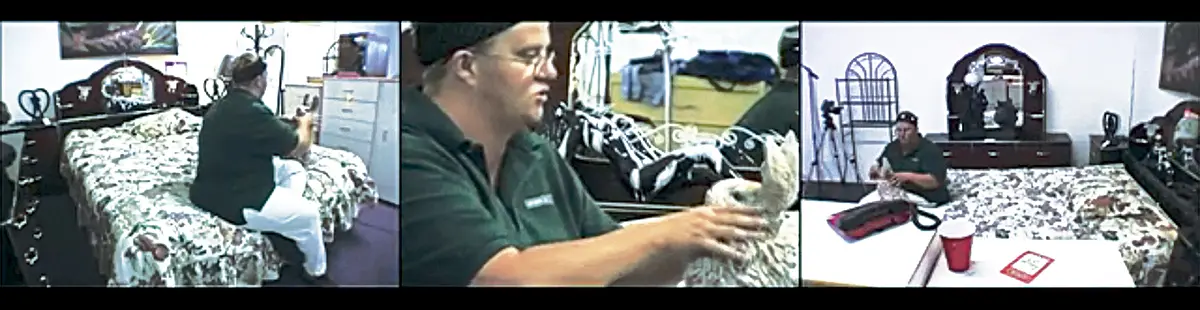
Also revisiting telenovelas as an exploration of society, Yoshua Okón’s New Décor is a three-channel video that turns reality into a stage, inviting customers in a furniture store to recreate scenes of their own lives in a telenovela format, using the furniture displays as their set. The attention of the camera turns these people, mostly afflicted and anguished, into fictional characters, blurring the border between real life and fantasy that a screen creates typically. Already in the 1960s psychologists posited role-playing as a therapeutic instrument, with patients representing themselves or someone else in order to work through a conflict. Okón gives the camera the therapist role.
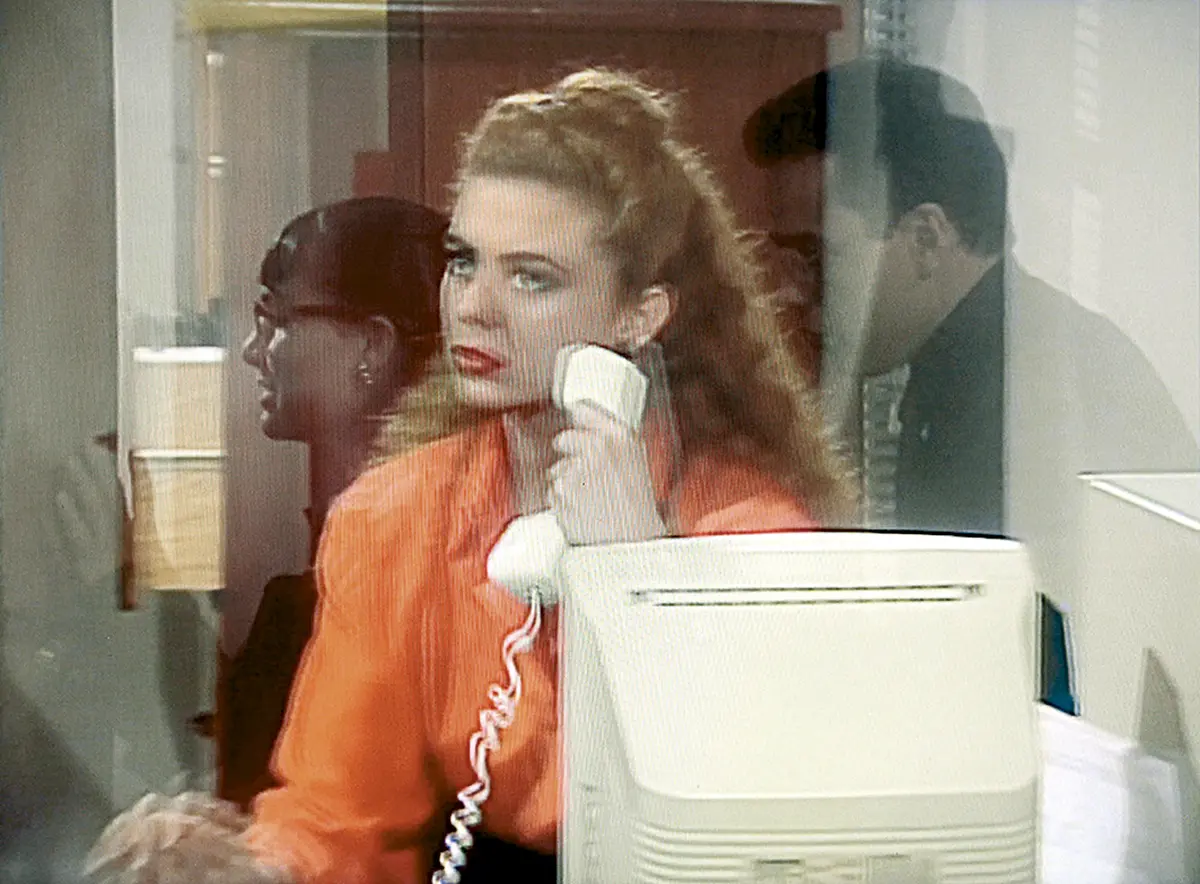
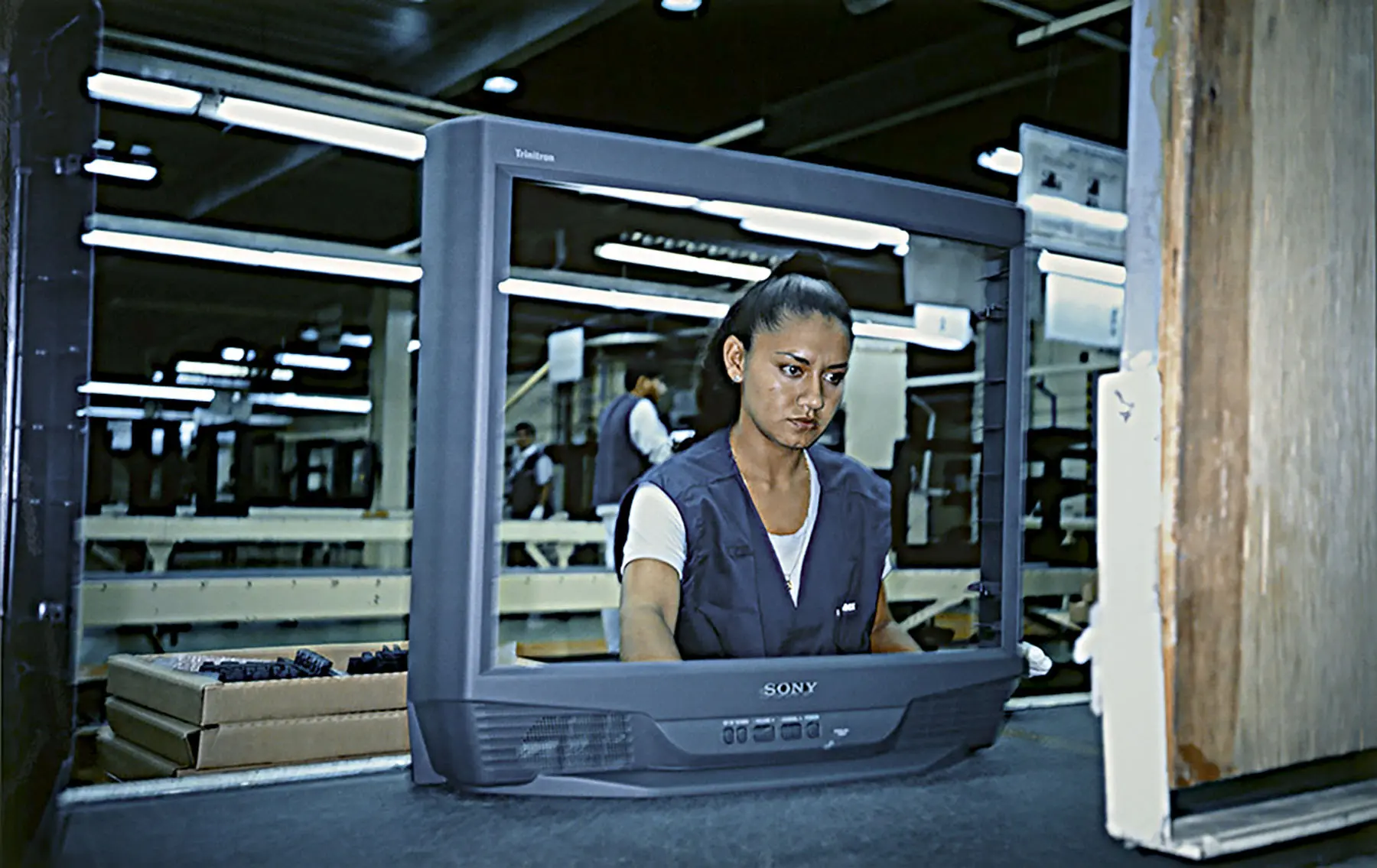
Another work with political undertones and a considerable sense of irony is Chica TV, by Carlos Amorales (México, 1970). Amorales visited a maquiladora (a manufacturing plant established in a tax-free zone near the border, servicing foreign industry) to portray one of the female workers assembling TV sets, and captured the precise moment when the woman appears framed by the screen of her product, like the protagonist of a show—a somewhat remote reality for someone who works long hours with scarce opportunities for advancement, in a monotonous environment devoid of entertainment (a concept that is connected to television).
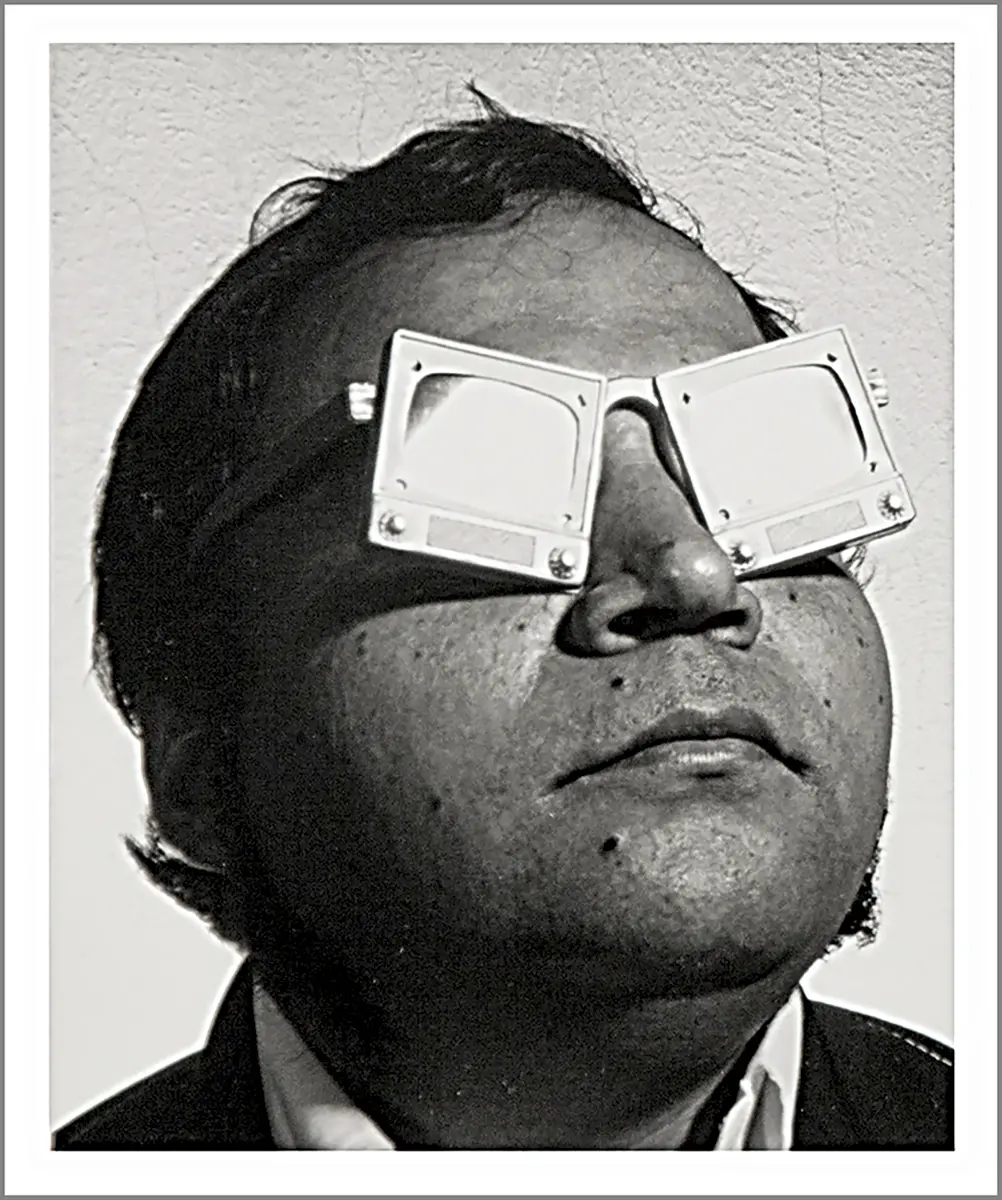
The versatile artist Melquiades Herrera (Mexico 1949-2003) and the photographer Javier Hinojosa (Mexico 1956) joined forces in a spirit of playfulness, in 1986, to create the series Las fases de Melquiades (Melquiades’ Stages). Herrera, a performance artist, creates versions of himself, like a magician with many tricks under his sleeve, characters that resemble those that used to appear in fantasy-filled children’s programs, using in his transformation such outrageous props as a pair of TV-shaped eyeglasses.
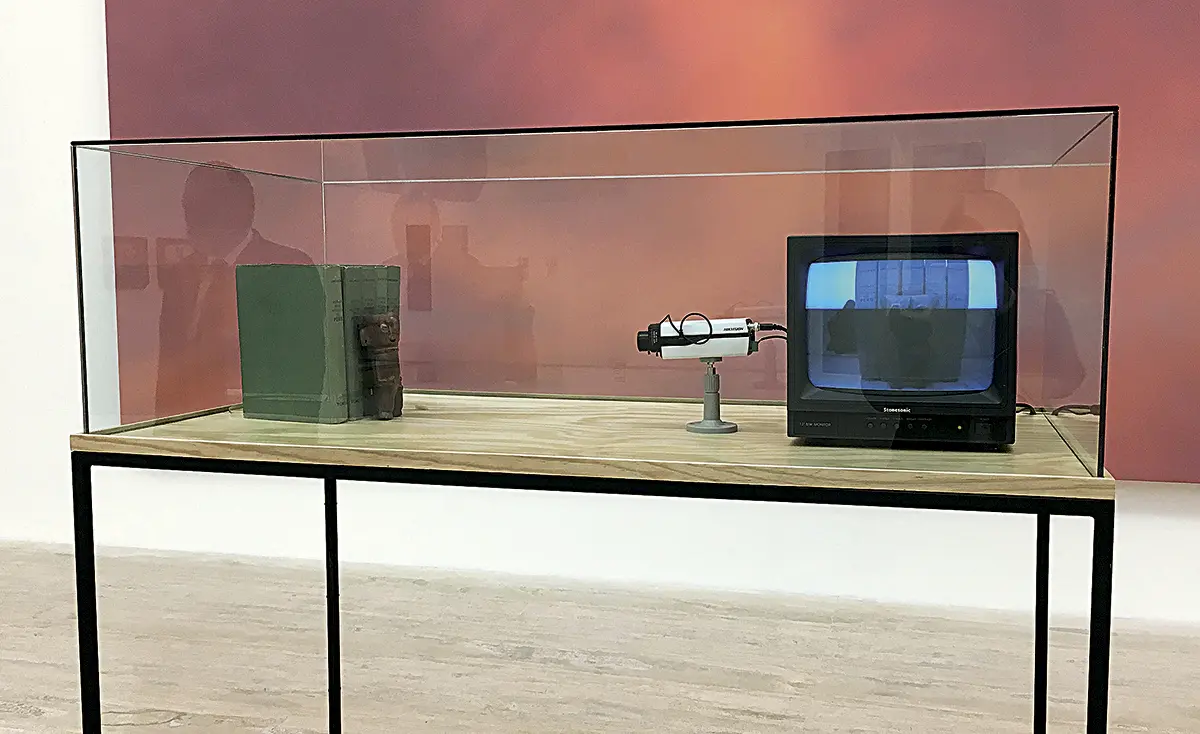
Television has also been a kind of filter for history, validating certain images, repeating them, and providing for them a seeming certitude. We see this in the work of Fernando Bryce (Peru, 1965), where a camera projects on a nearby TV four volumes of historian Jorge Basadre’s Historia de la República del Perú, published in 1939, alongside a small pre-Columbian sculpture, all of which turns the screen into a mediation between viewers and national identity. On the one hand, it distances from the objects, be it in libraries or museums, yet, at the same time, it brings them closer with the increased accessibility of the image at the push of a button.
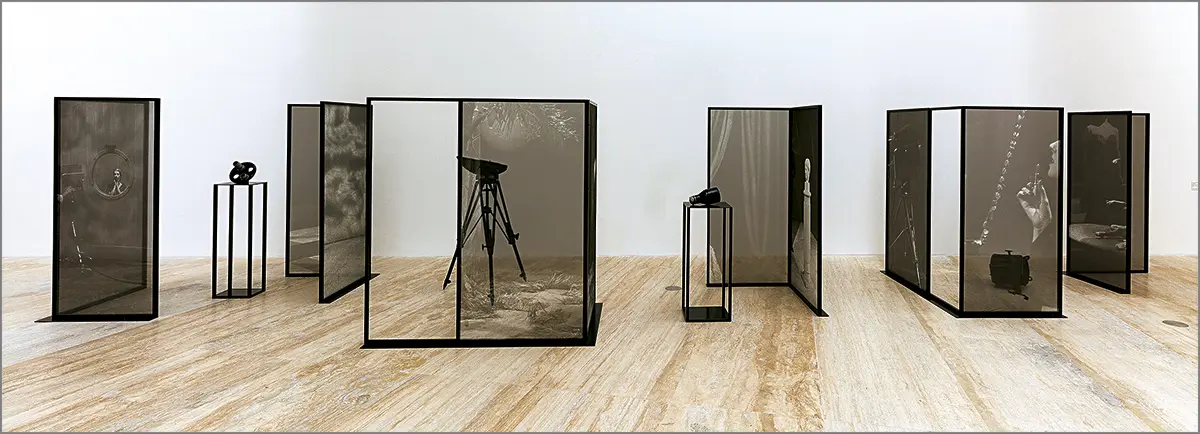
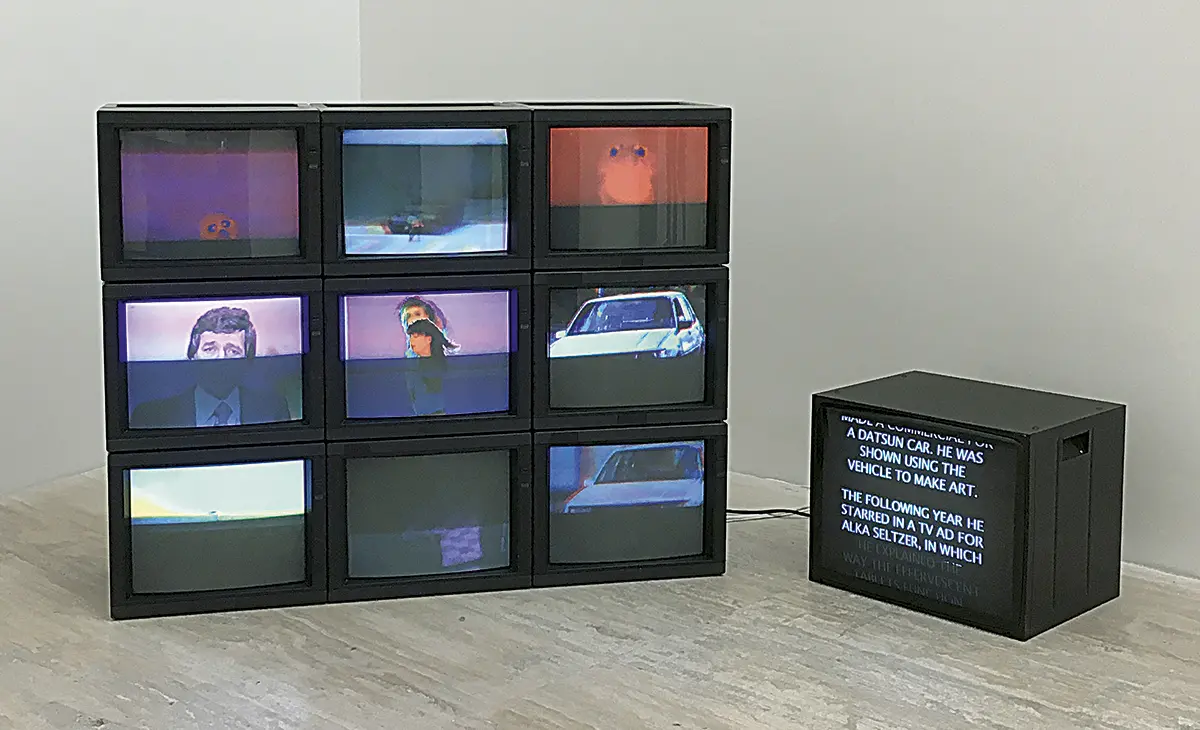
Works by Jorge de la Garza (México, 1978) are often imbued with his passion for photography and film. In his installation Cut & Fade, de la Garza revisits the photographic work of Ángel Otero, who shot portraits of many TV and stage stars in the 1950s and 1960s Mexico, combining it with film equipment of the era to capture a nostalgic feeling rearranged as an idealized staging.
In line with the approach to television as an object and a medium, Me está cegando todo ese color (Notas sobre el comienzo del final del videoarte) (All This Color Is Blinding Me [Notes On The Beginning Of The End For Video Art]), is a video essay about the construction of meaning by means of obsolete aesthetics and strategies, signaling the collapse and displacement of time and of means of production. The result is a collage of historical video-art images based on artistic interventions on TV programming, which now function as time capsules in a difficult-to-exhibit format that highlights the obsolescence of technology as time passes.
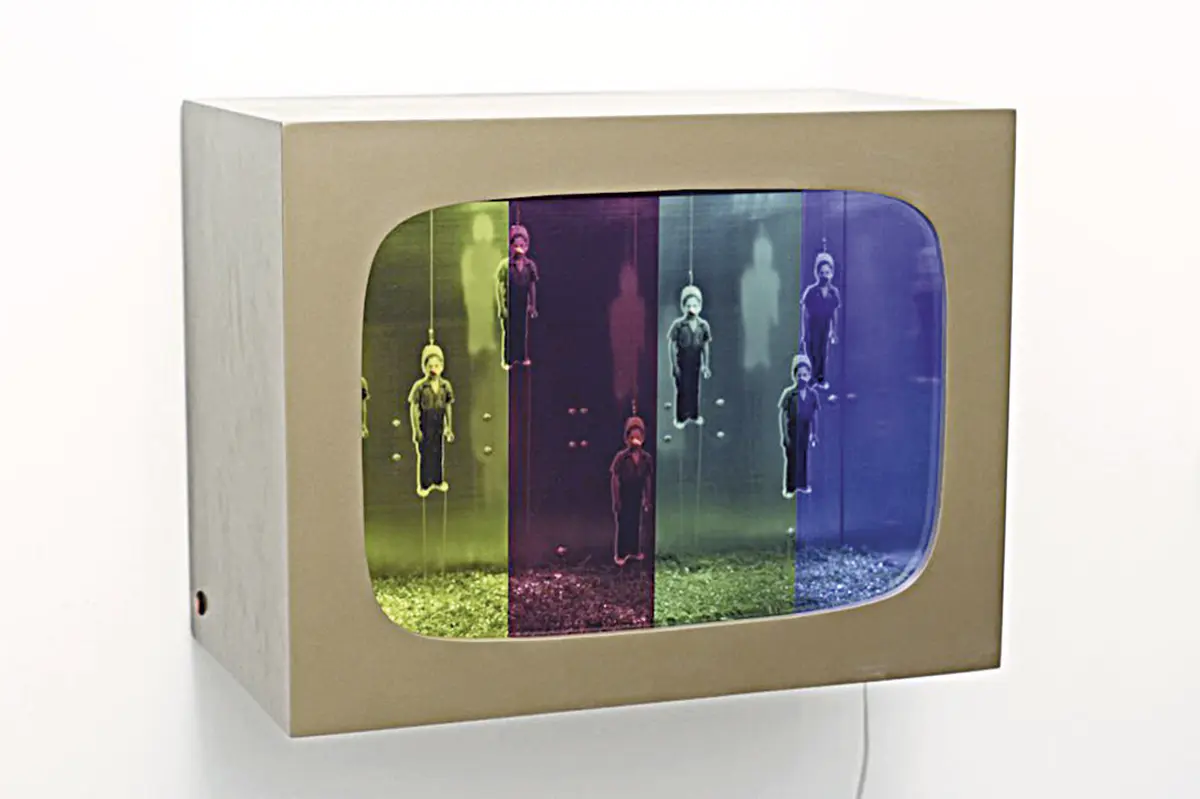
With a personal approach towards his local culture and to television as an object, Marepe (Marcos Reís Peixoto, Brazil, 1970) creates an installation that connects his childhood memories of the Brazilian Northeast, the region’s traditions and festivals, and the interactions between local culture and Western imports. In Periquitos (Parakeets), the artist depicts a TV that at first seems to be set to the saturated-color bars of the NTSC test pattern; yet, as viewers look at it in more detail, they discover some photographs of the artist at the age of six. Marepe wanted to capture the memory of how in his economically disadvantaged native region, people would cut out color acetate sheets and put them in front of their black-and-white TV screens, to watch it in color. Creativity has always triumphed over scarcity.
The title of the exhibition, Scripted Reality, alludes to current Cultural Studies theories that explore how television reflects life on a screen, while at the same time shaping experience and behavior, becoming a means to forge the collective imagination and visual identity through programs that left their imprint on whole generations. Television has also been an opinion leader, society’s primary influencer.
The power of the image is firmly ensconced at the center of our social life. More and more, we invest our free time in front of a screen, especially as reality shows and social networks proliferate. Thus, the reality is transformed, and the images created are absorbed and become a regular part of our everyday experience.
ISAURA RUIZ