As an artist and researcher, Emilia Azcárate (Caracas, 1964) explores various aspects of the individual and society as a starting point for her abstract work. Conceptually, it is nourished not only by the personal and spiritual but also by the historical, social, and political. For that reason, it is not strange that, upon discovering a book about caste painting during her first visit to Mexico, in the summer of 2015, she was interested in the subject and developed the Genealogy of Color series, recently exhibited at the Henrique Faria Fine Art, in New York.
It was precisely Faria who recommended her to do a residency in La casa de los perros, Apaseo el Grande, near Querétaro. As she remembers, upon her arrival in the Federal District she was surprised not to see people of color.1 Being Venezuelan and a descendant of a multicultural family—her father is Spanish; her mother is Mexican, and she was born in Venezuela— she was surprised by the lack of ethnic diversity. When commenting to her hostess, the lady showed her a book, on whose cover was illustrated the painting The Moorish Miguel Cabrera. She also commented that her grandmother, Mrs. Lydia Sada de González, had been an important collector of caste paintings and that she had produced that book.
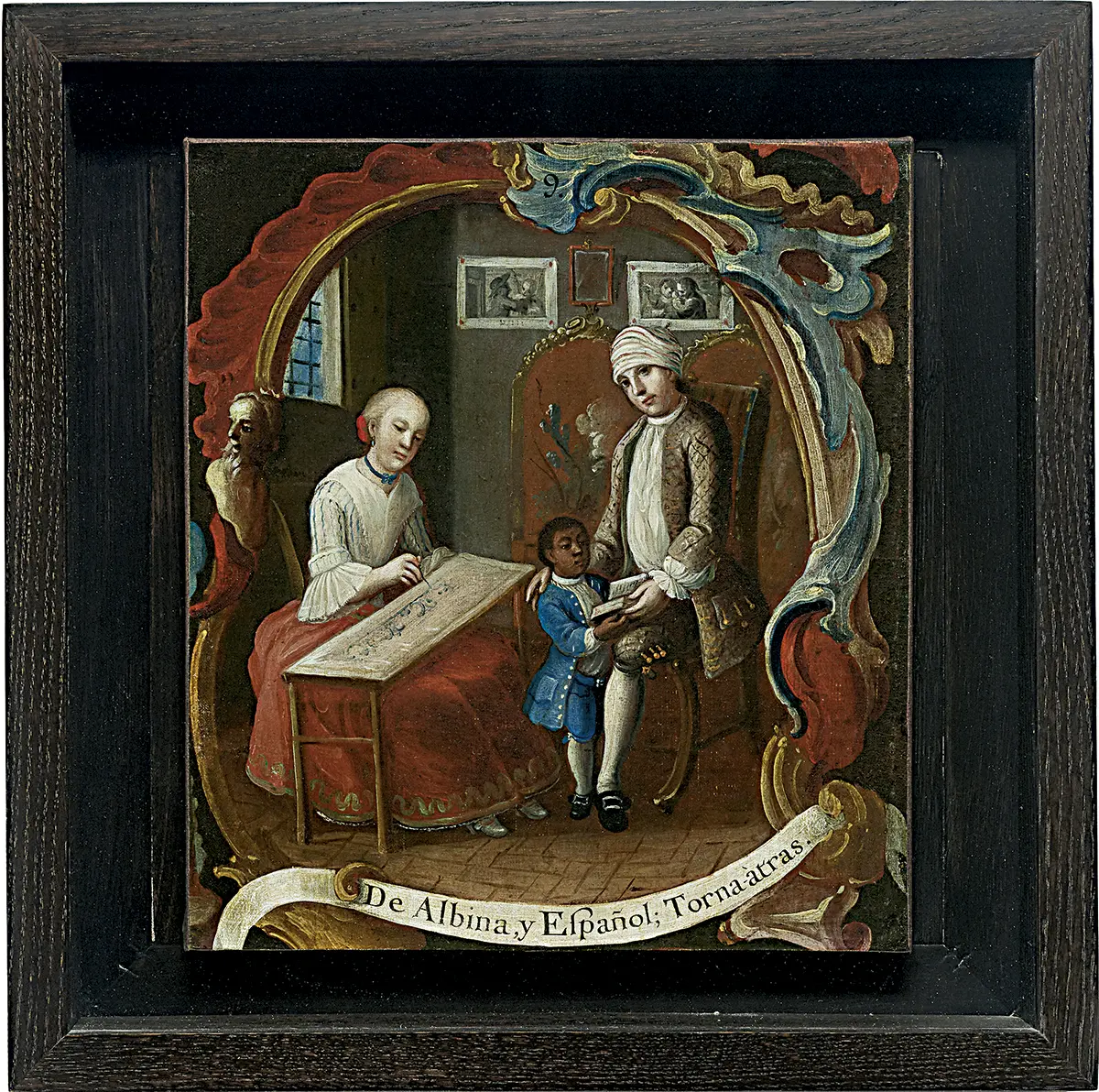
The fact that in the eighteenth-century paintings documented in detail the process of miscegenation seemed extremely interesting, so she decided to investigate thoroughly. Luckily, the two most important collections of caste painting were within reach because the first one is in the Museo de América, in Madrid, and the second one was donated by Dona Lydia to the Museo de Historia Mexicana, in Monterrey.
The origins of this pictorial genre go back to the viceregal societies of the 18th century, in which, as part of the Bourbon Reforms, the Spaniards classified the racial composition of the American population according to the different crosses of “races.” From the three original groups—Spanish, Indian, and black—different mixtures emerged that were documented by artists of the time, mainly in the viceroyalties of New Spain and Peru. In addition to illustrating the process of miscegenation, the works became essential testimonies of the daily life of that historical period.
In the book Casta Paintings. Images of the Race in Eighteenth-Century Mexico, Ilona Katzew, Curator of Latin American Art at the LACMA (Los Angeles County Museum of Art), explains: “The production of paintings of castes covers the entire eighteenth century. These paintings represent the complex process of miscegenation produced among the three main groups that made up the colony: Indians, Spaniards, and blacks. Most of these paintings are composed of sixteen scenes represented on separate canvases, although they sometimes appear on a single surface divided into compartments. Each scene shows a man and a woman of different races with one and, occasionally, two children, and carries an inscription that identifies the racial mixture represented. The series follows a specific taxonomic progression: at first, the scenes represent subjects of ‘pure’ race (meaning Spaniards), luxuriously attired and performing occupations that point to their privileged social class. As the racial mix of families increases, their social status decreases. In addition to presenting a typology of human races and their occupations, the paintings of castes also include a rich classification system in which different objects, food, flora, and fauna are carefully placed and identified through written texts.”2
As her research progressed, Azcárate discovered that the concept of miscegenation in caste painting was much more than a complex classification system. While the criollos acquired wealth and sought greater political power, the Spaniards created laws that exempted from privilege those who came from a racial mixture. It was not only a question of cataloging and documenting the different “crosses” but, in the end, the Spanish Crown exclusively hierarchized the viceregal society to keep itself in power.
In her search for understanding the complex theme of mestizaje in caste painting, the artist was interested in the color theories of Isaac Newton (1643-1727) and Johann Wolfgang von Goethe. As she explains, “the first printed color theory was Opticks (1704) by Isaac Newton, which determines—in a simplistic way—that the primary colors seen through light are yellow, blue, and red. All the other colors are born from those three basic colors—which are curiously the colors of the flag of the Gran Colombia and therefore of the Venezuelan flag. Since I always work with schemes, with systems, and in an orderly way, I decided to assign a primary color to each of the [pure] races: yellow corresponds to the Indian, blue to African, and red to Spanish. I started experimenting with that formula, and I created, from different combinations, specific tones for each one of the castes. For example, from the crossing of an Indian (50% yellow) and a Spanish (50% red) the mestizo was born, represented by a lower tone than the magenta. That is how I developed my own language.”3
In this new Pantone, created by Azcárate, each one of the color mixtures—made by hand by herself—corresponds to one of the castes: mestizo, castizo, mulato, morisco, albino, cuarterón, torna atrás, albarazado, tente en el air, lobo, cambuja, sambaigua or sambo, calpamulato, givaro and coyote. It is important to note that these names change according to the region, and even according to the painter, so, when performing each of her works, the artist is faithful to the terminology used in the original painting that inspires her.
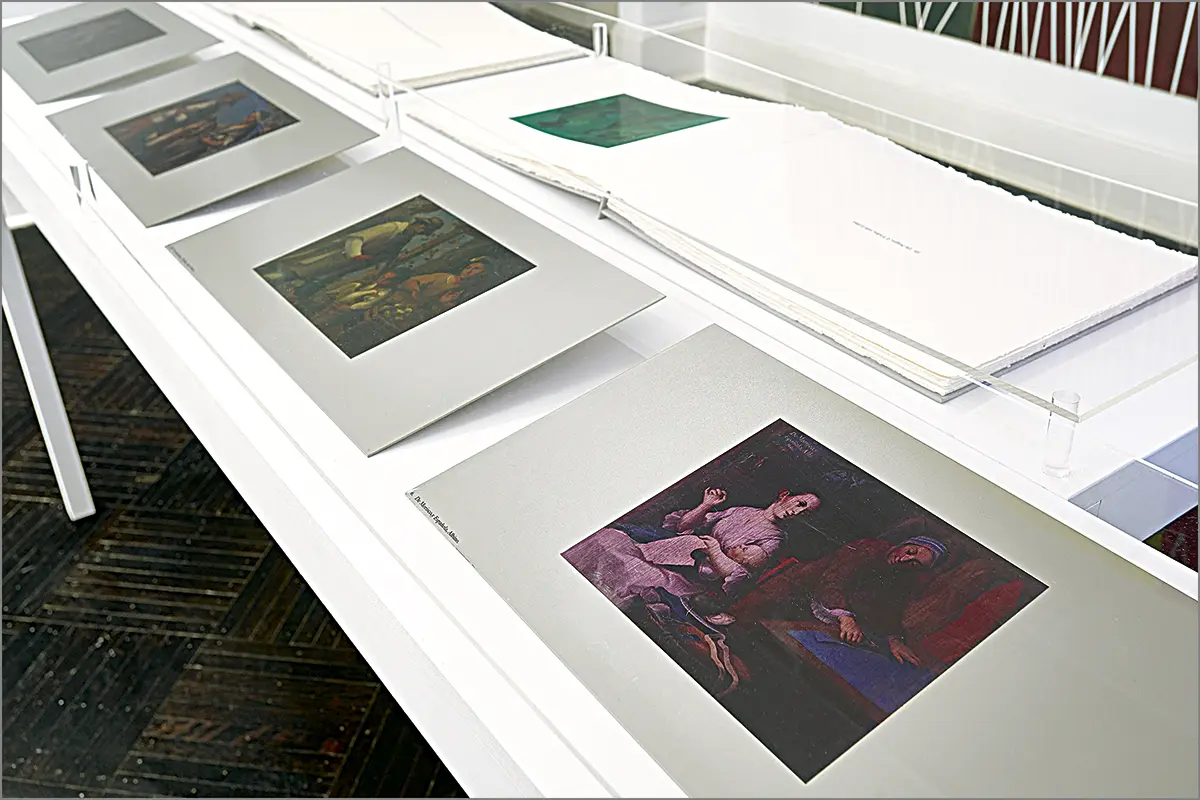
Once the color guide was established, she faced the dilemma of how to convey such a complex theme through an abstract work. It was not just about representing the idea of caste or racial mixture. The portraits have a great anthropological and ethnographic value because they show a lot of details, including, among others, ways of dressing, crafts, food, and also examples of native vegetation. Azcárate decided to produce two books: one based on a series of paintings by the Mexican artist José Joaquín Magón, and another one, inspired by the works of the Peruvian painter Cristóbal Lozano, both belonging to the collection of the Museum of Anthropology in Madrid. For these first works—Untitled (stainless steel series) (2016) — he photographed the original caste paintings, printed them with inkjet, and converted them into monochromatic works by assigning each one the tone corresponding to the caste of the couple’s son or daughter. Through this simple formal exercise, she subverted the very purpose of caste painting by giving the three figures of the image the same “skin tone.”
From there, she decided to do a series of exercises in which the figurative image disappears using only the representative tones of the different castes. She went to a mechanical workshop in which, as the artist recalls, “I met ‘Chiqui,’ an Indian character, half black, who has a dozen brothers and sisters, among whom I was struck by one of the sisters with a white complexion and green eyes.” She remembers that “entering the workshop was like entering a series of total caste paintings!”4 She worked three months in the making of new pieces. First, she drew them and made several books in copper and alpaca, reusing aluminum plates that had been left by one of the artists who had previously been in the workshop.
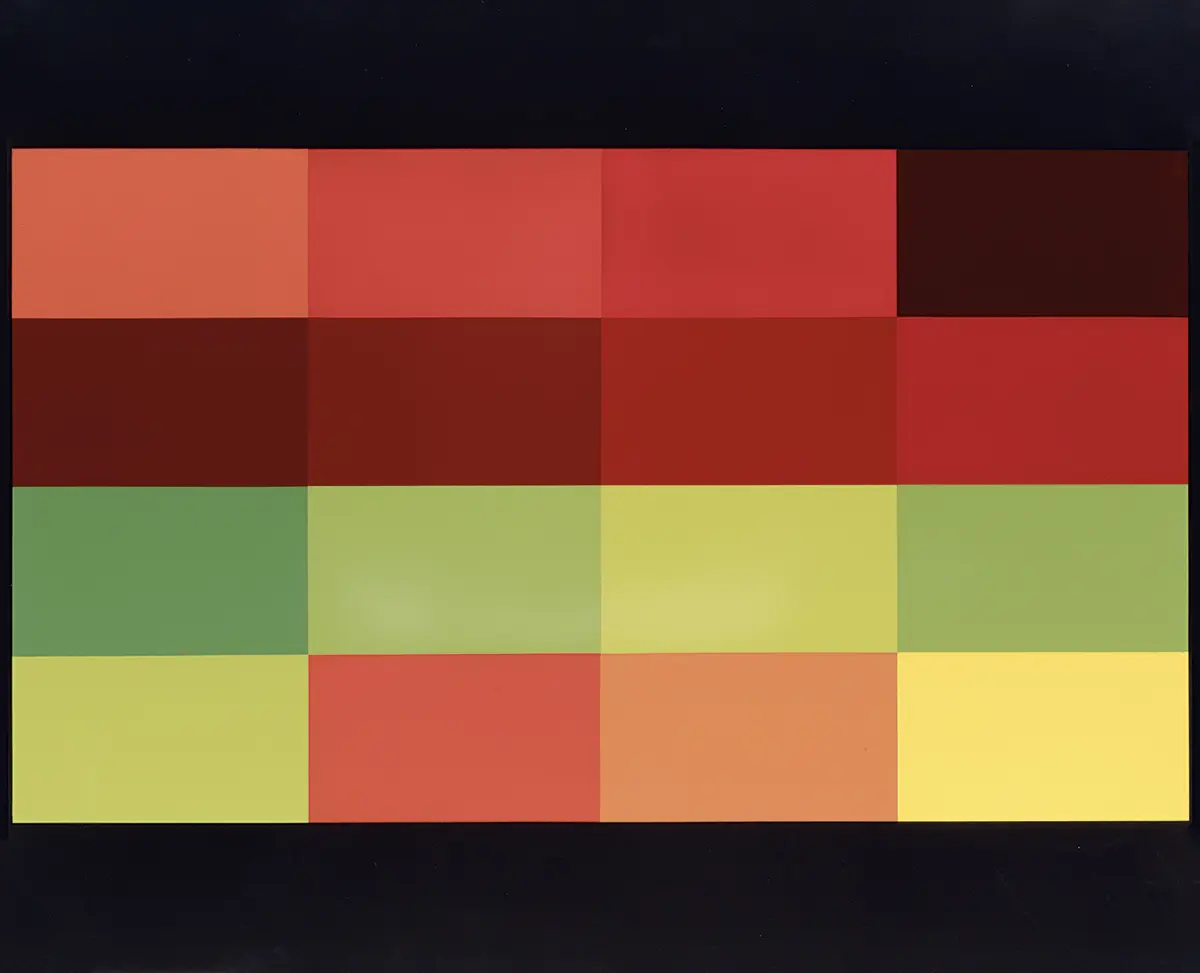
Then she produced abstract works, applying polyurethane on the same aluminum plates, in which each colored rectangle represents a caste painting made by an artist or a pictorial school—Untitled (Andrés de Islas Series) (2016), Untitled (Luis de Mena Series) (2016) and Untitled (Escuela Mexicana Series) (2016). In these works, the colors appear separated by reticles, not only for a formal aspect but also for the symbolism that the “limits” imply, particularly racial, political, economic, and social barriers. Each of these pieces includes the same number of paintings as the series that inspires them. For example, in the case of the work based on the caste paintings by Andrés de Isla, Azcárate includes the sixteen castes that result from the basic mixtures of the original taxonomy. The dark bands that frame the rectangles of color draw attention. According to her, “the black edges result from combining the three primary colors in equal proportions. They are not black-blacks. In fact, it is possible to distinguish between the different variations. It is a formal exercise. These frames also correspond to the proportion of the Mexican flag.”5
The fact of differentiating or judging someone by the tone of the skin is a complicated issue and surprisingly remains valid in the XXI century. The racist attitudes that exist today add to the xenophobia and migration problems that lead to extreme proposals such as the construction of the Melilla Wall, which forms part of the border between Morocco and Spain, in North Africa, or the wall of the border between Mexico and the United States, proposed by the current president Donald Trump.
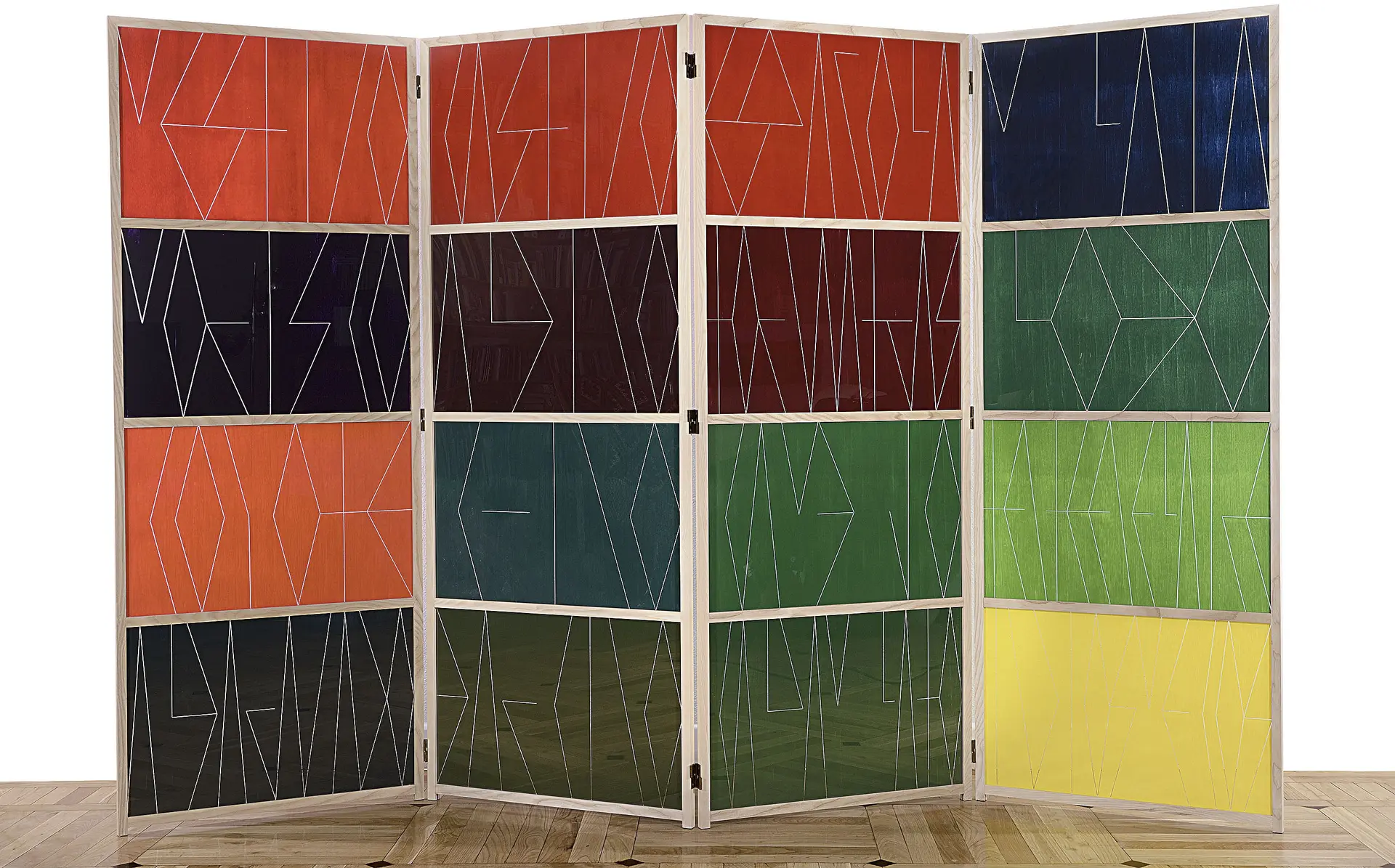
The idea of the “wall” serves as inspiration for the work Untitled. Folding Screen (Andrés de Islas Series) (2017)—a four-panel screen made of acrylic, wood, and metal. Each panel is composed of four rectangles that correspond to four paintings of castes by the Mexican painter Andrés de Islas and represent the color corresponding to the caste of the couple’s son or daughter.
Unlike the previous series, each quadrangle has the name of the caste written with fine transparent lines in an alphabet created by the artist, which only she or who knows the correspondence of each of the letters can decipher. The screen, typical in the decoration of Mexican homes in the eighteenth century, is not very high and, therefore, it does not give the feeling of being an obstacle, although it serves to divide or hide what is behind. When approaching it, the spectator realizes that through the transparent letters he or she can see towards the other side. Conceptually, Azcárate addresses the ineffectiveness of the bordering walls, which in one way or another the immigrants manage to cross, and suggests dialogue as an alternative to solve conflicts.
When asked about the alphabet, which has a primordial role in her work, both at a formal and conceptual level, the artist explains: “I created the alphabet precisely because I have a hard time writing. In 2014, I acquired old typewriters, and with them, I made drawings on paper, similar to the works of concrete poets. Since all my work has laws, I chose to design letters without ‘barriers,’ that is, without outside lines. All the letters of my alphabet are framed in a grid, but their limits are not part of them. Besides, it is a script that does not include spaces between words. In the case of the pieces of ‘Genealogy of Color,’ inspired by caste paintings, I reproduce exactly what the painter writes in the original painting, even with spelling errors.”6
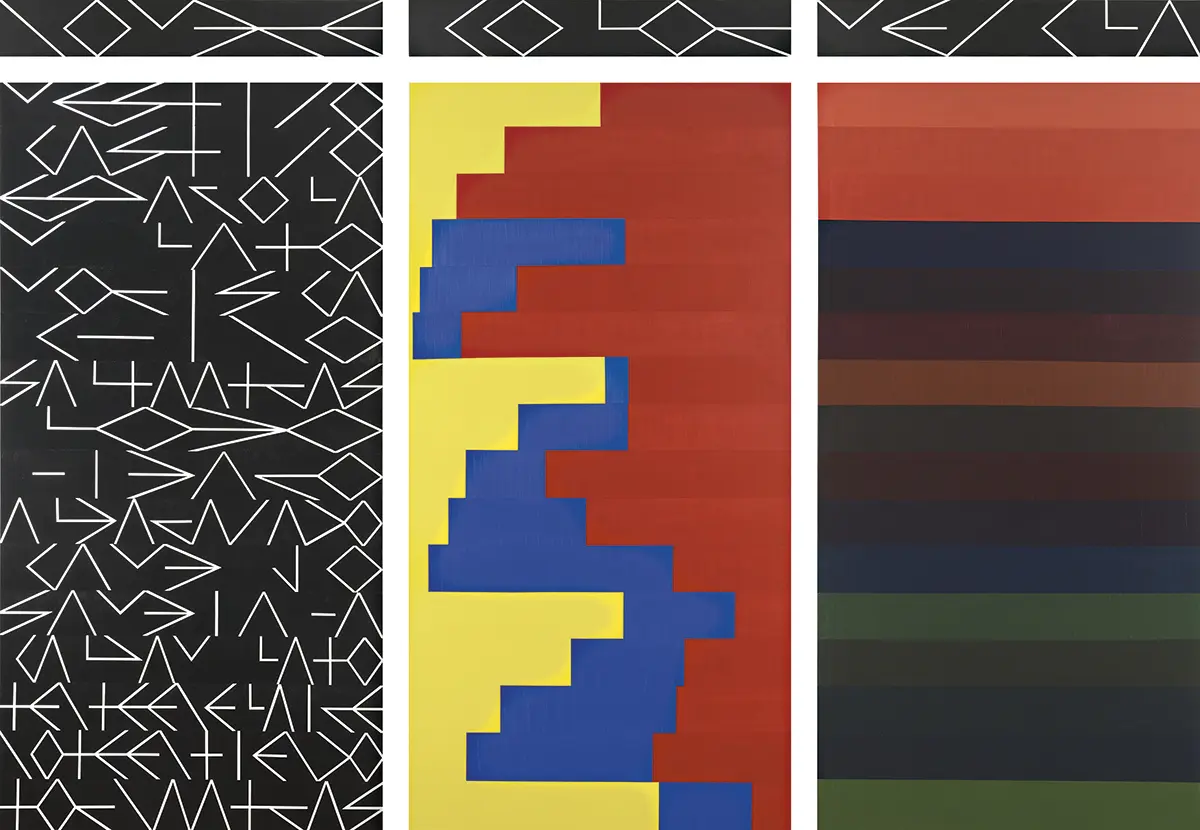
The work Untitled. Triptych (Mexican School) (2017-2018) works as a kind of the genesis of the project: on the first canvas, she lists the names of the sixteen castes written with the codified alphabet; on the second one, as a bar graph, she presents the primary colors—yellow, blue and red—in the proportions necessary to create the tone assigned to each caste; and, on the third one, she shows the sixteen color bands that result from the corresponding mixtures. Although in principle the piece works as a kind of guide to understand the series, the truth is that few can decipher it, especially as far as the language is concerned. In the end, it is an abstract work in which the formal aspect predominates. The meaning or interpretation that each one makes of it is not limited. On the contrary, it is about generating questions and delving into the subject matter from a visual proposal.
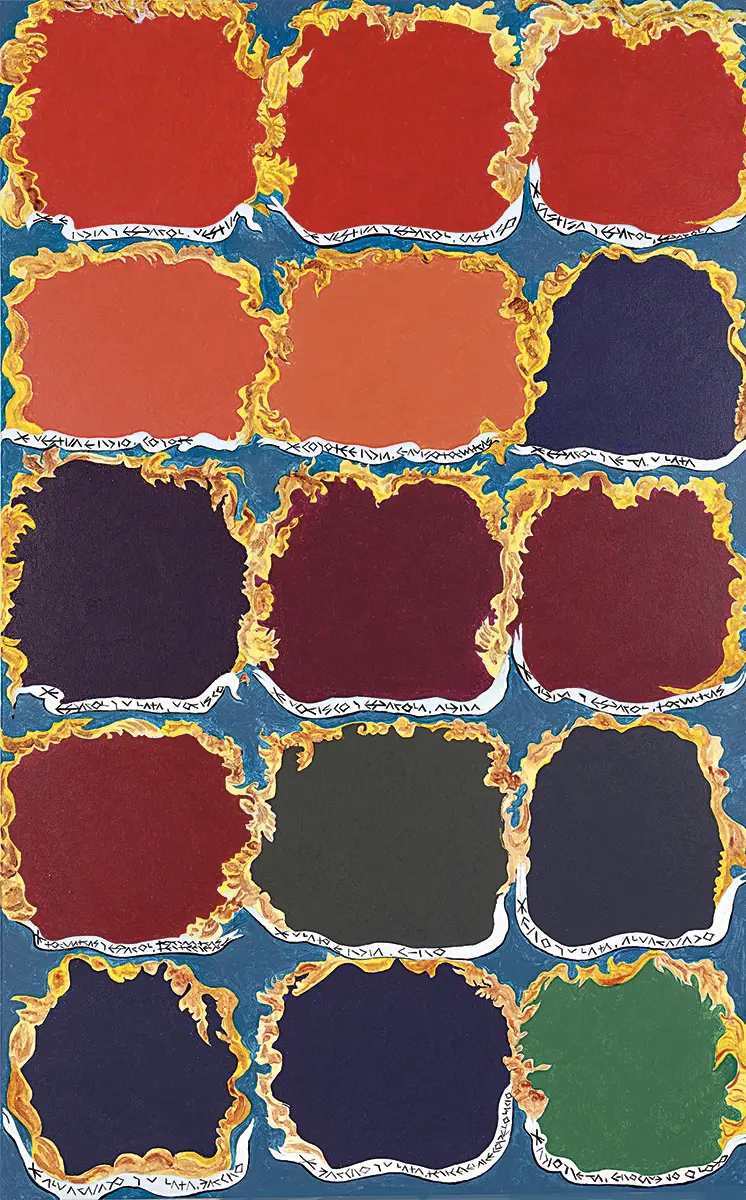
Although the majority of caste paintings were conceived as independent works within the same series, some artists documented them in a single canvas. Azcárate was inspired by fifteen paintings by José de Páez —shown as part of the exhibition at the Henrique Faria Fine Art Gallery—in which the baroque frame stands out, to create Untitled (Baroque Páez Series) (2018). In this piece, the artist alludes to the decorative element of baroque paintings by giving the grid a more organic appearance, faithfully keeping the proportions and the elements of the original painting, including the rococo style aureoles, the borders, and the lower curvilinear stripes, in which the different descriptions of each of the scenes are represented.
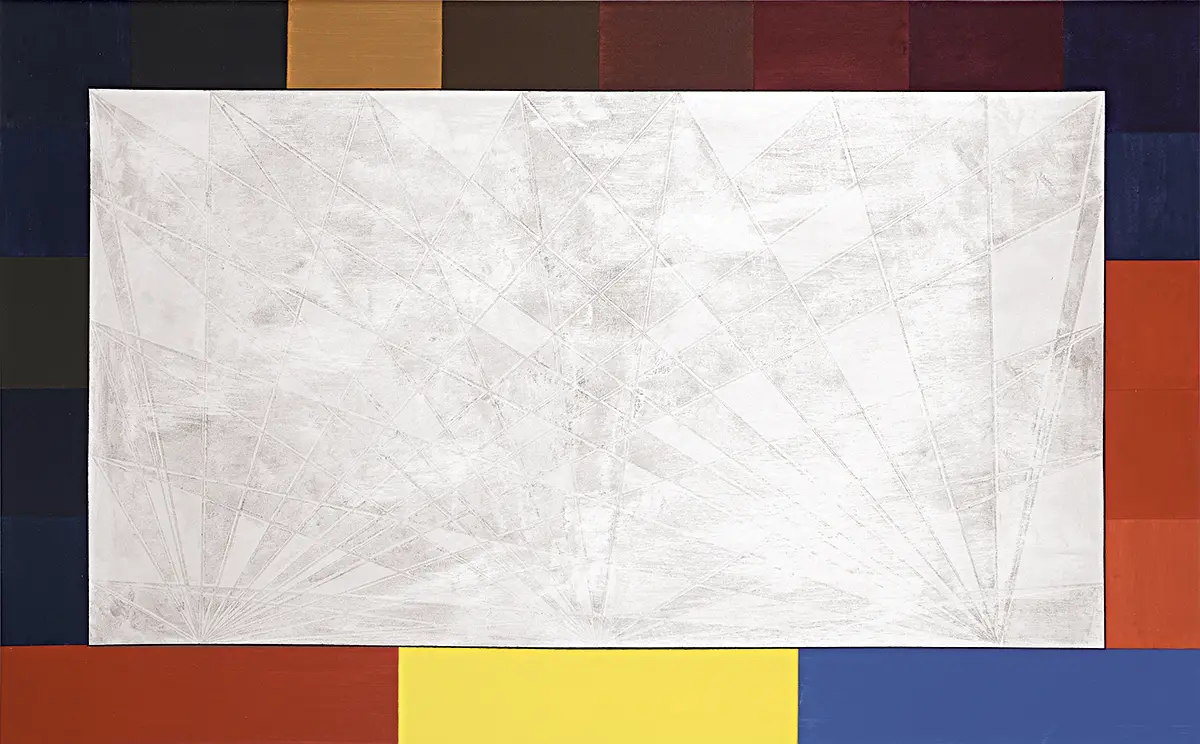
In two recent works, the colored rectangles that symbolize the castes are framed by yellow grids, in the case of the work inspired by the paintings of José Joaquín Magón, and white, in the piece based on the paintings by Miguel Cabrera. In the latter, Azcárate decided to experiment with placing more white ribbon grids, so that the color Pantone is covered by vertical lines, creating an optical effect. Without thinking, the piece acquired a geometric abstract character that recalls the Coloritmos by Alejandro Otero. At the same time, the artist plays with the theory of color, since white results from the mixture of the three primary colors according to Newton, which may mean that, since all the tones are combined, there is no way to differentiate or define the “race.”
The process of formal experimentation continues by inverting the areas of color, that is, by painting the grids with the representative tones of the castes and leaving the resulting rectangles blank. With this same formula, she creates Untitled (Clapera Map Series) (2018), with which she begins to study ancient cartographies. Colonial maps, like caste paintings, were made according to political, economic, and even religious interests, a subject that interests her and constitutes a starting point for new pictorial series.
In conclusion, as Juan Carlos Ledezma, curator of the exhibition, indicates: “it is this close-knit integration between discourse and painting that Azcárate unravels by means of a strategy that involves both painting and writing. Proposing that colonial discourse be reread anew under the terms of abstraction and that the caste paintings be re-perceived from the point of view of our postcolonial present, her double-sided approach adopts the discursive and visual condition of a past pictorial genre so as to reorganize it from within its own structural order—an order that Azcárate reinvents, which allows us new insights into our cultural past.”7
NOTES
1. Emilia Azcárate, telephone interview with the author, January 2019.
2. Ilona Katzew, Pueblos originarios (n. d.). Colecciones pictóricas y fotografías. Consulted January 30, 2019. https://pueblosoriginarios.com/recursos/colecciones/castas/castas.html
3. Emilia Azcárate, telephone interview with the author, January 2019.
4. Ibid.
5. Ibid.
6. Ibid.
7. Ledezma, Juan Carlos. “From Plane to Skin: Emilia Azcárate’s Tabular Painting.” The essay excerpted and redacted on the occasion of Emilia Azcárate’s exhibition at Henrique Faria, New York. The full essay will appear in the book Emilia Azcárate. The Genealogy of Color (Nashville: Turner, 2019).
FRANCINE BIRBRAGHER
Ph.D. in Latin American History and Masters in Art History. Writer and curator.