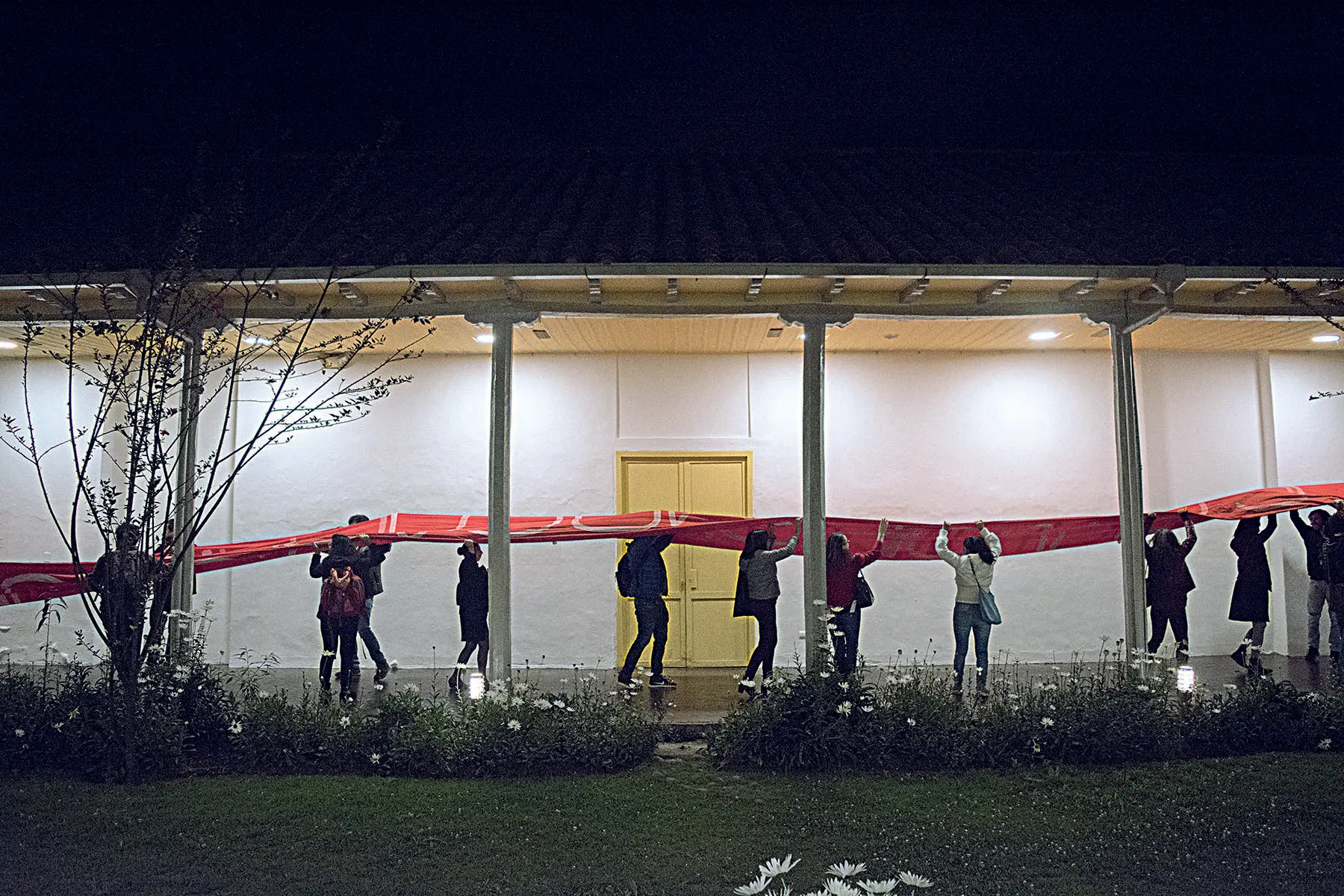
Eudoxia Estrella launched and directed the First International Painting Biennial in April of 1987, and she continued to participate and helm some of the later biennials. Estrella currently directs the Larrazábal gallery, Cuenca’s oldest, named after her husband, the Spanish draftsman, painter, and stained-glass artist Guillermo Larrazábal Arzubide, whose monumental sketches are on exhibit in the auditorium of the Museo Municipal de Arte Moderno, in Cuenca. In November of 2018, Eudoxia Estrella was the subject of a tribute, and she responded coherently and prospectively. It must be pointed out that the survival and continuity of an art biennial in a Latin American country is quite an accomplishment. It must also be noted that since its launch, the Cuenca Biennial has taken a double turn: it expanded to include all artistic expressions, and it changed its name. To review a bit of this history, even though the title of “Painting Biennial” was retained at the time, the 6th iteration of the event included digital painting and photography. In 2004 the change was fully embraced: painting ceases to be the generic umbrella, and the 8th Cuenca Biennial, period, was held. Parallel exhibitions began at the 5th Biennial and have continued since then. The 6th Biennial (1998-1999) was the first to have an overarching theme. The current one, 2018-2019, was titled Living Structures. Art as a Plural Experience. The curator was Jesús Fuenmayor (Caracas, 1963). Félix Suazo (Havana, 1966) was in charge of the pedagogical curatorship, devoted to training mediators, and Cristóbal Zapata (Cuenca, 1968) was the General Director. The local government finances the Cuenca Biennial.
“As we have conceived, as we have dreamt it for more than a year with Jesús Fuenmayor and the wonderful Cuenca Biennial team, the 14th edition will be the largest up to now,” writes Cristóbal Zapata in the informational leaflet that includes the program and sites.1 He adds: “The biennial encompasses one hundred artists and the same number of proposals, plus six parallel exhibitions and some special ones, in twenty-five sites.” Several sources report between 45 and 53 participants rather than 100. There were many independent exhibitions with international-range curatorship, some of which will be noted in this article. Unlike the other two key biennials, São Paulo and Venice, Cuenca takes place in a small city, and it activates and focuses on community participation not only as an audience but as extra-artistic producers. The labor force required for transportation, installation, and execution of works is an important domain that has so far been balanced via the pedagogical curatorship, a responsibility assumed by many artists and curators around the world. Although great waves of tourists were not apparent, it is an important source of jobs and income at the local level.
The official vision in circulation for the Cuenca Biennial mentions “A Biennial capable of generating a solid and sustained cultural infrastructure, with permanent programs in the fields of research, communication, and education.” In the present analysis, readers will encounter those vectors and others! For example, a situation that this writer decided not to explore in greater depth was to find out whether it was the result of a bet between the curator and the executive director, but certainly had both surpassing Madonna herself in terms of broadcasting intimacies. The day before the Biennial’s opening, in a sort of press conference, Jesús Fuenmayor dedicated the work to his wife, and during the official opening ceremonies, he talked about the Biennial and then said: “To my wife, I love you, a kiss.” Cristóbal Zapata, less performative, gave the official discourse and added: “To my wife, I love you.”
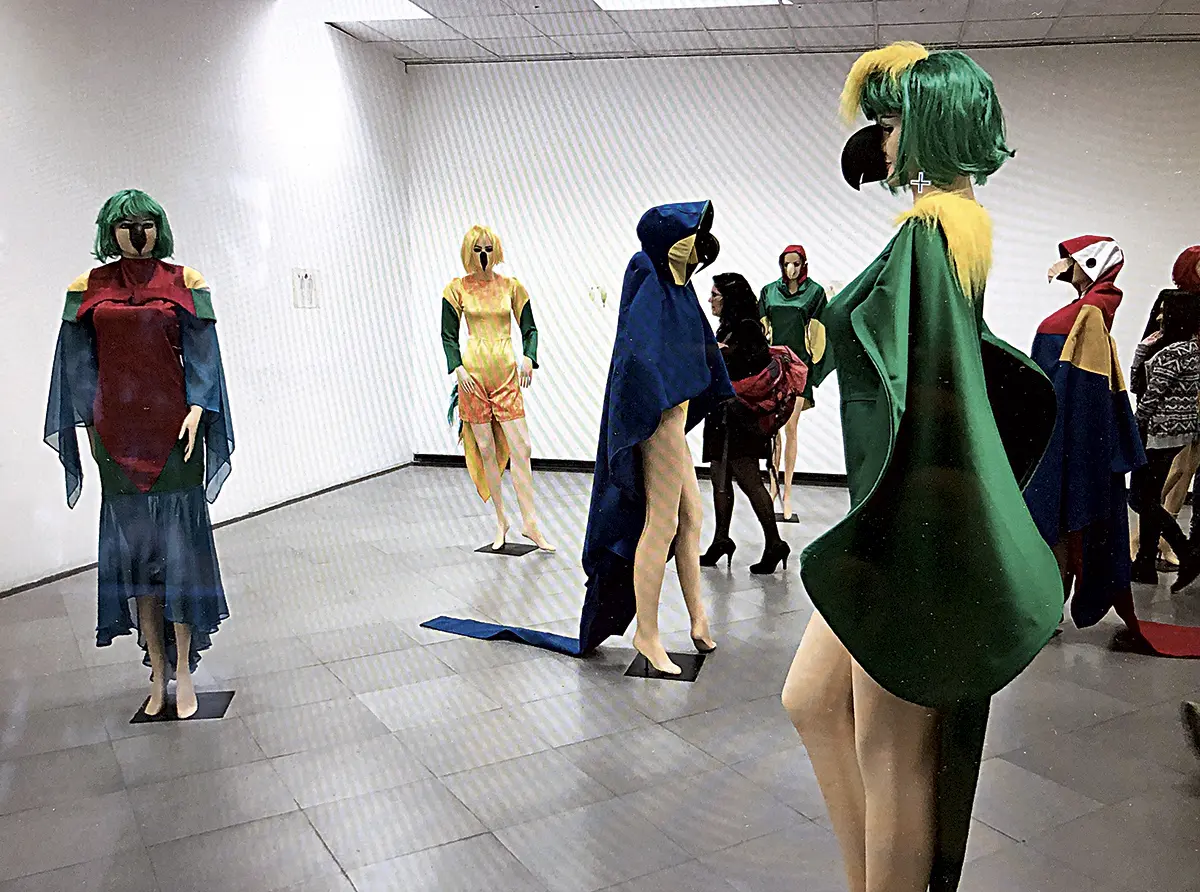
The biennial’s opening event took place on the evening of November 23, 2018, at Pumapungo Theater. The public gathered in the foyer and shared the space with living models standing atop pedestals, in an attempt to mimic a convergence seen with increasing frequency in museums around the world: art and fashion. This situation was reiterated after the inaugural ceremony, as one walked around the Pumapungo Museum. La madre de los Cañarís (The Mother of The Cañaris), by Argentinean artist Sergio Vega in collaboration with textile designer Silvia Zeas, revealed a contemporary interpretation of Latin America’s original cultures in a cosmological sense, expressed through the parrot and the macaw, especially in Ecuador and in the Cañaris worldview, different from Western interpretations. Visually, it was a scene of intensely colorful dressed mannequins with macaw-like heads. Historia tetis temporum est/ La historia es testigo (Historia tetis temporum est/ History Bears Witness), an installation/meditation by Pamela Cevallos (Quito, 1984) is an original self-critical work of art about anthropological collecting, with items from Museo Pumapungo’s own collection, and illuminates the limitations that specialists encounter when cataloging everyday utilitarian objects of recent or current vintage.
The title of the 14th Cuenca Biennial, Living Structures. Art as a Plural Experience, is all-encompassing, intriguing, and coherent, given the fact that the event featured mostly live actions. Some ten performances, book launches, and several talks were presented alongside the exhibitions in outdoor and indoor spaces, as well as interactions of the visual arts with sound and/or music, and with scientific notions. There were book presentations, a couple of conferences, and Lothar Baumgarten was recognized publicly on more than one occasion for his film The Origin of the Night (Amazon Cosmos). To this highly compressed review of what the biennial encompassed, we must add the terms analyses, comparisons, and analogies, which summarize the structures used by most of the participating artists. Only a minority of them created supra-structures. A couple of those artists addressed their reflections to the outdatedness of many museums and art-world professionals, due to the scarcity of financial and educational resources. Others, like Rey Akdogan (Germany, 1974), taking elements that are not visible to the naked eye, narrowed the connections between industry and paintings. In terms of a relationship between sound and image, Ana Guedes’ sound installation, titled Mapas del éxodo de los diarios de Karl Marx. Capítulo I: playa del naufragio (Map of Exodus from Karl Marx’s Diaries, Chapter I: Beach of the Shipwreck) is a highly original dialectic of tuning. In it, the Hague-based Portuguese artist explores, within a novel-like framework, the possible—and necessary—connections between memory and history, using wooden planks and ship sirens.
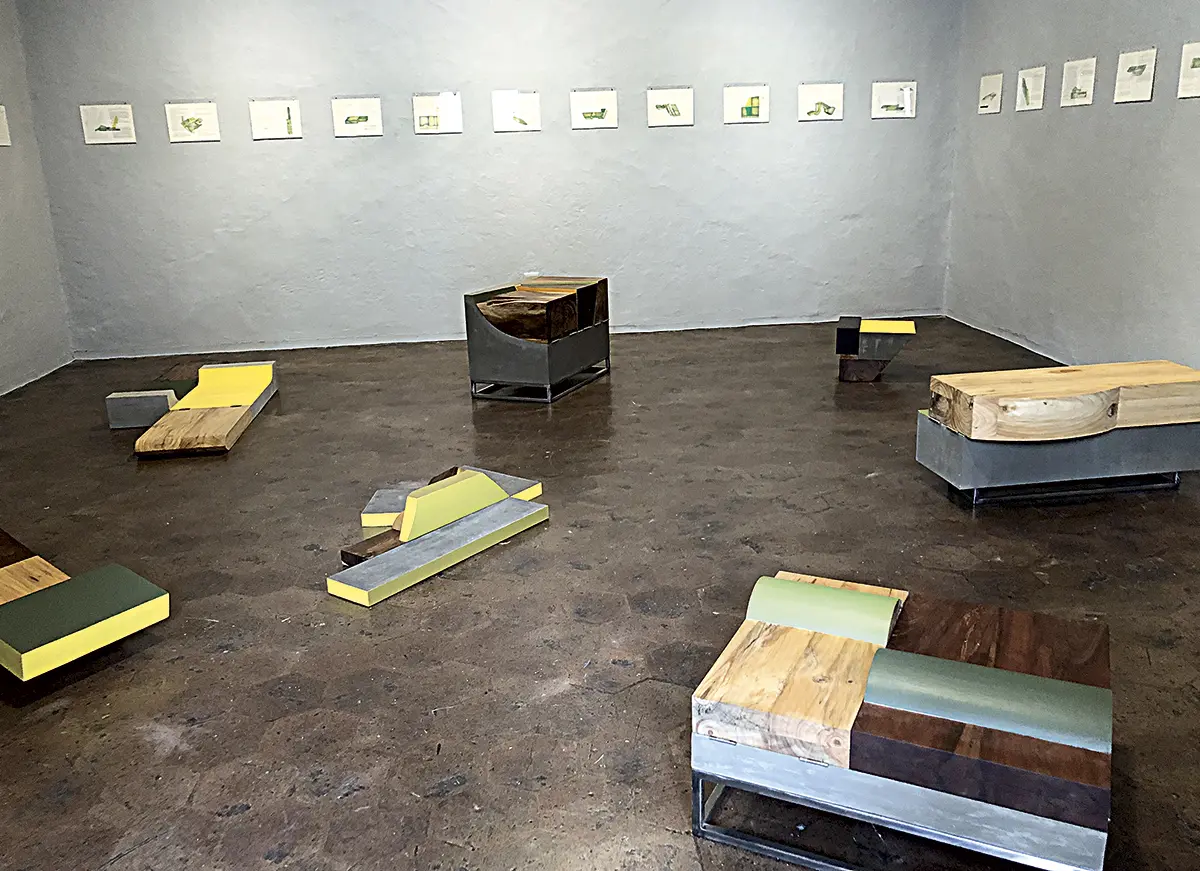
The Museo Municipal de Arte Moderno was a beehive well populated with works in both its open and enclosed areas. Alongside the names mentioned above, the work of the telluric conceptualist Jorge Eielson (Lima 1924-Milan 2006) was memorialized. Along similar conceptualist lines, re-pliegue (re-treat), an audiovisual installation by Estefanía Peñafiel (Quito, 1978), proposed appropriations, subversions, and deconstructions. On the pages of a technical manual dealing with such issues as Control of Production, Critical Pathway Analysis, and others, Ilich Castillo (Guayaquil, 1978) made thirty-two sketches for sculptures set up around the perimeter of the exhibition space. On the floor, viewers encountered several of these constructive sculptures in wood and cement, which posed the challenge of moving them at one’s own risk. Visually, this exhibition appeared coherent, inciting, like a proposal by a postconceptual designer or architect. Gabriela Chérrez (Guayaquil, 1981) made, in collaboration with Gabriela Cabrera, a sequence in museographic niches with pieces in ceramic, gold-colored paint, and humorous texts that she titled Mis 15 fracasos sentimentales (My 15 Romantic Failures).
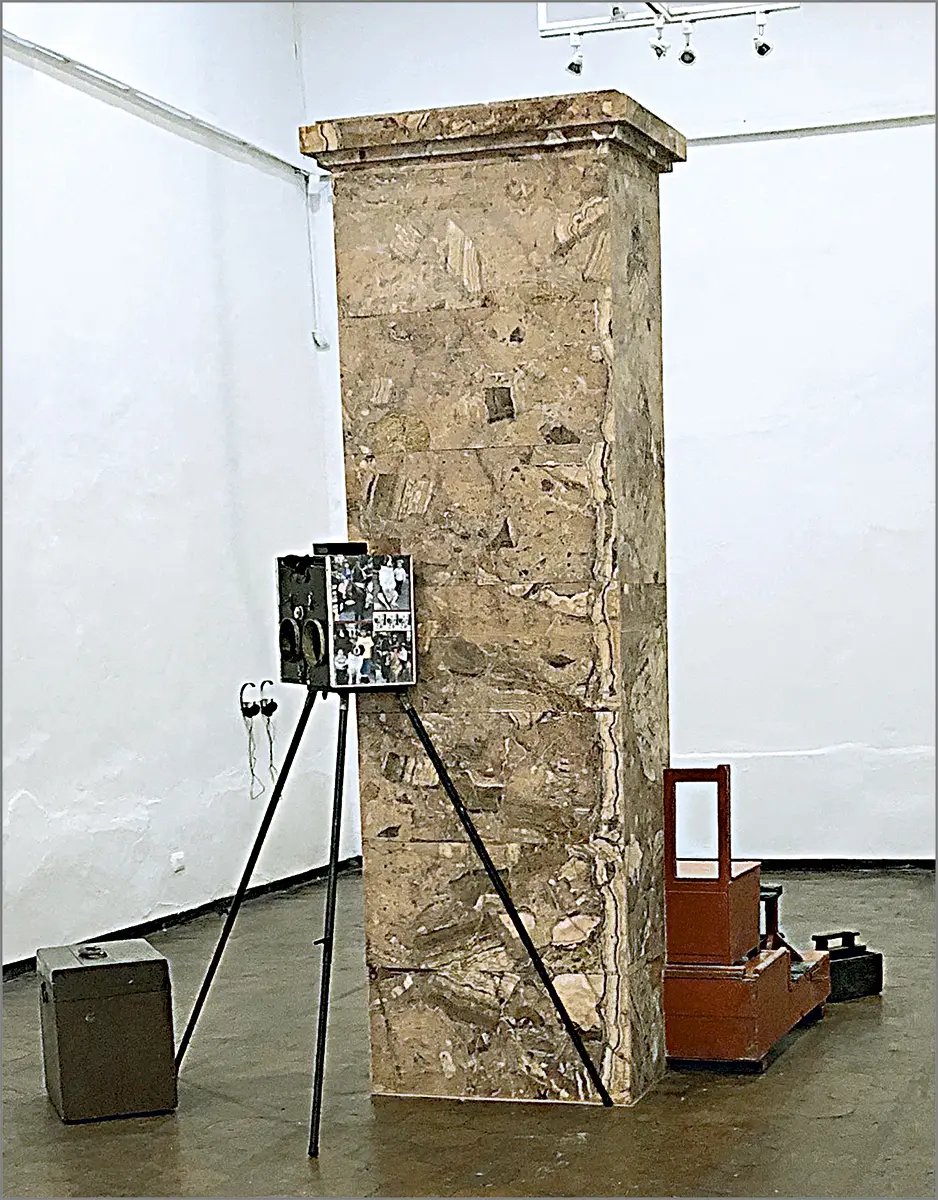
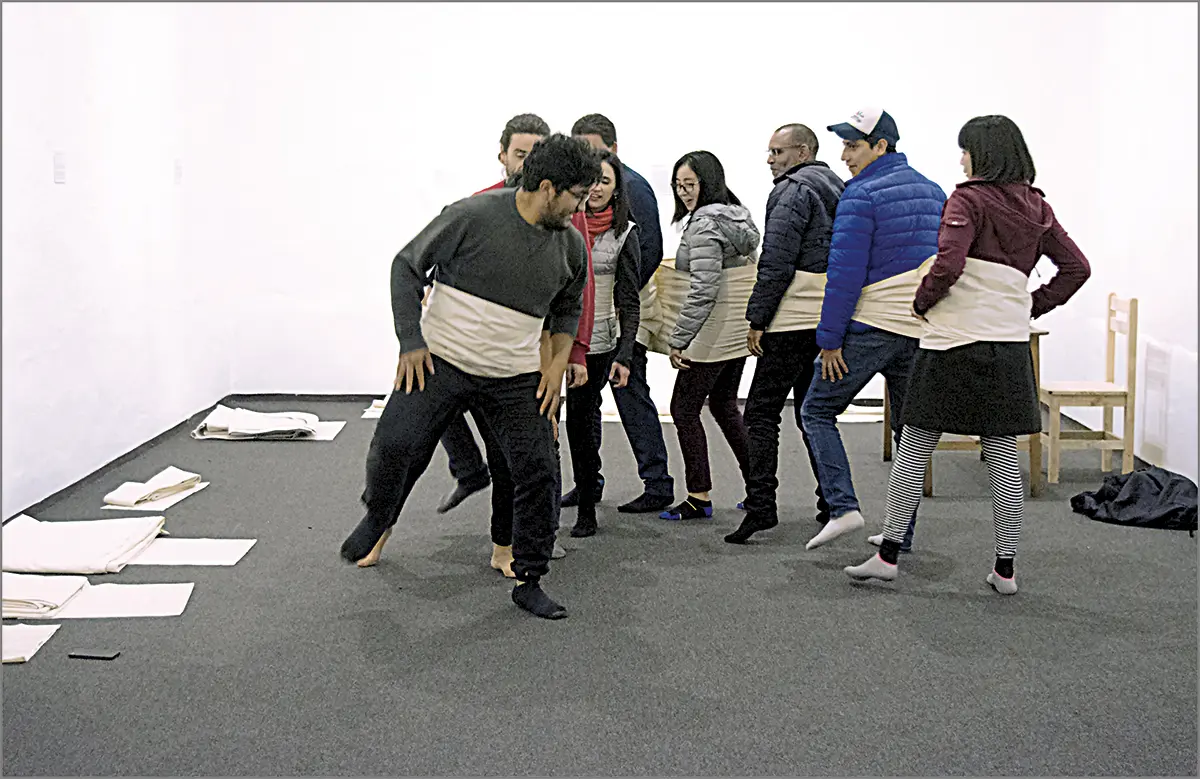
Games, challenges, resistance tests, all are part of the plot in Zehn Sockel (Ten Pedestals) and Single Element No. 57 of 1.Werksatz, works from 1969 made in sewn and dyed light canvas that traveled to Cuenca in the form of exhibition copies from the Franz Erhard Walther Foundation. The artist was born and works in Fulda, Germany, and his works display a sustained interest in the body, the object, and language, which he threaded in order to establish a relationship between the viewer and the artwork. Peruvian artist Ishmael Randall Weeks presented Voces monumentales (Monumental Voices), an installation in the gallery and the garden that connects popular services like shoe-shining and street photograph, among others, with the manga photographic camera, transforming them into museum presentations. The presence of Luc Tuymans (Belgium, 1958) with his mural The Return is a testament to the significant interaction between the Cuenca Biennial and Europe. Many of the participants are Latin American artists who live at least part-time in Europe. I have defended for decades the thesis of a “balance of migrations”: the year 1492 began an intensive process of migration into the Americas; Latin America has been balancing it since the Twentieth Century, as exemplified by the number of artists who live and work on both sides of the ocean.
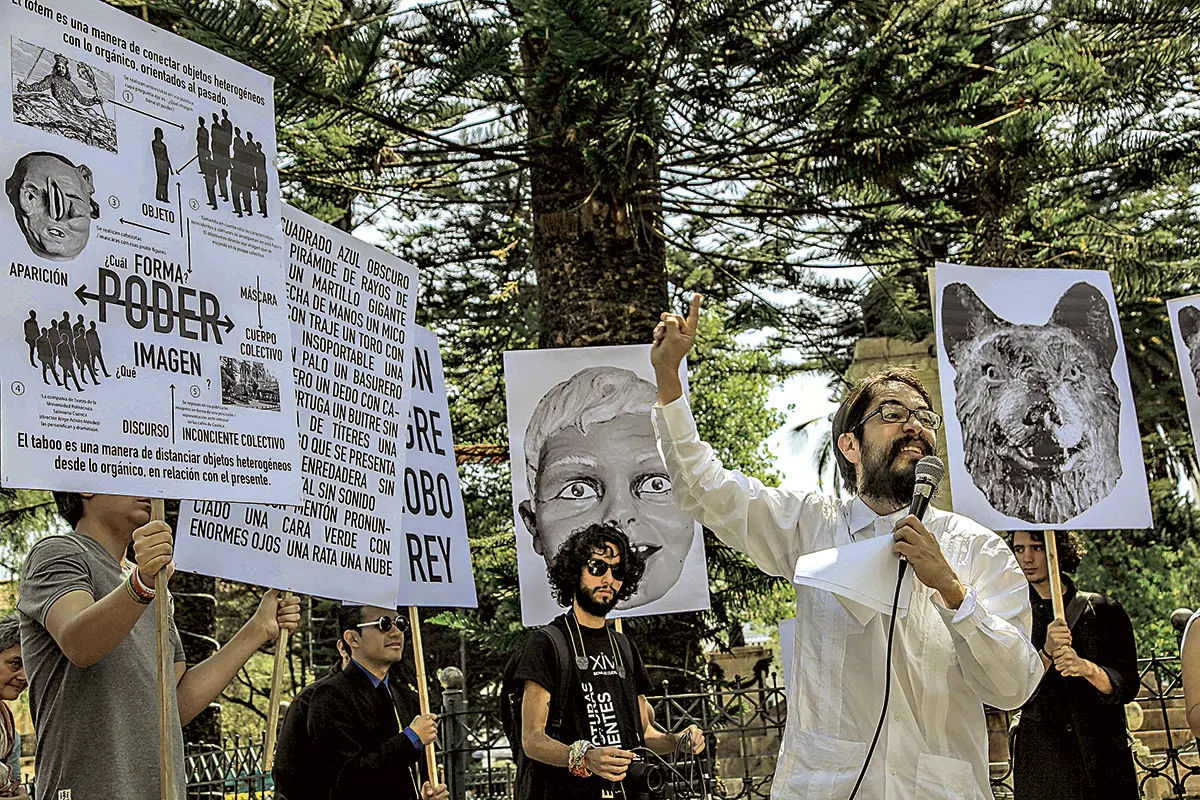
Moving from exhibitions to performances, Totem taboo is the title of the procession and installation with documents and video presented by Erick Beltrán (Mexico, 1974) at Plazoleta de la Merced, with the support of the Salesian Polytechnic University’s theater troupe. Beltrán processed several opinion surveys around Cuenca and used them to make a trilogy of masks representing aspects of power. More masks populated the procession through the city. Santiago Reyes (Ecuador, 1971), who lives and works in France, also presented several performances. At the 3 de Noviembre market, Reyes performed Camiseta del amor propio (Self-Esteem T-Shirt). At the Museo Municipal de Arte Moderno, he presented La vida es un carnaval (Life Is a Carnival), from the series Life contra un muro (Life Against a Wall), and at the Casa de la Cultura Theater, he performed Revelaciones del corazón (Revelations from the Heart), Diálogo con las sombras (Dialogue with the Shadows), and Romantic Eyes Movement. Meanwhile, Diego Barboza performed La caja de cachicamo (The Armadillo Box) at Calderón Park; and Carlos Martiel performed Gente de color (People of Color), with Jenny Jaramillo recording the action, at Museo Municipal de Arte Moderno. As readers will notice, some performance artists presented the same action more than once, in the same site or in different ones.
The jurors for the 14th Cuenca Biennial were Inma Prieto, Eva González, and Ramón Castillo, charged with deciding on prizes for installations and performances. In the latter domain, the prizes went to Erick Beltrán and Santiago Reyes. The installation prizes were given to Ana Guedes and Juliana Vidal, with a Mention for Ishmael Randall-Weeks.
The Biennial presented the special exhibition Imperios de lo plural (Empires of the Plural), with a selection of works from the Cisneros-Fontanals Foundation for the Arts’s collection, curated by Jesús Fuenmayor (the collection’s curator and director between 2010 and 2015). Those who have not had a chance to acquaint themselves with this collection are urged to do so soon.
Aside from the official contents of the 14th Biennial, it is worth noting, among the several parallel exhibitions included in the program, Sobre la dirección en la que sopla el viento (On the Direction the Wind Blows), with works by Manuela Ribadeneira, curated by Rodolfo Kronfle.
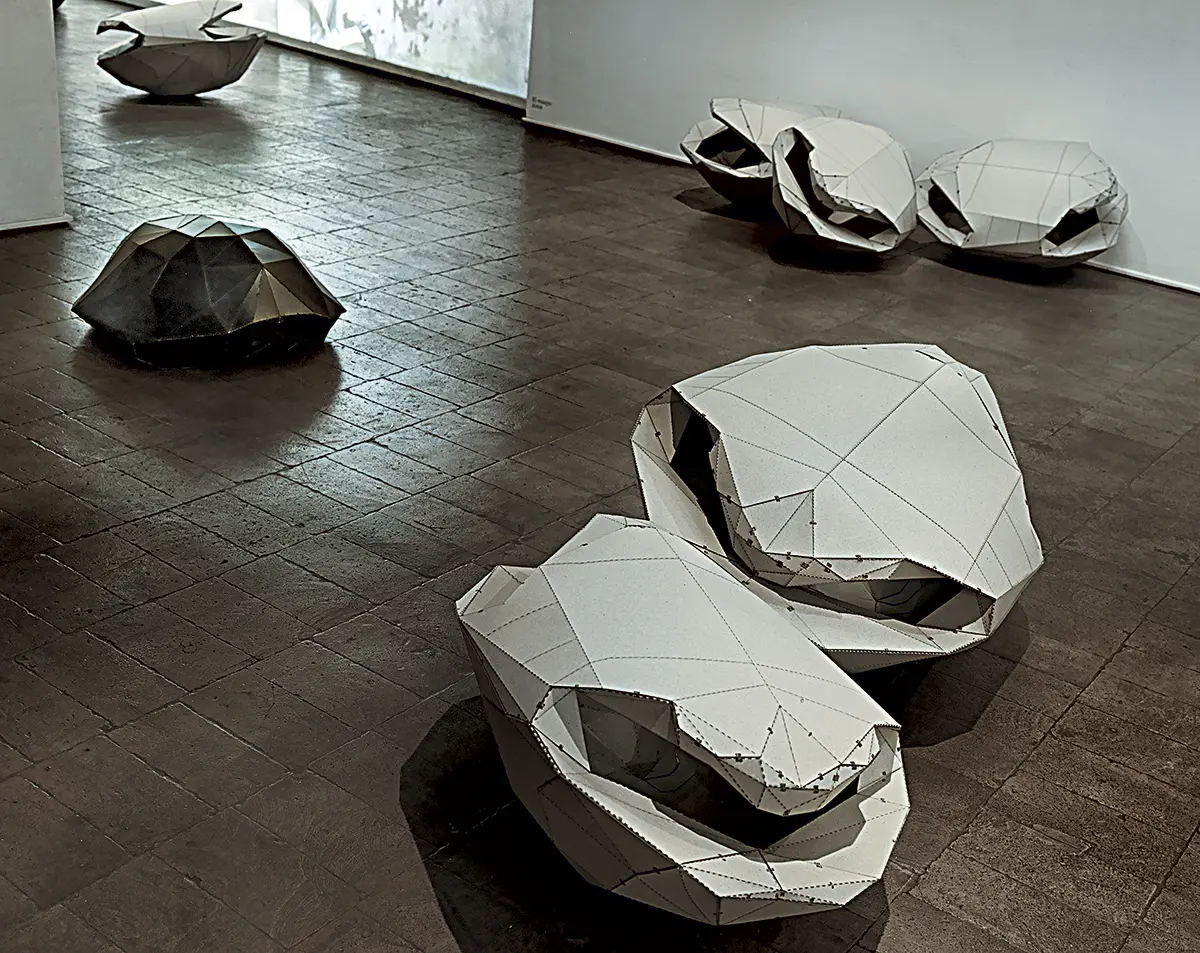
Born in Quito (1966), London-based Manuela Ribadeneira practices an obsessive and variegated language that focuses on the history of the five European countries that anchored their possessions in Latin America. The content of the artist’s professional exercise is political and sublimatedly social. On the first floor of Museomático, visitors encountered Sobre la dirección en la que sopla el viento, while at ground level Ribadeneira’s upturned tortoise shells, made in cardboard and accompanied by a video installation, created a climate of personal tension. There was a well-executed contrast between both series. The grayish cardboard of the intellectualized reflection and the drifting white feather on a vertical support resulted in one of the Biennial’s best exhibitions.
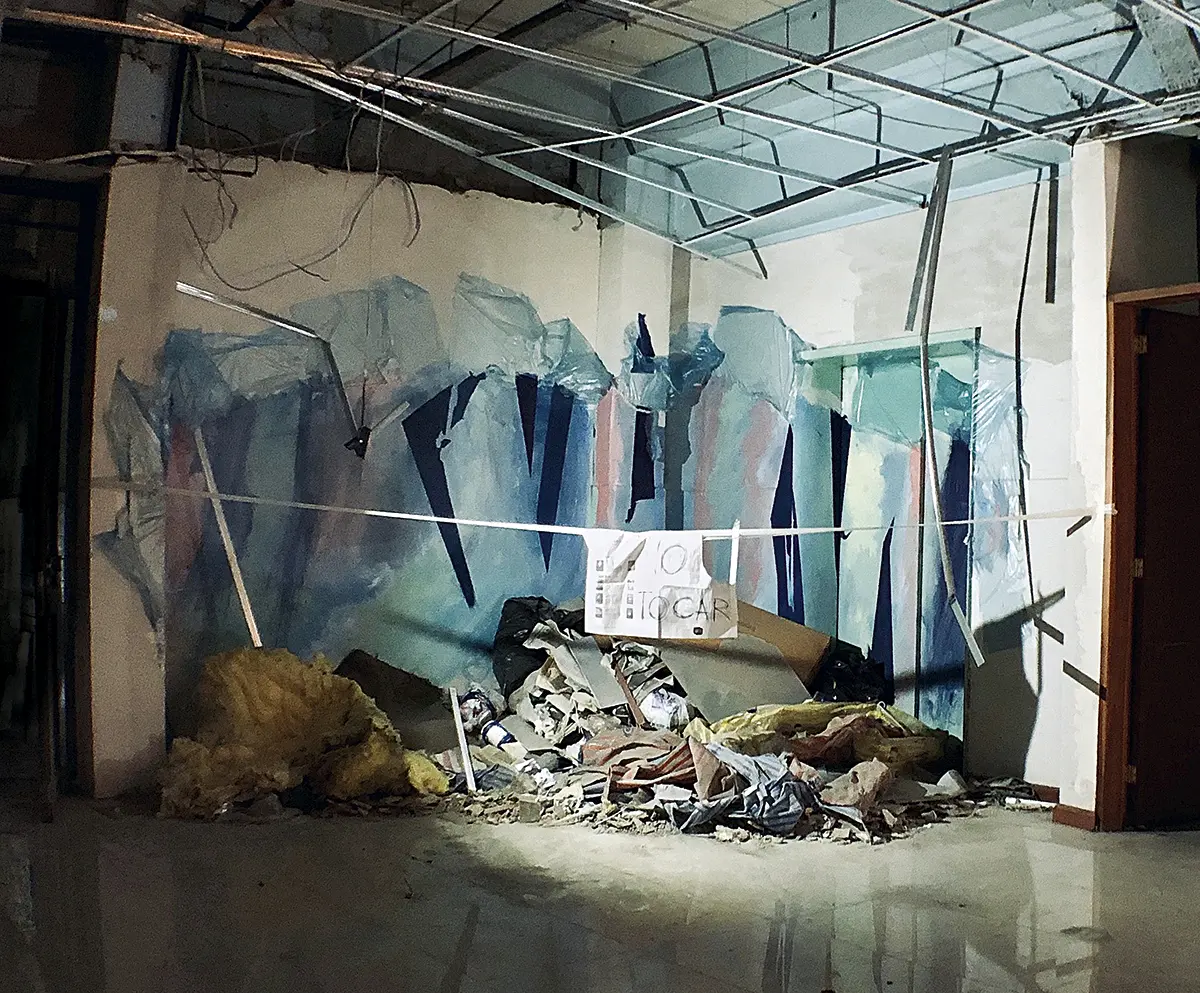
Among the independent parallel events, two must not go without mention: the “2nd Nomadic Biennial” and the exhibition titled “sdcphmrms,” at Larrazábal Gallery, which expanded into an exhibition/action at the auditorium of Museo Municipal de Arte Moderno. The latter convoked in personal languages a few global-raging Latin American artists: Sergio Fasola, Diego Anaya, Carlos Torres-Machado, Pablo Caviedes, Hermann Mejía, Manuel Velázquez, Roberto Rodríguez, Moses Ros, and Stella Sidi. Meanwhile, the “2nd Nomadic Biennial” is an independent endeavor curated in 2018 by Víctor Hugo Bravo and Hernán Pacurucu, with the title Diagnóstico Terminal (Terminal Diagnosis). The Nomadic Biennial began in 2016 with the salvage of an abandoned prison as an exhibition space. In 2018, also without financial support and equally independent, it took over an abandoned hospital. The “2nd Nomadic Biennial” had an international roster; more than sixty artists participated in the event, including two collectives, some of whom presented on-site productions. The presence of Chilean artists was noticeable. Among the younger participants, one highlight was a group of about-to-graduate students from Universidad Central de Quito, who conceptualized their projects in meetings with their Dean. The call for participants in the “2nd Nomadic Biennial” was by word of mouth and the work involved was intense, with significant social and visual results. The corollary: The Cuenca Biennial has centered in this city the seeds of action in the visual arts, occupying the urban space, habituating the citizenry, and motivating independent agents.
NOTE
1. It is important to note that in Cuenca, high-quality printing costs are among the lowest in the world. A more informative Biennial leaflet is to be expected for upcoming editions.
GRACIELA KARTOFEL