Todos los tonos de la rabia. Poéticas y políticas antirracistas (All Shades of Anger. Anti-Racist Poetics and Politics) argues a thesis: racism is the most extreme form in which the legacy of colonialism asserts itself. It is one of the key issues of the century, under a new world order in which xenophobia, nationalism, hate for the non-Western, and religious, sexual, and gender discrimination feed into policies of terror instrumentalized by the powers-that-be and by the State as tools of control. Curators Carolina Bustamante and Francisco Godoy are part of a growing wave of activism that questions public and State institutions in Spain by shining a spotlight on the emotions and the lives of migrant and marginalized communities. From the position of political subjects not centered on a Western, heteronormative, and patriarchal model, artists whose anti-racist struggle is a daily event have come together in this experience of visibility of bodies and subjectivities weighted down by the pressure of the modern/colonial gender world system, with the legitimacy of speaking in the first person and becoming situated voices that demand a place of enunciation.
The exhibition “focuses on racism as a structure-giving element in Western thought and life (…) not only in Europe but also in the Westernizing mentality that was taken to the colonies. [It] brings together the work of (…) artists, activists, poets, intellectuals, all racialized (…) non-white individuals who exert a radical critique of this structural dimension of racism.” 1. This braiding of art production and militancy gives freshness to the exhibition, helping it avoid the pitfalls of aestheticism always present when the urgencies of life are brought into the neutering device of the museum. The show attempts to subvert the primacy of the visual as a legitimated language under the modern paradigm of the museum institution. Orality and poetry are introduced as a disturbance in the exhibition dynamics, a sound environment where voices superimpose on each other and the content of certain texts overlaps with the content of others. A provocation intended to discomfit visitors, bringing them face to face with the anti-racist empowerment of Victoria Santa Cruz in her proud verse “Black, they yelled at me.”
Todos los tonos… begins with Rafeef Ziadah’s almost-homonymous poem, “Shades of Anger,” her response to the aggression of an Israeli soldier who in the course of a peaceful protest kicked a journalist in the stomach and yelled that she ought to be raped rather than to be allowed to give birth to terrorists. Allow me to speak my Arab tongue / before they occupy my language as well. / Allow me to speak my mother tongue / before they colonize her memory as well. / I am an Arab woman of color. / and we come in all shades of anger. A meditation on the colonial conditioning of education in the West and the construction of the family unit as the primeval space where the politics of difference are represented. From the womb that engenders rebellion to a view of childhood as the generative moment where the sense of contestation is diagrammed for a racialized subjectivity, which will from very early on experience the normalized forms of racism in the domestic sphere, the school, the public space, the mass media, etc.
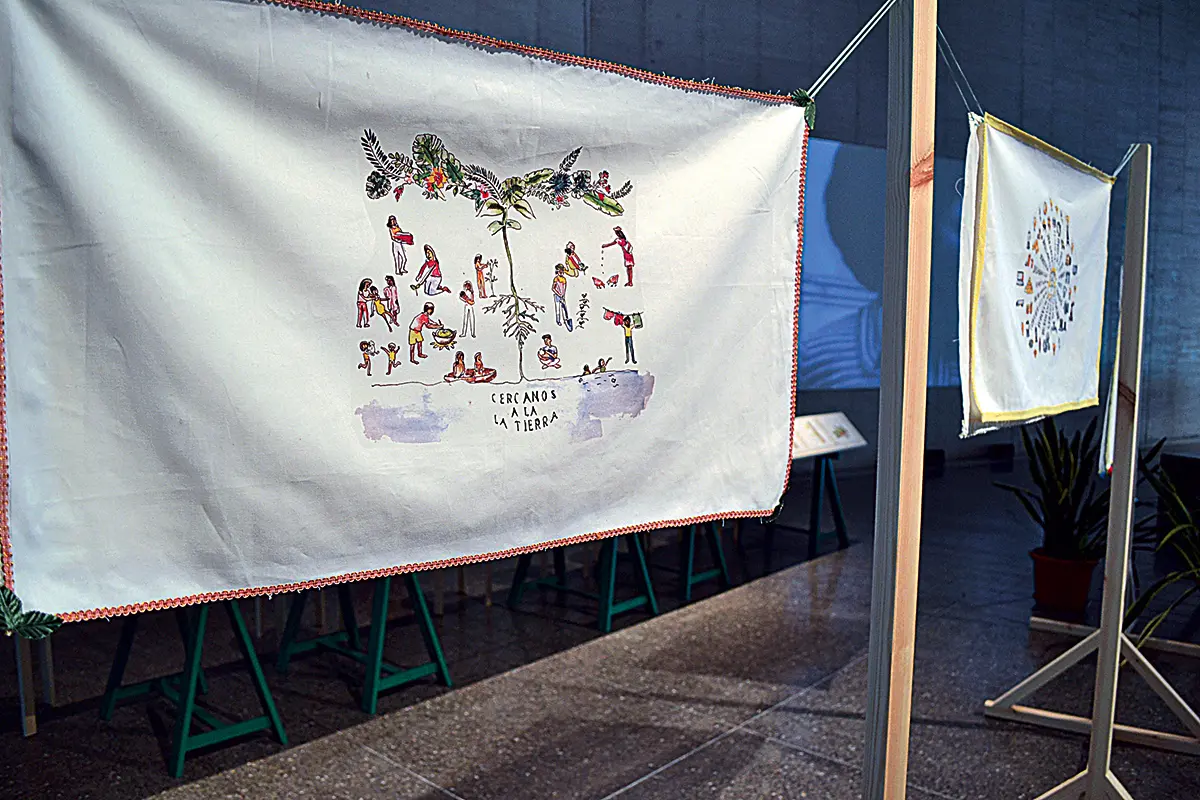
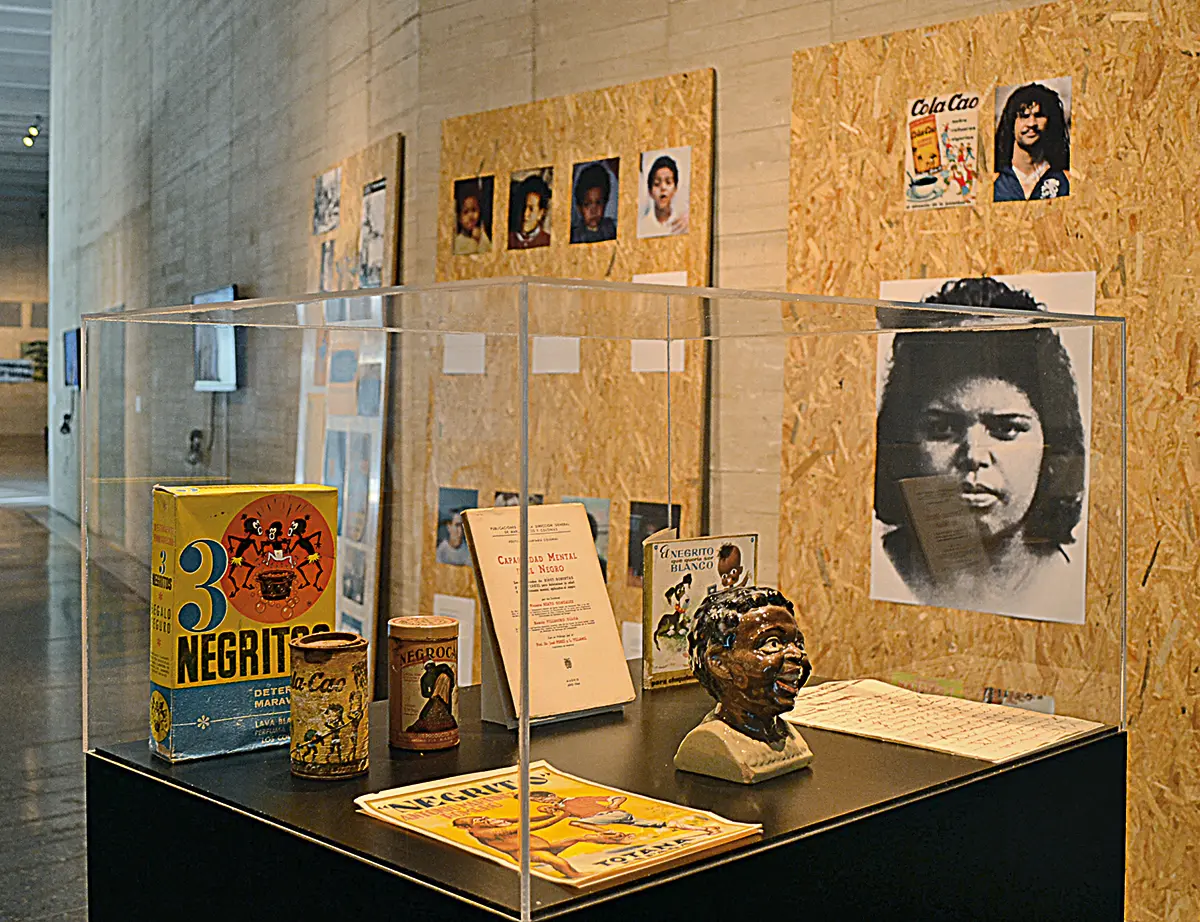
Highly worth noting are both Sandra Gamarra’s appropriation of the colonial genre of “caste painting” and Daniela Ortiz’s installation based on the artist’s book El príncipe blanco (The White Prince, 2018). Rubén H. Bermúdez also presents an installation connected to the homonymous artist’s book, Y tú, ¿por qué eres negro? (And You, Why Are You Black, 2017), which articulates the experience of racism in his own biography as an Afro-Spaniard person and the awakening of his racial consciousness deriving in a precocious political activism. Bermúdez takes 909 archival images and objects that represent the racist imagination that prescribes the figure of a stereotypical, subaltern black subject in the history of art, in popular culture, and in collective fantasies. Yeison F. García also resorts to private memory in order to reconstruct the experience of an Afro-Colombian immigrant in Madrid. He shares, from a family photo album, biographical passages punctured by alienation, xenophobia, the break of filial bonds, the absence of a mother forced to migrate when he was only seven years old, the coexistence with the ghost of whitening in a multi-ethnic household. García’s voice recites poems from the book Madrid negro (Black Madrid, 2016), which describe a triple exile: the African diaspora caused by the slave commerce; the flight from Colombia; and the condition of permanent foreignness in an intolerant city he nevertheless inhabits with a years-long sense of belonging. All of this is also in evidence in the work of Angelo Moșuțan-Zsurkis, whose sound installation Mi voz es ruido (My Voice is Noise, 2016) denounces the discrimination suffered by Eastern-European migrant communities, in a political space that has supposedly been designing for the integration of states, the EU. Language, sexuality, and nationality overlap as the axis of exclusion in the narrative of an artist who self-identifies as a marica-bulangiu rumanx Eastern European migrant.
Zoológicos de monstruos (Monster Zoos) shares space with La vida erótica del racismo (The Erotic Life of Racism), signaling towards the way in which the eroticization of the other and his or her transformation into a sexual fetish has been one of the strategies deployed in the ideological representation of the “inferiority” of non-white individuals. Such biological and cultural essentialism is imbricated in the modern binary notion of the race category, as a result of colonial Eurocentric taxonomies intended to justify the domination and violence exercised against non-European populations, defined as “savage” in contraposition to the white, European, Christian, heterosexual, and bourgeois civilizational project. One highlight in the first thematic area is the video (by Paula Heredia) of Coco Fusco’s and Guillermo Gómez-Peña’s performance The Couple in the Cage: Guatianaui Odyssey (1993), developed as a critique in the context of the celebrations for the fifth centennial of the so-called discovery of the Americas, or Abya Yala. Also, Sed de venganza, el lado pornográfico de la historia oculta del colonialismo (Thirst for Revenge: The Pornographic Side of the Hidden History of Colonialism, 2016), by the Terrorismo Teatral Migrante collective.
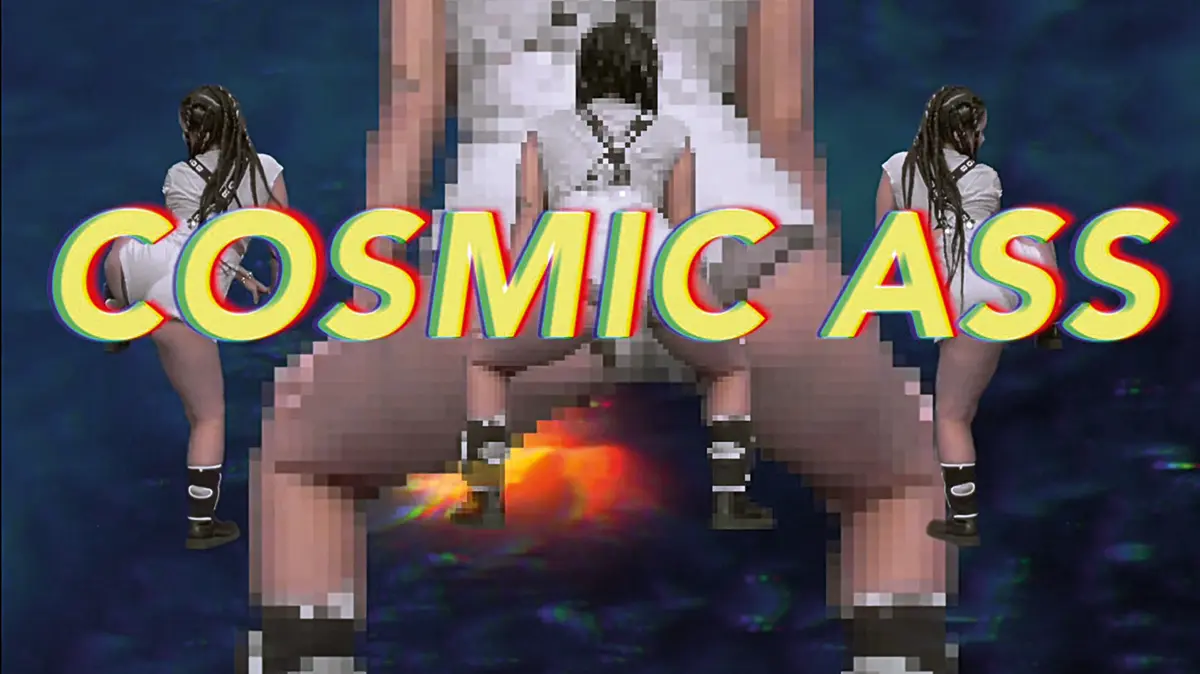
Fannie Sosa reverts the exotic images of the racialized female body in Cosmic Ass (2015). In this video, which plays with the codes of various media products, the artist reclaims twerking as a resistance practice that empowers women by means of self-expression, motion, and pleasure, in connection with ancestral African traditions of fertility dances and rituals, as well as with contraception practices among the African diaspora. Sosa’s performance explores a racialized corporality as a sign of pride in order to occupy public space and to dissent from the aseptic routines that are imposed on the bodies of the other; in order to revert the axis of the structural violence that is exerted upon them in the colonial/capitalist system, as pieces for productivity and reproductions. Linda Porn produces the manifesto of a Puta mestiza (Mestizo Whore, 2014) upon whose body the racist and hetero-patriarchal pressures of colonialism are perpetuated in the sexual relationships of a migrant woman. It reflects the renewed mechanics of bodily exploitation under global capitalism and in human trafficking. Yet, it does not speak from the position of the victim, but in full awareness of the political content of sexual work, and the way in which it impacts flows between the public sphere and the micro-political domain of private life and the domestic arena.
No esperaban que sobreviviéramos (They Did Not Expect Us to Survive), the exhibition’s last chapter, alludes to a history of knowledge running counter to Western epistemology and Eurocentric modes of production and transmission of knowledge. It considers local practices, modes of survival of oral memories, spaces of learning outside such modern institutions as archives, libraries, museums, universities; a culture not subject to the bibliophile paradigm.
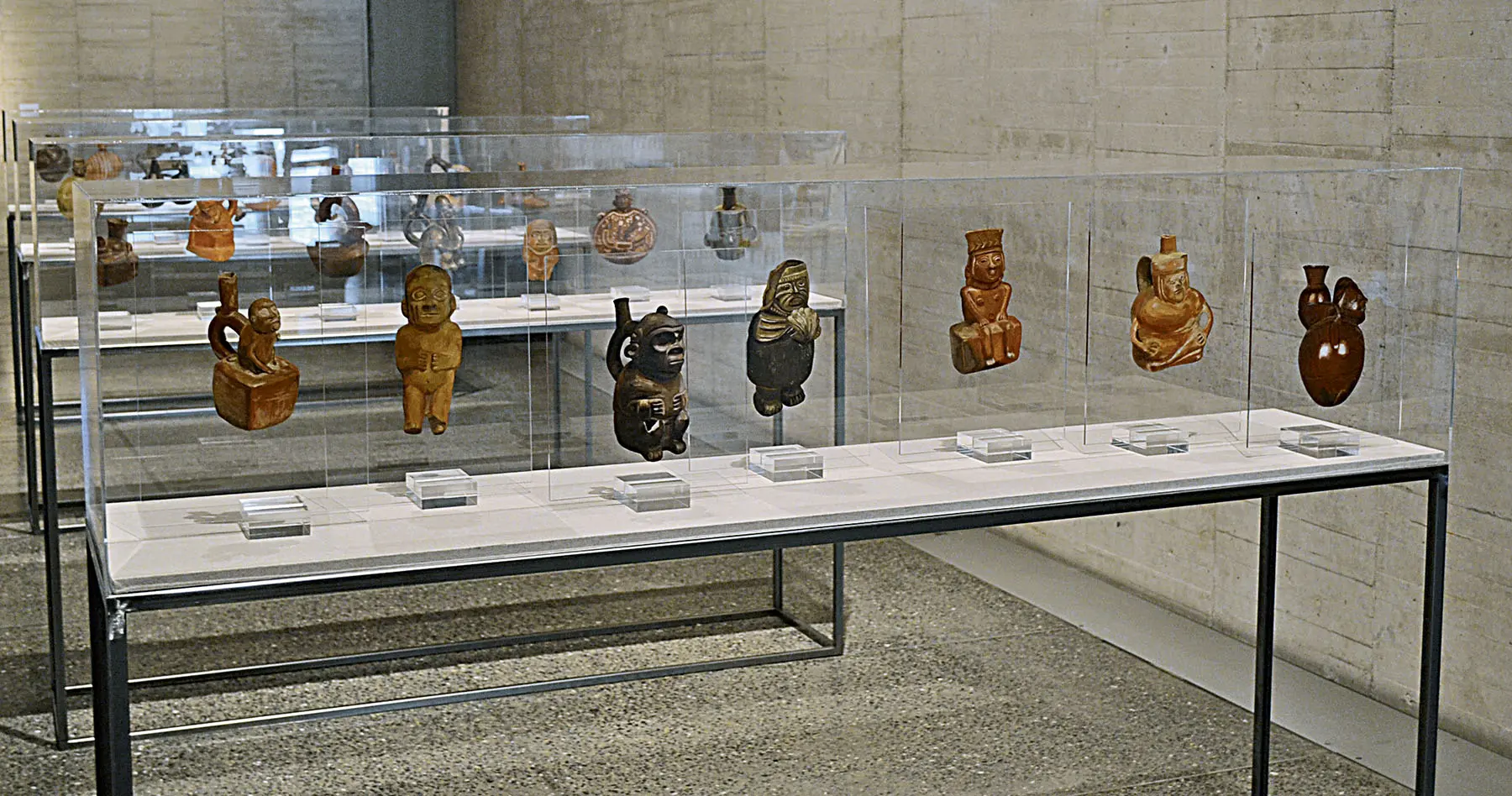
In her installation El museo del ostracismo (The Museum of Ostracism, 2018) Sandra Gamarra reproduces a series of pre-Hispanic ceramic creations now confined in European museums. Mimicking an ethnological museum, Gamarra arranges displays where the backs of these items stolen from their original contexts and deprived of their everyday functions show the xenophobic and racist nomenclature used to designate migrants, racialized subjects in Europe. Objects and persons are subjected to an absurd classificatory order that attempts to shore up the persistent coloniality of contemporary societies and of the new modes of exploitation.
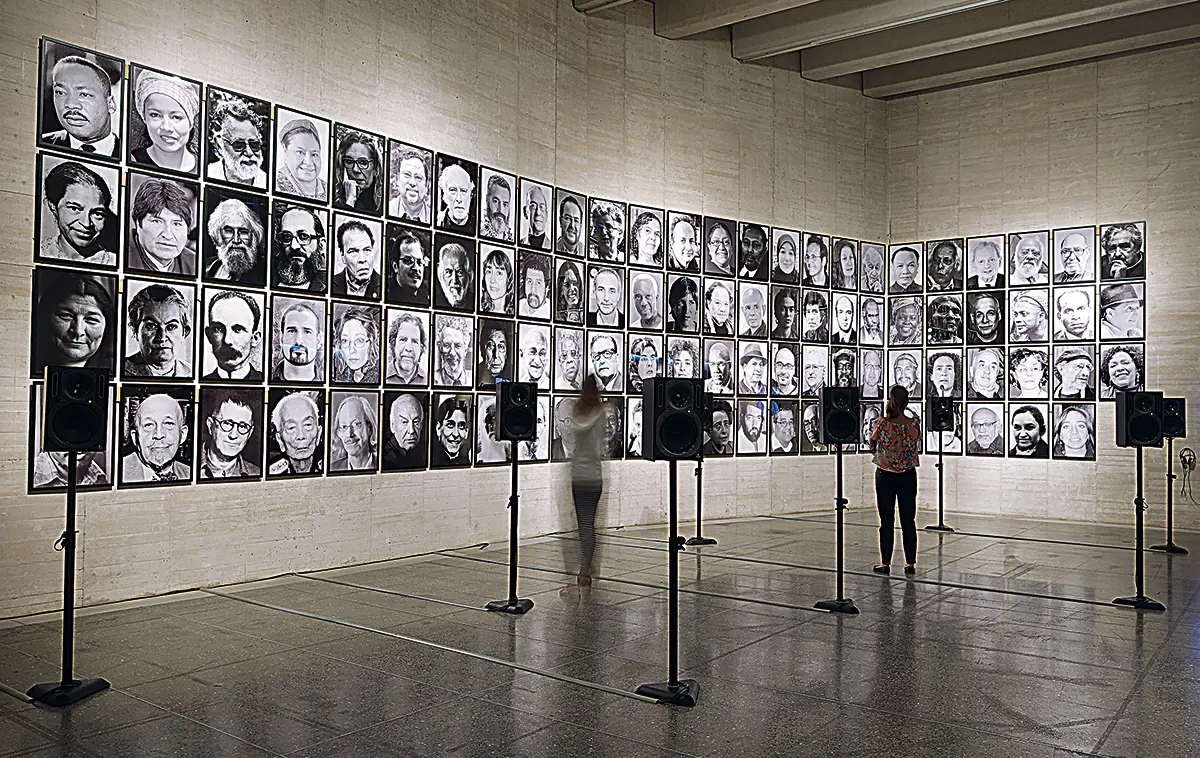
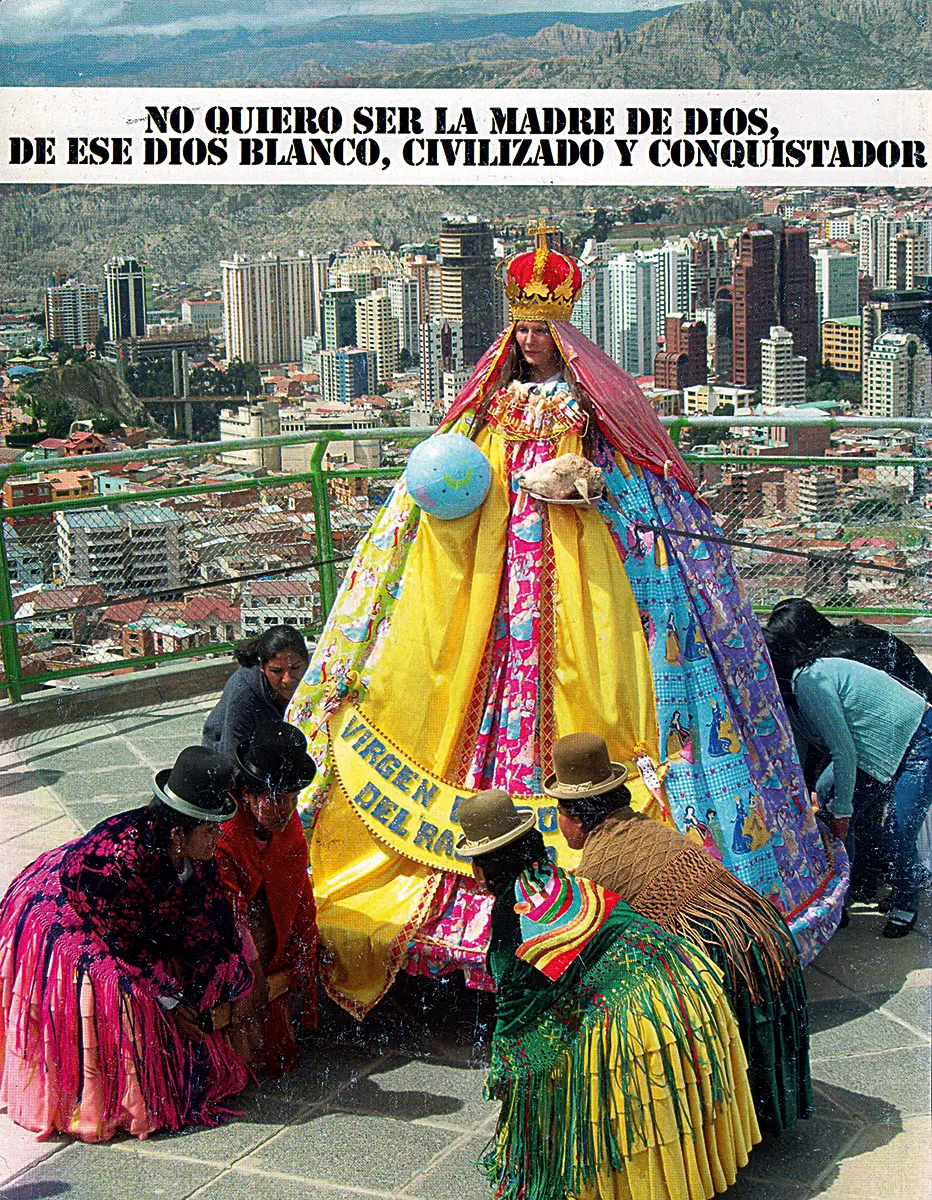
Finally, Arquitectura de las transferencias. La hybris del punto cero (Architecture of Transferences. The Hybris of Point-Zero, 2012), an installation by Ingrid Wildi Merino, takes as its point of reference a text by Santiago Castro-Gómez explaining how science and politics come together in the Enlightenment project in order to provide a humanistic alibi to the imperialistic expansion of modern rationality on the wheels of the colonial enterprise. The faces of 99 intellectuals, politicians, and figures from various historical contexts trace the map of other epistemologies, decolonial in intent, that exercise a radical critique of colonialism and eurocentrism in modern thought and science. In that space, we find the response to Christian monotheistic religious discourse developed by the Mujeres Creando collective in La virgen Barbie (Our Lady Barbie, 2010). Myth and colonial history are deconstructed in this fiction, in a feminist and ethno-racial key.
NOTE
1. Francisco Godoy and Carolina Bustamante. Video Tour with the Curators (In Spanish). https://www.youtube.com/watch?time_continue=34&v=KoRCtfoHEMU
Artists included in the exhibition: Gloria Anzaldúa, Lucía Egaña Rojas, Yeison F. García, Sandra Gamarra, Guillermo Gómez-Peña, Nadia Granados/ La Fulminante, Rubén H. Bermúdez, Paula Heredia/ Coco Fusco, Ira Sudaka, Johan Mijail, Angelo Moșuțan-Zsurkis, Jota Mombaça, María Galindo/Mujeres Creando, Daniela Ortiz, Yos Piña, Linda Porn, Silvia Rivera Cusicanqui, Victoria Santa Cruz, Fannie Sosa, Terrorismo Teatral Migrante, Ingrid Wildi Merino, Will Yacome, Rafeef Ziadah.
* Courtesy: MUSAC.
SUSET SÁNCHEZ SÁNCHEZ