The recently concluded (July 13th, November 10th, 2018) XXI Paiz Art Biennial was anything but common. Its chief curator, Gerardo Mosquera, ran it with a bottom-up strategy that stemmed into an elaborate top-down maneuver, one that the curator could not have staged better (as he put it1) even if he wanted to. As premises, he established the aim to level out hierarchies between different contemporary human expressions and go beyond the capital’s centralized art circuit. In some cases, the Biennial led to the recognition of the indigenous people of Guatemala, and their creativity, from within their communities. Moreover, it acknowledged something that continues to be a taboo in Guatemala, the genocide that occurred during the country’s civil war (1960-1996), not from a visual or spectacular point of view, but from the collectivity’s sorrow, as noted by Guatemalan curator and activist Maya Juracán2. Although it included works by internationally acclaimed artists such as Cildo Meireles and Tania Bruguera, it was an uncommercial Biennial that gazed into the country’s recent bloody history, uncovered some of its present inquietudes, unsterilized the white cube, and made its own horizon clear at once after no less than forty years from its launch.
Four decades ago, Rodolfo Paiz, father to Maria Regina Paiz, the actual President of the Paiz Foundation for Education and Culture, founded the Americas’ second most ancient biennial. In recent editions, the Paiz Art Biennial has employed distinguished professionals, like Mr. Mosquera, one of the Caribbean’s best-known curators, art critics, and theorists. This Cuban man surely had a vision for the Paiz’s Biennial, and quite some guts to present his hosts with it. Essentially, his Program included, aside from the Biennial’s venues –mostly in Guatemala’s City– a number of small towns scattered throughout the country with an enticingly creative bent. He fitted with resources and attention not only artists and their works but also the human exchanges that this Biennial set out to generate. Occasionally, instead of work, he presented a joint project between artists and communities. While these experiences enriched the practices of both parties, often they also served as a means to increase their visibility. Last, in some cases, the Biennial intertwined with the Foundation’s educational projects, especially the ones operating in marginal communities.
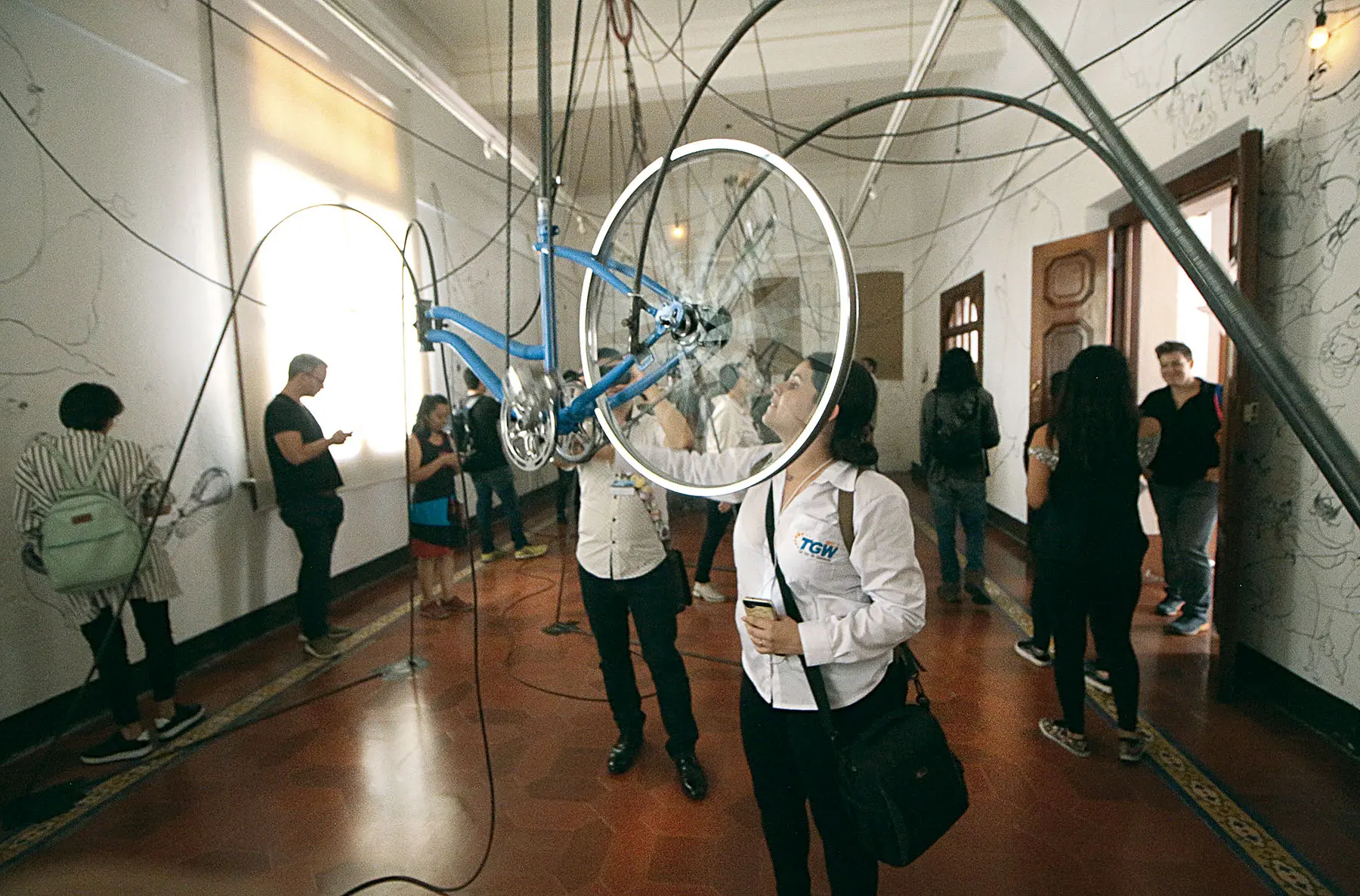
Guatemala does not have many contemporary art galleries, nor museums or collectors. Therefore, to bring to this country or produce in it pricy shows and installations were never the Biennial’s goals, let alone its curator’s. Although he displayed some remarkable pieces from international artists, such as the status-quo mocking installation by Ricardo Lanzarini (Uruguay), the tropicfavela spacey environment by Simón Vega (El Salvador), and the war and dignity photographs by Gervasio Sánchez (Spain), Mr. Mosquera’s Biennial was mostly an enterprise of the locals, with whom the summoned artists lived, worked and intermingled. In fact, for this endeavor, the curator cleverly imagined and achieved the keen and at times even enthusiastic involvement of different sectors of society, including marginal indigenous communities, diplomats (for example, the Mexican Embassy served as an exhibition venue), and entrepreneurs. This was done by putting forward the right man or woman –the right artist– at the right time.
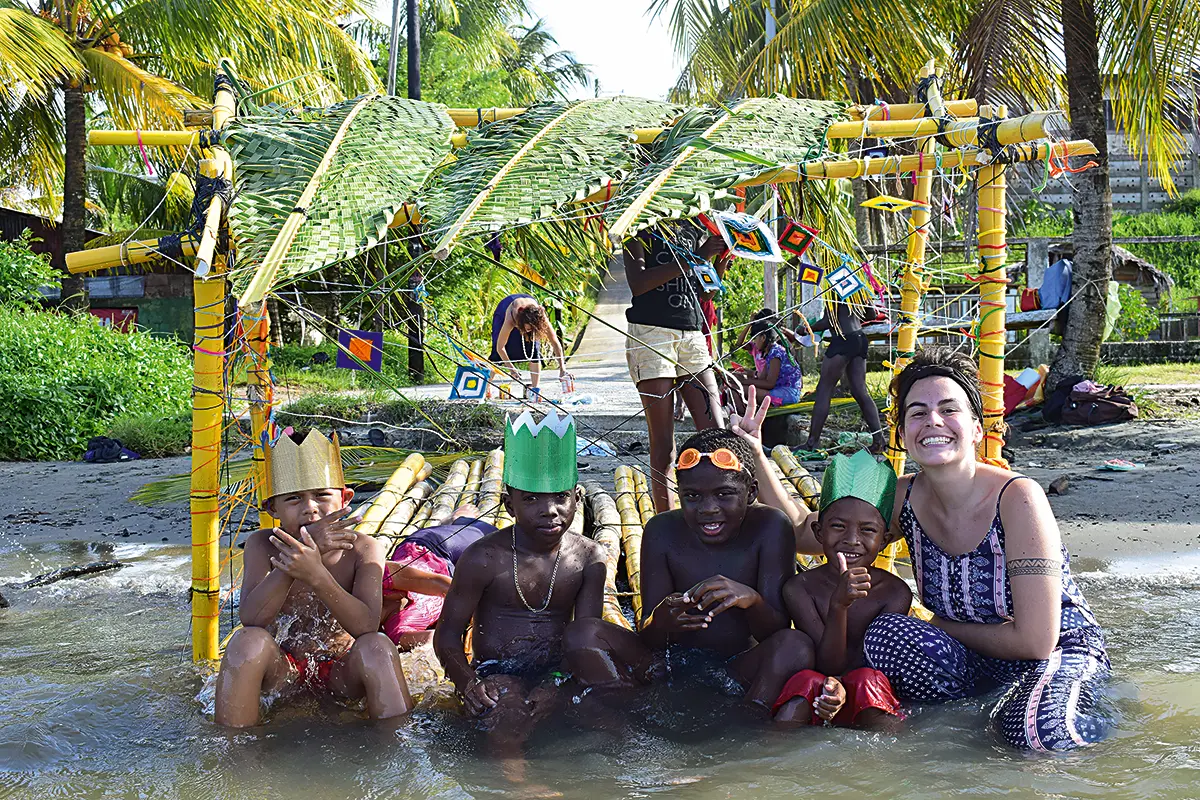
For instance, he had the El Salvadorian Alexia Miranda work in Livingstone, Izabal, where, after runaway slaves shipwrecked, a community was born: the Garifuna. Many Garifuna either left Livingstone, moved to the capital, or embraced the American dream. Yet, some are still there: living the life of a Latin-African minority. Water, electricity, cement, and nails are not plentiful in Livingstone. Nonetheless, Miranda, collaborating with the community’s public library and ludothèque Beluba Luba Furendei, managed to build a bamboo Raft where to nest dreams on which kids could play and express themselves. Whereas for the Garifuna kids this work stood as a sort of poetic lesson of perseverance, for the library’s professionals, it served as an opportunity to present their project in the capital.
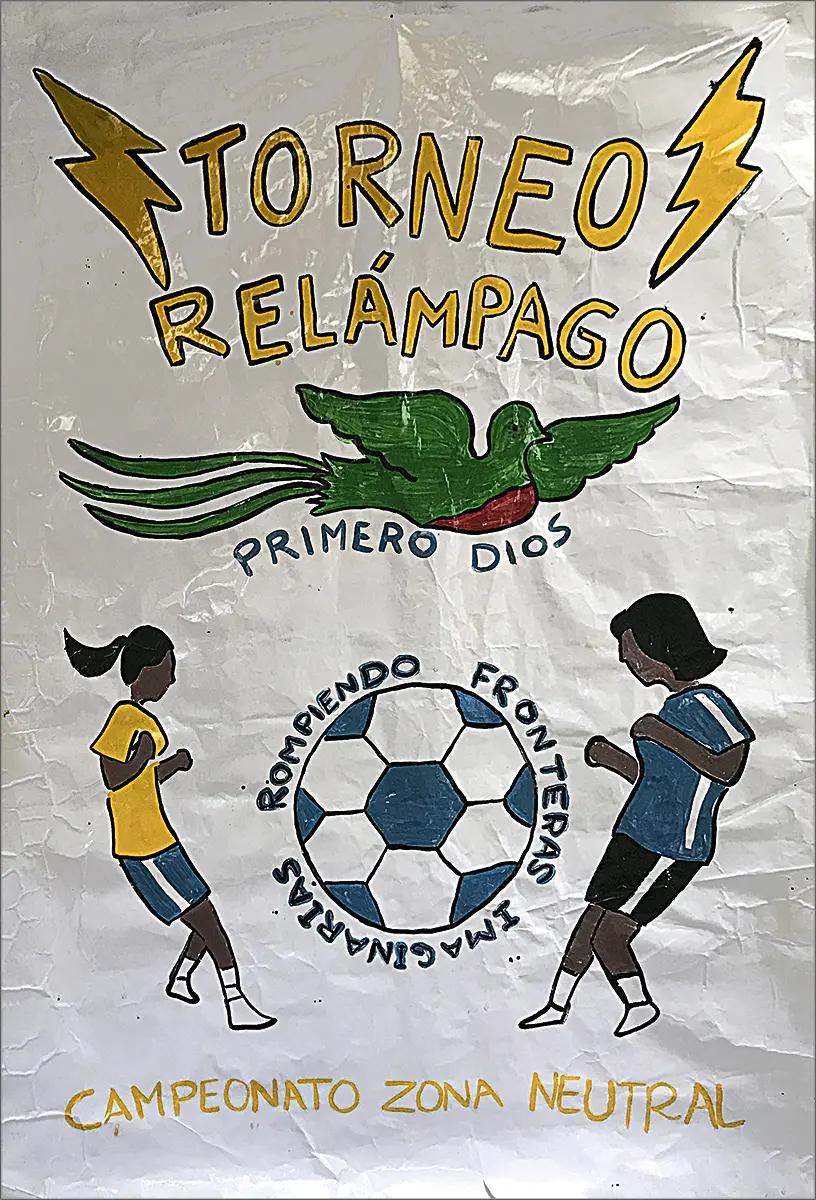
This was only one of the many artist-to-community exchanges that Mosquera orchestrated. The Puerto Rican artist Jesús “Bubu” Negrón was sent to spend a month at a host family in Colom Argueta, the neighborhood that collects and sorts waste from the entire capital. In this seeming dumpster of an environment, Negrón learned about the community’s passion for soccer and its distress with the long-lasting skirmishes that shake the neighborhood. Thus, in an attempt to temporarily calm the waters, he rented soccer fields in a nearby district and organized a much-welcomed tournament for the eight groups in which Colom Argueta is split. The participants helped him decorate the infrastructure with objects they collected for this purpose. In representation of Colom Argueta, Negrón’s host family took part in the Biennial’s official opening cocktail. Again, albeit this not being a part of Negrón’s work per se, the action brought together the “margin” and those who usually float above it, among them, the country’s Minister of Culture and Sports.
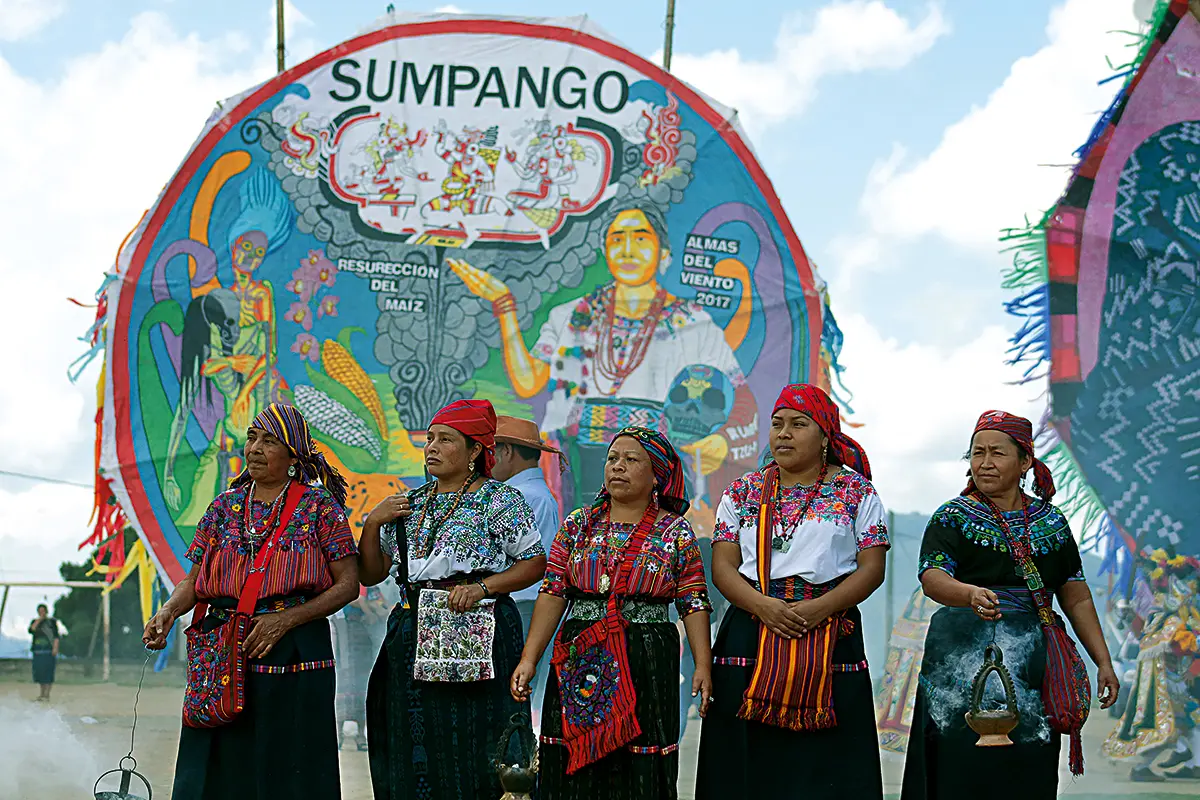
Meanwhile, the Panamanian Umberto Vélez lived for a month in Sumpango, a small town some fifty minutes away from the capital. This characteristic village whose inhabitants mostly wear Guatemalan traditional clothes holds four emblematic celebrations throughout the year. Elaborating on Sumpango’s idiosyncrasy, that is, its great excitement for these festivities, Vélez managed to have the community present the four of them in one day. On August 18th, 2018, the Biennial’s audience (founders included) reached Sumpango’s crest to attend the gigantic kites’ festival and the Maya ceremony for demanding health and bounty to the nahuales, the animal spirits. Visitors and residents were first welcomed by la danza de los moros y cristianos, a syncretic reenactment of the conflict between Muslims and Spaniards. Then, they reached the hilltop where kites flew and candles burned for the nahuales through the street to the cemetery. During this procession, musicians played a marimba on-wheels (a sort of wooden xylophone whose melody is omnipresent in Guatemala) and young Sumpangoers carried upon their shoulders two couples, a black and a white one, of oversized puppets installed onto tables: los gigantes.
It is important to note that Vélez’s work was not a forced exhibition of Mayan traditions. Sumpango’s events committees negotiated with the artist each point of his proposal and discussed to which extent they wished to meet his requests. As far as we know, the majority of the people from Sumpango joined Vélez’s parade, sometimes even filming and photographing it. In fact, they not only decided to back his initiative but supported it with their own means. The logo of the Paiz Art Biennial was even appropriated from the gigantic kites committee, which, by including it on one of the kites, showed a sense of belonging to the macro-event (Biennial’s ads were otherwise absent in Sumpango). This, was no Pro-forma acknowledgment, as most of this performance’s creative and administrative processes were in the hands of the committees’ leaders.
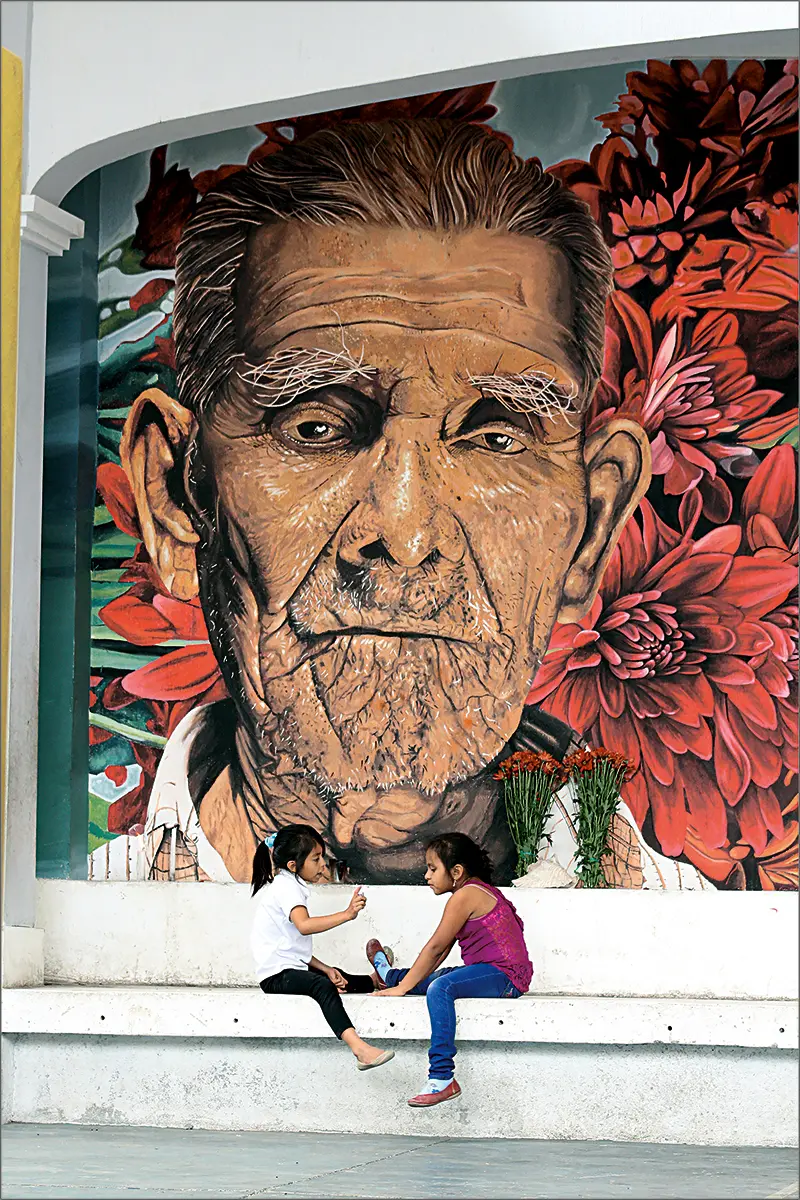
Two more off-the-beaten (touristic and artistic) path communities were involved in the Biennial. The first one, which resides in San Pedro de La Laguna, led by the local Colectivo Canal Cultural, produced murals depicting its heroes –amongst them, a healer who recently passed away aged 100. The second one, which was comprised of local poets, painters, and leaders, with the Biennial’s support was able to restore a Mayan public chapel in San Juan Comalapa.
While, thanks to the Biennial’s open-call for projects, in the main exhibitions one would come across a number of notable emerging artists such as the above mentioned El Colectivo, Roberto Escobar, and Kevin Frank, the Biennial also displayed some of Guatemala’s established artists, in between them, Alfredo Ceibal, Jorge de León, Diana de Solares, and Sandra Monterroso. These artists’ installations were also displayed in a non-hierarchical way and scattered between different venues, including Antigua, the former Guatemala City.
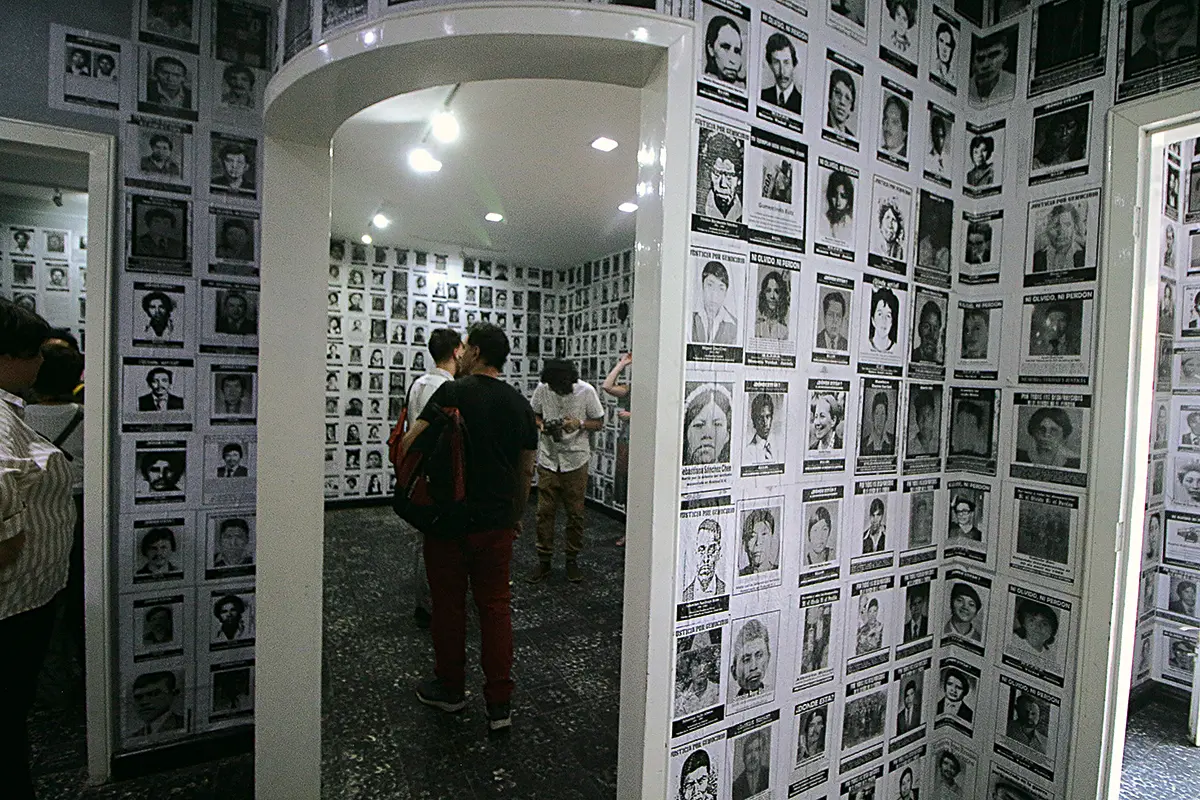
Moreover, the Biennial was able to enlist among its participants H.I.J.O.S. (Sons and Daughters for Identity and Justice Against Impunity and Oblivion, in its Spanish acronym, which reads “sons”), an international organization whose main purpose is to shed light on war crimes aggravated by impunity and oblivion. To this extent, the H.I.J.O.S Guatemalan branch produced 25,000 photocopies with images and information about civil war’s desaparecidos, to be printed and wheat-pasted again and again onto walls. Although they are to be posted in public spaces, Mosquera decided to encapsulate them inside an exhibition space. The group, initially reluctant to such display, accepted the commission thanks to the mediation of Itziar Sagone, an activist and the director of the Paiz Foundation. In Sagone’s words, the collective understood that Mosquera’s goal was not to flag activism as art, nor to shift the attention from the struggle for justice and memory revival to its latent creativity. Instead, he was committed to further elaborate on the project’s aim: by entirely covering the walls of an intimate place with these photocopies, they would physically and emotionally encompass the audience and thus resonate with one even more than outside in the street.
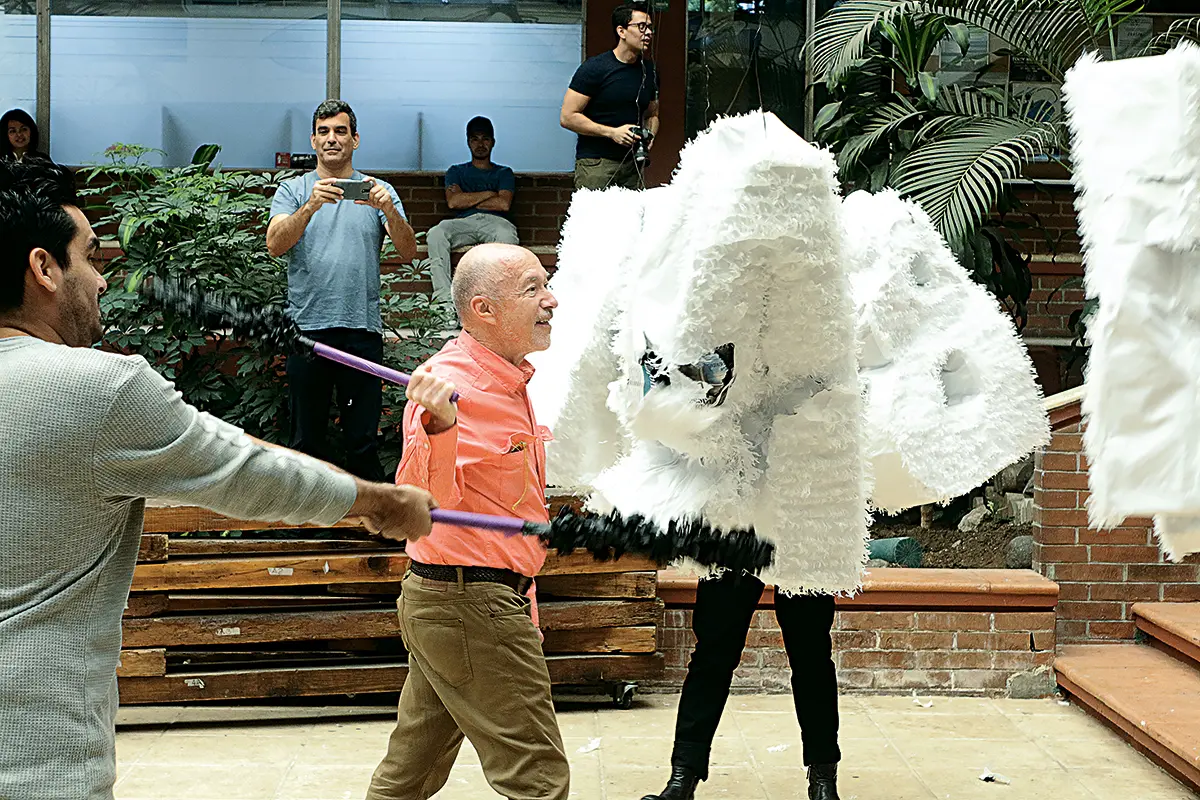
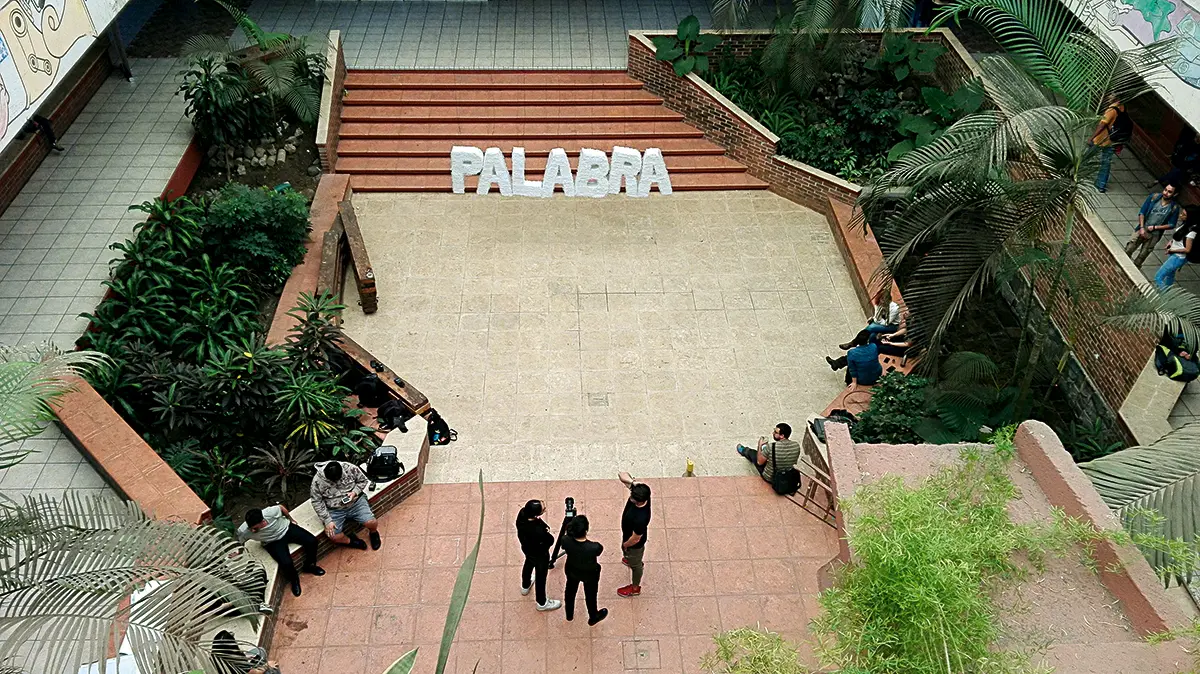
During the opening week, Universidad de San Carlos de Guatemala, a public university in the capital attended by activists since decades before the civil war, hosted a performance by El Colectivo. The two artists in this duo, José Oquendo and Christopher Torres Ticas, hung seven white piñatas spelling out the word "PALABRA" (word) within the Architectural studies’ building. The choice of this setting was no coincidence. In fact, the interior patio’s walls are covered with a mural from the 1970s by Arnaldo Ramírez Amaya that condemns the manipulation of students by corrupt governments and corporations backed by the US. The people who attended the performance were invited to beat the piñatas with bats provided by the artists. The task turned out to be difficult. In fact, the suspended paper letters contained more paper letters: the piñatas were filled with newspaper article cutouts. Nonetheless, it succeeded in expressing how twenty-two years after peace accords were signed in Guatemala the country still laments and questions the losses it suffered. Yet, through its action, El Colectivo also addressed something poetic and less tied to the media: the way we verbalize and phrase our thoughts. In this sense, the performance was cathartic not only for the internal armed conflict but also for the faulty usage we make of the word.
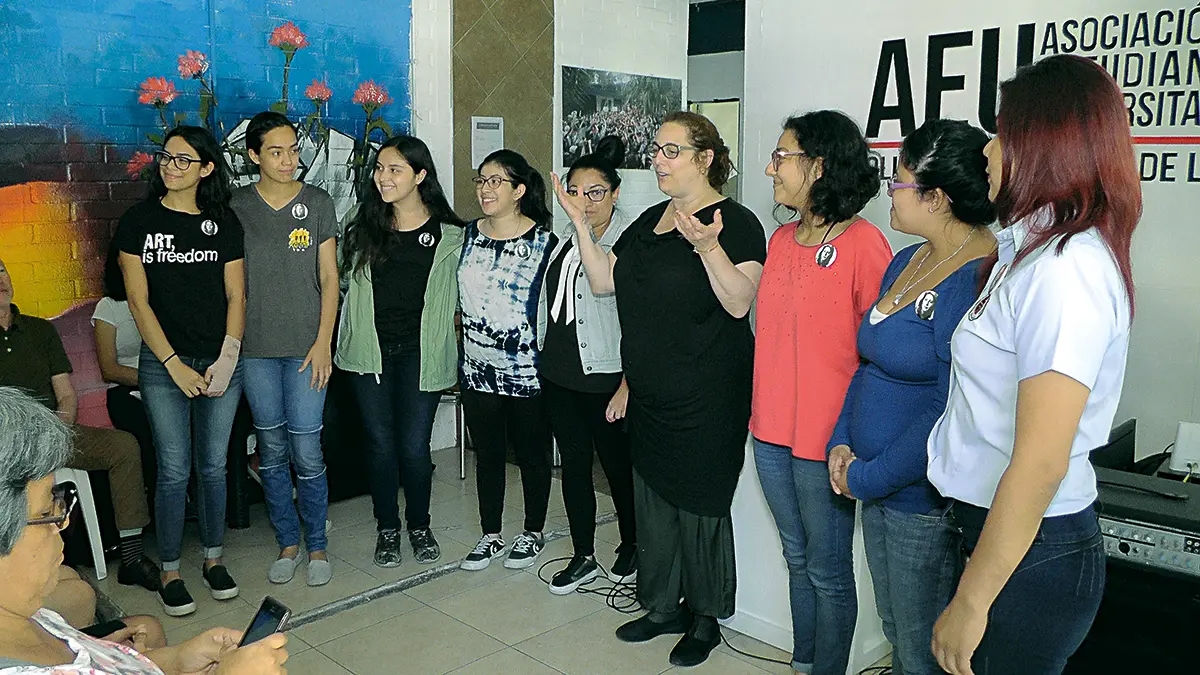
Also within the University’s grounds, Cuban artist Tania Bruguera co-authored work with the artivist group Proyecto 44 and thus boosted its visibility. The project aimed at facilitating the denouncements’ filing for sexual harassment and abuse from female USAC students. By offering to collect and brandish against the prosecutors the students’ complaints, the activists encourage them to actually make such depositions. To inaugurate Proyecto 44’s initiative, Bruguera commissioned pins printed with portraits of Rogelia Cruz, Guatemala’s first Miss Universe and a graduate of San Carlos de Guatemala brutally murdered during the civil war for her militancy. During this intervention, pins were appointed onto the students who stepped forward to condemn their harassers, and a box for complaints was installed at the entrance of the recently opened University Students Association. USAC activists and members of Proyecto 44, who conceived and now oversee the system, also received pins.
Mosquera invited Cuban artist René Francisco, known for his visual artwork and for conducting pedagogic programs in Cuba and abroad, to develop whichever project he would see fit for a Guatemalan social context of his selection. Francisco decided to work in the city’s oldest public hospital. There he held art workshops with students of different disciplines for terminal patients. At the end of these workshops, in the Biennial’s main exhibitions’ spaces, he did not show his creations but those of the patients. Most of the installations contained their personal belongings or hospital gear intervened by them.
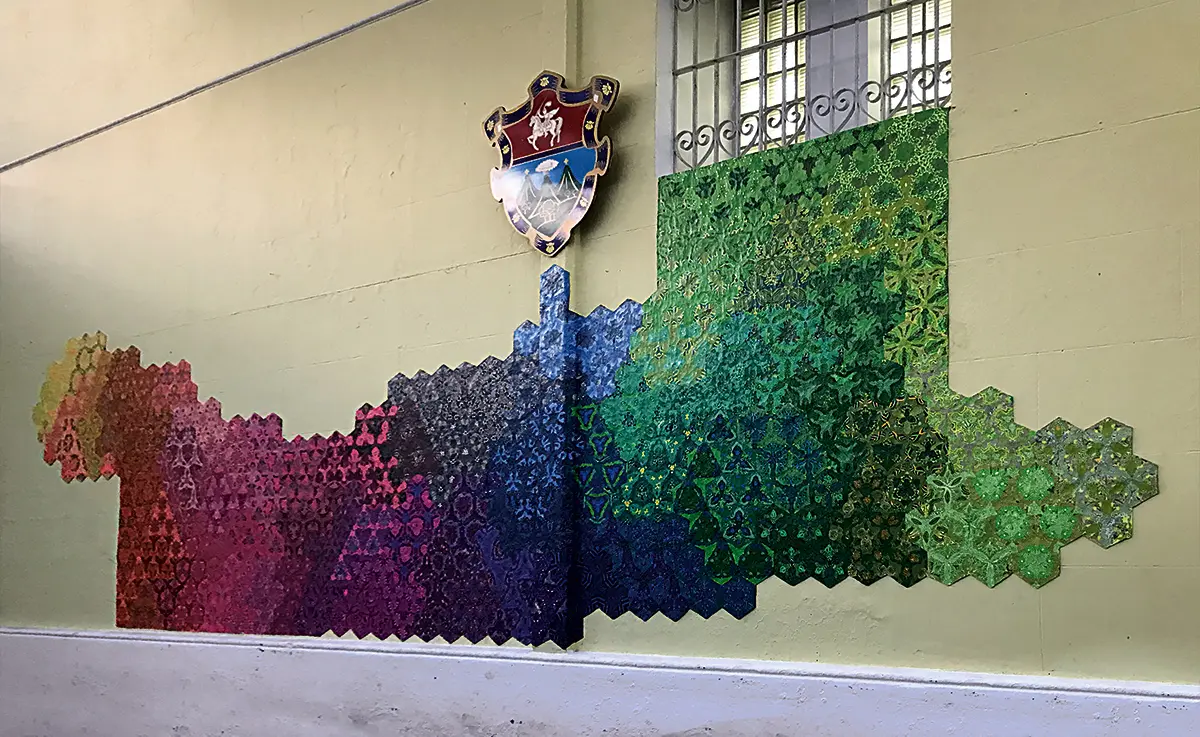
Going back to the introduction of this partial report of the XXI Paiz Art Biennial, there is no wonder why it was named (and not themed) Más allá (Beyond), as it solicited that both artists and the audience went beyond their usual wanderings and doings, in other words, their comfort zones, to explore new possibilities for themselves and the others. Another example that supports this assertion is the project by the Chilean artist Magdalena Atria. Best known for her trade-mark practice of blending plasticine of different colors to compose site-specific installations, she was invited to present one of her dazzling mosaics in the Biennial’s main exhibition. Then, Mosquera had Atria leave the capital to reach Rabinal. In this village, she held a workshop to introduce the community to her plasticine “painting” technique. Rabinal is a village in central Guatemala, where, according to Mosquera, phone signal is flaky but craftwork traditions are undoubtedly vibrant.
Furtherly building upon his transgressive vision, Mosquera had Más allá also go beyond a typical art biennial’s space and time. To this extent, Guatemalan artists Naufus Ramírez-Figueroa and Sandra Monterroso have commissioned exhibitions in Mexico City and Panama City, respectively. The first one, which opened in Galería de Arte Público Siqueiros, was organized and curated by the Sala de Arte Público Siqueiros (SAPS), and “appropriated” by the Biennial with the acquiescence of the artist, SAPS, and SAPS’ curator, Michele Fiedler. The second one, at Galería NG, in Panama, opened on October 10th and remained on view through November 10th, that is, more than a month after Más allá’s main activities ended (August 16th – September 16th). Moreover, in Mexico City, H.I.J.O.S. held a workshop at Museo Universitario Arte Contemporáneo (MUAC) and covered the walls of Universidad Nacional Autónoma de México with hundreds of photocopies.
Whereas listing all the XXI Paiz Art Biennial’s participants is hard work, covering all that took place in Guatemala, Mexico, and Panama during its course is virtually impossible. Mosquera’s enterprise involved many people and based itself on respect and recognition for others. Moreover, it reached beyond the schemes and systems that inscribe a work of art or a biennial in its framework, and what artists, the audience, and society make of it. It prompted the idea of fostering dialogue, processes, and exchange not only as part of the work but as the Biennial’s ultimate goal. This kind of experience, while it encompasses and surpasses relational and community aesthetics becomes —more than a new aesthetic approach— a system that is driven by art but not by the production or creation of new artistic modalities. This system aims at the experience and the continuative production of culture; it lacks expectations towards the materialization of an object, a performance, a book, a video, documentation essentially because it does not need it. Furthermore, in it, the participants’ experience extends over a period of time and a space considerably greater than art’s. Vélez’s festival, for example, began for him when he moved to Sumpango; for the Biennial’s goers, on the morning of August 19th, as they left the city and drove towards the village; and for the people of Sumpango, when something as certain as the days on which their festivities take place slightly quaked in the name of art and entertainment.
Gerardo Mosquera and his team, which included curator and activist Maya Juracán, educator and artist Esperanza de León, and curator Laura Wellen, delivered to the Foundation something more than an art biennial of or for Guatemala. They laid the foundations for a model that can make the event inclusive and participatory from the highly centralized country in which it is based.
Finally, it is possible that Más allá urged a new kind of art biennial, one that takes off from its artistic platform and focuses on that which art can engage and stir in a given socio-political context. This time, the Paiz Art Biennial surpassed itself in order to effectively deploy creativity as a non-violent means of social change. While this concept is not new, it certainly transcends art curating. If cultural agents are those who engender ethical and critical thinking within citizens and societies, Mosquera’s work in Guatemala is paradigmatic, accomplished, and unpretentious model of cultural agency.
NOTES
1. In an interview with the author, August 19th, 2018, Guatemala City.
2. In an interview with the author, August 18th, 2018, Guatemala City.
LUISA ALLENDE
Curator and researcher of art on the margin.