
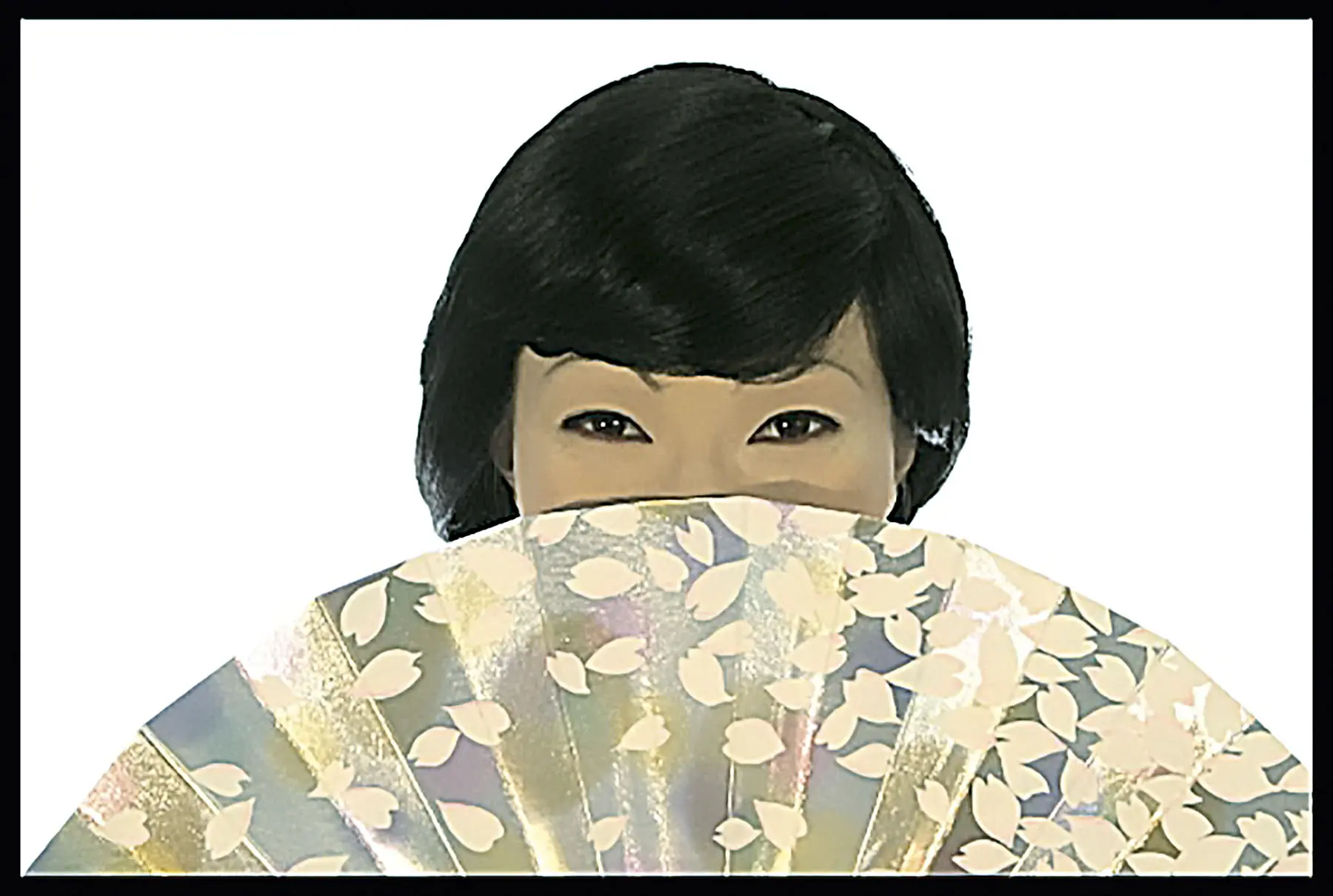
Out of the expansive artistic corpus that Teresa Serrano has produced, there may be one work that encapsulates it: a single-channel video titled Efecto cameleón (Chameleon Effect, 2004). The video begins with a woman dressed in Kimono who then changes into a business suit subsequently shedding it and donning ripped jeans, a short body-hugging tank top tied at the waist, distended combat boots, and a pierced mouth with lush lipstick and polished fingernails who defiantly laughs while smoking a cigarette. On the one hand, the work is a metaphor for Serrano’s heterogeneous artistic practice of sculpture, drawing, painting, installation, photography, video, performance, and a combination of these. Serrano’s subject matter is encompassing as well: although the woman in Efecto cameleón is Japanese, the signifiers of her clothes allude to a plethora of subtext via traditional feminine attire to white-collar vestment to its ostensible antithesis; that is, a kind of iconoclastic, anti-status quo rebel. There are other symbolic tensions inscribed in the protagonist’s mutable attire too including East and West, upper and lower class, tradition and the contemporary, and history and the present day. The video is also ciphered through the context of identity shaped by vocation, ethnicity, and sexual orientation. In one sense, Efecto cameleón succinctly manifests right before our eyes what the philosopher Judith Butler has coined the performance of gender.1 But the video expands the gendered construction of identity into social, historical, and cultural loci and in doing so, is emblematic of Serrano’s art characterized by a critical acumen and formal diversity and narratives that reflect her transnational artistic biography.
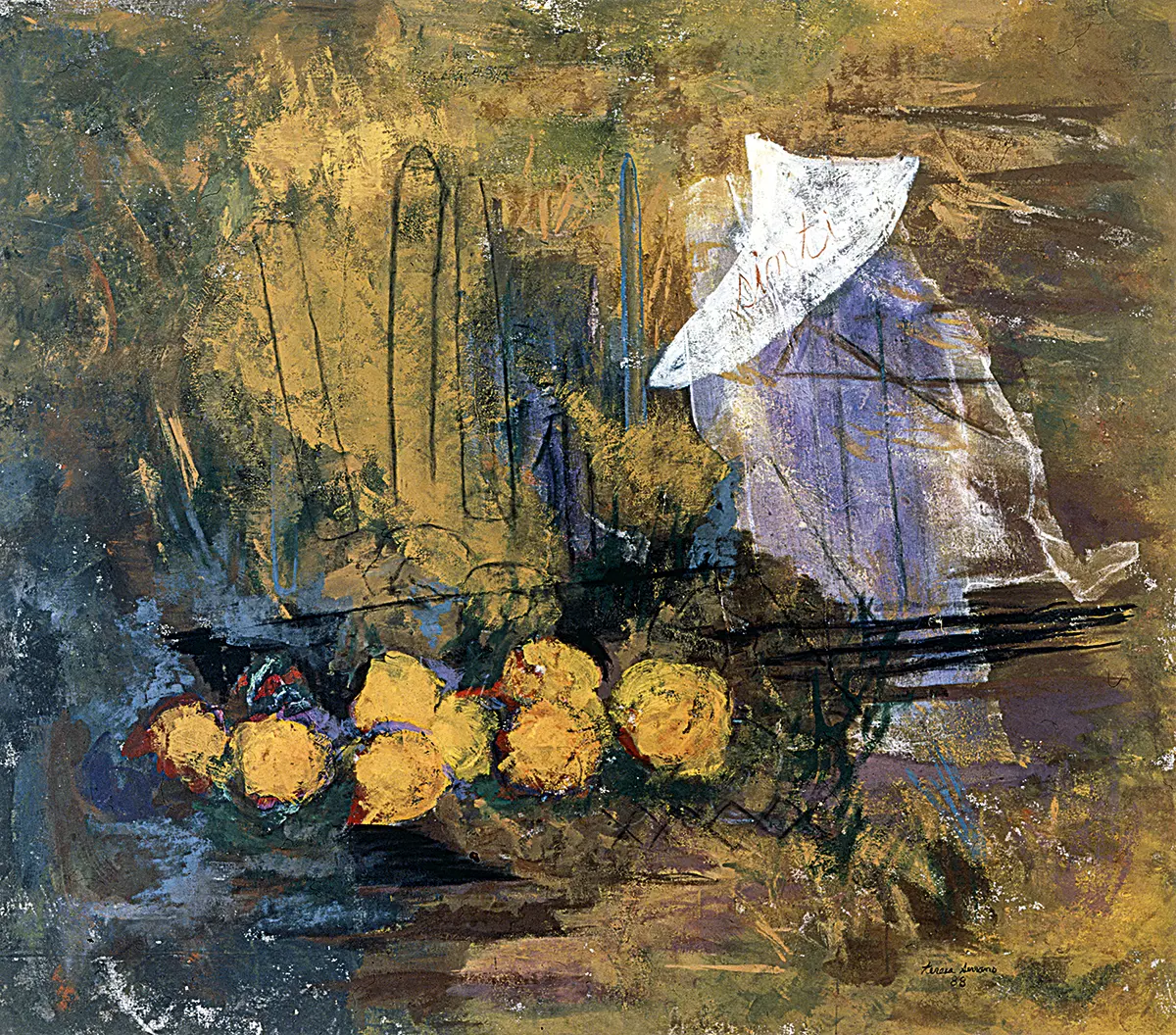
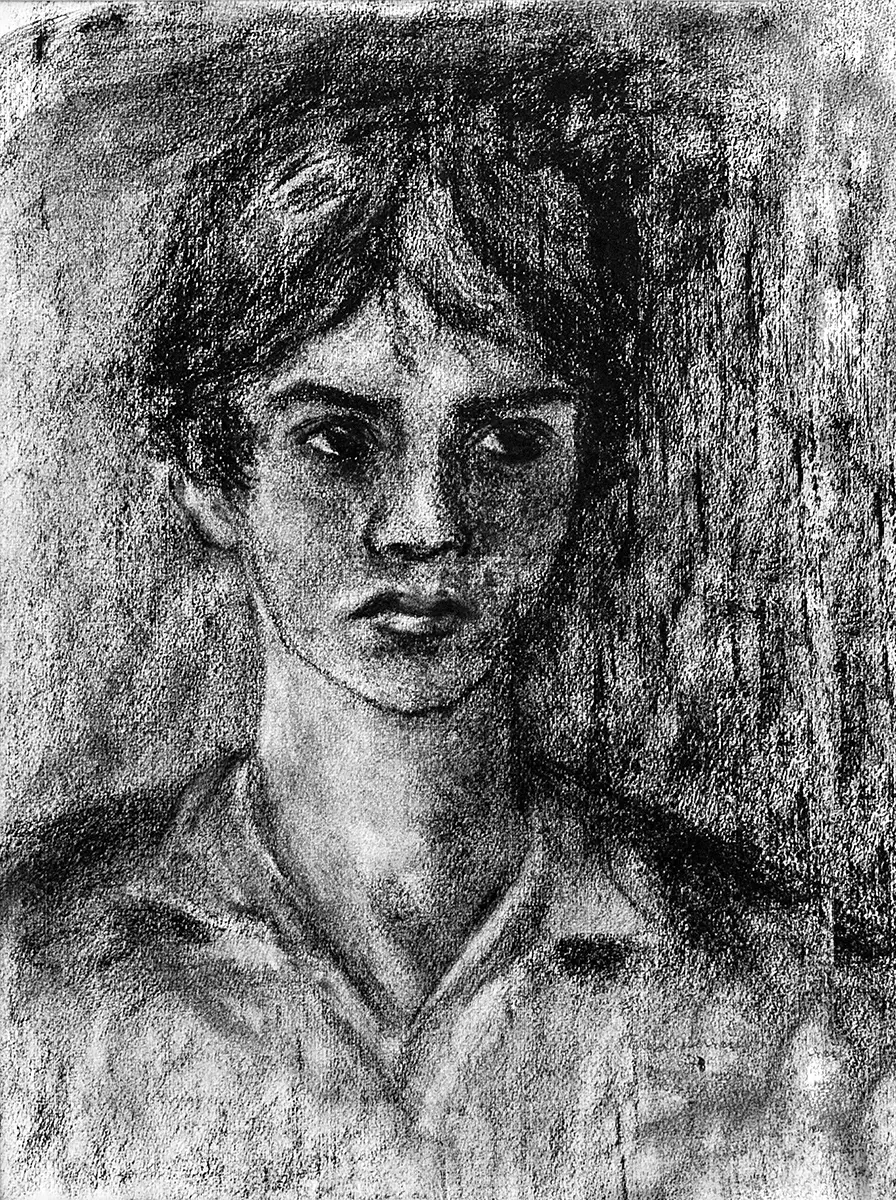
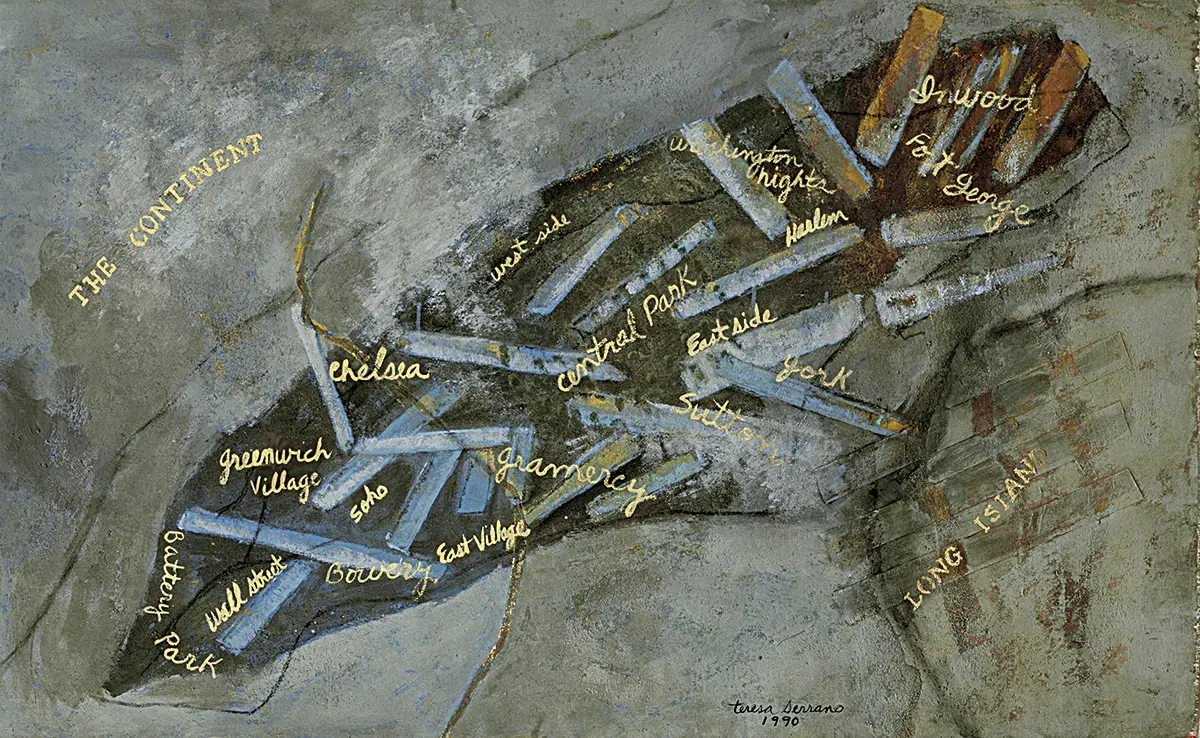
Arriving in New York City from her birthplace of Mexico City in 1982, which was two years before Julio Galán and Gabriel Orozco in the late 1980s, there may be two artworks that bookend her peregrination: a work on paper of her song titled Julio (1978) who stayed in Mexico after her departure, and a mixed-media work El pañuelo de Don Julio (1988), which was created after the death of her father. Julio evinces a sensitive, melancholic, and introspective mimesis, while the latter is laden with conceptual verve in weaving her father’s handkerchief into the work in the midst of debates in New York City in the early ‘80s about painting’s demise and rhetoric of medium specificity. Serrano is prescient in honing in on issues that had currency during her New York City years: whether exploring geopolitics and differential power relations between Mexico, South America, North America, and Europe, feminist heterodoxy, and a panoply of historical and topical themes of a political and even philosophical nature. An early painting that rubs up against the first concern is The Island #2 (1990) based on an idiosyncratic depiction of her new home of Manhattan in which geography west of the borough is literally described as The Continent. The deadpan, albeit ambiguous rendering harks back to early cartography and a slew of spatial tropes including medieval T-O maps, Joaquin Torres-Garcia’s iconic image of an “upside-down” South America, to Borges-like metaphors of space, and to socio-spatial theorists including Pierre Bourdieu.
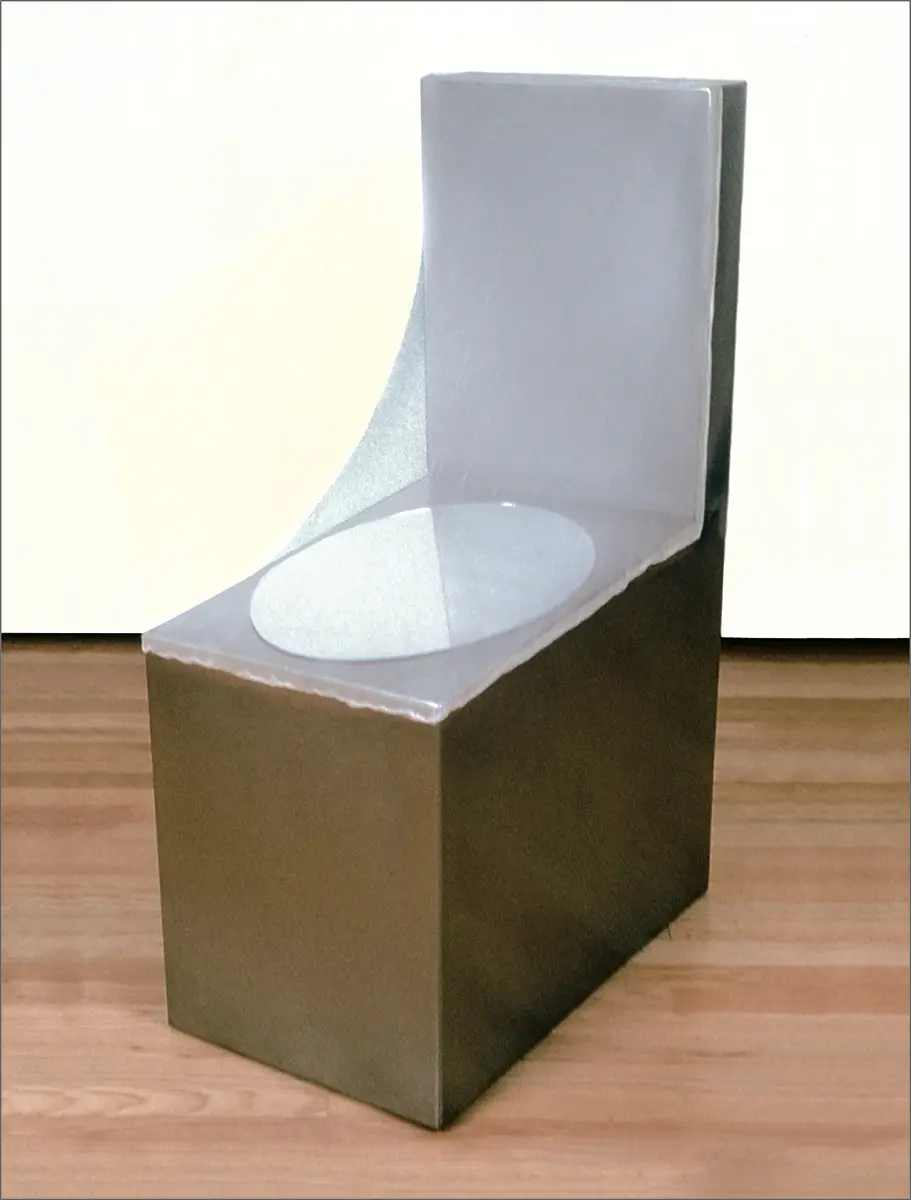
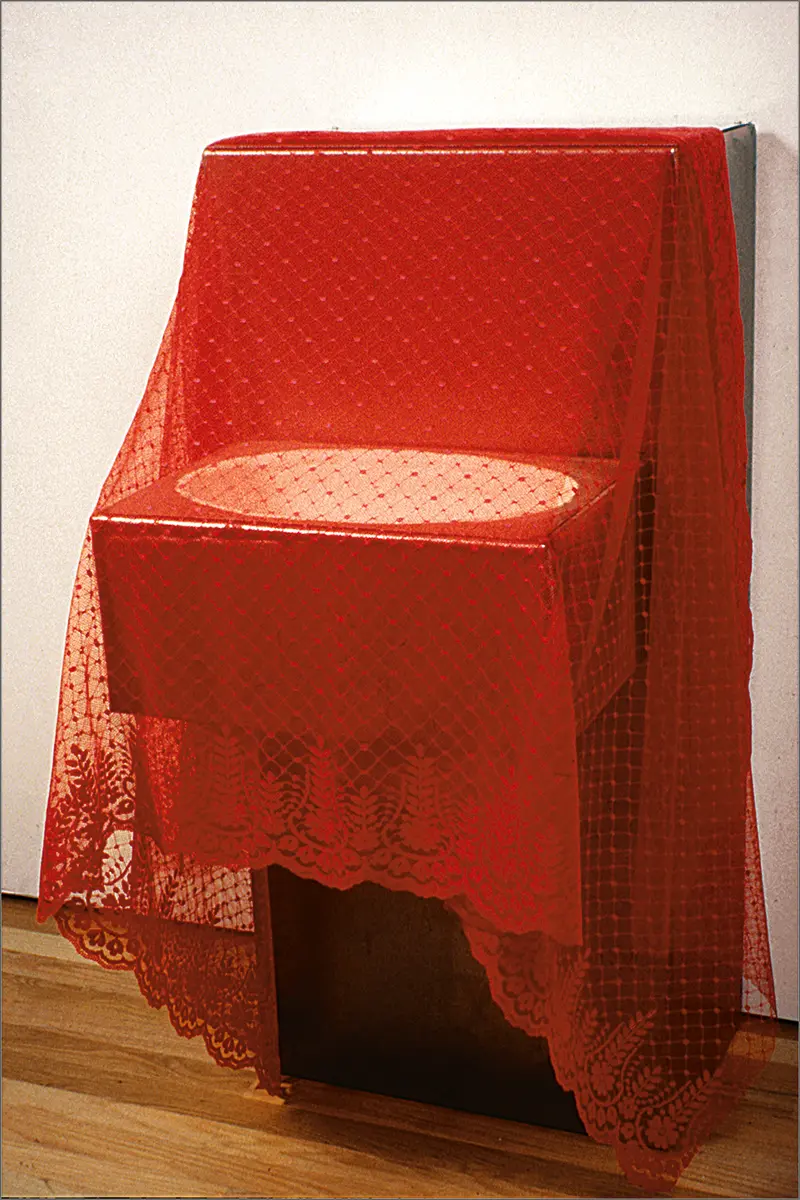
For Serrano, arriving in New York City in the midst of impassioned discussions around painting and its contestation by photographic and temporal media in the wake of the important Pictures Generation (1977) exhibition at Artists Space may have been an inspiration in the formal expansion of her work into time-based art. While not yet venturing into a video that would later round out her practice, her sculptural work on various scales that paralleled her painting offered other discursive possibilities than the two-dimensional medium. In Spell #1 (1994), Sleeping Beauty (1995), and One, Two, Three, Make a Wish (1997), the sculptures are characterized by a visual elegance and finesse and evoke domestic interiors. Here and there the sculptures also seem to cite history as well as other artists Serrano was in ostensible dialogue. Spell #1 has overtones of Marcel Duchamp’s Fountain and the readymade as well as Robert Gober in feigning a washing basin seemingly gendered by blood, red shawl placed over it evoking solemnity, the maternal, religiosity, or some esoteric funerary rite. Serrano’s citation of her predecessors and peers is a point for her art’s critical departure. In the same way that Eve Hesse subverted Minimalism2 by evoking, in her words, “the feminine body” by way of her latex sculptures,3 Spell #1 encompasses a broad narrative scope that is framed with a feminist criticality. This is also evident in Sleeping Beauty and its play on the fairy tale within a post-minimalist idiom that erases any sense of what the title may refer to. It, too, underscores both a high, refined design aesthetic as well as a poignant feminist critique of how identity is constructed from without at such an early age in the guise of subliminally gendered children’s stories. Possibly one of the most psychoanalytically imbued works from this period is the unnerving poetic quietude of One, Two, Three, Make a Wish.
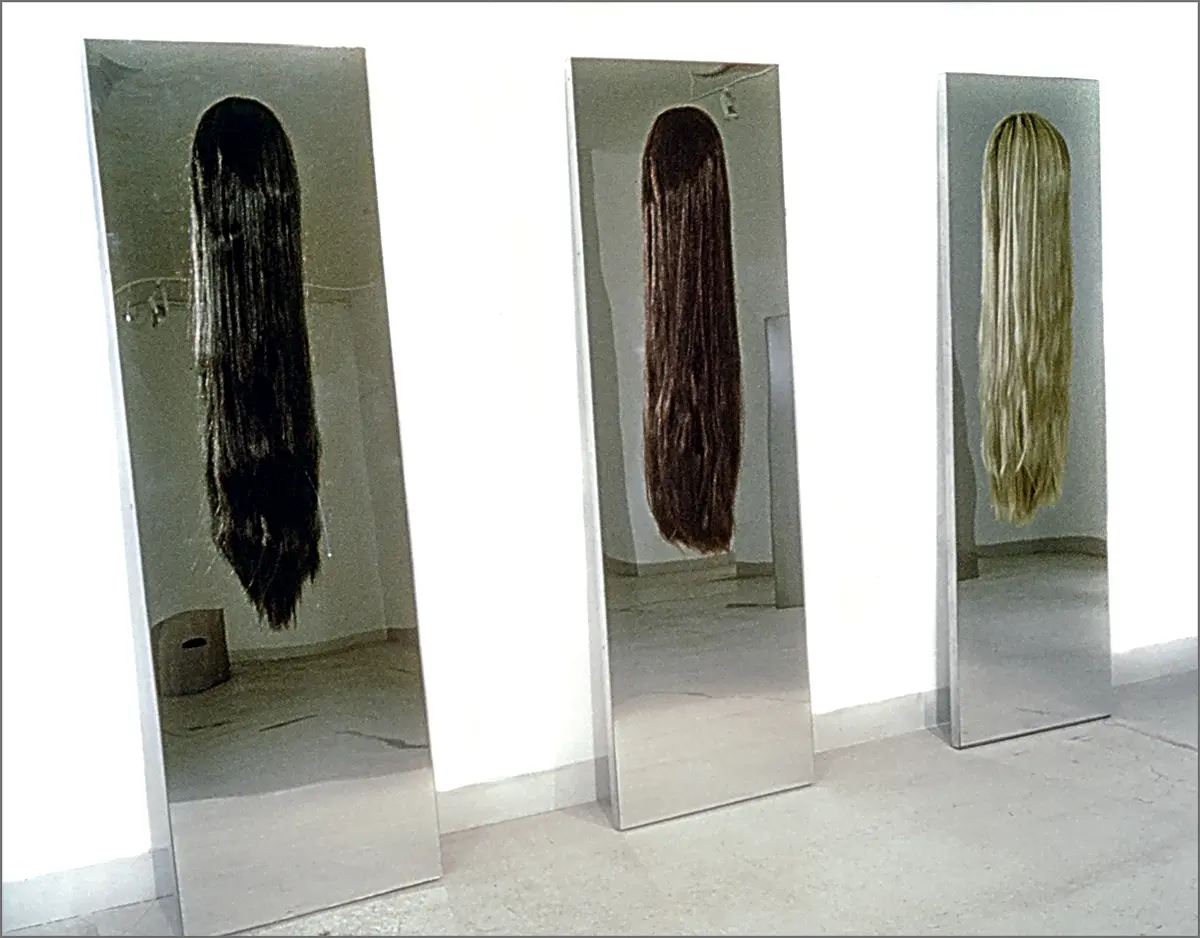
Consisting of three rectangular mirrors that are life-size and lean from the floor against the wall, what elegantly falls from each one from where a person’s head might be if they were standing in front of any of them, are female wigs made from human hair. Wishing, as the title implies, was theorized by Sigmund Freud as a desire repressed by the superego; but a desire that may have been deviant and transgressive of societal norms. Serrano, however, decenters Freudian theory from a phallocentrism of the subject into the zone of female desire, as both the male and female viewer are superimposed onto the female surrogates in which the viewer’s body is reflected in the mirror and the wig doubles as fetish and charged signifier of the viewer’s imagined subjectivity. The formal and conceptual device of the mirror sites, of course, Jacques Lacan’s mirror stage but subsumes a myriad of artists who employed the reflective glass, particularly in which, as Hesse said, the “feminine body” manifests either literally or figuratively. In Édouard Manet’s historically iconic A Bar at the Folies- Bergère (1882), for example, the viewer is implicitly reflected in the mirror as body-double for the bourgeois male speaking to the working-class female bartender underscoring their interaction as politics of class and gender. A more recent work that cites Manet but folds the myth of the heroic male artist as well as the external construction of female subjectivity cogently articulated by Laura Mulvey in Visual Pleasure and Narrative Cinema4, is Jeff Wall’s Picture for Women (1979). In this work, the camera is substituted for the upper-class man in Manet‘s painting, which opens up both works to a whole series of discussions around agency, the male gaze, and how the self is unconsciously shaped and formed by visual culture. In a brilliant intertextual maneuver, Serrano shifts the terms of engagement of the viewer regardless of gender, onto the wig and reflection of the viewer’s actual body in the mirror itself. For women, Serrano implies, you are partially reflected and maybe your unfulfilled “wish” is to have some other body than your own; an ideal of beauty forever unattainable and externally devised by a patriarchal superstructure. And for men who find themselves mirrored in the work, you too are facilitators in patriarchy and the construction of a fiction potentially traumatic in the formation of female subjectivity. A telltale sign of Serrano’s deft artistic intelligence resides in the work’s formal economy of means yet exponentially powerful and conceptually complex in the subject matter. This is also the case with Serrano’s video work which runs the gamut of a slew of genres that she reconfigures from a myriad of sources.
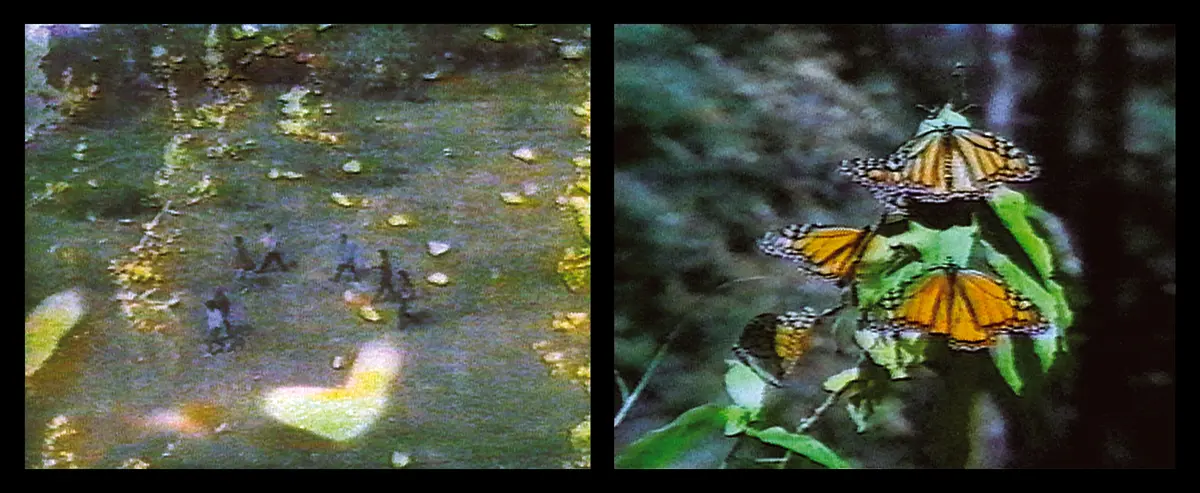
Teresa Serrano’s diverse video practice, whether single or multiple channels or projected or presented on monitors, is underscored in the multiplicity of themes it addresses and the absorption of the medium’s formal and stylistic historicity. Like directors who were trained in painting and then began to make films including Peter Greenaway, David Lynch, and Derek Jarman, Serrano’s work is also informed by her other artistic endeavors. Some of her films are sculptural through a palpable, volumetric use of architectural settings, while others still have an uncanny painterly quality akin to an animated mural. As if this alone wouldn’t distinguish her from her peers, Serrano’s videos are also informed by a wide range of subject matter and genres historically associated with the moving image, either in film, video, or television. Siempre el pasto del vecino es más verde (1997), which dovetails on the vernacular adage that the “grass is always greener on the other side,” becomes ever more pertinent today with Donald Trump’s xenophobia and attendant deportation policies and desire to build a wall between the U.S. and Mexico. Consisting of a three-channel video installation, Siempre el pasto del vecino es más verde entails immigrants crossing over to the U.S. while monarch butterflies make their migration from southern Canada to the state of Michoacan in central Mexico. Dislocation and consequential subjection are just some of the narratives woven into the work that are stunningly contrasted between the visually mesmerizing inundation of the butterflies with the alterity of the immigrants’ exile. Subtle appropriations of genres in this work include documentary and video journalism and the type of footage one might find on the National Geographic television channel.
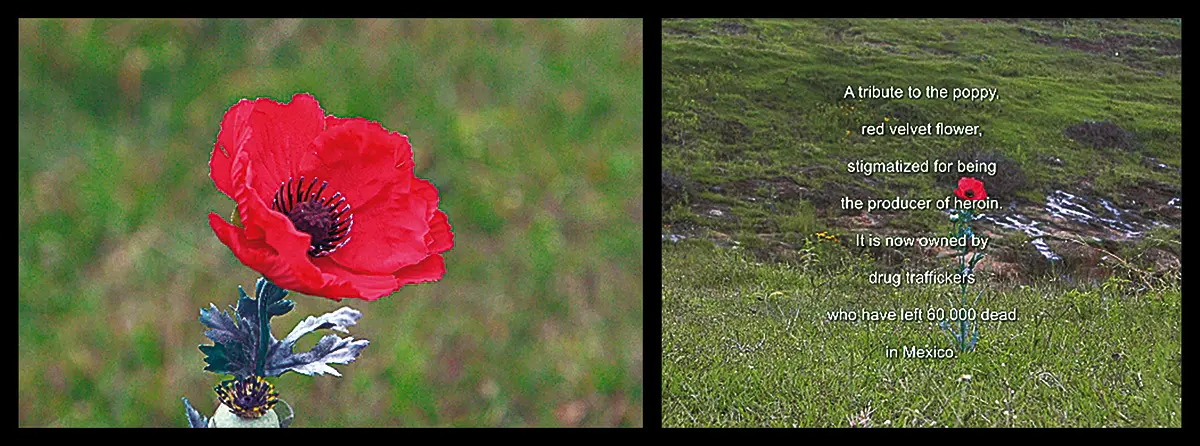
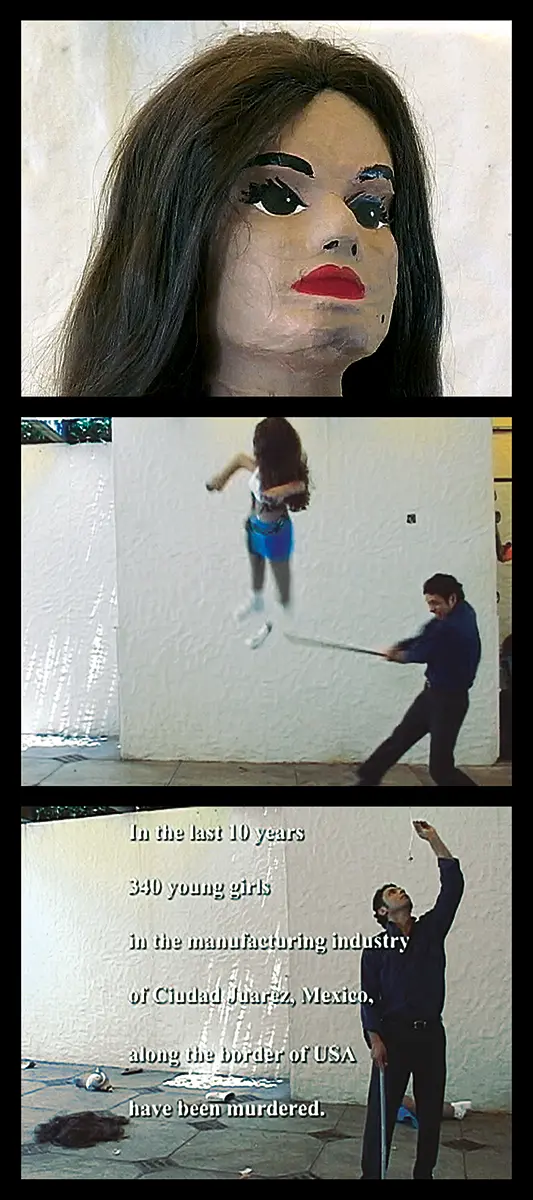
Other videos have focused on border issues as well but within a broad purview of contexts including La Piñata (2003) and most recently Amapola (2017). La Piñata, as the title implies, opens with a man violently hitting, with subtle sexual and misogynistic allusions, the eponymous paper birthday effigy. What heightens the video’s oblique narrative is that La Piñata is in the form of a clothed latex sex doll capped with a female wig. The film ends with a destroyed piñata and where one may subsequently see a video’s scrolling credits, what the viewer reads instead is a horrific statistic of what some have construed as a kind of femicide: more than 370 unsolved murders of women in Mexico’s Cuidad Juarez. Not unrelated is Amapola (2017) in that both works are linked in a roundabout way with the U.S.; the former with the Nafta treaty and the latter with illicit drug consumption. Amapola, which means poppy in Spanish, is a folk song written in 1920 and the composer uses the flower as a metaphor for unrequited love. Serrano, however, inventively transposes the song within the context of Mexican drug cartel wars where drug cultivation and smuggling have led to the deaths of more than 70,000 individuals including innocent victims as well as those tied to the lucrative drug markets and war for their domination. Serrano’s extensive videography that cites a panoply of references to film and television including journalism, soap operas, advertisement, talk shows, newscasts, and narrative cinema is part of a prolific corpus that includes painting, drawing, sculpture, photography, installation, and performance.
Teresa Serrano has contributed much to contemporary art internationally, especially in her hometown of Mexico City and New York City where she “commuted” back and forth for some 30-plus years. Although her artistic trajectory may be said to be a “tale of two cities,” it has ostensibly addressed demographics that have been marginalized but also speaks to humanity on a much broader scale. The abovementioned works that may focus on sexual inequality with a feminist criticality, transcend localities to reveal patriarchy as a transnational condition. The same thing can be said of her art in which geopolitical divides serve as thematic backdrops. The geopolitics of the border is global and symptomatic of our collective contemporaneity. And in a larger sense, Serrano’s work does not only articulate the troubled axis between the U.S. and Mexico, but also North/South America, dominant/subaltern, center/periphery, and a host of other social, political, and gendered asymmetries of power systemic to the world today.
NOTES
1. Judith Butler, Gender Trouble: Feminism and the Subversion of Identity. London and New York: Routledge, 1990.
2. Ana C. Chave, “Minimalism and The Rhetoric of Power.” Arts Magazine, vol. 64, no. 5, (January 1990): 44-63.
3. Ana C. Chave, “Minimalism and The Rhetoric of Power.” Arts Magazine, vol. 64, no. 5, (January 1990): 44-63.
4. Laura Mulvey, “Visual Pleasure and Narrative Cinema.” Screen, vol. 1 issue 3 (October 1975): 6-18.
RAÚL ZAMUDIO
New York-based independent curator and art critic. He is on faculty at Parsons the New School for Design.