Mexican artist Martín Soto Climent says openly—even including it in his exhibition, in the text he wrote for it—that he holds onto poetry “because I intuit that Being, as an entity, is Total, and it encompasses more than we can understand when we move within the tangible bounds of reality.” On the basis of this certainty (or sensation in the face of the immanent), Soto identifies with Argentine poet Roberto Juarroz, in whom he “discovered a silent teacher” after his girlfriend’s father gave him Juarroz’s books as a gift two years ago.1 It is for that reason that Soto dedicates his most recent exhibition to Juarroz, even titling it after a verse by the poet: Todo comienza en otra parte (Everything Begins Somewhere Else) is a statement of principle that plays, from the start, with an ambivalence between the original or primeval as a possibility—in art and poetry—and the processes—in the strictest sense, critical—that can drive us to invoke it as theme, allusion, reference, metaphor, or end.
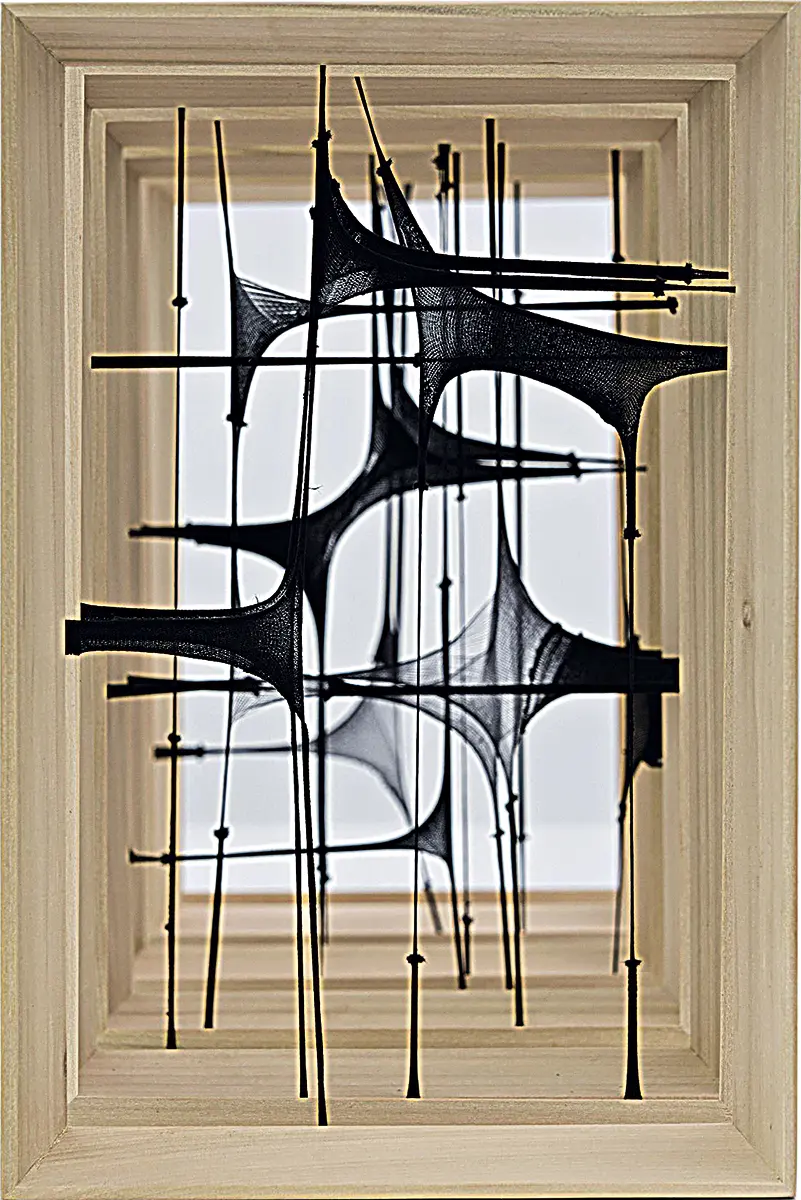
As he explains, Soto Climent goes back to Juarroz because the Argentine poet “understands the poems as a space for thought, a place where humans wonder about reality, about deities and the divine, about humanity itself. Because of this, Juarroz’s poetry can be described as philosophical, since it poses the same questions as the discipline of philosophy even as he knows from the start that there are no answers to be had.” The Juarroz quotation that Soto Climent brings forth to synthesize these attributes (and their impossibility) is a paradoxical enumeration: “The fate of the modern poet is to rejoin thought, feeling, imagination, love, creation”.2 The candor and sincerity proclaimed by this list of generalities—a list of the attributions and empowerments of the modern artist or poet—serves for the minimal transubstantiation of objects to which Soto Climent appeals—to continue with the exhibition text—when he declares (or, rather, describes) that his relationship with objects attempts not to alter them fully but to operate “subtle modifications” that seek to generate “a reality that duplicates the reality of the object.” Soto Climent proclaims himself suffocated by “the scarcity of rational possibilities for thought”, which he considers “extremely limited and rigid, unable to dissolve into such essential matters,” and in that way he tensions and wraps, or covers or superimposes, as the case may be and the purpose too, canvases on their stretchers using black elastic hosiery, in what can be read as an extension of its meaning and significance as objects. Where the canvas on a stretcher ceases to be a support and becomes a dynamic and complementary agent of an action that objectualizes it in order to transform it into what it ultimately is: a meditation on substrata. Matter as a topic, or, better yet, materials as a topic, in what, I insist, is a quest for what could be a matteric essentiality—given the reference to the poetic substratum—or a representation of the materials in lieu of the materials themselves, tending in this case to their sublimation. The material, despite its being—still and in essence—what it is, becomes something else; subtly, as underscored by Soto Climent, who describes it as alterity (other or in the place of another) rather than as alteration (an essential change). Following this mystique, and using the word in more than one sense, he personally produced a floating montage, where the works hang on both sides of the partition screens, transformed into one another’s counterparts to orchestrate a game that on the basis of the organic, and I suppose also the primeval, contrasts, complete, open, and amplifies the essential meaning of its patters, necessarily connected to its elements, appealing to the essential fragility that says and constitutes them as writing and matter. These quests after the essential meaning of things and the representation of the primeval, which follows a romantic vein towards the truth that is at the same time Hegelian in its aspiration to the absolute as well as decadent in its extremes, exhaustions, and reductions to absurd, and which years ago drove him to create, fascinated as he was by his reading of Huysmans’ À Rebours, his own Caramel Huysmans, which attaches in turn to a hybrid object of his own creation: a change purse (in red felt, open in an obscene way to suggest a) vulva”, to create an exhibition that drives him to insist on its paradoxical nature: on the effect or clash they cause as metaphors. In this way, he has the hybrid as the conceptual receptacle that opens towards the paradoxical ambivalence of its contents in the quest for ultimate truth. For example, he may lay wires like animal figurines that end up being winged insects, or has a butterfly be born from an eggshell. In that fragility as objects and ideas their miracle arises. And this is why it bears underscoring the verse by Juarroz that closes the epigraph Soto uses for his gallery text: the “There where it begins”3 of things that “strictly speaking was never here.”
NOTAS
1. As he said in an interview with Felipe Pando, published in the L’Officiel web portal on December 12, 2018.
2. Roberto Juarroz, “Poesía y realidad” (Poetry and Reality), text read on the occasion of his induction into the Argentine Academy of Letters.
3. Roberto Juarroz, second poem of his Decimotercera poesía vertical (Thirteenth Vertical Poetry).
RICARDO POHLENZ