Vandalic, by artists José Ángel Vincench and Henry Eric Hernández, is an exhibition essay that, above all other virtues, underscores the unsettling, revisionist, and ironic nature with respect to any model, canon, or paradigm stemming from stale historical consecration and stabilization maneuvers. Each and every one of the pieces included—in the form of a syntax—this penetrable and immersive text enjoys the inquisitive, critical-oriented, vocation that has shaped the discourse of Cuban art in the last thirty years.
The exhibition is a truly remarkable event, both visually and in terms of its narrative-conceptual predispositions. It offers an impeccable mise-en-scène that subjects the works by Vincench and Hernández to a dialog while maintaining a stylistic distance between the two proposals as well as their respective discursive autonomies. Together they weave a story that points to the core of the historical writing devoted to the protection of traditions and the consecration of myopia. It is a sort of critical commentary that, while paradoxical, abandons the erosion of language in favor of more subversive questions, framed by the cultural reach of its content and sophistication in the handling of irony and persuasive induction.
I have known Hernández and Vincench for over twenty years. We belong to the same generation of dissenters and agitators. While the two of them have been active in the realm of artistic production and artefactual, my practice has focused on the spheres of discursive production and art criticism. But the three of us share a sort of symbolic pact formulated during our generation when distrust and the need to dismantle “that which was given” became a modus operandi for object-art—as well as for the critical essay that explored it to varying degrees of success. All three, I insist, emerged from an intellectual class that did not believe in tradition, rejected the grand stories, and dismissed—de facto—the passports of utopia. This is perhaps the reason why during my stay in Havana and while visiting this special exhibition, I was overwhelmed by a contradicting feeling concerning a profound sense of the present and nostalgia for the past.
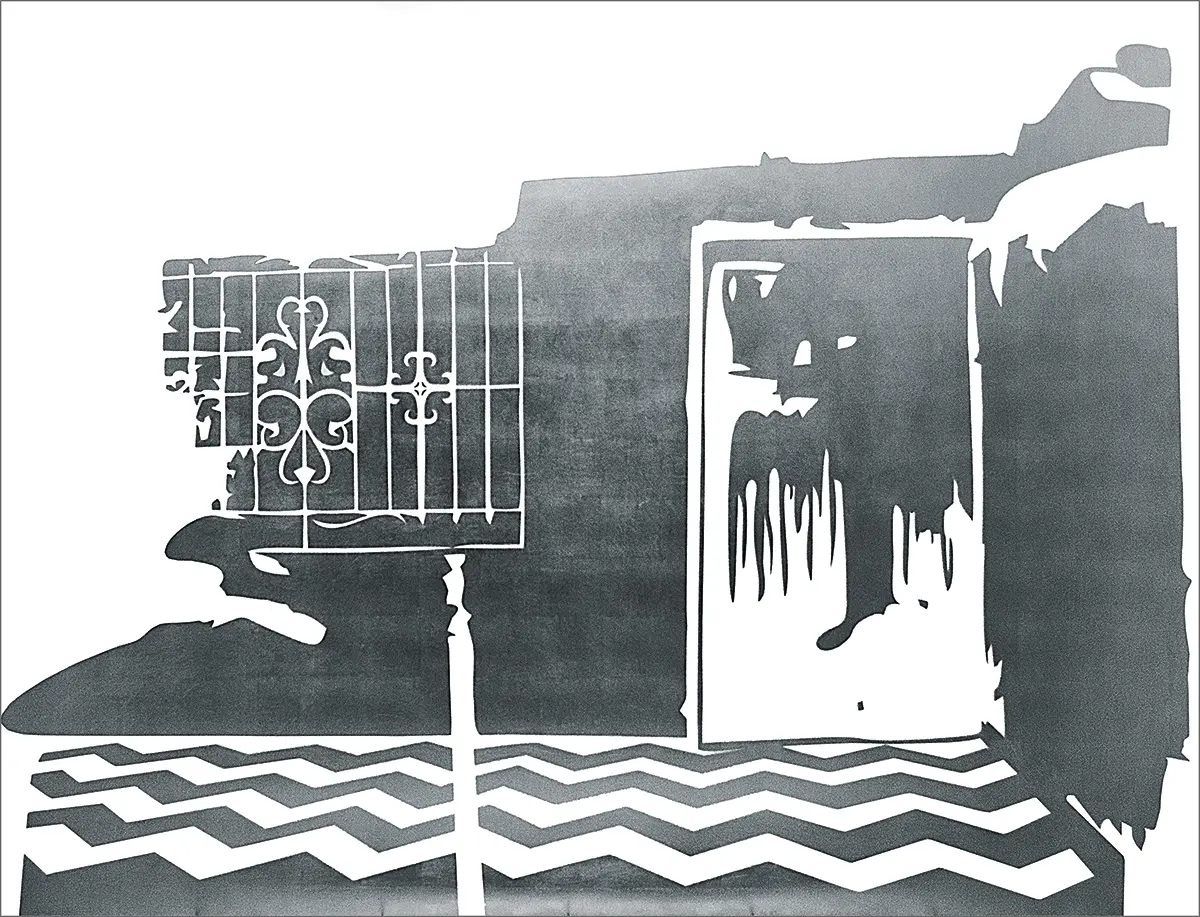
Excellent in its execution and stylistically, the show mobilizes states of consciousness, connects past and present, and becomes an intellectual-critical exercise about the anchors on which historical fiction is based. The dramaturgy of its mise-en-scène includes the works Robar la tradición (Stealing Tradition), Vivir la tradición (Living Tradition), Bucles (Curls), Forjar la tradición (Forging Tradition), Conmemorar la tradición (Commemorating Tradition), Spot a los tesoros del naufragio (Spot to the Treasures of the Shipwreck), Venerable, Vandálica (Vandalic), and Como oro en paño (Like Gold in Cloth), by Henry Eric Hernández; and Pintura de acción: studio del natural de un grafiti (Action Painting: Study of the Natural of a Graffiti), Paz, perdón y reconciliación (Peace, Forgiveness, and Reconciliation), Plebiscito, homenaje a los 50 (Plebiscite, Tribute to the 50s), Pintura de acción No. IX (Action Painting No. 9), by José A. Vincench. Through integration and dialogue, this works as a whole examine refuting perspectives pertaining to a present that, while criticized and perverted, is also participative.
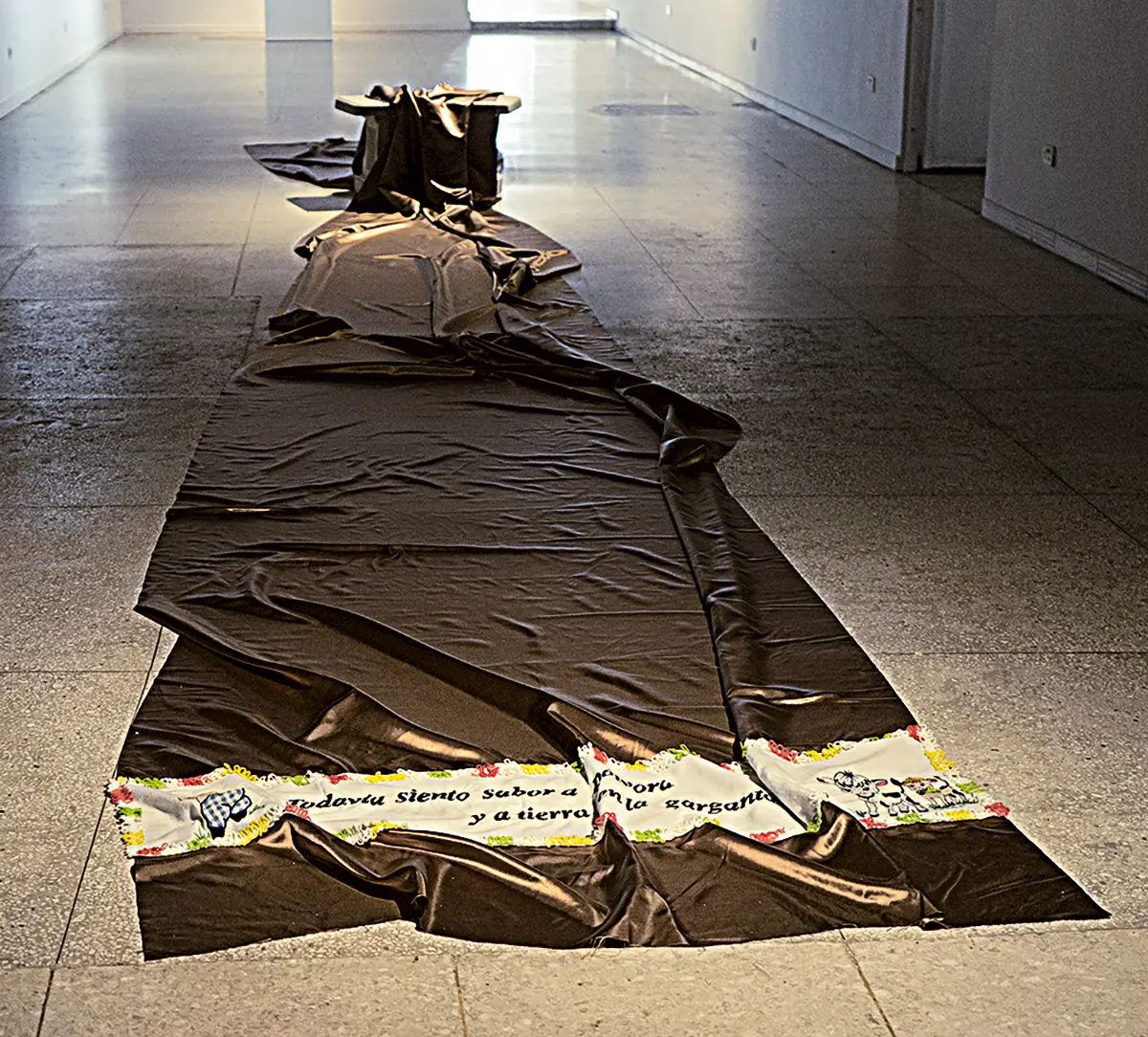
While this collaboration process was going on, both artists made statements about the implications of this proximity and “confrontation.” “For ten years—explained Fernández—we embraced this idea of doing something together based on the vandalic action of destroying something and putting it back together; recreating something, particularly that involves working with those minuscule stories. I rely heavily on my personal archives, on anthropological research and, as of recently, I have become very interested in this space of fictionalizing documents. All these pieces come from earlier works that used documentary films, books, and archives, so to speak, and felt the urge to use these documents to create fiction using other people’s phrases. I am interested in sculptural work with fabric. The first thing I did was to mark the space with lights before actually putting the exhibition together. I did it expressly for this gallery.” From this statement by Fernández stands out a large number of conceptual preoccupations and diverse disciplines of knowledge involved in the generation of his critical articulations, which he uses to subvert with the same grace with which he perpetuates the validity of the micro-stories and the interstitial zones were fallen into disuse.
For his part, Vincench affirmed that “Henry and I are part of the 90s generation. Above anything else, we are united by an aesthetic take on art. We are leading actors of a conceptual, historicist, and contextual legacy. We had participated in several collective exhibitions but had never done something personal. He decided to invite me to this space, and so we created this joint exhibition. Never before shown, this accumulation of works created in 2018 reflect the day-to-day. La Acacia is the open space with the greatest tradition in Cuban art. It used to have the stigma of being entirely focused on the vanguards, of the historical generations, but it has gradually welcomed new generations like mine—which at some point will also become a vanguard, once we get a little older, as any cycle must be renovated. The gallery has done very serious work, even in international fairs. It must continue to be supported in its endeavor so new doors can be opened and its autonomy developed for even greater things in the future, on behalf of artists at both the national and international levels.”
ANDRÉS ISAAC SANTANA