The exhibition Claudia Andújar. Tomorrow must not be like yesterday, organized in 2017 at the Museum für Moderne Kunst - MMK in Frankfurt, Germany, was curated by Carolin Köchling in collaboration with Peter Gorschlüter, and it presented for the first time in Europe an extended focus on the photographic work of Claudia Andújar (Switzerland, 1931), who grew up in Transylvania, studied in the United States, and settled in Brazil—where she was to become a self-taught photographer—in 1955.
Andújar’s complex family situation made her, from an early age, adaptable to shifting, contrasting environments and contexts; she found herself needing to learn several languages, to generate a strong sense of empathy, and, above all, to become resilient. The social and political circumstances she encountered after arriving in São Paulo forced Andújar to question her own role in that context often and ultimately strengthened her ability to communicate using the language of photography.
For almost five decades, Claudia Andújar has been an activist devoted to the protection of the Yanomami people and their culture, threatened by the invasion and contamination of their territory. Andújar’s support for this important cause has made it possible for her work to be respectfully and profoundly permeated by Yanomami wisdom and ways of knowing, and her photographic archive, developed over many years, is an unequaled document of great anthropological, aesthetic, and human values that cannot be reduced to a mere indictment.
The Amazon River basin is a land of extremes: its vastness, its great biodiversity, and its wealth of resources make it enormously appealing for researchers and scientists as well as—ever more voraciously—for industry and illegal mining that leave behind a trail of destruction in the sacred space where a variety of ethnic groups have coexisted since ancestral times.
It is precisely framed by this natural, deeply vulnerable space that Claudia Andújar offers us her legacy: an essential approach to the first inhabitants of an area known as the Earth’s lungs, and a defense of their rights.
The exhibition at MMK invited us to explore, in a non-linear fashion, the various aspects that Claudia Andújar has discovered and documented as she moves between São Paulo and Brazil’s Amazon region. A tangible manifesto of the artist’s genuine devotion to her investigation, despite the constraints and sanctions imposed by the military regime through which she lived.
A number of the photographs featured in this important exhibition confront viewers’ gazes directly, giving the impression of being elegantly suspended in the middle of the gallery. These museographic devices in concrete and glass are an academic reference. Originally designed by the Italo-Brazilian architect Lina Bo Bardi in 1968 for the Museu de Arte de São Paulo (MASP), they place viewers clearly in context: there is a people under threat deep in the Amazon forest, requiring our prompt attention.
Soon after her arrival in Brazil, Claudia Andújar began to work as a photojournalist. She met Brazilian anthropologist Darcy Ribeiro and by 1959 she had published her first photo essay for Life magazine, on the Karajá people, among whom she had lived for two months. Andújar also experienced life among other indigenous groups, such as the Bororo and the Kayapó. She underscores that these people’s cosmogonies differ widely, despite outsiders’ tendency to collapse them into one.
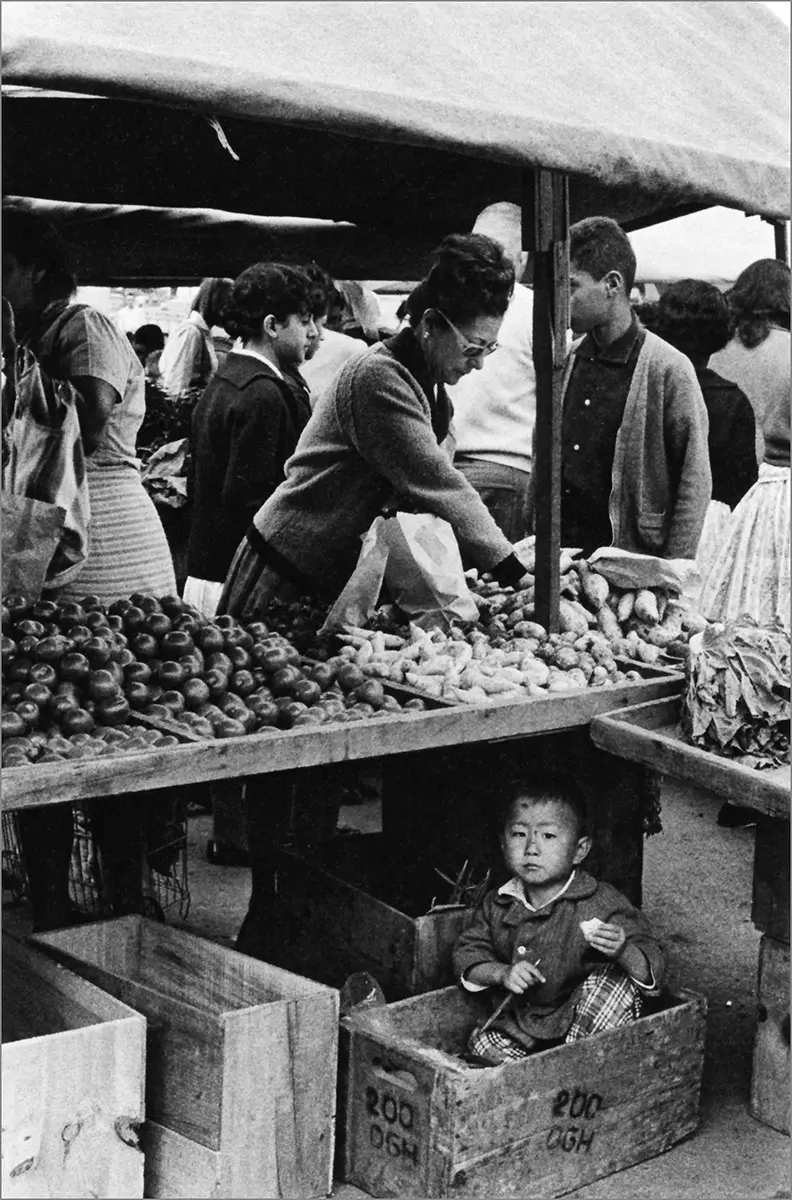
Andújar produced her series Family Album in several regions of Brazil between 1962 and 1964, but it wasn’t published until 2003 when it appeared in Folha magazine. Starting in the 1970s, the dominant trend in Brazilian photography was inescapably geared towards social documentary, which was even included in some university curricula. The most important publications were Realidade and Goodbye.
Claudia Andújar worked for Realidade magazine between 1966 and 1971, contributing important denunciations of prostitution and hunger in Brazil. It was a very interesting moment for photography in Brazil, and Andújar approached the practice from the perspective of social-ethnological documentarians. Realidade gave her creative autonomy, but those were nonetheless the years of the dictatorship, and she was steered away from the issue of the communities inhabiting the region. The “Amazônia” issue of Realidade magazine presented Andújar with an opportunity to disregard such advice and, on her own accord, investigated recently contacted territories. She arrived in Catrimani in 1971 and for the first time seeking out the Yamomami. She decided to dedicate herself entirely to the work at that point.
She was not in a hurry, Andújar says; she was not interested in producing a quick journalistic report, and her integration process into the group was gradual. She wanted to know the Yanomami at a deeper level, setting aside her camera until such moment she had gained their trust. Andújar took part in many shamanic rituals and even learned to speak Yanomami … after all, it was not her first time dealing with a new language.
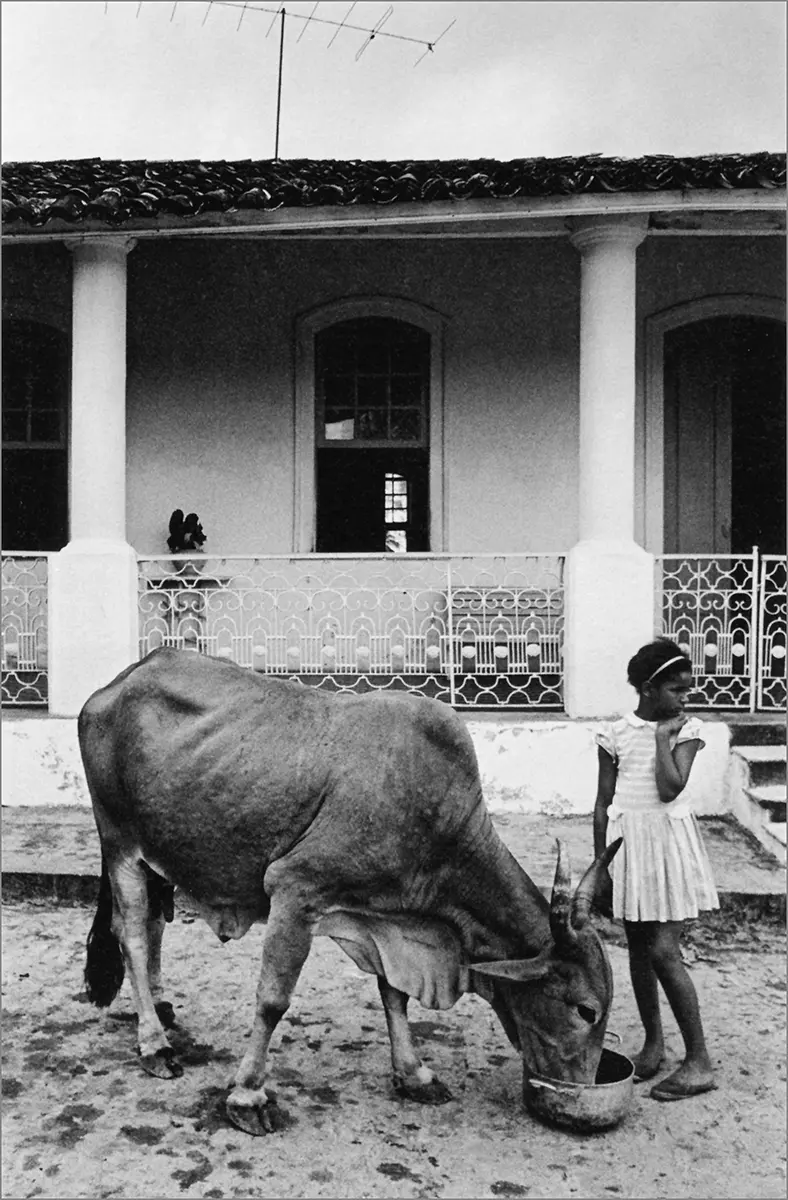
The series Lavrado, Igapó (1971), featured in the exhibition, is comprised of a number of aerial photographs, experiments in perspective, and Andújar earliest approached the Yanomami region in a helicopter, from which she registered the lavish natural scenery of the Brazilian north. Lavrado, or open natural landscape; Igapó a close-up of the sky reflected on the waterways that snake through the region.
Regrettably, large wounds were to open on such wonderful landscapes. During the 1970s, Brazil projected the construction of large-scale roadways that left unprecedented scars on the Yanomami territory. The first section of the world’s most inhospitable road, the Transamazónica, was built in 1972; it was a symbol of Brazilian economic hyperbole, but also the expression of a complete lack of ecological concern. In 1973, following the National Plan for Integration, construction began for another highway, the Northern Perimeter. Both projects triggered terrible epidemics of influenza, tuberculosis, measles, malaria, and venereal diseases that ravaged entire villages. Government irresponsibility bulldozed over the rights of the Yanomami, a population whose immune system was ill-prepared for the influx of new germs brought along by the road workers.
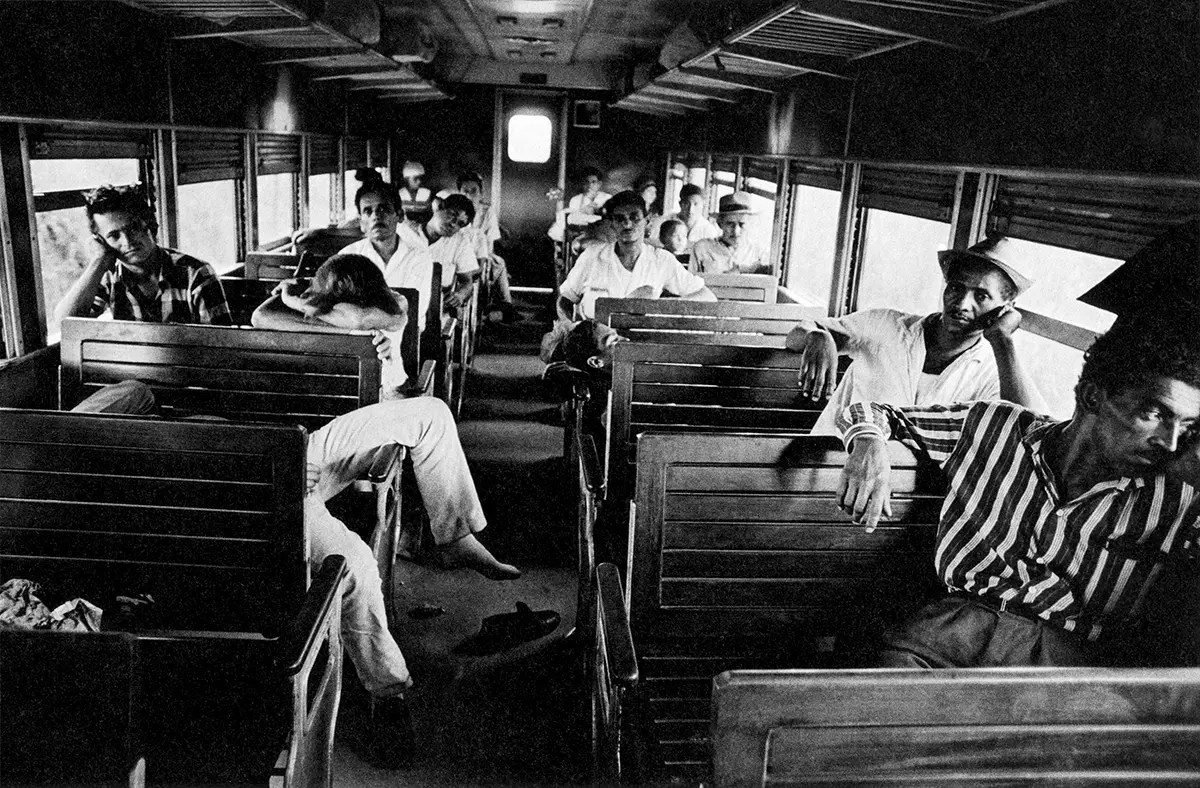
Claudia Andújar won a Guggenheim Fellowship in 1972 and the FAPESP fellowship in 1976, with funds for her photographic study of the Yanomami. She traveled to the Catrimani reserve, in Roraima, where she stayed for fourteen months.
Also on view in the exhibition was a contrast-laden photographic dialog proposed by Andújar with the series Urihi-a, Metrópole, Cemitério da Consolação (1974), which also features photographs captured from overhead: Urihi-a, an impressive shabono, circular lodging surrounded by an exuberant forest that explodes in fuchsia thanks to the thermographic method applied by the artist; Metrópole, a motley view of São Paulo, so different from the natural density of the Amazon region; and Cemitério da Consolação, a São Paulo cemetery dating from the late Nineteenth Century, organized around a central mausoleum. The set describes immensity and ungraspability, vulnerability, and disappearance.
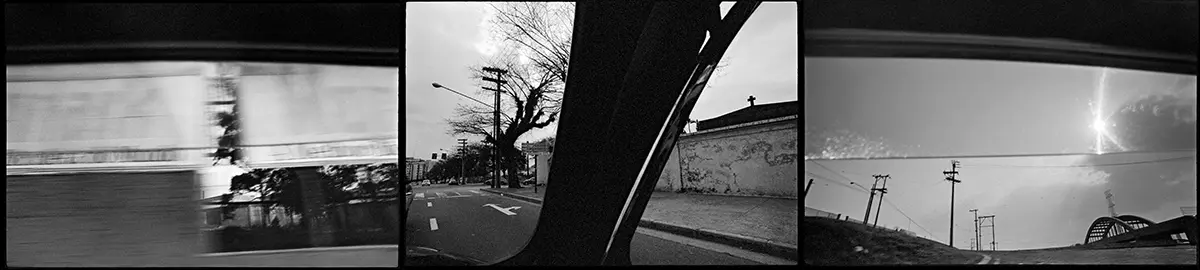
Através do Fusca (1976) features Andújar’s photographs from a different perspective, framed by the window of the Volkswagen automobile (Fusca) she used to traverse the country from the Museu de Arte de São Paulo (MASP) to the land of the Yanomami. Symbolically, her journey begins and ends at the museum—a cycle that translates constant denunciations in the sublimated domain of photography.
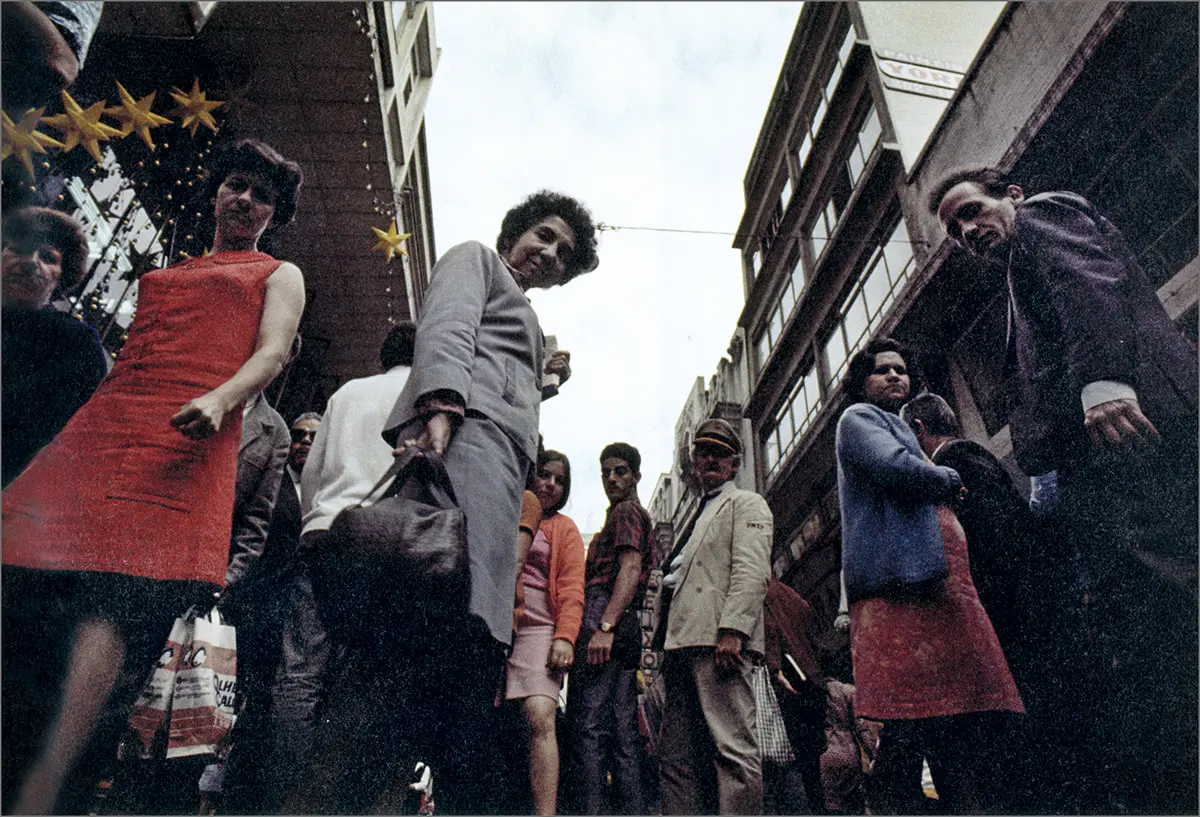
Rua Dreita (1970) is a photographic exercise in which Andújar uses a wide-angle lens to capture passers-by in the busy São Paulo thoroughfare, a low-angle shot that reveals the need for immediate reaction on the part of the inhabitants of a large city, who are entirely unconnected to the remote first peoples of their own country.
This call to attention was also in evidence in 1973, when Andújar invited a number of Yanomami to come to the installation Ilea Amazónica, presented at the Museu de Arte de São Paulo, and talk about the problems they faced.
Between 1976 and 1977, with the help of her missionary friend Carlo Zacquini, Andújar began the valuable document that occupied an entire gallery at the MMK: Mitopoemas Yãnomam. Interested in understanding and summarizing Yanomami thought, Andújar gave some of the paper and markers (tools they had never seen before) and asked them to narrate their myths; eventually, this became a method, and these Yanomami myths were translated into Portuguese. Sadly, their authors died in an epidemic outbreak.
Andújar presence in the territory, as well as the presence of anthropologists and foreign researchers, became increasingly more uncomfortable, and in 1977, under Brazil’s National Security Law, she was forcefully expelled by the Fundação Nacional do Índio (FUNAI). Her work was put on hiatus until 1978. That year, after a suggestion by Pietro María Bardi, a number of Yanomami drawings were exhibited for the first time at the Latin American Biennial in São Paulo.
That moment was of great importance for Andújar, who began the production of a transcendental project in the states of Roraima and Amazonas; the project was finally realized in 1984, with the Commission for the Creation of Yanomami Park (CCPY). At the same time, she coordinated the campaign for the demarcation of indigenous lands, which in 1992 (fifteen years later) was finally able to have the Brazilian government establish almost one hundred square kilometers as an enclave for the 11,000 surviving Yanomami.
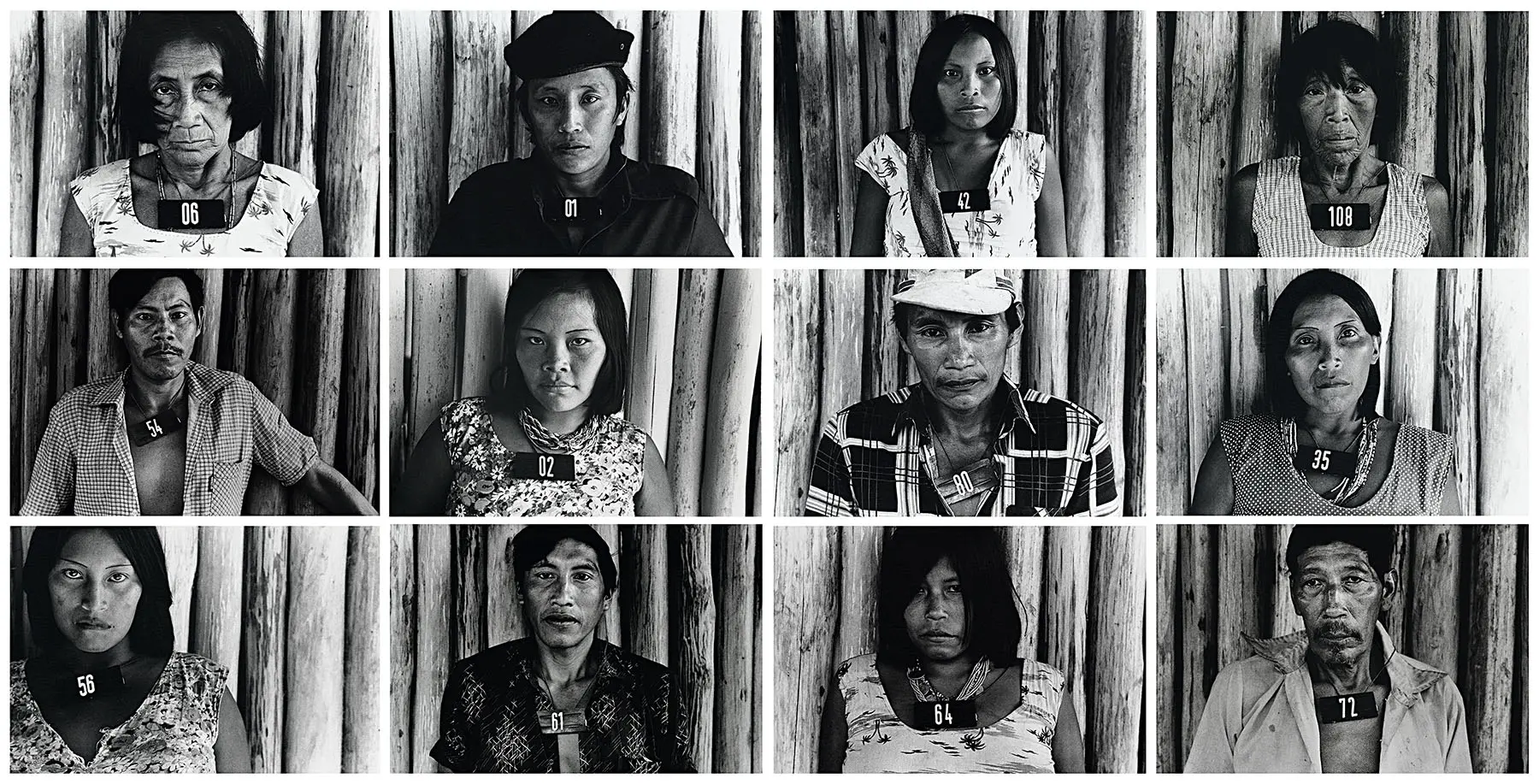
The exhibition also presented the emblematic series Marcados. Between 1981 and 1983, Andújar made a series of portraits that differed widely from those of the previous decade. As part of a research project for CCPY, she traveled through the entire Yanomami territory alongside a team of doctors of the São Paulo School of Medicine who were carrying out an unprecedented vaccination campaign. Given that the Yanomami do not use proper names, they had to be given numbers so that the dosages could be tracked and controlled. The data thus collected were very useful in the demarcation of the Yanomami territory.
Years later, Andújar decided to revisit those photographs and to group them by region. According to her, and unlike their numbered relatives who perished in the holocaust, these portraits served to identify the Yanomami into life. It took twenty years for the series to come to light, at the 2006 São Paulo Biennial.
In the late 1980s, Davi Kopenawa, an important Yanomami leader, left his village in the forest and traveled to the city in order to denounce before the UN that 40,000 garimpeiros had his people’s land under siege, blinded by gold fever.
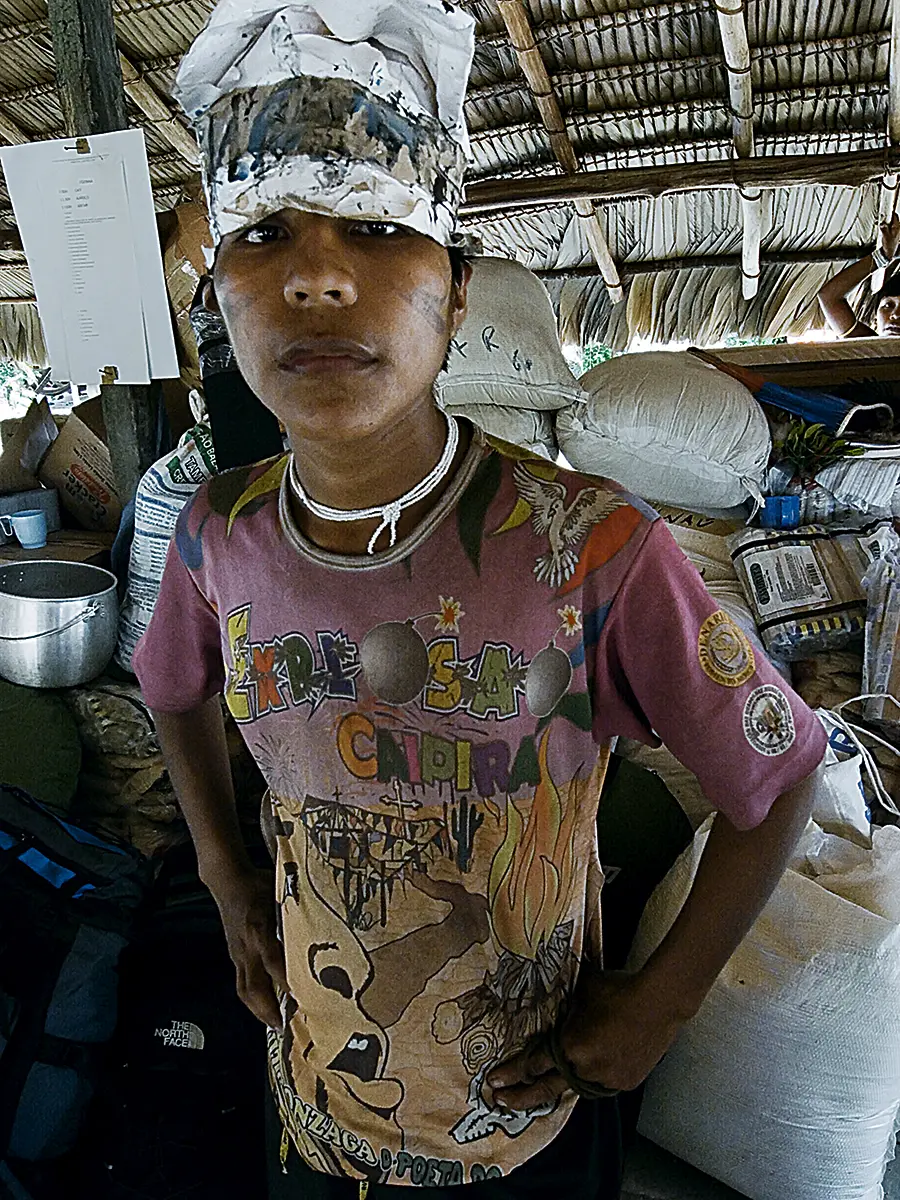
Thirty years after Marcados, and continuing with her purpose of highlighting the vulnerability of the Yanomami, we encounter Toototobi y Fiscais (2010), photographs made with a digital camera. Andújar photographed Kopenawa, along with other local leaders and government representatives, during a meeting organized by the Hutukara association in the Toototobi region, in Amazonas, to deal with the crisis created by illegal mining. Fiscais shows the cultural impact endured over the years by the Yanomami, who now wear mass-made clothing but are also more empowered and able to raise their voices about their own rights.
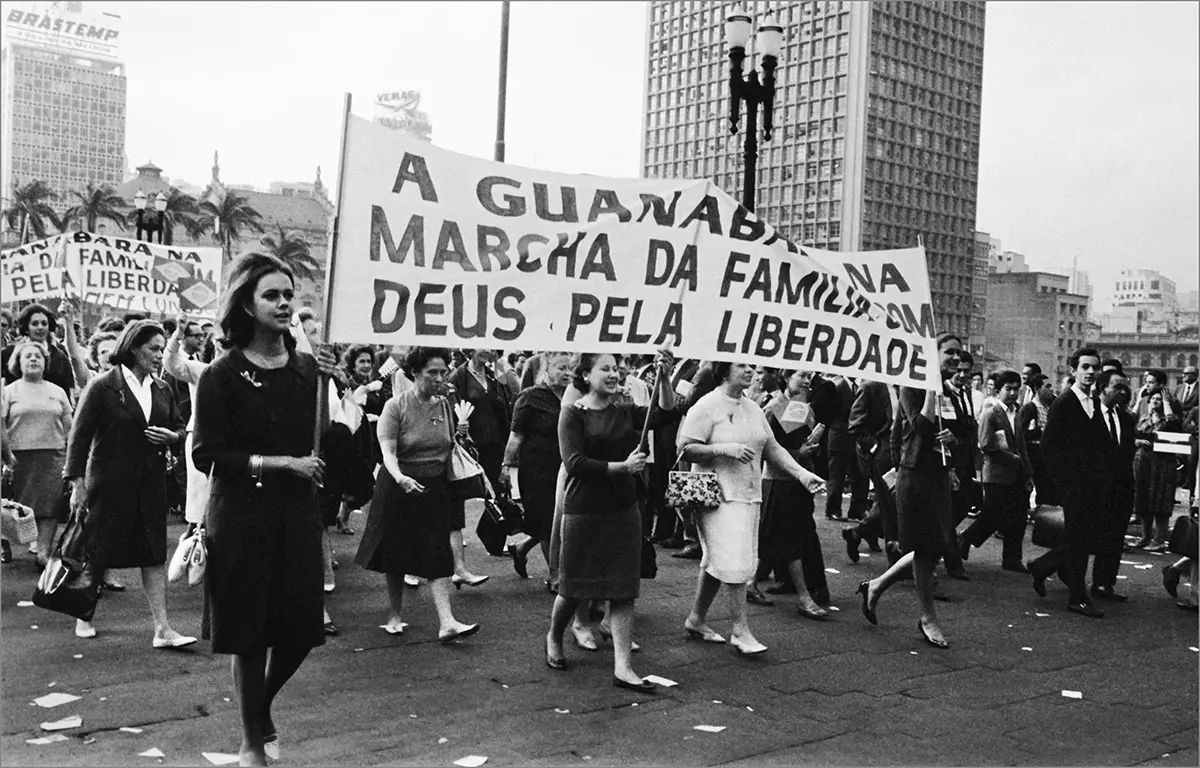
As a historical precedent, the show included the photographic series Marcha da familia (1964), which captures a key moment in Brazilian political history. Praça da Sé, in front of the São Paulo Cathedral, is the setting for the “March of Families with God for Freedom,” a conservative protest against the reforms instituted back then by President Jõao Goulart; soon thereafter Goulart was deposed in a military coup and the dictatorial regime that followed governed Brazil until 1985. This photographic series documented placards with slogans like “Brazil is not a second Cuba,” which gained a second life in the same location half a century later, with the ousting of Dilma Rousseff.
An added woe besides the imminent disappearance of the Yanomami people is the proliferation of irresponsible mining concessions in the Amazon region by the governments of Brazil and Venezuela (specifically, with the imposition of the terrible “mining arc” in 2016.) It is today more necessary than ever for Claudia Andújar’s legacy to gain global diffusion, and the MMK contributed laudably to the cause from the European continent.
Claudia Andújar has accompanied the struggle of the Yanomami people for more than half a century and is among the people primarily responsible for the establishment of a protected area for them to use and exist, in a territory greater than that of Portugal. Those commitments need to be complied with and the garimpeiros must be removed. Claudia Andújar and Kopenawa remain in the fight, denouncing the threats that still loom over the surviving Yanomami.
* Photos: Axel Schneider. Courtesy of MMK Museum für Moderne Kunst.
ELISA RODRÍGUEZ CAMPO
Graduate of Fine Arts UCV, Venezuela.