During the press conference, once the 33rd São Paulo Biennial’s six co-curators/artists had assembled, the event’s general curator, Gabriel Pérez-Barreiro, said: “This is the first time we find ourselves all together in the same place.” Such an un-gathering was not, however, the result of chance. On the contrary, it was a calculated strategy intended to generate surprises in a pavilion whose area is slightly larger than 25,000 m2, or six soccer fields. In that way, each curator’s individual work would result, according to the plan (or the unplanned), a rich and heterogeneous selection, since the choices of one of them would not impact the others’.
Adding to this proposal was the fact that the curators were, above all, artists charged with making selections, including from their own work, which pointed towards the generation of a horizontal dialog between the participants and, with that, a break in the hierarchical structure of art curating: the implicit power that a curator exerts on others.
For this proposal, then, a diverse, almost aleatory spectrum of seven artists were invited to produce their own shows: from Brazil’s Waltércio Caldas—with a well-established career characterized by sobriety—to young Sofía Borges, also from Brazil, whose work is markedly baroque, if I am allowed the term; from the picturesque Swedish artist Mamma Andersson to Argentina’s Claudia Fontes, an artist who works in a variety of media; and from Nigerian performer Wura-Natasha Ogunji to New York-based Uruguayan artist Alejandro Cesarco, whose work is pronouncedly conceptual. Finally, the team was completed by Spanish artist Antonio Ballester Moreno, who, after leaving video art behind, devoted himself to the making of paintings, in his own words, in an artisanal mode, works that have much in common with patters for textile design.
Twelve more exhibitions, directly organized by General Curator Gabriel Pérez-Barreiro, joined the seven shows prepared by the co-curators/artists. At the press conference, after explaining his proposal, Pérez-Barreiro said that the Biennial’s organizers asked him repeatedly to exercise his power, to organize a number of shows. Those twelve solo exhibitions are his response to the request. In this case, as was also said at the press conference, Pérez-Barreiro’s choices were conditioned more by the availability of the artists than by a prior plan, which resulted in a series that includes nine Brazilians and three artists from elsewhere in Latin America, all with production in recent decades.
All in all, we have 25,000 square meters with nineteen exhibitions curated by eight different people. Yet, instead of surprises, what we find is a kind of homogeneity and monotony. While the exhibitions are varied, it is difficult to know where one ends and the next one begins. Lost in the confusion of Oscar Niemeyer’s building, there are empty spaces that function not as pauses, but as surplus, as the overflow of an immense place that refuses to be covered in full.
Now, this edition of the São Paulo Biennial engages with several contemporary issues. A metaphor for our era, the large pavilion seems to function as what is left of the State, while the exhibitions, measured and discreet for the most part, function as sub-contracted work, the kind that is delegated without generating a tie between the parties; in fact, the model for millions of workers around the world, hired across a bridge that separates them both from the hiring entity and from their colleagues, if they exist. At any rate, what is truly intriguing is how such a delegation of functions does not result in a wealth of diversity but, rather, in the homogeneity that characterizes our world, its airports, its exhibition galleries, the covers of its books, or the politically correct prose of its academic texts. In sum, this Biennial is, even if unwittingly, a mirror of our present.
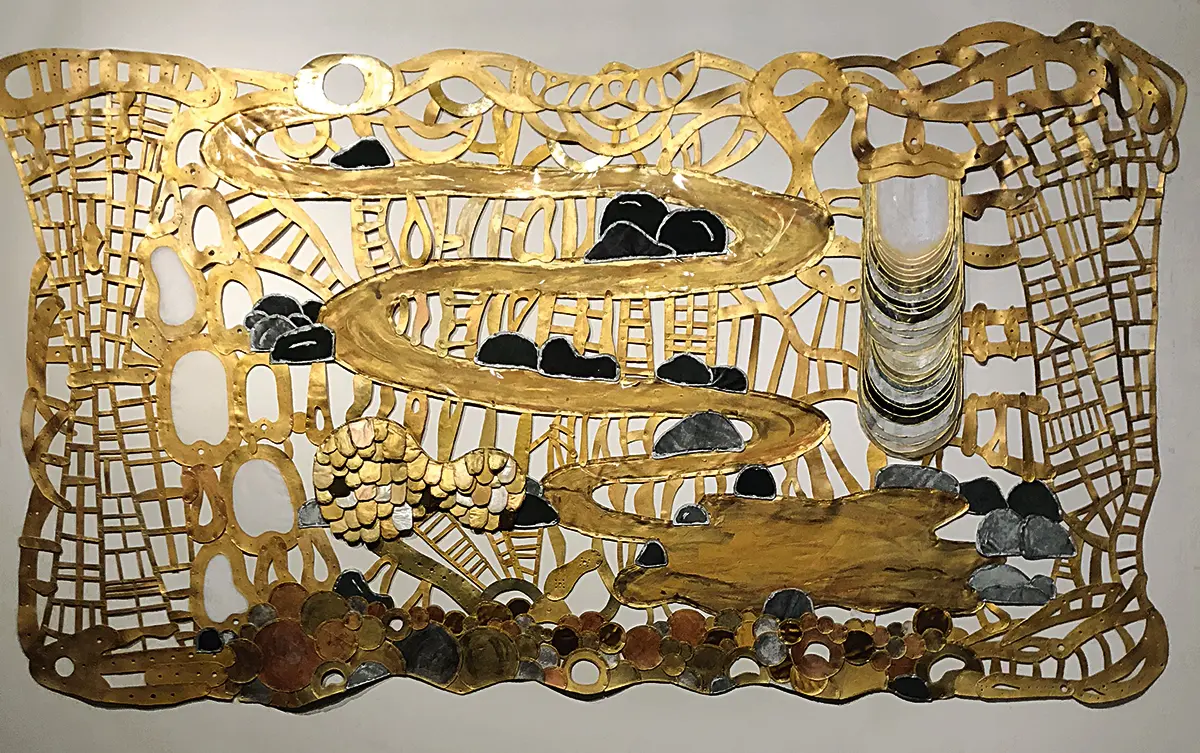
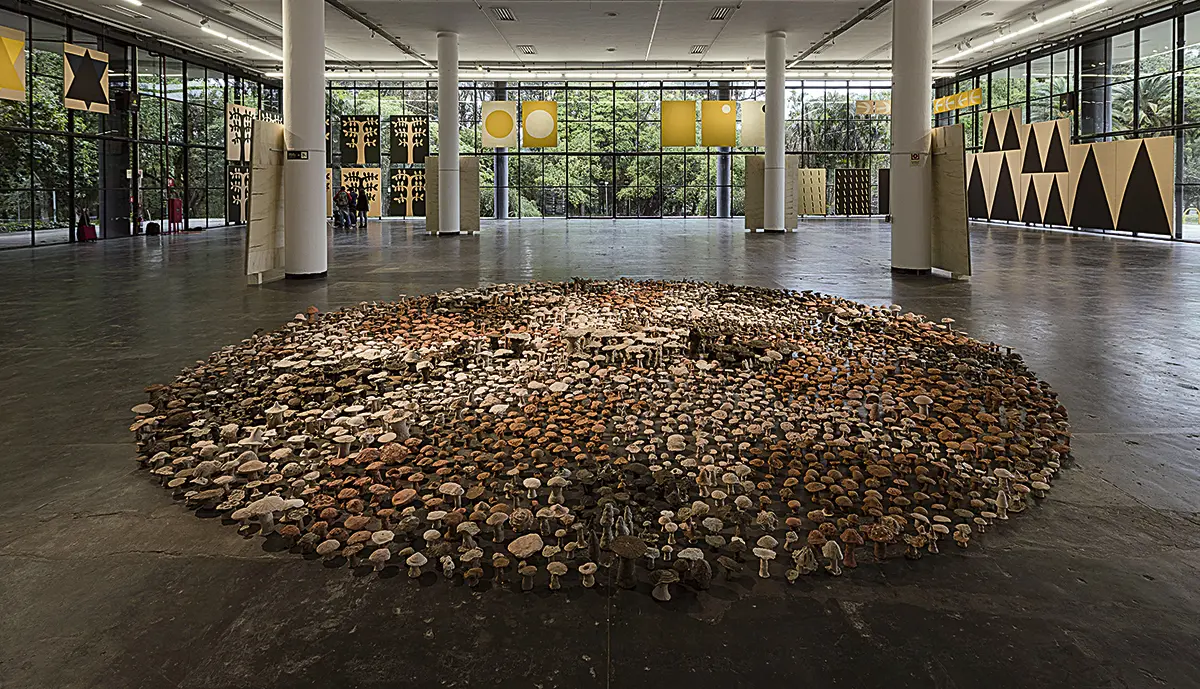
In the pavilion’s ground floor, right at the entrance to the large building, is the exhibition titled Common/Sense, organized by Antonio Ballester Moreno. Long Live Free Fields!, a circle of 2,000 clay mushrooms made by São Paulo schoolchildren, is arranged on the ground there. The circle is eye-catching and each mushroom is a unique item, as are the hues of the clay used to create them. Around this work are Ballester Moreno’s own canvases, along with paintings by Andrea Büttner and others. The exhibition’s central axis is practically identical to the show last year at La Casa Encendida in Madrid, a noticeably smaller space. In this way, by transferring the exhibition from one place to another, the Pavilion ate the canvases, lost above the large windows. Accompanying his curation is a Mark Dion space and a succinct show of Spanish artists in the orbit of the 1927 Generation, but a true integration of these elements is not achieved.
Located on the third floor, on the opposite side of the building, the exhibitions of works by Mamma Andersson and Waltércio Caldas present a different kind of proposal. I said it before. Andersson and Caldas are the artist-curators whose career is already well established, so they opted for exhibitions where, rather than weaving unsuspected relationships, they simply reveal the influences that have marked their production over the decades.
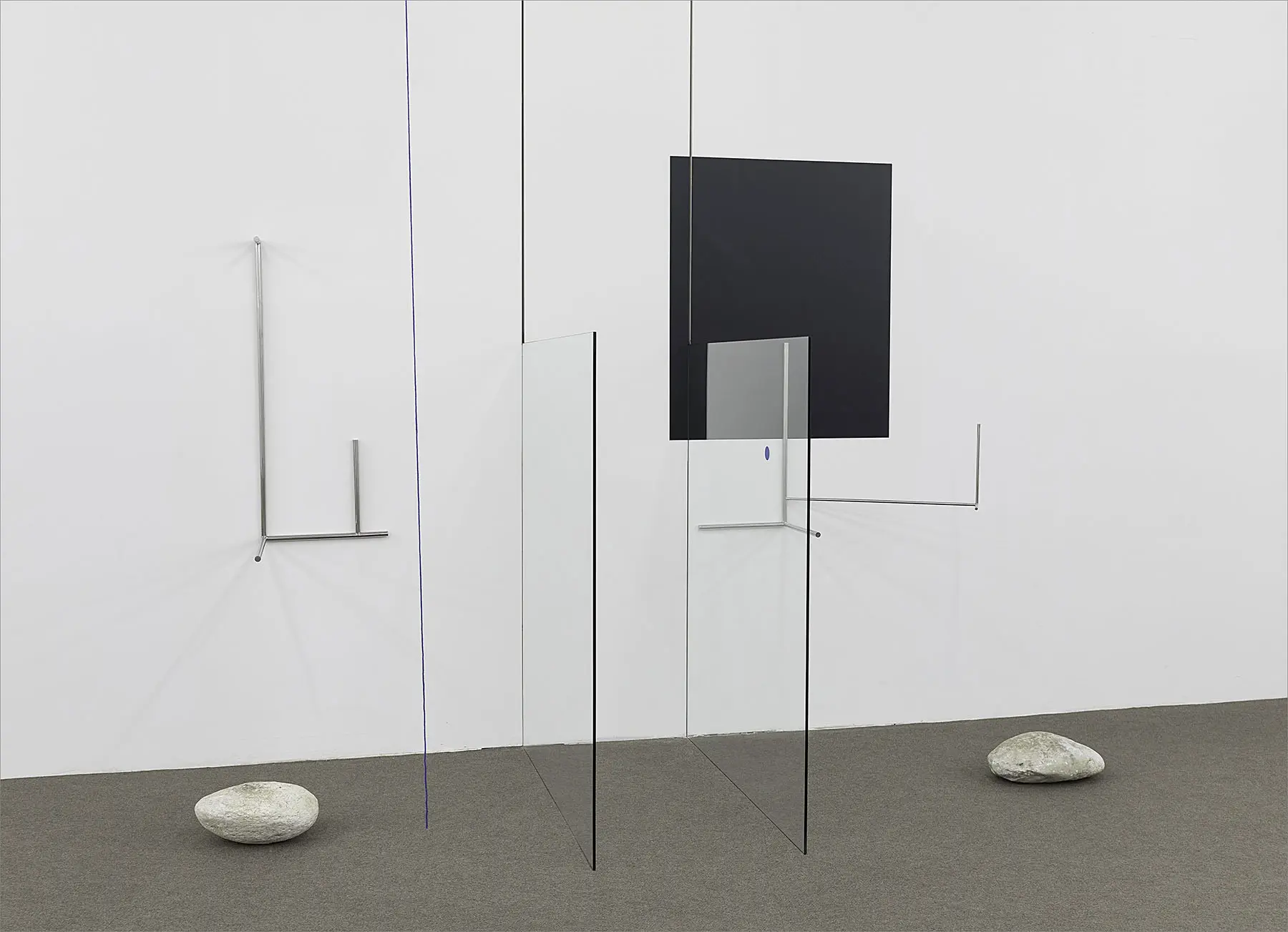
In The Apparitions, curated by Waltércio Caldas, we find a diverse range: from a paragraph from Victor Hugo to a Goeldi engraving, along with a small Reverón canvas, a paperless drawing by Gego, and more. Finding works that are essential for an artist like Caldas is a true privilege, and it helps give shape to his work’s universe of meaning. However, this is mostly of interest to specialists; in a certain way, the exhibition leaves outside a general public who, in my view, would not easily perceive the intrinsic relationship between Reverón’s monochrome impressionism with Caldas’ sobriety. Indeed, an exhibition like the one so brilliantly curated by Pérez-Barreiro at the Pinacoteca do Estado de São Paulo in 2013 served much better the purpose of introducing us to Caldas’ world.
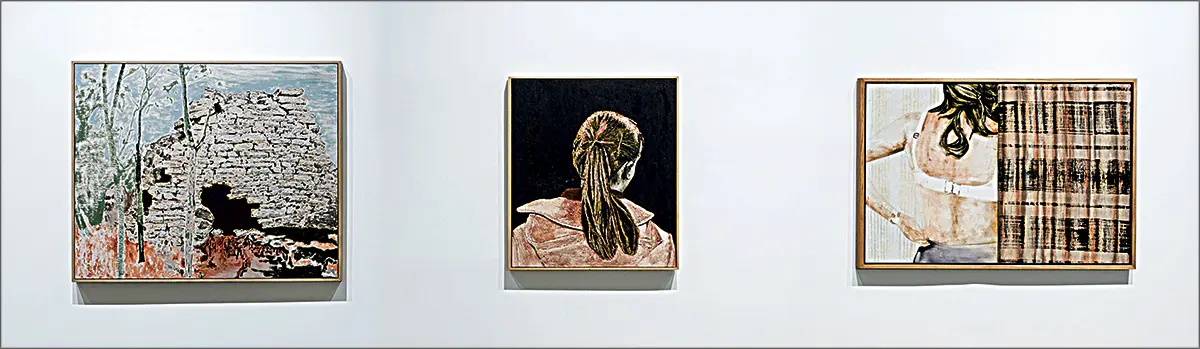
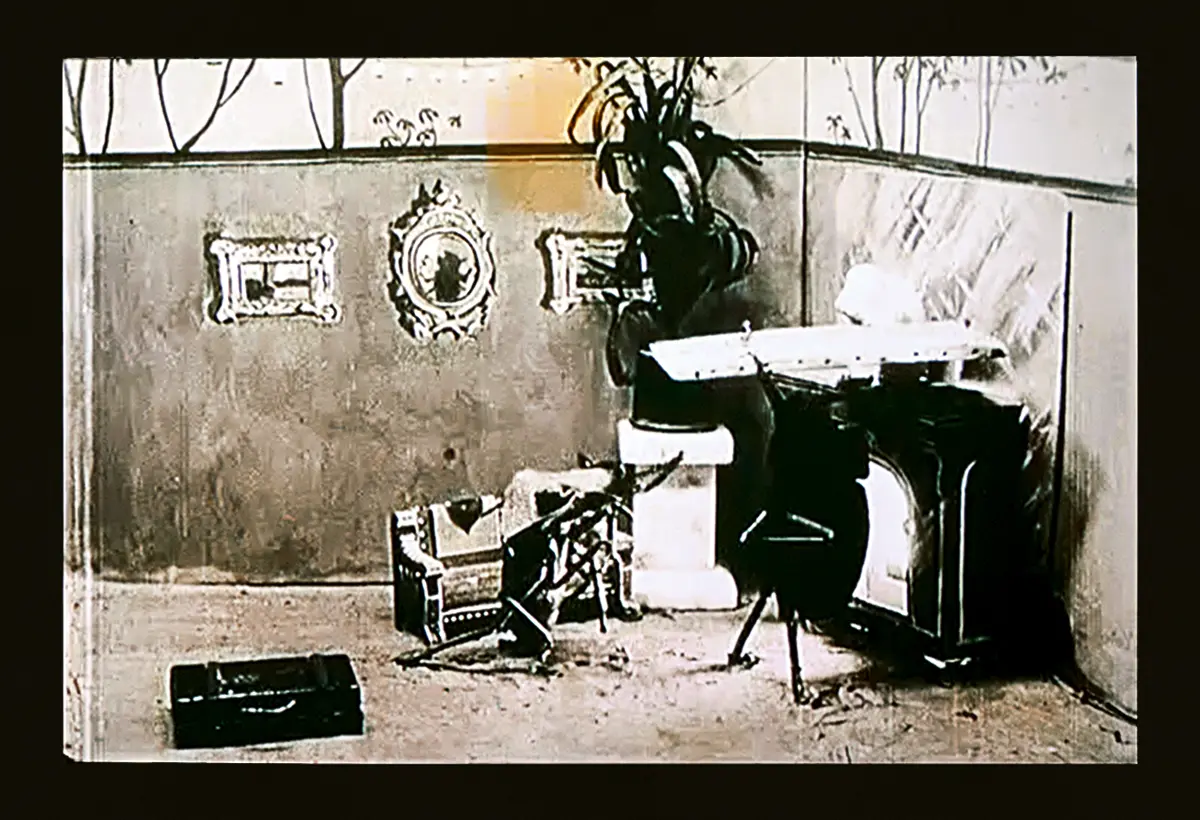
In turn, Mamma Andersson’s exhibition, titled Stargazer II, is of an exceptional subtlety. It welcomes visitors without demanding from them an enormous background of prior knowledge. Andersson’s canvases, small in size and dealing with everyday matters, anodyne landscapes, and domestic interiors, are presented on panels of the usual exhibition kind and dialog with historical artists like Henry Darger or Sweden’s Dick Bengtsson. It must be noted that Russian-Polish artist Ladislas Starewitch’s 1912 stop motion animation is a veritable oasis in the total context of the Biennial, one of the few humorous artworks, where a beetle concocts terrible revenge after being the victim of infidelity.
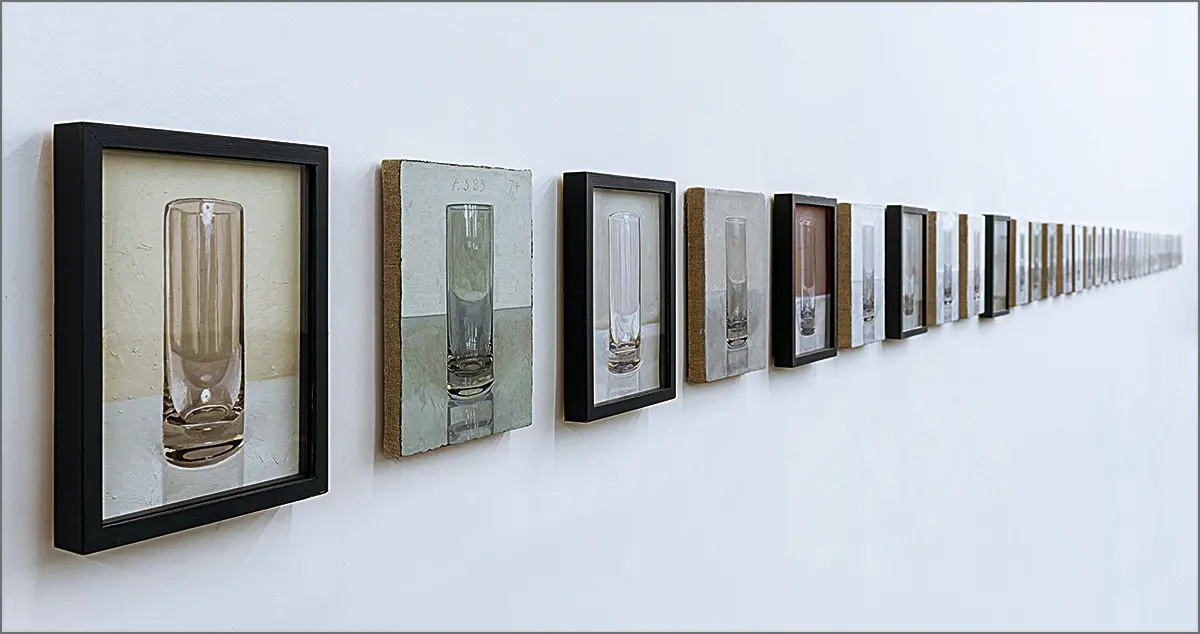
In To Our Parents, Alejandro Cesarco brings together the work of artists he admires deeply. The exhibition is filled with conceptual references in which narratives and repetition are forcefully present. This latter aspect is evident in a work like Day by day good day, a series of glasses painted by Peter Dreher, a set of small-format paintings where the same drinking glass appears under different lighting, as if in different moments of the day or, perhaps, of the year.
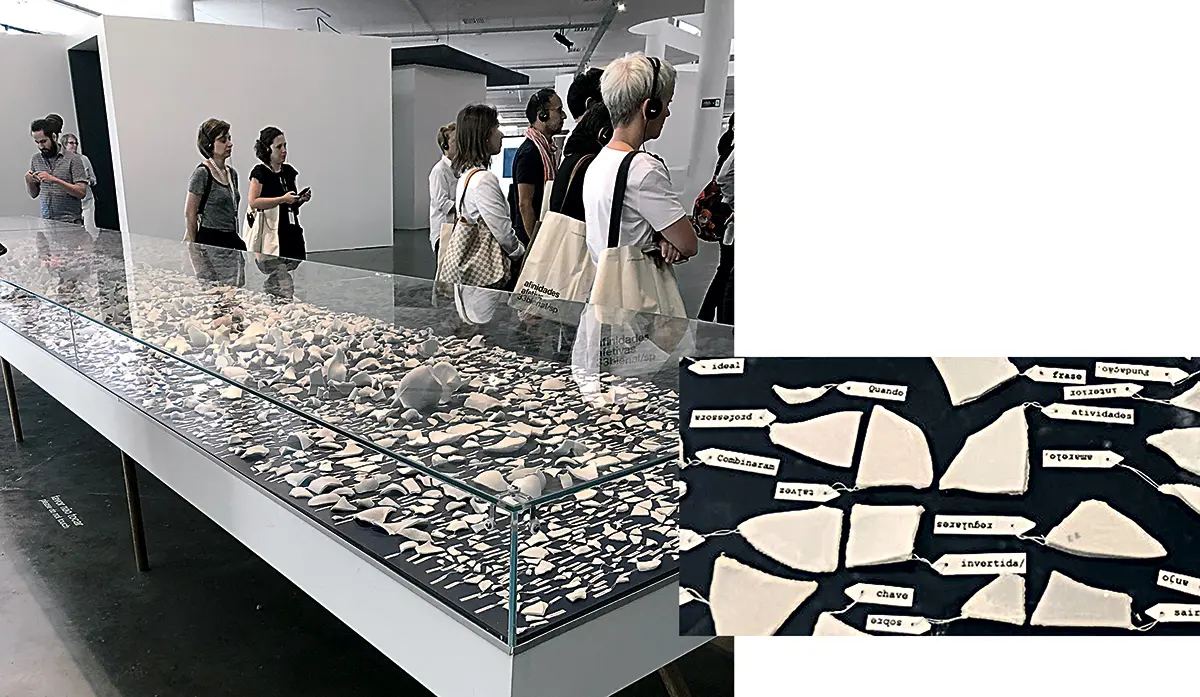
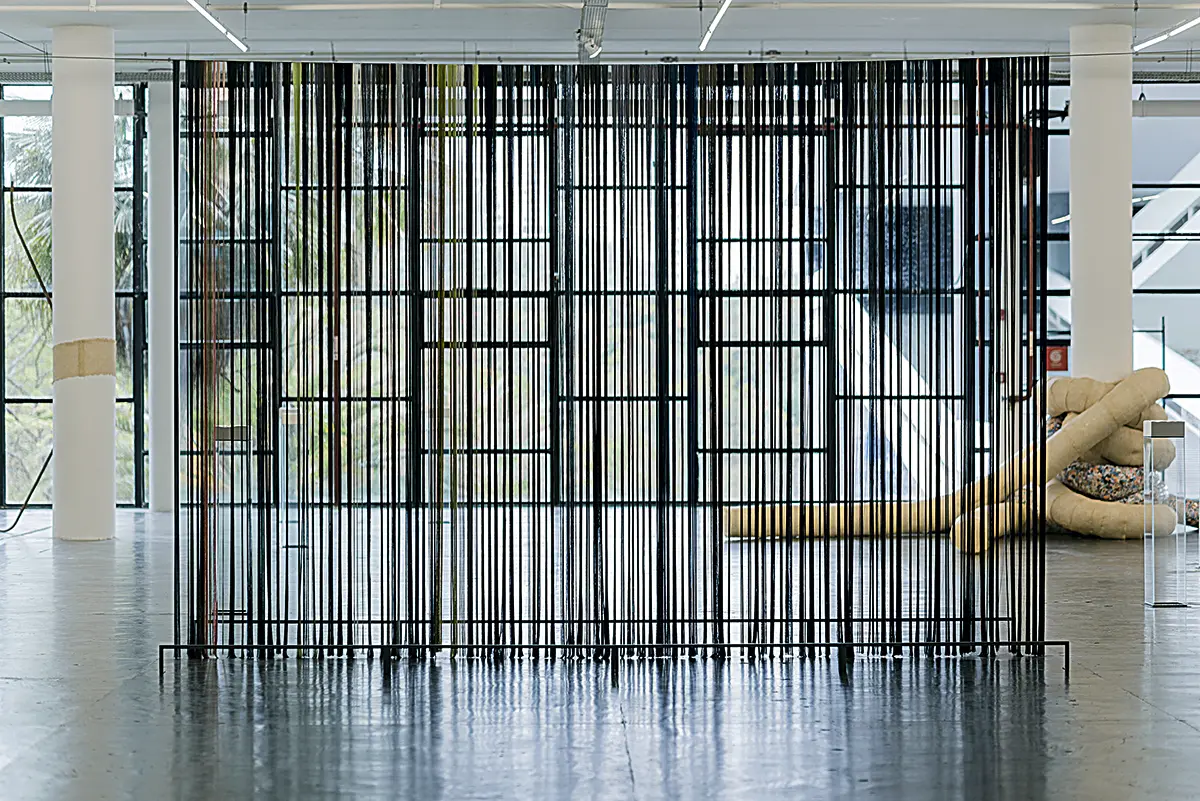
The exhibitions by Argentine artist Claudia Fontes and Nigerian-American artist Wura-Natasha Ogunji are characterized by the commission of artworks. In consequence. Their respective boundaries are not particularly clear in the pavilion. Titled The Slow Bird (Fontes) and Always, Never (Ogunji), perhaps the highlights in their selections are the works presented by the organizers themselves. On the one hand, Fontes’ Footnote, a kind of display case containing broken pieces of vases labeled as if in an archeology museum. On the other hand, Ogunji’s The sea and it’s raining, I missed you so much, a series of suspended threads that as a whole five shape to a kind of giant barcode, or a rigid rain crossed by the light coming from the windows.
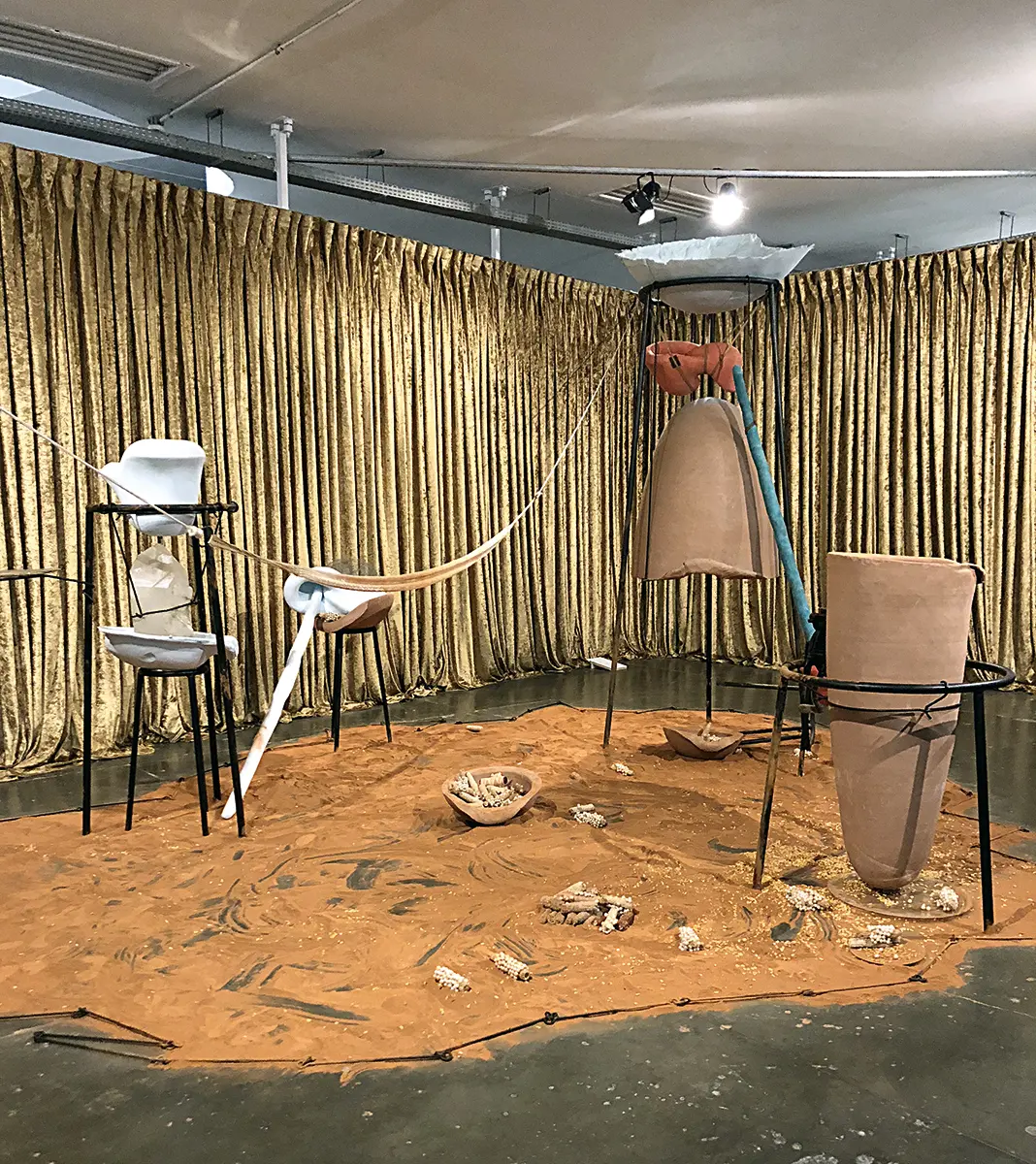
In turn, The Infinite History of Things or the End of the Tragedy of the One, curated by Sofia Borges, is like its title: long and loaded with twists and turns. The museography is comprised of a labyrinth of heavy golden-velvet curtains and walls with the texture of concrete, which generates a chiaroscuro, an affectedly mysterious atmosphere. Leda Catunda (with her works on canvas) and Tunga are protagonists of the exhibition. It must be said, however, that the heaviness of the space ultimately clashes with the works themselves.
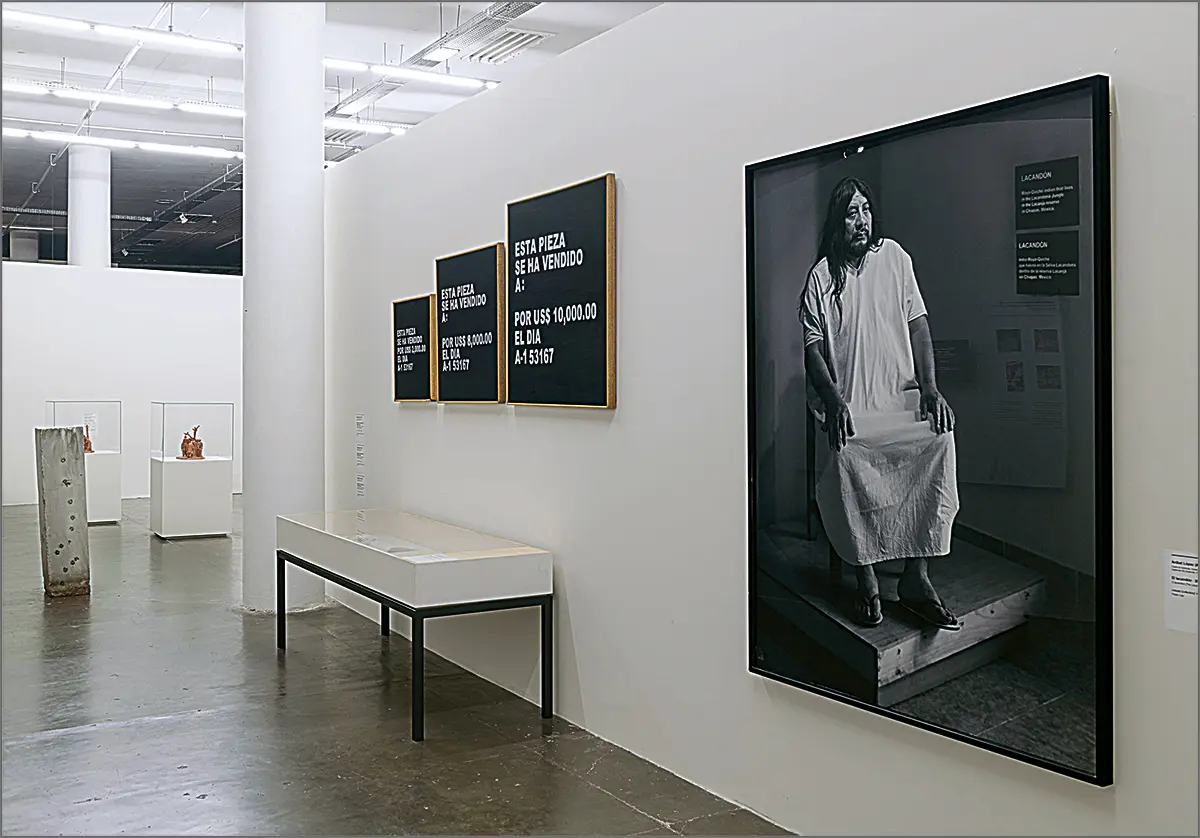
I will now consider the solo exhibitions organized by Pérez-Barreiro, among which Guatemalan artist Aníbal López’s is without a doubt the highlight, given the importance of displaying his work in a context where his name is virtually unknown. Meanwhile, Nelson Félix’s cactuses, trapped between walls with interior thorns, create weighty installations that are nevertheless swallowed by a vacuum in the site.
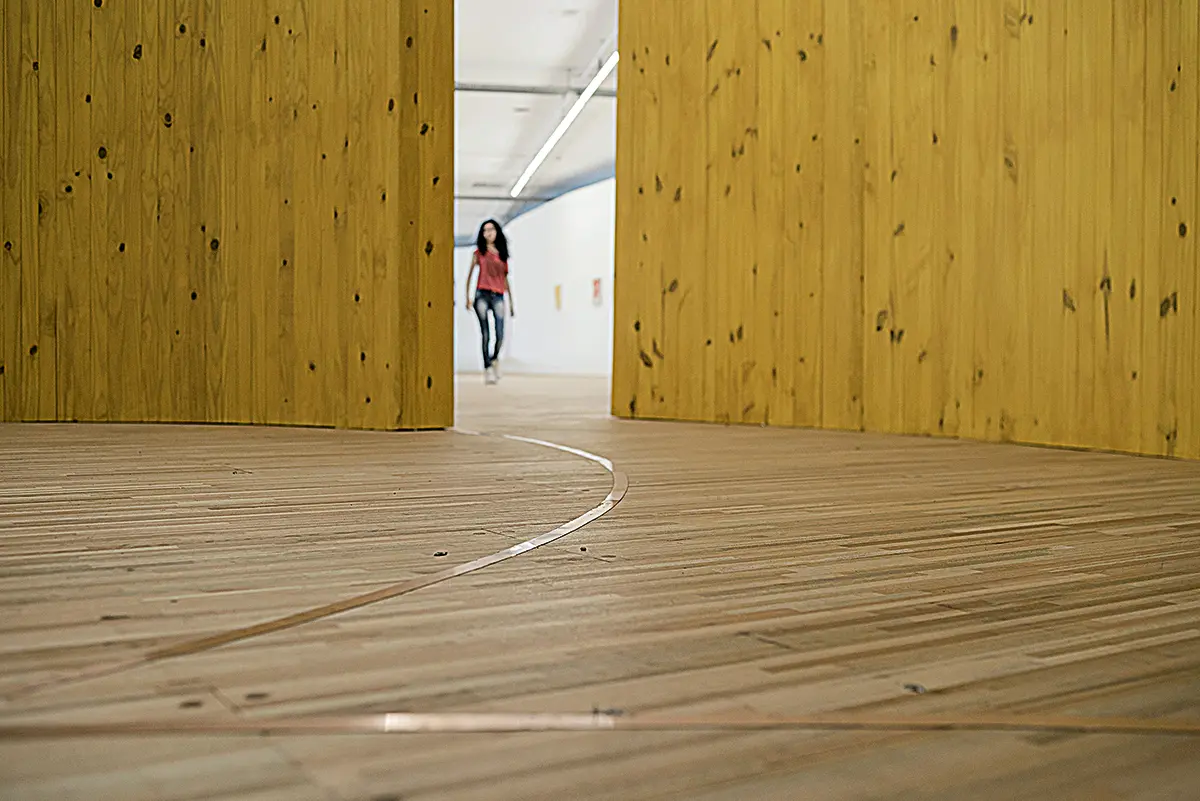
With regards to Bruno Moreschi’s entirely virtual project, I was not able to access it, neither in the pavilion nor through the Biennial’s web page. Finally, Alejandro Corujeira’s exhibition, situated in the pavilion’s mezzanine, was perhaps the most compact of the entire selection; in it, a careful intervention of the floor and walls provided the site with an organic character, a play with space unique in this set of proposals.
As my allotted space is coming to an end, I must stop here. But first, a couple of notes. As I said, this Biennial is an accurate mirror of our moment in time, a series of unconnected exhibitions in a space that overcomes them, a team of people who don’t know each other, without bonds, without personal relationships, without dialog. But the latter is more problematic: the title for this edition, Affective Affinities is a dual reference, to a Goethe novel and to Brazilian politician and thinker Mario Pedrosa’s study Da Natureza Afetiva da Forma na Obra de Arte (Of the Affective Nature of Form in the Work of Art). I’m unclear as to what role Goethe plays in this matter, but as far as Pedrosa—undoubtedly the greatest art critic and promoter in Twentieth-Century Brazil—an incongruity immediately appears. This Biennial devoid of theme and of focus wants to be neutral at a critical juncture in Brazil and the world, a moment when public cultural institutions, and the public sector in general, are under grave threat. The fire suffered by Brazil’s most important museum the night before the Biennial’s press conference was a clear example of this. In that order of ideas, the Biennial and its dialogs must be defended fiercely, as must all spaces for public debate, and the State itself. Neutrality is not an option at a time like the present, much less in reference to Mário Pedrosa, whose motto, as he wrote in a 1957 article in Jornal do Brasil, was: an art critic must be, above all, partial, passionate, and political. In other words, never neutral, never neutral, and never neutral.
* Courtesy: Fundação Bienal de São Paulo.
JULIA BUENAVENTURA
Critic and art historian with an emphasis in Latin America.