The exhibition series Templos (Temples), presented over the course of a year at Alonso Garcés Galería to celebrate its 40 years of activity, followed this calendar: March, 2017: La cuarta ambición (The Fourth Ambition), by Luis Caballero; July, 2017: For Your Eyes Only, by Francisco Fernández; August, 2017: Arquitecturas rituales (Ritual Architectures), by Jaime Franco; October, 2017: Interceptos (Intercepts), by Luis Morales; January, 2018: the commemorative exhibition Asenet cumple 15 (Asenet Turns 15); April, 2018: De naturaleza interior (Of An Inner Nature), by Carlos Jacanamijoy; and finally, in June, 2018: Un dibujo no son todos los dibujos (One Drawing Is Not All Drawings), by Carolina Rodríguez, and Hematomas, by Aldemar Muñoz.
Celebrating 40 years of an art gallery without giving in to nostalgia must be a difficult task. Nostalgia is a natural feeling, not all that detrimental if one is able to avoid the pitfall of a wholesale denial of present realities. The challenge is to retain a grasp of the contemporary as one remembers the past. Art dealer Alonso Garcés organized the proper tribute to the four decades of the gallery he opened in 1978, in partnership with Asenet Velásquez, in a renovated protestant church on Carrera 5ª, in the La Macarena neighborhood in Bogotá. This event is what gives its title to the Templos series, always in remembrance of a specific place inside the gallery’s main space and a prominent artist with a specific historical valence, Luis Caballero. The exhibitions in the series were able to combine a just dose of nostalgia, remembrance, and commemoration, with a decided wager for contemporary art.
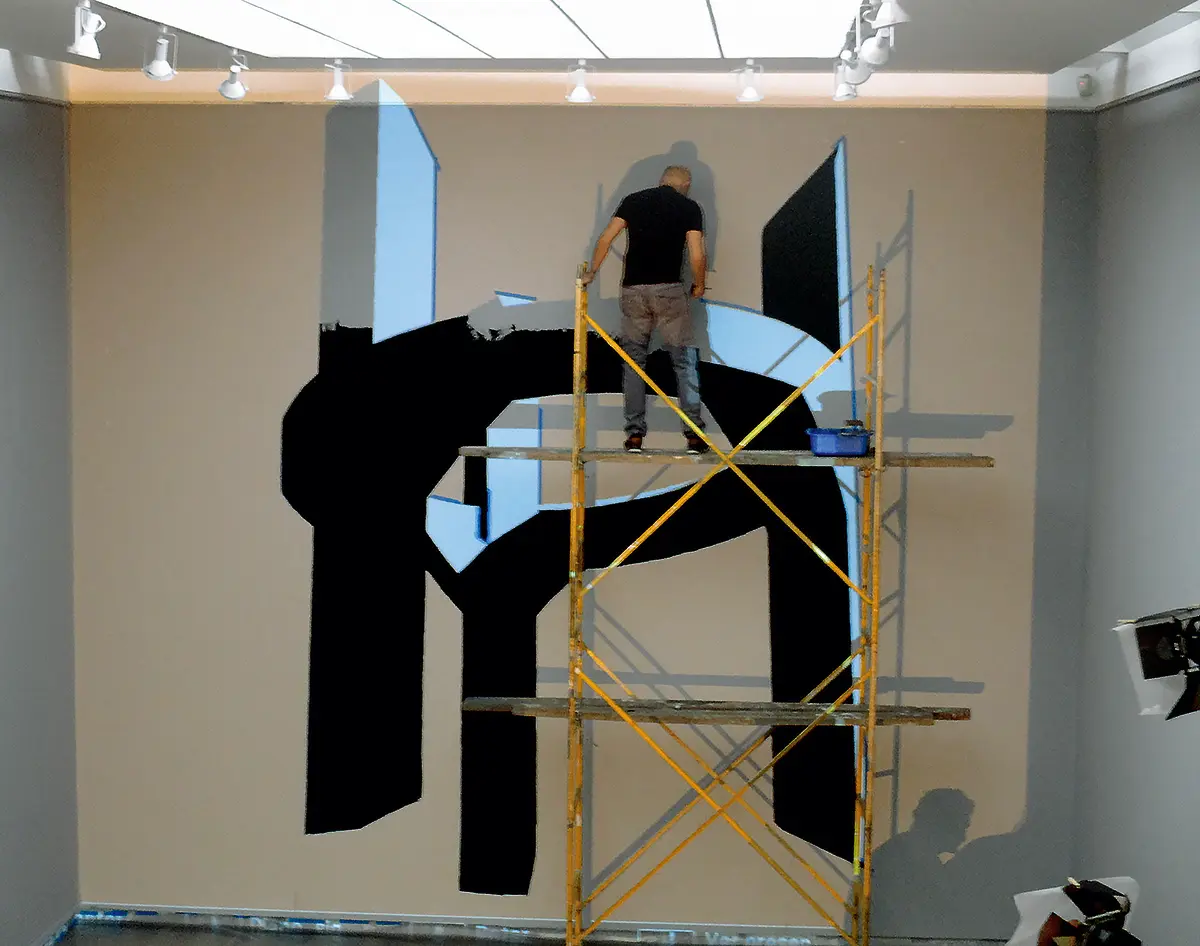
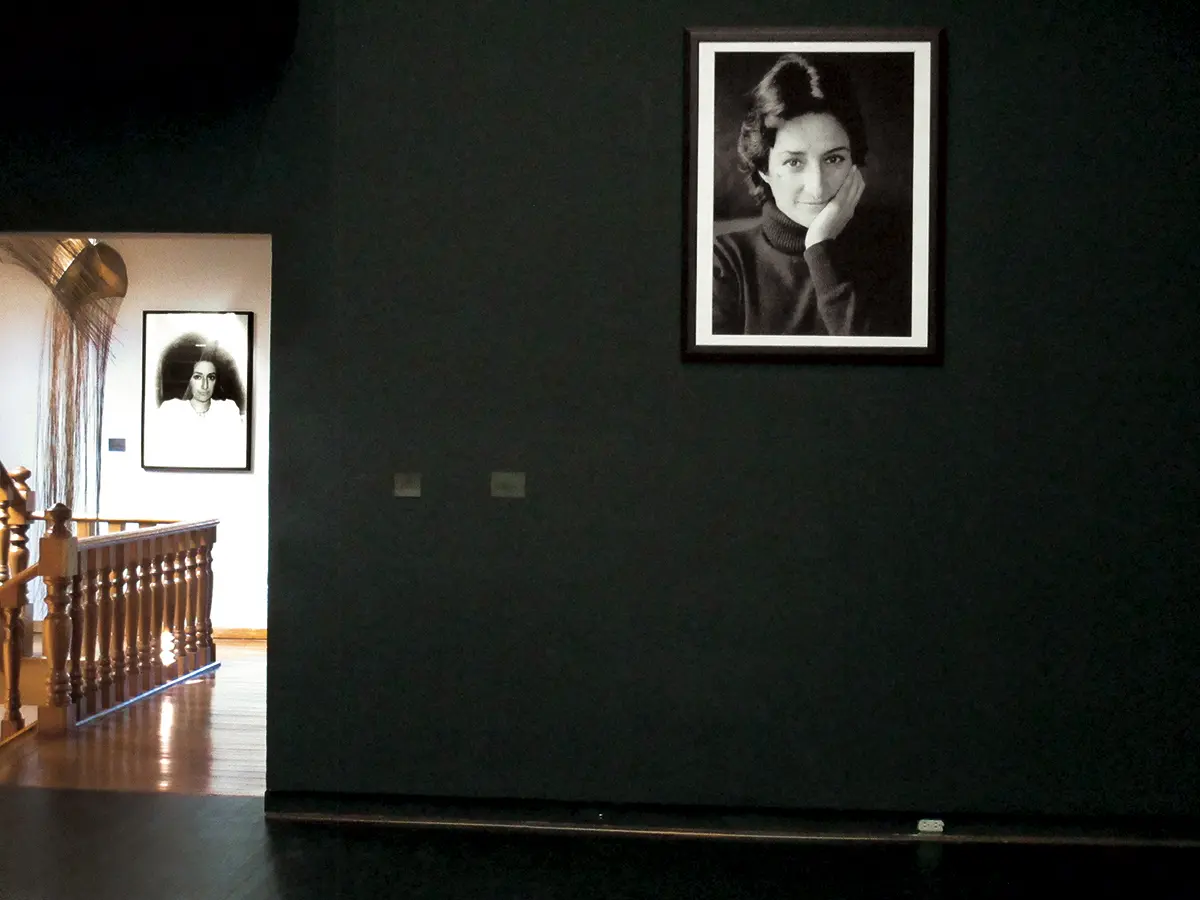
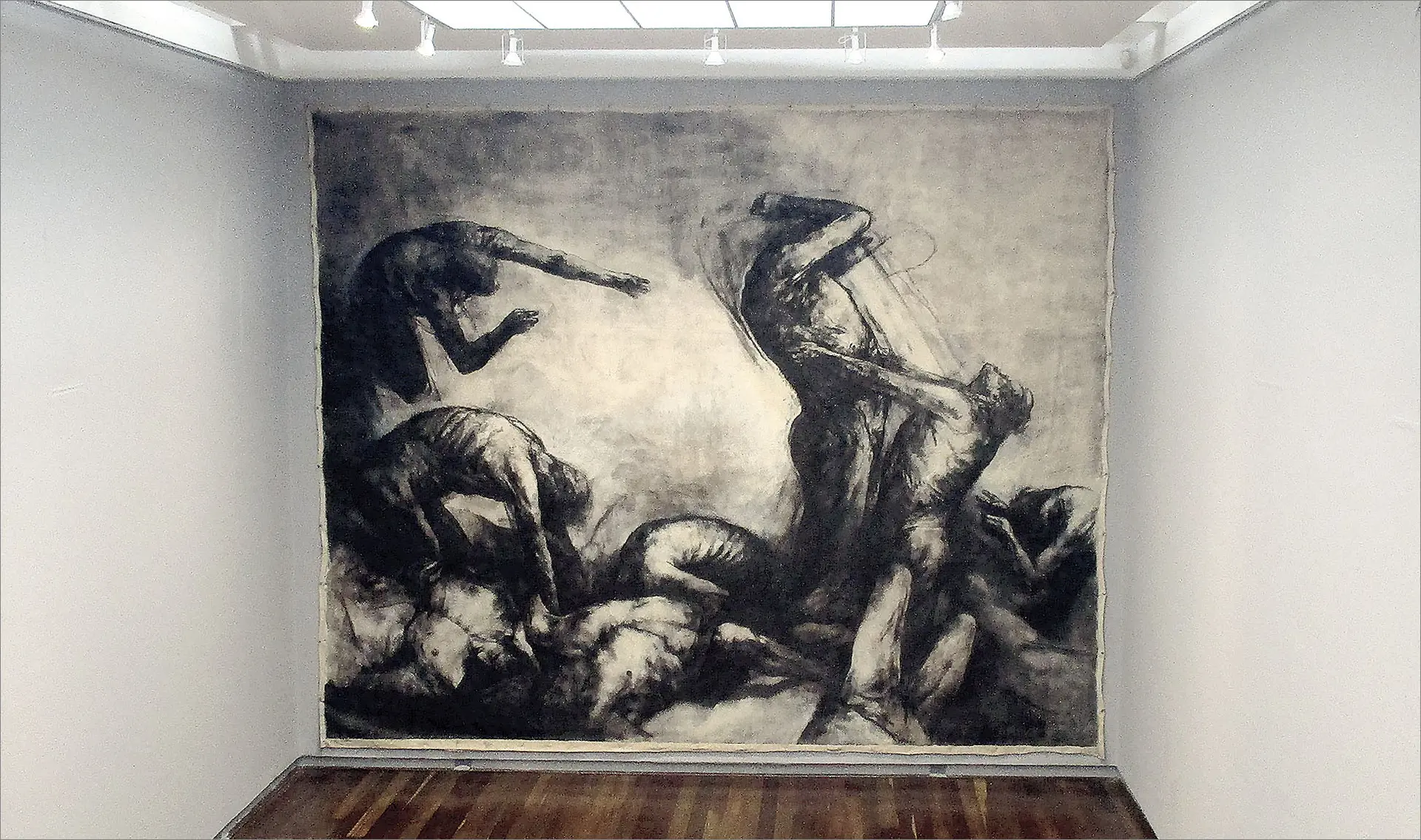
The exhibition commemorating Luis Caballero’s important intervention, La cuarta ambición, opened in March of 2017. On exhibit was the curtain that covered the wall for the first time in 1990, which Caballero sketched and executed as time progressed, up to the time when the closing of the show marked the end of the process. This idea of a work in progress that changes in front of the visitor was pioneering and bewildering in the local scene, and it speaks volumes about the gallery’s daring spirit at the time. And it also serves as a metaphor for the process of artistic creation, the life of the artist, and perhaps even for the passage of time in general. As the launching event of the celebration, it implies a statement of intent; its gesture anchors the series in the history of recent art—an art that challenged tradition by drawing nudes with an eye towards classicism and Art History, while introducing, once one looked at it in greater depth, subjects such as desire, eroticism, and homosexuality, all in an artistic language that was recognizable and acceptable for good Bogotá homes. Jaime Franco’s exhibition, Arquitecturas rituales, returns to the idea of an evolution over time. An architectural structure allusive to a ritual site (touching on the origins of the gallery’s space as a church and highlighting the almost sacred nature of the 7 x 6 m wall) changed every week. Franco marked and painted the structures in clay only to wash the material once the work was completed, and to start anew. It was, in his own words, like a Sisyphean punishment: to fall back to the beginning after an enormous effort. In this case, every new start created a new layer on top of the previous one, which generated depth based on the shadows of the work done before. Once again, the passage of time and the shifting of the ephemeral are essential components of the proposal. Nostalgia reappeared in the exhibition as it embraced the memory of the old partner and friend Asenet Velásquez, and paid homage to her. On display were works from the gallery collection, and especially the photograph of Asenet taken by the great portraitist of the local art scene of that era, Hernán Díaz.
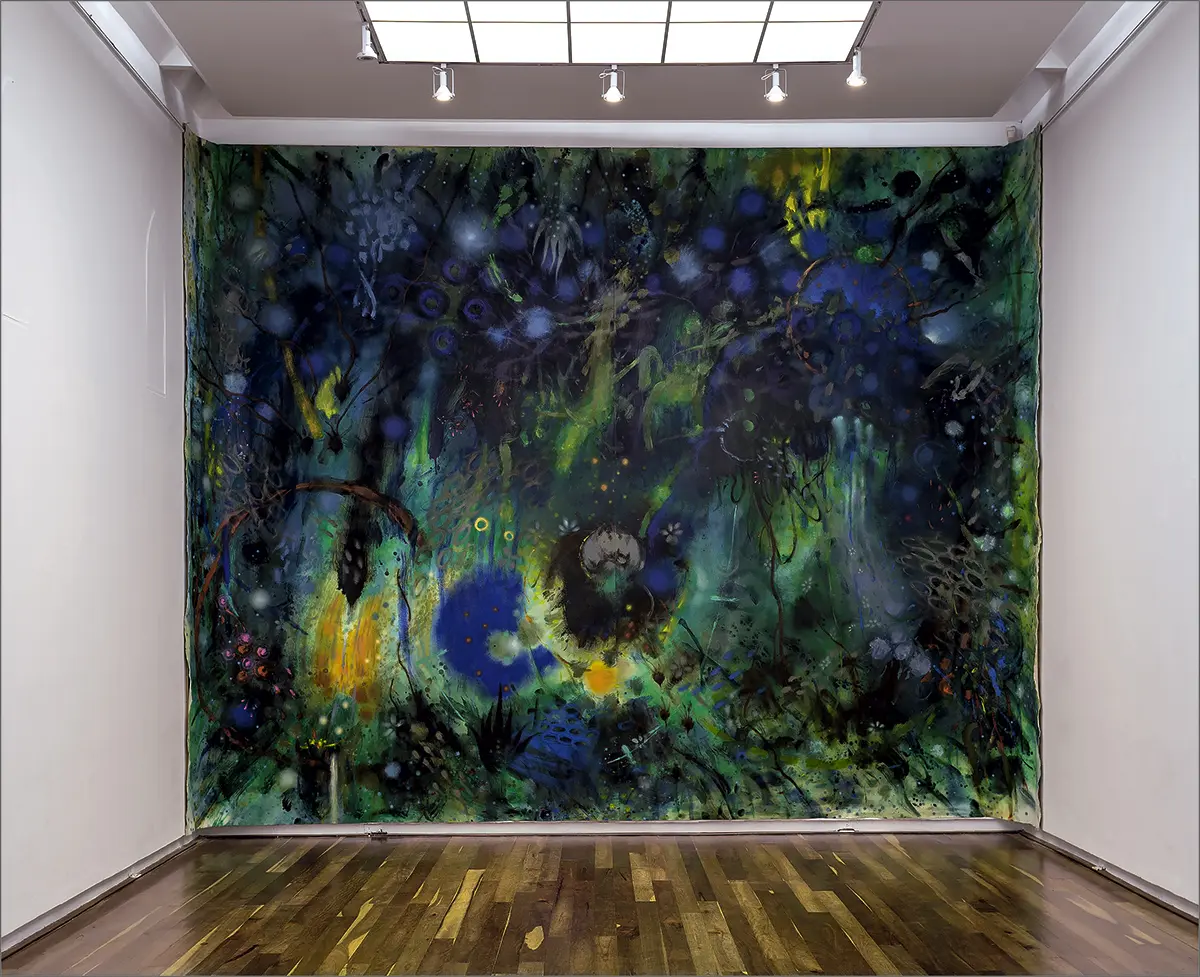
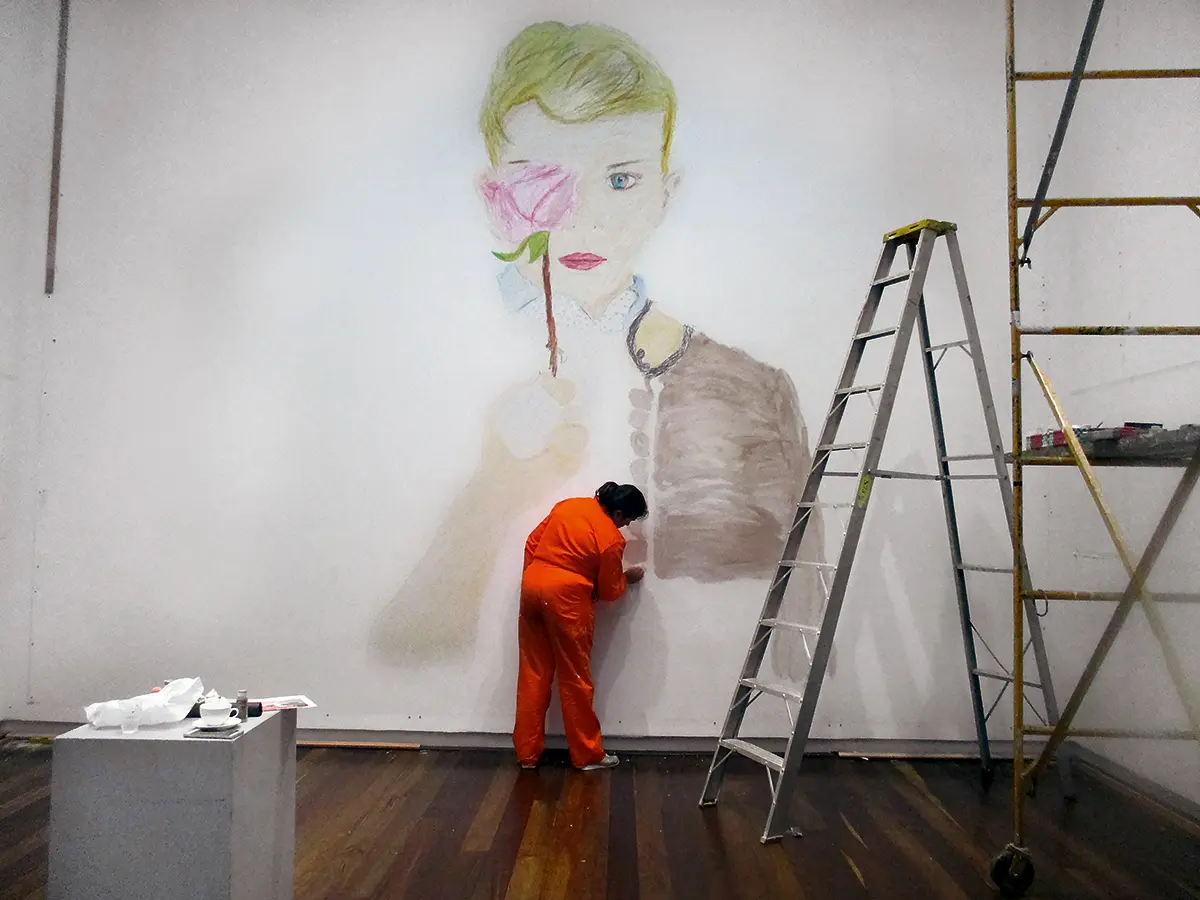
It must be noted that the Templos series are not only a tribute to the history of the gallery and to Asenet Velásquez; it can also be read, between the lines, as a tribute to the relationship between dealer and artist, to the importance of loyalty and collaboration, in life trajectories in which both parties accompany one another, grow together, change and evolve, fall out, and meet again. One artist we have seen in this space is Carlos Jacanamijoy, who presented De Naturaleza Interior in this series of exhibitions. In it, Jacanamijoy’s vibrant visions and experiences of colors, lights, and shapes in nature unfolded on yet another canvas/curtain; these visions and experiences emerge from a perception of what lies outside but are also built on the basis of what is inside, having directly to do with the artist’s identity and his indigenous roots, as has become characteristic of his creative process. Jacanamijoy also occupied other spaces in the gallery with an elongated canvas, also hung directly on the wall. It was yet another curtain-like format that, like a tree’s roots, grows on the temple’s walls—in this case with a single hue, between black and gray, devoid of the larger work’s bright colors. Finally, Templos featured Carolina Rodríguez’s mural and new series of drawings titled Un dibujo no son todos los dibujos, which, besides delving further in the artist’s insistent topic of childhood and child models in fashion magazines, it provides commentary on our current state, the speed at which we consume images, and also on the system in which artists, dealers, and collectors exist—a system that, for example, no longer speaks of creation but of production, and which responds, rather than to the desire of exploring profound interests, to the “obligation” of acquiring the works that every collection must hold. This proposal brings the cycle to a close, fulfilling the challenging promise of keeping the present in sight while we honor the past.
Ultimately, this series is also a tribute to the trajectory of the artists who give it shape, those who have conceived and developed projects centered on the idea of the curtain, of the sacred wall in a space transformed into a temple of art, but who have also been able to propose projects that summarize their careers and bring their essences up to the large surface the audience has encountered since 1978.
CARIDAD BOTELLA
Curator.