The exhibition Solid Abstraction. Disobedient strategies in contemporary Cuban art, organized by Miami Biennale and Henrique Faria Fine Art, brings together works by Cuban artists whose common element is the use of abstraction. Unlike the works of painters from the mid-twentieth century such as Carmen Herrera, Zilia Sánchez, Sandú Darié and Loló Soldevilla, who worked or still use abstraction that combines form, color and line to create works without references to the real world, the pieces chosen for this exhibition use abstraction to transmit ideas and messages that are closely related to specific contexts and experiences.
Curated by art historian and independent curator Aldeide Delgado, the exhibition is part of her project titled Solid Abstraction, Political Sailing in Central America and the Caribbean which was awarded the TEOR / éTica 2017 research and production of a critical text grant. The study analyses from a critical perspective the discursive approaches to abstract art in the region and contributes to the verification of the conceptual paradigms that accompany the artistic fact. The exhibition derives from her research and includes works by ten Cuban artists: Yaima Carrazana, Aurora de Armendi, Rafael Domenech, Filio Gálvez, Quisqueya Henríquez, Reynier Leyva Novo, Francisco Masó, Glexis Novoa, Ernesto Oroza and Rodolfo Peraza. According to Delgado, “the exhibition generates a discourse that avoids the risk of aesthetic cleanliness generated by a formal saturation of abstract language and, at the same time, makes it possible to address the creation of artists in a local or regional context. In this sense, it is a provocation around the question how can abstraction be radical today?”1
The title Solid Abstraction emerges as a way to establish a link between the Latin American abstract production of geometric character – ‘cold’ or concrete – and Latin American conceptualism. According to the curator, “this allows the project to be introduced to what researchers Cecilia Fajardo-Hill, Adán Vallecillo or Maria Lind call conceptual abstraction, meaningful abstraction, implicated abstraction, political abstraction, open abstraction and a long etcetera. Solid Abstraction allows us to establish a sort of game between both terminologies, demonstrating, in this way, the interdisciplinary, investigative and quasi-activist nature of the proposals present in the exhibition.”2
Delgado envisioned a show that questions the nature of abstract art and considers the discourse and/or thought about abstraction and its potentialities in the context of current creation rather than a chronological or thematic development. The notion of disobedience is accessible in that sense, not only because it constitutes a recurring term in the artists’ political statements, but also because disobedience is connected to the notions of detachment and resistance. According to her, “disobedience allows establishing a link with the conceptualizations of dissent in Jacques Rancière; hence, it implies a reconfiguration of consensual obedient logics through totally new questions.”3
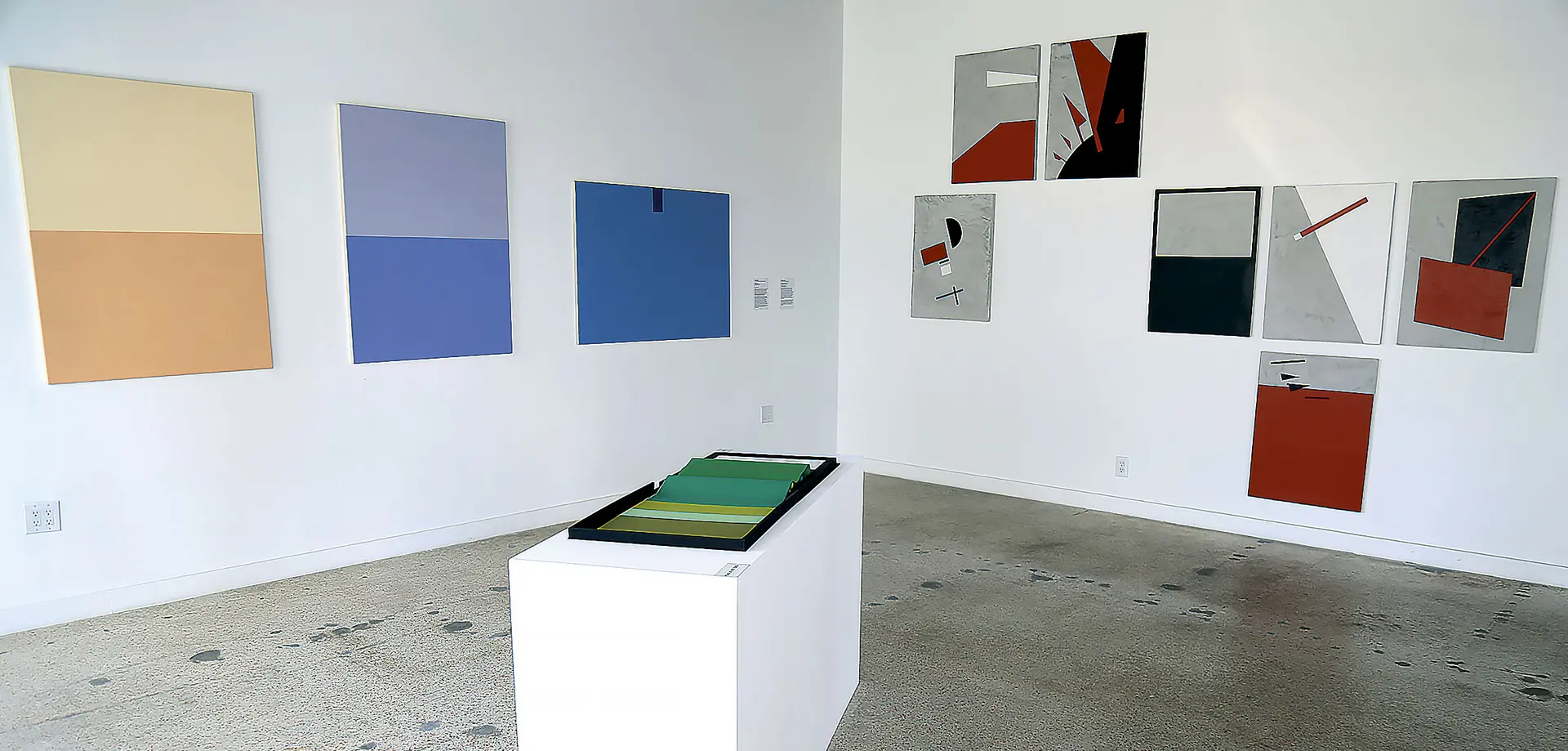
The exhibition occupies the three galleries of Miami Biennale’s space. The first one features works by Yaima Carrazana, Aurora de Armendi and Reynier Leyva Novo. The paintings entitled Fifty Percent (2017) and Declaration Letter No. 10 (2016) by Carrazana, who currently lives in Amsterdam, establish a dialogue between history and the discourse of contemporary art. The canvases painted in orange, purple and blue tones are inspired by the colors of the envelopes used by the Ministry of Justice and the Dutch government’s Department of Taxes. According to the artist, these envelopes and the documents they contain made her think about the process of integration she experienced as an immigrant. They also inspired her to create a series of abstract paintings in which she transforms the designs of the official correspondence, generating a kind of empowerment or exercise of creative freedom.
In Color Book II (The mountain and the sea) (2016), Armendi explores the landscape and the viewer’s relationship with it through a book made up of sixty-four monochromatic monotypes. The book explores how we inhabit or imagine the concepts of identity and place in our constant redefinition of home. Leyva Novo’s installation Revolution is an Abstraction (2013-2017) includes seven panels of ink on concrete in which he reproduces posters of artists from the Soviet avant-garde, such as El Lissitzky and Alexander Rodchenko, devoid of texts. By eliminating the posters’ original content, Leyva Novo decontextualizes them historically and transforms them into abstract conceptual works.
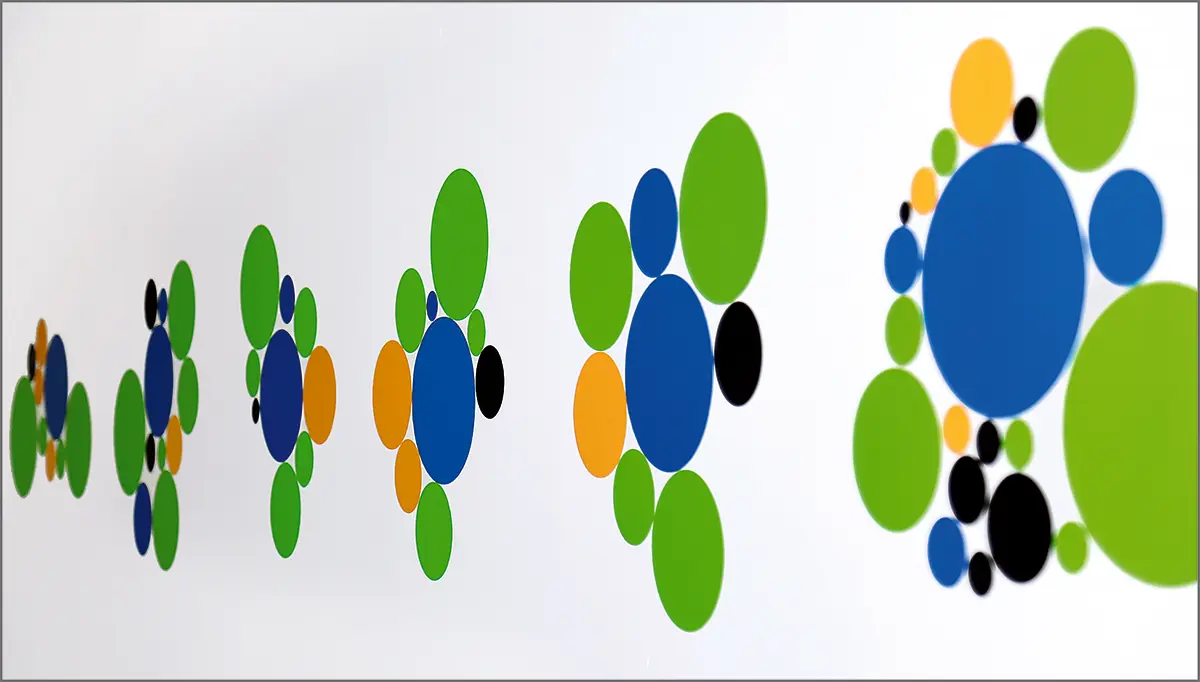
Computers and social networks serve as inspiration to the artists whose works are exhibited on the walls that lead to the second room. In Pilgram 1.0 (2015), Rodolfo Peraza focuses his research on the public space, both virtual and physical, as well as on DataVis on issues related to Internet culture and its footprint in society. In this particular work, Peraza relies on a data visualization program to graph the statistics of the use of applications in different WiFi points in Havana and analyzes, from a visual abstraction, the communication needs in an island that geographical and politically is condemned to isolation. On the other hand, GIS Studies (2017-2018) by Filio Gálvez provides a component related to the processing of files and computer systems. Gálvez uses the color patterns caused by the deficiency in the Internet connection when writing a word in the Google search bar to generate a series of collages that visually translate certain concepts.
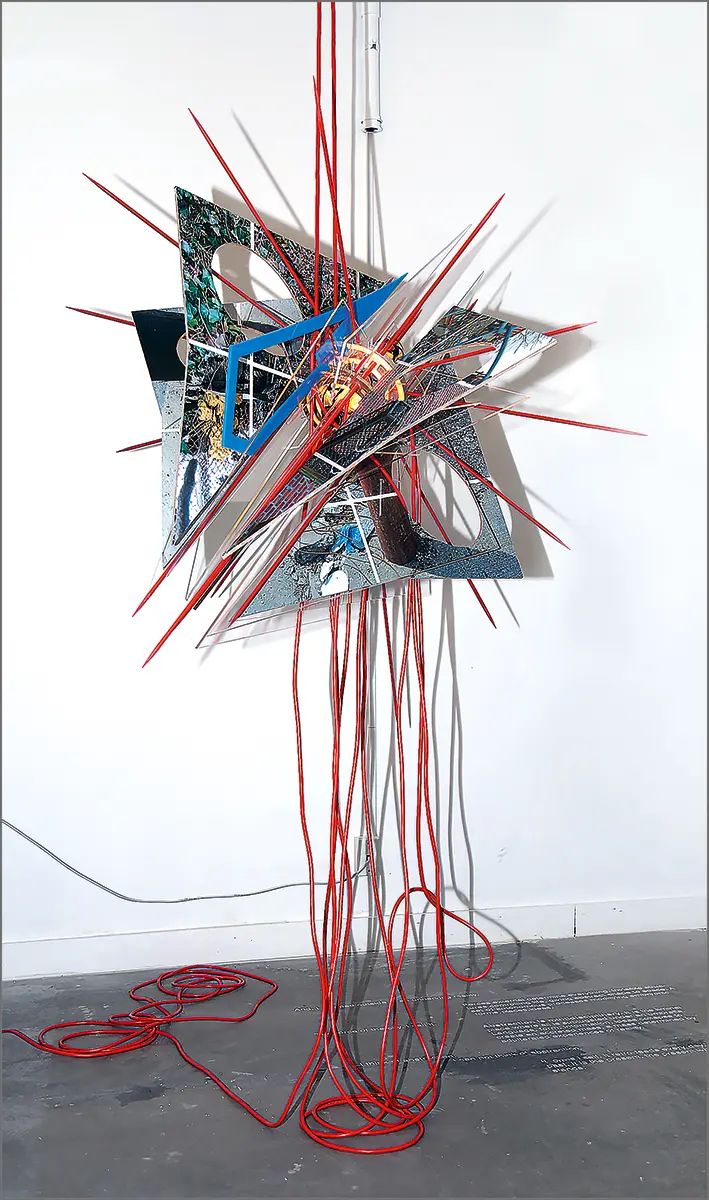
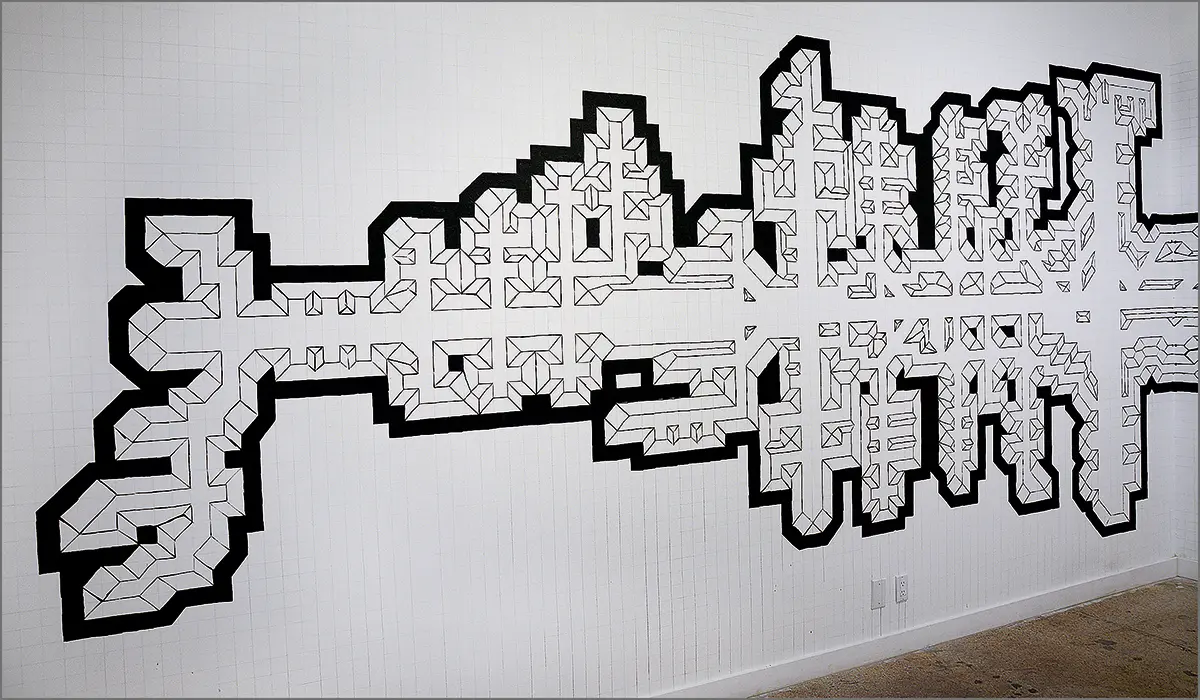
In the next room are Bejuco (2018), a graphite drawing made especially for the show by Glexis Novoa, and Untitled (object of social behavior) (2018), by Rafael Domenech. Novoa’s presence in Solid Abstraction is important not only because he shows a piece that is part of his research on the relationship between the architecture of power and history, but also because it recognizes his leading role in the historical exhibition Es solo lo que ves (It’s just what you see) which took place in Cuba in 1989, as a response to the government’s censorship which positioned the conversation about Cuban abstraction in the political arena. The work of Domenech stands out for its investigative nature and its relationship with the urban environment. In this particular piece, we can see his interest in the sensibility of perception and the physical appearance of the elements in a hanging installation made with with unconventional materials such as cables, steel, light bulbs, markers for urban projects and printed paper.
The last gallery features the works of Francisco Masó, Ernesto Oroza and Quisqueya Henríquez. Masó denounces the aggression of the agents of the Cuban regime by representing, in a series of compositions of horizontal color stripes entitled Aesthetic Register of Covert Forces, (2017 - continued) the patterns of the polo t-shirts used by the Cuban government agents that appear commonly photographed confronting opposing groups.
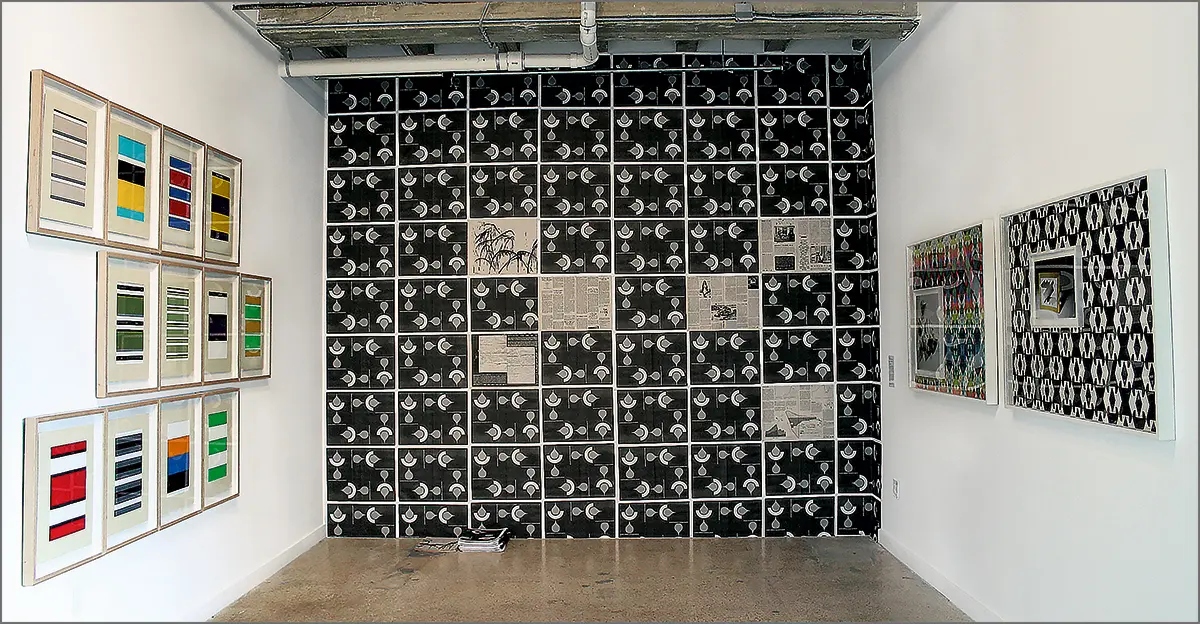
The project by Ernesto Oroza Models of Dispersal: Tabloid No. 29 & Tabloid No. 33 (2018), made in collaboration with Gean Moreno, Ana Olema and Annelys PM. Casanova, is part of Tabloids, a series of newspapers produced on the occasion of specific exhibitions. On this occasion, Oroza covers a wall with posters that establish a dialogue between the design of Felix Beltrán’s original poster titled “The used lubricating oil is useful again” (1979) and the tabloid Zamora Rainbow Brush produced by Ana Olema and Annelys PM. Casanova. The latter refers to the use of asphalt as a form of repression by the Cuban government and especially to the attack suffered by the dissident Liset Zamora. In this installation oil is shown both as a weapon of repression and as a visual element that generates a polluting abstraction.
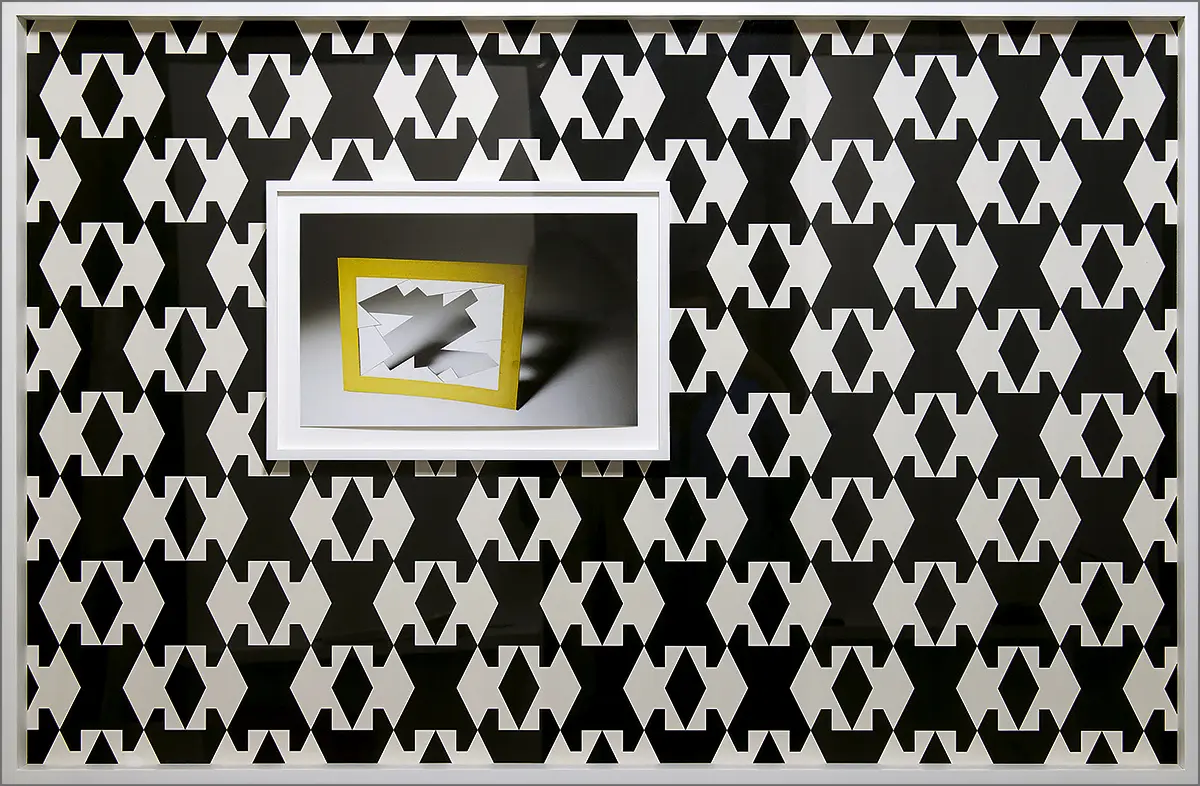
Finally, Delgado includes in the exhibition two works by Quisqueya Henriquez that make reference to important avant-garde artists August Macke / Dorothea Rockburne (2014) and Lygia Clark / Helio Oticica (2014). By establishing a dialogue between objects and common processes and works of recognized artists, in this case three of them abstract, the artist questions different issues including appropriation, copyright and originality in the work of art, which have been controversial throughout the history of art and they have become even more complex in the digital age.
Solid Abstraction presents an interesting selection of abstract works that connect with each other and share a close relationship with the everyday and with different strategies of collection, appropriation and analysis of data specific to our contemporaneity. In addition to presenting an impeccable curatorship, the exhibition reinforces Delgado’s intention to position the discourse of Cuban abstraction beyond the borders that reduce it to its modern understanding.
NOTES
1. Press release of the exhibition.
2. Interview with the author Miami, June 2018.
3. Ibid.
FRANCINE BIRBRAGHER