
Mexico is a country with artistic and cultural traditions that are as diverse as they are rich. This remarkable and monumental exhibition concentrates on a specific period of time, the Viceregal paintings of the eighteenth century. The history of Viceregal painting in New Spain (Mexico) is long and complex and would be impossible to organize for an exhibition of the scope and quality that would do it justice and the focus on this period is an ideal solution. Originating at Fomento Cultural Banamex in Mexico City and the Los Angeles Museum of Art, it presents the most important artists and stylistic developments of the century while providing an overview of cultural and historical significance. The title, “Painted in Mexico” is subtitled Pinxit Mexici, a Latin phrase to further emphasize the role of the artists and their growing self-awareness and pride in their own traditions, while maintaining a connection to current transatlantic trends that confirms their importance as educated and informed. Too often, colonial paintings in the Americas have been (wrongly) dismissed as derivative, rather than appreciated for unique interpretations relevant to the countries they represented. The artists in this exhibition were not novice, untrained artists producing naïve interpretations of European works, but professional skilled painters who not only signed their works, but also made explicit reference to Mexico as their place of origin. An artist’s honor as a professional is represented by a signature, a convention not of long duration in art history in Europe either, and the Mexican artists stood on the same ground as their Western colleagues in demanding respect and recognition, demonstrating their pride with the addition of Pinxit Mexici (Painted in Mexico), Fecit Mexici (Made in Mexico) or Faciebat Mexici (Was made in Mexico). The eighteenth-century artists actively explored ways to invigorate their art, resulting in the expansion of guilds, schools, and academies beyond the capital of Mexico City to appeal to a new level of patronage that required everything from small household chapel paintings to monumental works for religious, civic and domestic decoration. A wide range of subjects emerged, from the religious to the secular, including scenes of cities and rural landscapes, portraits, and everyday life. The viewer is given a glimpse into the century through the lens of the artist.
The exhibition of 110 works of art (primarily paintings) is divided into 7 chronological and thematic sections: Great Masters; Master Storytellers and the Art of Expression; Noble Pursuits and the Academy; Paintings of the Land; The Power of Portraiture; The Allegorical World; and Imagining the Sacred, all of which focus on the artists of the period. Masterfully curated by Ilona Katzew with guest curators from Mexico and Madrid, this extraordinary undertaking brings together works from many parts of the world and constitutes a major contribution to the understanding of New Spanish painting that has long been neglected. Accompanied by a comprehensive and scholarly catalog with essays that further expand upon the role of the artists for their stylistic, iconographic and historic innovations in each section, the exhibition is enhanced by the introduction of the most current research on the works and their subjects, many of which are unfamiliar to today’s audience. The exhibition and catalog will be valuable additions to present scholarship and hopefully encourage further investigation into other areas of Viceregal art, in Mexico and beyond, that have also been long overlooked.
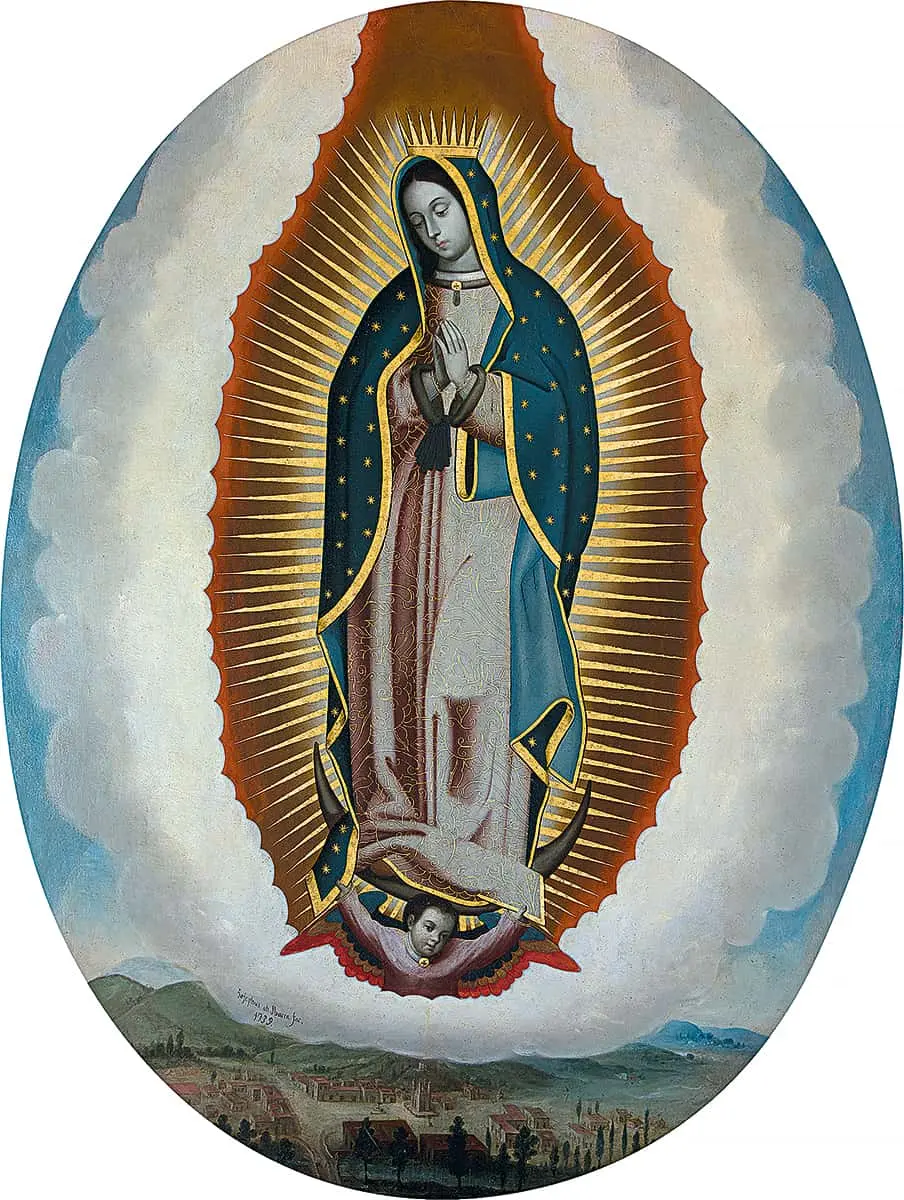
With excellent wall texts and labels, the installation is as educational as it is visually appealing. As would be expected, monumental religious works validate the significance of Christian imagery for didactic purposes, while conveying regional history and traditions in unique ways that may only be relevant to the local population but set the work apart from European sources. Newly canonized saints and local religious personalities are among the conventional characters of biblical and Church history, with new accolades for the Virgin Mary, starring the Virgin of Guadalupe and commemorating her official recognition by the Pope in 1754 as Patroness of the Americas. Some of the most iconic images of the Virgin of Guadalupe, the patroness of Mexico with depictions of her story of discovery and veneration include an iconic image by master painter José de Ibarra of the Virgin of Guadalupe and View of the Valley of Mexico, 1739, one of the many devotions that he painted and among many the artist was recognized for in his lifetime. Using an oval format to depict an open landscape with the Virgin floating high above Mexico City, the Virgin brings grace and beneficence to her people (Figure 1). Another painting of the Allegory of the Patronage of the Virgin of Guadalupe over New Spain, 1786, by an unknown artist is done in oil on tin set in a beautiful silver repousse frame with rococo cartouches illustrating main episodes of her miraculous apparition. The densely packed composition represents the official iconography of the event. The images of the Virgin of Guadalupe by the most recognized master artists of the period, José de Ibarra and Miguel Cabrera, reveal the Spanish influence with their heightened shadows and emphasis on three-dimensionality, also evident in several other works in the exhibition.
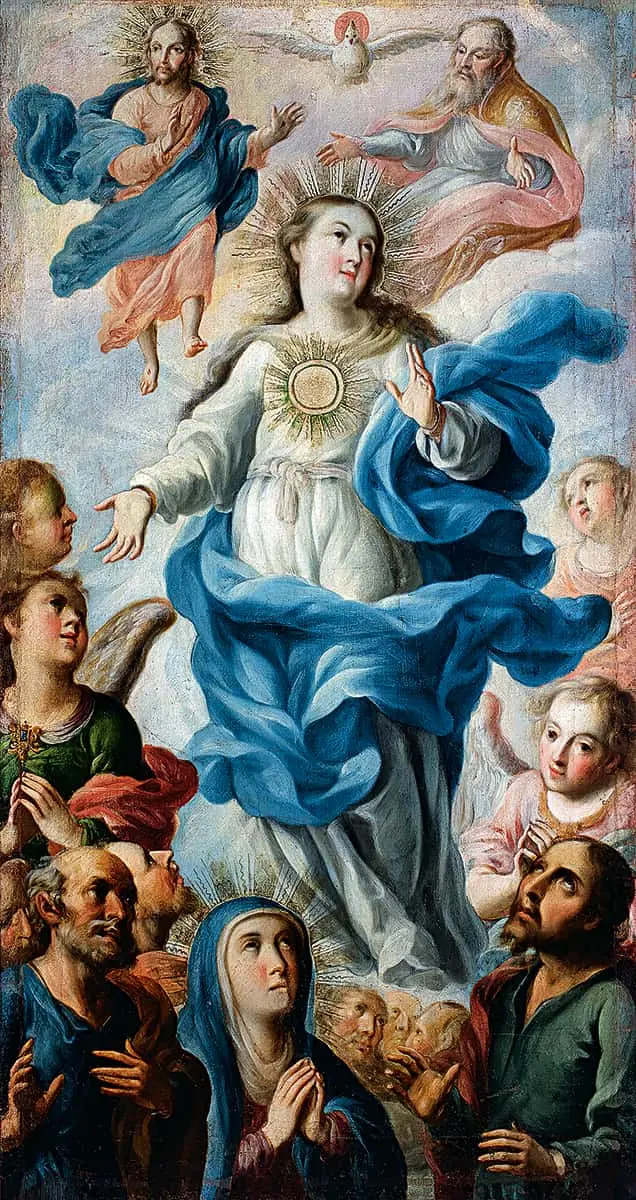
An impressive grand painting, The Assumption of the Virgin, 1719, by Antonio de Torres, is one of a series on the Life of the Virgin done for the Colegio Apostólica of Guadalupe, Zacatecas (Figure 2). It may have European antecedents, but also includes a radiant sun disc displayed on her breast that is reminiscent of Aztec objects. Such works are evidence of the mobility of artists beyond the capital to serve local needs as they depict a variety of symbols and images in a complex narrative as a didactic guide to inner spirituality. The Allegory of the Spanish Monarchy with the Kingdoms of Mexico and Peru, c.1770, by an unknown artist, embraces some of the old colonial and European interpretations of the Americas, with personifications of the viceroyalties of Mexico and Peru and their indigenous rulers surrounded by symbols and citizens. The curator describes it as a critical and politicized allegory perpetuating a maternal-paternal biological metaphor of a “new world.” Devotional images in New Spain often reflect a setting where sacred images were venerated that could be one of individual devotion as well as those associated with churches small to grand in scale. Miracle-working cult images inspire contemplation in small, carefully painted works that are often more impressive than their larger counterparts. Some are painted on copper, retablo-like objects that perform as milagros or offerings for a special favor and are distinctive of Mexico and its Pre-Columbian traditions of worship with the addition of certain flowers and other sacred objects. Others are described as ex-votos, votive offerings made of all kinds of materials that are donated to a sanctuary. They are among the most authentic works in the exhibition. The Divine Spouse, c.1750, by Miguel Cabrera, introduces another distinctive subject in New Spain (Figure 6). The scenic and idyllic image of Jesus Crist served as an instrument of contemplation and visual allegory of the mystical garden for nuns in convents. Replete with symbols of the Life of Christ, it is an image of devotion that is as sweet as it is beautiful.
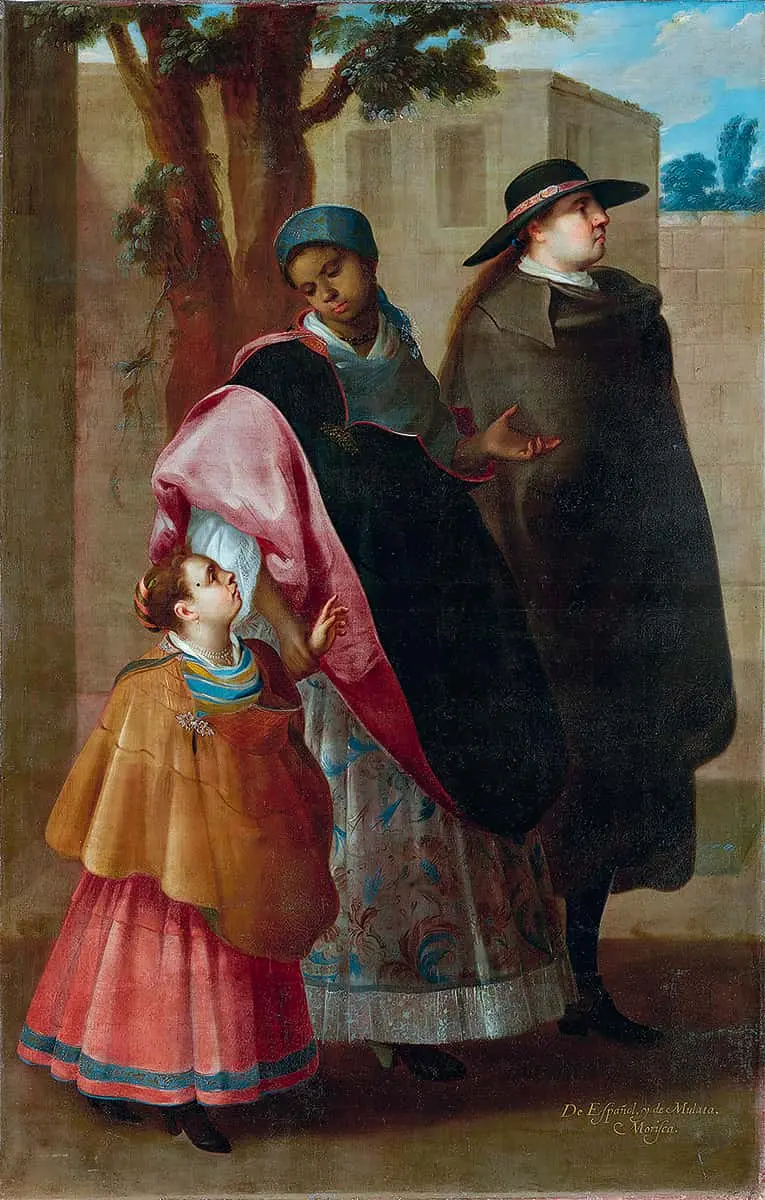
A group of paintings that are often considered the most celebrated and unique in New Spain are the casta paintings, many of which are represented in this exhibition, including some of the famous series of 16 by Miguel Cabrera from 1763 and others attributed to the other great master, José de Ibarra. The pictorial genre of mixed races (castas) in Mexico, from Indians, Spaniards, Creoles (Spaniards born in the Americas), and Africans became a visual means to categorize and rank the different racial groups of the colony, indicate their social status, and contest European notions of the new Americas as degraded hybrids. The paintings portray each person in their mestizaje combinations accompanied by inscriptions that identify the racial mix and a rich compendium of clothing, objects, food products, flora and fauna to complete their significance as documents of time and place. From Spaniard and Mulatta, Morisca, c.1730 attributed to José de Ibarra, portrays a proud Spanish male wearing a cape and broad hat and a mulatta woman with their morisca child (Figure 3). The lavish attention to detail on the clothing and jewelry ennobles the family group who are shown in an informal and leisurely manner. It also brings attention to the garment worn by the African woman, who was not allowed by law to wear Spanish-style clothing. Instead, they made their own unique form of clothing, often quite beautiful and seductive that easily competed with those worn by Spanish women. There are other fascinating images of casta paintings, as well as singular portrayals of Mexican Indians and Barbarian Indians. These works are full of complex details on textiles and in the natural settings in which the figures are placed in interesting groupings and poses, many of which are seen from various angles to add a life-like dynamic.
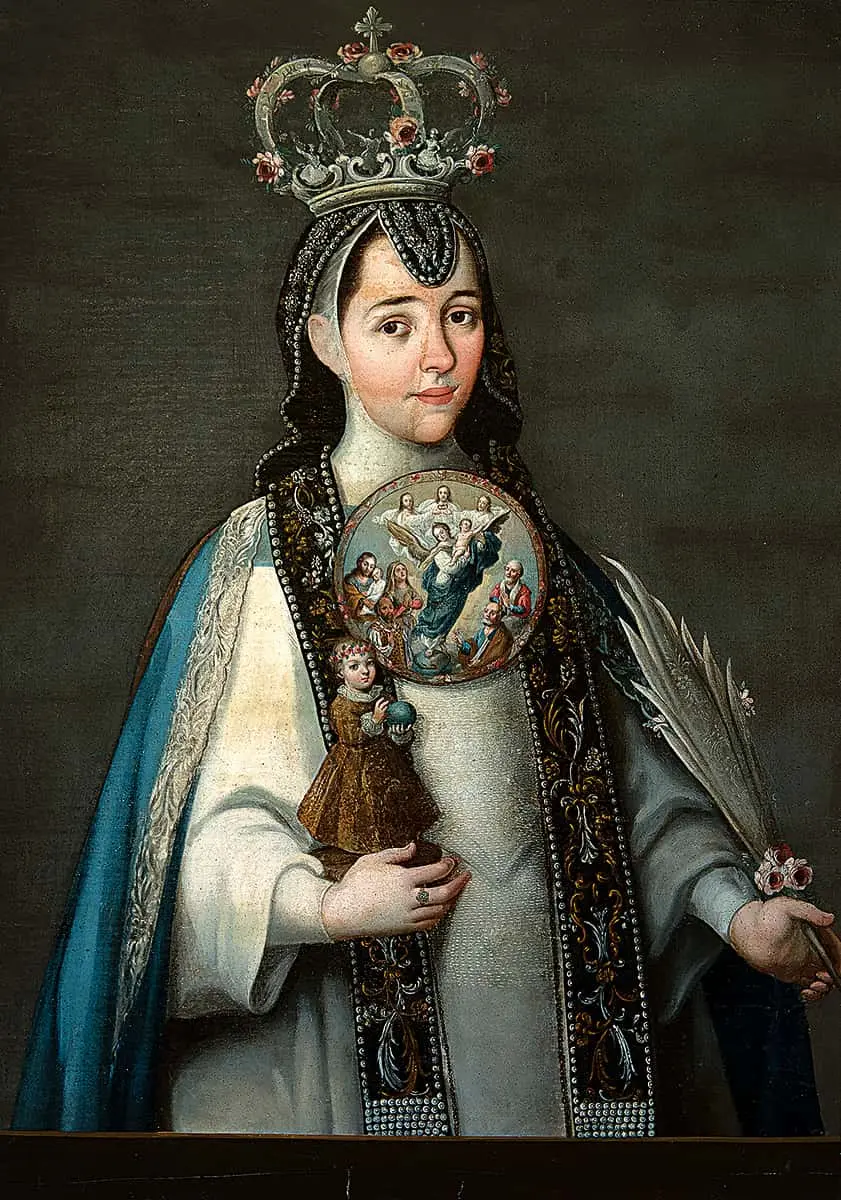
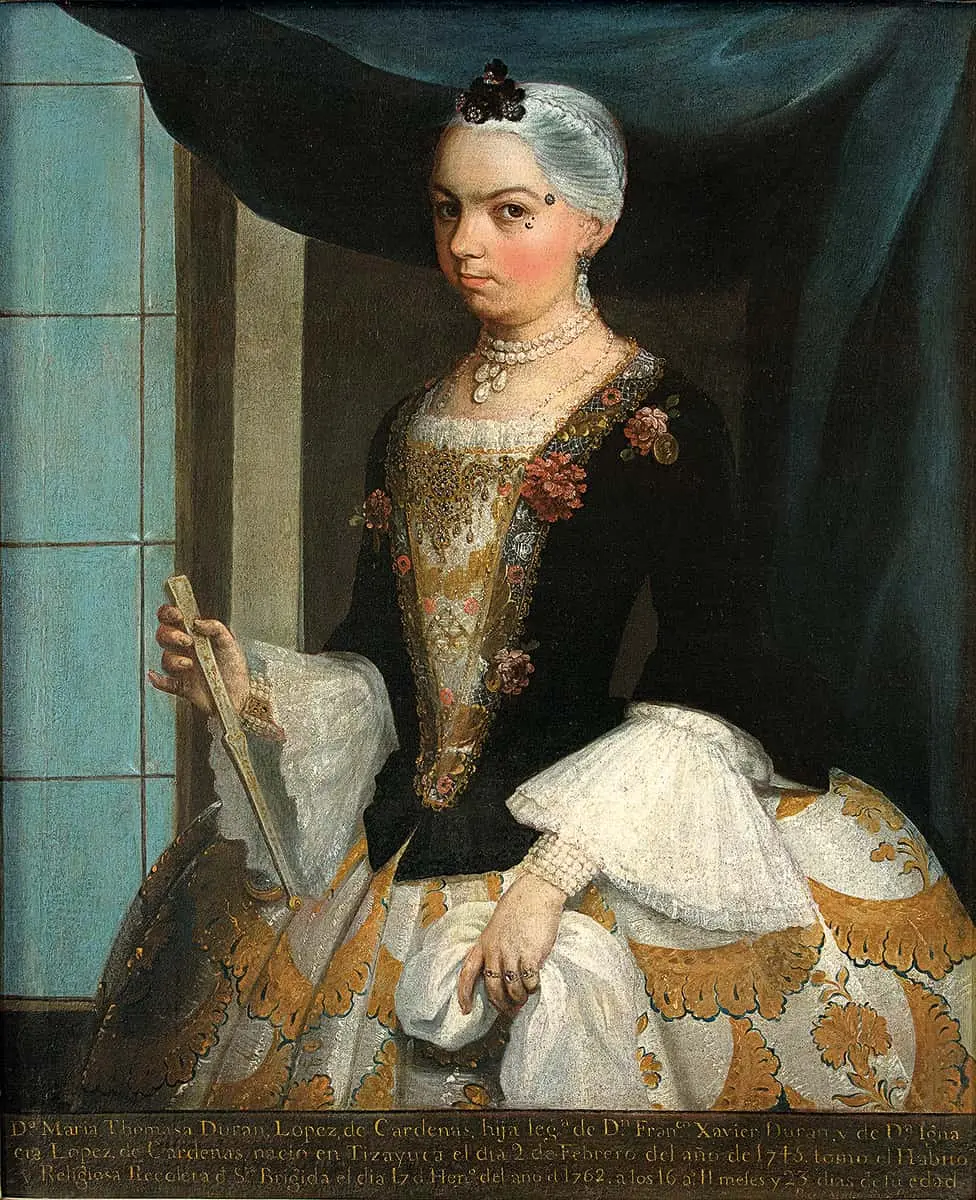
Portraiture of a more traditional and official description to assist the viewer to understand and visualize the personalities of society and authority, based on Spanish models, is in the section on the Power of Portraiture. The portraits indicate how hierarchal society of New Spain placed a premium on nobility of birth, piety, wealth, titles and merit through imagery that displayed their identity through fashion and setting. Sophisticated men and women are portrayed to serve a variety of purposes in the new society. In the striking Portrait of Doña María Tomasa Durán López de Cárdenas, c.1762, by Juan Patricio Morlete Ruiz (Figure 4), a young woman about to enter the convent belongs to a genre particular to New Spain. Dressed in a gorgeous velvet and lace dress and displaying a stylish beauty mark, she carries a closed fan to symbolize her soon-to-be marriage to Christ. Her social status is well established in the inscription below. Portraits of priests and nuns with distinctive religious details embellishing their habits, such as crowns and badges, are represented in Portrait of a Conceptionist Nun, second half of the 18th century, by an unknown artist (Figure 5). The young woman is shown shortly after the ceremony in which she professed her vows to be the bride of Christ. Her richly embroidered attire is dominated by the badge and other symbolic elements. A set of the nun’s badges is also in the exhibition. The badges or shields (medallones) with their opulent frames are made of a variety of materials and appear uncomfortably oversized as they display subjects significant to the nun and her order.
The volume of work produced by the four generations of Mexican painters in the eighteenth century is unique to the Viceregal Americas. Only in Viceregal Peru were there respected and successful workshops, many of indigenous artists, that rival the work produced in Mexico, but never in such great quantity or grandeur, nor over such a large territory of patronage. The exhibition recognizes the artists of New Spain as they respond to a growing demand for images of all types with remarkable works that visualize a unique form of expression for a unique period.