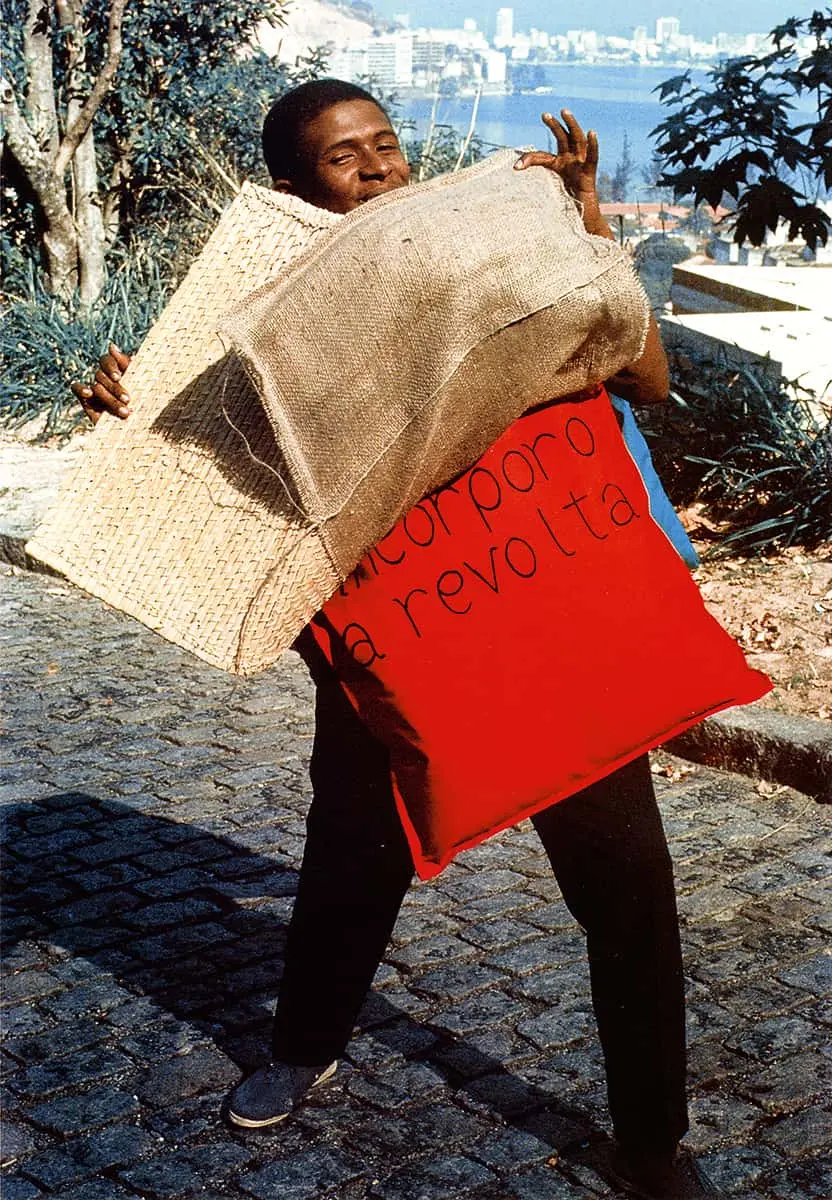
Many of the interrogations we could make of our modernity—a modernity that, be it imposed or acquired, arrived hand in hand with television (which transmits world events live)—in order to assimilate it, tropicalize it, turn it around like a glove, and transform it into an autochthonous readymade, are posited again on the basis of the “transobject”, if we assume Hélio Oiticica’s own description of his parangolés, some of which are arranged at the entrance to the exhibition for the audience to wear and parade (like an action, a weight, a particularity, or a space that—like Latin America itself—shifts and is redefined with very step, at every moment; an act for the duration of the exhibition.) As Julieta González explains, the parangolés resulted from a rethinking of the body in terms of public space, and were controversial in their time not only because they broke with established parameters of what is and isn’t allowed, but also because—as devices—they embodied a political payload involving matters of race and class. When first presented at the Opinion 65 exhibition in the Museu de Arte Moderna in Rio de Janeiro, the dancers from the Mangueira favela who wore them were barred from entering the premises.
This is not, at any rate, a mere act of protest, a way to disobey, to desynchronize, to replace, or to update contents with an eye towards trendier concerns (the political paradox of saying-nothing or saying-something-else about geometric abstraction, for example), as much as it is an attempt to work on the basis of conceptual borrowings (thefts or impositions) in order to define a general state of affairs (in shared terms, like the symptomatology of a cultural, social, economic, and political malaise) and to outline the idea of reality and its manifestations that is hidden or involved in the modern setting. That which comes out, becomes portable, becomes ephemeral, and is, in its transitory nature (like Modernity itself), imposed on the landscape. These are not isolated phenomena, Petri boxes arranged in this or that location, like the catalog of exemplars usually provided in an anthology exhibition. It is not a revision, an updating, a revamping, or a pimping (to use current slang), but the staging of a demonstration of the linkages and bridges between all these expressions (beyond their specific locations) as a frame of reference for the role, impact, and reach of Latin American countries in the contemporary art scene.
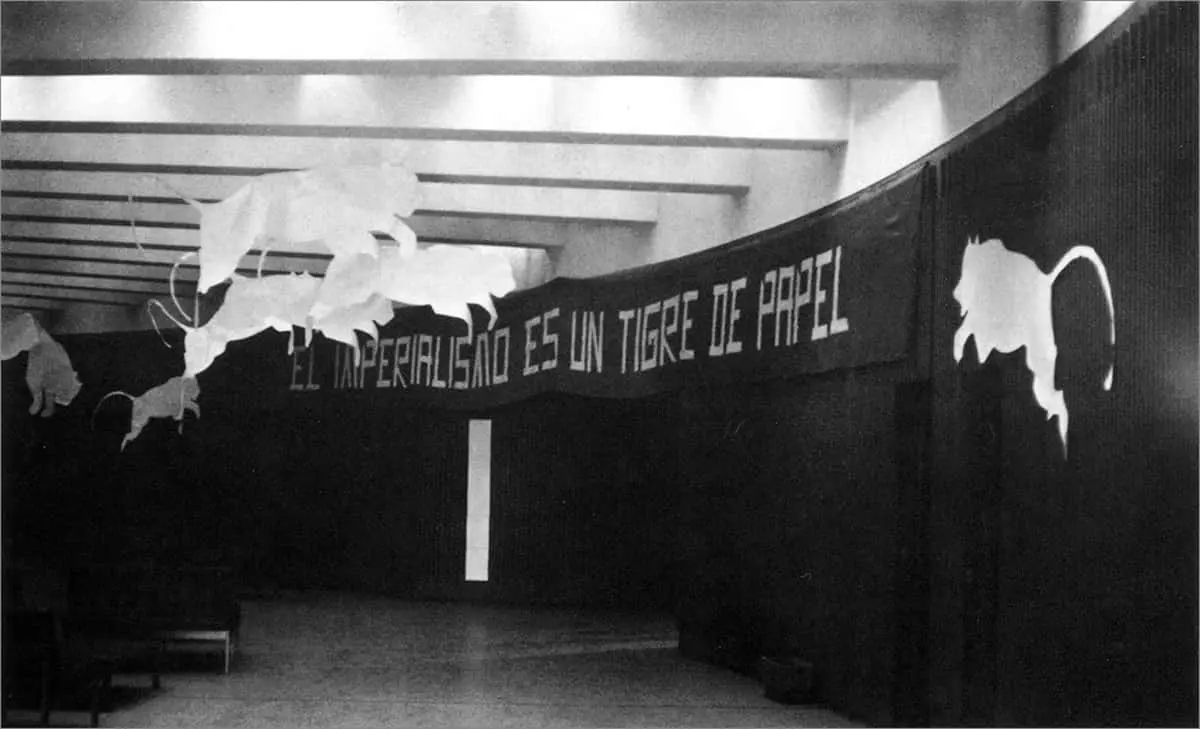
Julieta González traces a map (or a series of maps with communicating vessels) halfway between lived experience and representation. The resources—still controversial, albeit at times for different reasons—that can be used as a language—a living one, like the animals that are part of some of the works—and among which one can find echoes, resonances, similarities, and prospections not only in terms of their execution or of their geography, but also in terms of a critical revision of contents received or brought from the (other) metropolis. The medium is the message, the dispatch becomes the message, and between subversion and necessity lies an as-is that unfurls, threads, and sets up a process, a disarticulation, a disassembly where time and life are manifest in equal measure. Juan Downey’s Anaconda, mapa de Chile (Anaconda, A Map of Chile) could serve as a paradigmatic example, with the snake—an anaconda (replaced on this occasion with a python)—symbolizing the American mining concern that degrades—in a literal way—the map of Chile used in school (reproduced in an aside in the upper lefty section is Pedro de Lira’s The Founding of Santiago de Chile.)
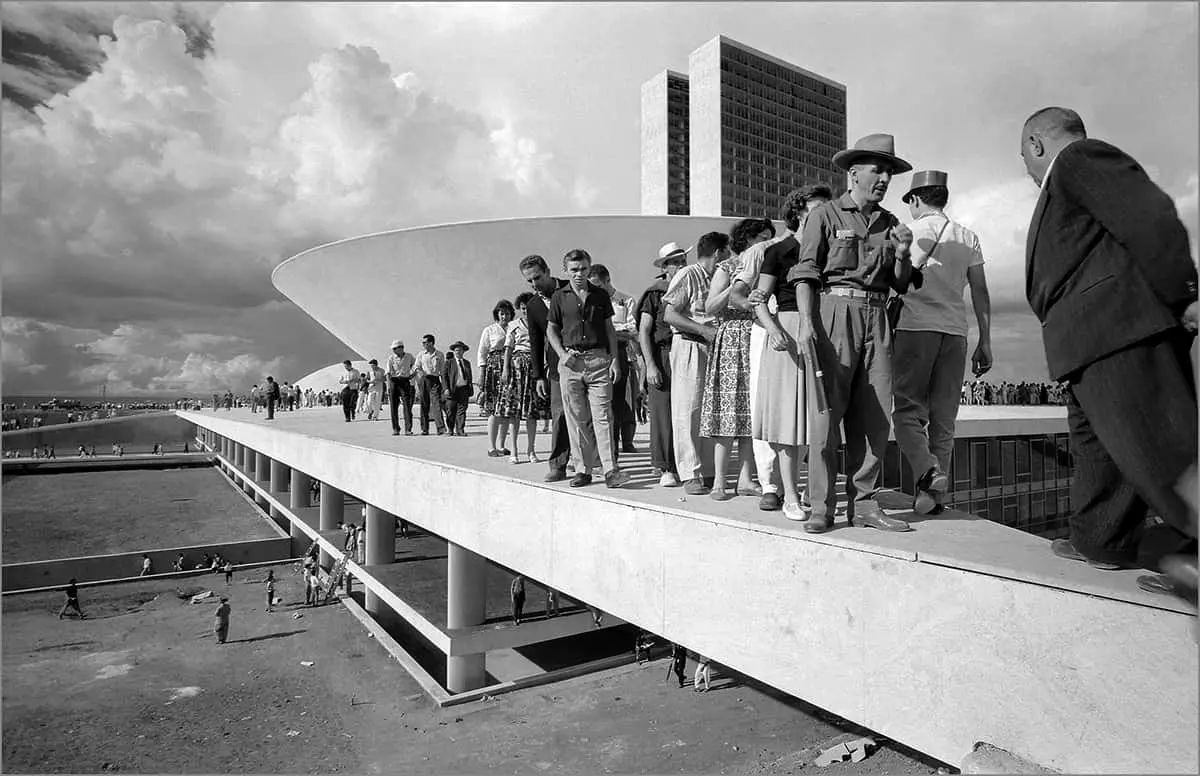
Downey’s intentions were in clear evidence as he presented the work at New York City’s Center for Inter-American Relations, an institution established by the Rockefeller family, owners of the mining company in question. It caused a stir and was censored. To replace the anaconda, Downey used a sign that read: Anaconda missing. I was ordered to eliminate a living snake from this work of art. Be it the anaconda itself or the sign placed in its stead, be it the plans for the future of a national reality as seen in the heliographic works crated by the Centro de Arte y Comunicación (CAyC) in parody of the visual resources (maps as well) of the paraphernalia of progress and modernization, genealogies are traced, journeys, railways, roads. It is a map, but also a trajectory, a course (literal and experiential) imposed on us as a forest of signs, referents, and abstractions (some more violent than others) that is and at the same time isn’t a spatial and temporal representation, as a gesture and as abstraction, determining a general climate and perhaps contained, because it says so in one way or another (the forest as analogy) in Hélio Oiticica’s Tropicalia. A course in time a space, in forms—their containers and their content—and the critical thoughts they generate are the continental level (or the sub-continental one, if we follow the norms dictated by a country with no name of its own that, in consequence, appropriates the name of an entire continent in order to speak itself or to impose itself as a product) as a response that affirms those local cultural contents that survive against a modernity that came to subjugate them—like a costume or a garment—in order to blur and disguise the extremes to which the big corporations are willing to go to promote their interests in Latin America.
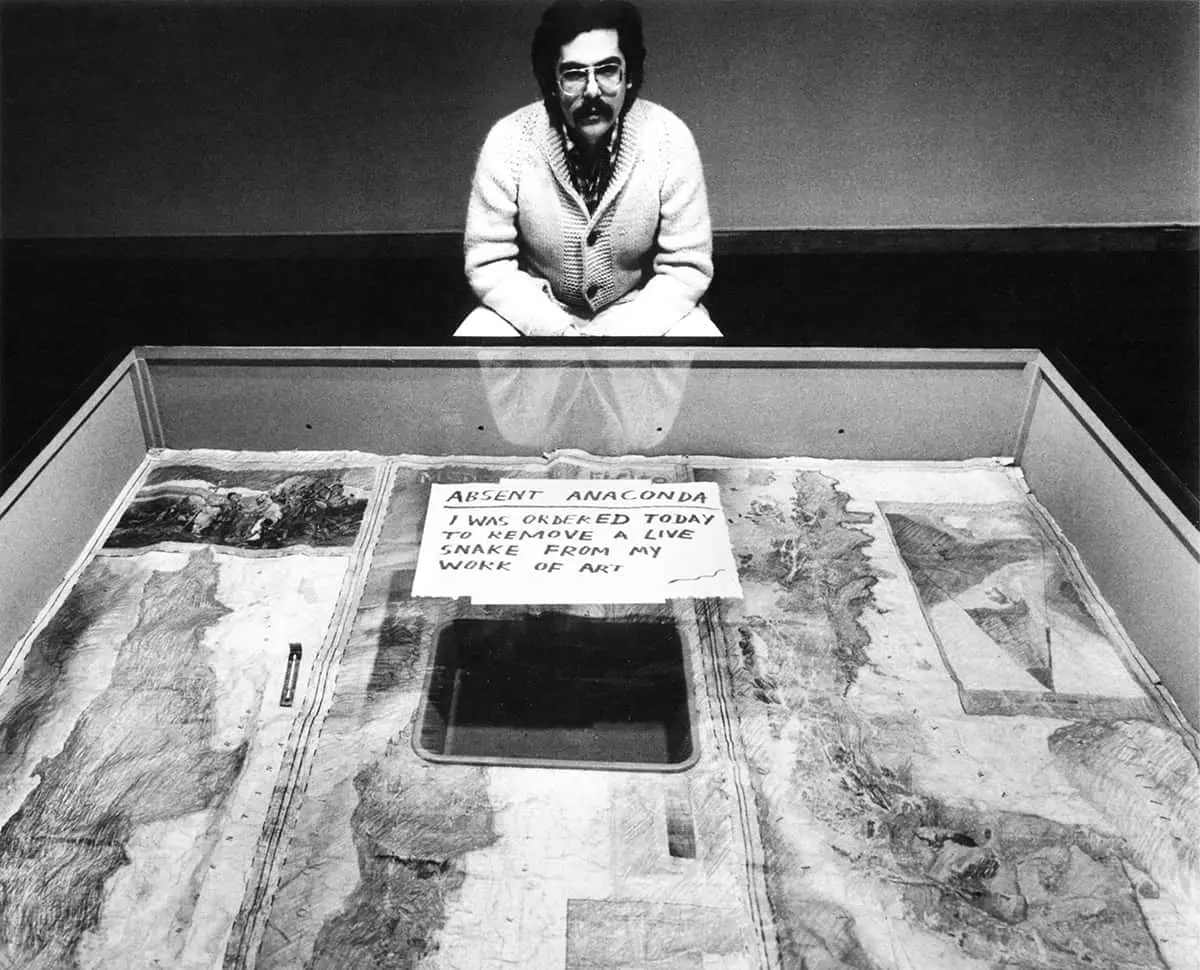
It is not a matter of building up paradigms in this case. If it were, all I’d have to do would be to list the artists and works featured in this exhibition; all are emblematic, all resonate to the music of a Canto General, as central as Pablo Neruda can be, as easy to transplant as Neruda himself, in that exhaustingly repeated transoceanic gesture of the natives presented to the King. And, as dispersed as it is around the world, all was gathered here not to boast of any national achievement but to give clear testimony of a common source. In the words of Julieta González, interviewed for Vice by Alejandra Legilisee: “We had to account for the specificities of the production, for the conditions of production of these works and of discourses connected to what these artists where doing, because a powerful matrix of thought existed that moved towards resisting the rhetoric of desarrollismo. Artists felt the urgency of thinking themselves Latin American, in opposition to what they perceived as an expansion of US imperialism.
It is a map, but also a trajectory that prefigures, defines, and opens perspectives for the reconsideration not only of the current moment of contemporary Latin American art, but also of the multi-referential framework around us (like a forest to be reformulated moment by moment.) All of those trends, figures, and public and private updates that we generate and consume—thanks to the momentum reached by networked electronic media—at a speed that cannot possibly allow us to assimilate them, and so are just passed by, left behind as we keep moving, and remembered—if we can be said to remember them—only under the dictates of this algorithm or the next one. Thus, for example, the version of Cildo Meireles’ Insertions into Ideological Circuits: Coca-Cola Project presented here uses bottles Coca-Cola Zero, not the most recent model but the most widely consumed one.
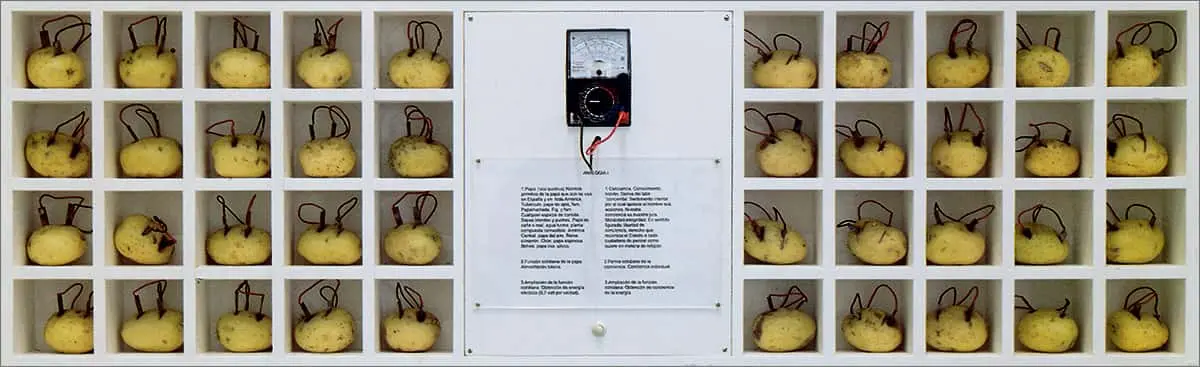
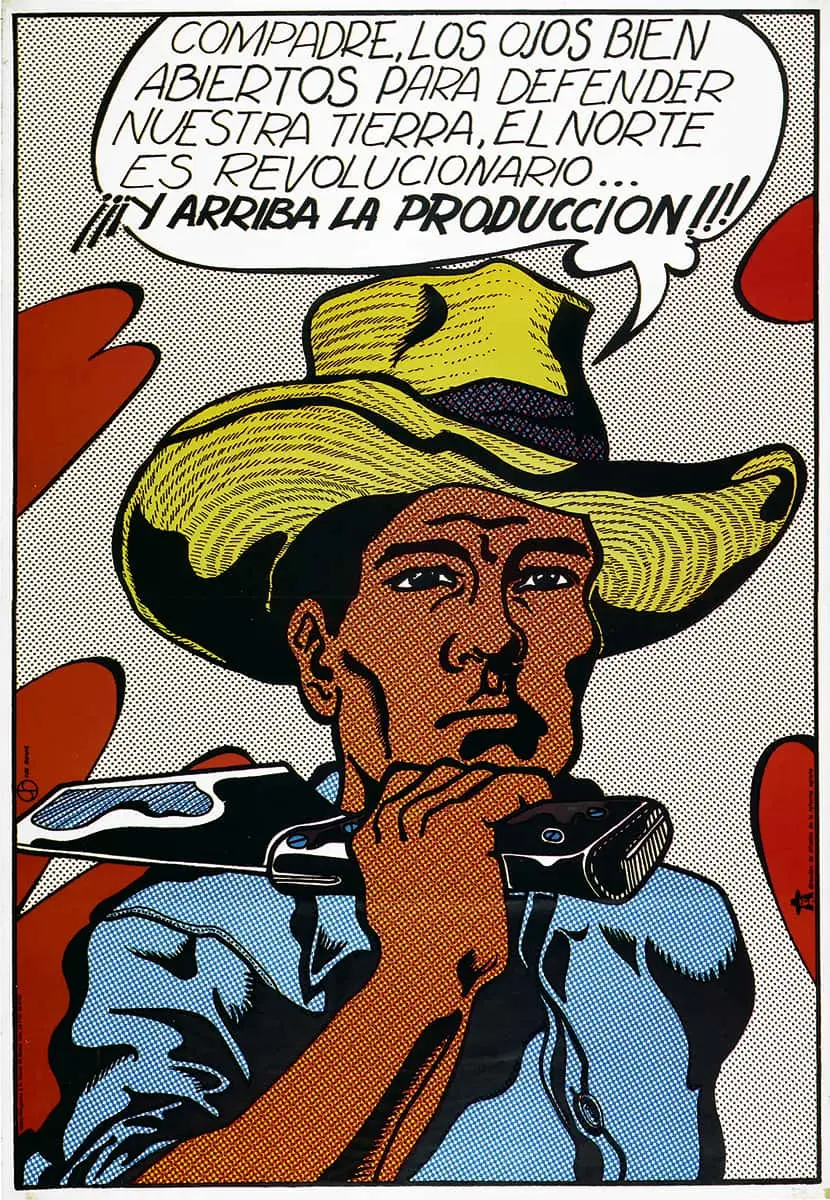
Memorias del subdesarrollo was the result of a four-year process of research. It was made possible by the support of the Getty Foundation and the San Diego Museum of Contemporary Art, along with galleries, collectors, and artists. The exhibition features four hundred works by fifty artists, among them Lina Bo Bardi, Lygia Pape, Teresa Burga, Anna Bella Gieger, Beatriz González, Catalina Parra, Fernando “Coco” Bedoya, Antonio Caro, Diamela Eltit, Luis Pazos, Eugenio Espinoza, Osvaldo Romberg, Luis Arias Vela, Glauber Rocha, Taller 4 Rojo, Jesús Ruiz Durand, Jacques Bedel, Víctor Hugo Codecedo, E.P.S. Huayco, Omar Lara, Horacio Zabala, Víctor Grippo, León Ferrari, Alfred Jaar, Armando Salas Portugal, and Felipe Ehrenberg.
The exhibition that was showed between September 2017 and January 2018 during Pacific Standard Time: LA / LA, in the MCASD, will be on view until September 9, 2018 at the Museo Jumex, and then is going to travel to the MALI in Peru.
RICARDO POHLENZ