Marcos López (Santa Fe Province, Argentina, 1958) never stops producing and exhibiting, writing, and making pronouncements. He also publishes “photos in Instagram and Facebook compulsively, as if saying ‘Here I am.’ ‘Don’t forget me…’” He is difficult to forget, as are his works and his shows, overflowing with chromatic and conceptual abundance, provocation and tenderness. The author of photographs, installations, and curatorial projects, López hits the mark when he says that he is “doing a socio-political chronicle of the Americas.”
Delirious and sensitive, Marcos López is the author of a body or work intimately connected to a region that, as his photographic essays emphasize, exists culturally and socially well beyond the geographical. In that territory filled to the brim with radiance and apathy, joy and suffering, López seeks and sets up the paradoxical landscapes and the multitude of characters that gain new life in his accomplished images, which he began capturing in color and in force in 1980, while traveling in Bolivia and Peru.
After such an enriching practice, López ultimately abandoned his well-advanced studies in engineering, and moved to Buenos Aires in 1982 with a fellowship from the National Fund for the Arts. He later studied at the International Film and Television School in Cuba and stayed for a while in Brazil, having by then become a restless traveler. Those were the initial steps in a career that includes awards, photo books, books with his texts, exhibitions in prestigious institutions, notable photographs shot in Mexico, Paraguay, Venezuela, Colombia, and Argentina, filled with an acidic sense of humor and with social critique, pain, and devotion. In Mexico he met his Cuban wife and her two children, with whom he now lives in a neighborhood south of the ever more Latin American city of Buenos Aires.
López began taking photographs in 1978 in his native province, where he returns often to photograph, intervene, and exhibit. In 2017, for instance, he worked alongside Estudio Marcos López on the curatorship, selection, and exhibition design for Pública (Public), a show at Macro, the Museo de Arte Contemporáneo de Rosario: a grand dialog between works from the museum holdings, interventions, and creations by the artist.
López’s first black and white series—published in Retratos (Portraits), his 1993 book reprinted in 2006)—already put on display the talents of an unusual artist. The photographs highlight the firmness of the subjects’ gaze, as in El ganador (The Winner, 1986), Tía Negra (Black Aunt, 1992), Doris (1992), or its absence, as in Flavio (1992) and his closed eyes. When he moves in the direction of color, he realizes that his true preference is for its visual forcefulness. López explores and appropriates color, the saturated hues that allow him to produce those exaggerated photographs that have gained such renown for him. Color and ironic undertones explode in López’s photographic essay Pop latino, during the 1990s, in consonance with the extreme feelings it expresses. “With color my work is more tragic,” the artist explains. “Color is like a kind of ruse, because when one enters into the supposed carnival of the photographs, tragedy and tenderness are what is there.”
The content of López’s surprising and outstanding images are as appealing as they are heartbreaking. They are chimerical representations, arranged and polished to the point of perfection to reflect moments that are more real than life itself. His gaze trained in the discovery of protagonists for his unexpected setups, López finds occasional models: a restaurant waiter, a bar employee, assistants in his studio, visual artists, actors, friends, even family members. But he is also able to see the surrounding environment, be it real or invented, that will best enhance his photographs and suggest a multiplicity of meanings.
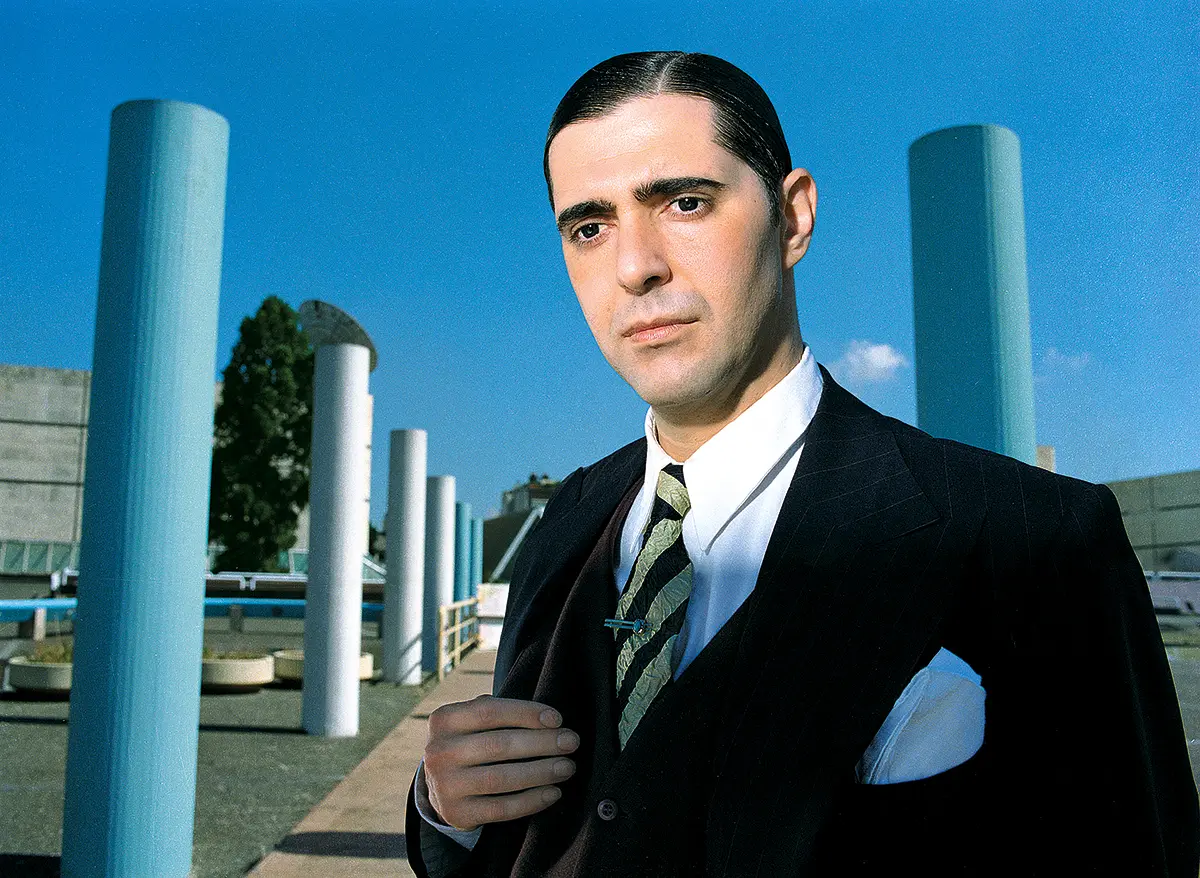
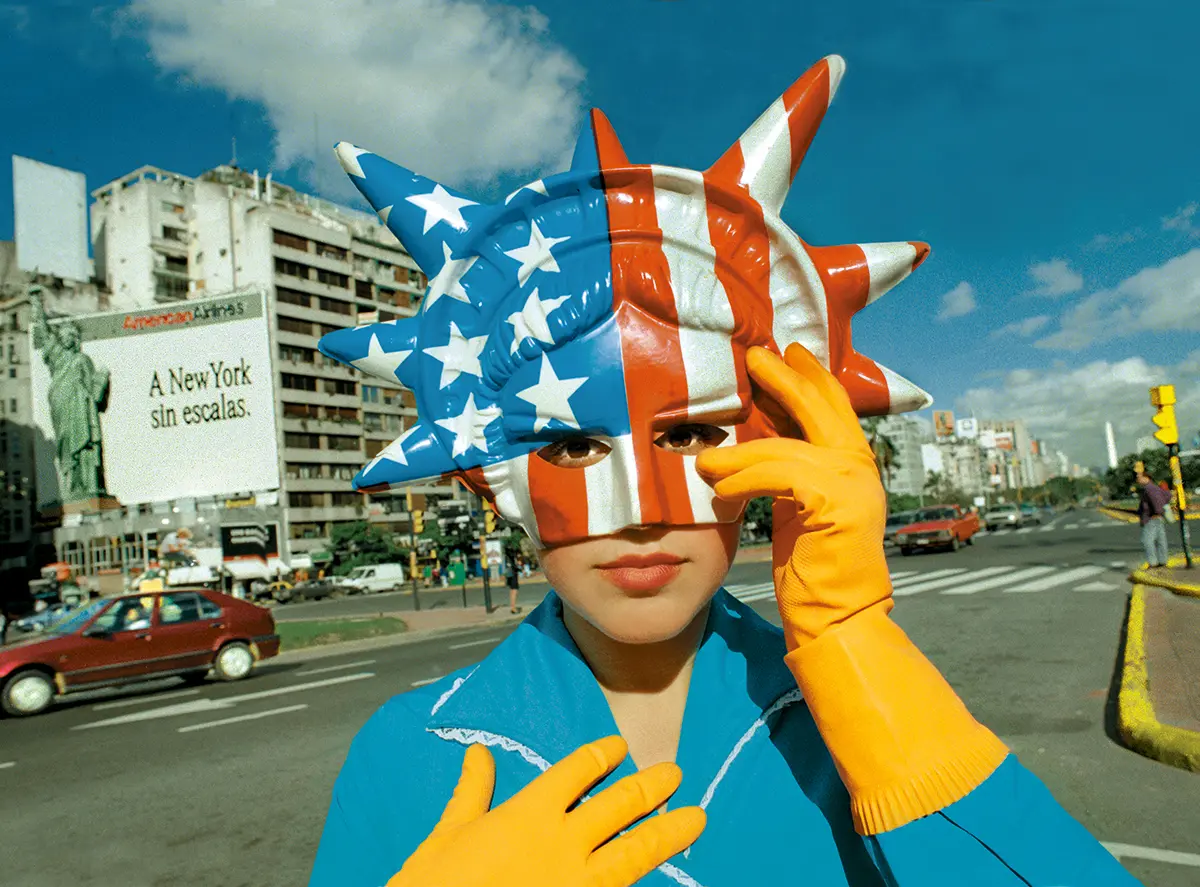
The woman in Carnaval criollo (Creole Carnival, 1996), wearing a Statue of Liberty mask, was not photographed at any random location. She stand on Buenos Aires’ broad, iconic Avenida 9 de Julio, in front of a poster advertising commercial flights to New York. The image seems to be saying that it is highly unlikely for this woman, dressed in a domestic servant’s outfit (rubber gloves included), to travel much beyond the obelisk that can be glimpsed in the background. López’s Gardel preocupado (Worried Gardel, 1997)—an excellent resemblance to the legendary singer and composer of tangos—is in the Public TV building complex. What is the matter with him? Is he afraid of a new televised version of his life that may reveal a hidden side? López’s images invite questions. No possible meaning is closed off.
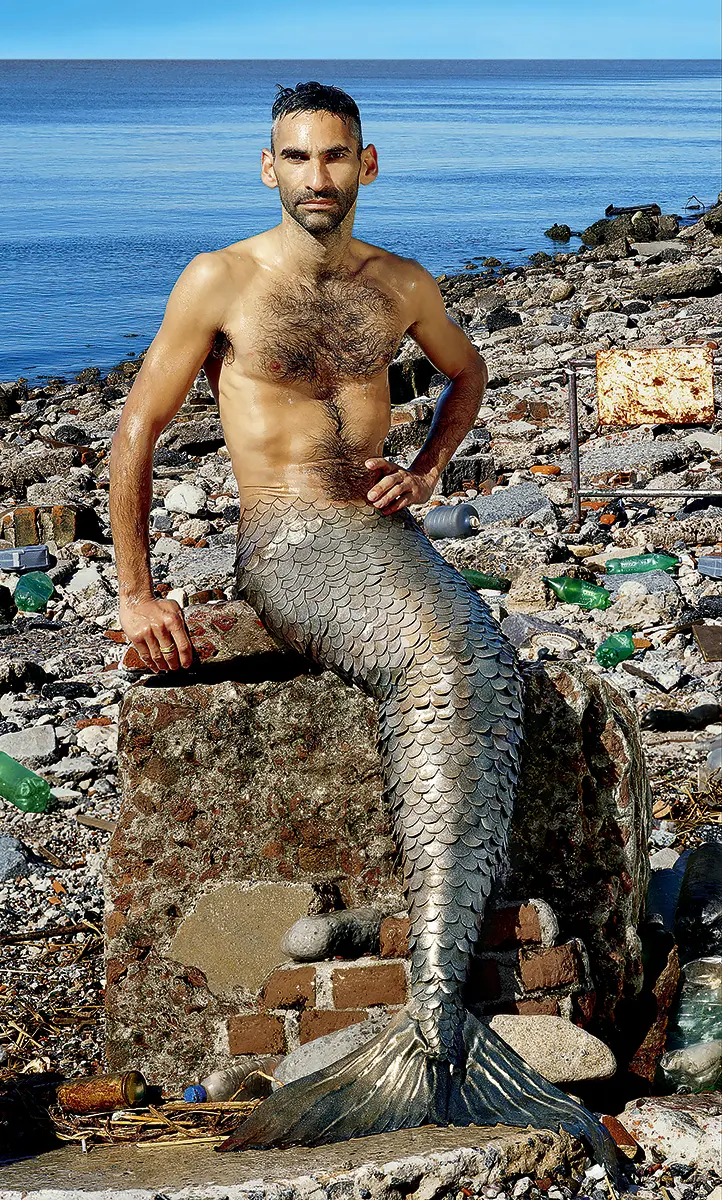
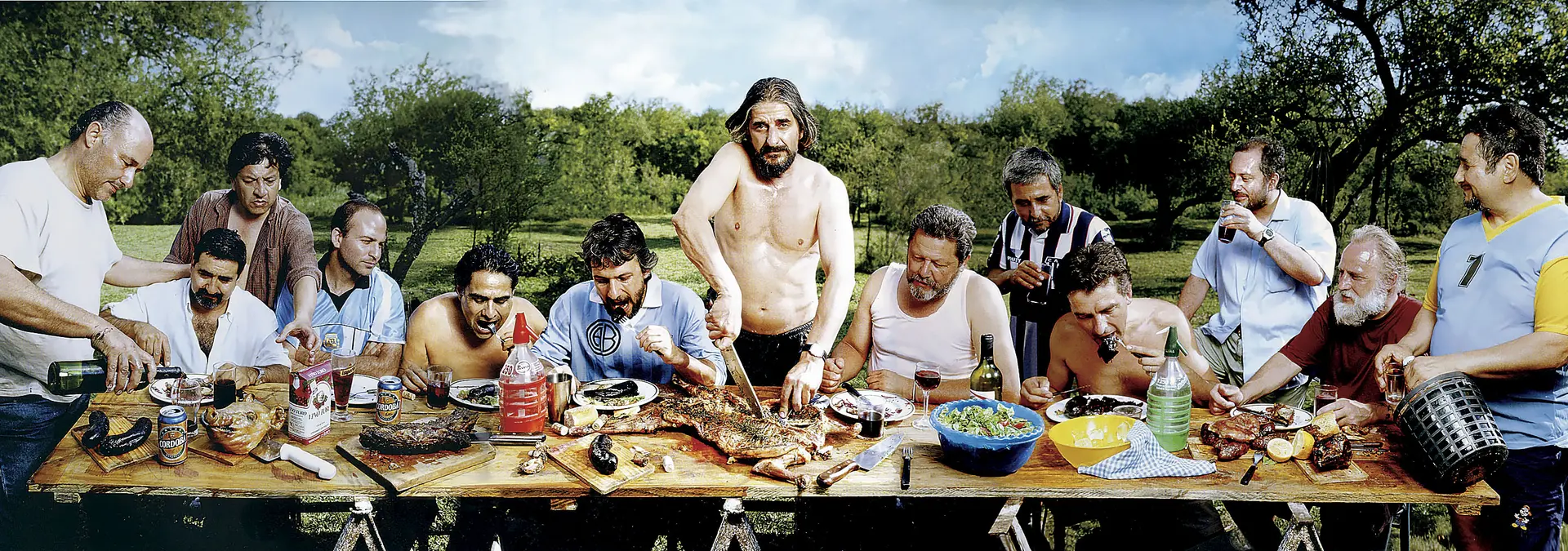
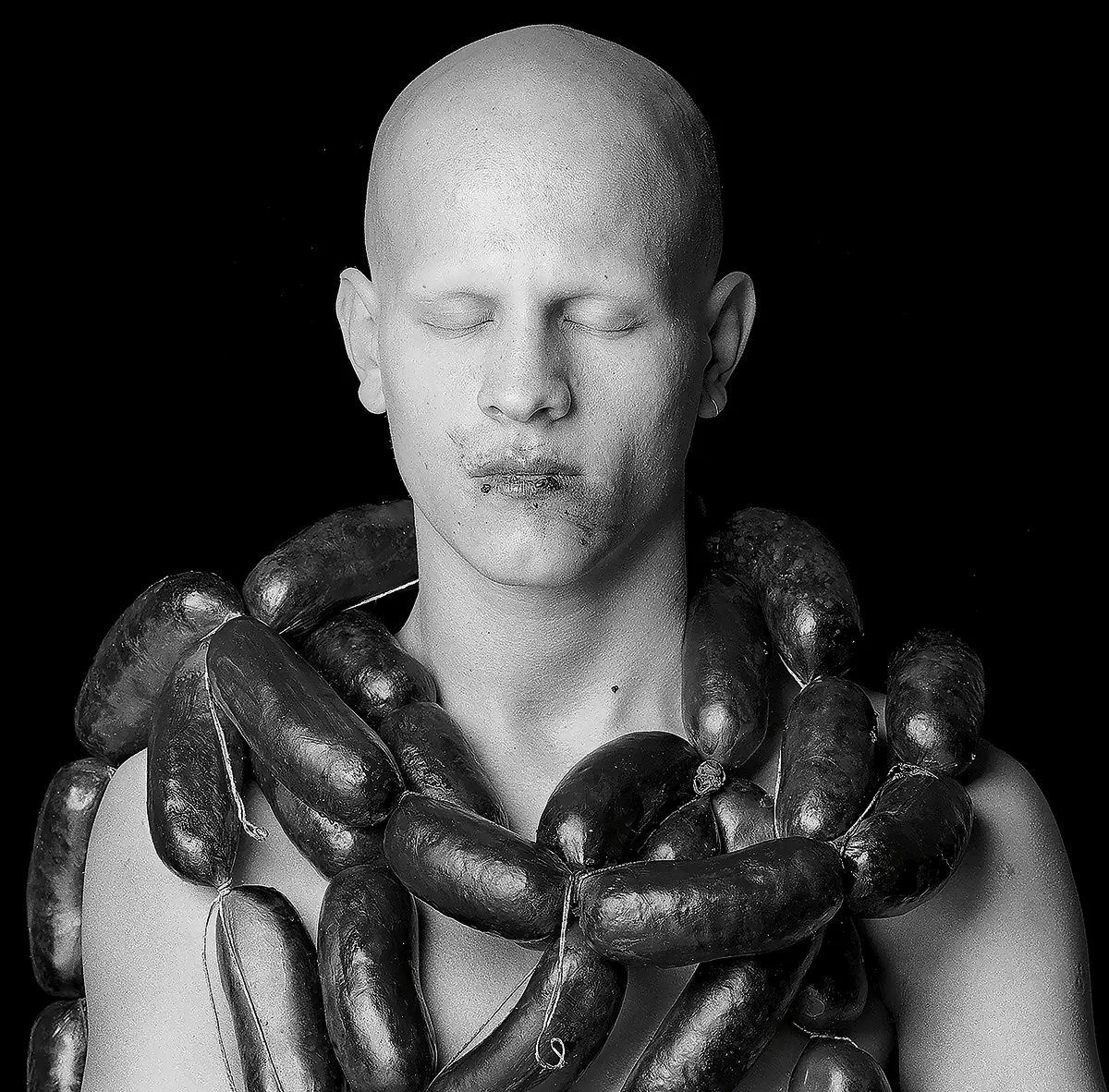
With his series Sub-realismo criollo (Creole Sub-Realism) in 2000, López seems to be looking more intensely into the history of Western painting. Citation and artifice become more frequent in his photographs, which he now retouches digitally or using paint. Citing Leonardo da Vinci’s Last Supper, López’s Asado en Mendiolaza (Barbecue at Mendiolaza, 2001) depicts a group of friends gathered around a very typical table: suckling pig, chorizo and blood sausages, wine and soda, mix salad. But the image is dated in 2001—a year of social economic, and institutional explosion in Argentina (no currency, no president, no jobs, and more)—and López is perhaps wondering about such scarcity. Were those ingredients found on the people’s tables? His Sireno del Río de la Plata (The Merman of the River of Silver, 2002) may bring to some minds the Copenhagen Little Mermaid—a tribute to Hans Christian Andersen, author of the story featuring the character—overlooking the city’s bay. With this image, López not only brings to the fore issues of gender (the model here is a man), but also points out the dereliction of the contaminated riverbanks.

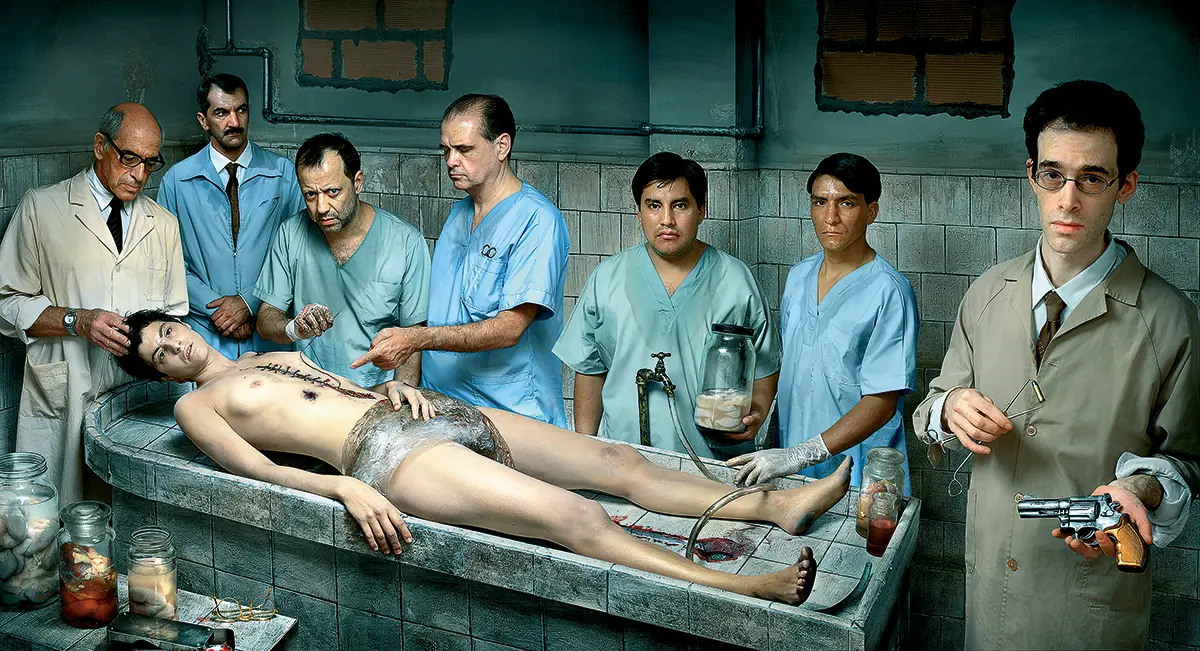
The photograph in Hospital (2004) is special. It recreates Frida Kahlo’s Las dos Fridas (The Two Fridas). The heart-rending image—two identical recordings, joined digitally, of a single actor—was produced in the hallway that leads to the morgue in Buenos Aires’ gloomy Psychiatric Hospital for Women. In the case of the patient and nurse, there is no humor. “It is pure pain,” says López. “Here, sick blood cures healthy blood, and vice-versa; one ‘is’ one’s own nurse. The cure is attained by exploring one’s own desolation in depth.” The photograph speaks for itself, but it gains a new dimension when a connection is established with the feelings of loss that accompany the artist: his twin brother, Luis Daniel López, died three days after birth. Similarly, in Autopsia (Autopsy, 2005) one can discern traces of Rembrandt’s The Anatomy Lesson as well as echoes of Freddy Alborta’s 1967 photograph of Che Guevara’s remains at the La Higuera school, but also a torture table.
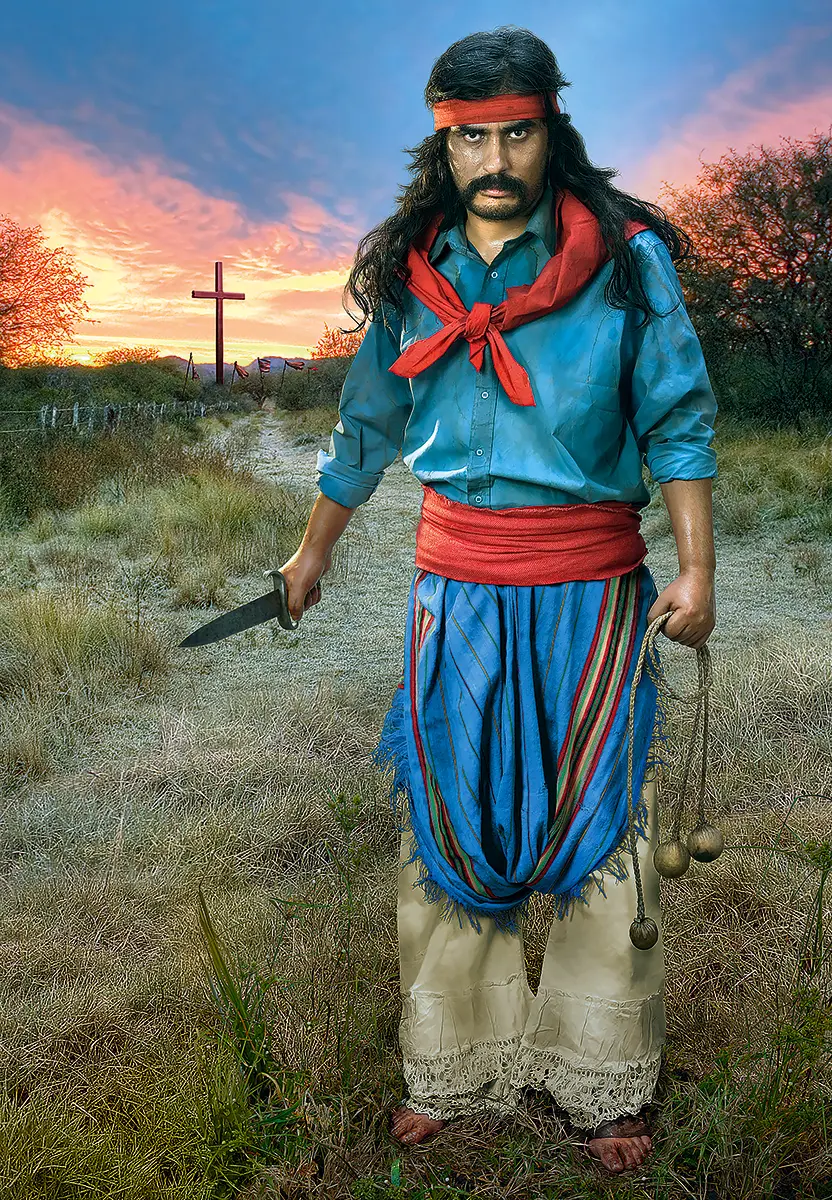
López’s Gaucho Gil (2008) portrays a gaucho executed by authorities in 1878 in the province of Corrientes who is venerated as a miracle worker and folk saint, whose image adorned with red ribbons is widely found in Argentinean roads and shrines. Gil looks fierce, with flaming eyes and a knife in hand, dressed in the lace-edged pantaloons that were common in the late colonial era; in the distance we see a cross and some red flags. Just as there are several versions of Gil’s biography (he may have been a deserter from the army or a rural robber), there are several interpretations of his face; what can be doubted is that López’s image of Gauchito Gil, as the character is known, will stand the test of time.
The exhibition Exceso (Excess, 2010) at Ruth Benzacar, which included photographs of a family of Bolivian tailors and of the Andean high plateau, established a precedent for Debut y despedida (Debut and Farewell, 2013) at Centro Cultural Recoleta, and other curatorial exercises. López’ irrepressible creative torrent moved towards painting, objects, and installations emerged from the setups for his photographs or from the photographs themselves. With the collaboration of other artists, López’s photographs turned towards space or became embodied in sculptural objects such as Evo (Morales, the Bolivian president) or Ekeko Pop; he references paintings by the enduring Warhol and adds consumer objects.
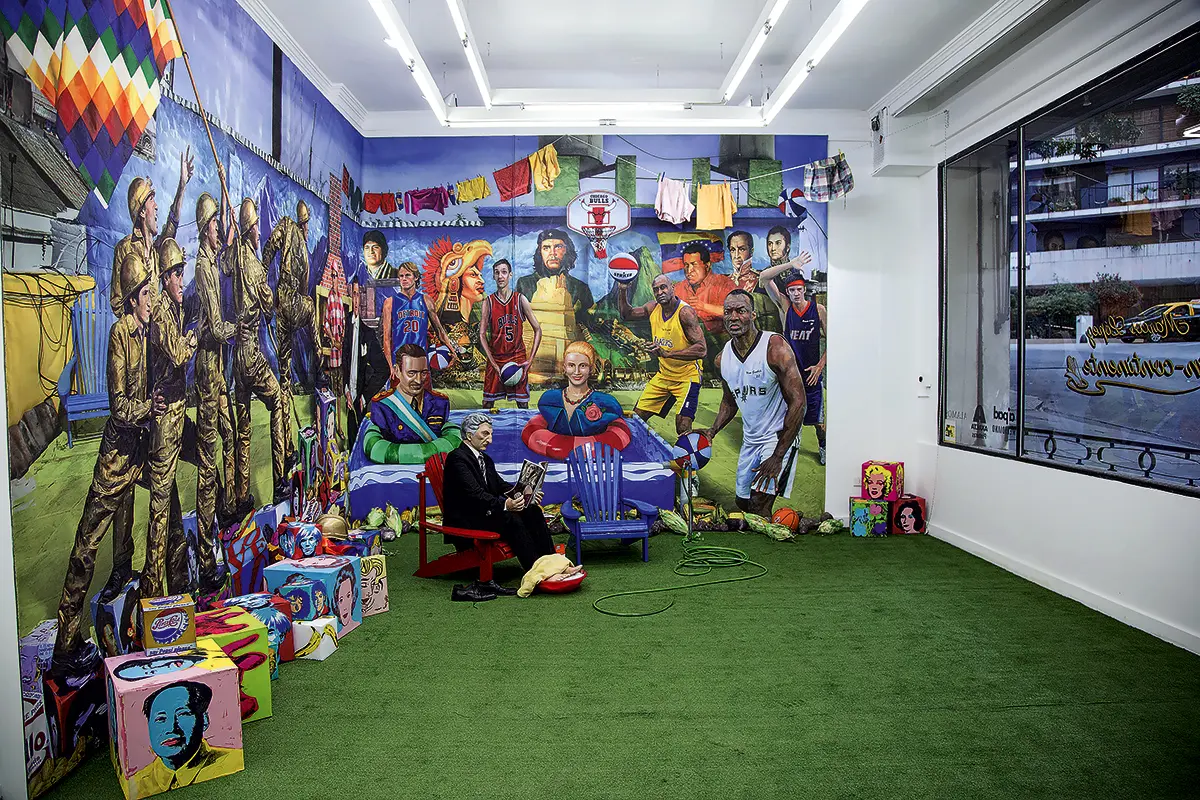
With the accomplished curatorial experience of Debut y despedida, Marcos López created an unclassifiable genre. He then doubled the wager in terms of visual power, transforming Sala Cronopios (CCR)—filled from floor to ceiling—into a composition with works in many formats and with the hues and mixtures of a traditional market. There he revisited his biography, citing both his own work—as in Casita feliz (Happy Little House, 2013), where the Sireno from his photograph became a sculpture, in collaboration with artist Elba Bairon—and the work of others, from Antonio Berni to Martha Peluffo and León Ferrari; from Jeff Koons to Edward Hopper, and more. López exhibited colorful animal-shaped knickknacks from Chinese shops, and all kinds of souvenirs. He combined anonymous beings with Christian iconography, invented the Suite Bolivariana (Bolivarian Suite, 2009) with busts of heroes (San Martín, Bolívar) and politicians (Evita, Che, Chávez), fictional superheroes. He mixed folk crafts with references to the history of art, and much more. He brought together the joy of the carnival, the precariousness of shantytowns, and the opulence of Puerto Madero. Creativity reigned.
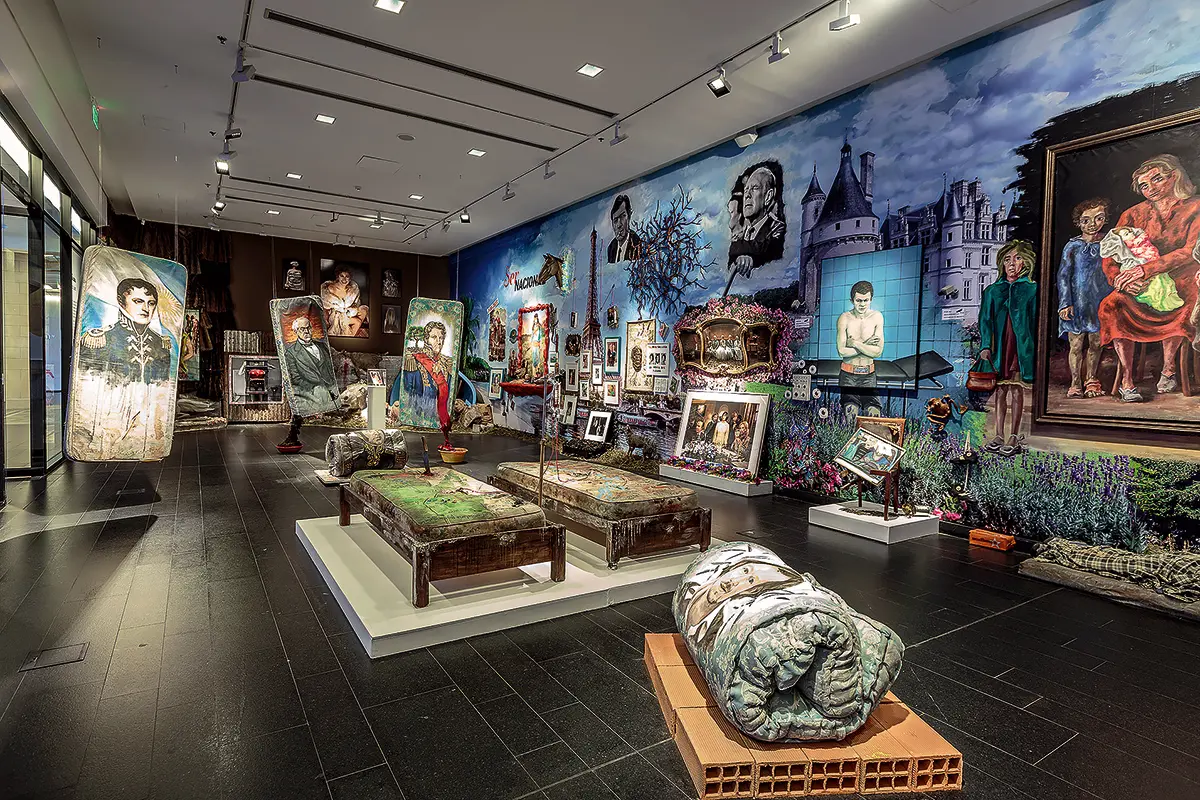
Although the collaboration of other artists, those participating in Estudio Marcos López, is central in the production of this type of exhibition, what prevails is López’s own vision as a social subject and as an all-terrain artist (he is the author of the award winning film Ramón Ayala [2013], a docufiction about the eponymous Argentinean composer, musician, and painter; in 2016 he even took the stage, in a work of his own authorship.) With his firm, López created another giant collage at the CCK (Centro Cultural Kirchner), Ser Nacional (National Being, 2016), on the occasion of the 200 years of Argentina’s independence. In coincidence with that anniversary, López’s aspiration was to create an artistic, social, and political chronicle of the country. His creative drive was able to attract many important original works of art to the grand gallery, along with authors of musical pieces and literature and references in the media. Again, López quoted himself by including Gauchito Gil and others; presented photographs by Sara Facio and Annemarie Heinrich, illustrated national heroes and put dossiers on display; expanded magazine covers; installed the figure of a homeless person; evoked María Elena Walsh and Mirta Legrand; worked with a Berni original and another one by Pablo Suárez; placed Guillermo Kuitca’s mattresses and images in the space, along with plants and animals. López successfully put Argentina’s “national being” on display.
That same year, at Proa Foundation with Entre - nos. Crónicas de La Boca, (Between Us. Chronicles of La Boca, 2016), López recreated Piccolo Vapore, the only remaining Italian bar in the La Boca neighborhood since the 1970s. His installation Il Piccolo Vapore, evolved from a photograph originally taken in 2007, allowed visitors to enter the locale, sharing its tango-and-football infused atmosphere, and photographing themselves with the characters in it.
As ArtNexus went to print, the exhibition In-Continente (In-Continent) remained on view at Rolf Art. With 50 works on display, it “proposes an archeology of the artist and his work” and, again, demonstrates López’s philosophy that “more is more” and his political point of view. The most important work here is the “photographic-pictorial” mural Suite Bolivariana. To it López adds a life-size sculpture of President Mauricio Macri reading Hola magazine with is feet in a washbasin. What is the artist telling us? See it and decide for yourself. In the text that accompanies the show, López says that the moral is an attempt to “shine a light on the end the utopia of a just world. It is conceived from a lace of polarity. To the left are the good guys and to the right, the bad ones. Imperialism is represented as an NBA team. In the middle, Peronismo navigating on its hypocritical, populist fetishism. (…) The insurgent left is represented by a group of Bolivian miners raising the Wiphala, the flag of the original peoples of the Andean high plateau (…) a reference to Raising the Flag on Iwo Jima, the famous photograph taken by Joe Rosenthal on February 23 of 1945.” With his boundless imagination and energy, López is already at work on a new project: a movie made on his cell phone. He lives and works in Buenos Aires.
VICTORIA VERLICHAK
The author is preparing the launch of her latest book, Mildred Burton. Atormentada y mordaz.