The exhibition Cuerpo en cuestión (The Body in Question), at Museo de Arte Contemporáneo del Zulia, derived from an investigation published by Universidad del Zulia professor and researcher Neydalid Molero, on the subjects of the body, identity, and representation. Elsy Zavarce formulated the idea of developing the show using the concepts articulated in Molero’s work. María Verónica Machado joined them in the curatorship in order to engage women’s issues from a broad perspective, free of fundamentalism of extreme militancy, making it possible for each artist to focus their own gaze towards the construction of a multidirectional visual text. They convoked creators in various disciplines such as the performing arts, architecture, communications, video art, performance, and literature, thus buttressing the goal of creating communicating vessels between defined and definitive boundaries. Conflicts in today’s art are connected to the notion of body: its ephemeral character, its life, its death, the undrawing of its usual boundaries, and its shifts in direction. In the exhibition, the body is put on display as a project, matter, language; as an expression of deep identity; as a criterion of cultural and social truth—not as a site of strictly physical attention but as a territory for poetic, biological , technological, political, social, ritual, cultural, medical, anatomical, and, in consequence, aesthetic encounters.
The organization and development of Cuerpo en cuestión were a joint effort of the three curators and the participating artists, who, in meetings and readings, combined their thoughts and positions with regards to creativity and the conceptualization of the topic at hand, organized in axes ranging from the individual body to the social body, all of them traversed by the political (space, memory, power, and representation.) The result is an artistic manifesto and a reflection about the construction of gender, the exercise of power, being in the world—matters all of great significance for the issue of women as subjects. Fifteen artists, each in her own terms, disciplines, material supports and experimental concerns, construct a discourse with eighteen works that interweave the body as a social and personal space, as a site of pleasure or refuge, but also of pain, violence, distortion, or dysfunction, of difference and encounter, of dialog or silence. The experience of the body is rendered personal and collective.
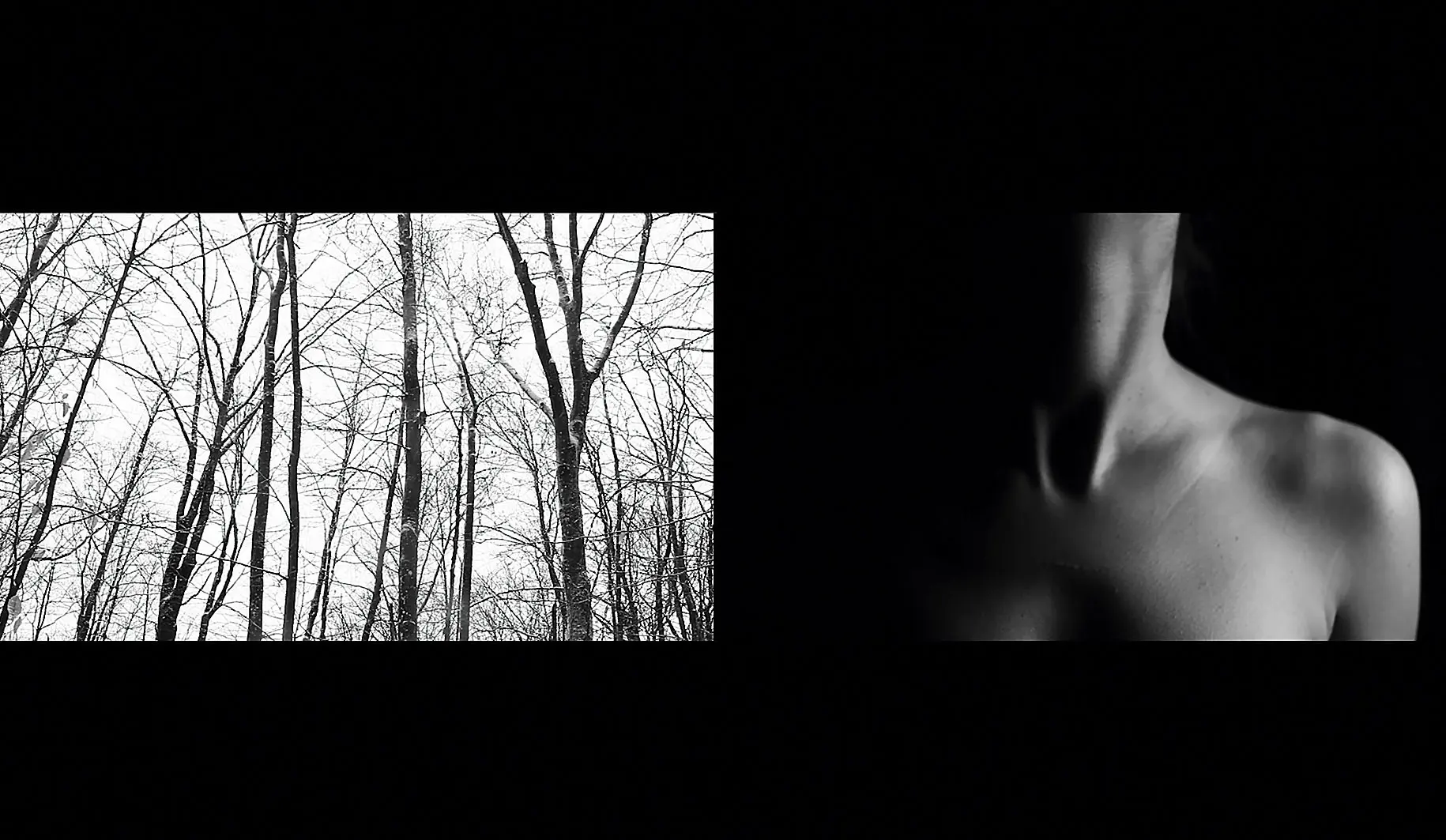
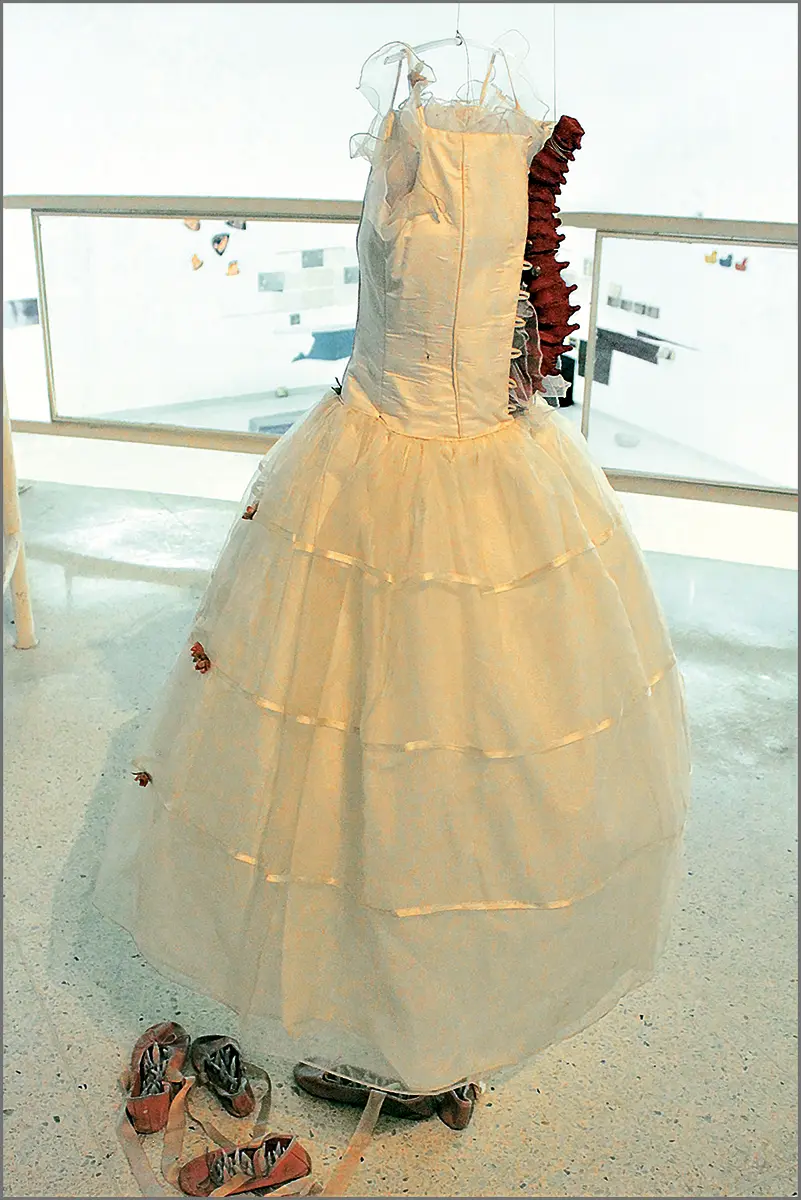
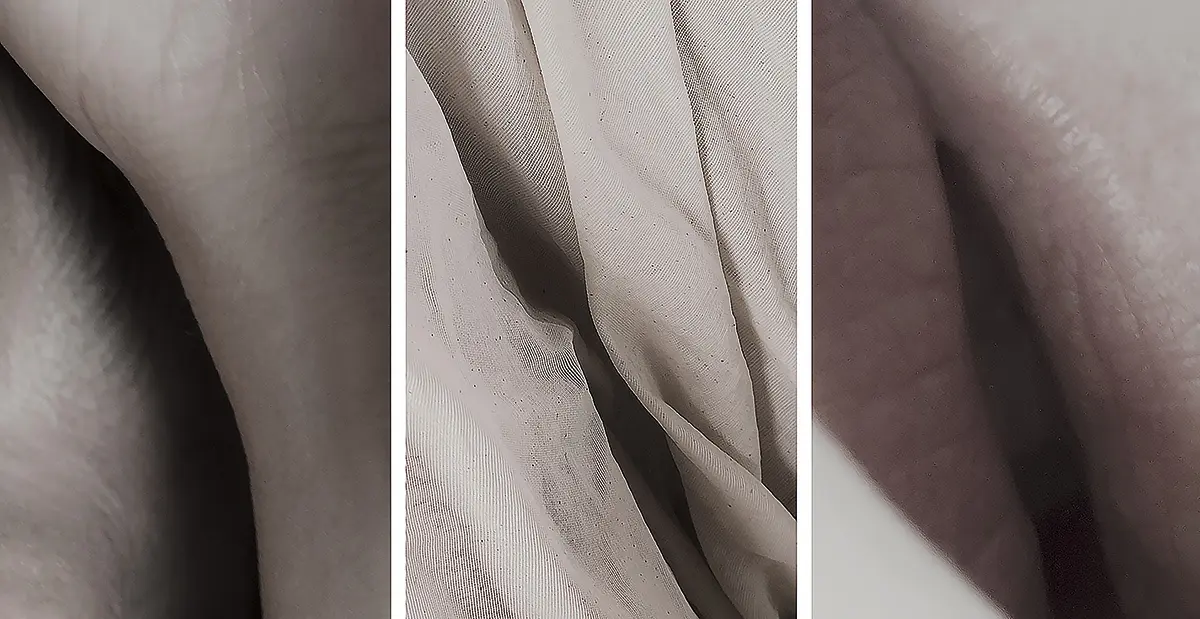
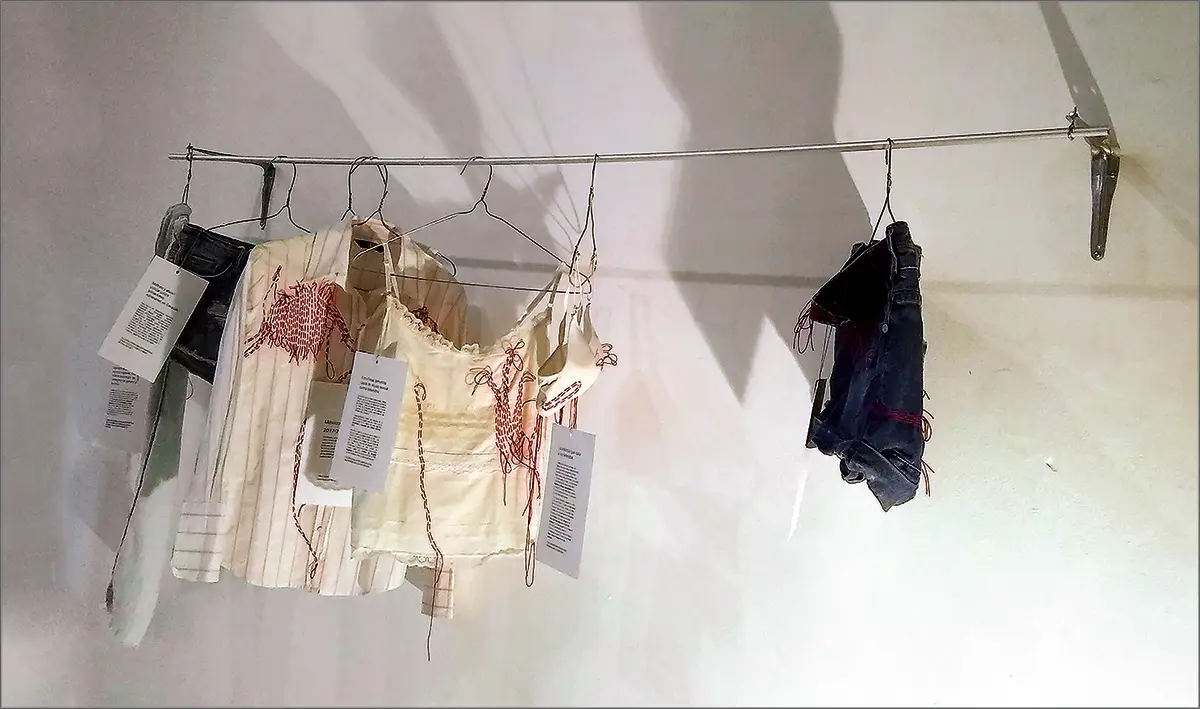
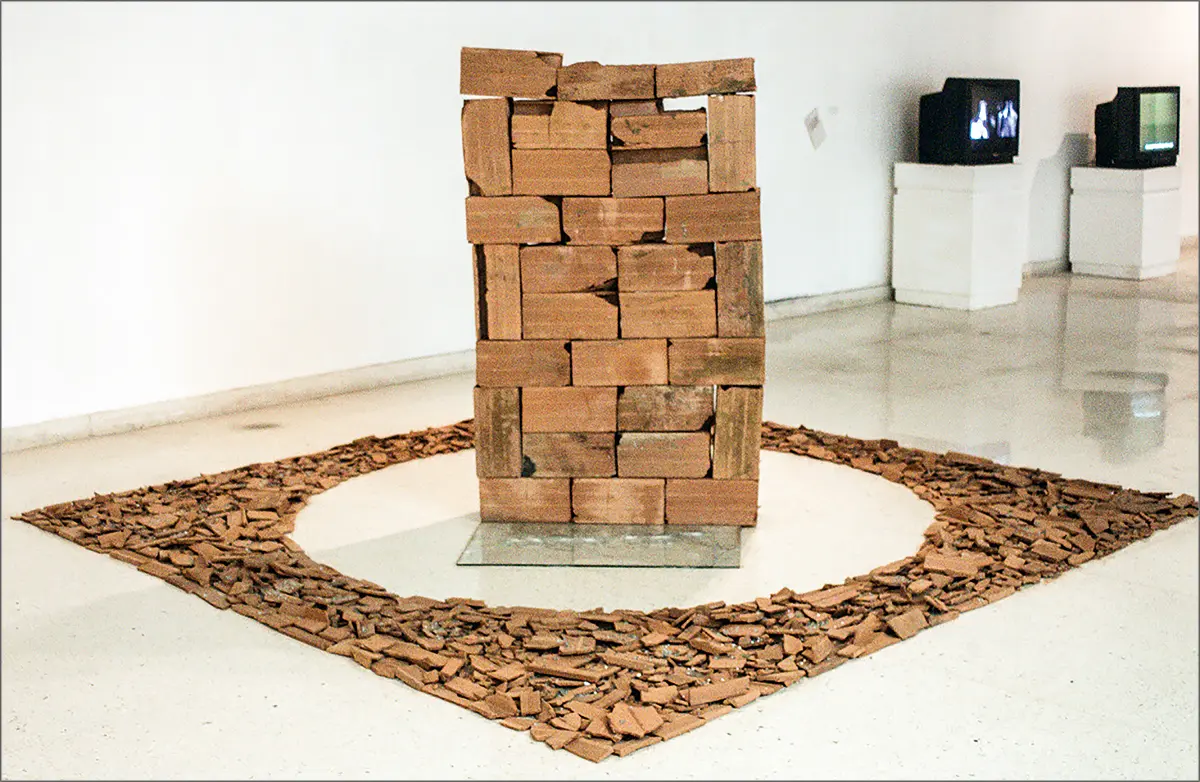
The axis titled Body imagined as representation, imagination, or metonymy features works by Mónica Nava, Oriana Nuzzi, Agustina Isidori, Marithé Govea-Corina Lipavsky, and Carmela Fenice. In them we intuit a metaphor for the pleasures and the conflicts, the fields of actions of memory that construct and deconstruct the unity of the body. Nava presented an assemblage of diverse materials and clay that, title Disciplina del olvido (Discipline of Oblivion), forces our gaze to focus on a private female world woven from lived experiences, remembrances, sensations, and forgettings. The body hides under the metaphor of the dress and the starkly presented marrow: refuge or membrane that runs through the occult, even if to see that which we would rather not see. Oriana Nuzzi exhibits Sobre la extimididad en uso que ellos llaman cuerpo (About the Extimacy in Use They Call a Body), an installation of diverse materials and video that blurs the conscience of being/body and leaves us with the remnants of memories and clothes that drive towards the construction of a new bodily reality. In her video Cuerpos (Bodies), Agustina Isidori explores the fusion of nature and body. With this she opens up a space of reflection about trauma and abuse—the suffering caused by mistreatment—expressed in a fragile, forceful, painful beauty. Marithé Govea-Corina Lipavsky reformulate the metaphors of the body in a video titled Interferencias dactilares (Digital Interferences), which composes and decomposes in their utmost expression the microelements of the image of the fingerprint (ultimately, the most private bastion of our personal identity.) Govea is the author of an investigation focused on issues like dark matter, relativity theory, quantum physics and mechanics, and she projects her concepts in very clear graphic solutions. In this case, she explores technical possibilities for self-recognition from unthinkable perspectives. A fingerprint is a portrait and a universe at the same time. Lipavsky’s camera and production give shape to a distended and expanded body: a space where perceptual possibilities are widened—from unknown planets to landscapes in transformation; from sidereal matter to bodily matter. Carmela Fenice’s Hendiduras (Fissures) is a photographic installation of barely a few fragments of the artist’s nude body, covered by a wet canvas and placed in the fetal position inside a trunk/belly/relic that invokes an ancestral uterus. Fenice’s work is, in general, a profound meditation on those traces of memory that draw and undraw our everyday experience and build private spaces for encounter or disappearance.
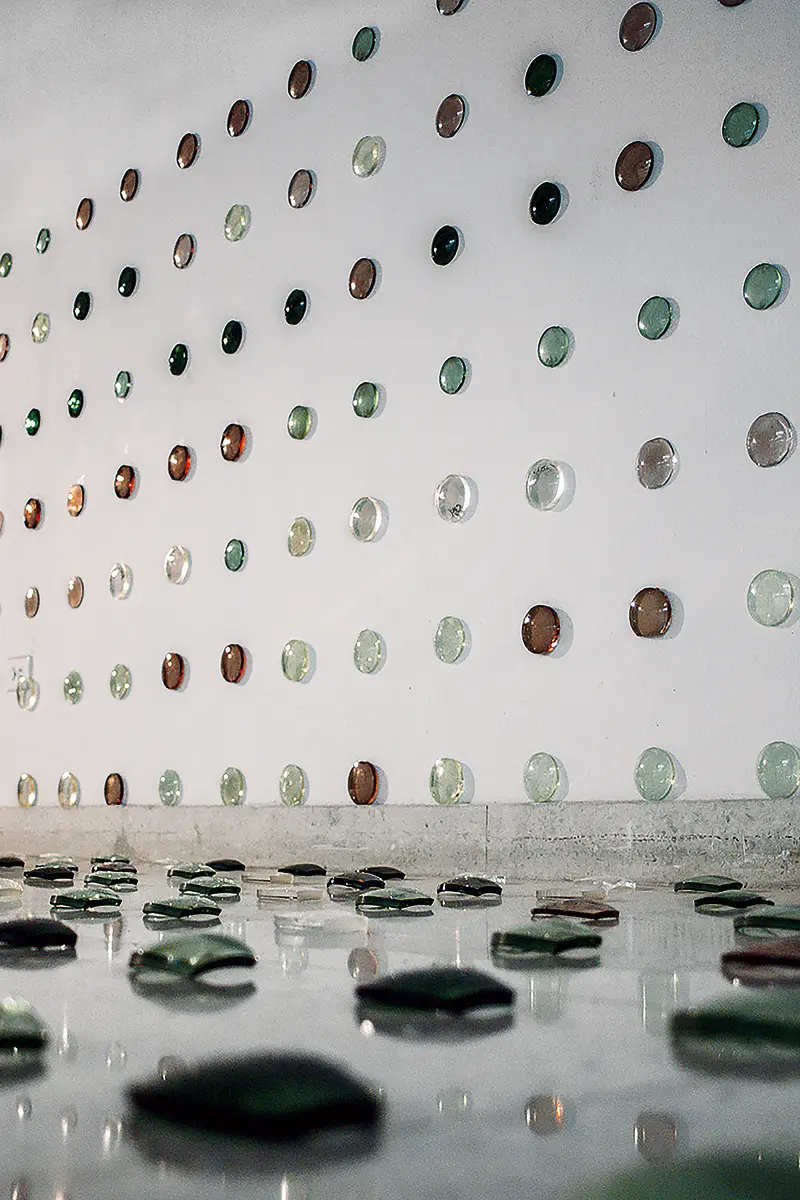
The axis about the Body as a space of conflicts and encounters, as well as Territory of confrontations, developed around the works of architects, curators, and artists Elsy Zavarce and Lourdes Peñaranda. Zavarce’s discourse unfolded in two installations, titled Chica moderna (Modern Girl) and Digresiones: del mito y las ilusiones de Gloria (Digressions: Of Myths and Illusions of Glory). These installations provide a visual reelaboration of the narratives of the Mother Earth, the domain of myths, heroes, histories, and power struggles. In Chica Moderna, Zavarce works on the element of objectification that is part of the construction of identity. In Digresiones…, she creates layers of meaning through the use of various elements that recreate the colonization of the territory, the richness of the natural world as an intervened body, the myths that have prevented us from understanding each other, the past, present, and future of the Fatherland as a political body. Lourdes Peñaranda’s Cuerpos disfuncionales (Dysfunctional Bodies) is a monumental installation using magnifying glasses, intended to mitigate the defects of the visual organ. Peñaranda’s work is characterized by a clear-sighted consideration of the poetics inherited from minimalism from a historical and conceptual perspective. On this occasion, space becomes body and dysfunction, while at the same time expressing the currently existing museum spaces’ ineffectiveness as containers, which demand attention if we are to overcome institutional myopia: the space/dysfunction/body/museum axis conjugates its conflicts.
The Body and Power axis is structured from the field of the legitimization and political action on the body—the articulation of new repressive schemes; how the change has influenced the notions of personality and person; the infinite variety of technologies and their establishment as bodily models. What is important is that the body itself becomes museum space, a painting’s canvas, a granite block for the creation of mutations and sculptures, and, obviously, in marker/boundary of its own genre (and even gender, in the elemental distinction between male and female.) Neydalid Molero presents two installations/performances, Lo que nos queda (What Remains for Us) and En evidencia (In Evidence), where she defines the identity of the social body on the basis of action. Molero refers back to a complex and diffuse urban space, articulated in multiple ways in the midst of a broken social contract, political coexistence, and the repressive practices of the totalitarian government of Venezuela, expressed in the case or women as sexual abuse: fondling, verbal abuse, or rape intended to subjugate and humiliate female prisoners. Molero’s works bear witness to the way in which the social body hovers between chaos and humiliation as modes of subjugation and disarticulation of the social fabric.
In a text/audio/installation titled Quantified Failure, Heidi Barkun explores constructions of identity from a scientific point of view. Her approach is the result of her meditations after six years of failed attempts at in vitro fertilization. It alludes to the treatment of infertility as an illness and the female body as a space for experimentation. Barkun examines the many sides of the issue—social, political, medical—with the purpose of rendering visible the experiences of women for whom assisted reproduction technologies are unsuccessful. Inside an impeccably white, empty room, the artist puts on display the daily routine of her fifth and last cycle of in vitro fertilization. Over the course of 20 minutes and 35 seconds, we hear the names of all the medicines, medical appointments, and actions taken at home every day. Barkun’s body becomes a site of dysfunction where her failure is quantified, calculated, and exposed. Agustina Isidori has a second work on display within the exhibition. It is the short film Don Federico, which explores the subject of domestic gender violence with an emphasis on education. Here, Isidori uses materials gleaned from YouTube, making a connection between a Chilean hand game for children and a 2016 case of gender violence in the country.
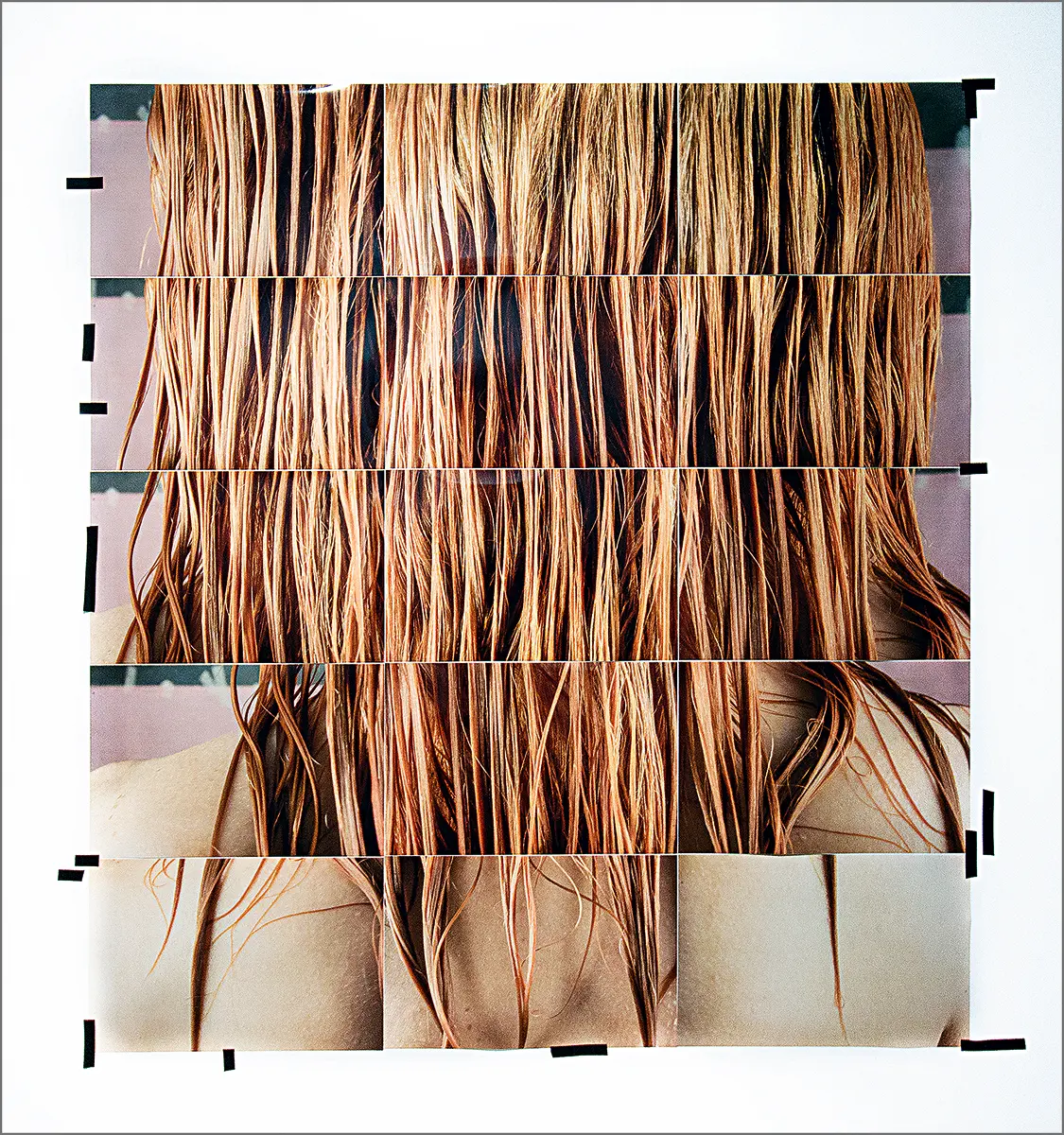
Lorena Riga’s interesting discourse unfolds by means of a photographic image of hair covered in product as a routine involved in beauty treatments. Frente al espejo/Baño de crema (In Front of the Mirror/Hair Product Bath) reformulates the action of posing as an imposition coming from a society that constantly sets unattainable ideals of physical beauty: the cult of thin bodies, clear skins, shiny hair, makeup, eyelashes, implants, dyes, aesthetic surgery—things that seems to help one achieve a healthier life, but one that suffocates under the pressure of the socially imposed obsession for personal well-being and even mental illness. Silvia Martínez and Martha Calderón present an action-performance titled Muestreo no probabilístico por bola de nieve (Non-Probabilistic Sampling by Snow Ball). In it, they reformulate the techniques in social research and statistics that establish that the selection of items is not dependent on probability, but on causes connected to social characteristics. Their action is a representation of the identitarian dynamics present in the social body.
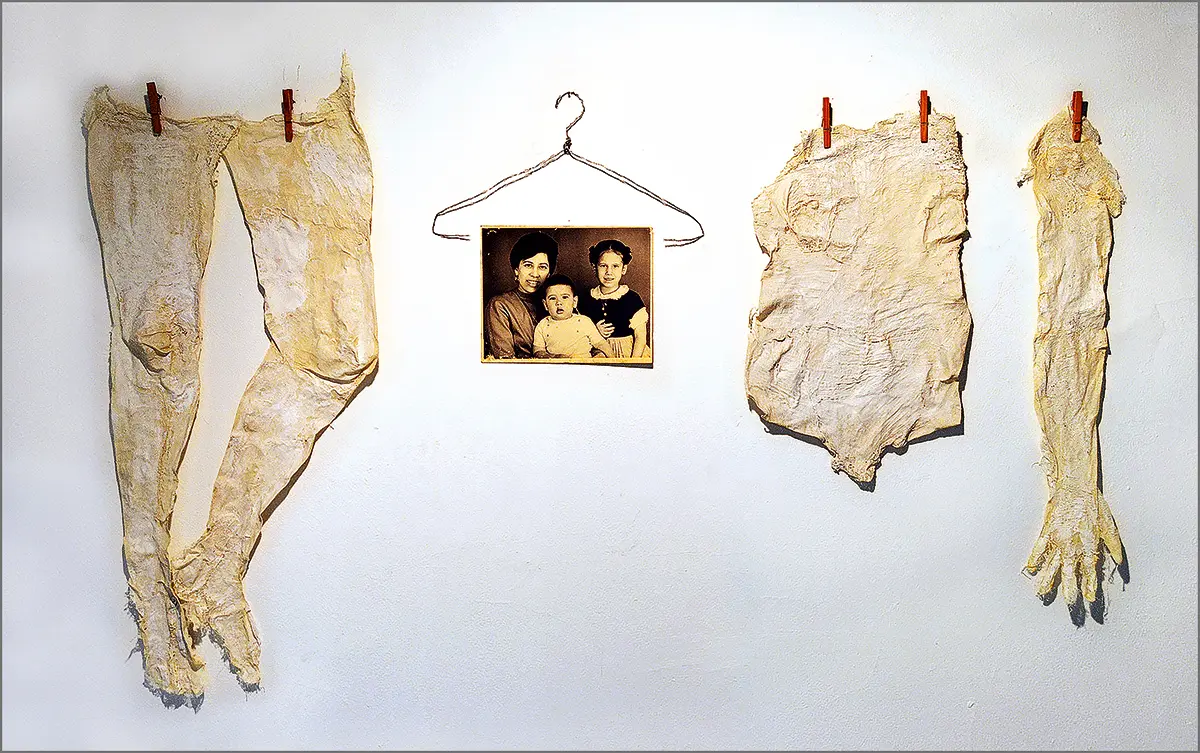
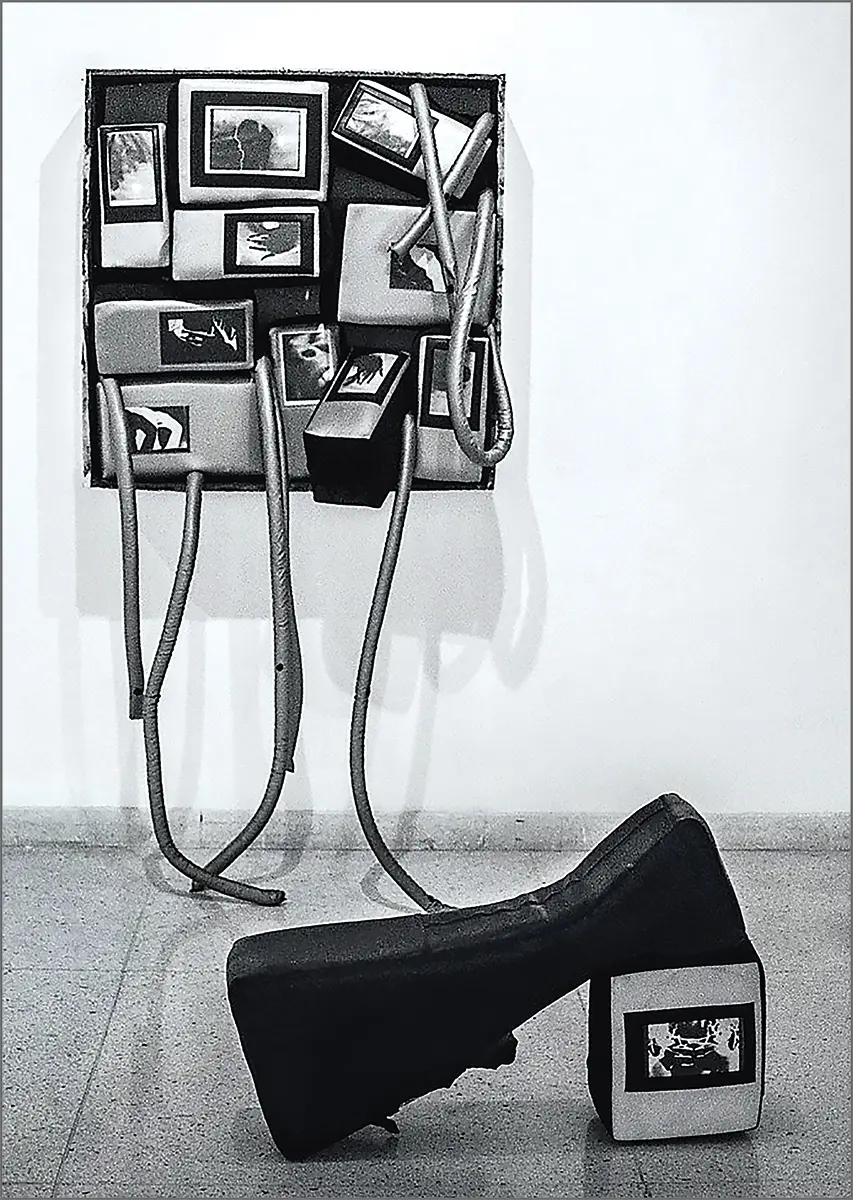
María Verónica Machado exhibits two installations. Círculo familiar (Family Circle) is a metaphor of the values of fragility, brittleness of character, and weakness of thought that are attributed to women in the monolithic space of the family. In Los CUERPOS de la política. Las POLÍTICAS del cuerpo (The BODIES of Politics. The POLITICS of the Body), Machado alludes to books as bodies and proposes an interaction with the audience, which, by reading the words, explores and dialogs with concepts connected to the exercise and abuse of power. Malu Valerio’s textile installation Especies domésticas (Household Species) probes aspects of everyday routines and habits, while at the same time manifesting private stories from an iconic vision of interiority. Valerio embroiders small items, like devotional objects that represent living beings and fragmentarily narrate life in the home, the silence of private spaces, and the ideal demands that are posed within the family group. Underneath is a question about the possibilities of a coexistence with such beings, their capture and domestication.
Cuerpo en cuestión is a narrative of the body and its fields of legitimization, its current history and its demarcations; of the traces and signs that place it on a grid and negate it in its difference; of its isolation and redemption; of the body as matter and material for artistic creation; of its complexities, its quandaries, its images and its representations, which make it possible for us to mend our ties of identity.
MARÍA LUZ CÁRDENAS