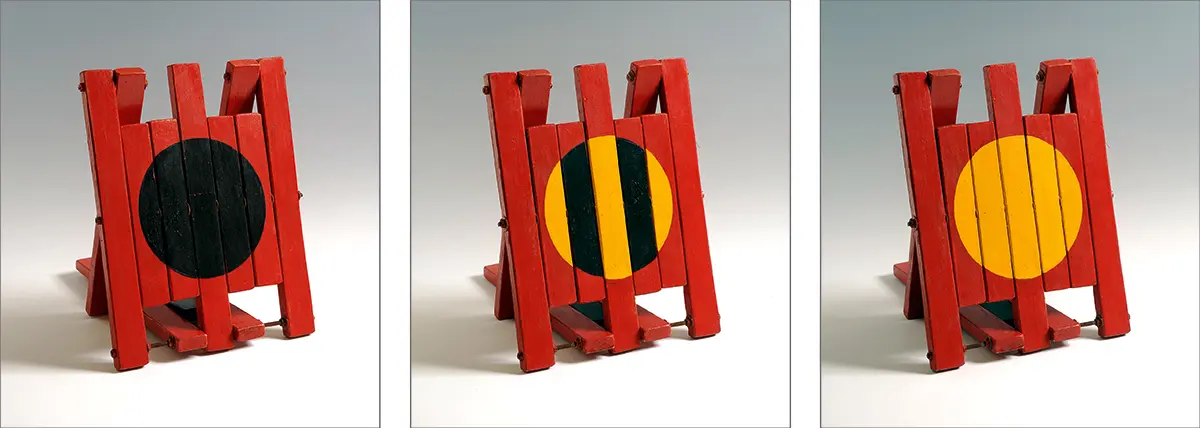
Protagoras said that Man is the measure of all things. The principle espoused by the famous Greek sophist explains that truth is relative to each person and that human beings are the norm for that which is true for them. Protagoras’ maxim sheds light on a number of aspects connected to the process of artistic creation, especially the domain where the communicational takes precedence and where the emotional and the intellectual come to mix in search of an almost festive form of enjoyment. It is in those terms that the artistic practice of that exceptional figure that was Sandu Darie deserves special attention. He must be remembered in this connection not only for the way in which the artworks are objects for aesthetic contemplation but also for the way in which he turned the work of art into a favored terrain for the direct participation of those who contemplate it. His action no longer limited to mere visual enjoyment, Man becomes indispensable for the configuration of the work of art, and pride of place is given to his powers of transformation and the attainment of new realities.
Darie, originally from Romania, came to Cuba from Paris in the early 1940s. Despite the obvious geographical differences, his adaptation was fluid. The new context, characterized by nature’s exuberance and a one-of-a-kind form of light, presented the young artist with unending expressive possibilities and had a positive impact on his pictorial production. His first contacts with Cuban audiences were by means of graphic humor and personal caricature.
Sandu Darie’s career as a professional painter began in 1942, and it soon became clear that he was an innovative presence, capable of synthesizing reality and presenting it in singular new ways. His early exhibitions at the Havana Lyceum in 1949 and 1950, which heralded new modes of artistic expression, attest to Darie’s quick insertion into the art circuit of the era. Widely seen as a precursor of abstract art, both in its lyrical and geometric variants, his actionable works and his electro-paintings in motion also situate Darie as one of the superior representatives of kinetic art in Cuba.
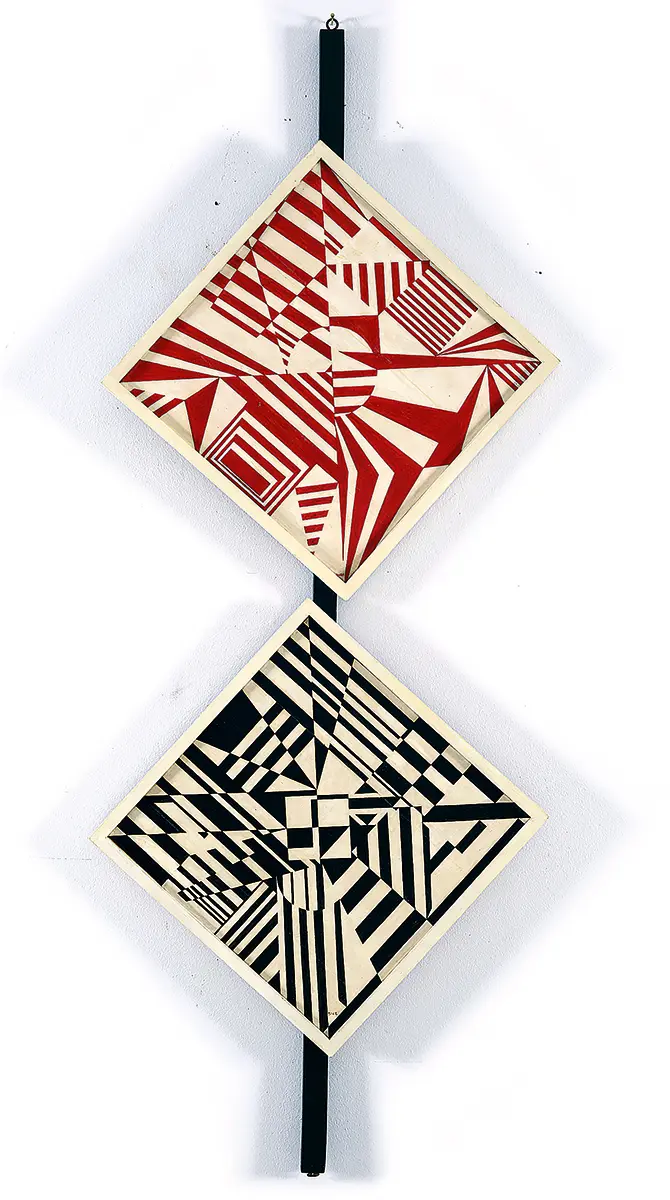
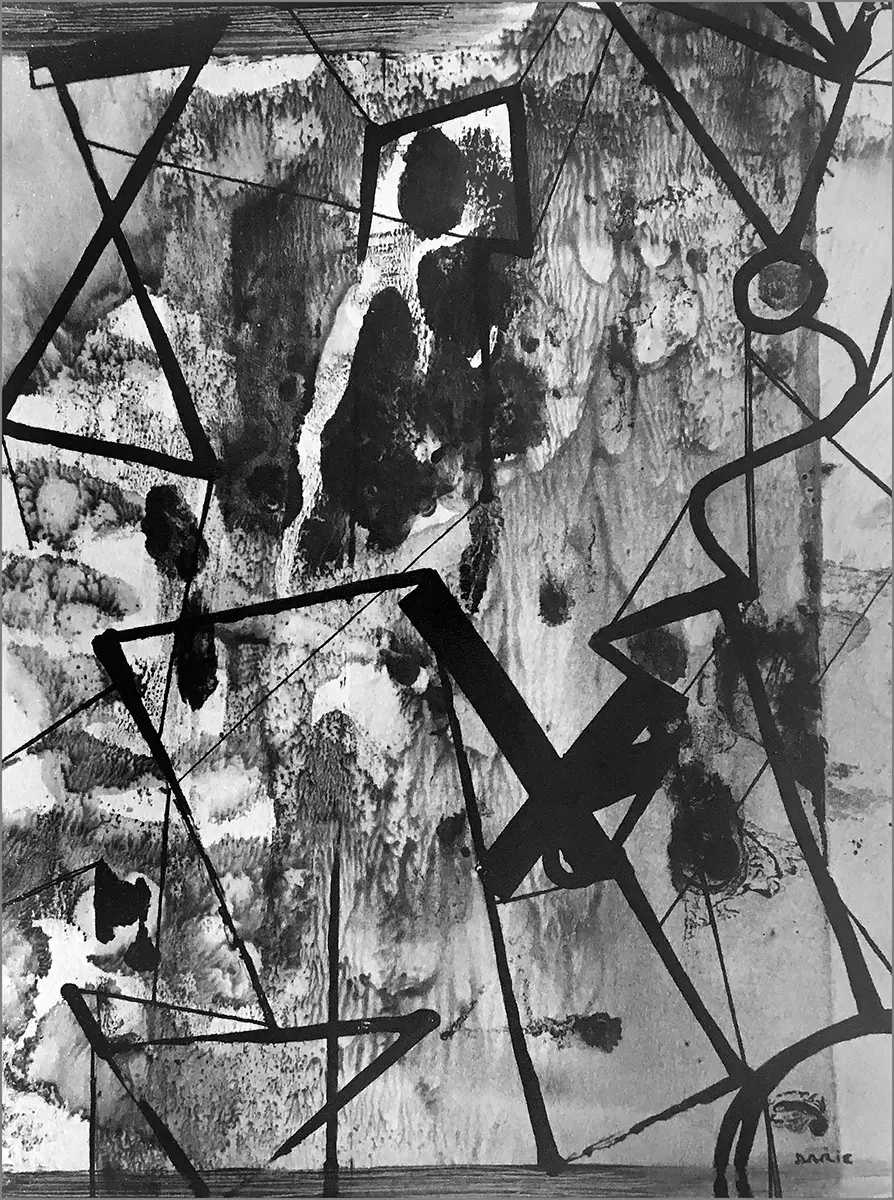
First came his lyrical non-figurative works, which, freed from any objective referent, rendered painting a purely creative act. Unmoored from all anecdotal scaffolding, these lucid exercises stood out for their chromatic harmony and their poetic nature.
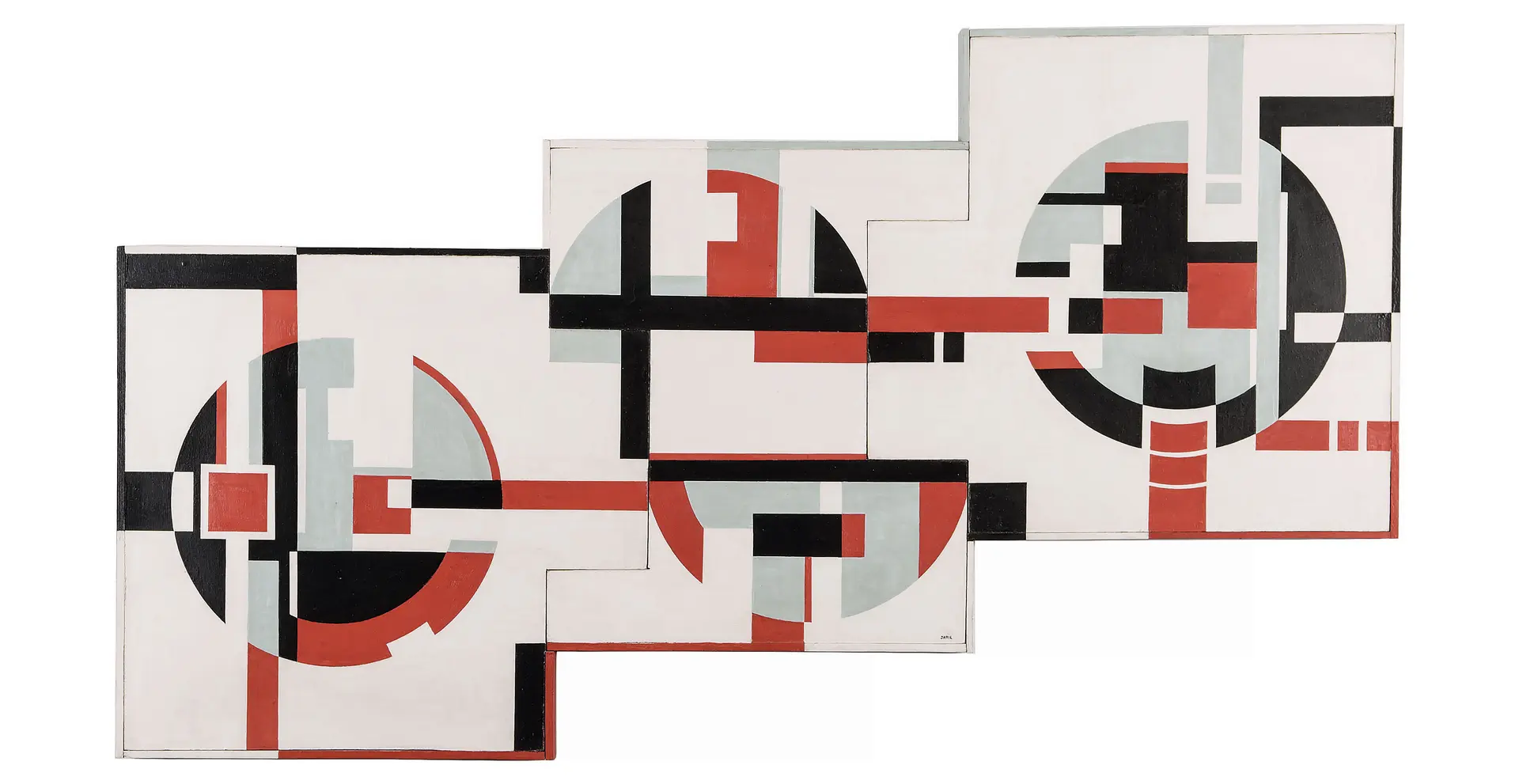
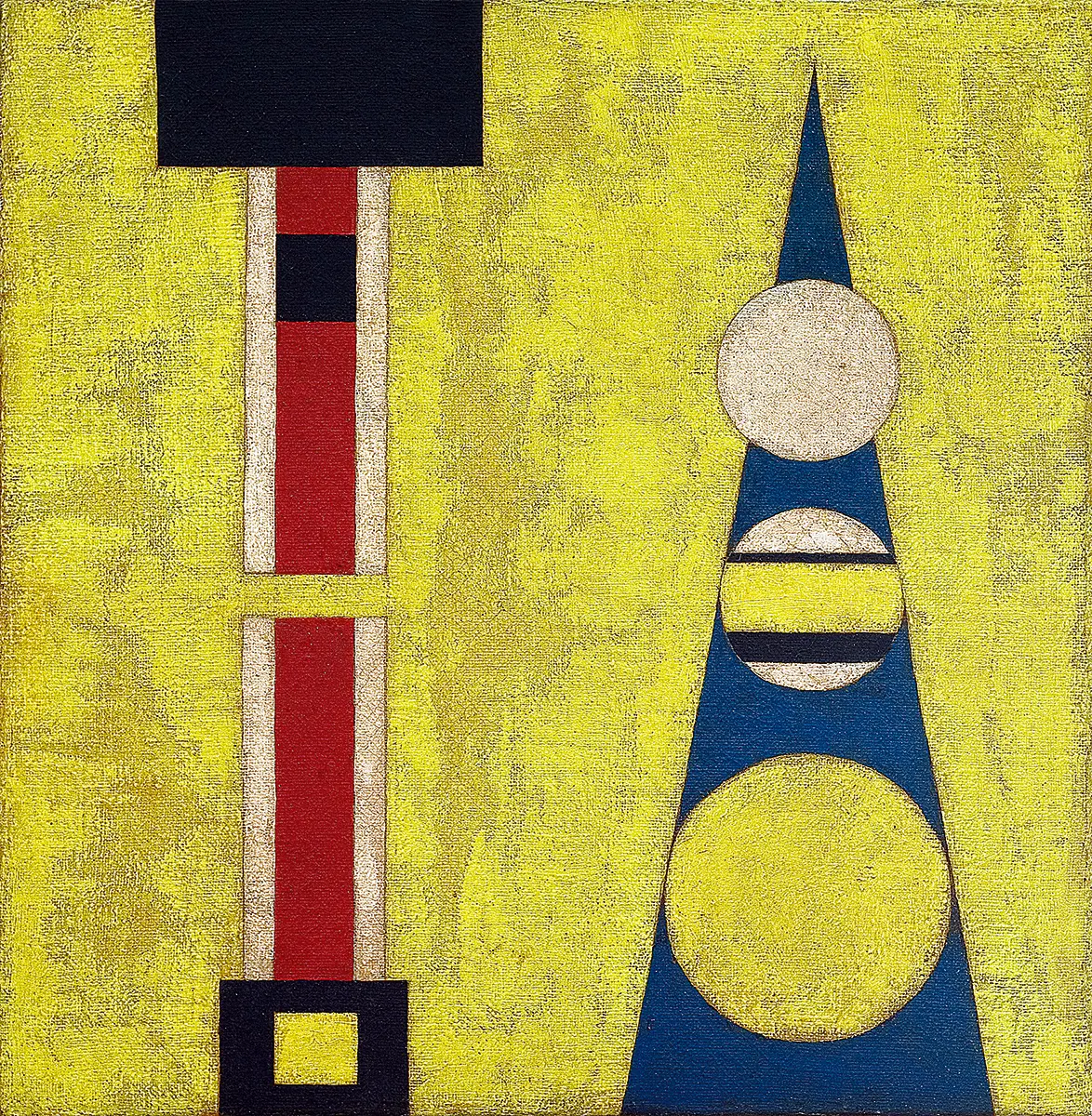
Later came Darie’s inclination towards the tenets of Neoplasticism, mainly as advanced by Mondrian. Thus his interest in straight lines, geometric exactitude, rectangular oppositions, and primary colors. Through his friend, the Greek-born abstract painter Jean Xceron, Darie became aware of the MADI group in Argentina and soon sought contact with them. A review of his extensive epistolary exchange with Gyula Kosice, a key MADI figure, bears witness to Darie’s affinity for the movement. The same goes for the many MADI exhibitions that included his works, and above all his theoretical contributions in the Buenos Aires journal Arte Madi.
With no prior knowledge and in an entirely independent way, Sandu Darie reached with his “pictorial structures” the same conclusions of his MADI colleagues: that a painting can be an object capable of projecting itself into space, thus overcoming the boundaries set by its frame.
Alongside Mario Carreño and Luis Martínez Pedro, Darie was among the first to move in the direction of different aesthetics, finding in geometry the necessary support for his discourse. Darie’s presence contributed an indisputable element of vitality 10 Concrete Painters collective (1959-1961); his capacity for innovation and his abundant knowledge placed him at the vanguard of the group.
Driven by the need to move art in step with the times, Darie continued to march in a long trial-and-error path of ceaseless probing and inquiry. Enamored of the vertigo of exploration (in the words of the renowned Cuban intellectual Marcelo Pogolotti,) he turned his entire oeuvre into a kind of laboratory where ideas, technologies, and feelings came to be combined.
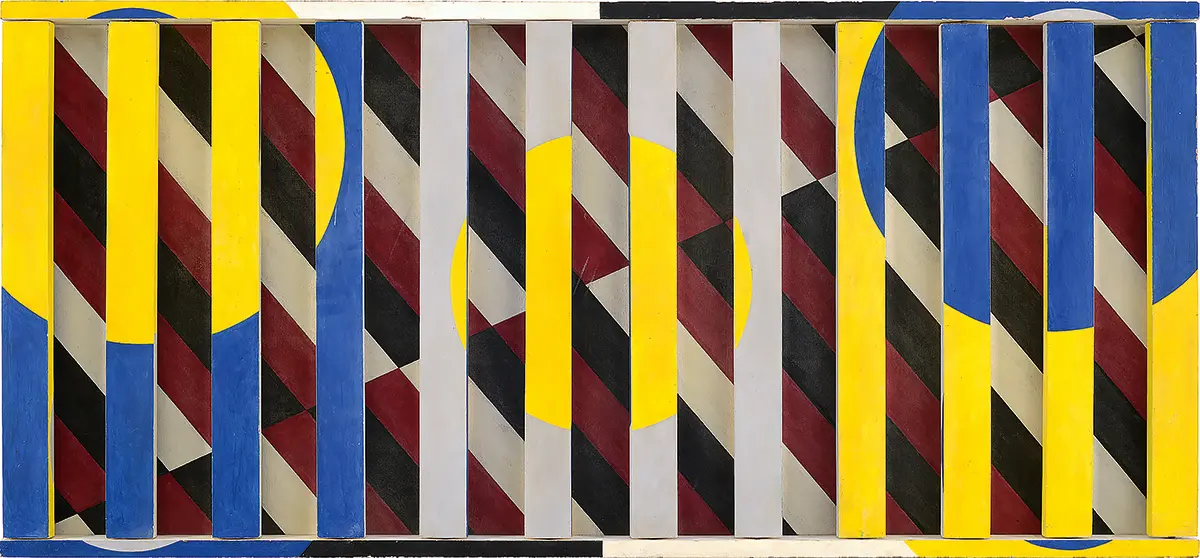
Identified like many of his contemporaries with universal aesthetic precepts, Darie began to include “motion” into his creative proposal. Between April 25 and May 10 of 1955, his transformable structures were shown as part of the First Concrete Exhibition, presented alongside Luis Martínez Pedro at the Social Sciences Pavilion of the University of Havana. Interestingly, it was around the same dates that the landmark exhibition Le Mouvement was held at Denise René Gallery in Paris; it was in the program for this Parisian show, commonly known as the Yellow Manifesto, that Vasarely first used the term opticocinétisme. Roger Bordier helped establish the critical foundations for this style for the subsequent decade and a half when he said: “What we have in front of us is the transformable work of art. It is the mobility of the work itself, optical motion, the intervention of the viewer; indeed, the work of art has become incessant by virtue of its very substance and nature, and can be infinitely recreated.” 2
Without pushing the coincidence too far, the previous connection should serve to exemplify how up-to-date with his contemporaries Sandu Darie was. We should remember, for instance, that Kosice’s mobile neon sculptures were newly in circulation at the time, as were Vasarely’s photographisms, Soto’s works suggesting optical motion, Gregorio Vardanega’s geometric-motif transparencies painted on overlapping Plexiglas plaques, and Abraham Palatnik’s kinetic-chromatic devices (which won a Special Mention from the jury at the First São Paulo Biennial).
In Cuba, meanwhile, there were few representatives of the kinetic movement. One salient figure among those few was Loló Soldevilla with his mobiles and light-emitting boxes of the 1950s. Later, in the 1960s, the key name was Osneldo García, and in the late 1970s, we have the Cuban Optical Art Group, formed by Jorge Fornés, Helena Serrano, Armando Morales, and Ernesto Briel.
Sandu Darie’s experiences in kinetic art reached their peak with Cosmorama, exhibited at the Museo Nacional de Bellas Artes in Havana in 1966. On many occasions, the artist acknowledged that the genesis of this work was rooted in the photographic possibilities he discovered one day in the transformable structures mentioned above. We must mention, however, that an audio-visual experiment of the same title, made by Darie in response to an initiative by filmmaker Enrique Pineda Barnet, had come to light two years prior, and that it contributed greatly to his later proposal. The film was produced by ICAIC, photographed by Jorge Haydú, and edited by Roberto Bravo; it featured music by Bela Bartok, Henry & Schaeffer, and Carlos Fariñas.
With Cosmorama, we move from the free and mobile play, responsive to human will, that Darie proposed on the basis of his transformative metaphors, to works of greater plurality, integrative of other elements, such as light and sound. With this lumino-kinetic spectacle, the artist achieved a veritable communion of art and science, specifically attempting to have art provoke thought as well as emotion.
Soon after, Darie’s Cosmorama was included in the Art-Light-Art exhibition organized by Jan Leering and Frank Popper at the Stedelijk Van Abbemusseum, in Eindhoven, The Netherlands. While the exhibition duly demonstrated a high level of technological advancement, Darie proved that there is no such thing as poverty of resources in art when the work is rich in the communication of ideas. The international reach of his art was again made clear the following year when Popper cited Darie as one of the initiators of “environment light art” in his book Naissance de l’art cinétique. L’image du mouvement dans les arts plastiques depuis 1860, alongside Yaacov Agam, Nicolas Shöffer, and Victor Vasarely.
There are other signs of the transcendence of Darie’s work. We can mention the acquisition of one of his paintings by the Modern Art Museum of New York as early as 1949, or his selection as a member of the Royal Fine Arts Academy in Le Hague, The Netherlands. At the same time, a number of publications pointed out his significance in the international art context. Such are the cases of Juan Eduardo Cirlot’s La escultura del siglo XX, published by Editorial Omega in 1956, and Michel Seuphor’s Dictionnaire de la peinture abstraite, published by F. Hazan in 1957.
A sustained and highly characteristic process of feedback stands out in a general analysis of Sandu Darie’s artistic production as a whole. On more than one occasion, we see him returning to a style or aesthetic idea he’d explored before, in response to specific creative needs. From this process emerge works like Espacioscope, Cosmoscope, and Multivisionscope, heirs to the spirit of Cosmorama; also the transformable volumetric structures—plastic constructions of a larger magnitude—that he created in the 1970s and 80s, as well as the lyrical abstractions produced around the same years.
Within this scheme, special attention must be paid to Darie’s works for urban spaces, an important line of work developed in the second half of the 1970s and still indebted to kineticism as an expressive language. His actions along those lines were many, convinced as he was that art needed to situate itself precisely in the spaces where everyday life takes place for humankind. Important, among others, are Construcciones (Constructions), in iron and fiber-cement, at Cuatro Caminos Park (1977); El árbol rojo (The Red Tree), installed at the main entrance to the Ernesto Che Guevara Main Palace of Pioneers, in Havana’s Lenin Park (1981); the murals El día y la noche (Day and Night), in the main lobby of the Hermanos Ameijeiras Hospital of Centro Havana (1982); La columna de la vida (The Column of Life), a sculpture in plastic and stainless steel installed in the fifth floor of the Havana Institute of Genetic Engineering and Biotechnology (1986); and La historia del cine a través del espejo (The History of Film Through the Looking Glass), a mural for the film theater of the Topes de Collantes sanatorium in Sancti Spiritus (1987).
With a long and fertile career, well established as one of Cuba’s most genuine and revolutionary artists, Sandu Darie “also possesses the exceptional virtue of being a visionary, of being always ahead of the times, with his imagination traveling at the speed of light and breaking through the barriers of his era.” 3
His influence transcended the historical moment in which he lived, and his name became a mandatory reference in writing the history of Cuban art. Shoehorning Sandu Darie into this or that label based on his recourse to any given mode of expression is a difficult task; his ingenuity and creativity contributed consciously to pushing aside the boundaries established between different genres.
Sandu Darie’s artistic life was a sequence of takeoffs and landings; his entire oeuvre is a kind of cosmic flight that continuously confronts us with the unexpected. Sandu Darie enjoyed taking us by surprise, firing up his viewers’ emotions and intellect, and surpassing their expectations. Delighted in adventure, he was a restless explorer who set out to create a new and different type of art, a forcefully transformative signal.
Contemporary society’s vertiginous pace of technological development offers new tools to complement creative talent. Can we possibly imagine how rich and diverse would Sandu Darie’s work be today? I, for one, feel inclined to approach it as infinite, incalculable, and ceaseless surveying of the future, where there is always something new to be learned. Perhaps the image Darie chose to end his short film El viaje cósmico (The Cosmic Journey), produced by ICAIC in 1967, will best summarize the enduring character of his entire aesthetic production: three white lines against a blue background, evoking something that never ends.
NOTES
1. Quoted by Rafael Squirru in his introduction to the catalog 15 años de arte madi. Museo de Arte Moderno de Buenos Aires, November 1961. Catalog.
2. Quoted by Osbel Suárez in Los cinéticos. Cronología. Lo(s) Cinético(s). Museo Nacional Centro de Arte Reina Sofía (MNCARS). March 2007. Catalog.
3. Quevedo, Alberto. Sandu Darie. Exposición antológica 1945-1988. Havana, Museo Nacional de Bellas Artes. December 1988. Catalog.
ELSA VEGA
Independent Curator.