Open to the public between November 2017 and April 2018 and curated by José María Espinasa and Alejandro Salafranca, this exhibition presented the Mexican capital as the protagonist in the representation activated by works from different periods and through a number of historical processes.
The section devoted to the arts of the Twentieth and Twenty-First Centuries occupied the last portion of Gallery 3, Gallery 4, and some exterior spaces. Titled From Utopia to Dystopia, this section was separately curated by Luis Rius Caso, who proposed a critical treatment of planning, always taken by storm in the unexpected junctures of the city, with a distribution based on counterpoints between modern and contemporary works that also activate a variety of visual-communication genres, so that viewers encounter representations of familiar and emblematic aspects of Mexico City, but also surprising urban transformations.
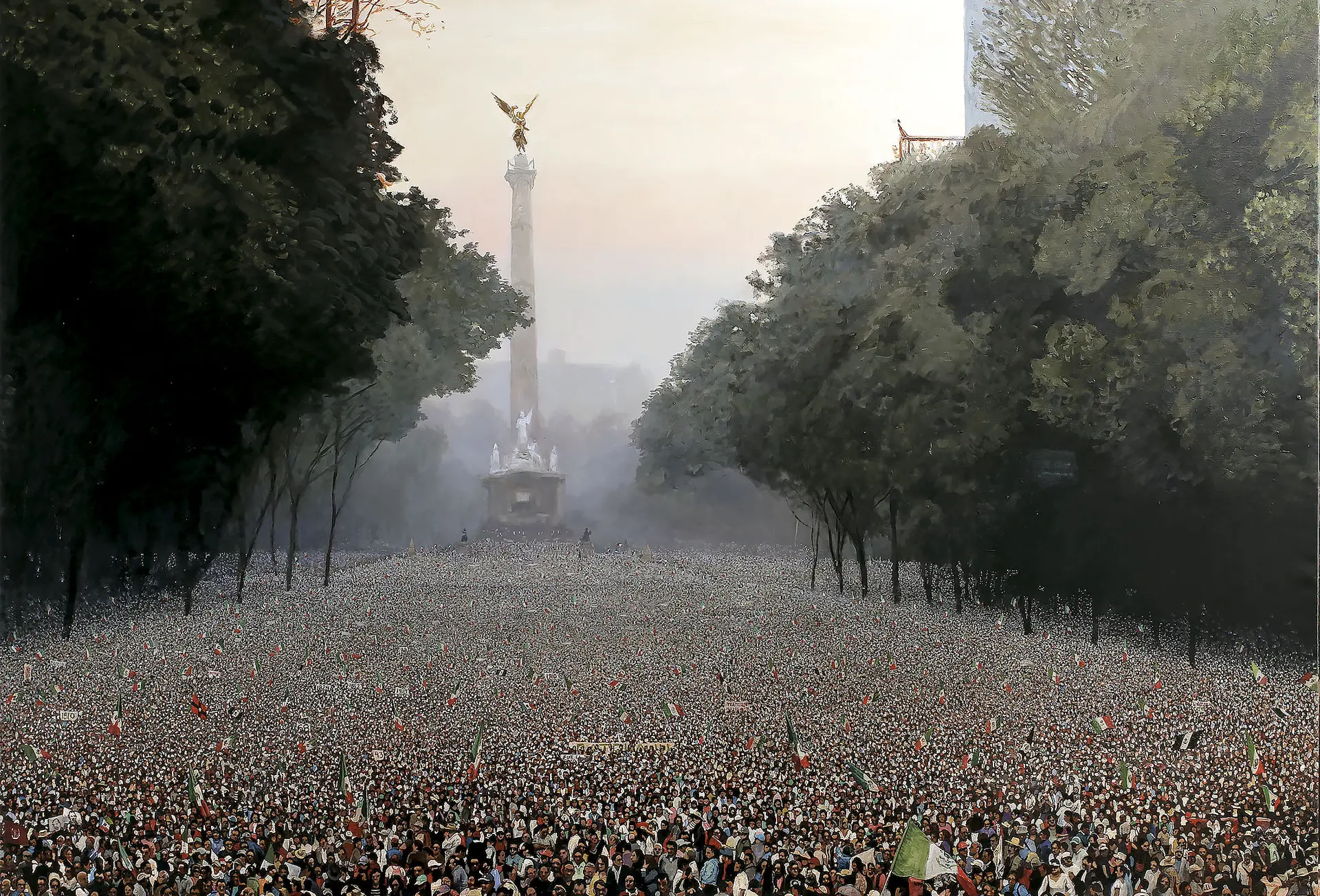
The section titled Maps, Signs, and Territories features La Patria (Fatherland), Eric Pérez’s 2017 work (oil on canvas, 140 x 200 cm), the affirmation of a career that has constantly explored the irradiating potential of the pictorial. That mass of people rallying in Mexico City’s central Reforma Avenue is also an expression of forceful social mobilization against a corrupt political order or a collective movement in the face of the static values represented by the emblematic Independence Angel monument. The connotation is in consonance with the artist’s career, always guided by a conscious selection of representations of privately appreciated spaces: water-filled areas, as in the Altépetl project (2011); human beings in motion through vast open environments, as in Altiplano (High Plateau), which gathers works from 2005. The landscape is a genre that continues to explore the realm of the sensorial.
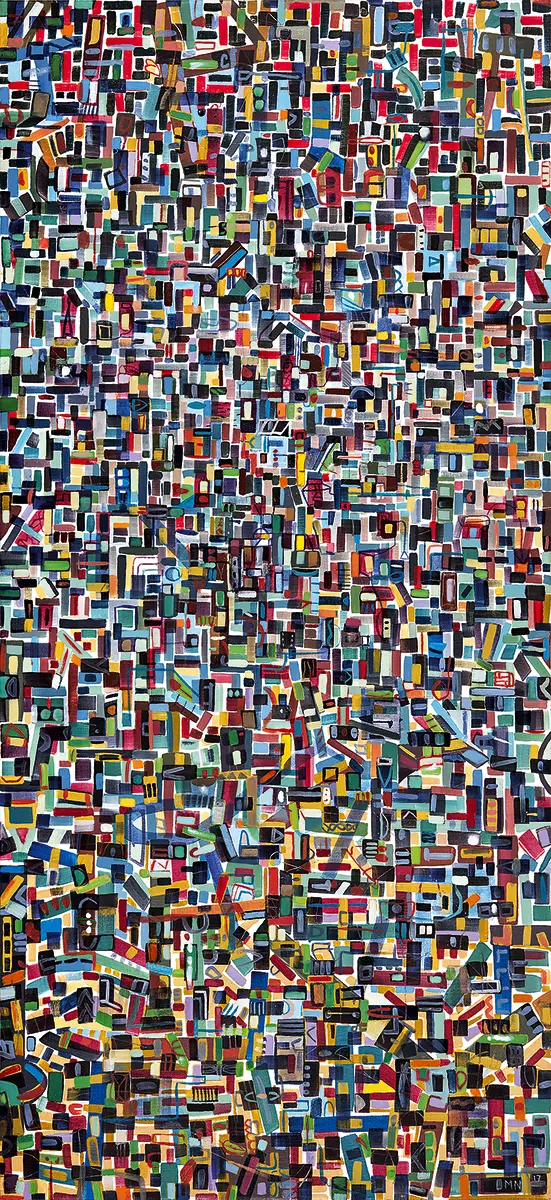
Also included in Maps, Signs, and Territories is Urbe (Big City), a 2017 oil-on-linen work by Mario Núñez that emphasizes intermixing as a condition of urban life, in terms of routes, subjects, activities, buildings, and displays an evident superposition of geometric motifs with various colors and volumes that create hollows, tiers, nooks, and crannies, as can be seen in marginal communities established by conurbation, the result of land invasions and improvised, unfinished constructions, expanded in the most unbelievable ways if needed, within areas with large urban developments (Santa Fe, for instance). A number of critics and Núñez himself have noted, in connection with exhibition processes such as Maraña (Tangle, 2017), Dentro y fuera (Inside and Out, 2015), Laberinto de ecos (Labyrinth of Echoes, 2013), the presence of shifting plots of colors, textures, routes and detours, trajectories and labyrinths, and the expressive centrality of a gradual process of art-making in the composition of networks.
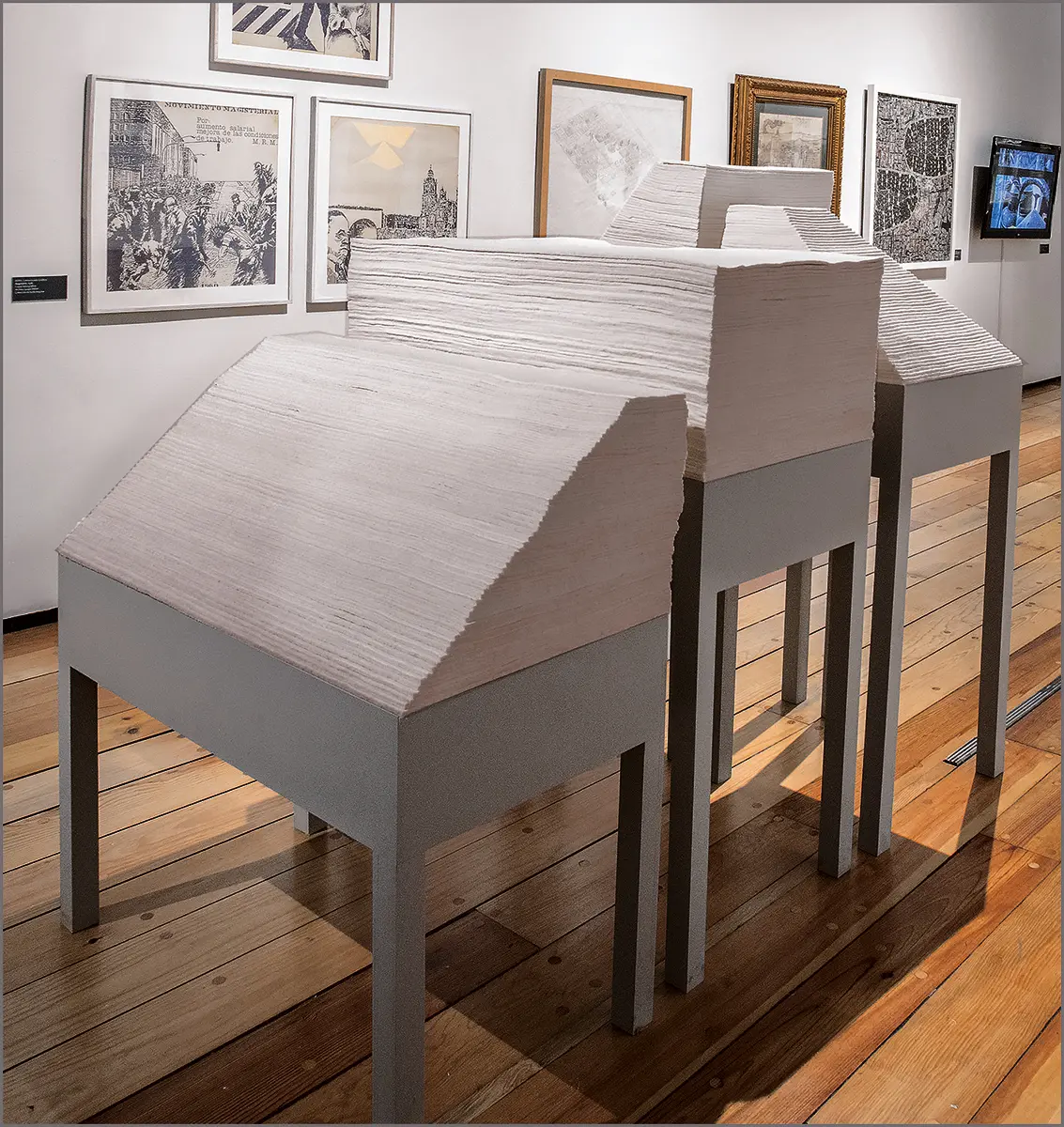
In the same section, María José de la Macorra’s Ciudad de templos, made between 2010 and 2014, with cut-up cotton wadding arranged on tables, activate the experience of perceiving overlapping architectures, a characteristic of pre-Hispanic remains in Mexico City in its spatial relationship with other temporalities—and in itself, when it lets the strata of different periods of indigenous life seep through to our gaze. This production perhaps alludes to those strata with the layers that comprise each module, structuring inclines and pedestals. The artist’s careers have been marked by sustained experimentation with different materials, intended to extract strata of an experience of the real connection with nature, as with projects in which she has used embroidered fabric, carved and assembled wood, and ink on Japanese paper, ceramics, junk jewelry, resins, wired: Ramas (Branches, 2008-2009), Juncos (Reeds,2010-2014), Río (River, 2008), or processes included in publishing projects such as De nubes y lluvia/torres de agua (Of Clouds and Rain/Water Towers, 2000-2007), characterized by the linking of pieces and series within broader projects of their sensorial unfolding on different supports.
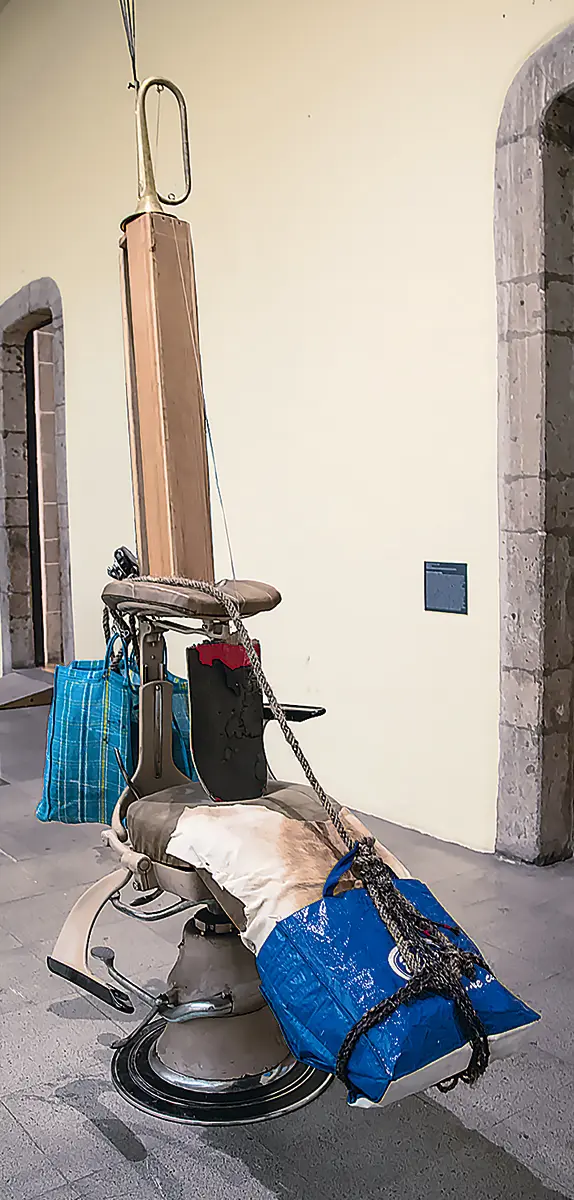
A good representative of the section From desire to catastrophe is Autoconstrucción (Self-Construction), from 2016, where Abraham Cruzvillegas revisits the material culture derived from urban travails and events to remark on what it is that the inhabitants of such a megalopolis as Mexico City gradually build as fragments of ourselves between hard-wearing bags used to transport stuff, dentist chairs, trumpets, ropes. This work converges into a current of the same name in Cruzvillegas’ broader creative process, with works produced between 2007 and 2010 and derived from improvisations with resources and ways of doing that are connected to aspects of the artist’s family colonia (city sector) or origin, always in a process of transformation. But there is also in this work a sustained trace of Cruzvillegas’ passages in his career, from the collaborative experiments with his colleagues from the “Friday Workshop” to the many works that suggest a different reading of the real on the basis of everyday objects, such as, to name a few, Indio (Indian, 1997), La moderna (The Modern One, 2002), La familia (The Family, 2009), and The simultaneous promise (2011).
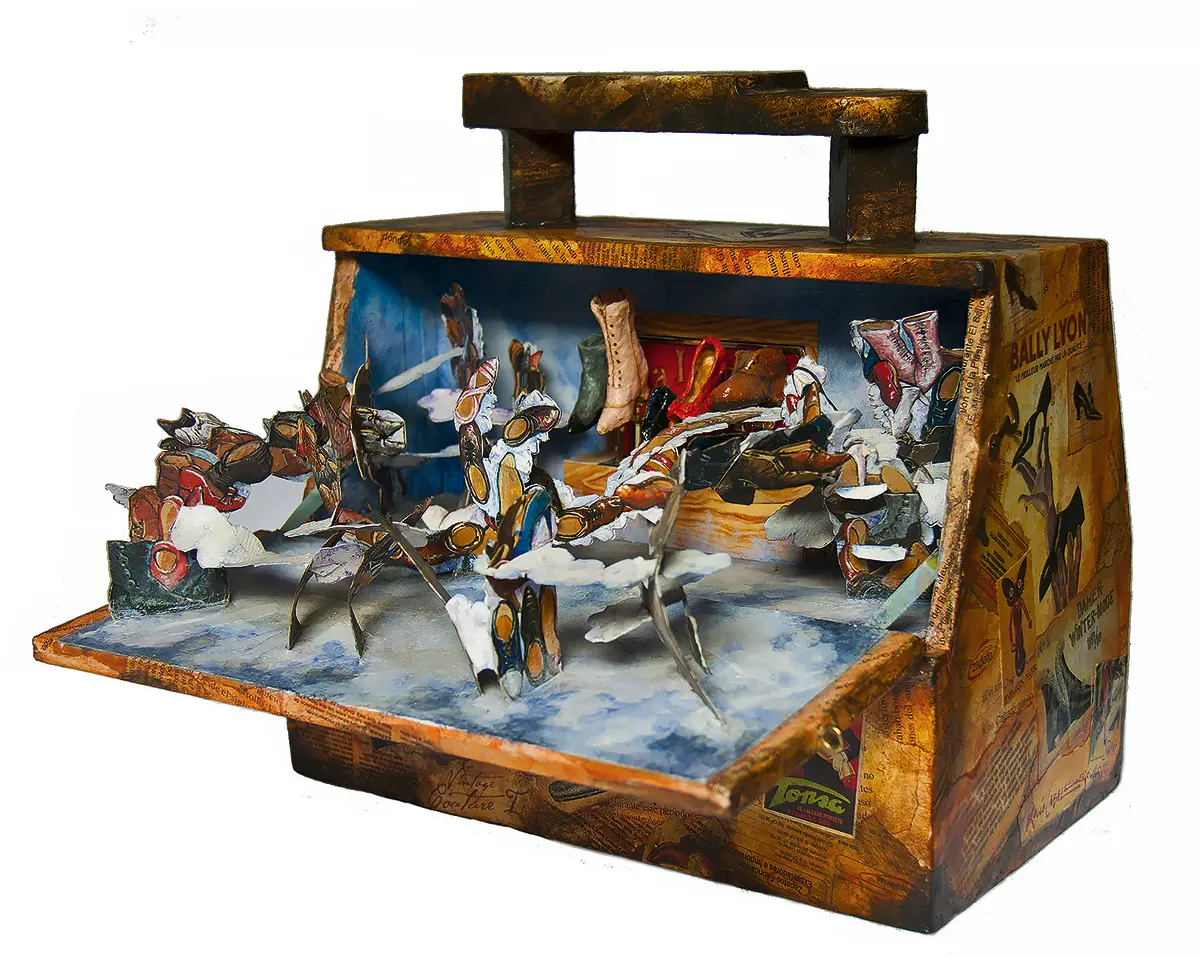
The section that best showcases the contrasting interpretations of the city in modern and contemporary art is The Tradition of Rupture. Rocío Caballero’s La pesadilla del bolero (The Shoeshiner’s Nightmare, 2010), an art object with a music box in the place of the traditional shoe-shine box, ubiquitous in Mexico City, contains a three-dimensional scene with all kinds of shoes in disarray. Caballero retains in this work the characteristic features of her ironic and critical pictorial practices, deploying great technical skill to achieve social impact, as she has done in other works that engage the issue of power: her series De Crimen y sin Castigo (Of Crime and no Punishment 2015), or Disertaciones de altura (Dissertations from On High) and Espantapájaros (Scarecrow), both from 2013, which quote artists like Juan O'Gorman and Edward Hopper.
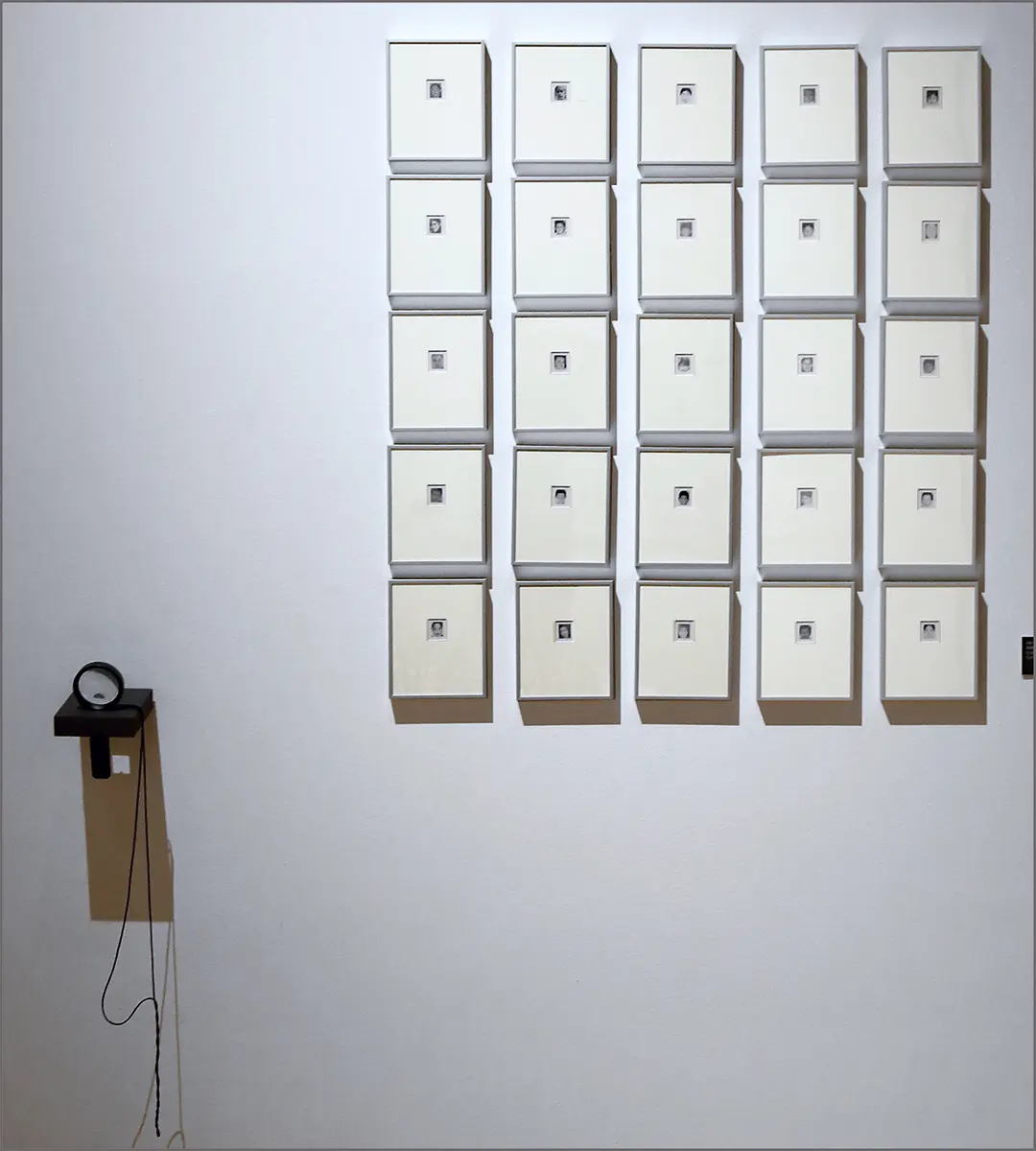
Also on exhibit in this section is Ilán Lieberman’s Niño perdido (Lost Child, 2006-2007), a series of graffito-on-paper portraits that follow the usual format of ID files, reproducing the faces, physical information, name, complexion, distinguishing characteristics, and last place seen for a number of children. Lieberman’s faithful reproduction of flyers asking for help to find lost children opens up an array of meanings; the title of the work as well as the old name of a major freeway in Mexico City (today called the “Eje Central”), and the all too real, growing phenomenon of child abduction as a characteristic of the city. This project is connected with Lieberman’s frequent practice of taking visual and material culture elements that circulate in the public space to intervene and transform them, by means of their copying or reproduction in drawings or paintings, into artworks that engage critically the social issues they touch upon as they move through the city (indigenous rights, sexuality, crime, etc.) Such was the case of Lieberman’s 2013 project Disculpen la molestia (Pardon the Inconvenience) and the works included in the book Foto real (Real Photo), from 2014.
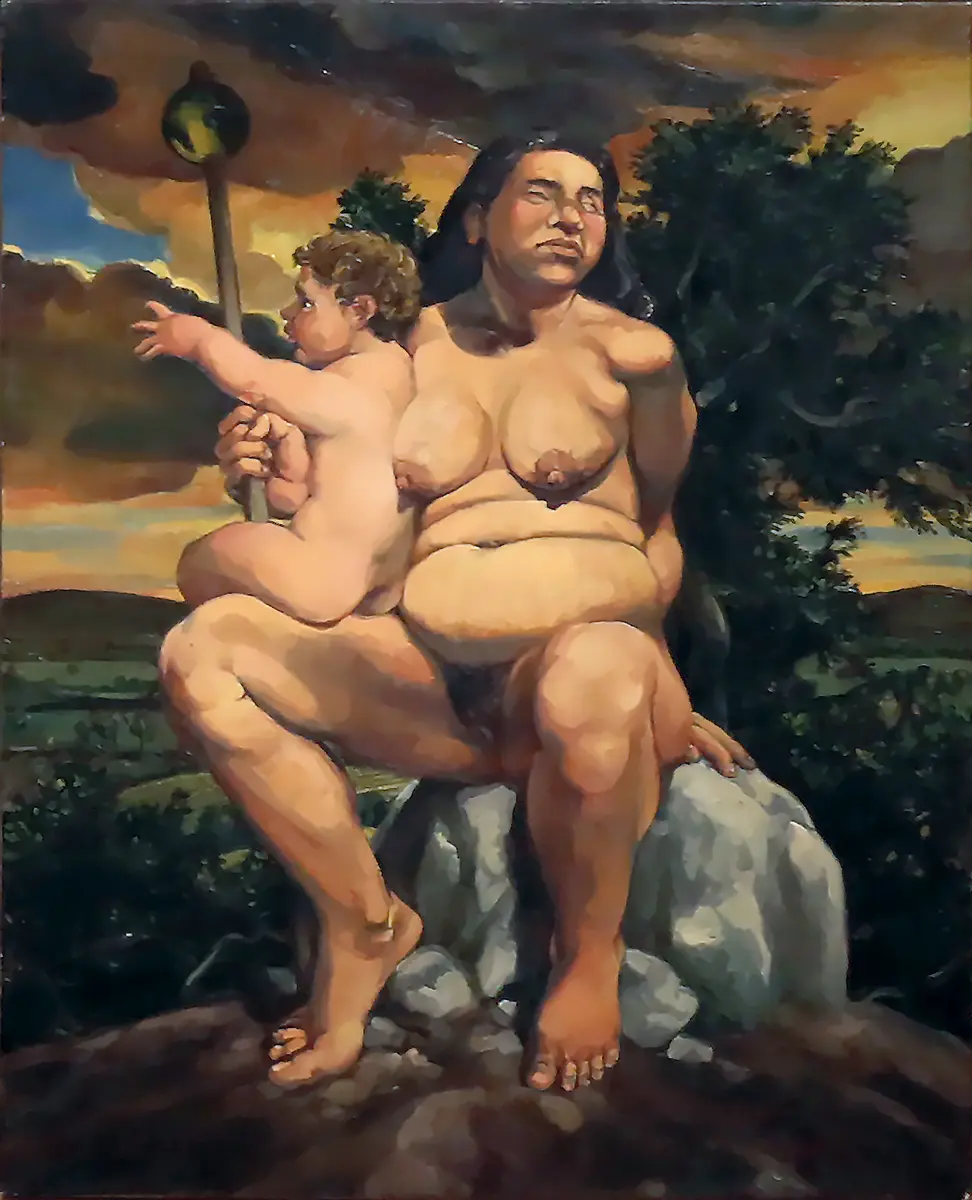
Exhibited in the transition area between before the section Places and Non-Places was Fortuna Emperatrix, a 1997 oil-on-canvas work by Daniel Lezama that activates constant features of the artist’s oeuvre: a scene with local allusions, in this case, a rural Mexican landscape, and characters whose attributes are treated by Lezama in a way (iconographic, legendary, based on folk images) that provides entries to a consideration of the socio-political anchoring of what they represent. In this case, the re-signification of a colonial-era visuality deeply rooted in the Virgin-and-child Catholic imagery that is so pervasive in Mexico, only now bodies, gestures, and canons are tied to the place of the possible and the human, rather than to an ideal principle of virtue. Similar operations can be found in works like Tigre de Santa Julia (Tiger of Santa Julia, 2000) or La rosa de oro (The Golden Rose, 2000), both from the series La clase de Historia (The History Lesson), and Carta a Humboldt (Letter to Humboldt, 2009), from the series Viajeros (Travelers).
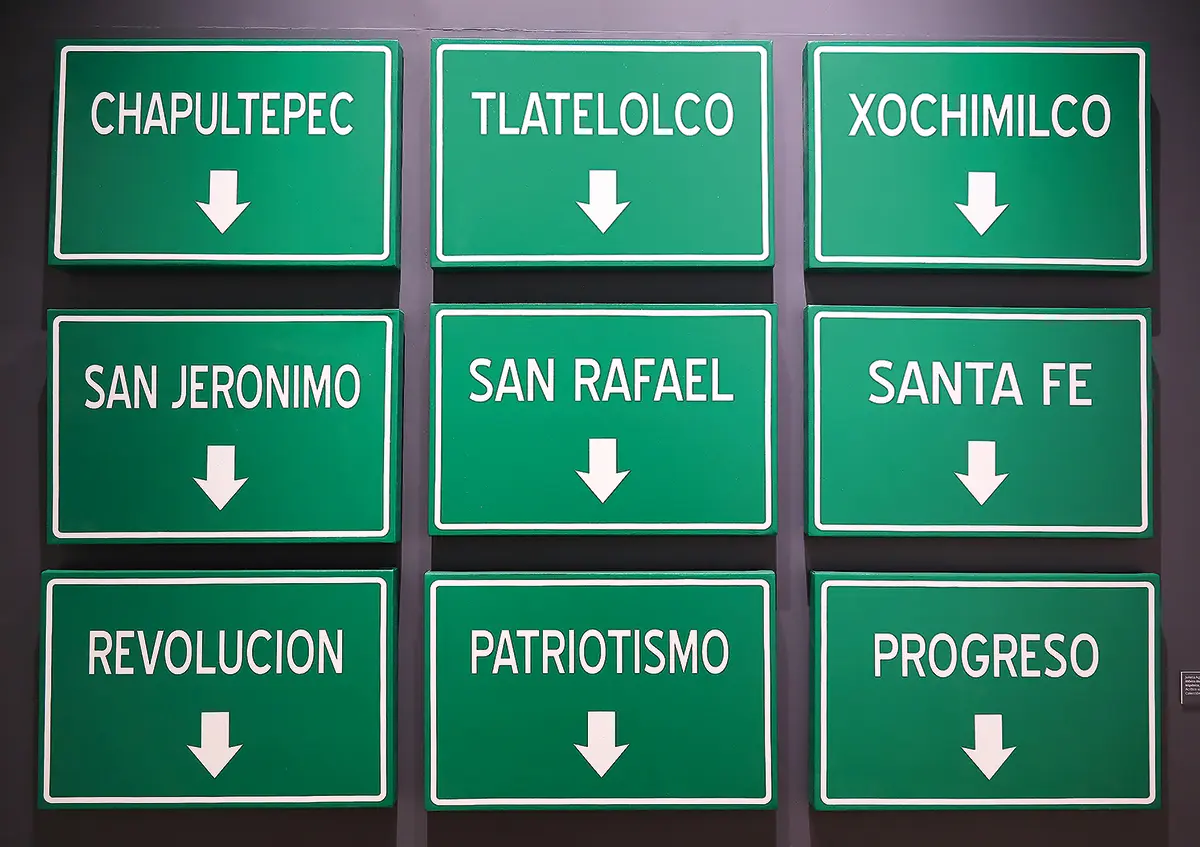
Julieta Aguinaco also elaborates on the back-and-forth between places and non-places that are determined by the variability of the construction of what is personally or collectively significant in them, in her work México Moderno, México Colonial, México Prehispánico Modern Mexico, Colonial Mexico, Pre-Hispanic Mexico), from 2013, nine acrylics on canvas where the names of Mexico City’s streets or sectors offer synchronic readings of the country and the city’s neighborhoods across historical periods. It could even be judged on the basis of the territorial and socio-political postulates implied by those terms: the use of pre-Hispanic spaces; the socio-economic order brought about by the establishment of the Catholic Church in Mexico; the modern, post-revolutionary tenets of the country’s construction. Aguinaco has also explored other visual and artistic disciplines, with inquiries about Mexico’s territoriality, as in her video installation Still of Under the Citlaltépetl, from 2013, or her recent “Ustedes les dicen piedras”. De la roca al Homo sapiens, un recorrido en X capítulos (“You Call Them Rocks". From Rocks to Homo Sapiens, a Journey in 10 Chapters, 2017).
These are some examples of the diverse, prolific network established in the exhibition La ciudad de México en el arte. Siglos XX y XXI. De la utopía a la distopía, interweaving various representations of the city’s issues, features, and dynamics and setting up dialogs between the works of contemporary artists like those highlighted here, and modern expressions as well as alternative sensibilities and practices for the exploration of processes that the city contains within itself.
* Courtesy: Museo de la Ciudad de México.
EUGENIA MACÍAS