The name of Ivan Argote resonates in different corners of the world. This young artist, born in Bogotá (1983) and living in Paris, moves through Europe, the United States, Africa, Asia, and Latin America, carrying out projects in all kinds of media that impact, not only people related to the visual arts but mainly the general public. His aesthetic language is flexible and accessible. The word, written or spoken, plays a fundamental role in his videos, photographs, sculptures, drawings, and installations, through which he explores the relationship between history, politics, and the construction of subjectivity. His works confront the viewer and stimulate him to ask how he relates to the environment, to the people around him, to the state and its control mechanisms, to what is considered patrimony, and to family and social traditions. His works are the product of an agile mind that refuses to assume a contemplative attitude. His provocative and transforming nature does not accept negatives or barriers; on the contrary, it seeks challenges and confronts them by carrying out critical and even rebellious works.
Argote’s vertiginous career began at the Universidad Nacional de Colombia, in Bogotá, where he studied graphic design. After finishing his studies in 2004, he got a job in which he lasted one day. According to him, he resigned “because he had to try something else. He was interested in art.” He worked at Colombo Films where, at age 22, he worked as an assistant director and became familiar with the techniques of photography, video, and film. At the same time, he took courses in photography and new media at the Universidad Nacional. In 2005, he received the first prize at the Salón Nacional de Arte Joven, which consisted of a plane ticket. Initially, he considered traveling to New York but then decided to go to Paris.
In 2006, he traveled to France. He was 23 years old, he did not know anyone and although he had taken some courses at the Alliance Française in Bogotá, his knowledge of the language was very limited. He decided to take advantage of the opportunity to reinvent himself. He remembers that “he walked a lot, observed everything that happened around him, and even invented strategies such as making people believe he was a professional salsa dancer.”1 He prepared his portfolio for the fine arts contest, he memorized his speech in such a way that they would not ask him questions and he managed not only to be accepted but also to be placed as a third-year graduate student at the École Nationale Supérieure des Beaux-Arts, in Paris.
From that moment on, he began to create works that shock or take people by surprise, such as the video Boom (2007), in which he places a ball under the tire of a truck making it explode; I just want to give you money (2007), in which he records the reactions of people who are riding a subway car to which he speaks in French, offering them a coin that nobody receives; and Making of (2017), in which the voice of Argote is heard directing the passengers who are in the subway car as if they were actors in a film set. His intention in these works is to question the boundaries between reality and fiction, to rethink the concept of credibility, and to analyze the way people relate to each other and the role of the word in this context.
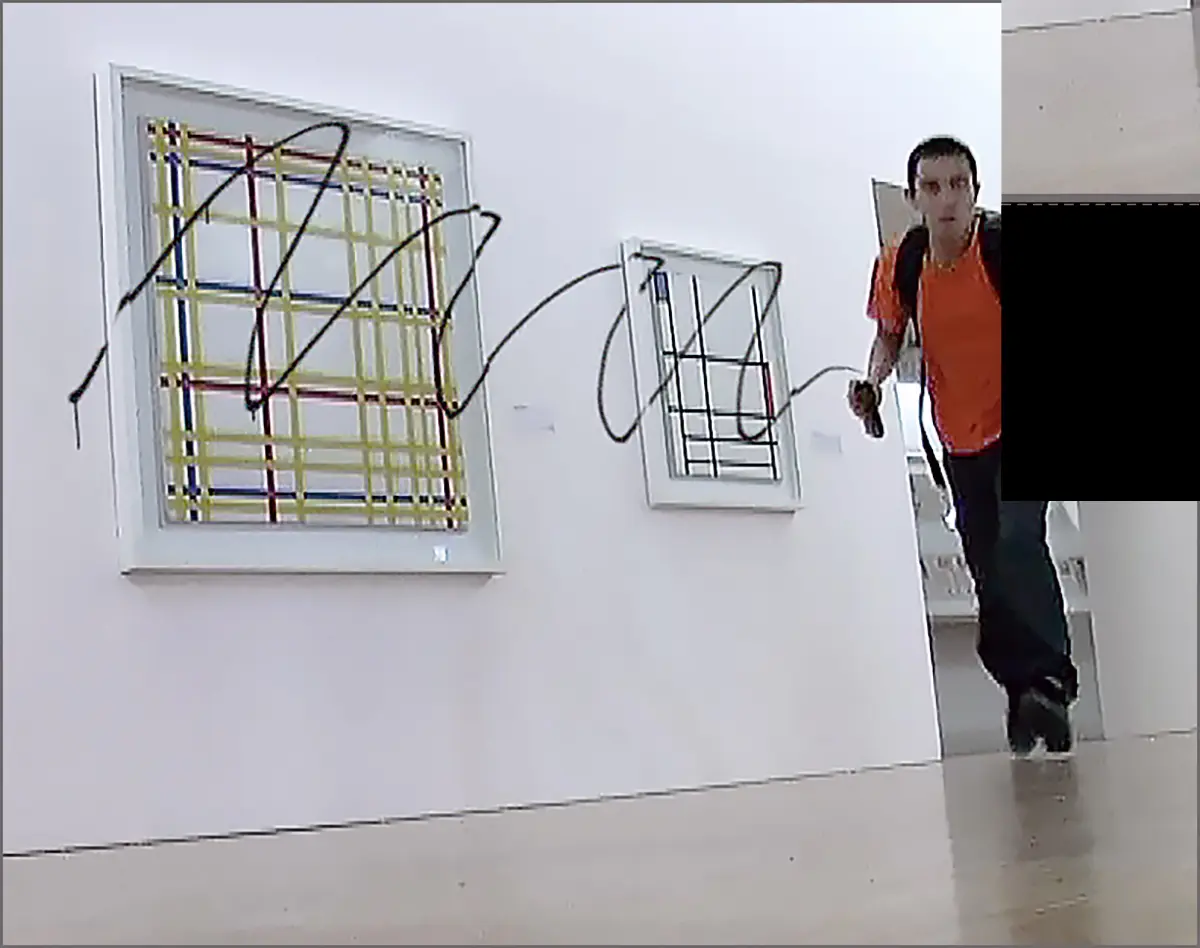
While he was still a student, his provocative attitude and his constant questioning of what is considered official or legitimate led him to carry out an intervention for which he earned the reputation d'enfant terrible. In Retouch (2008), Argote placed a video camera on the floor of one of the galleries of the Centre Pompidou, ran towards two iconic works by Piet Mondrian, painted them with black spray as graffiti, and ran back to the camera to turn it off. The action, which took a total of twelve seconds, caused great commotion and merited an article in the newspaper Le Monde in which he was called a vandal. The performance established a relationship between the historical works’ aura and the spontaneous action of urban resistance symbolized by the graffiti, and at the same time, it questioned and ridiculed their market value through the act of vandalism. The funny thing is that it was a digital intervention and at no time were Mondrian’s works painted or damaged as shown in the video in which Argote mischievously plays with the idea of the image’s truth.
Another work that deals with the theme of approach and communication is the video Birthday (2009). When entering an elevator, Argote tells people he does not know anyone in the city, he informs them he is celebrating his birthday and he asks them to please sing the traditional birthday song. The camera captures the faces of those who initially hesitate or say no, but who finally ask his name and begin to sing. Through a universal tradition such as celebrating a birthday, Argote manages to overcome the barriers that exist among strangers and reaches a level of familiarity, even if it only lasts a few seconds. Once again, he creates a performance that allows him to analyze the way people relate to each other and the role of the word, in this case, a song that has family and cultural connotations.
These actions must be seen not only as strategies to belong but also as part of a critical position toward the role of the individual in the public sphere. In 2010, he traveled to New York where he made recordings he used in the series Untitled (New York, Paris, Madrid, 2010-2012). In these videos, he filmed passers-by in their daily life activities, which he interrupted by shouting phrases like “I love you”, “You are beautiful” or “You are great,” taking them by surprise and provoking expressions of amazement. In this series, the artist and the word disappeared because they were presented without sound. Once again, he used the game as an intervention strategy but, in this case, he also reflected on the role of affection within a theme that has subtle political connotations.
Politics plays an important role in his work because they are closely linked to his own history. Argote grew up in the neighborhoods of Bogotá where the leftist groups were formed in the seventies and eighties and therefore he was exposed at an early age to the ideals of civic and revolutionary participation. Hence, the project La Estrategia (2012), commissioned for the XXX São Paulo Biennial, was exhibited at the Palais de Tokyo in Paris and recipient of the Sam Prize for Contemporary Art. La Estrategia is based on the materials he collected and used to present an unofficial history of the revolutionary groups mentioned above. These communities were governed by a system of ideals that determined their daily life and the critical way in which the social and political reality of the country was perceived. The central work of the project is a film in which he presents oral histories he uses to reconstruct and document a way of life. It is accompanied by some objects, in particular pieces that allude to concrete walls and pedestals with mirrors, which aim to involve the viewer in the process.
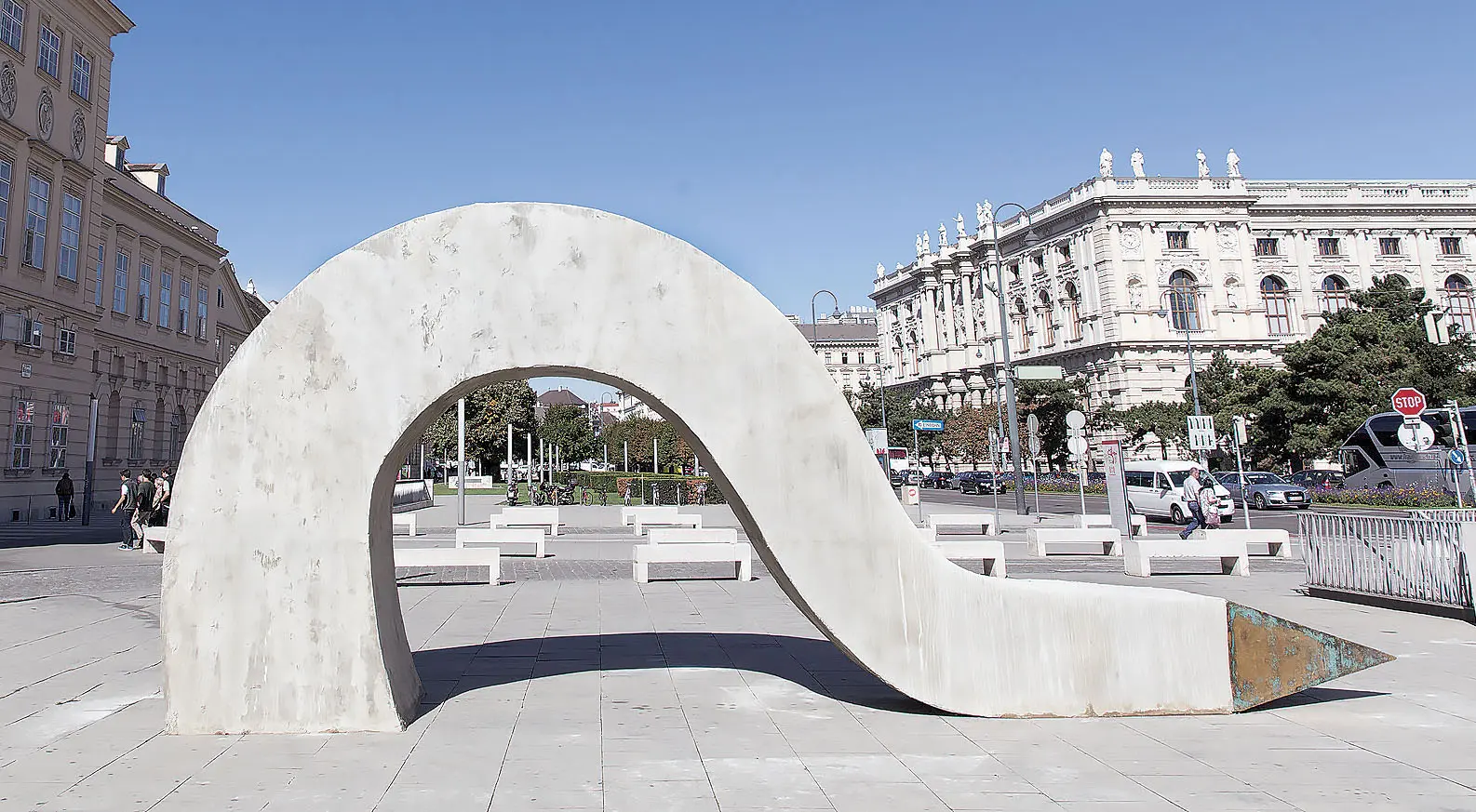
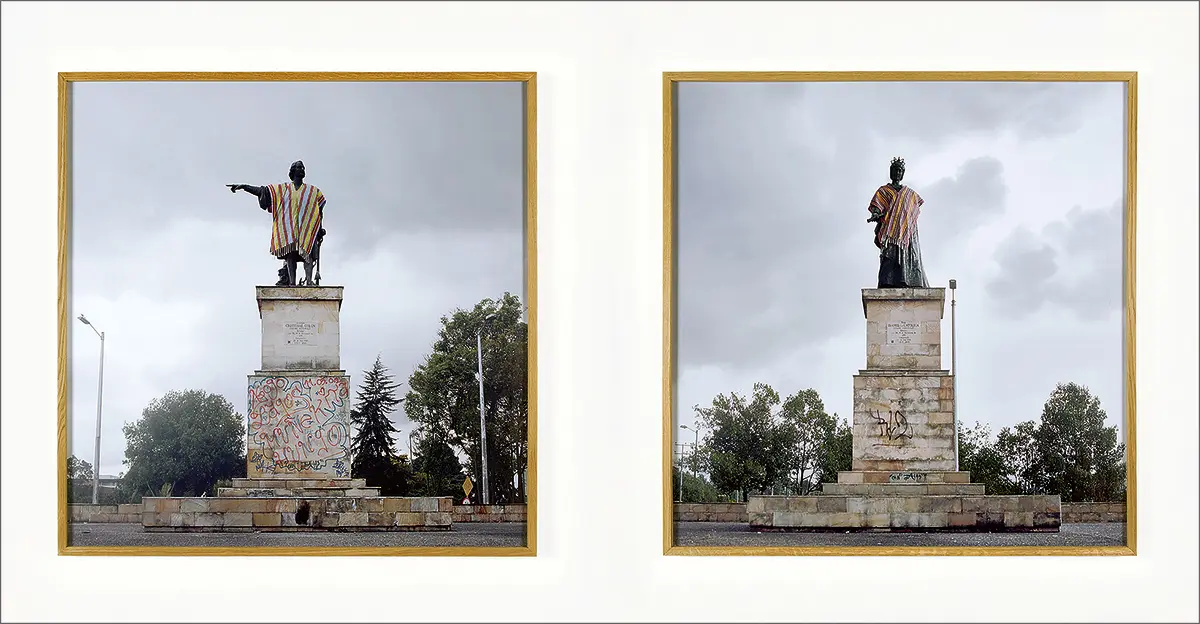
Beyond documenting testimonies, Argote is interested in going from the personal to the community, especially in regard to the urban space. According to him, “It is this space what marks and draws the story.”2 Hence his interest in urban interventions on historical monuments and installations inspired by them. Among others, Turistas (2012-2013), actions that are documented photographically in which he dresses with ponchos statues of historical figures, especially Spanish conquerors, in cities in Colombia, the United States, and Spain; Strengthlessness (2014), a sculpture inspired by the Egyptian obelisk located at the Place de la Concorde in Paris, which he reproduces folded and laying on the floor; and Roarr (2016), and installation of outdoor sculptures in which, inspired by the iconic felines located in different public places in Paris, he exhibits reproductions of lions made of a white stone cut as if they were torn by their own claws.
Public monuments become recurrent themes insofar as they allow him to question the mechanisms of power and authority, and at the same time explore the city as a place of transformation and virtual reality. Through his interventions, he analyzes how the city boasts a past and how that past, in many cases dark and bellicose, is assumed in the present. It also emphasizes the fact that the public space does not belong to the population and is considered, to some extent, untouchable. By appropriating urban spaces through interventions and installations, he negotiates with the symbols, making them vulnerable with a particular sense of humor, either by humanizing the statues by dressing them in ponchos or by folding the obelisk. According to Argote, “things are alive, history is alive and you have the right to dialogue with it.”3
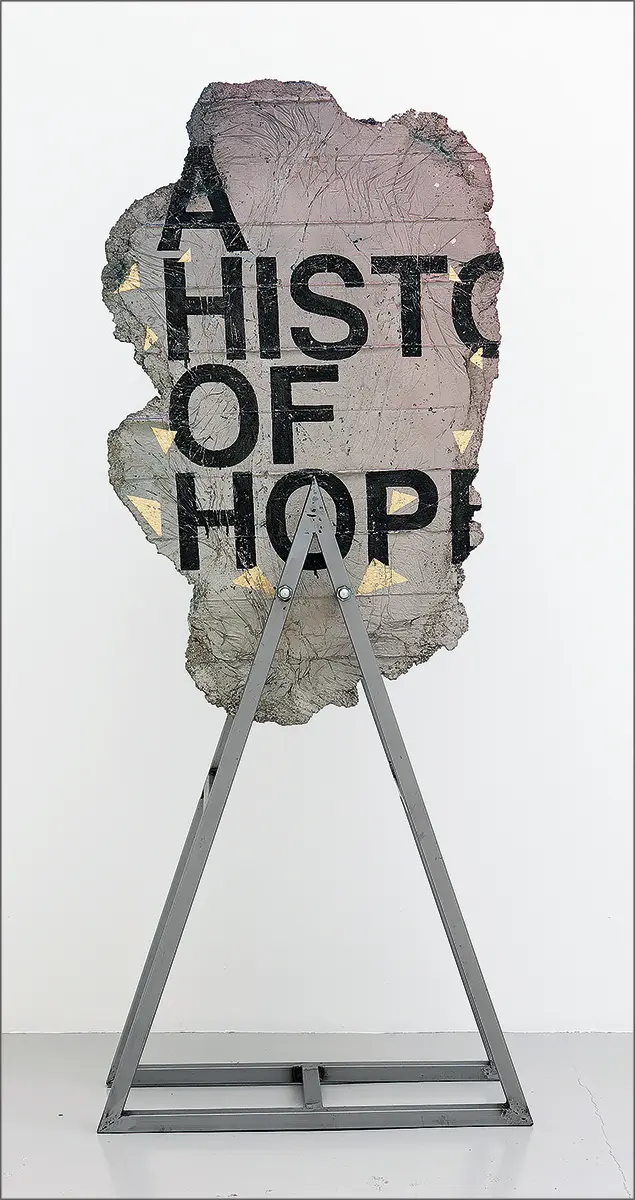
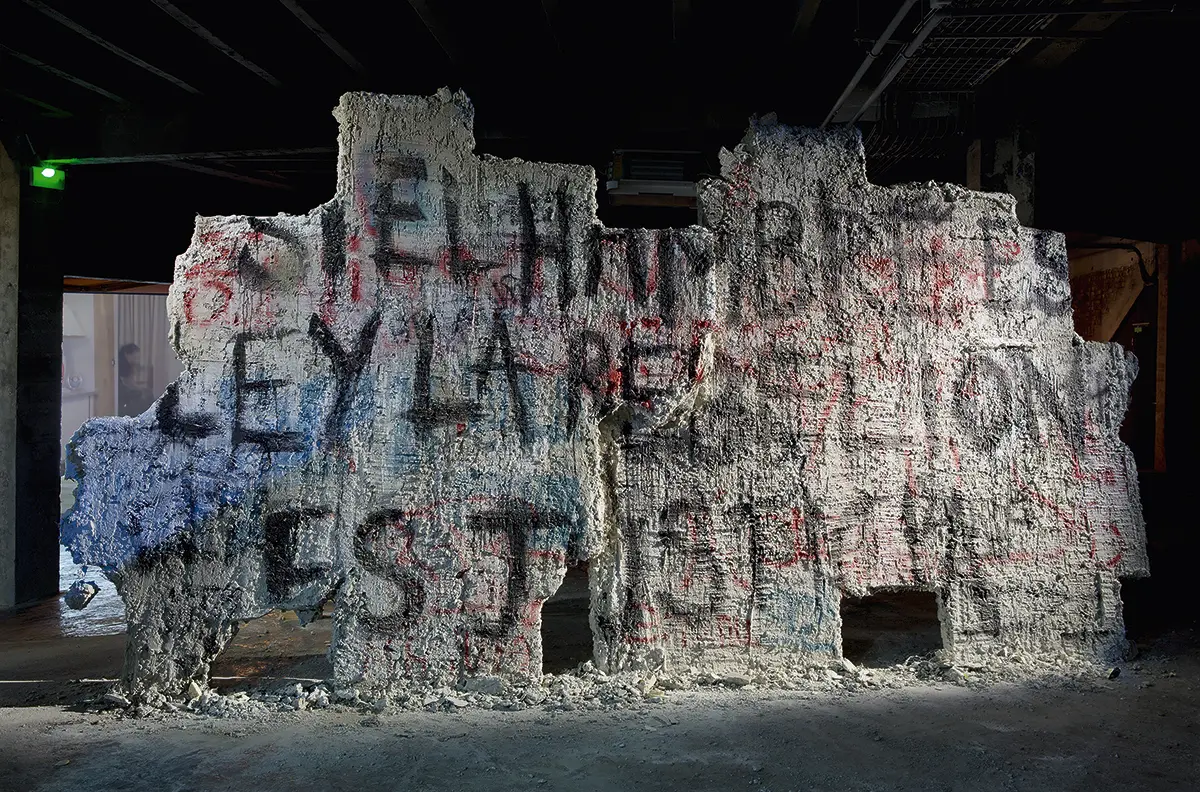
Even ruins remaining of structures demolished by time, can be assigned an emotional value for what they once represented, particularly in pictorial or literary expressions in which they tend to become metaphors of human nature. Based on this idea, Argote made the Excerpts series (2012-ongoing), which started with the sculptures that were part of La Estrategia (2012). Initially, the wall fragments made of concrete, polyurethane, and steel were drawn with graffiti, but eventually, they became the support for fictitious texts written by the artist that refer to the most diverse themes including declarations of love, songs, titles of exhibitions, and movie scripts. Together, the sculptures become a false archaeological testimony as they originate from the inventiveness of the artist and are made with current materials.
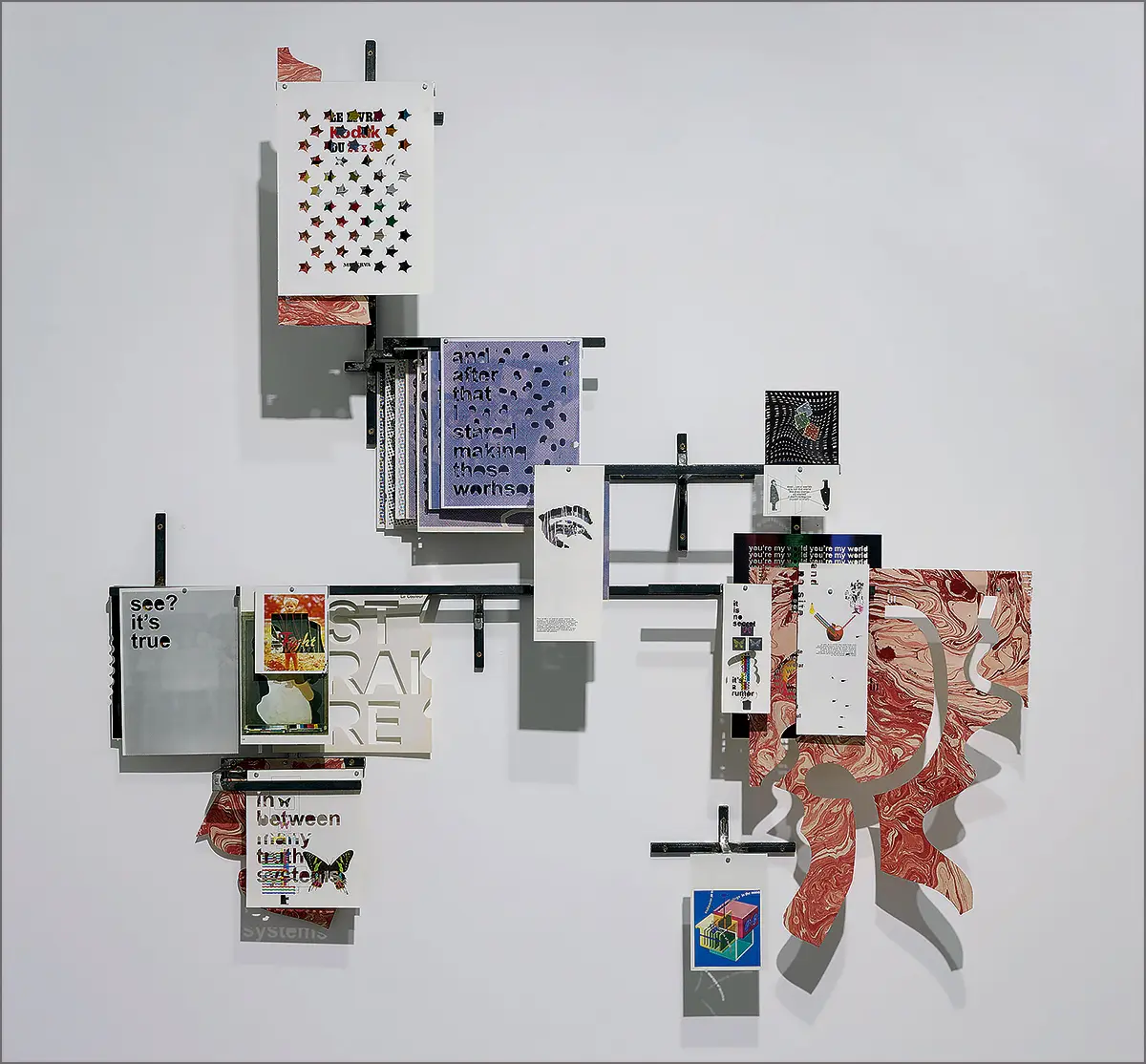
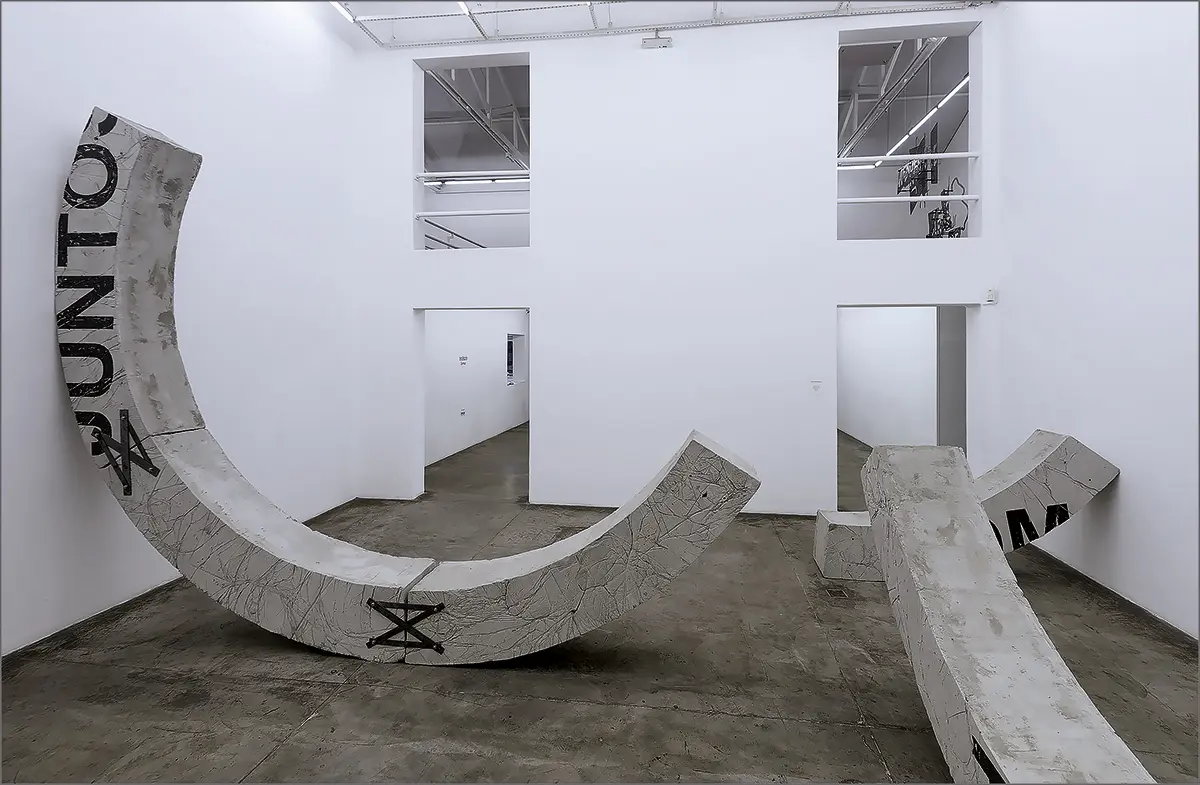
Another series inspired by history and particularly by the relationships that exist between image and ideology is Setting Up a System (2014-ongoing). In it, he uses printed materials such as photography books, science diagrams, political propaganda, school texts, advertisements, and newspapers, laser-cut them, and hangs them strategically in steel structures, superimposing them to create different layers of reading and reference. These practically destroyed archives, and especially the visual image of the laser-drilled holes, inspire the monumental concrete pieces that he subsequently makes such as If Hunger is Law Rebellion is Justice. Sleep More to be Less Tired (2016), in which the sentence can hardly be read given the size of the perforations. With time the wall disappears and he simply presents large semicircles of concrete in which he writes words or syllables that must be interpreted in the context in which the works are shown.
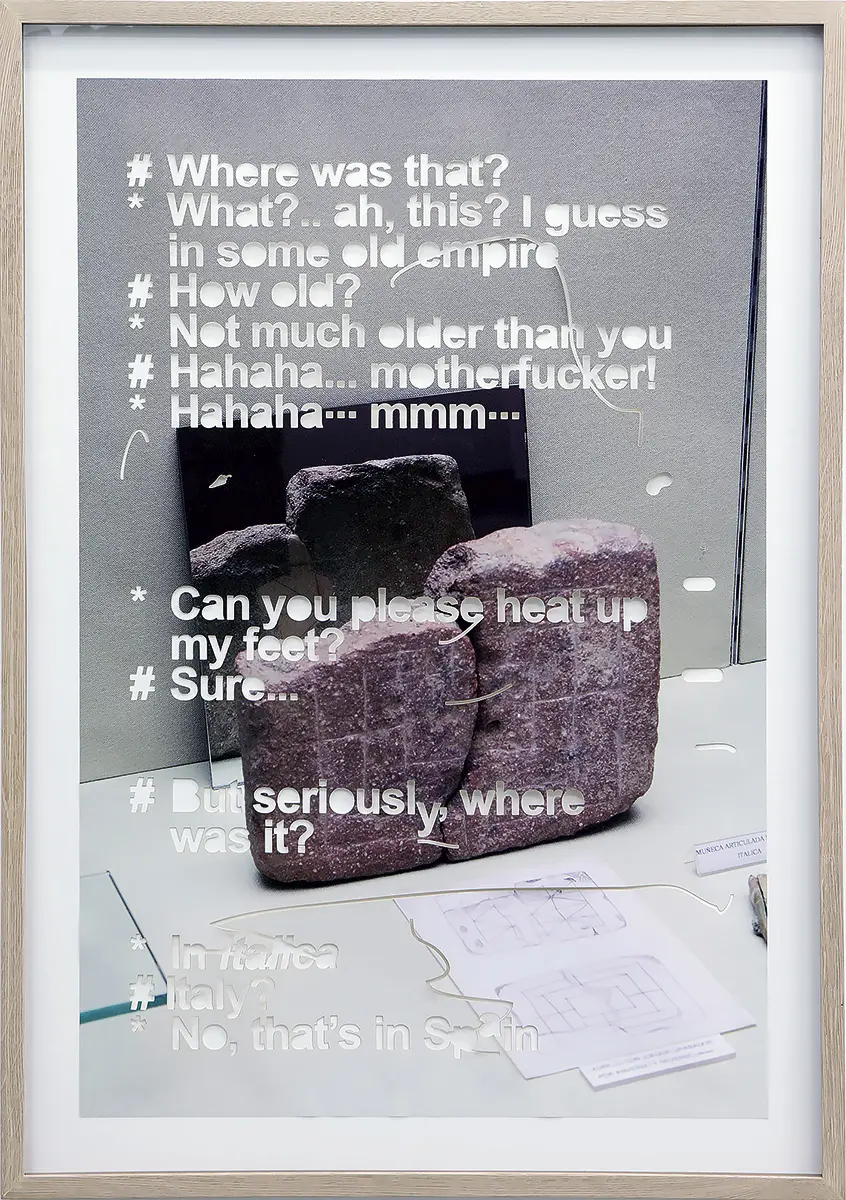
Another series in which the word plays a key role is New Methods-Have I Seen This Before (2014-ongoing), which consists of photographs with laser-perforated texts that serve as inspiration for the screenplay of the movie The Messengers (2014), made with funds granted by Prize Audi Talents Awards (Paris, 2013). In the film, two young Americans with strong political views travel to two historic towns, Mompox (Colombia) and Arcos de la Frontera (Spain). The visual and auditory superposition of histories, voices, landscapes, architectures, and cultural traditions create a complex atmosphere that serves as background to the dialogue established by the two characters during different scenes of the trip, which oscillates between the philosophical and the personal. Through this project, Argote questions how to assume positions in such a complex world and how the particular conditions of two sites, so far from the centers of power, can influence and/or promote political activism.
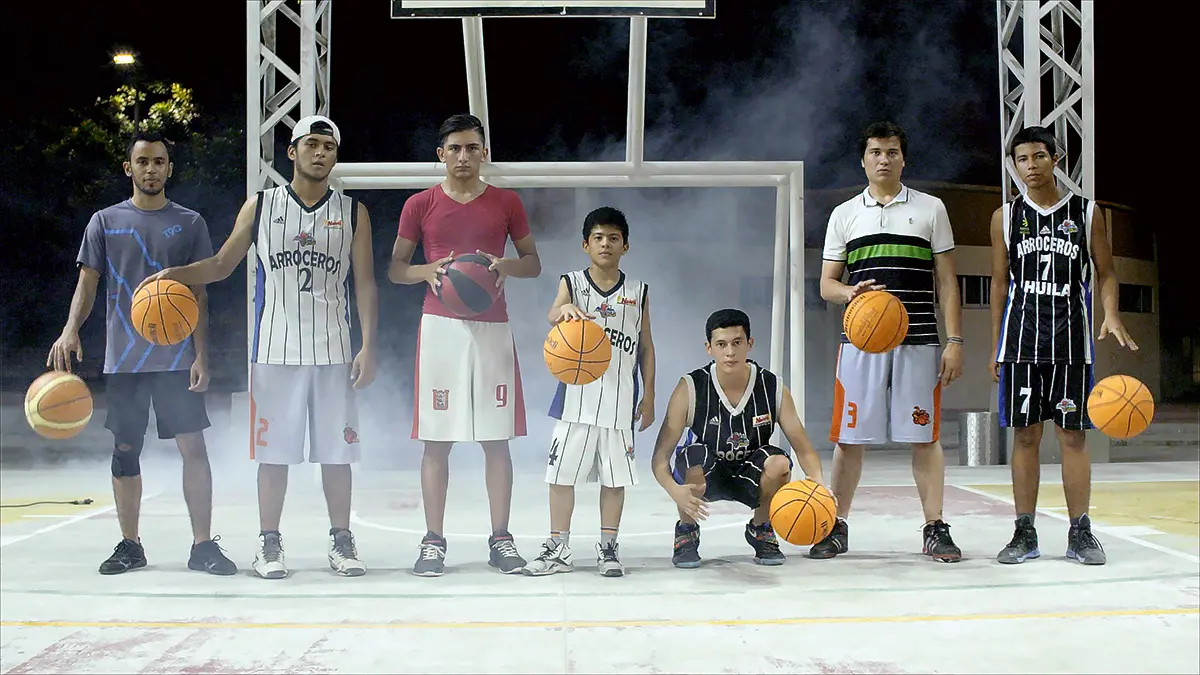
In his most recent film titled As Far as We Could Get (2017), Argote connects imaginatively two antipodal cities, Neiva (Colombia) and Palembang (Indonesia), and traces an imaginary line through which he spins several stories. In one of them, he shows young people dribbling basketballs. When moving from one location to another, the camera places more emphasis on similarities than differences. According to curator and art critic Gianni Jetzer, “the balls are read as agents of globalization that mediate between continents, but also between the world of leisure, sports marketing (...), neo-liberalism and contemporary art.”4 In another chapter, he shows people working on the installation of huge canvases on two billboards advertising a movie called The revenge of love. While the individuals put together the billboards, a female voice in Indonesian and a male voice in Spanish, with a marked coastal accent, read almost simultaneously a script in which they talk to those who hold power and tell them that things are going to change and that revenge will happen precisely through the game of love.
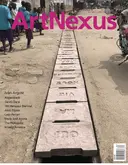
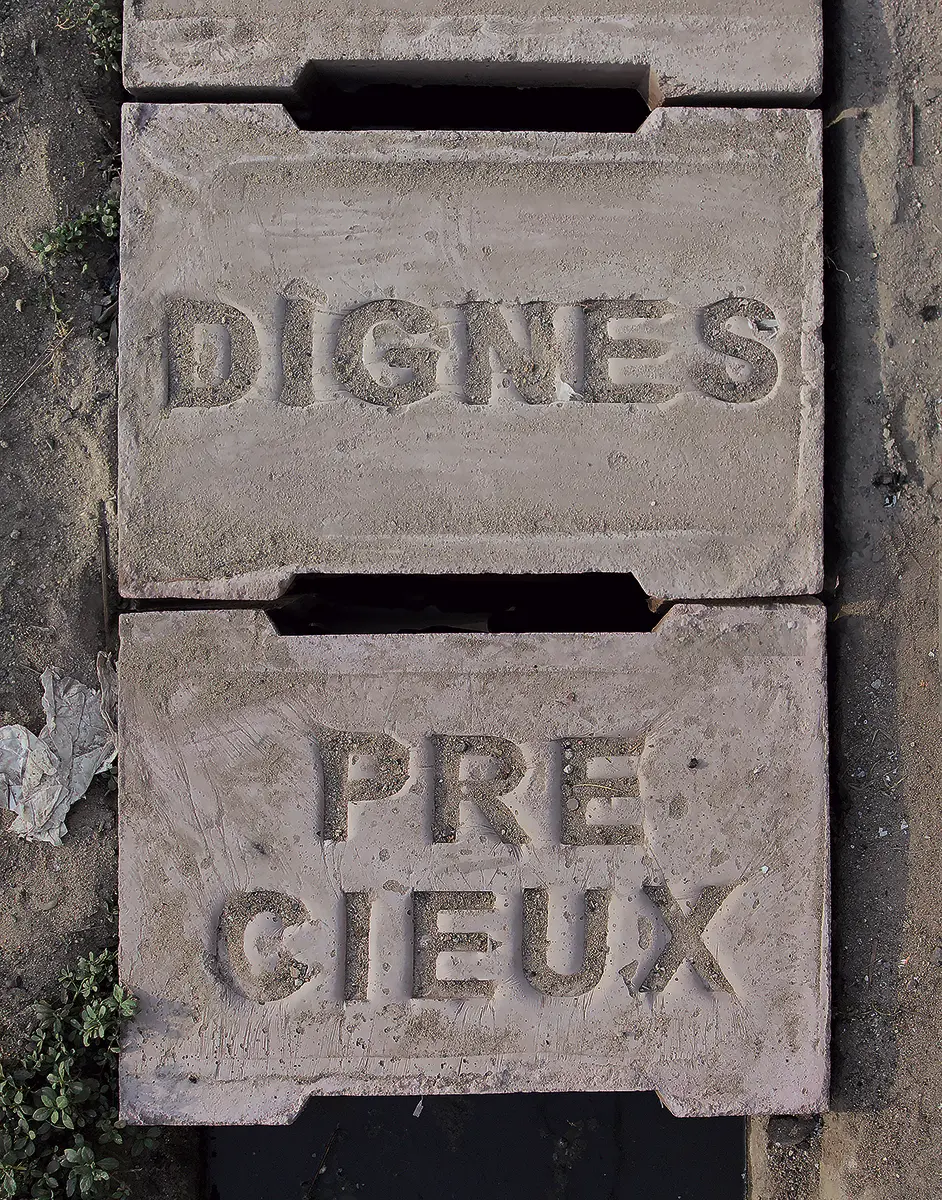
Love as a symbol of empowerment, dignity, and respect is the basis of his most recent project for the Public Art Triennial SUD 2017 – La Place de l’Humain, which takes place in Douala, Cameroon. Oui ma vie (2017) is an unlimited series of pink slabs engraved with words that cover the sewers of the city and, when combined, they form small poems scattered on the ground. The context in which Argote presents this installation could not be more appropriate, since the objective of the event is to reflect on the role of art as history and as the creator of new meanings in the urban context. His proposal not only brings a practical solution to an infrastructure problem by covering the holes of the rainy and sewage channels but also generates a possibility of a dialogue in a society in which censorship has prevailed either through colonial rule or due to the dictatorship that has lasted more than three decades.
All the projects carried out by Ivan Argote are interconnected and have multiple layers at a formal and conceptual level. For each one of them, he selects the appropriate format with humor and creativity in a way that allows us to reflect on topics that range from how we live and relate to others, to how to re-write history from alternative sources and references. The social, the political, and the ideological are intertwined in many ways, whatever the context may be. In the end, the differences are not such and the specific problems are in many cases general. When facing different problems, his work criticizes, opposes, and protests against the establishment. But his actions are far from violent. On the contrary, his criticism and his activism, as shown in The revenge of love, have another kind of nuance. His weapon is art led by the power of the word.
Ivan Argote presents the exhibition Deep Affection at Perrotin Gallery (Paris) from June 2 to July 28, 2018.
NOTE
1. Ivan Argote, interview with the author, Bogotá, October 2017.
2. Iván Argote, entrevista con la autora, Bogotá, octubre 2017.
3. Ibid.
4. http://ivanargote.com/selected-projects/article/as-far-as-we-could-get.
FRANCINE BIRBRAGHER-ROZENCWAIG
Ph.D. in Latin American History and Masters in Art History. Writer and independent curator.