Duván López is presenting, at Museo de la Cárcova of the Universidad Nacional de Buenos Aires, a series of twenty-five digital prints and twenty-five methacrylate sculptures that made me think of the answer that philosophers Deleuze and Guatarri gave when asked, “What is philosophy?” They said: “It is the art of inventing, of manufacturing concepts.”
Observing Duván López’s images, viewers might find in some of them a playful reference, and a dramatic hue in others—which has significant echoes in contemporary Argentina as it attempts to camouflage the deaths of the disappeared under a respectful cultural order. And Henri Michaux notes, in a poem about the ideas of death and religion:
Beginning without discourse
Beginning or all beginnings
Return to the beginning
That refers to a level beyond
Always about the vibration of what is single and unique
Reconciling with everything in depth
In intimate conjunction
Embracing
With efforts to embrace even more widely
The cloud of being condenses
Folds back
“Universe” Cosmos
Cosmos of the universe of the “in itself”
Beyond geometries, geometries
Lines, like abated radiations
Insistent, clairvoyant
Loaded with the occult
Drawing to return to the absolute
Drawing-destiny
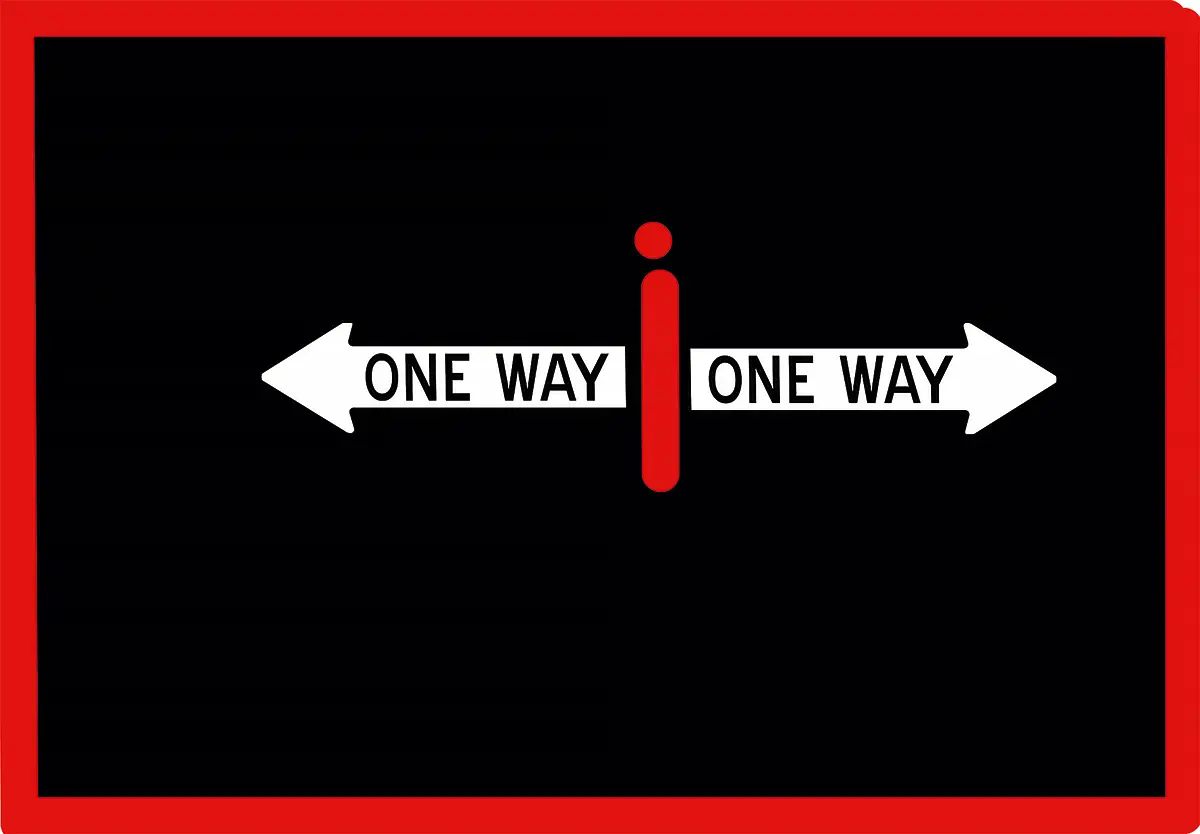
All of these interrogatives descend from the unanswered questions about religion that were present as Duván López intervened, in 2016, the beautiful Eleventh-Century San Martí chapel in Besalú, in the same way, he intervened as he created prints in a computer.
At that time, Duván López was after an emphasis on the process of educating humanity, where space must be reserved for detoxification. A mirror where human beings can see themselves without the armor of belief.
We can think of a survey of philosophical and religious discoveries that have come to define the profile of the human in a syncretism of light, peace, harmony, and ataraxia.
The human need for transcendence is universal and inherent. And as part of that vital exercise is a search for the figure of God. Every culture has created an image of the ineffable that, through the arts, has been able to bring together the consciousness of its people and to outline the customs that define them. The same differences have been used to set peoples against each other in sub-human struggles that have caused genocides and great fractures in the realm of the human.
“The San Martí de Besalú chapel has preserved its walls and some of my works attempt to approach the subject of the sacred, whose point of view seeks out the spirituality that each being has inside: the value of each human being.”
In the creative process behind these works, I thought that freedom has a proper name. I thought that the new materials give printmaking a more open universe and that a fresh air that subscribes to free will continues to dominate. Works that people apprehend in a matter of seconds, about unexpected moments that are part of their everyday life. And at the same time, other works represent the most contradictory codes of existence.
That is why the series Signos y símbolos (Signs and Symbols) is life in the opposite direction because they don’t irrigate the circulation of blood. The human icons symbolize beings in a state of failed encounter, loneliness, neglect, or at the edge of the abyss. Others are loose, abstract images that come close to Miró’s own foreboding.
This is a back and forth where Duván López signals towards the boundaries of words devoid of signifier and signified because they are stand-alone letters that propose a language that does not imply communication. They are instruments without instructions where value is not reckoned in terms of utility. The artist does not intend to resolve needs; on the contrary, he eschews them. Neither is he concerned with that which Man fears or longs for. His journey is not tied to pre-established codes. It is an unexplored territory despite all the world already traversed: ideas, concepts without function. He also seeks the symbolic that historically situates collective events within a unit with respect to the past and a futureless present. It is a dysfunctional alphabet that attempts to reconstruct human dignity.
ANA MARÍA ESCALLÓN