Many things changed after the reestablishment of relations between Cuba and the United States on December 17, 2014, especially for Cuban geopolitics and, in consequence, for the country’s culture, society, and arts. As a whole, these changes embody the reality of large sectors of the population that today are able to move with ease between different cities and politico-economic realities (capitalism, on the one hand, the Castro regime on the other). They come and go from Cuba to the United States, and vice versa, without the old restrictions. They are freed from the symbolic load of terms like inside and outside; foreign and national; to go and to stay; revolutionary and counterrevolutionary. And this clearly signals a shift in tendencies in the geopolitics of an island that is starting to no longer be dominated by the antagonistic logic of its two great polis, its two great city-states.
Climate Change: Cuba/USA, curated by Noel Smith, has this changed reality as its leitmotiv, and it brings to the fore two discursive perspectives in the positing of such issues, two perspectives that are marked, above all, by the artists’ generational origin. One comprises the work of Gléxis Novoa and Tonel, from the 1980s generation; Celia y Yunior and Javier Castro, artists whose work appeared after the first decade of the Twenty-First Century, represent the other. In the case of the former, the discursive perspective on the topic addressed by the exhibition comes with the marks of the social, political, and ideological critique that so preoccupied the artistic avant-garde of the 1980s. That artistic avant-garde was responding to their training under the political and cultural tenets of the Revolution, where the arts needed to be useful to society.
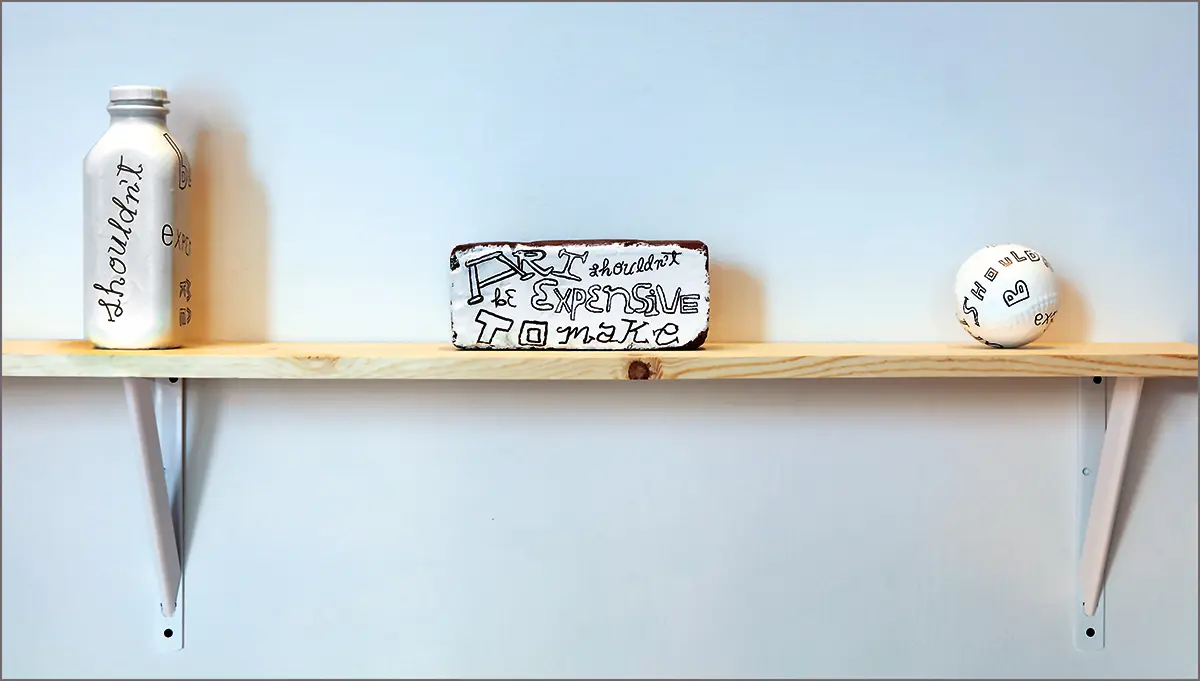
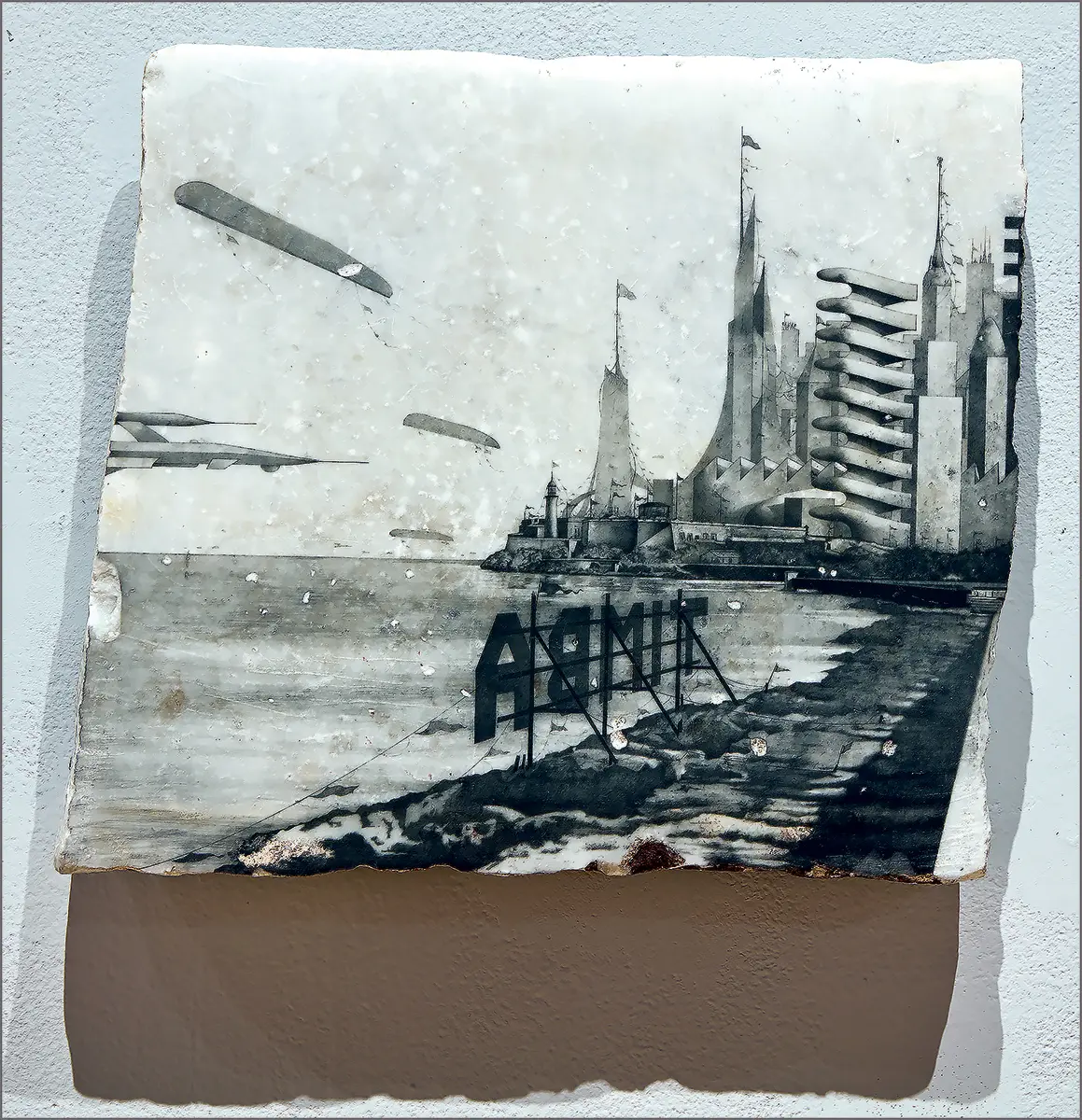
Gléxis Novoa’s works are arranged in the exhibition space like a large-scale installation with paintings, graffito on Carrara marble or granite, flags, photographs, and posters. Between them, these components set up a narrative where the artist considers the path followed by his career, from Cuba to his current residence in the United States. Meanwhile, Tonel also arranges his works in an installation format with sculptures and drawings: Hacer arte no debería ser caro (Making Art Should Not Be Expensive, 2012/2017) and Elogio del darwinismo (In Praise of Darwinism, 2010/2017). The former interrogates—taking as its references the figures of the critic, the curator, and the artist—the art institution and its relationship with international financial capital. The latter denounces the triumph of social Darwinism and money’s conquest of Cuban society. On the one hand, Novoa’s work dissects the rhetoric of the Revolution, the symbols of the Nation in order to produce a heraldic language that unveils and critiques the manipulations and contradictions underlying revolutionary ideology and practice. On the other hand, his landscapes of futuristic cities, made in a graffito in a neo-figurative, realistic poetic key, bring utopian worlds into life. Landscapes of worlds and lives—Primero de Mayo (May Day) and View from Pravda Tower, Havana, both from 2017—enveloped in the spirit of a fantasy that wants to come into being, but hasn’t yet. With an informal visuality that brings to mind outsider art, Tonel takes on the role of the artist and the intellectual as a critical voice that in the public sphere denounces the decadence of the role of art in the transformation of society, a victim of the imperatives of money, and also notes how those imperatives will also, in the end, debase the utopian Communist project of the Cuban revolution.
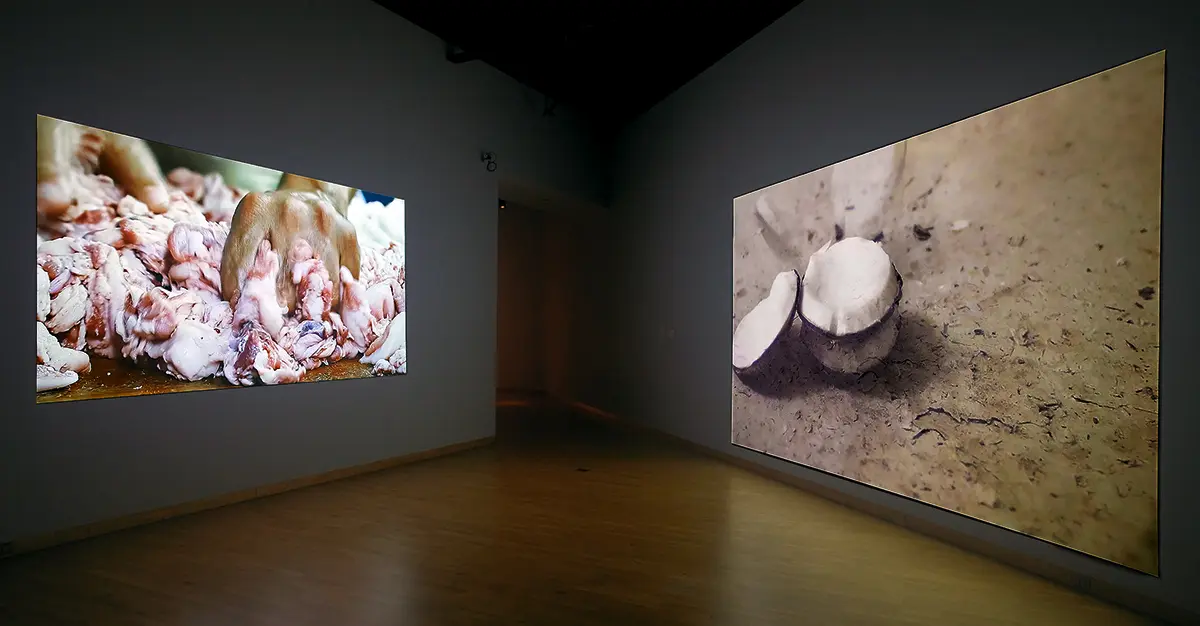
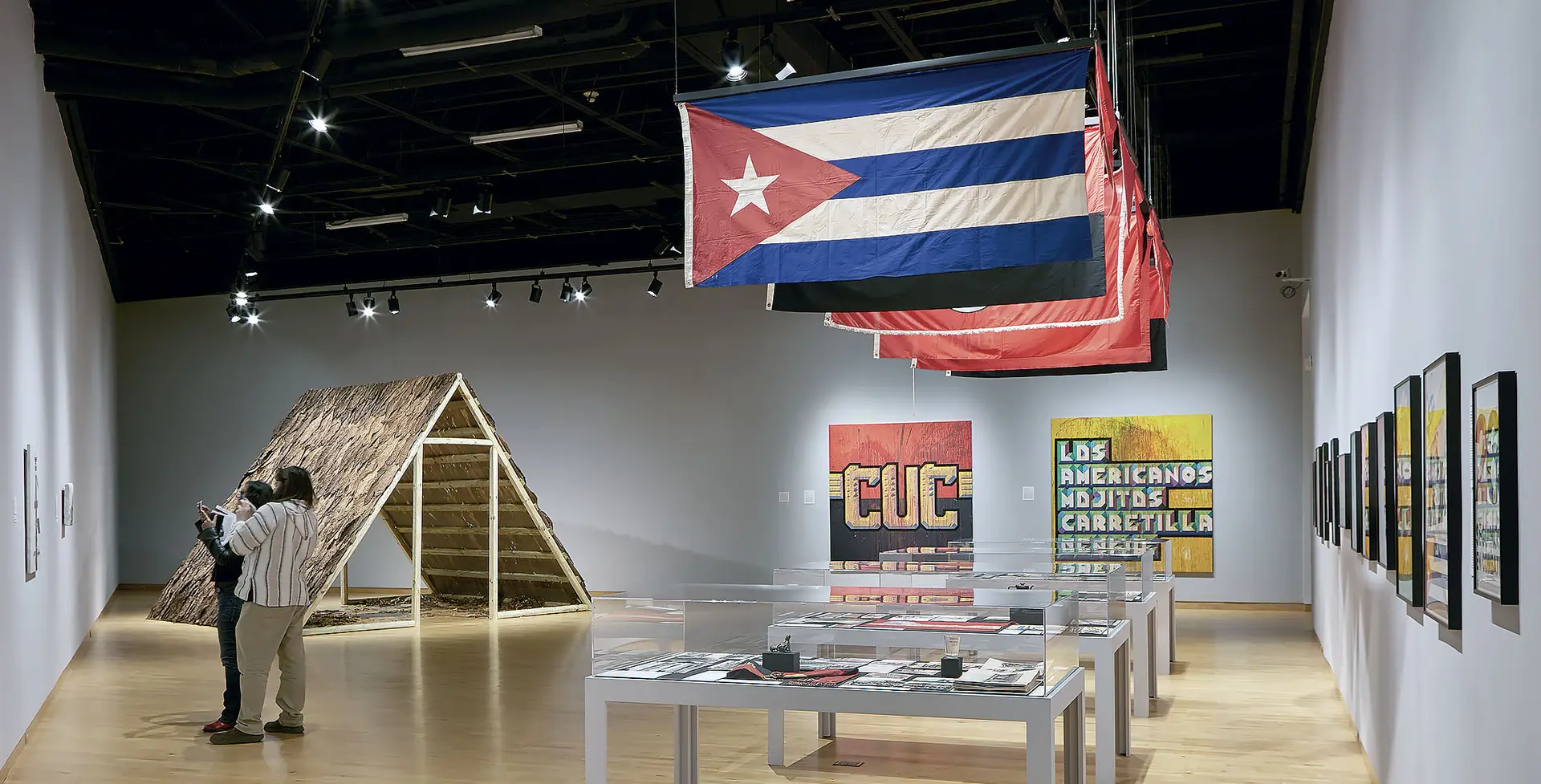
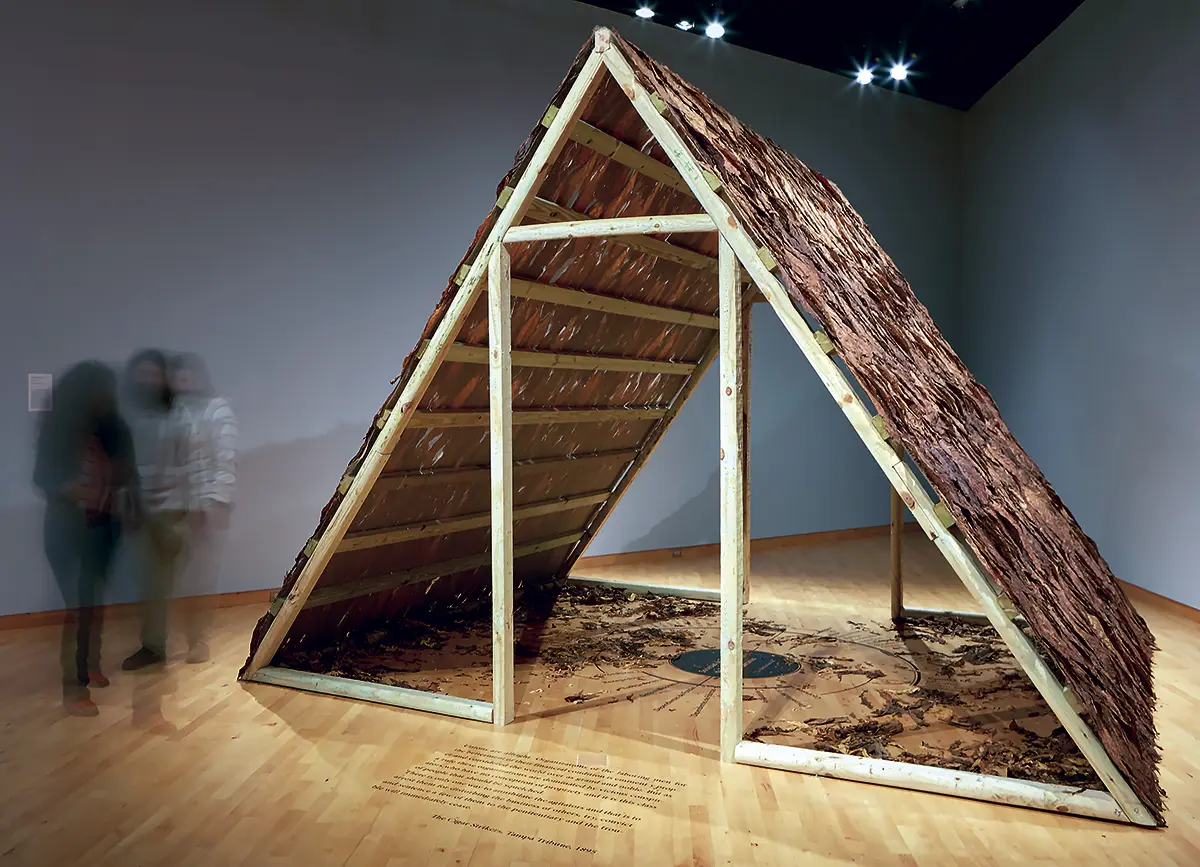
If Novoa’s and Tonel’s discourses are inspired on a view of art as critique, aware of their role in the transformation of society and culture, the point of view adopted by the works of Celia y Yunior and Javier Castro eschews any such commitment. Celia y Yunior’s installation Varaentierra (2017) and Cuatro cosas básicas (Four Basic Things, 2018) a video installation by Javier Castro, are presented from an artistic position that thinks about reality from the standpoint of immediacy, in dialog with the artist’s closest and most personal experiences. Because of this, their artistic practices can be seen as an expression of what is known as relational aesthetics, for example in Castro’s video installation, which uses materials developed by the artist in his Old Havana neighborhood. These are videos that tell about the quotidian experiences of a population whose daily life is an act of survival in the midst of marginalization and scarcity. The contrasting values and ways of seeing the world, touching on the artist’s familial context, the problems faced by the neighborhood, and also the prerogatives of art. Celia and Yunior’s installation mimics a niche of the kind commonly found in Cuba’s countryside, used for protection against hurricanes and also to keep work tools. The construction here has a roof made from tobacco branches and dry leaves. Accompanying the structure is a trove of documents about the cultivation and commercialization of tobacco, which in the second half of the Nineteenth Century made possible the development of Ibor City, in Tampa. The industry also flourished in Cuba during that period but is now in clear decay, reduced to boutique sales as a token of its former splendor.
The discursive perspectives adopted in the work of Celia y Yunior and Javier Castro mark their distance with respect to the political, social, and ideological narrative present in the case of Novoa and Tonel (as they were in the work of many artists of the 1980s generation). Both Celia y Yunior and Javier Castro tend to transform their lived experience, their closeness to reality, into artistic material. And they do this sometimes using their personal biographies but without the background of the large narratives of Revolutionary doctrine. The dissolution of such references to the Grand Narrative of the revolutionary utopia can be interpreted as a feeling of disappointment with respect to the promise of the new Communist society as the best of all possible worlds.
* Courtesy of CAM USF, Tampa.
DENNYS MATOS